At exactly 8:15 every morning, Mason Reed crossed the street carrying a small paper grocery bag.
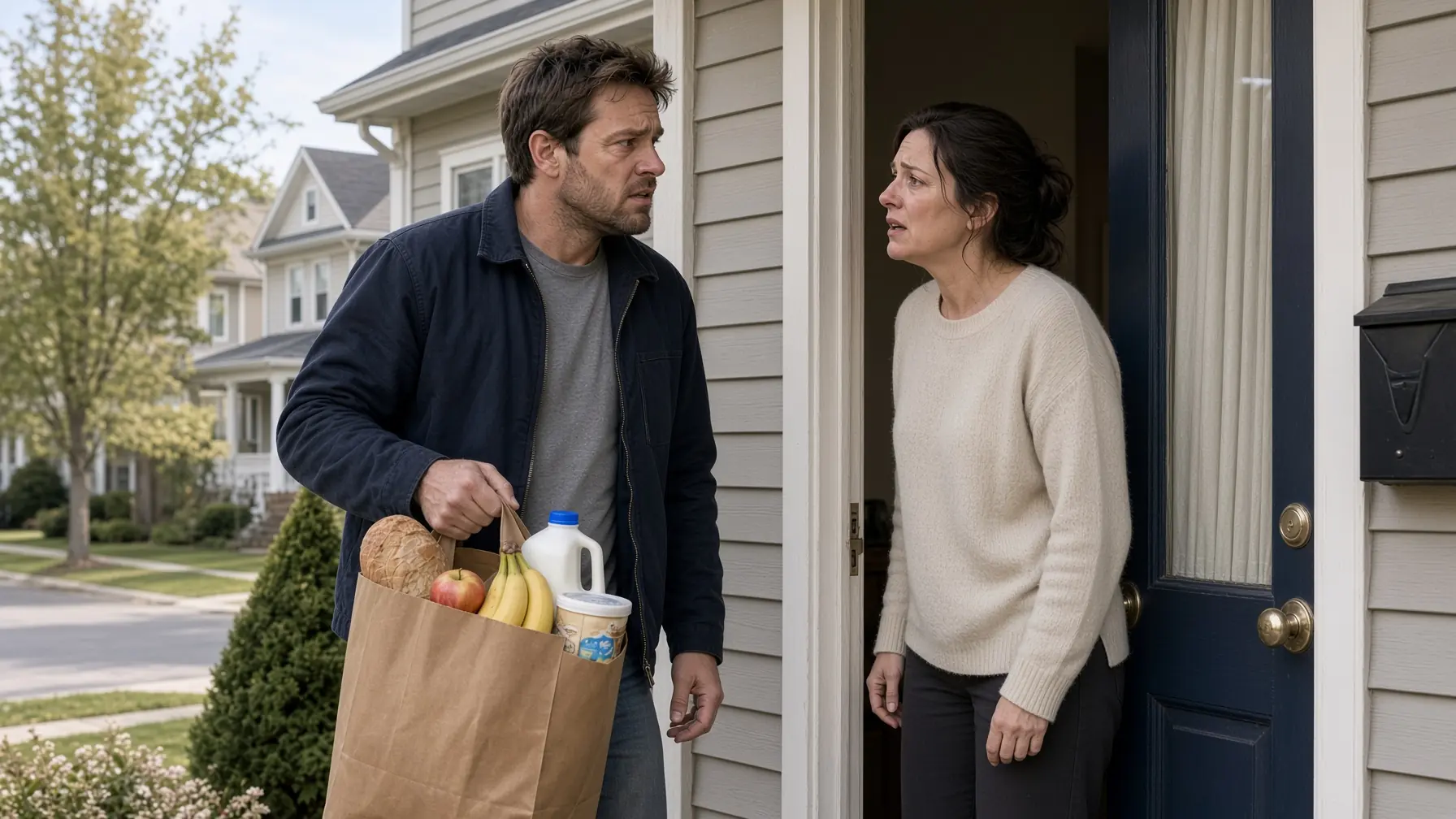
Bread.
Milk.
Fruit.
Oatmeal.
Sometimes eggs.
Sometimes the cinnamon tea Mrs. Agnes Whitmore insisted tasted better than every other tea even though Mason was fairly certain it came from the same factory.
He climbed the three wooden porch steps.
Knocked twice.
Waited.
And normally heard the same voice from inside.
“Door’s open, Mason.”
That Tuesday morning, nobody answered.
Mason frowned.
The curtains were closed.
Agnes’s old blue sedan was missing from the driveway.
That was unusual.
At eighty-two, Agnes rarely went anywhere before nine unless she had a doctor’s appointment.
Mason knocked again.
“Mrs. Whitmore?”
Nothing.
He set the grocery bag on the porch railing and pulled out his phone.
Then he heard footsteps.
Not Agnes’s slow shuffle.
Faster.
The lock turned.
The door opened.
Mason froze.
The woman standing inside was the last person he expected to see.
Victoria Harrow.
Chief executive officer of Harrow Systems.
The woman who had approved the restructuring that cost Mason his job three weeks earlier.
For several seconds, neither of them spoke.
Victoria looked nothing like she did on the forty-second floor.
No tailored navy suit.
No polished heels.
No executive assistant two steps behind her.
She wore a cream sweater, dark trousers, and socks.
Her dark hair was loosely tied back.
Her eyes were red.
And she looked frightened.
Mason’s hand tightened around his phone.
“Ms. Harrow?”
Victoria stared at him.
“Mason.”
The fact that she remembered his name somehow made it worse.
He looked past her.
“Where’s Mrs. Whitmore?”
Victoria swallowed.
“The hospital.”
Every trace of anger disappeared from Mason’s face.
“What happened?”
“She collapsed this morning.”
“What do you mean collapsed?”
“I found her on the kitchen floor.”
Mason stepped forward instinctively.
Then stopped at the threshold.
“Is she conscious?”
“She was when the ambulance left.”
“Which hospital?”
“St. Catherine’s.”
He exhaled.
Then something clicked.
He looked at Victoria.
At Agnes’s house.
Back at Victoria.
“You know her?”
Victoria’s face crumpled slightly.
“She’s my grandmother.”
Mason said nothing.
For three weeks, he had thought of Victoria Harrow as the woman who signed away six years of his working life.
Now she was standing barefoot in his elderly neighbor’s doorway, trying not to cry.
And Mason had every reason in the world to turn around.
Instead, he picked up the grocery bag.
“What did the doctors say?”
Three weeks earlier, Mason had been called to Conference Room 42B at 3:30 on a Thursday afternoon.
He knew something was wrong before he sat down.
Human Resources was there.
His department director was there.
And Victoria Harrow appeared on a video screen from another meeting upstairs.
The company was restructuring.
That was the phrase.
Not failing.
Not bankrupt.
Not closing.
Restructuring.
Harrow Systems had missed two growth targets.
Investors were pressuring the board.
Consultants recommended consolidating several internal support teams.
Forty-seven positions were eliminated.
Mason’s was one of them.
He had worked there for almost six years.
Operations systems coordinator.
Not senior leadership.
Not highly paid.
But important enough that whenever something stopped working, somebody called him.
He had built scheduling tools.
Documented internal processes.
Created client escalation workflows.
Spent years learning which department relied on which database even when official charts claimed otherwise.
None of that appeared dramatic on a restructuring spreadsheet.
His role looked duplicative.
Another team supposedly performed similar functions.
So it disappeared.
The meeting lasted eleven minutes.
His director said: