The sound was so violent that Ethan Carter thought the tractor had broken in half.
A metallic clang exploded beneath the steel plow, and the old red machine lurched hard enough to throw him against the steering wheel. The engine coughed under the sudden load. The tires dug into Virginia clay, then stopped. For a moment the entire pasture seemed to vibrate around him, from the dry grass at the fence to the loose boards on the old barn beyond the hill.
Ethan shut off the engine. A metallic ringing lingered in his ears. He climbed down, muddy boots landing in the freshly opened furrow, and stared at the place where his plow had struck something that had not moved.
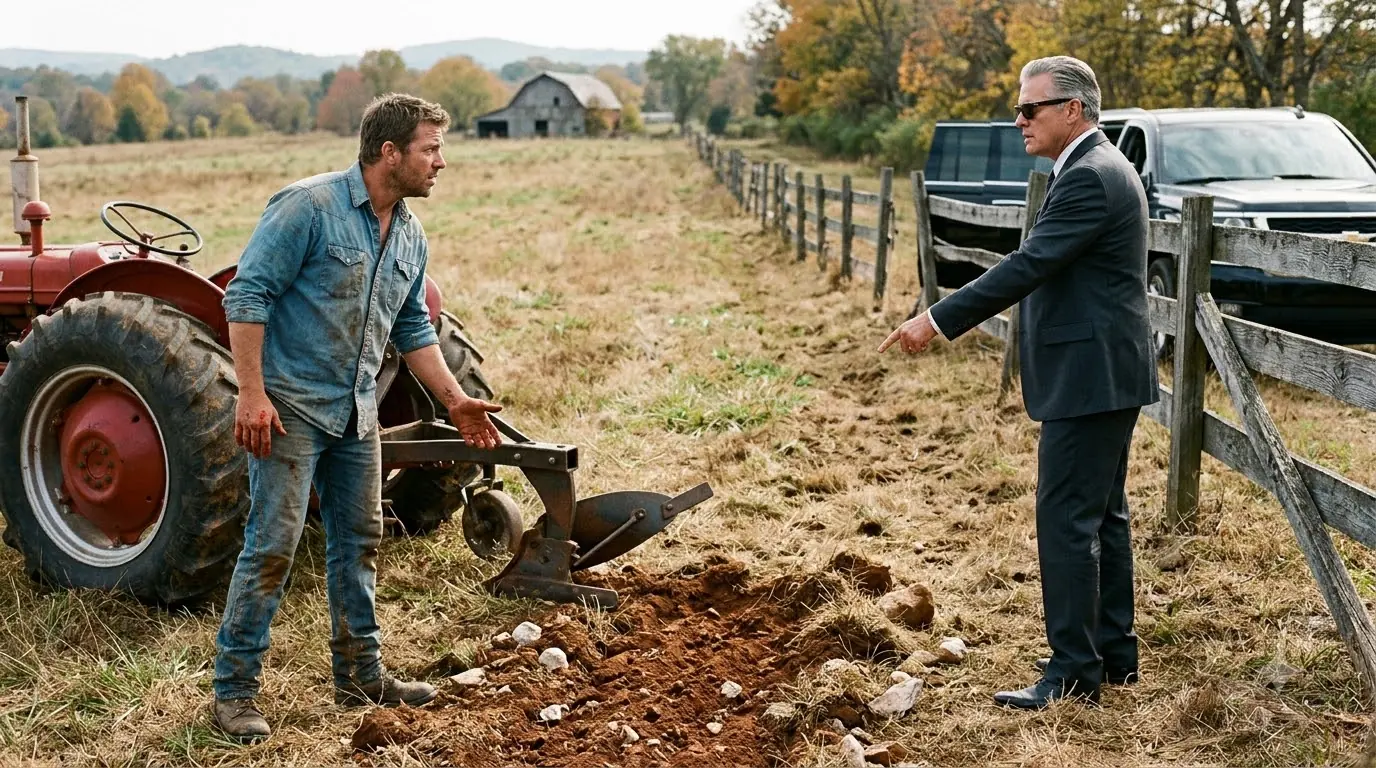
“What the hell was that?” he muttered.
He was thirty-eight years old, strong from years of farm work, with short brown hair and a face weathered by wind and sun. His faded blue denim shirt was dark with sweat beneath the arms. He had hit limestone before, and he knew the sickening resistance of a plowshare catching a buried root. This had felt different. The impact was too clean, too hard, too abrupt. Whatever the plow had met was still concealed beneath the red soil.
He crouched, brushing loose dirt from the point of contact with his glove, careful not to force the damaged steel deeper. A small amount of reddish clay crumbled away. Nothing identifiable appeared. He shifted back to examine the plow's angle instead of digging blindly. His father had taught him that an expensive surprise in a field was rarely improved by making a second, larger mistake.
That was when he heard the vehicle.
A black luxury SUV approached along the gravel lane bordering the pasture. It traveled too fast for the uneven track and stopped just outside the wooden fence, its polished body looking almost unnatural against the cracked clay and the shabby barn. The driver's door opened. A tall man in a charcoal suit stepped out, his slick gray hair undisturbed by the breeze. Dark sunglasses concealed his eyes. His polished shoes found the driest ground beside the fence as though he had inspected it beforehand.
The stranger looked toward the stalled tractor, then toward the disturbed patch of earth.
“Name your price,” he called. “I'm buying this land!”
Ethan slowly stood. “You haven't even told me your name.”
“Richard Harlan.” The man's voice was controlled, but his fingers tightened around the fence rail. “We can settle the details today.”
Ethan looked from the expensive vehicle to the man who had arrived at the exact moment his plow stopped. Richard had not asked whether anyone was hurt or whether the tractor was damaged. He had not asked what Ethan had struck. He had looked straight at the furrow, as though the location itself mattered.
Ethan's surprise hardened into suspicion.
“How do you know what's down there?” he asked.
Richard's confident expression tightened.
For one breath, neither man spoke.
The question had begun taking shape months before that autumn morning.
Ethan had purchased the eighteen-acre pasture because it was the only land in the county he could afford without surrendering the rest of his working life to a lender. The listing called it neglected grazing ground. The agent called it a challenge. Two neighbors called it a graveyard for equipment, and one of them advised him to save his money for a better opportunity. Ethan signed the purchase documents anyway, knowing that the acreage offered no easy income and that his savings would barely cover the first season of improvements.