The officer told me to take out my identification slowly, and I did exactly that. A second later, my cheek struck the terminal floor, his knee drove into my back, and someone in the crowd screamed. I lay there listening to him describe a threat that had never existed while my open jacket pressed against the tile. Then his partner picked up the leather case beside my head, read what was inside, and called for her captain in a voice I had not heard from any of them before.
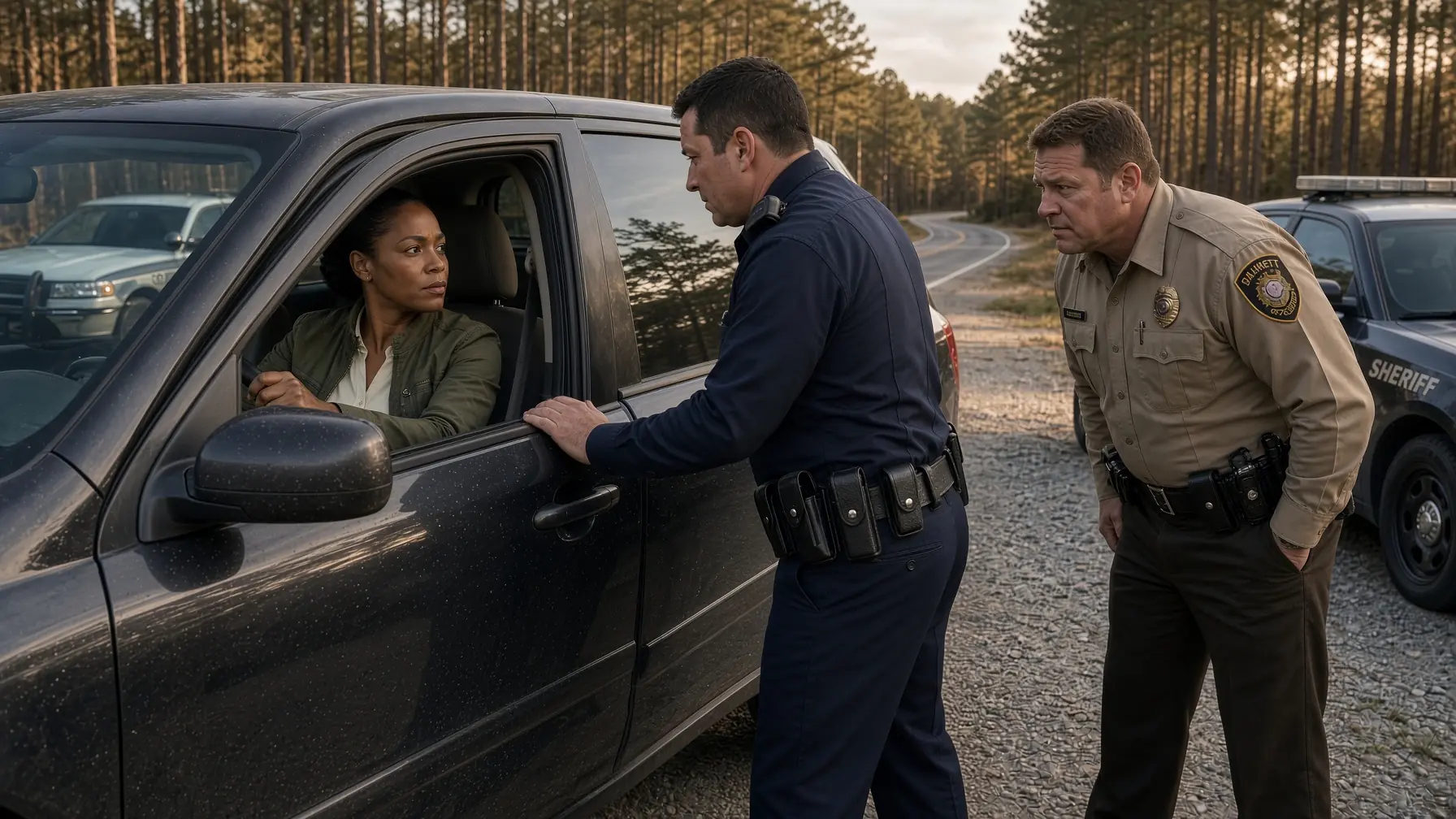
At 6:15 that morning, the most serious disagreement in my life concerned a sweater.
I stood in the kitchen drinking black coffee from a chipped ceramic mug my daughter had painted years earlier. She had intended the blue shape on its side to be a whale, although my wife maintained that it looked more like a particularly unfortunate potato.
I had defended the whale for nearly two decades.
Denise came downstairs carrying her travel bag. She stopped at the kitchen entrance, looked at me, and tilted her head.
“You’re wearing that?”
I looked down at my navy sweater.
“What’s wrong with it?”
“You’re delivering a keynote at one of the biggest legal conferences of the year.”
“I own a suit.”
“You apparently refuse to travel in it.”
“That’s why luggage exists.”
She shook her head, set down her bag, and came over to straighten my collar.
“There.”
“I thought you disapproved.”
“I can disapprove and improve it.”
I kissed her forehead.
Our daughter had called the night before to wish me luck. Her advice was to avoid making the speech so long that people started checking their phones, which I considered sound guidance from someone who had spent much of her adolescence checking hers while I spoke.
I had revised the final page after that call.
The speech was in my carry-on, marked with notes in the margins. A clean dress shirt lay beneath it, along with a small lunch and a wooden paperweight shaped like a gavel.
Everything had a place.
I liked traveling that way.
At fifty-four, I had learned that enough things could go wrong without encouraging them through poor preparation. Denise would tell you that I had also learned to prepare for complications that did not exist.
She was probably right.
But I had checked our documents, confirmed the connection, and left enough time to get to the airport without rushing. When we locked the house, I expected an ordinary travel day followed by a demanding evening.
Nothing about the morning suggested I would later be lying on a terminal floor trying to work out whether the blood in my mouth came from my lip or a tooth.
By noon, we were connecting through Atlanta on our way to Chicago.
The concourse was crowded enough that the sounds seemed to merge: suitcase wheels crossing seams in the floor, boarding announcements, coffee grinders, children crying, and people speaking into phones while looking for gate numbers overhead.
Denise and I had been rebooked through separate gate areas. We paused near the concourse junction to compare the information on our phones.
“I’ll check mine,” she said.
“I’ll go to the other desk.”
“Text me before you board.”
“I will.”
She looked at my sweater again.
“It’s survived the first leg.”
“A ringing endorsement.”
She smiled and turned toward her gate.
I watched her disappear into the moving crowd, then adjusted the strap of my carry-on and headed toward mine.
That was when I noticed the officers beside a pillar.
I would probably have forgotten them if one had not stepped directly into my path.
His nameplate read BRENNAN.
“Hold up.”
I stopped.
A woman behind me moved around my shoulder, pulling a suitcase past us. The officer waited until she cleared the space before speaking again.
“Where are you going?”
“My gate.”
“Which one?”
I showed him the boarding information on my phone without handing it over.
He looked at the screen, then at me.
His partner stood a few feet behind him. Her nameplate read HOLLOWAY, and she appeared to be watching the crowd as much as the conversation.
“Is there a problem, Officer?” I asked.
“You match a description.”
“What description?”
“Black male.”
He looked me over.
“Medium build.”
I waited.
He did not continue.
Around us, passengers moved toward flights, shops, restrooms, and the escalators. Several Black men had walked past while he gave the description.
“A Black male with a medium build describes quite a few passengers in this terminal,” I said.
His expression tightened.
“Step over there.”
He pointed toward the pillar.
I complied.
I did not want to obstruct the walkway, and I did not want a reasonable move out of traffic to become the first disagreement. I wheeled my carry-on beside me and stopped where he indicated.
Holloway followed.
“Hands out of your pockets,” Brennan said.
They were already out.
I opened them slightly so he could see.
“What was reported?” I asked.