The coffee pot broke at Margaret Quinn’s feet, but it was the sound of the chair that her son would remember. A sharp scrape across the checkered floor, a blunt strike against her hip, and then a seventy-two-year-old woman trying to apologize before she had even recovered her balance. Sergeant Thomas Keene stood over her, furious about the coffee on his uniform. He had not yet looked closely at her face.
That morning, Margaret had arrived at the diner before the front windows finished filling with daylight.
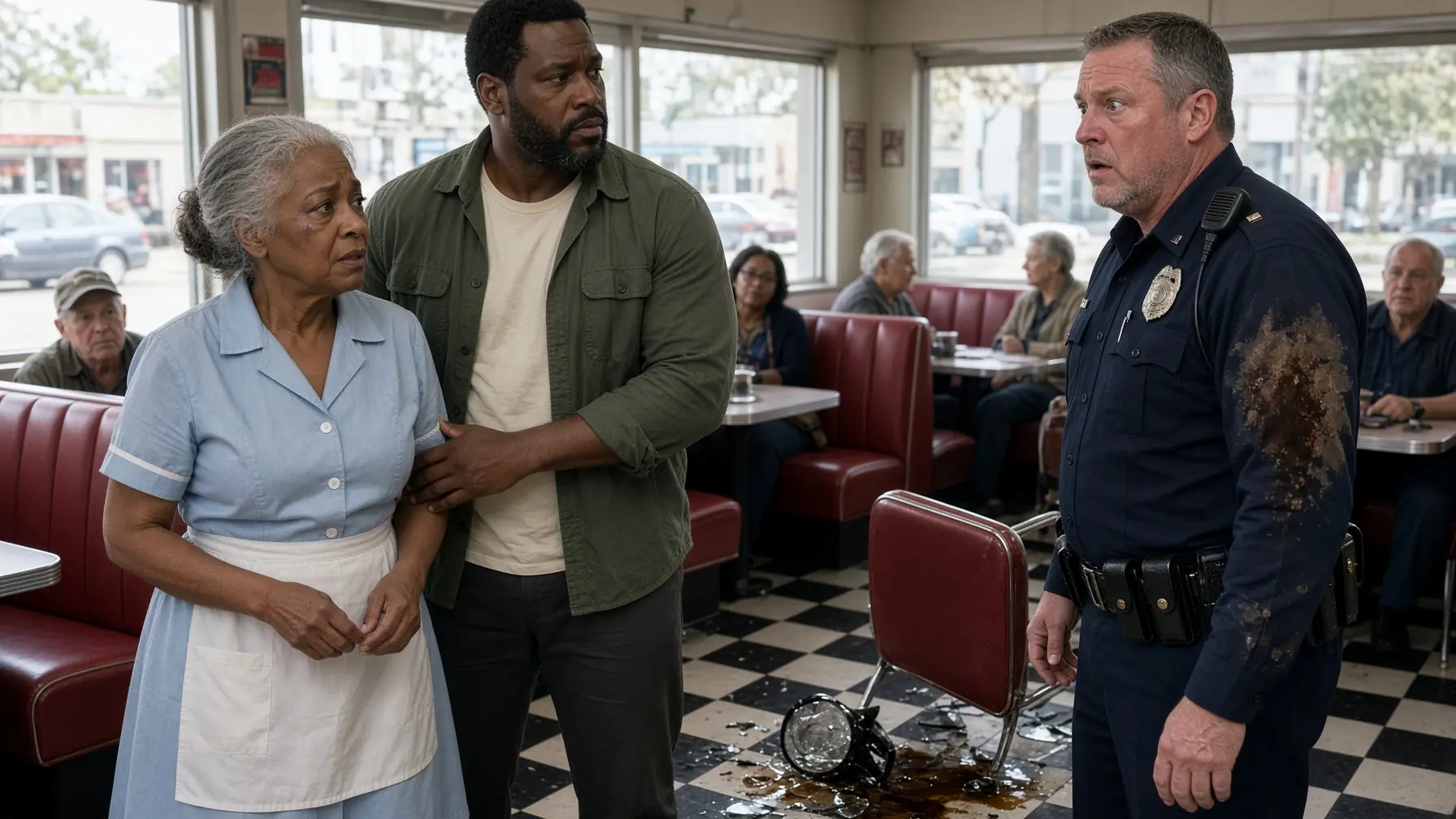
She came through the side entrance wearing gray sneakers and carrying her white apron folded over one arm. Her silver hair was pinned securely at the back of her head, and her pale blue diner dress had been pressed the night before.
She stopped just inside the kitchen to catch her breath.
Not because the short walk had exhausted her.
Because she liked to begin a shift without rushing.
Beyond the service opening, the red booths were empty, the tabletops wiped clean, and the checkered floor still damp along the far wall. The diner smelled of fresh coffee, toast, and the first onions meeting the griddle.
Margaret hung her coat on a hook.
Then she tied her apron.
The young woman opening the register looked up.
“You’re early.”
“So are you.”
“I have to be.”
Margaret smiled.
“So do I.”
She checked the silverware at the counter, straightened a stack of menus, and replaced a chipped sugar bowl before anyone could set it on a table. None of those jobs had been assigned to her.
They were simply the small things she noticed.
The first customer came in while she was filling water glasses.
He chose the booth nearest the front window, as he usually did, and reached for a menu he did not need.
Margaret placed coffee beside him.
“Eggs today?”
He looked up.
“Thinking about pancakes.”
“You were thinking about pancakes yesterday.”
“And you talked me out of them.”
“You ordered eggs before I said anything.”
He smiled, and she left him to decide.
By the time he settled on breakfast, two more tables were occupied. A woman with a child needed an extra napkin. A delivery driver wanted a refill before returning to the road. Someone at the counter asked whether the kitchen could leave the onions out.
Margaret moved between them without appearing hurried.
She was slender, and age had made some of her movements more deliberate, but she knew how to carry a plate without tiring her wrist and how to turn between tables without striking a chair. When people saw her crossing the room, they sometimes mistook that care for frailty.
Luke never did.
He knew the difference between his mother moving carefully and his mother needing help.
He arrived shortly after the breakfast rush began to thin.
The bell over the front door rang, and Margaret glanced up from a table she was clearing. Her son stood inside the entrance, unusually tall even among the men waiting to pay at the counter.
His olive overshirt was open over a cream T-shirt. Charcoal trousers fell neatly over brown boots, and his trimmed beard framed a face that softened as soon as he saw her.
Margaret lifted two fingers in greeting.
Luke returned the gesture.
He did not call across the diner.
He waited until she finished stacking the plates.
Then he approached.
“You eat?”
“Good morning to you too.”
“Good morning. You eat?”
“I had toast.”
“That’s what you said last time.”
“It was true last time.”
“Was there anything on it?”
“Something brown.”
“Mom.”
“Peanut butter,” she said. “You can put the inspection clipboard away.”
Luke smiled.
When he leaned down to kiss her cheek, she touched the side of his face, a gesture so familiar that neither seemed to notice doing it.
At forty-seven, he was still her boy in that moment.
Then she stepped back and looked at him properly.
“You slept?”
“Yes.”
“You always answer that fast when you haven’t.”
“I slept.”
“Enough?”
“Enough to come have breakfast.”
“That isn’t the same thing.”
He glanced toward the counter.
“Are we both going to keep asking questions neither one wants to answer?”
Margaret considered him for a moment.
Then she pointed toward an empty table near the aisle.
“Sit down.”
He obeyed.
The chair looked smaller once he settled into it.
A few customers glanced his way, partly because of his height, partly because he moved with the quiet assurance of someone who did not need to announce himself. He placed his phone facedown beside the menu.
Margaret brought him water.
“Coffee?”
“Yes, please.”
“Breakfast?”
“Whatever you recommend.”
“You say that, then argue about the potatoes.”
“Because you recommend things you know I’ll argue about.”
She smiled again.
“Eggs. Toast. Potatoes.”
“There it is.”
“I’ll make sure they’re good.”
“They’re always good.”
“Then stop complaining.”
She went toward the kitchen before he could answer.
Luke watched her cross the floor.
It was not an anxious look.
He had spent enough years watching his mother work to know that she disliked being monitored. Still, his eyes followed the places where the aisle narrowed and where a carelessly positioned chair could make her route harder.
At the service opening, Margaret set down an order slip.