The letter from Aldous arrived on a Tuesday morning, folded twice inside a plain brown envelope. He wrote that the old Govan place was empty, the house still stood, and she could stay there until spring if she needed somewhere quiet. He did not mention the three years she had spent renting furnished rooms in Winnipeg, nor the engagement that had ended when her fiancé admitted he preferred the respectability of her family name to the woman carrying it. Aldous had never been skilled with tenderness, but she recognized concern hidden inside every short sentence.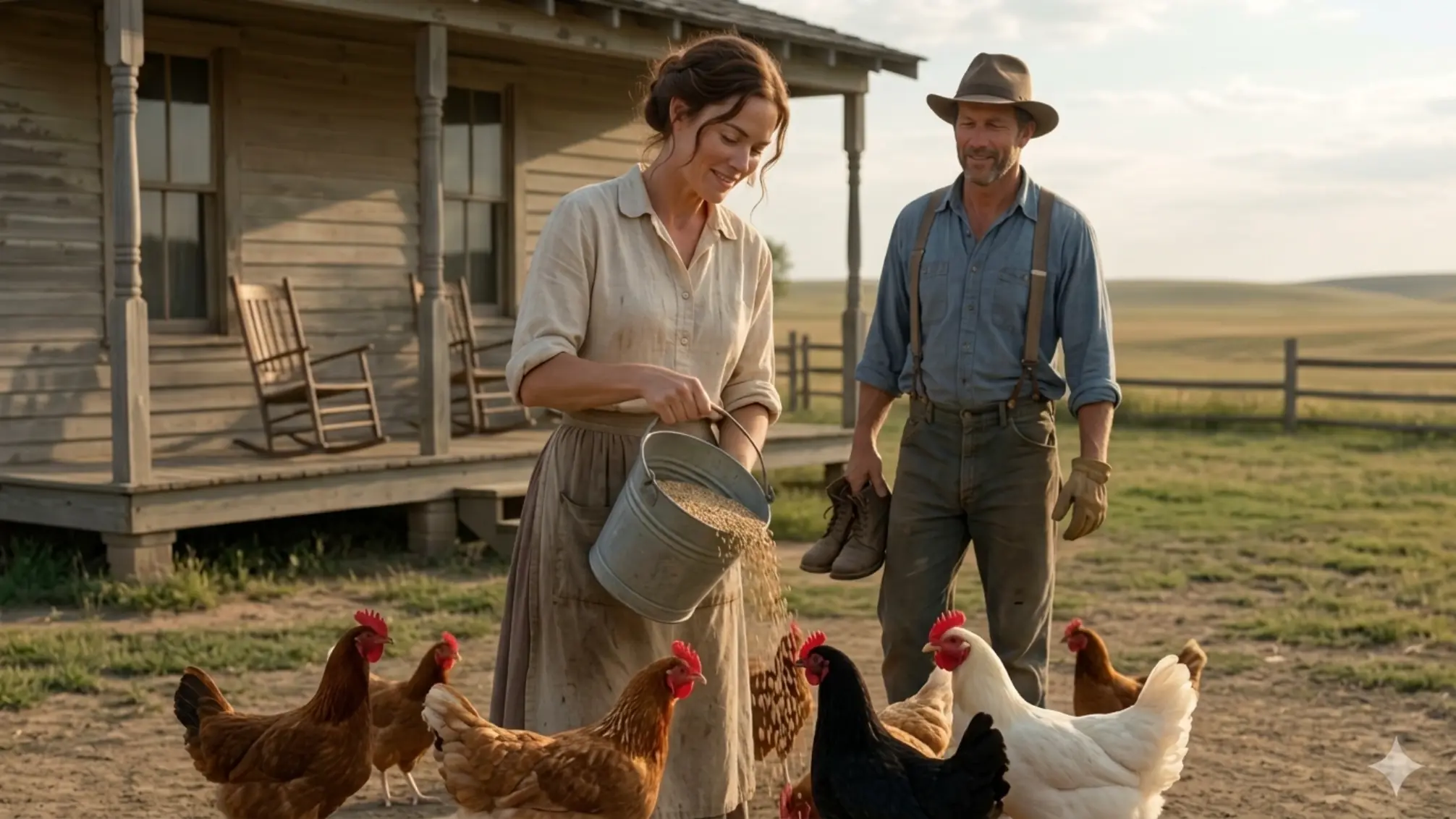
By Thursday, Clara Bell had packed everything she owned into one trunk and a wooden crate. Her landlady watched from the doorway as Clara carried the final box downstairs without asking for assistance. The November street was gray with slush, and carriage wheels had ground the snow into dark ridges along the curb. Clara paid what she owed, thanked the woman, and walked toward the station without looking back.
The westbound train was cold enough that frost formed around the window frame. Clara sat beside the glass and watched buildings give way to warehouses, then fields, then the wide white emptiness of the Canadian prairie. She had expected fear to come once the city disappeared, but instead she felt the pressure in her chest begin to loosen. For the first time in years, no one nearby knew what she had lost or what she had failed to become.
Aldous met her at the small station in Crestfall. He looked thinner than she remembered, with wind-cut lines around his mouth and a coat that had been repaired at both elbows. He hugged her once, took her trunk, and loaded it into his truck without discussing the decision that had brought her there. On the drive out, he described forty acres, a narrow creek, several neglected outbuildings, and a chicken coop that had not held chickens in years.
“You said the house was standing,” Clara remarked.
“It is.”
“That is not the same as saying it is sound.”
Aldous glanced toward her. “The roof keeps most of the weather outside.”
The farmhouse was smaller than Clara had imagined. It contained a kitchen, one bedroom, and a narrow lean-to built against the north wall. The barn sagged slightly near one corner, the fencing had collapsed in several places, and the chicken coop leaned so sharply that it appeared tired of resisting the wind. Aldous had left split firewood beside the house, sacks of flour and potatoes in the pantry, and his own bedroll inside the lean-to.
“You have been sleeping here,” Clara said.
“Someone had to check the chimney.”
“You could have told me.”
“You might not have come.”
She looked at the broken fence, the muddy yard, and the empty fields beyond it. Aldous expected the silence to frighten her, but the land did not feel empty. It felt unfinished. Clara placed one hand against the porch post and said, “I am staying.”
Aldous drove back to Crestfall before sunset. Clara stood in the yard listening until the truck’s engine faded beyond the road. The wind moved through the dead grass with a dry whisper, and the house creaked as the temperature dropped. She carried her trunk inside, built a fire, and slept on the floor because the bed still felt like something belonging to another person.
She woke before dawn and boiled water on the stove. As the sky lightened, she examined the yard through the kitchen window. The chicken coop stood thirty feet from the house, its west wall bowed inward and the door hanging from one rusted hinge. Clara pulled on her coat and went outside before finishing her tea.
The damage was worse up close. A support post had rotted where it met the earth, allowing the frame to settle unevenly. Two roof boards had warped, the latch was broken, and gaps between the planks were wide enough for foxes to enter. Yet the foundation stones remained firm, and most of the original timber was dry beneath the weathered surface.
Clara pressed both hands against the leaning wall. It moved slightly, then held.
“You are not dead yet,” she murmured.
That afternoon, she drove Aldous’s truck into Crestfall and entered the hardware store carrying a handwritten list. The owner, Bertrand Pike, read each item aloud as though confirming a legal agreement. Clara requested post supports, two-by-fours, three-inch nails, new hinges, roofing tar, wire mesh, and a proper latch.
“You repairing something?” he asked.
“Yes.”
“What?”
“A mistake someone left standing too long.”
Bertrand stopped repeating her words and helped load the truck.
Clara spent the next three days repairing the coop. She cut away the rotted base, installed a new support, raised the leaning wall with a jack, and checked it repeatedly with an old carpenter’s level she had carried from Winnipeg. Her palms blistered, her shoulders burned, and snow began falling before she completed the roof.
When she finally stepped back, the structure was not beautiful. One corner remained slightly crooked, and the repaired boards did not match the old gray timber. But the walls stood straight, the roof no longer leaked, and the door closed firmly against the wind.
A woman named Mrs. Aberfoil delivered eight hens and a hostile red rooster the following week. She walked around the repaired coop twice, inspected the ventilation, and tested the latch with both hands. Clara waited without defending her work.
“You fixed this yourself?” Mrs. Aberfoil asked.
“Mostly.”
“Govan never fixed anything until it fell on him.”
“That explains the barn.”
Mrs. Aberfoil smiled reluctantly. “The rooster bites.”
“So did my former fiancé.”
The older woman laughed and lowered the price by two dollars.
The chickens changed the property immediately. Their complaints, scratching, and sudden bursts of movement filled the yard with life. Clara stood inside the kitchen listening as they settled into the coop that first night. The sound was small and ordinary, but it belonged to her in a way nothing in Winnipeg ever had.
Aldous visited the following Sunday. He parked beside the porch and surveyed the repaired coop without comment. Clara was pulling old wire from the north fence, and after watching for several minutes, he removed his coat, took the spare hammer, and began working from the opposite end.
They met at the corner post two hours later. Clara drove the final staple and stepped back to inspect the straight line of wire running between them.
“You should plant a garden on the south side,” Aldous said. “Good light there.”
“I know.”
He looked at her briefly and nodded. It was the closest her brother came to acknowledging that she had already imagined a future beyond spring.
Winter arrived in layers. The creek froze in December, snow buried the pasture, and the wind pushed against the house for days without rest. Clara cut and split enough wood to last until March, packed straw around the coop walls, and hung an oil lamp inside during the coldest nights.
She recorded every expense inside a blue notebook. Feed, lumber, nails, lamp oil, seed orders, and the twelve dollars she had paid for the first chickens all received their own line. Beside those figures, she wrote what she hoped to earn once the hens began producing steadily.
The first eggs appeared in January.
Clara carried them inside as carefully as porcelain, though two were small and one had an uneven shell. She placed them in a basket on the table and stared at them for several minutes. They were not enough to change her life, but they were proof that patient work could produce something where others had left only neglect.
By February, Aldous was taking eggs into Crestfall twice a week. Penwick, the general-store owner, displayed them beside his register under a handwritten sign reading BELL FARM EGGS — FRESH AND LOCAL. Clara objected to the name at first because she did not own the land.
“You made the farm,” Aldous said. “The deed is only paper.”
“The deed determines who can take it away.”
Aldous studied her across the kitchen table. “Nobody is taking it.”
She heard a promise in his voice, but she had learned never to build security upon promises alone.
The first payment from Penwick came to eleven dollars and forty cents. Clara placed it inside a small tin beneath the bed. The amount was modest, but she counted it three times before closing the lid.
Spring arrived reluctantly. Clara started tomato seedlings on the kitchen windowsill before the final frost and turned the soil south of the house as soon as it softened. She built raised beds from leftover timber and mixed creek soil with compost she had begun preparing during her first week on the property.
By June, the garden had become a dense patchwork of potatoes, carrots, onions, beans, and climbing tomato vines. Clara expanded the flock, repaired the barn roof, and began selling more eggs than Aldous could carry in one trip. She opened an account at the Crestfall Credit Union and moved the money from beneath her bed into a place protected by more than secrecy.
The people in town began referring to the property as Clara Bell’s farm. Some said it admiringly; others said it with surprise, as if the land had repaired itself out of embarrassment. Clara ignored both reactions.
One July afternoon, Aldous arrived with another man.
Clara was standing on the lean-to roof replacing shingles when she noticed the second truck. The stranger climbed out slowly and looked first at the straight fence, then the enlarged coop, then the garden stretching behind the house. He was broad through the shoulders, perhaps forty-one, with a weathered face, brown hair, and the quiet posture of a man accustomed to considering things before speaking.
“This is Clem Bourcier,” Aldous called. “He runs the Tilden place east of here.”
Clara finished securing the shingle before climbing down.
Clem removed his hat. “You supply Penwick’s store.”
“I do.”
“I bought your eggs.”
“Were they satisfactory?”
“They were better than satisfactory.”
She waited, sensing that he had not come merely to praise breakfast.
Clem explained that mice had entered the eastern granary on his property. He needed more chickens around the yard and someone capable of managing them properly. If Clara expanded her flock, he was willing to purchase eggs at a fixed price and allow the birds to forage near the grain buildings during daylight.
“What is your idea of a fair price?” she asked.
He named one.
It was higher than Penwick paid.
Clara kept her expression neutral. “I will consider it.”
Clem’s mouth shifted slightly. “Aldous said you would say that even if you had already decided.”
Clara looked at her brother. “Aldous says too much when he finds someone willing to listen.”
Clem returned two days later with a written agreement. There were no hidden deductions, no vague promises, and no language suggesting he expected authority over her work. Clara signed after changing one sentence concerning feed costs.
Their arrangement brought him to the farm twice each week.
At first, Clem came only to collect eggs and discuss production. He never entered the house without being invited, never offered advice unless she asked, and never assumed physical strength gave him the right to take a tool from her hands. Those small restraints distinguished him from nearly every man Clara had known.
When she expanded the chicken coop in August, Clem sent one of his workers to help pour the foundation. He appeared later that afternoon carrying additional wire mesh and a sack of feed she had not ordered.
“I did not ask for these,” Clara said.
“They were left over from my south coop.”
“I will pay you.”
“You can, if it helps you sleep.”
“It will.”
Clem nodded as though her pride were neither charming nor troublesome, merely a boundary worth respecting.
By September, Clara managed forty-three birds. Penwick bought three times his original order, Clem collected eggs for his workers, and a restaurant in Crestfall began paying a premium for consistent quality. Clara recorded every transaction, and the balance in her account grew steadily.
Her success did not arrive through luck. It came from rising before daylight, carrying water through snow, examining birds for sickness, learning which feed combinations improved laying, and repairing problems before they became emergencies. The farm prospered because Clara noticed what others ignored.
Clem noticed her.
He began finding reasons to stay after loading the egg crates. Sometimes he helped repair fencing; sometimes he stood near the garden asking questions he already knew how to answer. Clara understood what he was doing, but she did not encourage him enough to make the matter easy.
She had once trusted a man who praised her intelligence until it became inconvenient. He had admired her independence in private, then asked her to become quieter in public. When she refused, he married a woman whose primary accomplishment was never making him feel challenged.
Clem’s patience made Clara more suspicious, not less. Kindness could be another form of courtship performance, abandoned once a woman had been secured. She watched him for signs of irritation whenever she contradicted him.
They appeared only once.
In October, Clem came to help winterize the expanded coop. Clara had designed a cross-ventilation system based on a poultry manual she ordered from Ontario. Clem examined the openings and suggested lowering one vent.
“That would push cold air directly across the upper roost,” she said.
“It would increase circulation.”
“And increase illness.”
He began to respond, then stopped.
“Show me,” he said.
Clara used the manual, a charcoal sketch, and the direction of the prevailing wind to explain the design. Clem listened without interrupting. When she finished, he climbed the ladder, inspected the roofline, and returned to the ground.
“Your way is better.”
The words unsettled her more than an argument would have. Men often protected their pride long after facts had left them exposed. Clem seemed more interested in obtaining the correct answer than in being its source.
They finished near sunset. The temperature had dropped, and their breath showed in the air as Clara gathered the tools. Clem rubbed his hands together but made no move toward his truck.
“Tea?” she asked.
“I was hoping you would offer.”
Inside, the farmhouse had changed from the place Clara entered the previous November. Shelves held preserved vegetables, the pantry was full, and clean curtains softened the windows. A braided rug covered the floor beside the stove, and the blue record book rested near the lamp.
Clem sat at the table while Clara poured tea into two tin cups. Through the window, the repaired fence, enlarged coop, and turned garden beds faded beneath the last gold light of evening. The hens murmured as they settled onto their roosts.
“You planning to stay another winter?” he asked.
Clara turned toward him.
The question was simple, but the way his hands tightened around the cup made its deeper meaning impossible to miss. He was not asking about production schedules, feed stores, or whether she intended to renew their agreement.
“I have not thought about leaving,” she said.
Clem looked down at his tea. “I am glad.”
Silence settled between them.
Clara watched him turn the cup slowly. She could have allowed the moment to pass, protecting herself through uncertainty as she had done for months. Instead, she placed both hands on the table.
“You admire what I built,” she said. “But do you see anything beyond the farm?”
Clem lifted his eyes.
“I noticed you long before the fences stood straight.”
Her heartbeat changed.
“When?”
“The first afternoon I came here. You were on the roof, and Aldous shouted at you to come down. You finished the row before acknowledging either of us.”
“That impressed you?”
“It told me you would not abandon necessary work just because a man arrived.”
Clara looked toward the window. “Men admire that until it becomes inconvenient.”
“I am not asking you to become convenient.”
“What are you asking?”
Clem reached across the table but stopped before touching her hand. He left the final distance to her.
“I am asking whether there might be room in the life you built for someone who does not want to own it.”
Clara’s throat tightened. “Then say what happens if I stay another winter.”
“Stay,” he said softly, “and let me show you I came back for you, not the eggs.”
She placed her hand beneath his.
His fingers closed around hers without claiming more than she offered.
Nothing changed quickly after that evening. Clem did not begin arriving every day or speak as though one honest conversation gave him rights over her time. He continued visiting twice a week, though he no longer pretended that collecting eggs was the only reason.
During the winter, he brought books from Crestfall, replaced a cracked stove pipe, and listened while Clara described plans for a second garden plot. She visited the Tilden place and discovered a farm managed with the same quiet care he brought to everything else. His workers were paid reliably, his animals were healthy, and no building had been allowed to decay merely because repairing it could wait.
Clara also discovered his silences were not empty. Clem had lost his younger brother in a threshing accident and carried guilt because he had assigned the work that morning. For years, he had kept people at a distance, believing affection created hostages for disaster.
“You cannot prevent loss by refusing to love anything,” Clara told him.
“I know that now.”
“Because of me?”
“Because you looked at a broken farm and saw a beginning. I have been looking at my own life as though it were already finished.”
In February, Aldous arrived carrying a legal envelope. He placed it on Clara’s kitchen table without sitting down.
“The Govan property belonged to our mother,” he said. “Father sold most of her land after she died, but this parcel remained in her name. I paid the taxes and kept it because I did not know what else to do with it.”
Clara opened the envelope.
Inside was the deed transferring the forty acres entirely to her.
“You invited me here because you wanted to give me the land.”
“I invited you because you needed somewhere to stand,” Aldous replied. “You made it worth giving.”
She looked at the brother who expressed love through firewood, repaired engines, and documents prepared without ceremony. Clara crossed the room and embraced him before he could retreat.
By spring, Bell Farm had become one of the most reliable small suppliers in the district. Clara added dairy goats, expanded the garden, and hired a widowed woman from Crestfall to help with egg sorting and deliveries. She refused offers from merchants who wanted exclusive control of her production and negotiated every agreement herself.
Clem never asked her to abandon the property.
When he proposed, he did so beside the original chicken coop while Clara replaced a section of wire. There was no audience, no expensive ring, and no speech designed to make refusal difficult.
“I do not want to move you to my farm,” he said. “I do not want to move into yours and call it mine. I want us to decide together what kind of life belongs between the two places.”
Clara set down the pliers.
“You have considered this carefully.”
“For almost a year.”
“And if I say no?”
“I will still collect the eggs on Tuesday.”
She laughed.
It was the answer that allowed her to say yes.
They married at the farmhouse in late summer. Aldous stood beside Clara, Mrs. Aberfoil brought food for half the township, and Bertrand Pike repeated the final words of the minister’s blessing under his breath. Clem moved into the farmhouse gradually, bringing only what they agreed was useful and leaving the rest at Tilden for his foreman.
Their marriage did not erase the boundaries Clara had fought to build. They kept separate business accounts and created a third for shared expenses. Clem asked before altering anything on Bell Farm, and Clara extended the same respect to his property.
Years later, visitors often praised the flourishing gardens, the rows of strong coops, and the prosperous little farmhouse that had once appeared ready to collapse. They called Clara fortunate, as though luck had repaired the walls and planted the fields while she slept.
She never corrected them unless they asked directly.
Then she showed them the first blue notebook.
Its early pages recorded twelve dollars for chickens, the cost of lumber, and an eleven-dollar payment from Penwick’s store. She showed them the uneven support post she had installed during her first week and the original section of fence she and Aldous repaired together.
Most importantly, she told them the farm had not saved her.
She had saved it.
The land merely gave her somewhere to place the strength she had been carrying without purpose. Every straight fence, fertile garden bed, and repaired wall became proof that abandonment was not the same as worthlessness.
Clem understood because he had needed the same lesson.
On cold evenings, they still sat across from each other at the rough kitchen table. Through the window, they could see the coop, the pasture, and the garden resting beneath snow. Sometimes Clara caught him watching her instead.
“What?” she would ask.
“I am glad you stayed another winter.”
She always reached across the table for his hand.
Outside, the chickens settled into their roosts, filling the darkness with the low, ordinary murmur of a life patiently built. The broken-down farm Aldous offered only to keep his sister occupied had become profitable, respected, and entirely hers.
Yet the greatest thing Clara created there could not be entered in her account book.
She built a home where love did not demand surrender, where respect came before romance, and where the man who kept returning never once asked her to become smaller so he could feel larger.