She did not cry when her mother’s hand cracked against her cheek. She had not cried in years.
She only steadied herself against the cold stove, closed her eyes for one breath, and made a promise to herself that she would not break.
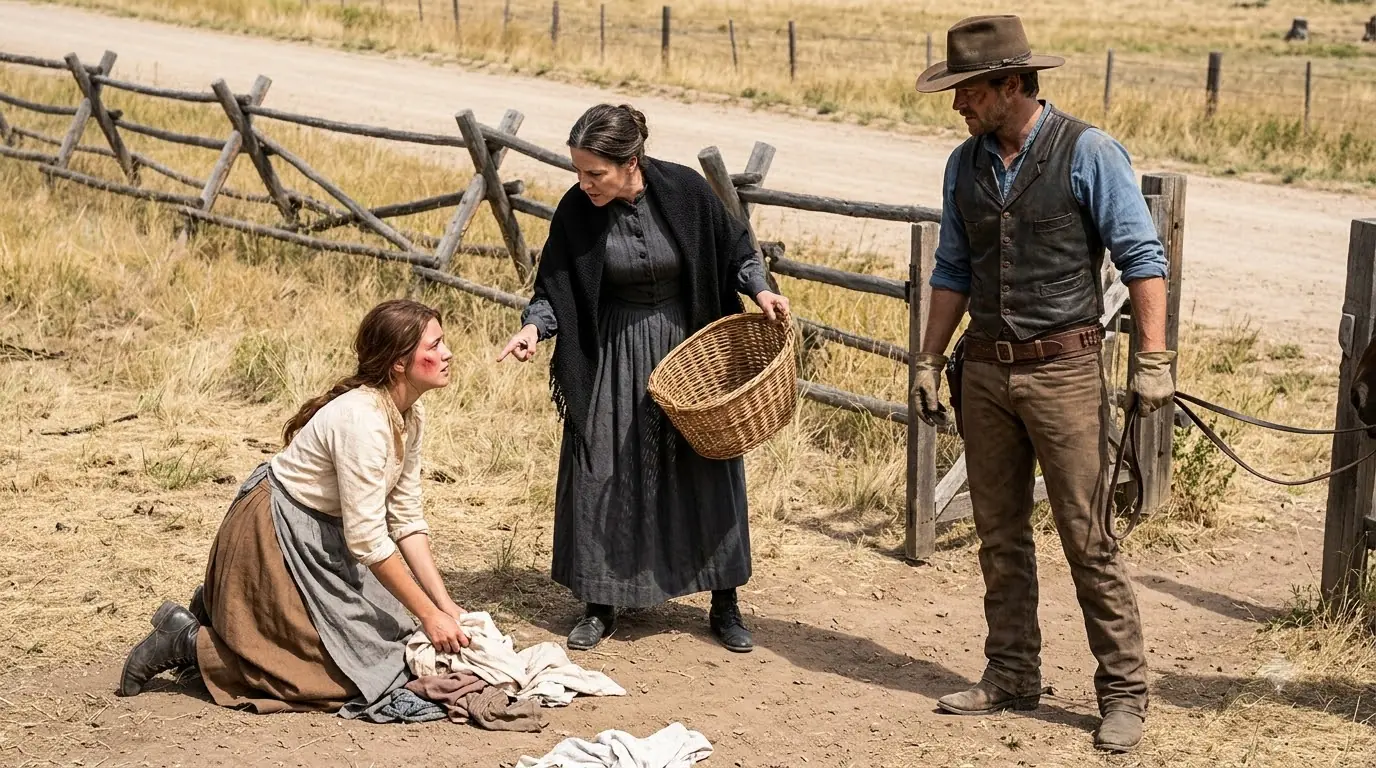
Before the sun rose fully over Briarcliff, Colorado, Josephine Merrick would be gone, and she would not be coming back.
The summer of 1883 had settled over Briarcliff like a debt come due, dry and heavy, and impossible to argue with. Josephine was 23 years old, and she had never once fallen asleep without listening for footsteps on the stairs.
She knew her mother’s walk the way other women knew scripture, not out of love, but because a person learns fast what keeps them safe. The dragging left heel. The particular creak of the fourth step when anger walked instead of tiredness.
That morning she was awake long before the footsteps started. She stood at the stove stirring a pot of oats that neither of them would enjoy, because stirring gave her hands something honest to do, and idle hands in that house were an invitation. Adeline Merrick came down at 6:00.
She had been a handsome woman once, people in town still said so, the way folks mention a storm that passed through years back and left the fences down. Josephine had never seen proof of that beauty. She had only ever seen what the years, and something colder than years, had carved it into.
“You let it burn,” her mother said before she’d even crossed the kitchen.
The oats were pale and smooth. Josephine looked at them and said nothing because she had learned too many times that the truth cost more in this house than silence did. The blow came anyway, an open palm against the side of her head, sharp enough to ring in her ear. She did not flinch. Flinching only ever invited the next one sooner.
“No, Mama,” she said quietly, setting the spoon down with great care. “I won’t speak to you like that again.”
She meant it differently than her mother heard it. The decision had been building for years, the way water wears down stone, not in one strike, but in ten thousand small ones. Sometime before dawn that morning, the last piece had given way. She only needed to get through breakfast.
Briarcliff was not a cruel town by design. It was cruel the way small places often are, through the comfort people take in someone else staying at the bottom. Josephine’s father had left when she was nine, and nobody spoke of why. The kind version was that he’d gone west for work. Her own version, the one she never said aloud, was that he had chosen to survive, the same as she was choosing now, only earlier and with less shame about who he left behind.
She worked mornings at the dry goods counter in town, keeping the ledgers in her small, careful hand. It was the one thing anyone had ever praised in her. The shop owner never asked why she wore high collars in July heat, and she never told him. She had one friend in Briarcliff, if friend was the right word. Nell Ashby, wife of the telegraph man, had once pressed a small bottle of arnica salve into her palm without a single word about why it was needed.
That morning, Josephine walked into the post office not for a letter, but to see if she could say out loud what she meant to do before she did it.
“I’m leaving today,” she told Nell, both hands flat on the counter.
Nell went still, then asked where.
“North into the mountains. There was a ranch.” She’d seen the notice tacked outside the feed store two weeks back, a plain handwritten card asking for a cook and a hand for the summer. Sutter Ridge Ranch. Follow the north road nine miles to the fork, then west toward the ridge. She had read it three times and never forgotten a word.
Nell reached beneath the counter and slid a folded cloth holding a few coins and a small pocket knife. Josephine tried to refuse it.
“You’ll pay it forward,” Nell said, holding her eyes. “That’s how it works. Now go before your mother comes looking.”
Josephine took almost nothing else. A change of clothes, a blanket roll, her grandmother’s small Bible with its faded inscription inside the cover: “For Margaret, with love that does not end.” She left a note under the salt shaker that said only, “I have gone. Do not look for me.” Then she walked out the front door into a sun already high and merciless, with nine miles of packed dirt road ahead of her and no horse to carry her over it.
She had been walking 20 minutes when she heard hooves behind her. She did not run. Running only ever invited a chase. It was not her mother. It was old Otis Fairweather from the livery, 70 if he was a day, with the deep-lined face of a man who had spent his life in honest weather.
He looked at her, at the bag on her shoulder, at the fading bruise along her jaw.
“North road,” he said, not a question.
“Yes, sir.”
He chewed the inside of his cheek a moment, then said he had a mare that needed exercising and a reason to ride up past the ridge anyway.
“Climb up,” he said, “and stop arguing with an old man who’s decided not to ask questions the answers are already plain about.”
She climbed up. The road rose steadily, the valley heat giving way to something thinner and cooler, pines thick and dark and smelling of resin. Somewhere in that climb her back straightened without her deciding it should.
“Man up at Sutter Ridge,” Otis said after a while. “Gideon Sutter. Fair man, private. Lost his wife and both his children to fever some years back. Runs that place alone since.”
He glanced sideways at her. “That notice of his has gone up and come down three times this summer. Pulled it down twice himself. I think he wants the help and can’t quite believe someone decent would come for it.”
Josephine held that thought the rest of the ride.
The ranch appeared from the ridge trail all at once, a wide green shelf of land cut by a creek, timber on two sides and open mountain on the third. A well-built house, a barn, a kitchen garden doing better than she expected from a man alone. Otis let her off at the top of the lane and told her, not unkindly, that she had more grit than she knew before he turned his horse and rode back the way he’d come.
She walked down alone. Gideon Sutter was mending the corral fence and did not hear her until she was nearly on him because he had stopped expecting the sound of footsteps in his yard three years ago. When he straightened and saw her, he went very still.
He was younger than she’d pictured, perhaps 35, broad through the shoulders, his face shaped by outdoor work and some private, guarded weather she couldn’t yet name. He looked at her bag. He looked at her face, and something in his own expression did not change, though she felt herself being read all the same.
“That notice came down two weeks ago,” he said.
“I know. I memorized it first.”