Clare Dawson arrived at Stonegate Medical Center at 6:47 on a gray Oregon morning, thirteen minutes before her shift officially began. She carried a cold cup of coffee, six unanswered incident reports, and the exhaustion of a woman who had spent twenty-three years catching mistakes before they became funerals. The emergency department smelled of antiseptic, stale air, and the tension of too many patients waiting for too few beds. Before Clare reached the nurses’ station, she noticed three warning signs that no administrator had bothered to address.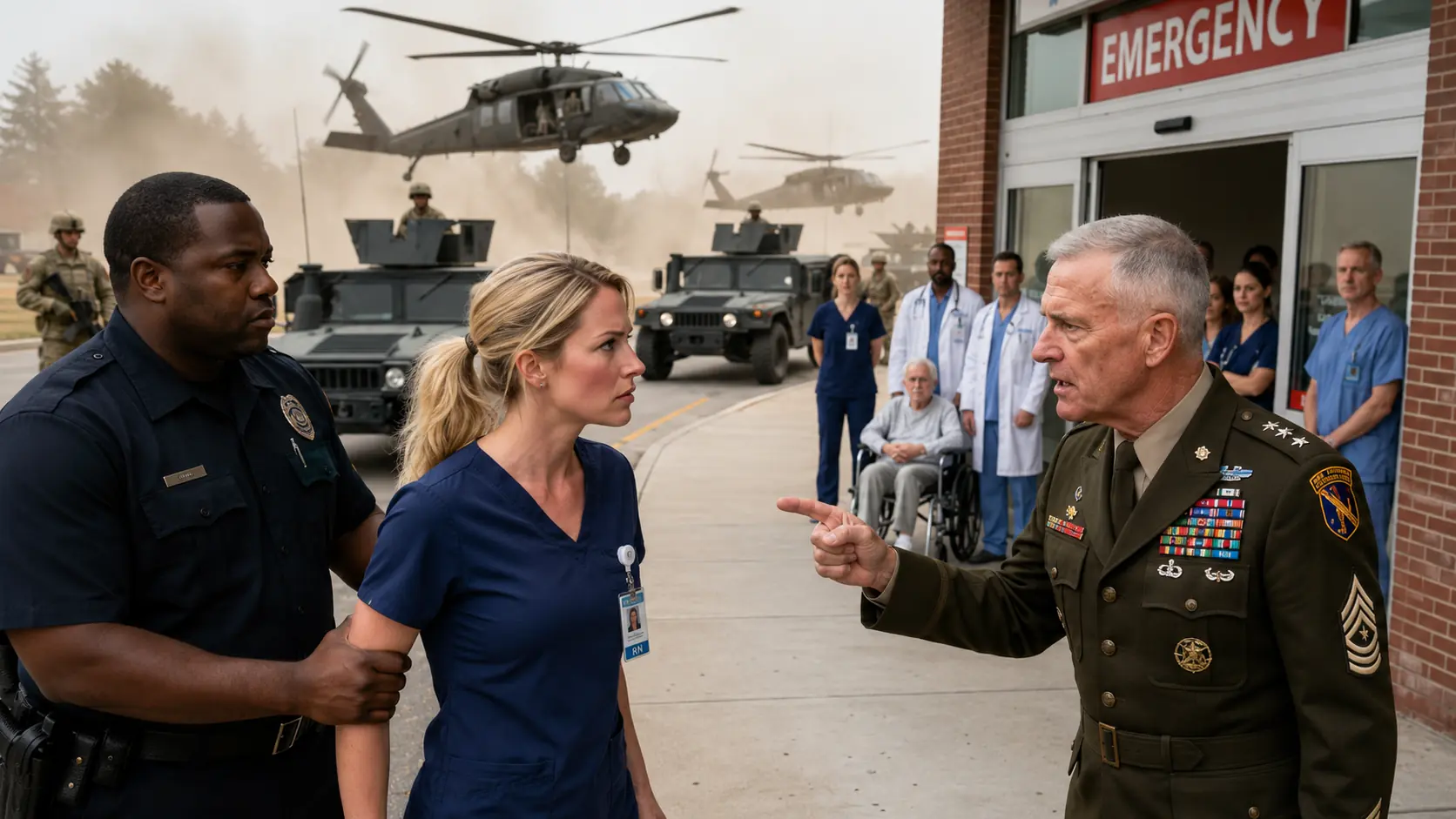
A sixty-seven-year-old woman with chest pressure had been classified as an anxiety case without a complete cardiac workup. A frightened mother had waited six hours for a pediatric consultation because the request had been entered into the wrong field. Two overnight nurses had managed fourteen high-acuity patients during the most dangerous hours of the shift. Clare corrected what she could, documented what she could not, and added another page to the growing record she had been building for six weeks.
Priya Shah, the overnight nurse, watched Clare finish the cardiac note.
“Director Merritt came in early.”
Clare stopped writing for half a second.
“How early?”
“Before eight.”
Harlon Merritt never arrived before ten unless lawyers, donors, or inspectors were involved. He was a polished hospital director in his mid-fifties with silver hair, expensive suits, and the controlled smile of a man who believed calm language could make any cruelty sound reasonable. Clare had filed reports concerning missing medication records, falsified acuity levels, unsafe staffing, and patients discharged too early to create space. Merritt had answered none of them.
His voice appeared in the corridor behind her.
“Miss Dawson. I need a word.”
Clare finished the sentence she was writing before turning.
“I’m documenting a patient concern.”
“It can wait.”
“The patient already waited six hours.”
Merritt’s smile tightened.
“This won’t take long.”
He led her into the small conference room normally used for family notifications. Two administrative employees entered behind him, one carrying a tablet and the other standing silently near the door. Clare remained on her feet. She had attended enough disciplinary meetings to understand that the seating arrangement was part of the performance.
Merritt folded his hands.
“We’ve reviewed your recent submissions.”
“All six?”
“Yes.”
“Then why has nobody responded?”
“Because the reports are creating unnecessary exposure during a funding review.”
Clare stared at him.
“Medication irregularities are not exposure. They are evidence.”
“You are using inflammatory language.”
“I am using accurate language.”
Merritt explained that outside auditors had begun asking questions and that repeated reports from a senior nurse could damage the hospital’s position. He called the staffing failures temporary and described the medication records as clerical discrepancies. Clare reminded him that one patient had received the wrong dosage after a dispensing log was altered. Merritt’s expression remained smooth, which told her he had decided the outcome before she entered the room.
“I want you to withdraw the reports,” he said.
“No.”
His eyes hardened.
“Think carefully.”
“I have.”
“You have a long career here. A good reputation, mostly.”
“Mostly?”
“There was the incident fourteen months ago.”
Clare remembered it perfectly. An elderly patient had been discharged under administrative pressure despite her warning that his symptoms were unstable. He suffered a cardiac event at home that night, and the hospital responded by placing a reprimand in Clare’s file for challenging the discharge decision. The patient survived, but the policy remained.
“The reports stay,” Clare said.
Merritt looked at the two administrators.
“Then you are suspended from clinical duties pending review.”
“On what grounds?”
“Insubordination, disruptive conduct, and creating a hostile environment.”
Clare almost laughed.
“I filed patient-safety reports through the proper channels.”
“The characterization is at my discretion.”
“No. The retaliation is at your discretion.”
His face finally changed.
“Security will escort you out.”
The removal was designed to be seen. A guard named Thomas Faulks walked beside Clare through the emergency department while nurses, residents, patients, and orderlies watched. She collected her jacket, water bottle, and a photograph from the back of her locker. Priya stood behind the station with pain in her eyes but said nothing.
Clare understood why.
Merritt’s system survived by making resistance expensive.
At the emergency doors, he handed her badge to an administrator.
“Your access is suspended immediately.”
“You’re making a mistake.”
“We will manage without you.”
“I wasn’t talking about me.”
Merritt gave her the same empty smile.
“We’ll manage the patients.”
“We’ll see.”
Outside, the sky looked like old concrete. Clare stood near the ambulance bay with her jacket over one arm and her phone in the other. She called her union representative, left a message, and tried to decide whether to contact an attorney or the state licensing board first.
Then she heard the impact.
A deep metallic crash rolled across the neighborhood, followed by several smaller collisions. Black smoke rose beyond the trees near the freeway interchange. Clare turned toward the road as emergency sirens began in the distance.
A broken radio transmission came through the hospital speakers.
“Multiple casualties. Federal transport involved. At least four critical.”
The message dissolved into static.
Clare pushed through the emergency doors.
The department had already shifted into crisis mode. Charge nurse Marcus Webb was clearing beds while physicians studied incomplete dispatch information. Every radio inside the hospital had stopped working, and the mobile network was failing beneath the sudden volume of calls.
Merritt emerged from the administrative corridor.
“Miss Dawson, you are not authorized to be inside.”
“How many trauma physicians are on the floor?”
“That is no longer your concern.”
Marcus answered before Merritt could stop him.
“Two. One is post-call.”
Clare looked toward the ambulance bay.
“You’re about to receive several high-speed trauma cases with two physicians and no reliable communication.”
Merritt pointed at the exit.
“Security.”
Before anyone moved, the sound of rotor blades shook the windows.
Five helicopters descended over Stonegate Medical Center in tight formation. Dust swept across the parking lot as armored vehicles appeared at the end of Harrove Avenue. Doctors and patients moved toward the glass doors, staring at the scene in disbelief.
The first vehicles stopped near the ambulance bay.
Uniformed personnel jumped out carrying stretchers.
The leading patient was a broad man in his forties whose formal uniform had been cut open across the chest. His skin was pale, his breathing shallow, and blood darkened the blankets beneath him. Captain Elena Reyes followed the stretcher into the emergency department.
“This is Colonel Voss,” she announced. “Primary impact position. Loss of consciousness during transport. Who is your senior trauma specialist?”
A tired attending physician stepped forward.
“I’m Dr. Finn.”
Reyes looked at a tablet.
“Where is Clare Dawson?”
Silence moved through the department.
Clare stepped into view.
“I’m here.”
Reyes studied her street clothes and missing badge.
“You are listed as Stonegate’s most experienced trauma clinician.”
“I was suspended forty-five minutes ago.”
“By whom?”
Merritt approached.
“I am the hospital director. Miss Dawson is no longer authorized to treat patients.”
Reyes turned toward him.
“Four critically injured personnel are entering this department.”
“Our existing staff will manage.”
Clare looked at Voss’s monitor.
His pressure was falling.
Reyes stepped closer to Merritt.
“Move, Director.”
“You do not command this hospital.”
“No, but I control emergency medical authority for these patients.”
Merritt signaled the security guard.
“Remove her again.”
Reyes moved between Clare and the guard.
“Take your hands off her.”
The confrontation froze when another commander entered through the ambulance doors. Brigadier General Paul Okafor pointed toward Clare.
“You blocked my extraction order and touched federal business, nurse. Move now before I have you thrown off this entrance.”
Clare did not retreat.
“Your fake order nearly killed my patient.”
The general’s eyes narrowed.
“One more word, and you’re finished.”
Clare lifted her chin.
“Try it. Then explain the forged signature.”
Everyone near the doors went silent.
Clare had seen the transfer form attached to Voss’s records. The signature authorizing immediate removal from Stonegate was wrong. The date format was inconsistent with federal paperwork, the routing number belonged to a discontinued system, and the medical authorization had been copied from another patient.
General Okafor took the document from her.
“Who gave you this?”
“It arrived with the transport file.”
He examined the signature.
“This is not mine.”
“That’s what I said.”
Merritt interrupted.
“This is wasting valuable time.”
Clare looked toward Voss.
“His abdominal pressure is rising. Possible internal bleeding behind the left kidney. If we move him again before imaging, he may not survive the trip.”
Okafor studied her for one hard second.
“Treat him.”
Merritt objected.
“She is suspended.”
Okafor faced him.
“Not from this case.”
Clare moved immediately.
Inside Trauma Bay One, the conflict outside disappeared. Voss became the only problem that mattered. Clare directed the team through imaging, vascular access, pressure monitoring, and blood preparation with the exact language of someone who understood that wasted words could become lost seconds.
The first scan confirmed internal bleeding, but it also revealed something more dangerous. A slow hemorrhage behind the left kidney was expanding toward a major vessel. Clare ordered a vascular surgeon called in and refused a premature transfer to the operating room until she had stabilized Voss enough to survive anesthesia.
Dr. Renata Hollis arrived twenty minutes later.
“You found this?”
“Yes.”
“How?”
“The pressure pattern didn’t match the visible wounds.”
Hollis reviewed the images.
“You’ve done vascular trauma before.”
Clare pulled on a surgical gown.
“Some.”
The operation lasted ninety-one minutes. Hollis repaired the primary vessel while Clare identified a smaller secondary bleed hidden behind damaged tissue. Voss’s blood pressure stabilized only after both injuries were controlled.
When Clare left the operating room, Captain Reyes was waiting.
“He’ll live,” Clare said.
Reyes closed her eyes briefly.
“Good.”
Then she handed Clare a sealed file.
“We ran your complete credentials before arriving.”
Clare did not take it.
“My civilian record?”
“Both records.”
Reyes explained that Clare had spent fourteen years as a combat trauma specialist before entering civilian medicine. She had managed field hospitals during multiple deployments, received two decorations, and left service without mentioning any of it to Stonegate. Clare had wanted her civilian work judged without rank, reputation, or history.
“That record is not relevant here,” Clare said.
“It became relevant when the hospital director decided you were disposable.”
Across the department, investigators entered the administrative wing. They had already been traveling with the convoy to review Stonegate’s federal contracts. The crash had accelerated their arrival, but the investigation had begun eleven weeks earlier.
Special Agent Dana Forsythe met Clare on the third floor.
“We have copies of your reports.”
“How?”
“Someone inside Stonegate forwarded them.”
Clare thought immediately of Priya.
Forsythe opened a folder containing billing records, staffing schedules, and medication logs.
“Your reports match a pattern of deliberate fraud. Acuity levels were altered to justify reduced staffing while the hospital billed federal programs for services it did not provide.”
“Merritt knew?”
“He did more than know.”
Surveillance footage showed Merritt instructing administrators to intercept internal reports before they reached compliance reviewers. Staff members who continued filing were reprimanded, transferred, or pressured to resign. Clare’s suspension that morning had been intended to remove her before she could send the evidence elsewhere.
A sudden alert interrupted the meeting.
Someone in the billing department was attempting to delete eleven months of surveillance records.
Forsythe and Clare reached the office in time to find financial officer Brendan Quillin typing at a workstation. Agents pulled him away before the deletion finished. Merritt stood outside the door holding his phone, his face stripped of its usual control.
“You don’t understand the financial pressure this hospital was under,” he told Clare.
“You discharged unstable patients to protect numbers.”
“I was saving the institution.”
“You were saving yourself.”
Forsythe ordered him away from the office.
Clare’s pager sounded before Merritt could answer.
Sergeant Doyle, another casualty, had lost sensation in both feet.
Clare ran back downstairs.
Doyle had suffered a cervical injury that appeared stable during the first scan. A bone fragment had shifted, compressing part of his spinal cord. The hospital’s portable imaging unit had been broken for days, another maintenance failure hidden inside Clare’s unanswered reports.
Neurosurgeon Anika Patel reviewed the new scans.
“If we operate immediately, we may preserve function.”
“And if we wait?”
“The damage could become permanent.”
Doyle looked at Clare.
“What would you do?”
“I would operate.”
“Then tell them to start.”
The surgery removed the fragment. Seven hours later, Doyle moved both feet.
While he recovered, Voss developed a dangerous clot following abdominal surgery. Clare coordinated another emergency intervention, balancing the risk of internal bleeding against the threat to his lungs. The treatment worked, but only after his heart entered a severe irregular rhythm.
Clare remained beside the monitor until the rate slowed.
“Still alive?” General Okafor asked from the doorway.
“For now.”
“He asked for you before sedation.”
“He needed a nurse.”
“He needed the right nurse.”
By evening, federal investigators had arrested Quillin and seized Merritt’s communications. The altered transfer order had been created to remove Voss from Stonegate before he regained consciousness. Investigators believed he carried audit evidence exposing the hospital’s billing fraud.
The convoy crash was not accidental.
Someone inside Stonegate had changed the route through a construction corridor, hoping to delay or destroy the federal review materials. Quillin’s credentials had been used, but further evidence connected the decision to Merritt and an outside contractor named Victor Aldris.
Four people had nearly died to protect a financial scheme.
At 8:47 that night, Merritt was escorted through the hospital’s main entrance by federal agents. He passed the same waiting chairs where Clare had been walked out hours earlier. Patients, nurses, and orderlies watched him leave in silence.
Clare was not there.
She was checking Voss’s cardiac monitor.
Three weeks later, the investigation became public. Prosecutors charged Merritt, Quillin, Aldris, and several others with fraud, obstruction, falsification of medical records, retaliation against protected staff, and reckless endangerment.
Stonegate’s administration was dissolved.
Every disciplinary action connected to suppressed patient-safety reports was reviewed. Four clinicians who had resigned under pressure received corrected employment records and formal invitations to return. The unsafe bed-pressure discharge policy was suspended permanently.
Clare’s reprimand disappeared from her file.
So did her suspension.
Deputy Director Hargrove offered her the position of interim Director of Emergency Clinical Operations.
Clare did not accept immediately.
“I want mandatory staffing minimums written into the charter.”
“Agreed.”
“I want safety reports to reach the oversight board directly.”
“Agreed.”
“I want a response deadline that administrators cannot ignore.”
“Agreed.”
“And every employee who filed reports during Merritt’s tenure gets written confirmation that the retaliation was unlawful.”
Hargrove nodded.
“That can be done.”
“Then I’ll take the job.”
Six weeks after the helicopters arrived, Stonegate held a formal ceremony inside its auditorium. Clare expected a briefing and found ninety people waiting. Voss, Doyle, and the other recovered patients sat near the stage.
Doyle walked without assistance.
Voss stood carefully and faced the room.
“This woman is the reason I am standing here.”
Clare wanted to deflect the statement, but she did not. She had spent years making herself smaller whenever someone praised her because praise felt dangerously close to being noticed. That day, she allowed the truth to remain in the room.
When she was invited to speak, she stepped behind the microphone.
“I filed reports,” she said. “That is what started this.”
The room became quiet.
“The system was designed to make speaking more expensive than silence. It nearly succeeded.”
She looked toward Priya, Marcus, Yolanda, and the others who had worked beside her.
“The next person who sees something wrong should not need helicopters, investigators, or a building full of witnesses before anyone listens.”
Applause filled the auditorium.
Clare returned to the emergency department afterward.
She opened the locker she had emptied six weeks earlier and taped the old photograph back inside. Then she clipped her restored badge to her navy scrubs.
The department was still busy.
Patients still waited.
The work was still difficult.
But the overnight shift had enough nurses. The communication system worked. The broken equipment had been repaired. Every safety report now moved directly to an independent board with a required response deadline.
Clare closed the locker and walked onto the floor.
Stonegate had tried to silence her because she refused to stop documenting the truth.
Instead, her reports became the foundation of the case that exposed the hospital.
Merritt believed removing one nurse would make the evidence disappear.
He was wrong.
Clare Dawson had spent twenty-three years protecting patients from mistakes people preferred not to see.
Now she finally had the authority to protect the people brave enough to report them.