Look, I didn’t think I had done anything wrong.
I had missed one date and had dinner with my boss. That was all. But then I came home and found legal papers waiting on the kitchen table.
Now everyone thinks I betrayed him.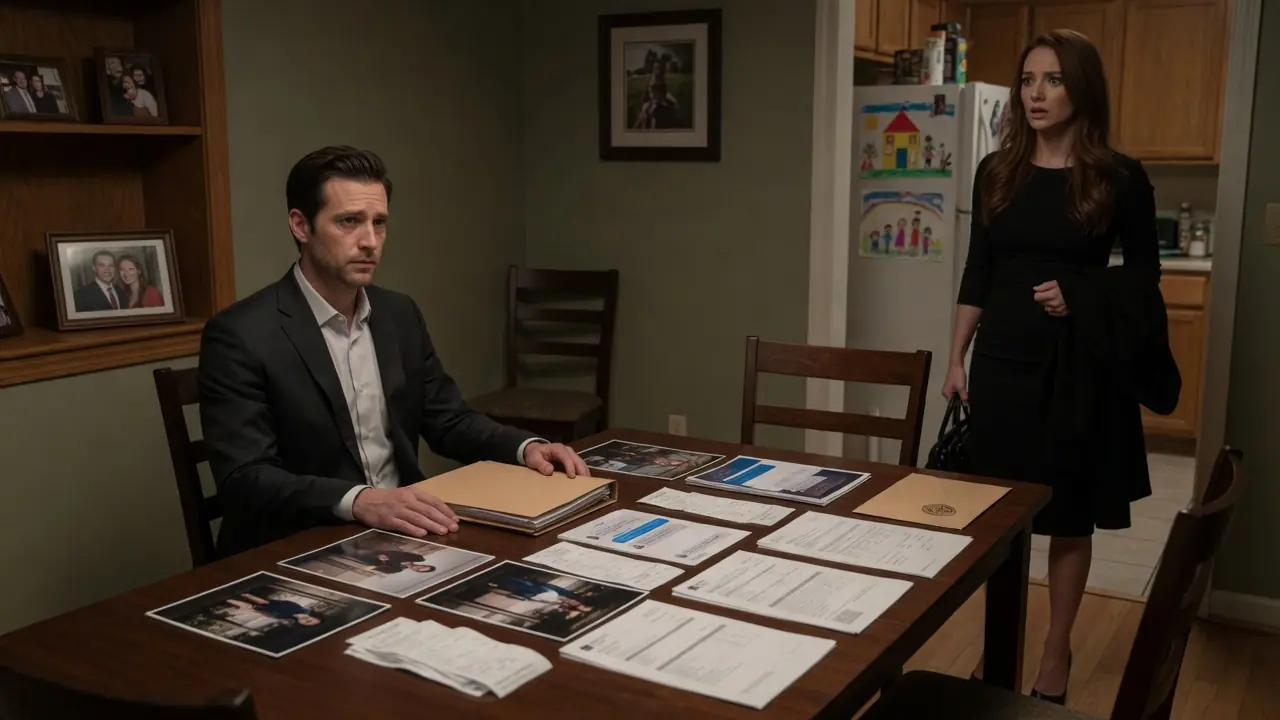
And Caleb is the one walking away with his dignity intact.
I did not think forgetting an anniversary was the end of the world. People forget birthdays, dinners, even weddings, and life goes on. That was what I told myself when I left the house that night, while my husband Caleb sat at home waiting with some silly meal he had planned.
He had been mentioning it all week, saying he wanted to make something special. He had even taken the day off work, which, in my mind, was dramatic.
Meanwhile, my boss, Deacon, had invited me to dinner downtown. Not just dinner, but an opportunity. He said we could talk about new roles, about how he saw potential in me beyond just being the reliable office manager.
I could not just say no.
What woman in my position would say no?
Caleb texted me earlier that day, asking if I would be home by six. I wrote back that work was running late. It was not a lie exactly, just a softer version of the truth.
He did not respond, which I figured meant he understood.
That evening, I stood in front of the mirror, smoothing my black dress, telling myself it was harmless. My sister Clara had once told me men did not even care about anniversaries. She said women were the ones who built them up and men just went along.
I repeated that thought in my head as I left the house, ignoring the flowers Caleb had set on the table near the door.
They were lilies, my favorite.
Instead of making me feel guilty, they made me roll my eyes.
He always did that sort of thing, like he was overcompensating for being so ordinary.
The restaurant Deacon chose was one of those sleek places with glass walls and waiters who spoke in low tones. He ordered wine before I even sat down. He told me I looked stunning, that my dedication was rare, that most women in the office would never stay as late as I did.
I laughed and told him my husband was supportive of my career.
Inside, I knew I was bending the truth.
Caleb supported me, but he always made those quiet comments about missing dinner together or asking why I needed to be available after hours.
Deacon leaned in and said I had the drive of someone who could run her own team. I felt lightheaded, not just from the wine, but from the attention.
While Caleb was probably plating some steak or pasta at home, I was sipping red wine under soft restaurant lights and being told I could be more.
My phone buzzed on the table.
It was a photo from Caleb.
A candlelit dinner for two. Two plates waiting. His message was short.
“Happy anniversary, Izzy.”
I did not reply.
Instead, I flipped the phone face down and told Deacon about a new system I wanted to implement at the office. He nodded like I was brilliant.
When the bill came, Deacon slid his card over without even glancing. He said I deserved to be celebrated.
Walking out of that restaurant, I told myself Caleb would understand if I explained later.
After all, it was just a meal.
He had the whole year with me.
One night did not erase that.
But when I opened the front door past ten, the house felt strange.
Quiet.
Heavy.
The smell of charred steak lingered in the air. The table had been cleared except for two glasses of wine, one untouched.
In the kitchen trash bin, I saw food scraped off plates, still warm.
Caleb sat in the living room without the TV on. He did not look at me.
I said I was sorry work had run late.
He said nothing.
He just leaned back, his face unreadable.
I added that Deacon had insisted on discussing projects and I could not leave early.
Still silence.
That infuriated me.
I told him he was being childish, that anniversaries were symbolic but not essential. He finally asked why I had not even sent a text.
He stood up and walked past me into the bedroom.
No shouting.
No scene.
That was worse somehow.
The next day, his mother called.
Marjorie said she heard I had not shown up for our anniversary dinner and asked if I was sick.
I told her Caleb must have exaggerated, that we had only had a minor scheduling issue.
She went quiet before saying Caleb deserved better.
I laughed and said, “Men don’t even remember anniversaries unless someone reminds them.”
She hung up without another word.
Clara texted me later, saying I was right to go out. She said Caleb needed to grow up and stop making everything about his feelings.
That made me feel vindicated.
I told myself I was not cruel. I was practical.
When I returned home that evening, Caleb had eaten leftovers alone. I tried to sit beside him and talk, but he only said he was tired.
His silence was a wall, and I hated it.
I told myself he was sulking like a child and that eventually he would snap out of it.
But I could feel it even then.
Something had shifted.
The untouched glass of wine still sat on the counter, dust already settling on the rim, like a quiet reminder that he had waited and I never came.
At work, everything felt easier than it did at home. Deacon greeted me in the mornings with a wide grin, asked how I was doing, and made me feel like my presence mattered.
I soaked it up.
Caleb, on the other hand, had barely spoken to me since that night. He moved around the house like a ghost, always polite but cold, and it irritated me more than if he had just shouted.
I told myself he was sulking to punish me.
Honestly, it just made him look weak.
During lunch in the break room, one of my co-workers asked how my anniversary had gone. I laughed and said Caleb had tried to make a big deal about it, but I was too busy working late with Deacon.
They laughed politely.
I added that Caleb could be dramatic sometimes, acting like dinner at home was more important than my career.
Someone asked if he was upset, and I shrugged.
I said he should be proud his wife was impressing the boss.
The more I said it, the more it felt true.
Later that week, Deacon invited me and a few colleagues out for drinks. It was casual, but I could see how people watched the way he paid me more attention.
When someone joked that Deacon clearly valued me more than anyone, I smiled and did not deny it.
I even said Caleb sometimes got jealous because I spent more time at the office than with him.
The table chuckled, and I added that Caleb was not exactly the exciting type.
I called him reliable, predictable, safe.
Words that sounded like compliments, but were daggers underneath.
It felt good, honestly, to play the role of the ambitious woman with a boring husband at home.
I knew Deacon liked it too.
At home, things did not improve.
Marjorie dropped by unannounced with some soup. She looked around the house and then at me, asking if I was too busy with the boss again.
Her tone was sharp.
I laughed and said Caleb had been oversharing and that she should not believe everything she heard.
I told her men exaggerate when they feel ignored.
She gave me this long look that made me feel judged.
I went straight to Clara afterward and vented. Clara said I was right, that Caleb was acting insecure, and that men who could not handle ambitious wives were stuck in the past.
She told me to keep doing what I was doing.
I believed her because it was easier.
But even Clara frowned a little when I told her about the dinner Caleb had thrown in the trash.
At a family dinner the next weekend, the cracks widened.
Caleb sat stiffly at the table, barely eating. My father asked why he looked so tense.
I laughed and said he was still upset about our anniversary and that he wanted me chained to the stove instead of out building a career.
Caleb’s jaw tightened, but he did not say anything.
Clara nodded quickly, saying, “Exactly. Izzy deserves her own life.”
My mother frowned but stayed silent.
Then Marjorie, who had been quiet all evening, suddenly said Caleb was not upset about food. He was upset about respect.
She said I had humiliated him.
Everyone froze.
I smiled sweetly and said she was overreacting, that Caleb was sensitive and needed to toughen up.
I said it like a joke.
No one laughed.
Caleb looked down at his plate, his shoulders heavy.
The silence was suffocating.
To break it, I added that Deacon appreciated me in ways Caleb never did, in how he listened to my ideas.
That was when I saw Caleb’s hand clench around his fork.
For the first time in a long while, he looked directly at me.
There was no anger.
Just this blank emptiness.
It chilled me.
Later that night, when the guests were gone, he asked quietly why I had to mention Deacon in front of everyone.
I told him I was just being honest, that people deserved to know he was not as exciting as I once thought.
He did not respond.
He just went to the bedroom and closed the door.
I felt both annoyed and triumphant.
Annoyed because he would not argue.
Triumphant because I felt like I had proven my point.
He could not even defend himself.
The next day at work, I recounted the story to Deacon, making it sound like Caleb was overreacting.
Deacon smirked and said some men could not handle strong women.
His validation felt like oxygen.
That evening, Caleb did not join me for dinner. He ate alone in the kitchen, silent while I watched TV.
I told him he was being childish and that he should get over himself.
He finally asked if I was in love with Deacon.
I laughed, told him not to be ridiculous, and said he was paranoid.
He stared at me for a long time before walking away.
That look, the same empty one from the dinner table, stuck in my mind even as I brushed it off.
I told Clara about it later. She said Caleb was just jealous, and that jealousy meant he cared.
I clung to that explanation.
But deep down, I wondered why his silence felt heavier than words, why it felt like something was cracking under the surface, something I did not fully see.
The following weekend, we were at another family dinner when everything shifted again.
I joked about Caleb’s moodiness, saying he was brooding like a teenager.
But this time, he did not just sit there.
He stood, pushed his chair back, and walked out of the house without a word.
The sound of the door closing made the whole table go quiet.
Everyone stared at me.
Marjorie whispered, “You don’t even realize what you’re doing.”
For the first time, I could not think of a single clever reply.
The night Caleb walked out of that dinner, I told myself he was being dramatic. I laughed it off in front of everyone and said he just needed some air.
Inside, though, there was a twist in my stomach I did not want to acknowledge.
He came home late, long after Ella was in bed, and did not say a word.
He slept on the edge of the mattress like a stranger.
In the morning, he left before I woke.
That should have been my cue to soften, to bridge the gap.
Instead, I decided to double down.
If he wanted distance, fine.
I had Deacon.
At the office, Deacon asked how things were at home.
I sighed and said Caleb was sulking, that he could not handle the fact I was valued outside the house.
Deacon chuckled and said, “Some men prefer their wives small, contained, not shining.”
The way he said it made me feel vindicated.
That week, I started staying later at work. At first, it was just an extra hour. Then two. Soon, I was practically living in Deacon’s office.
He would order takeout for us, and we would laugh over wine while the building emptied.
I told myself it was harmless.
It was not like anything physical had happened yet.
Just dinners.
Conversations.
A touch on the arm that lingered.
But then one Friday, he asked if I wanted to continue our discussion somewhere more private.
I hesitated only for a second before nodding.
His apartment was sleek and impersonal, nothing like my home. He poured drinks and told me I deserved to be appreciated.
I told myself it was innocent.
But I knew it was not.
When I finally came home past midnight, Caleb was still awake, sitting in the living room with his laptop.
He asked where I had been.
I said Deacon needed help finishing reports.
He asked why I had not answered his texts.
I snapped that my phone had died.
His eyes stayed on me for a long time before he closed the laptop and went to bed.
That silence was worse than shouting.
The next morning, Ella would not look at me.
She sat at the table with her cereal, and when I tried to ruffle her hair, she leaned away.
Caleb noticed but did not say anything. He just kissed her forehead and left for work on a Saturday, which was unusual.
Clara came over later, and I told her Caleb was being paranoid, that he had even asked where I was the night before like I was a teenager sneaking out.
Clara rolled her eyes and said all men were controlling.
She said I should be glad Deacon appreciated me.
Her words soothed me, but only for a moment.
That evening, Caleb came home with a quiet expression I could not read.
He asked if I was happy.
I said, “Of course. Why wouldn’t I be?”
He asked if I was being honest.
I laughed, called him paranoid again, and told him he was making problems where none existed.
He did not argue.
He just nodded slowly, like he was filing something away.
Days passed like that, with me floating on Deacon’s attention and Caleb retreating further into himself.
At work, Deacon started dropping hints about how much better I could do, about trips he wanted me to join him on. I did not say yes or no. I just smiled and let the flattery wash over me.
At home, Caleb barely spoke.
Dinner was quiet. Ella played with her food while Caleb asked her about school, and I scrolled my phone.
I felt annoyed at the dullness of it all, especially after laughing with Deacon all day.
One evening, Caleb asked if I could stay home instead of working late.
I told him Deacon depended on me.
He asked why Deacon needed me every night.
I said it was called ambition, something he would not understand.
His face went blank again.
That night, I went to Deacon’s apartment without even pretending it was work-related.
I told myself it was just dinner, but when I returned, Caleb was awake again, sitting at the kitchen table with a folder of papers.
He closed it quickly when I walked in.
I asked what it was.
He said, “Work.”
I did not believe him, but I pretended I did.
The folder stayed on my mind.
Later, when he went to shower, I peeked inside.
Receipts.
Screenshots.
Notes.
I shoved it closed before he came back, my heart pounding.
I realized then that he was not just sulking.
He was watching.
Gathering.
But instead of stopping, instead of pulling back, I told myself he was bluffing, that he would not dare do anything drastic.
He loved me too much.
I used that thought to calm my nerves.
But when I crawled into bed that night, he was already turned away from me, breathing steadily, like he had built a wall I could not climb.
I closed my eyes and told myself he would get over it.
He always did.
Still, I could not shake the image of that folder sitting heavy on the table, waiting like a storm.
The family gathering was supposed to be ordinary, just Sunday dinner at my parents’ place with everyone around the long oak table.
But the tension came with us like a shadow.
Caleb drove in silence, one hand on the wheel, eyes fixed ahead. Ella sat in the back, humming softly to herself as if she was trying to fill the silence.
I scrolled through my phone, texting Clara about a new dress I had ordered, pretending nothing was wrong.
When we arrived, Marjorie was already there. She sat near my mother, her posture stiff, her lips pressed tight.
I knew she was waiting to pounce.
Part of me welcomed the fight.
At least it would break Caleb’s silent routine.
Over dinner, conversation started light. My father asked Caleb about work. Caleb answered briefly, then fell quiet again.
The silence irritated me, so I filled it with chatter about Deacon, about how he praised my efficiency, how he said I was the backbone of the office.
Clara laughed and said Caleb should be proud to have such a competent wife.
I smiled, feeling triumphant.
But Marjorie’s eyes narrowed, and she asked why I had to bring up Deacon in every conversation.
I told her she was paranoid, that Deacon was simply my boss, and that it was natural for me to mention him.
Caleb sat there chewing slowly, not defending me or himself.
I turned it into a joke, saying some people could not handle modern marriages where women worked late and had male colleagues.
My father frowned.
My mother looked down at her plate.
Ella pushed peas around with her fork.
I kept talking because silence felt worse.
Clara backed me up, saying men who could not handle ambitious wives were insecure.
Marjorie snapped then.
She said Caleb was not insecure. He was humiliated. She said I was the one dragging him through the mud.
The room went cold.
I laughed too loudly and said, “Maybe Caleb should toughen up.”
Everyone stared at me.
No one laughed.
Caleb’s face was unreadable, but I saw the muscle in his jaw tighten. He set down his fork and looked at me, not with anger, but with something emptier and heavier.
I shifted in my seat, uncomfortable, but I would not back down.
Instead, I said, “People should be grateful I’m noticed at work. Not every wife has that kind of recognition.”
Marjorie muttered that respect at home mattered more than flattery from strangers.
I snapped that respect went both ways, and Caleb gave me none when he sulked like a child.
Then Ella suddenly said she wanted to go home.
Her small voice cut through the tension like a knife.
My mother tried to distract her with dessert, but Ella shook her head, staring at her plate.
Caleb stood then, his chair scraping loudly.
He did not say anything.
He just walked out of the dining room, grabbed his coat, and left the house.
The slam of the door echoed in the hallway.
Everyone turned to look at me.
My father cleared his throat and asked what had just happened.
I shrugged and said Caleb was overreacting, that he could not handle a strong woman.
No one replied.
Clara touched my arm under the table, whispering that I should just ignore him, that he would come back once he cooled off.
But Marjorie leaned forward and said in a low voice, “You don’t even realize what you’ve done.”
I smiled like it did not matter, but inside, my chest felt tight.
I told myself Caleb was being theatrical, that he would be back in an hour, that he always came back.
But when we drove home later, the house was dark.
His car was gone.
On the kitchen counter, an envelope sat neatly, my name written in his clean, sharp handwriting.
My hands trembled when I picked it up, though I told myself it was just some note.
Maybe an apology.
Maybe a plea.
But the paper inside was not a letter.
It was a copy of a legal consultation receipt with his signature at the bottom.
My stomach dropped.
I shoved it back into the envelope as Ella wandered in behind me, asking if Daddy was home yet.
I told her he was just working late, my voice steady, though my heart pounded.
She nodded, unconvinced, and went to her room.
I sat at the table with that envelope, staring at it like it might burn through the wood.
Caleb was not sulking anymore.
He was not brooding in silence.
He was preparing something.
And I did not know what.
For the first time, I felt a sliver of fear cut through my certainty.
The next morning, Caleb did not come home.
His car was parked at his office when I drove by on the way to work, which told me he had not even bothered sleeping in our bed.
I told myself it was fine, that he would come back when he realized how foolish he was being.
At the office, I put on a bright smile and told Deacon everything was fine, but my hands shook when I typed.
Deacon noticed and asked if Caleb was giving me trouble.
I said Caleb was being insecure, that he was blowing things out of proportion.
Deacon just smirked and said, “Some men aren’t built for strong women.”
His calmness felt like a balm, so I let myself relax.
But when I got home that evening, Caleb was waiting at the dining table.
His suit was sharp. His tie was neatly knotted. In front of him sat a thick folder.
He looked at me the way a stranger might.
Polite.
Detached.
I asked if he was finally ready to talk.
He said he had already done the talking where it mattered.
Then he pushed the folder across the table.
Inside were photographs.
Me walking into Deacon’s apartment.
Me leaving late at night.
Receipts for restaurants.
Screenshots of messages I thought I had deleted.
My stomach dropped.
I demanded to know if he had followed me, spied on me.
He said he had not needed to. Everything he had gathered was legal, clean, and ready for presentation.
I tried to laugh it off.
I told him it did not mean anything, that Deacon and I were just close colleagues.
Caleb said judges did not usually buy those kinds of stories when there were timestamped records and eyewitness accounts.
His voice was steady.
Almost too steady.
Like he had rehearsed every word with a lawyer.
I called him paranoid. I told him he was ruining our family over nothing.
He asked if Ella deserved to grow up thinking her mother’s betrayal was normal.
That word, betrayal, stung.
I snapped back that he was twisting things.
He stayed calm and said he was not twisting anything. He was protecting his daughter and his finances.
He told me he had already spoken with an attorney and that papers would be drawn soon.
I felt my throat close.
I asked if he really wanted to drag his wife through court, if he wanted Ella to see us fight.
He said Ella would see stability because he intended to have primary custody.
I panicked then and accused him of trying to take my child away.
He just repeated that he was not taking her.
He was shielding her.
I shouted that Deacon meant nothing, that I still loved Caleb, that this was all being blown out of proportion.
He looked at me with tired eyes and asked why love had to be proven in Deacon’s apartment.
I had no answer.
He stood, said I should expect documents by the end of the week, and walked out with that same eerie calm.
When Clara heard, she told me to hold my ground. She said I should say Caleb was overreacting, that no court would side with him just because of dinners and texts.
But when I showed her the photos he had gathered, her voice faltered.
She said it looked bad.
Very bad.
My parents were quieter.
My father barely looked at me, and my mother only sighed and asked what had possessed me.
Marjorie, though, was triumphant. She said Caleb was finally doing what needed to be done.
Ella sensed everything.
She clung to Caleb when he came to pick her up for school, barely hugging me.
That night, I cried in my room, telling myself Caleb would not go through with it, that he was bluffing.
But the next morning, a courier arrived at the door with a sealed envelope.
Inside were official documents.
Petition for divorce.
Request for custody arrangements.
Financial disclosures.
My hands trembled as I read, each page filled with neat legal language that stripped away every excuse I had made.
He had moved faster than I imagined.
Already protecting his accounts.
Already laying out a case that painted me as reckless, negligent, unfaithful.
I wanted to scream, to call him cruel, but the evidence was right there in black and white.
That night, I sat alone at the kitchen table, staring at the legal papers while Ella slept in her room.
Caleb had been quiet for weeks, and I thought his silence meant weakness.
But it had been planning.
Every look, every unspoken word had been him building his case.
I realized then that he was not going to shout.
He was not going to beg.
He was not going to crumble.
He was going to erase me carefully, lawfully, piece by piece.
As much as I wanted to deny it, I could not shake the fear that he would succeed.
The court hearing came faster than I thought it would.
Caleb’s lawyer filed everything so quickly that I barely had time to find my own.
Clara told me to get someone aggressive, but even my attorney seemed unimpressed when I tried to explain that it was just dinners and late nights, that Deacon did not mean anything.
She said the photos, the messages, and the receipts all told a different story, and that the judge would not care about my intentions when the evidence was so clear.
Sitting in that courtroom, I felt like I was watching my own life through glass.
Caleb sat straight in his suit.
Calm.
Collected.
Not even glancing at me.
His lawyer spoke for him with precision, presenting the folder I had once seen on our kitchen table.
Photos of me walking into Deacon’s apartment at night.
Screenshots of texts where I told Clara I was with Deacon again.
Credit card statements with dinners charged late on work nights.
Security footage from the parking garage at work showing Deacon and me leaving together long after hours.
I wanted to scream that it was not what it looked like, that it was not serious.
But the judge did not need explanations.
He needed facts.
Caleb had them all.
My lawyer tried to frame it as a misunderstanding. She said nothing physical had been proven, but even I could hear the weakness in her voice.
Caleb’s lawyer countered calmly, pointing out patterns, timelines, and how I had gaslit Caleb whenever he asked questions.
That word again.
Gaslit.
He said it like a knife.
My chest burned as I listened.
The worst part was not the evidence.
It was Caleb’s composure.
He did not raise his voice. He did not glare at me. He did not show anger.
He answered questions quietly and respectfully, explaining that his goal was stability for Ella, that he wanted his daughter to grow up in a secure home.
When the judge asked him if he was seeking revenge, Caleb shook his head and said simply, “I just want peace for my daughter.”
The courtroom was silent after that.
I tried to look at Ella, sitting with Marjorie in the back, but she avoided my eyes.
My little girl, who used to run into my arms after school, now clung to her grandmother, her face pale.
My parents were there too.
My father’s jaw was tight.
My mother’s eyes were full of disappointment.
Clara sat beside me, glaring at Caleb like he was the villain, but I could feel everyone else’s judgment pressing down on me.
When it was my turn to speak, I said I loved my husband, that I never meant to hurt him, that Deacon was just a mentor.
My voice trembled, and the words sounded thin even to me.
The judge asked why, if it was so innocent, I had hidden it, lied about it, and mocked my husband publicly.
I had no answer.
I mumbled something about pressure, about needing recognition, but it sounded hollow.
The decision came down in a blur.
Temporary custody to Caleb.
Financial protection for him, with restrictions on my access to certain accounts.
The house would remain with him until further hearings.
I felt the floor tilt beneath me as the words sank in.
My lawyer whispered that I could appeal, but even she did not sound confident.
Caleb did not gloat.
He did not even look satisfied.
He just nodded, thanked the judge, and gathered his papers.
When the session ended, he walked past me without a glance.
Ella followed, holding his hand tightly.
She did not even say goodbye.
Marjorie gave me a look that said everything she had wanted to say for months.
My parents approached briefly. My father muttered that he hoped I learned something.
My mother touched my shoulder lightly but said nothing.
Only Clara tried to console me, whispering that Caleb was being cruel, that men always got away with this kind of thing.
But I knew that was not true.
He had not been cruel.
He had been methodical.
Lawful.
Deliberate.
Back at the house, the house that no longer felt like mine, I walked through the empty rooms.
Caleb’s things were gone.
His clothes.
His personal files.
Even the books he used to stack on the bedside table.
Ella’s toys were missing too.
Her drawings had been removed from the fridge.
The silence in the house was unbearable, louder than shouting.
On the kitchen counter, another envelope waited.
Inside was a list of dates and times for custody visits, all approved by the court.
Each line was neat, clear, final.
I sank into a chair and stared at it.
All my excuses, all my laughter, all my gaslighting, none of it mattered now.
Caleb had chosen not to fight me with words.
He had fought with proof, with patience, with law.
And he had won.
I tried to call him that night.
No answer.
I tried again the next morning, and the call went straight to voicemail.
I left a message saying we could work it out, that I still loved him, that Ella needed both of us together.
There was no reply.
Days passed, and nothing changed.
When I saw Ella at the first custody exchange, she hid behind Caleb’s leg, barely whispering hello.
My heart cracked, but Caleb did not comfort me or scold her.
He just guided her gently into the car and drove away.
I stood on the porch with my arms hanging useless at my sides, realizing the fight was over.
Not just the legal battle.
Everything.
Caleb had not yelled.
He had not broken things.
He had not sought revenge in anger.
He had dismantled my world piece by piece with evidence and silence.
Now he was gone with our daughter, with our home, with his dignity intact.
I was left with nothing but my excuses echoing in an empty house.