I only asked my daughter-in-law for one hundred dollars to buy heart medication.
She looked at me, then burst out laughing right there in the bank lobby.
I stood still like a beggar inside the walls of what used to be my family. I did not cry. I simply nodded and walked away.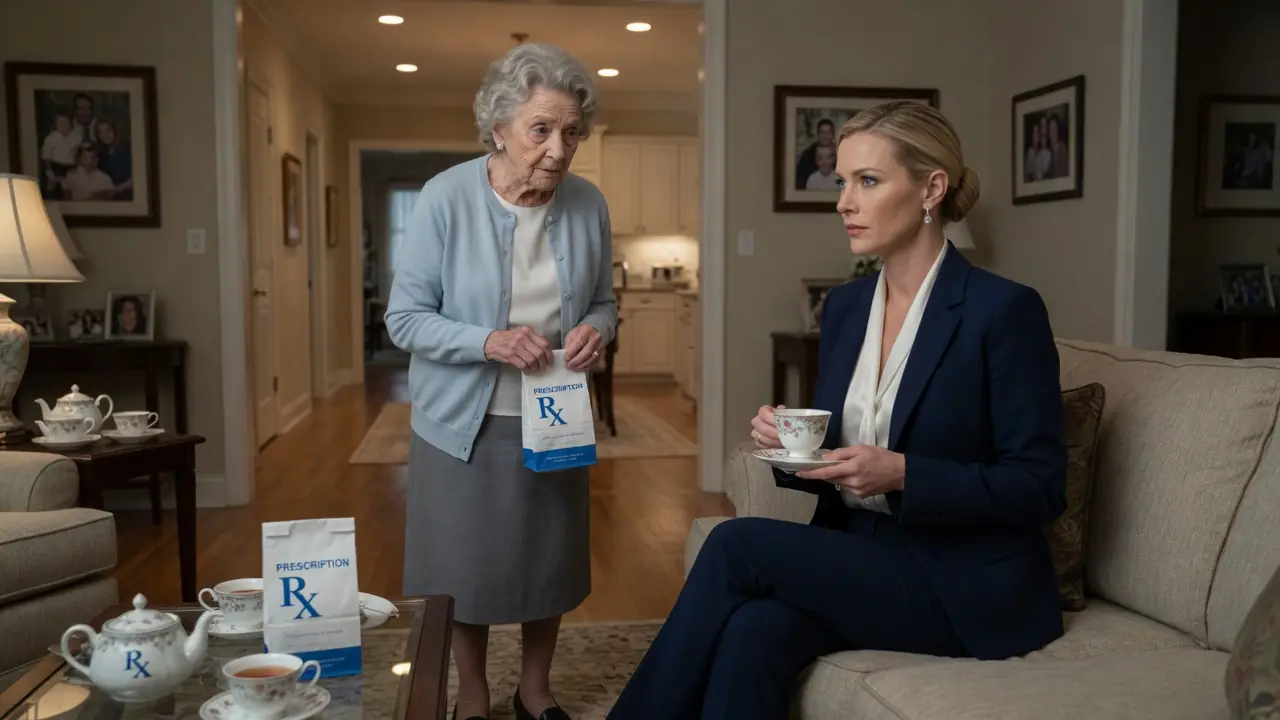
Seven days later, Crescent Bank froze without warning. She screamed across the floor.
And me?
I was sipping tea, waiting for the finance hearing to begin.
No one knew who I was.
But after that day, no one would forget.
I stepped into the bank lobby just after noon, hoping to catch Miranda before the rush. I did not want to make a scene. I only needed one hundred dollars, just enough to cover my medication until my next check cleared.
Miranda stood behind the service counter, dressed in one of those sharp navy suits that made her look like she ran the whole building.
Technically, she did.
The Crescent branch was her domain, and she made sure everyone knew it.
When she saw me, her smile barely held. She did not wave me over. She just raised one eyebrow like I was someone who did not belong.
I walked up anyway. I kept my voice low. I did not want the customers behind me to hear.
I said I needed a small loan, just one hundred dollars until next Monday. I even added that I would be happy to sign whatever she needed.
She blinked twice.
Then she leaned forward, rested her manicured hands on the desk, and gave a laugh that cut straight through the air.
A laugh.
Not a soft chuckle.
Not surprise.
It was sharp, loud, and cruel.
A few heads turned. I felt them watching. One of the tellers even paused mid-transaction.
Miranda tilted her head and said, “I must be confused. This isn’t a charity. If you need money, perhaps you can ask your old coworkers at the clinic. Or maybe check the back of the medicine bottle for a helpline.”
She said it slowly, like she wanted each word to land.
I did not say anything back. I just looked at her and took in that carefully painted face, the rings, the badge pinned neatly to her blazer.
I used to think she was bright. Smart. Maybe even kind, back when she first married Paul.
That was a long time ago.
I nodded once and said, “Thank you.”
Then I turned and walked out.
Each step felt heavier than it should have. My shoes squeaked on the tile. I did not look back.
Outside, the sun hit my face, but I felt cold. I stood at the curb for a minute, clutching the paper bag with my prescription and nothing to fill it with.
I had raised Paul better than this.
Or at least I thought I had.
But this was not just about the money. It was not even about the pills. It was about being told I did not matter. Not even enough to lend one hundred dollars.
Not even enough to pretend.
I kept walking past the pharmacy, past the diner, past the church steps where old friends used to sit and chat on Sundays. I did not go anywhere in particular. Just away.
There is a kind of silence that does not come from outside.
It sits inside your chest.
The kind where no one has to say the truth out loud because their actions already told you everything.
That day, I heard it loud and clear.
I was not family anymore. I was a shadow in their world.
But a shadow still knows where the light comes from.
The house was louder than usual that evening. Paul had invited some people over from Miranda’s office for a birthday celebration for one of their senior associates. It was the kind of party where everyone talked about investments while holding tiny plates of cheese cubes.
I stayed in the kitchen carving roast chicken while keeping one ear on the conversation in the living room.
My son had not said much to me all week, not since the moment at the bank. He must have known. Miranda surely told him.
Still, he had not asked.
I set the tray down and walked into the dining room. The lights were warm. The candles were lit. I reached to place the dish near the center of the table.
That was when Miranda leaned in behind me.
Her voice was low but sharp.
She said she appreciated the help, but I did not need to linger once the food was served, just so things did not get confusing for the guests.
“Some of them might not understand your role in the household,” she said.
Her exact words.
I did not respond.
I walked back to the kitchen and closed the swinging door behind me.
Through the frosted glass, I could still see silhouettes moving, toasts being raised, laughter that felt manufactured.
My hands smelled like garlic and time.
There were footsteps.
Then the door opened again.
It was Paul.
He looked like he was going to say something, but hesitated.
He asked if there was any more white wine.
He lingered a second and said maybe I was taking Miranda too seriously. That she had a lot on her plate, managing the bank, managing the house. He reminded me it was her event tonight.
Then he left, and the door swung closed again.
I sat down on the stool near the back pantry. My back ached. The skin on my hands felt thinner than ever.
I looked around the kitchen I used to run. The stove where I used to cook Sunday meals. The window above the sink that once overlooked my rose bushes, now replaced by her herbs in glass jars with gold labels.
This was not my home anymore.
Later, after the guests had gone and the dishwasher hummed behind me, I returned to the dining room to clean. Plates half full of untouched food. Lipstick stains on napkins. A broken wine glass in the corner.
I gathered the dishes carefully.
But as I was reaching for a crumpled linen, I heard Miranda’s voice from down the hall. She was laughing with someone on the phone.
She said I had turned into a walking cautionary tale.
She said if she ever ended up like me, someone should put her out of her misery.
That laugh again.
That same laugh from the bank.
I did not flinch.
I did not cry.
I just picked up the broken glass and dropped it in the trash.
Then I walked to the hallway closet, pulled out the small bag I had packed weeks ago, and zipped it all the way shut.
It was time to go.
Not because I was angry. Not even because I felt rejected.
But because I realized something that night.
Some people do not change.
And some houses do not heal.
They just get quieter when the wrong people leave.
I left early the next morning. The sky was still a pale gray when the cab pulled up outside the house.
I did not say goodbye. Paul was still asleep. Miranda would not have noticed anyway.
I left the spare key on the counter with a note that only said, “Thank you for letting me stay.”
It felt more polite than necessary, but I wrote it anyway.
I checked into a small extended-stay hotel off McCarran Boulevard. Nothing fancy. Just a kitchenette, a decent mattress, and a window that faced a used tire shop.
But it was mine.
Quiet.
Uncomplicated.
Three days later, I visited my old P.O. box near the downtown post office. I had not used it regularly since I moved in with Paul and Miranda, but something told me I should check.
When I unlocked it, there was a manila envelope wedged inside. No return address. Just my name written in Lucia’s handwriting.
I walked to the coffee shop nearby, found a quiet corner table, and opened it.
Inside was a packet of quarterly statements and a letter written in Lucia’s usual clipped tone. She said it was time. The investments we had started decades ago with the Everlight Systems Fund had reached maturity.
I now held forty-eight percent voting shares.
The total value, spread across multiple funds and property trusts, was listed in bold ink at the bottom of the page.
Six hundred eighty-four million dollars.
I read the number again.
Then once more.
For a few seconds, I did not move. My fingers stayed on the edge of the page as if touching it would make the numbers fade.
There was also a second document. A revocable trust, still unsigned, with my name as primary executive and Lucia listed as managing director.
I could choose to roll over the funds into a new phase of community reinvestment.
Or I could liquidate.
The choice was entirely mine.
She had written one more line at the bottom.
When you’re ready, Dolores, just say the word.
My hands trembled slightly, but not from fear.
It felt more like clarity.
Like remembering something I did not know I had forgotten.
I thought about the early days working with Lucia in mobile health units, setting up stations in parking lots and churches, vaccinating children who did not speak English and grandmothers who did not have birth certificates.
We were not trying to build an empire.
We just wanted people to live.
Somehow, over time, those little grants and pooled donations had turned into something else.
Something vast.
Something powerful.
I had walked away from all of it after my retirement. I thought I was tired.
Maybe I just wanted to belong to a family again.
But this was something no one could take from me.
Not Paul.
Not Miranda.
Not even time.
I folded the documents neatly and slipped them back into the envelope.
I did not know what I would do yet, but I knew I would not do it with noise. Not with rage or vengeance.
No one needed to be told twice.
They just needed to feel the absence of what they thought would always be there.
I stepped back out into the sun, the envelope tucked under my arm. A warm breeze moved through the parking lot, rattling the flags above the car wash across the street.
I took a deep breath.
My lungs felt full.
My steps felt light.
For the first time in a long while, I felt like myself.
Whole.
Unapologetic.
Unafraid.
I waited three more days before calling Lucia.
It was not hesitation.
It was preparation.
I wanted to sit with it. To remember the past. To grieve the years I had traded away trying to matter to a family that never saw me whole.
But on the morning I finally picked up the phone, I did not feel grief.
I felt ready.
Lucia answered on the third ring. Her voice had not changed. Still sharp as chipped glass, but with an undertone I recognized.
She had been waiting.
She did not ask how I was.
She just said the paperwork was in place and that the board had signed off on my return if I wanted it. She reminded me that this was not about taking control.
It was about remembering what we had built before the world taught us to shrink.
That afternoon, I met her at a quiet cafe just off the university campus. She was already seated, files spread around her like she never stopped moving.
She wore the same style of gray sweater she used to wear in the nineties, but her eyes had grown harder.
She did not hug me.
We never were the hugging type.
She slid a folder across the table.
Inside was a full transfer draft. I would reinstate myself as chair of Everlight’s ethics and oversight council. No public announcement. No headline.
But with it came full authority to redirect legacy funds, including the Crescent Initiative.
I asked what would happen if the Crescent branch lost its federal backing.
She just said, “It would collapse like paper in the rain.”
We did not speak for a while after that. We just sipped coffee and listened to the low hum of college students murmuring behind us.
When she finally looked up, Lucia said it plainly.
“If you’re going to act, Dolores, act cleanly. Let the system reveal itself. Don’t shout. Let them feel the silence when the lights go out.”
I nodded.
The next morning, I submitted the transfer quietly through secure channels. The funding line that propped up Miranda’s branch had been camouflaged for years under a grant meant for mobile clinics.
No one really paid attention to the details until the details started moving.
Lucia assigned her compliance team to begin a full audit. We did not name names. We did not accuse. But the minute the numbers stopped lining up, the state’s financial review board would be forced to take notice.
I also requested a copy of all known Crescent partnerships with elder-care programs. I needed to see who Miranda and her sister had been targeting.
Not just the loans.
The patterns.
It was all there.
Loans made to women over sixty. High interest rates hidden in the footnotes. Collateral buried in contracts no one understood.
Candace had approved them all.
And Miranda.
She had smiled in every brochure, promising access and dignity to women like me.
They had built their reputation on the backs of women they thought would never push back.
But I was not there to make them fall.
That part would take care of itself.
I was there to build again.
By the end of that week, I requested the legal team to begin drafting a new program. Not through Crescent. Not through Everlight’s public face.
Something separate.
Quiet.
Meant for women like Elise, who used to sit beside me in the pharmacy line with three coupons and a prayer.
We called it Whitaker Commons.
A grant-based education and reinvestment space, quietly funded, fully independent.
The best part was that it would need a building. Preferably one already outfitted for financial services.
Preferably one Crescent would soon have to vacate.
I did not feel angry.
Not even satisfied.
Just steady.
It was not about revenge anymore.
It was about planting something that could not be uprooted.
The email arrived just after nine in the morning. A brief notification. One funding stream had been closed. Another had been flagged for review.
Within the hour, the internal audit system at Crescent picked up the shift.
Nothing dramatic.
Just a quiet ripple beneath the surface.
Lucia had warned me it would move like this.
Not a wave.
A draw of breath.
I sat at the breakfast table in my rented apartment, oatmeal going cold. I read the message twice, then clicked print.
By the time the paper slid out of the machine, the second notification had come through.
The elder loan bundle, the one labeled Tier Four Deferred Recompense, was officially under federal inquiry.
That was Candace’s portfolio.
Lucia’s team had submitted anonymous evidence to the oversight committee. Nothing theatrical. Just enough discrepancies in signature timestamps and approval sequencing to warrant a deeper look.
Later that afternoon, I filed a secondary report.
I included a voice recording.
Weeks ago, I had started pressing record whenever I entered a Crescent building. It was just a habit from my old public health days.
This one captured a conversation between Miranda and her assistant, Elise.
Miranda had said they should start pulling back on approvals for women over seventy. Said it was not worth the risk.
Elise had asked if they should recheck some of the current clients.
Miranda laughed and told her not to bother.
“Those women barely remember what they signed.”
The file was crisp.
The voices unmistakable.
I sent it with no name attached, just a direct drop to the financial ethics office in Reno.
By Thursday, Crescent’s upper management had called a special meeting. Candace did not attend. Miranda was present, but reportedly quiet. Their father had been seen leaving corporate headquarters that afternoon.
Word was, he had withdrawn his shares.
Friday came with silence.
But silence, I have learned, is the most revealing sound.
Inside Crescent, tension grew. Employees started whispering in back halls. Clients requested unusual withdrawals. The regional vice president made a surprise visit, and for the first time in five years, Miranda missed her quarterly networking brunch.
Meanwhile, I kept moving.
Lucia and I finalized the legal structure for Whitaker Commons. It would operate under a nonprofit LLC, but be backed by a charitable trust. The paperwork was clean. The funding traceable. The intent clear.
We also reached out to a small group of retired financial counselors, women I had worked with decades ago, women who knew what it meant to be overlooked.
They said yes.
All of them.
By the end of the week, Lucia confirmed that the Crescent branch Miranda ran was on a list of three locations under temporary freeze for audit review.
She said it calmly. No celebration in her tone. Just confirmation.
I asked if we needed to prepare for backlash.
She said no.
The damage was already internal. Their structure depended on quiet complicity. Once silence cracked, the rest would fall in on itself.
That night, I stood at the edge of the empty Crescent parking lot.
The lights were still on, but dimmer than usual. Through the glass doors, I saw staff shuffling papers and avoiding eye contact.
I did not go inside.
Instead, I walked back to my car. I opened the glove compartment, pulled out the lease agreement for the Whitaker Commons property, and placed it neatly in my bag.
Same building.
Same lobby.
Soon to serve a different purpose.
This was not revenge.
This was redirection.
Controlled, quiet, and complete.
The freeze became official on a Monday morning. It started with a halt in outgoing transfers.
A few irregularities, they said.
Temporary review.
Standard protocol.
Elise, the assistant manager, tried to approve a routine batch of checks before ten in the morning, but the system bounced her out.
She tried again.
Same result.
By ten-thirty, the phones were ringing. Clients had noticed their accounts in limbo. Digital banking access was disrupted. Internal alerts fired one after another.
Elise walked into Miranda’s office, holding the printout of the flagged transactions.
Miranda read it in silence, then called Candace.
Candace did not answer.
She tried the regional director.
Voicemail.
Her fingers drummed on the desk as she scanned the notification again.
“System error,” she said out loud.
But it was not convincing.
Not even to herself.
Downstairs, the teller line stalled. Customers were told to wait. One woman raised her voice. Another asked if their accounts had been compromised.
Elise kept refreshing her screen, sweating through the back of her blouse. Staff started texting each other from three feet away.
Miranda pulled the blinds closed and locked her door.
For the next thirty minutes, she ran scenarios in her head.
None of them ended well.
She opened the internal risk folder and read the old warnings Candace had dismissed months ago. Flagged loan structures. Duplicate authorizations. Beneficiary overlap.
In the middle of the stack was one client Miranda vaguely remembered.
A woman named Dolores Whitaker.
There was not much on file. Just a note.
No recent activity.
One inquiry about senior service grants declined.
Miranda leaned back in her chair. Something about the name prickled at her.
She minimized the file and pulled up the branch’s balance ledger.
The shortfall was more than expected.
Nearly seven hundred million in frozen assets.
The grants that fueled their community uplift programs had been rescinded, all tied to Everlight Systems.
She checked the Everlight account key again.
That trust had been reassigned to Whitaker Holdings.
She read the name twice.
Then again.
Her hand dropped to her lap.
Outside her office, Elise buzzed the intercom. Two federal examiners had arrived. They wanted to speak with the branch manager.
Miranda stood, straightened her jacket, and paused for a moment in front of the mirror.
Her lipstick was still perfect.
But the person wearing it looked older than she remembered.
She opened the door.
Downstairs, the air felt thicker. Her heels clicked slower than usual.
The examiners were calm. One held a clipboard. The other nodded politely.
They handed her a list of documents and requested her presence at a hearing the following week.
Miranda nodded. Her voice did not shake.
She had been trained for this.
But as they turned to leave, she glanced at the printout again.
Whitaker Holdings.
She walked back to her office in silence and closed the door.
For the rest of that day, she did not speak.
Not during calls.
Not when Paul sent a short message asking if she was free for dinner.
Not even when Elise knocked and said the first reporter had shown up outside the front doors.
Miranda did not answer.
She was busy remembering a laugh, one she had once let slip across a bank lobby.
A laugh meant to humiliate.
One she had not thought twice about until now.
The invitation came two days after the freeze.
A simple message from Paul.
Dinner at Ellen’s House Friday evening. Just the three of us.
He said it like we were still a family. Like nothing had shifted. Like I had not quietly gutted the foundation Miranda built her image upon.
I did not answer right away.
I let the message sit in my phone for almost a day.
When I finally replied, I said yes.
No punctuation.
Just one word.
I arrived early, not by much, maybe fifteen minutes. The restaurant had not changed. Dim lighting. Heavy wood paneling. A fireplace that always smelled like old pine.
The hostess greeted me with a smile that did not reach her eyes. She led me to a small corner booth and said my son had requested it specifically.
He was not there yet.
Neither was Miranda.
I sat, ordered hot tea, and let the quiet wrap around me.
They arrived ten minutes later.
Paul looked tired. There were new lines on his forehead. Miranda’s hair was pulled tighter than usual, her expression unreadable.
Paul did the talking at first. He asked how I was settling into the new place, said he missed seeing me around the house, told me Elise had been asking about me.
I listened.
Nodded.
Did not say much.
Then Miranda spoke, her voice even.
She said they had heard rumors that someone had taken over funding lines connected to Crescent. That legal inquiries were underway. That Candace had taken an extended leave.
She did not accuse.
She did not ask.
She just floated it out.
I stirred my tea and waited.
Then she smiled. She said she hoped I was doing well. Said maybe there was a way to work together if I had new projects in motion.
Paul added something about investing in family. Said it was never too late to rebuild trust.
I set my cup down.
Then I asked them what they knew about Whitaker Commons.
Miranda blinked.
Paul shifted in his seat.
I told them the ribbon cutting was in two weeks, that the program had already secured full staffing, that our opening semester had nearly seventy women enrolled.
I did not mention the building.
Or the lease.
Or the trust.
But Miranda’s silence told me she already knew.
Paul reached for his water, cleared his throat, and said that was wonderful.
Miranda just looked at me.
There was something hollow behind her eyes.
Not fear.
Not anger.
Something quieter.
Recognition, maybe.
The check came. Paul insisted on paying. I let him.
As we stood, Miranda touched my arm lightly and said she hoped I found what I was looking for.
I told her I was not looking anymore.
Outside, the wind had picked up.
Paul walked me to my car and said he was sorry for not stepping in, for not seeing things sooner.
I told him I appreciated the words, but some things do not need apologies.
Just distance.
He nodded.
He did not argue.
I drove home in silence.
The kind of silence that does not ache.
It just sits with you.
Still.
Steady.
That night, I did not unpack. I did not turn on the television.
I opened my notebook, reviewed the curriculum drafts, and highlighted sections on financial literacy, elder advocacy, and digital safety.
Then I added a new line.
Guest speaker: Elise Harper.
Sometimes redemption begins in the places where loyalty used to live.
The letter arrived on a Wednesday, tucked between a utility bill and a coupon flyer. Heavy paper. Embossed seal.
Office of Financial Regulatory Ethics, State of Nevada.
Inside was a formal notice.
Miranda Hastings was under investigation.
Allegations included elder exploitation, falsification of lending terms, and breach of fiduciary duty. Her license was suspended, effective immediately. A hearing had been scheduled. Witnesses would be called. Documents had been subpoenaed.
Lucia had warned me this stage would come quickly.
Once the funding trail was exposed and the silence cracked open, the rest would follow like dominoes.
I read the letter twice, then placed it in a folder marked Quiet Files.
I did not feel triumphant.
Just tired.
But a good kind of tired.
The kind that says something has finally begun to end.
By midafternoon, news of the suspension had reached the local press. Nothing sensational. Just a brief column in the regional business journal.
No photos.
Just words.
That night, Elise called. She said she had been let go without warning. No severance. No explanation. Just an envelope and a quiet escort from the building.
She sounded steadier than I expected.
She said she knew things now about how Candace had backdated approvals, about the files Miranda kept off the system, about the list of women they had flagged as low resistance.
I did not ask how she knew.
I just listened.
Then Elise asked if she could help.
Not out of pity.
Not for pay.
But because she had seen enough.
I told her yes. Her experience would matter, especially to the women who were still learning how to name what had been done to them.
The next day, Lucia sent over transcripts of internal communications. Emails between Candace and upper leadership discussing ways to recategorize loans to avoid audits.
Miranda had signed off on several.
The dates aligned with the initial complaints filed by former clients.
Lucia’s compliance team had done their work quietly, methodically. No leaks. No media circus. Just facts in order, unshakable.
Meanwhile, construction inside the former Crescent building continued. The signage had been removed. The interior was stripped. Walls were repainted. Fluorescent bulbs were replaced with soft lighting.
We kept the teller counters.
Not for banking.
For one-on-one sessions with counselors and advocates.
Women had already started visiting. Some came just to peek in. Some asked if they could volunteer.
One woman cried when we handed her a folder titled Reclaiming Financial Power.
She said no one had ever explained these things to her in a way that made her feel capable.
We told her that was the whole point.
By the end of that week, Miranda’s name had been removed from Crescent’s official site. Candace’s was already gone.
Paul had not reached out again.
I did not expect him to.
I spent Saturday reviewing the intake forms for our first cohort.
Seventy-three women, aged fifty-five to eighty-four.
Different backgrounds.
Different losses.
One thing in common.
They had all been overlooked.
Not anymore.
At dusk, I walked through the front lobby. The place still smelled of fresh paint and new beginnings.
I stood for a moment in the center of the room and closed my eyes.
No applause.
No headlines.
Just the sound of a place finally breathing the right kind of air.
Whitaker Commons was not revenge.
It was a correction.
And it was only the beginning.
The ribbon cutting happened on a quiet Tuesday morning.
No press. No speeches. No corporate banners or glossy handouts.
Just a row of folding chairs on the sidewalk, a makeshift table with a blue thermos of coffee, and a simple vinyl sign that read Whitaker Commons.
I did not stand at the center.
I let Lucia do that.
She was always better at formal gestures.
But I watched from the entrance as a line of women filtered in, slow and curious, shoulders tense at first, then loosening when they saw no one asking for IDs or forms.
Just a welcome.
Just space.
The building smelled of lavender oil and fresh lumber. The walls were pale green, calming, intentional.
The old Crescent bank vault had been repurposed into a private reading room lined with bookshelves and two recliners.
The teller windows now held welcome kits, notepads, pens, a list of emergency legal contacts, and handwritten letters from past volunteers.
The first workshop began at ten. Elise led the group with steady hands.
She guided the women through a session called Reclaiming What Was Ours.
The title alone brought two of them to tears before she finished the second slide.
I did not attend the full session. I just sat in the back corner for a while, listening, watching.
One woman raised her hand and said she had not touched her own bank account in six years. Her husband had handled everything. He passed last fall, and the bank refused to speak with her at first.
She had been surviving on what little she could learn from online videos.
Another woman whispered that her son had her sign a document last winter. She thought it was a medical form. It turned out to be a property release. Her name had been removed from the title of her own home.
Stories like these were not rare.
They were built into the cracks of polite society.
And now they had a place to be spoken out loud.
That afternoon, Lucia pulled me aside. She handed me a photo someone had taken from across the street.
It showed the old Crescent facade, now painted soft cream, with a new wooden sign above the doorway.
Whitaker Commons, etched in bold navy letters.
Below it, a second sign in smaller script.
For those who were told to stay quiet.
I did not smile, but I felt something settle in my chest.
Not pride.
Not even relief.
Just the confirmation that what had been lost was beginning to find its place again.
I walked the building once more before the day ended. Each room carried pieces of what I had once dreamed the world could be.
The tech room had five refurbished laptops set up on folding desks. The kitchen offered tea and toast for anyone who came in early. The back office held locked cabinets full of grant forms, housing resources, and a list of safe lawyers for those needing advice.
Before I left, I paused at the front door.
Two women stood there reading the welcome sign. They did not come in, not yet.
But one of them nodded. The other touched her shoulder gently.
Then they turned and walked away.
Not afraid.
Just thinking.
It would take time.
Not everyone is ready to walk back into the space where they were once dismissed.
But the door would stay open.
That night, Lucia sent me one last photo.
It was taken just after dusk. The building lit from within. No crowds. No movement. Just the glow of something quiet, finally doing what it was built to do.
No revenge.
No performance.
Only repair and invitation.
She came in just after eleven.
I was in the back room sorting through enrollment forms when I heard the door open.
Slow steps.
Quiet.
I did not recognize them by sound, but something told me not to rush out. Let the space do what it was made to do.
A few minutes later, I stepped into the lobby.
She was standing near the old teller counter, hands resting gently on the edge. Her posture was different. Shoulders lowered. Neck tilted down.
But it was her.
Miranda.
She did not see me at first. Her eyes moved slowly across the space. The framed quotes. The open pamphlets. The wall of resources labeled Financial Renewal.
Her gaze landed on the corner table where a small stack of notebooks sat beside a handwritten sign.
Free to take for the next chapter.
When she turned, I was already there.
I did not speak.
Neither did she.
A woman at the front desk, a volunteer named Therese, offered a soft hello.
Miranda responded with a quiet nod, her voice barely audible when she asked for the schedule. She did not use her full name. She just said she was interested in the financial resilience class, the one Elise taught on Fridays.
Therese gave her a clipboard and directed her to the intake lounge.
I did not follow.
I stayed behind and watched her walk slowly past the community board, where someone had posted a thank-you letter from a student. The letter mentioned how she had once felt invisible, how Whitaker Commons had made her feel seen again.
Miranda paused there.
Read the whole thing.
Then kept walking.
The next Friday, she returned.
This time, she wore jeans and a plain blue sweater. No makeup. No polished heels. Just walking shoes and a canvas tote bag.
She joined the class without comment, sat near the back, and took notes.
Elise later told me Miranda never brought up her past work. Never mentioned Crescent. Never hinted at who she had been.
She listened.
Asked thoughtful questions.
Volunteered to organize handouts when class ended.
Elise said she was different now.
Quieter.
Less certain of herself.
But open.
Not broken.
Just changed.
Some people saw her and whispered. They recognized her face from the news. A few women bristled.
But Elise made it clear.
This was a place for repair, not punishment.
I stayed away those first few weeks. I let the space do the work. Let Miranda find her own way through it.
But one afternoon, I passed by the open door and saw her sitting at the table alone, flipping through a budgeting worksheet. Her fingers paused over a question about long-term values.
She did not write anything.
She just stared at the empty line for a while.
That night, I updated the attendance log.
Beside her name, I wrote a note.
Steady. Engaged. Listening.
She did not need my approval.
But I needed to remind myself that even the ones who hurt us might carry their own ache. And sometimes letting them walk back into the room is not weakness.
It is choice.
Miranda continued coming. Week after week, she started speaking more.
She even shared one story about a woman she had once judged too quickly, how she regretted not listening, how she wished she had asked more instead of assuming.
No one interrupted her.
No one forgave her out loud.
But no one walked out either.
The healing was not hers to claim.
But she stayed.
Sometimes that was enough.
It was late afternoon when I finally sat on the balcony. The breeze was light, the sun angled low enough to spill soft light across the railings. My cup of ginger tea steamed gently in my hands.
Below, the courtyard of Whitaker Commons settled into its usual hum. Women came and went. Soft laughter rose with the wind.
Miranda was still downstairs. Elise had started a smaller breakout session on personal boundaries, and Miranda stayed behind after the others left.
She was helping reset the chairs, lining them up in quiet symmetry.
Her movements were careful.
Focused.
Like someone who had finally learned not to rush.
From above, I watched without hiding.
We no longer danced around each other.
There was no reunion. No dramatic arc. Just distance, and this strange, unexpected peace that settled in between.
I took a sip of tea.
The warmth eased something tight in my chest.
There had been days, not too long ago, when the thought of sharing even the same sidewalk with Miranda would have twisted something inside me.
Days when I carried the humiliation of her laughter like a wound stitched too tight.
The bank lobby.
The look on her face.
The quiet dismissal.
All of it had lived under my skin longer than I cared to admit.
But healing had its own pace, and mine had been slow. Not from weakness, but because I needed every step to mean something.
Whitaker Commons had not been built on fury.
It had not risen from revenge.
It had grown from silence.
From the nights I spent alone rereading court files.
From the mornings I walked past the mirror and whispered, “Still here.”
And now, here I was.
I heard footsteps on the stairs. Not rushed. Measured.
The door opened behind me.
It was Miranda.
She did not speak. She just walked to the opposite corner of the balcony and leaned against the railing. A respectful distance.
Nothing in her posture asked for conversation.
We stayed like that for a while. Two women standing in the hush of early evening. The courtyard below slowly emptied. The building behind us fell into soft shadows.
Eventually, she turned.
Not all the way.
Just enough.
She placed something on the side table between us.
A small notebook.
The same kind we gave to every woman who walked through our doors.
Hers was filled with handwriting. Corners bent. Edges worn.
She did not wait for me to pick it up.
She turned and walked back inside.
I watched the notebook for a long moment.
Then, finally, I reached for it.
Inside, there were pages of notes from classes, quotes, budget drafts, and a line from Elise’s second session. The page was starred in red ink.
Not all change is loud.
Another page held a list titled Things I Thought I Knew.
Beneath it, in her tidy cursive, she had written:
Power can be taken, but trust must be given back gently.
I closed the book.
Below us, the wind rustled through the trees, carrying the soft creak of the gate swinging open, then shut again.
I sipped the last of my tea.
Not every story ends with justice.
But sometimes the quiet is enough.
There is a small framed quote that hangs near the front entrance of Whitaker Commons. It is not fancy. Just black ink on old parchment. The frame is chipped in one corner, but it stops people.
I have seen them pause to read it, some quietly mouthing the words.
People don’t hear you when you raise your voice. They hear you when you are quiet enough to make them want to understand.
That quote came from an old notebook I once found in a storage box marked Miscellaneous.
I do not know who wrote it.
But it stayed with me longer than most things.
We had just finished our fourth month of programs. Forty-two women had completed the resilience course. Thirteen had gone on to teach workshops of their own. Six now co-ran the peer support program on Thursdays.
We had not changed the world.
But we had made a corner of it softer.
Stronger.
I no longer sat with bitterness.
There were days when I wanted to scream, to throw every betrayal back in their faces the way they erased me, dismissed me, humiliated me in front of strangers.
But in the end, silence turned out to be louder.
Not the kind that buries pain.
The kind that holds it, knows its shape, and waits for the right moment to move forward with it.
Not away from it.
Miranda still comes.
Some weeks she helps.
Other times she just listens.
She has never asked me for anything.
And I have never offered her more than space.
That is all either of us can give now.
And it is enough.
Paul called once and left a message I never returned. He sounded smaller. Unsure.
I let it be.
Some wounds close without noise.
And not all closures require a key.
I walk through the building in the early mornings before the women arrive, before the lights click on. The quiet hum of this place wraps around me like a memory I never thought I would have.
No legacy is ever clean.
No ending ever complete.
But if you can plant something where you were once erased, if you can leave behind a door that was not there before, then maybe, just maybe, that is enough.
Today, a woman I had never seen before walked in.
She looked lost.
Nervous.
Her coat was thin for the weather.
Elise offered her tea.
She took it without a word.
And then she stayed.
She stayed.
And that is how I know we have done something right.