The moment my daughter-in-law calmly told me to pack my bags and rent a room somewhere else, she thought she had just won my home.
She had no idea I was about to uncover one document hidden for decades that would destroy every plan she had spent months building.
The words hung in the kitchen like smoke.
For several long seconds, no one moved. The lasagna I had just pulled from the oven, David’s favorite since he was eight years old, sat untouched on the table.
Its familiar aroma filled the house Tom and I had built together thirty-seven years earlier, the house where every wall still seemed to remember our laughter, our arguments, our prayers, and our grief.
Ashley folded her arms with complete confidence.
“This living arrangement isn’t working anymore, Margaret,” she said. “David and I need our own space. It’s time for you to find somewhere else to live.”
Somewhere else.
In the only home I had ever truly known.
The hallway where David had taken his first steps. The windows Tom repaired with his own hands after a spring storm cracked the old frames. The garden where his roses still bloomed every April, stubborn and red, as if grief had never been strong enough to stop them.
I wiped my trembling hands against my faded apron and looked toward my son, waiting for him to laugh and tell me this had to be some terrible joke.
He didn’t.
David simply lowered his eyes.
Then he nodded once.
That single motion hurt more than any shouted insult ever could.
I had raised that boy through fevers, broken bones, school disappointments, late-night fears, college applications, job failures, and the death of his father.
I had sold my wedding earrings to help him through his last semester at Virginia Tech when his scholarship money came up short. I had stayed awake beside him after Tom’s funeral while he cried like a child and said he did not know how to live without his dad.
Now he stood in my kitchen, in the home his father and I had made, and could not look me in the eye while his wife told me to leave.
I smiled anyway.
Not because I was calm.
Because I had spent seventy years learning that some women only survive by refusing to let their enemies see the wound while it is still bleeding.
“If that’s what you’ve both decided,” I said quietly, “I’ll start looking.”
Relief washed across Ashley’s face.
David relaxed as though an uncomfortable burden had finally disappeared from his shoulders.
Neither of them noticed that something inside me had not broken.
It had hardened.
Ashley reached for her water glass and took a small sip, looking pleased with herself. She was thirty-four, polished, pretty, and always dressed like someone might photograph her unexpectedly. Even on ordinary evenings, she wore gold jewelry, soft makeup, and expensive sweaters in colors with names like ivory mist and champagne beige.
When David first brought her home three years earlier, I tried to like her.
I truly did.
She had a bright smile, a marketing job, and a way of placing her hand on David’s arm that made him look chosen. After watching my son walk through years of lonely dating and failed relationships, I wanted to believe she was good for him.
At their wedding, I cried when he danced with me.
“Mom,” he whispered, “Dad would have loved her.”
I had looked across the room at Ashley laughing beneath white flowers and candlelight, and I told myself Tom would have wanted me to give her a chance.
So I did.
When David called eighteen months later and said he and Ashley needed to move in “just for a little while” because their apartment lease had ended and they were saving for a house, I said yes before he even finished asking.
That was my mistake.
Not because a mother should never help her child.
But because help becomes danger when the people receiving it begin to mistake kindness for weakness.
At first, Ashley was grateful.
She brought flowers for the dining room. She said my house had “so much charm.” She told me she loved the old staircase, the garden, the wide kitchen windows, the built-in shelves Tom had made during one winter when money was tight but his hands were patient.
“This place is a gem,” she said.
I smiled.
“To me, it’s home.”
She smiled back.
At the time, I did not hear the difference.
To me, it was memory.
To Ashley, it was property.
They moved into the upstairs guest room with eight boxes, two suitcases, and a promise that it would only be six months. Six months became nine. Nine became a year. A year became the new normal.
Then small changes began.
Ashley rearranged my pantry because, she said, my system “made no sense.” She replaced the curtains in the living room without asking because the old ones were “too grandmotherly.” She moved Tom’s reading chair from the front window to the basement while I was at church, then acted surprised when I noticed.
“Margaret,” she said, laughing lightly, “you can’t keep everything exactly the same forever.”
I stood at the basement stairs, looking down at Tom’s chair under a tarp.
“I was not trying to keep everything,” I said. “Just a few things that mattered.”
She touched my shoulder as if soothing a child.
“I understand. But David and I live here too now.”
That phrase became her favorite weapon.
We live here too now.
She said it when she wanted to host friends in my dining room without warning. She said it when she wanted to paint the guest room dark green. She said it when she wanted to replace the family photos in the hallway with framed abstract prints she ordered online.
At first, David tried to soften her.
“Ash, Mom likes things a certain way.”
But he grew tired of being between us.
Then he started repeating her words.
“We do live here too, Mom.”
I let too much pass because I loved my son.
I told myself marriage changes a man’s loyalties. I told myself they were young and ambitious, under pressure, trying to build something. I told myself Ashley’s sharpness was insecurity, not cruelty.
But cruelty can wear insecurity like perfume.
Six months before the night of the lasagna, Ashley began talking about “practical arrangements.”
She said the house was too big for me.
She said the stairs were dangerous for someone my age.
She said maintaining the property was becoming too much.
I was seventy, not helpless. I still drove myself to the grocery store, volunteered twice a week at the church thrift room, tended the garden, cooked, cleaned, paid bills, and walked three miles every morning when my knees allowed it.
But Ashley had found a new word for me.
Vulnerable.
She used it in front of David.
“Your mom is vulnerable here alone during the day.”
“Your mom is vulnerable with all these old appliances.”
“Your mom is vulnerable if she falls and no one hears.”
The word sounded caring.
It was not.
It was preparation.
I began noticing brochures on the coffee table for senior apartments. Not nursing homes. Ashley was too clever for that. These were “active adult communities” with bright photos of smiling gray-haired people drinking coffee in common rooms.
“Just options,” she said when I found them.
“I did not ask for options.”
“No one is forcing anything, Margaret.”
But her voice said not yet.
Around that same time, David began asking questions about the house.
Not sentimental questions.
Financial ones.
“Mom, what’s the property tax now?”
“Did Dad ever refinance?”
“Do you still have the mortgage paperwork?”
“Where do you keep the insurance documents?”
I answered some, avoided others.
The house was paid off.
Tom and I had managed that twelve years before he died. We celebrated by eating cheap steak in the backyard with paper plates because Tom said the bank had taken enough of our money and did not deserve fine china.
But David seemed uncomfortable every time I said the house was mine.
He corrected me once.
“Ours, technically. I mean, eventually.”
I looked at him across the kitchen table.
“Eventually is not ownership.”
His face flushed.
“I didn’t mean it that way.”
But perhaps he had.
Or perhaps Ashley had.
The night everything changed began with lasagna.
David had called that afternoon and asked if I could make it because he had “a stressful week.” I still knew how he liked it. Extra ricotta. Less onion. A little basil in the sauce. Edges crisp enough that he would steal corner pieces before the pan cooled.
I spent half the day cooking.
That is what hurt later.
Not only what they said.
But that they said it while the meal I had made with love sat between us.
Ashley came downstairs dressed in cream-colored slacks and a soft blue blouse, her hair smooth, her wedding ring shining. David followed in a gray sweater, restless and quiet. I should have known something was wrong because he did not sneak a piece of cheese from the counter the way he always did.
We sat at the kitchen table.
I had just placed the lasagna in the center when Ashley cleared her throat.
“Margaret, we need to talk.”
Those five words are rarely innocent.
I looked at David.
He stared at his plate.
Ashley continued with the calm of a woman who had rehearsed.
“This living arrangement isn’t working anymore.”
I folded my hands.
“All right.”
“David and I are married. We need privacy. We need to be able to build our life without feeling like guests.”
“You were never treated like guests.”
“That’s not really true,” she said. “This house still feels like yours.”
I looked around the kitchen.
“It is mine.”
Her mouth tightened.
“That is exactly the problem.”
David finally spoke.
“Mom, don’t take it that way.”
“What way should I take it?”
He looked miserable.
Ashley did not.
She leaned forward slightly.
“We think it would be healthier for everyone if you found another place. Maybe a small rental. Maybe one of those senior communities we showed you.”
“You showed me brochures. I did not ask to be shown.”
“You need to be realistic.”
I felt my hands go cold.
“Realistic about what?”
Ashley’s eyes flicked toward David, then back to me.
“You are one person living in a family-sized home. David and I want children soon. This house makes more sense for us.”
The kitchen seemed to fall silent around that sentence.
David and I want children soon.
For a moment, my old heart betrayed me. It imagined a baby in the house again. A crib upstairs. Little socks in the laundry. A child running through the same hallway where David once ran.
Then I realized Ashley had not mentioned grandchildren to include me.
She had mentioned them to remove me.
I looked at my son.
“David?”
He swallowed.
“Mom, Ashley is not trying to hurt you.”
That was when I knew he had already chosen the lie that made him feel less guilty.
“Is she trying to help me?” I asked.
He looked down.
Ashley answered for him.
“We are trying to move forward.”
“And I am backward?”
She sighed.
“That is not what I said.”
“It is what you meant.”
Her patience cracked slightly.
“Margaret, you cannot expect us to live indefinitely under your rules in a house that should stay in the family.”
“It is in the family.”
“Exactly.”
I finally understood the shape of it.
Not fully.
Not legally.
But emotionally.
In Ashley’s mind, I was not the owner of the house. I was the temporary obstacle between her and what she believed marriage to my son had earned her.
That was when she said it.
“This living arrangement isn’t working anymore, Margaret. David and I need our own space. It’s time for you to find somewhere else to live.”
Somewhere else.
I looked at David again, waiting for my son.
He lowered his eyes.
Then nodded once.
And everything I had been refusing to see became clear.
I smiled quietly.
“If that’s what you’ve both decided, I’ll start looking.”
Ashley believed she had won because I did not argue.
People like Ashley mistake quiet for defeat because they have never understood the discipline it takes not to strike back too soon.
Dinner was unbearable.
David ate three bites. Ashley ate politely, complimenting the sauce as if she had not just asked me to leave my home. I ate nothing. I listened to the rain beginning outside and remembered Tom standing at the stove years earlier, feeding sauce to David from a wooden spoon while our little boy laughed.
After dinner, I washed the plates.
Ashley offered to help, which was almost funny.
“No, thank you,” I said.
David hovered near the doorway.
“Mom.”
I kept rinsing.
“Yes?”
“I know that was hard.”
I turned off the water.
“Do you?”
He looked pained.
“Ashley just wants us to have a life.”
“And what do you want?”
He rubbed his forehead.
“I want peace.”
I dried my hands slowly.
“Peace without justice is just silence forced on the person being wronged.”
He looked away.
“You always say things like that.”
“Because your father taught me not to say useless things.”
That hurt him.
Good.
Not enough.
But a little.
After they went upstairs, I remained in the kitchen until the house was quiet. Then I walked through each room slowly, touching doorframes, tabletops, photographs. I was not saying goodbye. I was reminding myself what had been built here and by whom.
In the living room, Tom’s photograph sat on the mantel.
He was smiling in the picture, wearing the green flannel shirt I could never bring myself to donate. It was taken the summer before his heart attack. He stood in the garden, one hand on a shovel, dirt on his knees, roses blooming behind him.
“What would you do?” I whispered.
Of course, photographs do not answer.
But memory does.
Tom had been gentle, but not weak. Patient, but never foolish. He believed in helping family, but he also believed a person who tried to push you out of your own life had forfeited the right to your softness.
I walked upstairs to the bedroom Tom and I had shared for most of our marriage.
The room still smelled faintly of lavender sachets and old cedar from the closet. Ashley had once suggested repainting it and turning it into a nursery “when the time came.” I had laughed then because I thought she was teasing.
Now I understood she had been planning.
I opened the closet and reached for the old jewelry box on the top shelf. It was walnut, scratched along one side, lined with faded velvet. Tom gave it to me on our tenth anniversary with a pair of pearl earrings inside. The earrings were long gone, sold to help David years ago, but the box remained.
Beneath the velvet tray were Tom’s cuff links, family photographs, my mother’s brooch, a lock of David’s baby hair in a paper envelope, and the one document I had never imagined needing.
The deed.
I unfolded it carefully on the bed.
My hands shook as I read the words.
Margaret Anne Sullivan.
Sole Owner.
Not Margaret and Thomas Sullivan.
Not Thomas Sullivan and heirs.
Not David Sullivan.
Me.
Only me.
The memory came back slowly.
Twenty-nine years earlier, Tom had been sued after a business partner made reckless decisions and tried to drag him into the damage. We almost lost everything. A lawyer advised us to protect the house. Tom insisted on transferring the deed into my name alone.
“You carried this family when I was building the business,” he told me. “If trouble comes, I want the roof over your head to be untouchable.”
I argued with him.
He refused to bend.
Later, after the lawsuit was resolved, we simply never changed it back. Not because we distrusted each other. Because it no longer mattered to us. The house was ours in marriage, in memory, in life. Paper was just paper.
Until it wasn’t.
I sat on the edge of the bed with the deed in my lap.
For months, Ashley had moved through my home with growing confidence. She had measured rooms with her eyes. She had spoken of nurseries. She had asked about taxes, insurance, repairs. She had planted the idea that I was too old, too alone, too vulnerable, too in the way.
And all that time, the truth had been resting under faded velvet.
Margaret Anne Sullivan.
Sole Owner.
Fear gave way to determination.
If they wanted to force me out of my own home, they were about to discover they had misunderstood exactly whose house they were standing in.
The next morning, I woke before sunrise.
I did not cook breakfast.
That alone made David come downstairs confused.
All his life, breakfast had existed in that house because I made it exist. Pancakes before exams. Eggs before soccer games. Coffee when he became an adult and wanted to talk like one. Even after he and Ashley moved in, I cooked most mornings.
That day, the kitchen was clean and empty.
I sat at the table with coffee and the deed in a manila folder.
David entered first, rubbing his eyes.
“Morning, Mom.”
“Good morning.”
He looked at the stove.
“No breakfast?”
“No.”
He blinked, then forced a laugh.
“Okay. I guess we’re doing cereal.”
Ashley came in a few minutes later wearing a silk robe, carrying her phone, already typing. She stopped when she saw the folder.
“What’s that?”
“Paperwork.”
Her eyes sharpened.
“About apartments?”
“No.”
David opened the pantry and took out cereal with the awkwardness of a man sensing weather change but not knowing where the storm was.
Ashley sat across from me.
“Margaret, about last night. I know it was emotional, but I’m glad you’re being reasonable.”
I looked at her.
“I am being very reasonable.”
She smiled slightly.
“Good.”
“That is why I called Mr. Feldman this morning.”
David turned from the counter.
“Mr. Feldman?”
“Your father’s attorney.”
Ashley’s smile faded.
“For what?”
“To review the ownership documents for this house.”
The room changed.
David set down the cereal box.
Ashley’s eyes moved to the folder.
“I don’t understand,” she said.
“I think you do.”
David came to the table.
“Mom, what is going on?”
I opened the folder and placed the deed on the table.
Neither of them touched it.
They only stared.
“I found the deed last night,” I said. “The house is legally mine. Solely mine. It has been for almost thirty years.”
David’s face went blank.
Ashley leaned forward.
“That cannot be right.”
“It is.”
“But Tom built this house with you.”
“Yes. With me. Not for you.”
Her face flushed.
“I didn’t mean—”
“Yes, Ashley. You did.”
David picked up the document, scanning the page.
His voice was faint.
“Mom, I didn’t know.”
“Neither did you ask before agreeing I should leave.”
He looked wounded.
That almost angered me more.
People who betray you often look hurt when you stop making their betrayal comfortable.
Ashley recovered quickly.
“Well,” she said, folding her hands, “legally, that may be the case, but morally this is David’s family home.”
I almost laughed.
“Morally?”
“Yes,” she pressed on. “He grew up here. He is your only child. Surely you don’t intend to keep him from the home his father built.”
“I intend to keep myself in the home my husband protected for me.”
David looked at Ashley, then at me.
“Mom, no one is trying to take anything from you.”
I turned to him.
“David, your wife told me to pack my bags and rent a room.”
His mouth tightened.
“She said it harshly.”
“She said it clearly.”
Ashley’s eyes narrowed.
“You agreed last night.”
“I said I would start looking. I did.”
I tapped the deed.
“I found what I needed.”
For the first time since she came into my house, Ashley looked truly uncertain.
Then her face hardened.
“So what now? You’re going to throw your son out?”
I looked at David.
“No. I am going to give you both thirty days to find another place.”
David sat down slowly.
“Mom.”
“You wanted your own space.”
“Not like this.”
I held his gaze.
“You wanted peace. This is what peace will cost.”
Ashley stood.
“This is ridiculous. We have rights. We live here.”
“Yes,” I said. “And Mr. Feldman will explain exactly what that means and what notice is required. I will follow the law. I suggest you do the same.”
Her lips parted.
She had not expected law.
She had expected guilt.
For most of my life, guilt had been easy to use against me. I was a mother. A widow. A woman who believed keeping family together was worth swallowing small pains. Ashley had mistaken that for endless access.
David sat at the table staring at the deed.
“Dad did this?”
“Yes.”
“Why didn’t he tell me?”
“You were nine when it happened. Later, it did not matter.”
“It matters now.”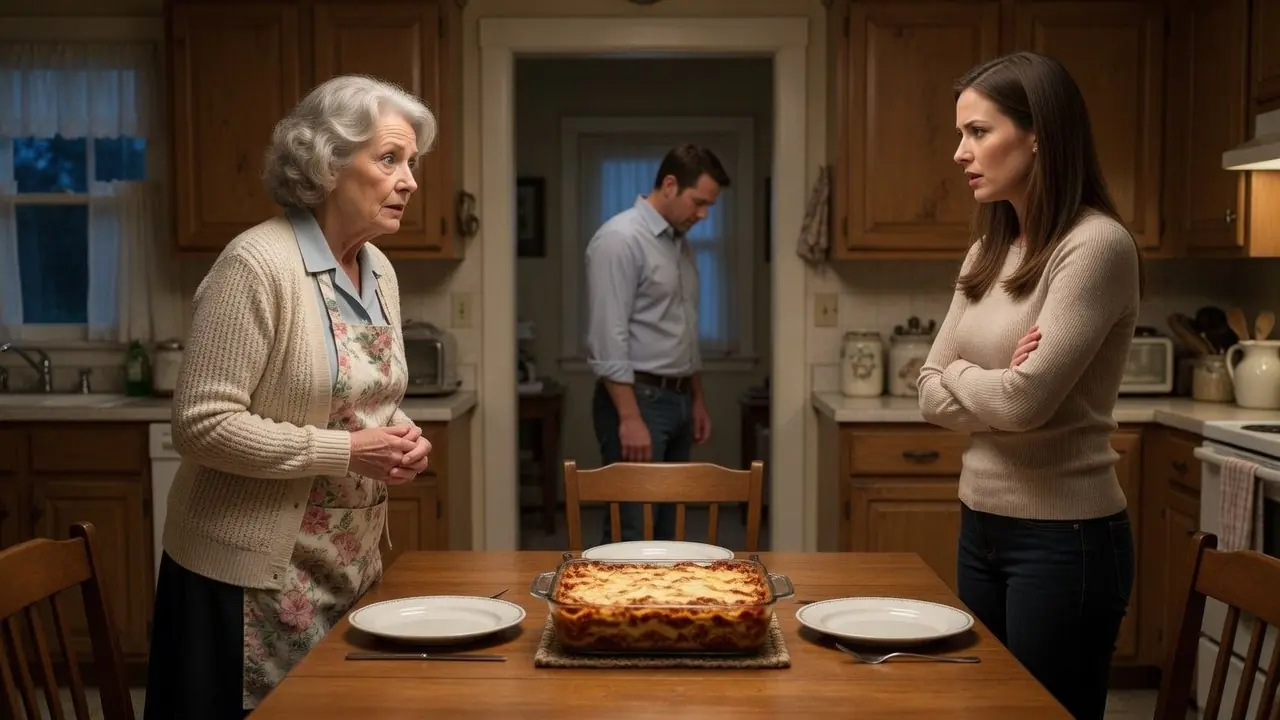
“Yes,” I said quietly. “Because now you have made it matter.”
He flinched.
Ashley pushed back her chair.
“I need to get ready for work.”
She left the kitchen quickly, but I saw anger in the sharpness of her steps.
David remained.
For a moment, he looked like my little boy again.
Confused.
Ashamed.
Wanting me to make it easier.
“Mom,” he said softly, “I never wanted to hurt you.”
I believed that.
And I also knew it did not excuse him.
“David, harm does not disappear because you were not brave enough to intend it.”
His eyes filled.
“I was trying to keep my marriage together.”
“By letting your wife push your mother out of her home?”
He covered his face.
“She said you would be happier somewhere smaller. She said you were lonely here. She said the house was too much.”
“And what did I say?”
He lowered his hands.
“You said you were fine.”
“I said it many times.”
He looked at the deed.
“I should have listened.”
“Yes,” I said. “You should have.”
The formal letter arrived three days later.
Mr. Feldman handled it with more restraint than I might have managed. He confirmed my ownership, outlined the terms of their occupancy, and provided proper written notice. Thirty days. No threats. No insults. Just facts printed on legal letterhead.
Ashley read the letter in the living room and laughed once.
“This is unbelievable.”
David said nothing.
She turned on him.
“You’re just going to let her do this?”
He looked exhausted.
“Ash, we told her to leave.”
“We suggested a healthier arrangement.”
“No,” he said quietly. “You told her to pack her bags.”
I was in the kitchen when he said it.
I did not smile.
But I noticed.
Truth had begun its slow work.
Ashley did not leave quietly.
People like her rarely do when the story stops obeying them.
She called her mother. Then her best friend. Then, I suspect, a lawyer of her own. For a week, she moved through the house like an offended queen forced to endure a peasant’s misunderstanding.
She stopped speaking to me except through David.
“Tell your mother we’ll be using the dining room Sunday.”
I looked at David.
“No.”
He blinked.
“No?”
“She can ask me herself. And the answer will still be no.”
Ashley appeared in the doorway.
“We have friends coming.”
“You can meet them elsewhere.”
“This is still our temporary residence.”
“And my permanent home.”
Her face tightened.
“You’re enjoying this.”
“No,” I said. “I am surviving it.”
She had no response to that.
The following Sunday, Ashley’s parents came over.
I had not invited them.
Her mother, Patricia, wore pearls and carried a pie from a bakery she pretended was homemade. Her father, Alan, was a retired insurance executive with a soft voice and calculating eyes. They arrived at two o’clock, clearly prepared to mediate.
I served coffee because I was raised properly.
Ashley sat beside her mother on the sofa. David sat in Tom’s old chair, which I had brought back from the basement myself. He had helped carry it up without a word.
Patricia began gently.
“Margaret, this has all become very emotional.”
I stirred my coffee.
“Yes.”
“We understand you feel attached to the house.”
I looked at her.
“Attached?”
She smiled as if speaking to someone fragile.
“At your stage of life, change can feel threatening.”
David closed his eyes.
Ashley watched me closely.
I set my spoon down.
“Patricia, this is not about attachment. This is about ownership.”
Alan cleared his throat.
“No one disputes that the paperwork may be in your name.”
“The deed disputes it quite clearly.”
He looked irritated.
“What I mean is, surely you understand David has a future interest in the property.”
“Only if I choose to leave it to him.”
That sentence landed like a glass breaking.
Ashley’s head snapped up.
David looked at me.
I had not planned to say it that way.
But once I did, I realized it was true.
For years, I had assumed David would inherit the house because he was my son. Not because he earned it. Not because he respected it. Simply because blood moves papers after death unless someone changes the instructions.
Ashley’s face changed first.
There it was.
The plan beneath the plan.
She had not only wanted the house now.
She had been counting on later.
Patricia said carefully, “Surely you would not disinherit your only child.”
I looked at David.
He looked stricken.
“No,” I said. “I have not decided anything. But I have learned that leaving a gift to someone who sees you as an obstacle is not love. It is surrender.”
David whispered, “Mom.”
Ashley stood.
“This is manipulation.”
I turned to her.
“No. Manipulation is moving into a widow’s home, changing her rooms, suggesting she is too old to live independently, pressuring her son, and then telling her to leave the house she owns.”
Patricia gasped.
Ashley’s face went red.
“That is not what happened.”
“It is exactly what happened.”
David finally spoke.
“Ashley.”
She turned.
“Don’t.”
He stood slowly.
“She’s right.”
The room fell silent.
Ashley stared at him.
“What did you say?”
David looked pale, but he did not sit down.
“She’s right. We crossed a line.”
“We?” Ashley snapped.
“Yes. We. You pushed, and I let you. That makes it we.”
For the first time in months, I saw my son’s spine return.
It did not erase what he had done.
But it mattered.
Ashley grabbed her purse.
“I’m not sitting here being attacked.”
“No one is attacking you,” David said.
She laughed coldly.
“Of course you’d say that now. You’ve always been weak when it comes to her.”
I stood.
“That is enough.”
Ashley turned her anger on me.
“No, Margaret. It is enough. You act like some sweet old widow, but you are selfish. You have this huge house, and you would rather sit in it alone with dead memories than let your son build a life.”
The room went still.
Dead memories.
I heard Patricia whisper, “Ashley.”
But it was too late.
I looked at my daughter-in-law.
For once, my voice did not shake.
“Those dead memories include the man who worked overtime for twenty years so this roof would never be taken from me. They include the childhood of the husband you claim to love. They include every birthday, every sickness, every sacrifice that made David’s life possible before you ever entered it.”
Ashley’s mouth tightened, but I continued.
“And if you believe love means pushing an old woman out so you can decorate a nursery in her grief, then you do not understand family. You understand acquisition.”
David looked down.
Ashley’s father stood.
“I think we should go.”
“Yes,” I said. “I think you should.”
They left with the bakery pie unopened.
Ashley went with them.
David stayed.
For two days, Ashley did not return.
David slept in the guest room alone.
On the third evening, he found me in the garden trimming Tom’s roses. It was early spring, and the first buds had begun to open. He stood by the gate for a long time before speaking.
“Mom.”
I kept my shears in hand.
“Yes?”
“Ashley wants me to move out with her immediately.”
“That seems wise.”
He swallowed.
“She also wants me to stop speaking to you for a while.”
I clipped a dead stem.
“And what do you want?”
He rubbed his eyes.
“I don’t know.”
I turned then.
He looked exhausted, ashamed, and younger than thirty-nine.
“I love her,” he said.
“I know.”
“But I don’t recognize what we became here.”
“Then recognize it now.”
His eyes filled.
“I’m sorry.”
The words were small.
Not enough for the wound.
But they were real.
“I should have stopped her,” he said. “No. I should have stopped myself. I let wanting a future make me cruel about your past.”
I felt my throat tighten.
“You did.”
He nodded.
“I know.”
For a moment, we stood among the roses in the soft evening light. A breeze moved through the garden, carrying the scent of damp soil and early blooms. Tom had always said roses only looked delicate to people who had never been cut by them.
David looked at the house.
“Dad would be ashamed of me.”
I wanted to soften that.
But truth stood between us, and I respected it too much now to push it aside.
“Yes,” I said quietly. “He would.”
David closed his eyes.
The words hurt him.
They hurt me too.
Then I added, “But he would not stop loving you.”
A tear slipped down his cheek.
That was the first time I had seen my son cry since Tom’s funeral.
He moved out the following weekend.
Ashley came with a rented truck, her mouth pressed into a hard line. She did not speak to me. I did not speak to her. David carried boxes down the stairs. He paused once in the hallway by the old pencil marks on the doorframe where Tom had measured his height every birthday until he was sixteen.
He touched one mark with his fingers.
Age nine.
The year of the deed.
I saw him wipe his face before picking up another box.
When the truck was full, David stood on the porch.
Ashley was already in the passenger seat, staring forward.
He turned to me.
“Can I call you?”
“Yes.”
“Will you answer?”
I looked at him.
“Not every time. Not right away. But yes, David. I am still your mother.”
His face crumpled.
He hugged me then.
Hard.
Like a man trying to hold together something he had helped crack.
“I’m sorry,” he whispered.
“I know.”
“I love you.”
“I love you too.”
Love did not fix everything.
But it kept the door from becoming a wall.
After they left, the house felt enormous.
For one hour, I walked through it listening to the absence of Ashley’s footsteps, her phone calls, her cabinet doors closing too sharply, her voice saying Margaret as if my name were a problem.
Then I opened the windows.
Every one of them.
Cold air moved through the rooms, carrying out the stale tension that had been trapped there for months.
I brought Tom’s chair fully back into the living room and placed it by the front window. I rehung the family photos in the hallway. I returned the old curtains Ashley hated. I put my mother’s brooch back in the jewelry box and placed the deed in a fireproof safe Mr. Feldman insisted I buy.
Then I did something I had not done in years.
I sat at the kitchen table and ate lasagna for breakfast.
Cold.
Straight from the pan.
Tom would have laughed until he cried.
Over the next few months, I rebuilt my life inside the house I had almost been guilted into leaving.
Not dramatically.
Quietly.
I joined a gardening club. I invited women from church for tea on Thursdays. I turned the upstairs guest room into a sewing room, then later into a reading room because I realized I liked buying fabric more than sewing it.
I changed my will.
That was the hardest part.
Not because I wanted to punish David.
But because love and wisdom are not always the same instruction.
Mr. Feldman sat across from me in his office, hands folded.
“You do not have to decide in anger,” he said.
“I am not angry today.”
“Good.”
“I still want David to inherit something.”
“That can be arranged.”
“But not control of the house without conditions.”
He nodded.
We created a plan.
The house would remain in a trust. David could live in it after my death if he respected the terms, but he could not sell it quickly under pressure from anyone else. If he chose not to live there, it would eventually be sold, with part of the proceeds going to him and part to a scholarship fund in Tom’s name for trade school students who worked with their hands the way Tom had.
When I signed the papers, I cried.
Mr. Feldman handed me tissues without speaking.
Some signatures hurt because they are not only legal acts.
They are acknowledgments that the people we love may not be safe with everything we leave behind.
David called every Sunday.
At first, our conversations were stiff.
He told me about work. I told him about the garden. He asked if the gutters had been cleaned. I told him I had hired Mr. Alvarez down the street to do it, and he sounded wounded that I had not asked him.
“You’re busy,” I said.
“I could have come.”
“Maybe next time.”
There was a next time.
And another.
Slowly, he began showing up again.
Not with Ashley.
Alone.
He repaired the loose railing on the back steps. He carried mulch into the garden. He sat with me on the porch and drank coffee in silence. Sometimes he apologized again, and sometimes I told him not to, because apology repeated too often can become another request for the wounded person to provide comfort.
Ashley did not come back.
Six months after they moved out, David told me they were separating.
I was not surprised.
Still, I did not celebrate.
“I’m sorry,” I said.
He looked at me across the kitchen table.
“Are you?”
“I am sorry you are hurting. That is not the same as being sorry she is gone.”
He nodded slowly.
“That’s fair.”
He told me then that Ashley had been pressuring him for months before the lasagna night. She had wanted the house refinanced somehow. She wanted her name connected to it. She believed they could convince me to move, then gradually take over expenses, then claim some practical right to ownership later. She had spoken to a real estate agent about the property value. She had looked up rental listings for senior apartments. She had even made a private list of renovations.
“Nursery upstairs?” I asked.
David looked down.
“Yes.”
“In my bedroom?”
He closed his eyes.
“Yes.”
That one hurt.
Even after everything.
David whispered, “I didn’t know about that part until later.”
“But you knew enough.”
“Yes,” he said. “I knew enough.”
He did not defend himself.
That mattered more than any dramatic apology.
A year after the night Ashley told me to leave, David came over for dinner on a rainy Thursday.
I made lasagna again.
For a moment, when I placed it on the table, we both grew quiet.
The memory sat down with us.
David looked at the dish, then at me.
“You didn’t have to make that.”
“I know.”
“Why did you?”
I cut him a corner piece, crisp at the edges, just the way he liked.
“Because I refuse to let one bad night steal every good memory attached to this meal.”
His eyes filled.
“Mom.”
“Eat before it gets cold.”
He laughed softly through tears.
We ate.
Not as if nothing had happened.
As if something had happened and we had decided to continue anyway.
Later, while David washed the dishes without being asked, I stood by the back window and looked at Tom’s roses in the rain. They bent under the water but did not break.
I thought about the deed in the safe upstairs.
A paper shield.
A husband’s old act of protection reaching across decades to save me from a betrayal he never could have imagined.
I thought about how close I had come to walking out of my own life because two people confused my love with permission.
Then I thought about the moment I unfolded that document and read my name.
Margaret Anne Sullivan.
Sole Owner.
It was more than legal language.
It was a reminder.
I belonged somewhere.
I had a right to stay.
Not because I was useful.
Not because I was needed.
Not because I cooked, cleaned, babysat, sacrificed, or made life easier for anyone.
I had a right to stay because it was my home.
That is something many mothers forget.
We spend so much of our lives making room for everyone else that we begin to believe love requires us to disappear. We give children bedrooms, husbands comfort, relatives forgiveness, daughters-in-law patience, and then one day someone looks at the space we created and assumes we are the only thing left to remove.
But I was not furniture to be moved.
I was not a memory to be boxed.
I was not a widow taking up too much space in the house her husband built.
I was Margaret Anne Sullivan.
Tom’s wife.
David’s mother.
The woman who planted the roses, paid the taxes, buried her husband, held her son, and kept the lights on through every storm life sent through that front door.
Ashley thought she had won when she told me to pack my bags.
She thought my silence meant defeat.
She thought the house was already hers because she wanted it badly enough and had convinced my son not to stand in her way.
But she had misunderstood one important thing.
The house had never been waiting for her.
It had been protecting me.
And the document hidden beneath faded velvet for nearly three decades did more than prove ownership.
It reminded me who I was before grief, guilt, and motherhood taught me to make myself smaller.
That night, after David left and the dishes were dry, I walked through the quiet house, turning off lights.
In the hallway, I paused by the pencil marks on the doorframe.
David at five.
David at nine.
David at sixteen.
So much love lived there.
So much pain too.
I touched the wood gently.
Then I turned off the hall light and went upstairs to my room.
My room.
My house.
My life.
And for the first time in months, I slept through the night without fear that someone was waiting to take it from me.