Margaret Whitfield learned what her daughter truly thought of her on a Tuesday morning, under the bright lights of a grocery store, with a loaf of bread, a carton of eggs, and a small bouquet of pink flowers sitting on the conveyor belt.
The cashier swiped her card once, then twice, then gave Margaret the careful look people reserve for elderly women they think are beginning to lose control of their lives. “I’m sorry, ma’am,” she said softly. “It’s declined.”
Margaret smiled automatically because women of her generation were trained to make humiliation easier for everyone else in the room.
“That’s strange,” she said. “Try this one.”
The second card declined too.
Then the debit card.
Then the emergency credit card Harold had insisted she keep in her wallet for nearly thirty years.
Behind her, a man sighed loudly. A woman shifted her cart. The cashier looked more embarrassed than annoyed, which somehow hurt worse. Margaret could feel the whole line quietly rewriting her story: the old woman with nice hair and an empty bank account, buying flowers she could not afford.
Margaret left the groceries there.
She walked out with her back straight, her purse tucked under one arm, and her dignity held together by habit alone. Only when she reached her old Honda Civic did she sit behind the wheel, lock the doors, and let her hands tremble.
Her cards had not failed by accident.
She knew it before she called the bank.
Her daughter had done this.
Renee.
Her careful, polished, successful daughter, who always spoke in soft tones before sliding a knife between the ribs.
Margaret Whitfield was sixty-nine years old, widowed, and the owner of a secret that would have made half the town faint if they knew it. Eight months earlier, she had won two hundred eighty-nine million dollars on a lottery ticket she bought from Dawson’s Corner Market, the same place where she and Harold had bought Friday scratch tickets for almost forty years.
Harold had been dead three years by then.
He had died in the small downstairs bedroom after cancer thinned his body but never softened his grip on her hand. His last clear words were not about heaven or pain or even the children. They were about the house.
“Margaret,” he whispered, his fingers dry against hers, “you keep Clearwater Lane.”
“I will,” she promised.
“Don’t let anybody make you feel like you’re in the way.”
At the time, she thought he was only afraid grief would make her lonely enough to sell.
Now she understood.
Harold had known their daughter.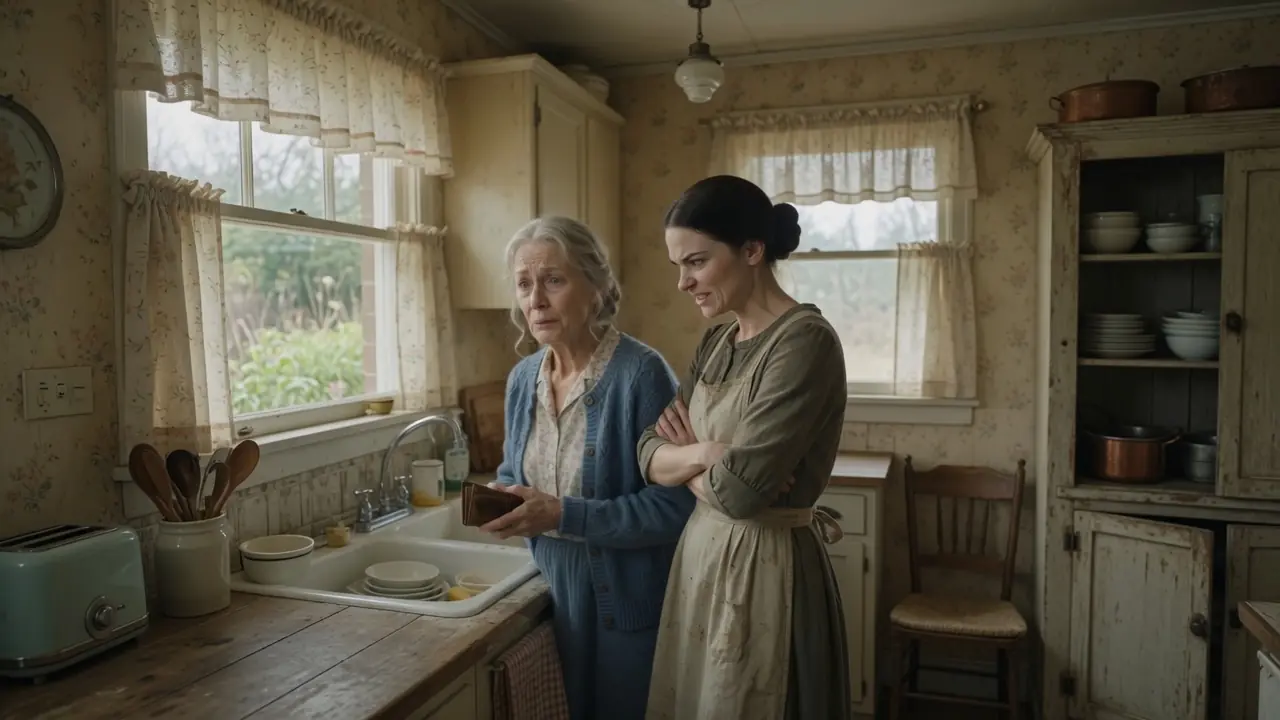
Maybe not all of her, not the woman Renee would become after his death, but enough to sense the danger. Enough to know that some children look at aging parents and stop seeing the hands that raised them. They see square footage. Retirement funds. Medical risk. Inheritance delayed.
“Who will you tell first?” Evelyn asked.
Margaret had looked down at Harold’s photograph, the one she kept in her purse, and said, “No one yet.”
Evelyn raised one eyebrow. “That is a large secret to carry alone.”
Margaret nodded. “So is disappointment.”
That was how the test began.
She did not call it a test at first. She simply continued living the way she always had. She drove the old Honda. She used coupons. She bought day-old bread when it was still good. She wore the blue cardigan Harold used to tease looked like something a librarian would wear in a snowstorm.
And she listened.
Renee started first.
Her daughter came by every other Sunday with her husband Brad, a man who treated every family dinner like a business lunch he had agreed to attend under protest. Renee wore expensive perfume and soft sweaters in pale colors. She always kissed Margaret’s cheek, but her eyes went past her mother almost immediately, scanning the kitchen, the curtains, the cabinets, the old appliances.
“Mom,” Renee said one afternoon, standing near the sink while Margaret rinsed plates, “have you thought more about downsizing?”
Margaret kept her hands in the warm water. “I live in a three-bedroom ranch, not a castle.”
“It’s a lot for one person.”
“It was enough for four.”
Renee gave a patient sigh. “That was different. You had Dad.”
Margaret dried one plate slowly.
There were ways Renee said Harold’s name that made Margaret feel as if widowhood had reduced her from a wife to a maintenance issue.
Brad joined from the dining room doorway. “The market is strong right now, Margaret. That lot alone is worth more than you think.”
Margaret looked at him. “I know what my home is worth.”
He chuckled. “Sentimentally, sure.”
Renee shot him a look, but not because she disagreed. Because he had spoken too plainly.
That was Renee’s way. She liked cruelty dressed in concern.
A week later, she arrived with assisted-living brochures.
They were glossy, cheerful, and insulting. Smiling seniors doing water aerobics. A dining room with linen napkins. A garden bench beneath perfect trees. Words like safety, community, transition, independence.
Margaret read one sentence twice.
A home without the burden of homeownership.
Burden.
There it was.
Renee sat across the kitchen table with both hands folded. “Mom, I just want you to look.”
“I’m not interested.”
“You haven’t even considered it.”
“I don’t need to.”
Renee’s expression tightened. “You are being stubborn.”
Margaret looked at the woman across from her and suddenly saw the little girl Renee had been at six years old, refusing to wear a coat because the sleeves itched. Harold had laughed and carried the coat anyway. Margaret had knelt in the hallway and patiently explained cold weather until Renee finally surrendered.
Now Renee was forty-four, and patience no longer felt like motherhood. It felt like surrender.
“This is my home,” Margaret said.
Renee’s mouth softened into something that pretended to be compassion. “For now.”
The words stayed with Margaret for weeks.
For now.
Her son Derek was different. He did not push brochures. He simply disappeared when she needed him and reappeared when he needed money. He called with stories about repairs, delayed contracts, temporary problems. But Derek’s neglect hurt less than Renee’s control because Renee was present enough to make rejection feel personal.
Then, eight months after the lottery win, Margaret’s cards failed at Whole Foods.
When she called the bank from the parking lot, the young representative told her the accounts had been restricted pending “family concern review.” He would not say more over the phone.
Family concern.
Margaret almost laughed.
Renee had finally stopped circling.
She had moved.
Margaret drove home first, not to cry, but to prepare. She parked in the driveway of the house on Clearwater Lane, walked through the front door, and stood in the hallway where family photographs lined the wall.
Renee on her first day of school.
Derek holding a baseball bat.
Harold on the porch with a coffee mug.
Margaret and Harold at their thirtieth anniversary, smiling like people who had built something worth keeping.
She touched Harold’s frame.
“You warned me,” she whispered.
Then she went to the kitchen drawer and took out the folder Evelyn had prepared for exactly this moment.
Renee arrived forty minutes later.
She did not knock.
That was the first change Margaret noticed clearly. Her daughter used to knock because this was her mother’s house. Now she used her key because she had begun thinking of it as a future asset.
Renee stepped into the kitchen wearing a clean white coat, her blond hair smooth around her face, one hand holding a folder of assisted-living brochures. Brad was not with her. That meant Renee intended this to sound like love.
“Mom,” she said, “we need to talk.”
Margaret stood by the sink with her empty wallet in her hand.
“My cards were declined.”
Renee did not even pretend surprise properly. Her face tightened for one second before she arranged it into concern.
“I know.”
Margaret stared at her. “You know?”
“I spoke with the bank.”
“You froze my cards?”
Renee placed the brochures on the table. “Temporarily restricted. There’s a difference.”
Margaret felt something inside her go very still.
“You humiliated me in a grocery store.”
Renee closed her eyes briefly, as if Margaret were being dramatic. “Mom, this is exactly what I mean. You are becoming emotional and reactive.”
Margaret’s fingers tightened around the wallet. “Because I object to my daughter cutting off my access to my own money?”
“Because you are not making safe decisions.”
“What decision was unsafe?”
Renee gestured around the kitchen. “This. Living alone. Driving yourself everywhere. Buying things you don’t need when you should be planning for care.”
Margaret gave a soft laugh.
“Flowers,” she said.
Renee blinked. “What?”
“I bought flowers. That was one of the things in my cart.”
Renee’s mouth tightened. “Mom, this isn’t about flowers.”
“No,” Margaret said. “It is about control.”
Renee stepped closer, her voice dropping into the polished tone she used when she wanted to sound reasonable while being cruel. “You are a sixty-nine-year-old widow living alone in a house that is too much for you. Your accounts are not large enough to support this kind of stubborn independence forever. If you sell now, you can move somewhere safe and stop pretending you are still capable of managing everything.”
Margaret looked at her daughter for a long moment.
There it was.
Not concern.
Not love.
A verdict.
Old. Incapable. In the way.
Margaret set the wallet on the counter.
“You think I’m broke.”
Renee sighed. “I think you’re vulnerable.”
“No,” Margaret said. “You think I’m broke, and you think that gives you permission to push.”
Renee’s face hardened. “I am your daughter.”
“Yes,” Margaret said. “That is what makes this ugly.”
The sentence struck harder than Renee expected. Her eyes flashed, and for the first time the softness vanished completely.
“Fine,” she said. “You want the truth? I am tired of watching you sit in this house like it’s a shrine. Dad is gone. You are not the woman you were. Derek is useless, and I’m the only one trying to make practical decisions before everything becomes a crisis.”
Margaret’s voice stayed low. “You froze my cards to create the crisis.”
Renee looked away.
Only for a second.
But Margaret saw it.
She walked to the kitchen drawer, opened it, and pulled out the sealed folder.
Renee frowned. “What is that?”
Margaret placed it on the table between the brochures. The old woman in the faded cardigan and the polished daughter in the white coat stood across from each other as the refrigerator hummed quietly behind them.
“I needed to know,” Margaret said.
Renee’s eyes narrowed. “Know what?”
“Who loved me when they thought I had nothing left to give.”
Margaret opened the folder.
Inside were the lottery documents, trust summaries, attorney letters, and a bank confirmation page with numbers so large they looked unreal even to Margaret.
Renee stared.
At first, she did not understand.
Then she did.
Her face changed slowly. Annoyance became confusion. Confusion became shock. Shock became fear. The kind of fear greedy people feel when they realize they have insulted the vault before learning the combination.
“Mom,” she whispered.
Margaret held up the first page. “Two hundred eighty-nine million dollars.”
Renee gripped the back of a chair.
“You won the lottery?”
“Eight months ago.”
Renee looked from the papers to her mother’s face. “You kept this from me?”
Margaret smiled sadly. “And you still found a way to show me who you were.”
Renee’s eyes filled, but Margaret did not know yet whether the tears were grief, shame, or calculation. She waited.
“Mom, I was trying to protect you.”
“No, Renee. You were trying to pressure me while you thought I was weak.”
Renee reached for the table, but Margaret slid the documents back toward herself.
“Do not touch them.”
The command froze Renee completely.
Margaret had never spoken to her daughter that way. Not as a child. Not as a teenager. Not as an adult. But something in her voice had changed after the grocery store. It no longer asked for love. It demanded truth.
Renee lowered her hand.
“What are you going to do?” she asked.
Margaret gathered the assisted-living brochures and tapped them into a neat stack.
“I am going to stay in my house.”
Renee’s mouth opened.
“I am going to keep Clearwater Lane because your father asked me to, and because I want to.”
“Mom—”
“I am going to fund the senior home repair program at the community center so other widows are not bullied out of houses they love.”
Renee looked stricken.
“And I am going to remove you from every emergency contact, financial permission, medical authorization, and estate document you thought gave you leverage.”
The room went silent.
Renee’s tears fell then.
“Mom, please.”
Margaret looked at her daughter and saw the little girl she had loved, the woman she had excused, and the stranger she had become.
“I have always loved you,” Margaret said. “That is why I kept hoping concern was hiding somewhere under your ambition.”
“It was,” Renee insisted.
Margaret shook her head. “No. Concern brings groceries. Concern fixes porch steps. Concern sits beside someone without counting the resale value of the chair.”
Renee sank into the chair.
“I made a mistake.”
Margaret placed the brochures in front of her.
“No,” she said. “You made a plan.”
That broke something in Renee’s face. She pressed both hands over her mouth and cried harder, but Margaret stayed standing.
She had spent decades rushing toward her children’s tears. Now she understood that not every tear was a call to mother. Some were simply the sound of consequence arriving.
“You will leave now,” Margaret said.
Renee looked up, stunned. “You’re kicking me out?”
Margaret’s eyes moved around the kitchen. Harold’s mug. The old curtains. The pantry door. The home Renee had tried to turn into a transaction.
“I am asking you to leave my home.”
Renee stood slowly. At the doorway, she turned back. “Are you cutting me out?”
Margaret looked at her for a long time.
“I am cutting off your access,” she said. “What happens to our relationship depends on whether you can love me without it.”
Renee left without another word.
After the door closed, Margaret finally sat down. Her knees felt weak, and her hands trembled as she gathered the lottery papers. The house was quiet again, but it no longer felt like loneliness.
It felt like protection.
That evening, Margaret called Evelyn.
“It happened,” she said.
Evelyn did not ask what. “Do you want to proceed with the revisions?”
“Yes.”
Within seventy-two hours, Renee was removed from every legal role. Derek too, after Evelyn confirmed he had ignored three calls from his mother in the previous month but responded within six minutes when Evelyn mentioned “estate updates.” The trust was restructured to protect Margaret’s home, fund her care on her terms, and direct most of the money into a foundation under independent management.
Renee called nineteen times the first day.
Margaret did not answer.
On the fourth day, a letter arrived by courier. Renee had written it by hand, which surprised Margaret enough to open it.
The first page was full of excuses.
Fear. Stress. Practicality. Love. Concern.
Margaret nearly stopped reading.
Then, on the second page, the tone changed.
I did not see you as my mother. I saw you as a responsibility I resented and an inheritance I expected. I am ashamed to write that sentence, but it is the truth.
Margaret sat at the kitchen table for a long time with the letter in her hands.
Truth did not erase cruelty.
But it opened a door lies never could.
Two weeks later, Renee came back. This time she knocked.
Margaret opened the door but did not step aside immediately.
Renee stood on the porch wearing jeans, no white coat, no glossy folder, no polished smile. In her hands was a paper grocery bag.
“I brought food,” Renee said, her voice trembling. “Not because you need it. Because I should have done it before.”
Margaret looked at the bag, then at her daughter’s face.
“What did you bring?”
Renee blinked, then looked down. “Milk. Eggs. Bread. Apples. Tomato soup. And pink flowers.”
Margaret’s throat tightened despite herself.
Pink flowers.
The flowers she had abandoned at Whole Foods.
She stepped aside.
Renee entered carefully, like a person visiting sacred ground after once planning to sell it. She placed the groceries on the counter and did not open cabinets without asking. That small respect nearly undid Margaret more than any apology.
They sat at the table.
Renee cried again, but this time she did not ask for reassurance quickly.
“I was cruel,” she said.
“Yes,” Margaret answered.
“I was greedy.”
“Yes.”
“I thought if I made you feel scared, you would let me take over.”
Margaret’s eyes filled, but her voice stayed steady. “Yes.”
Renee took a shaking breath. “I don’t know how to forgive myself.”
Margaret looked toward Harold’s photograph.
“Good,” she said softly. “Start there. Do not forgive yourself too quickly.”
Renee nodded, crying silently.
Their relationship did not heal in one afternoon. Life rarely gives that kind of clean ending. Margaret did not restore Renee’s access. She did not rewrite the trust. She did not pretend assisted-living brochures and frozen cards were misunderstandings.
But she allowed Renee to visit.
Once a week at first.
Then twice.
Renee began showing up with groceries, not because Margaret needed them, but because she needed to practice love without control. She learned to ask before opening drawers. She learned to sit in the kitchen without mentioning the market value of the house. She learned to talk about Harold without using his memory as leverage.
Derek came eventually too, full of apologies and requests tangled together. Margaret loved him, but she was no longer fooled by softness without action. He was given no access, only boundaries.
The money changed the town quietly.
Margaret funded home repairs for seniors, medical transportation, food pantry expansions, and scholarships for caregivers. She paid off the community center mortgage anonymously at first, then publicly when Evelyn convinced her that visible generosity might inspire better behavior than secrecy.
But Clearwater Lane stayed exactly where it was.
The porch was repaired.
The roof replaced.
The maple tree trimmed.
The pantry door with the children’s height marks protected behind clear varnish.
On the first anniversary of her lottery win, Margaret returned to Dawson’s Corner Market. She bought bread, chicken, olive oil, a bouquet of pink ranunculus, and one scratch ticket for Harold. At checkout, her card approved immediately.
She carried the groceries to her Honda, placed the flowers on the passenger seat, and sat quietly for a moment.
Money had not changed her daughter.
It had revealed her.
But time, shame, and truth had begun the slower work money could not do.
Margaret drove home to Clearwater Lane, where Renee was waiting on the porch with coffee and no brochures. For a second, Margaret saw the little girl her daughter had once been. Then she saw the woman trying, awkwardly and painfully, to become worthy of being invited inside again.
That was not forgiveness.
Not yet.
But it was a beginning.
And Margaret, who had survived grief, humiliation, and the terrible clarity of sudden wealth, had learned one final thing.
A mother can love her child with her whole heart and still lock the door where her dignity lives.