My daughter said, “Sometimes I wish she would just disappear.”
She meant me.
Her own mother.
She wanted me gone so she could inherit my five-million-dollar estate, have the wedding she truly wanted, and never again deal with what she called my control.
The next morning, I canceled her $250,000 wedding, transferred the remaining money back into my own account, and disappeared before she could beg.
My name is Lydia Monroe. I am sixty-nine years old, a widow, and a former real estate broker from Charlotte, North Carolina.
I spent most of my life understanding contracts better than people. Contracts were clean. Contracts told you what was promised, what was owed, what would happen if someone broke faith.
People were messier.
Especially the people you loved.
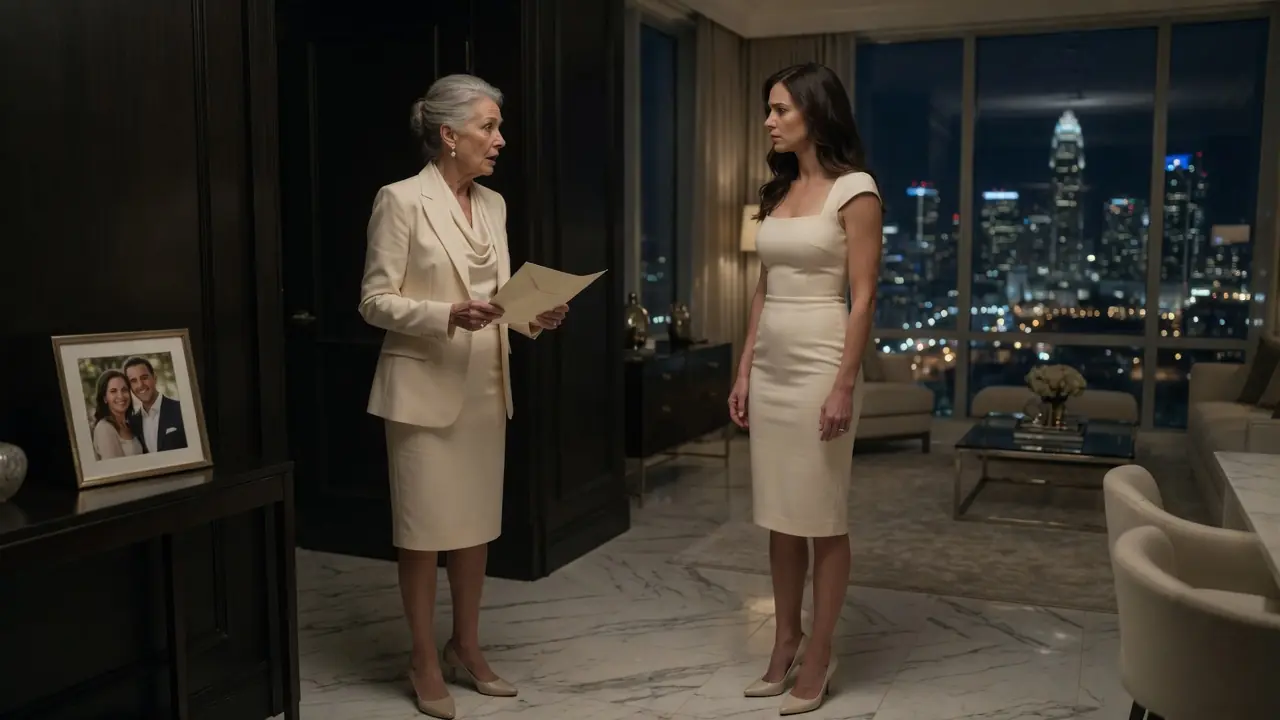
The lights of Charlotte shimmered beyond my penthouse windows that night, a river of gold beneath the dark sky. From that height, everything looked orderly. Roads, buildings, offices, towers, investments, progress. I liked order. It comforted me.
I was sitting at my glass dining table, reviewing investment papers, when the private elevator chimed.
A moment later, my daughter’s heels clicked across the marble floor.
“Mom,” Clara called, radiant as she stepped into the room.
Liam followed close behind her, tall, handsome, and polished in the way young men are when they have learned how much a tailored jacket can hide.
“Clara,” I said, rising to kiss her cheek. “Liam, good to see you both.”
He smiled easily.
“Your place looks amazing, Mrs. Monroe. That view never gets old.”
“Please,” I said, motioning them toward the table. “Call me Lydia.”
Dinner was already waiting. Roast chicken the way Clara liked it, crisp potatoes, asparagus with lemon, and the bottle of French white wine I had been saving for a special occasion. I had not known the occasion when I opened it, but a mother sometimes senses when a daughter arrives carrying news.
We ate surrounded by city light and soft music.
I noticed the way Clara kept glancing at Liam. Her fingers twitched against the stem of her wine glass. Her face had the bright, breathless look she used to get as a little girl when hiding a secret behind her back.
Finally, she burst out.
“Mom. Liam proposed.”
For one perfect second, I forgot every lonely year since my husband died.
“Oh, sweetheart.”
I reached across the table and took her hands.
“I’m so happy for you.”
Liam grinned.
“She said yes before I even finished asking.”
I laughed through the sudden sting of tears.
“I couldn’t be prouder.”
Clara’s face softened, but only for a moment. Then she exchanged a quick look with Liam and cleared her throat.
“We’ve been talking about the wedding.”
“Of course,” I said.
“We want it at Quail Hollow.”
“The golf club?”
She nodded eagerly.
“It’s beautiful.”
“It is,” I said. “Your father and I went to a gala there years ago.”
At the mention of her father, Clara’s smile dimmed slightly, though I told myself I imagined it.
“It’s perfect,” she continued, “but it’s expensive.”
Liam leaned back with a careful sigh.
“The full package might be around two hundred and fifty thousand dollars.”
Clara looked down at her plate.
“Even with our savings, it’s not realistic. We might have to settle for something smaller.”
The hesitation in her voice tugged at me.
My logical side whispered caution.
A quarter of a million dollars for one day was not sensible.
But love has a way of making sensible things sound cold.
“Don’t be silly,” I said. “You only get married once. You’ll have your dream wedding. I’ll take care of it.”
Clara blinked as if surprised.
“Mom, no. You’ve already done so much.”
“Please,” I said. “Let me do this. It makes me happy.”
Liam raised his glass.
“You’re incredible, Mrs. Monroe.”
That night, after they left, I sat in my office with the city glowing behind me. On the shelf was a framed photograph of Clara at six years old, standing beside a sold sign nearly twice her height. She was missing one front tooth and holding my hand with both of hers.
I thought of her father, Richard.
He would have been so proud to see her engaged.
At least, that was what I told myself.
Over the next few weeks, I handled everything personally. I reviewed every contract line by line, just as I had done for decades in real estate.
The venue.
The caterer.
The florist.
The band.
The photographer.
The designer.
The planner.
Each contract carried the same buried clause.
The primary client may cancel with thirty days’ written notice, forfeiting all non-refundable deposits.
I signed my name on every document.
Lydia Monroe.
Primary client.
I paid seventy-five thousand dollars in non-refundable deposits.
The wedding planner praised my efficiency.
“You are the kind of client we dream of,” she said.
I smiled politely.
Sometimes, in quiet moments, I wondered if I was doing too much. But then I would hear Clara laughing on the phone as she described flower arrangements, gown fittings, table settings, and imported champagne, and my doubts would fade.
This was my gift.
A mother’s final grand gesture before her daughter stepped into a new life.
I organized every receipt, every invoice, every signed contract into a leather binder labeled:
Clara’s Wedding Master File.
Then I placed it inside my safe, beside the documents for my real estate holdings and the latest statement from my investment firm.
The metal door closed with a soft click.
For a moment, I rested my hand against it.
Richard’s voice drifted through memory, calm and wise as ever.
“Lydia, you can give everything, but make sure they deserve it.”
I brushed the thought away.
Clara was my daughter.
Surely that was enough.
The weeks after the engagement passed in a blur of planning, contracts, and fittings. Every morning brought another email, another invoice, another question Clara seemed too busy to answer but too controlling to delegate.
I told myself it was stress.
Every bride gets overwhelmed.
But something in her tone had changed.
It started at the floral consultation.
The designer’s studio smelled of roses, peonies, and orchids. I sat beside Clara at a marble table while the designer showed us sample arrangements.
“I thought we could add white lilies,” I said. “They were your father’s favorite. It would be a beautiful way to honor him.”
Clara groaned without looking up.
“Mom, please. Nobody uses lilies anymore. They’re dated. They look like funerals, not weddings.”
The designer froze, one hand still resting on a vase.
I kept my voice gentle.
“Sweetheart, it would only be a small touch. Your father would have loved it.”
“This isn’t about him,” Clara said sharply. “It’s my day.”
The words landed harder than they should have.
My day.
As if the man who had loved her, raised her, paid for her education, and left behind the estate she expected to inherit had become an inconvenience to her aesthetic.
I forced a smile.
“Of course,” I said. “Whatever the bride wants.”
When the meeting ended, Clara walked ahead of me, heels clicking impatiently on the sidewalk.
“You’re upset again,” she said without turning.
“I only thought your father should be remembered.”
“Well,” she said, sighing, “he’ll be there in spirit. Let’s not make this emotional.”
I said nothing.
But something inside me cracked.
Small.
Silent.
Real.
Two weeks later came another fracture.
I was reviewing the updated guest list the planner had emailed when I noticed three names missing.
Margaret.
Helen.
Judith.
My closest friends.
The women who had brought soup after Richard died. The women who had sat with me through lonely Christmases. The women who had known Clara since she was small enough to fall asleep on my lap during book club.
I called Clara immediately.
“Honey, I think there’s been a mistake. My friends are not on the guest list.”
“That’s not a mistake,” she said brightly. “We had to make cuts.”
“Cuts?”
“Liam’s senior partners and their wives need those seats.”
“You replaced my friends with his co-workers?”
“Mom, they’re not just co-workers. They’re important for Liam’s career. Besides, your friends wouldn’t fit in.”
My hand tightened around the phone.
“They have known you since you were little.”
“I know, but this is a different kind of event.”
“It is your wedding.”
“Yes,” she said. “Exactly. My wedding.”
There it was again.
My.
Not ours.
Not family.
My.
I swallowed.
“It feels like I’m being pushed out of the day I’m paying for.”
Clara exhaled in irritation.
“Please don’t make this about money.”
I almost laughed.
Instead, I said quietly, “It isn’t about money.”
She paused.
“Mom, I have another call. We’ll talk later. Love you.”
The line went dead before I could answer.
That evening, I texted Margaret.
Change of plans. Venue capacity became tight. I’m sorry.
She replied almost instantly.
Don’t worry, Lydia. We’ll celebrate another way. I love you.
Her kindness hurt worse than anger would have.
The final wound before everything changed came at the bakery.
I arrived early for the cake tasting, heart lightened by the thought of watching Clara smile over buttercream and filling samples. The bakery smelled of vanilla, sugar, and almond paste. I gave my name at the front counter.
The receptionist blinked.
“Oh, Mrs. Monroe. Your daughter and her fiancé came this morning. They finalized everything.”
I stared at her.
“This morning?”
“Yes, ma’am. They said you were too busy.”
My phone buzzed.
A text from Clara.
Sorry, Mom. We made a quick decision so you wouldn’t have to bother. Don’t worry. It’s perfect.
I looked at the message until the words blurred.
“Could you tell me what flavor they chose?” I asked softly.
“Champagne sponge with passion fruit cream,” the receptionist said cheerfully. “Very trendy.”
Trendy.
Not meaningful.
Not shared.
Outside, the summer air felt heavy. Cars rushed along Providence Road, and I stood on the sidewalk feeling strangely hollow.
It hit me then.
I was not part of Clara’s wedding.
I was financing it.
When I got home, the penthouse felt foreign, like a hotel room I had overstayed. I poured a glass of water and sat by the window overlooking the city.
On the balcony, the lilies I had planted weeks earlier had bloomed white and elegant. My husband’s favorite flower. My idea of beauty, the kind that did not need approval.
Clara’s words replayed in my head.
This isn’t about him.
This isn’t about money.
It’s my day.
But it was our past that had made her future possible.
The money did not hurt nearly as much as the erasure did.
People say weddings bring families together. But watching the lights stretch across Charlotte that night, I felt the opposite.
Something between us was breaking.
Not suddenly.
Not loudly.
In small, deliberate fractures.
Four weeks before the wedding, I decided to give Clara her honeymoon gift early. A check, large enough for the trip she had been dreaming of.
I wanted the moment to be simple and private.
I slipped it into an ivory envelope with a note.
For your next chapter. With love, Mom.
The day was humid, the sky gray and heavy with rain. I parked in front of Clara’s high-rise condo, smoothed my blazer, and took the elevator to the twelfth floor.
Something inside me felt uneasy.
When I reached her door, I saw it was slightly open.
I lifted my hand to knock.
Then I heard Clara laughing from inside.
“Oh my God, Madison,” she said. “She’s driving me insane. Always interfering, always double-checking. She thinks because she’s paying, she gets to own my wedding.”
My hand froze in midair.
Madison’s voice came faintly through the speakerphone.
“She’s just trying to help, Clara. That’s what moms do.”
“Help?” Clara scoffed. “She’s micromanaging. She treats this wedding like one of her real estate projects. Contracts, deadlines, clauses. Everything has to go through her. She acts like she’s some kind of CEO.”
Her laughter rang out.
Sharp.
Mocking.
Then her tone changed.
Lower.
Colder.
“Honestly, sometimes I wish she’d just disappear.”
The hallway seemed to tilt.
Madison gasped.
“Clara, don’t say that.”
“I’m serious,” Clara replied. “It sounds awful, but if she passed away before the wedding, think about it. No more judgment, no interference, and the inheritance.”
My breath caught.
Madison’s voice shook.
“You can’t even joke about that.”
“I’m not joking,” Clara said flatly. “Between Dad’s estate and her real estate holdings, it has to be five million at least. If she died now, I’d get all of it. I could have the wedding I actually want. No budget. No guilt. No control freak breathing down my neck.”
The envelope trembled in my hand.
Inside it was another gift.
More money.
More love.
More proof of exactly how foolish I had been.
Clara kept talking.
“She thinks she’s so smart, reading fine print, signing every paper like she’s outsmarting the world. But she doesn’t realize she trapped herself.”
Madison whispered, “What do you mean?”
“She signed as primary client on every contract. If she cancels now, she loses seventy-five thousand dollars. And she won’t cancel. She’s too weak. Too desperate to be loved. She’ll pay for all of it because that’s what she does. She buys affection.”
Something inside me shattered so quietly it almost sounded like a sigh.
Madison tried again.
“You don’t mean that. You’re angry.”
“Angry? No,” Clara said. “Realistic. She made me this way. She taught me to negotiate, to read people, to get what I want. She just never thought I’d use it on her.”
For a moment, I could not move.
I saw every sacrifice I had made rearrange itself in my mind.
Not as love.
As leverage.
Not as generosity.
As weakness.
Not as motherhood.
As a transaction she had learned to exploit.
Inside the apartment, I heard the faint clink of ice in a glass.
“Anyway,” Clara said brightly. “Did you see the villas in Santorini? If the inheritance ever came early, I’d book the one with the infinity pool.”
Madison said nothing.
I stepped inside just far enough to place the ivory envelope on the console table. Beside it was a framed photo of Clara and Liam smiling on a beach, bright and perfect and unreal.
I straightened the envelope, smoothed the bent corner, and left.
The laughter from the living room continued.
She never heard me close the door.
The hallway stretched ahead, endless and silent. My heels echoed softly against the carpet as I walked toward the elevator.
I do not remember pressing the button.
I do not remember the ride down.
Only the sound of my own heartbeat.
Outside, rain had started to fall, soft and steady. I stood beneath the awning, coat open, hair dampening at the edges.
The envelope was no longer in my hand.
But the weight of it remained pressed against my chest.
It was not only betrayal.
It was the precision of it.
My daughter had dissected me line by line, like one of the contracts she mocked. Every signature, every dollar, every gesture of love had become a weapon she thought she could turn against me.
I had built my life on foresight.
On knowing when to walk away before a deal went bad.
Yet I had missed this.
The one partnership that mattered most.
The rain blurred the city lights into streaks of silver and gold. I stood watching them until the ache dulled into something colder.
Clarity.
She thought I was trapped.
She was wrong.
That night, I sat alone in my dark office.
The city shimmered beyond the windows through sheets of mist. Charlotte looked like a map of everything I had built. Properties, deals, investments, legacy.
And yet it all felt distant.
Her words would not stop echoing.
Too weak.
Too desperate to be loved.
I had heard cruelty in business before. I had sat across from men who smiled while trying to cheat me. I had watched partners lie, buyers bluff, sellers threaten.
But never like that.
Never from Clara.
The desk before me was immaculate. My reflection stared back from the glass surface. Tired eyes. Perfect posture. The posture of a woman refusing to break.
Behind me, the clock ticked softly.
Each second sounded like a decision waiting to be made.
On the bookshelf, Clara’s photos caught the lamplight.
Clara at six, missing a tooth.
Clara at graduation, cap crooked.
Clara on the day she earned her own real estate license, holding the certificate while I cried beside her.
Every frame held a version of my daughter I had loved fiercely and without condition.
I reached out and traced one photograph with my fingertip.
The tears came quietly.
No sobbing.
No sound.
Just a slow, steady ache.
I had spent a lifetime teaching her strength, strategy, discipline, and ambition.
But had I taught her compassion?
Had I mistaken cleverness for character?
By two in the morning, grief had hardened into something colder.
Not rage.
Clarity.
That old, razor-edged stillness I used to feel before closing impossible deals returned.
She trapped herself.
The phrase rolled through my mind, not as a wound now, but as a challenge.
I turned on the desk lamp. Its golden light cut across the darkness. I unlocked the safe and pulled out the leather binder.
Clara’s Wedding Master File.
Seven folders.
Venue.
Catering.
Florist.
Band.
Photographer.
Designer.
Planner.
Each one neatly tabbed. Each one a record of love turned into a transaction.
I spread them across the desk like puzzle pieces.
The first contract was Quail Hollow Club.
Page six.
Section four.
Cancellation policy.
The primary client, Lydia Monroe, may cancel services with thirty days’ written notice. The client will forfeit all non-refundable deposits.
I moved to the catering contract.
Same clause.
The florist.
Same.
The band.
The photographer.
All identical.
All binding.
I leaned back, staring at my name printed again and again.
Lydia Monroe.
Primary client.
She had been right about that part.
I had signed everything myself.
On paper, it looked like a trap.
But business is never only about what is written.
It is about what a person is willing to lose to regain control.
I did the math quickly.
Seventy-five thousand dollars in non-refundable deposits.
One hundred and seventy-five thousand dollars still unpaid.
If I canceled everything tomorrow, I would lose the deposits. Yes.
But I would save the rest.
This was not a loss.
It was the cost of terminating a bad deal.
I placed my palms flat on the desk.
“You were right, Clara,” I whispered. “I did trap myself.”
Then I smiled faintly.
“But you forgot who built the cage.”
Outside, the horizon began to pale. Dawn touched the skyline, washing the glass towers in muted gold.
The city was waking. Delivery trucks moved along the streets below. Engines hummed. Lights blinked on in offices.
I gathered the papers into a single stack, aligning every page perfectly.
My hand no longer shook.
“I’ll lose seventy-five thousand,” I murmured. “But I’ll reclaim something priceless.”
Freedom.
Self-respect.
Peace.
By six o’clock, my decision was absolute.
I was not a grieving mother that morning.
I was a businesswoman cleaning up a contract gone bad.
At nine sharp, I lifted the phone.
“Quail Hollow Club,” a man answered. “This is Mr. Harris.”
“Good morning, Mr. Harris. This is Lydia Monroe. I’m calling to cancel the Monroe-Liam wedding scheduled for next month.”
There was a pause.
“I’m sorry, Mrs. Monroe. Cancel?”
“Yes. I understand I will forfeit the twenty-five-thousand-dollar deposit. Please send written confirmation by email.”
“Mrs. Monroe, are you certain? The arrangements are already quite advanced.”
“I’m certain. Thank you for your time.”
I ended the call before he could ask another question.
Next came the catering company.
“Yes,” I said. “I confirm cancellation and accept forfeiture of the fifteen-thousand-dollar deposit.”
Then the florist.
Ten thousand.
The band.
Five.
The photographer.
Ten.
The planner.
The designer.
One after another, I dismantled everything.
By ten in the morning, Clara’s dream wedding no longer existed.
Seven contracts voided.
Two hundred and fifty thousand dollars erased from the calendar.
I set the phone down.
I expected to feel pain.
Instead, I felt stillness.
The room seemed lighter.
For the first time in months, I could breathe.
At eleven, my phone began to ring.
Clara.
I let it buzz three times before answering.
“Yes?”
Her voice tore through the line.
“Mom, what did you do?”
I said nothing.
“I just got an email from Quail Hollow. They said you canceled the wedding. Tell me this is a joke.”
“It is not a joke.”
“You can’t just cancel my wedding!”
“I can. I did.”
“Do you realize what you’ve done?” she shouted. “Everyone is calling me. Liam is furious. The planner is panicking.”
I waited until her words ran out.
Then I said, “I heard your conversation with Madison yesterday.”
Silence.
Then a small, shallow sound.
“What?”
“I heard you, Clara. Every word.”
“Mom, I don’t know what you think you heard, but I was just stressed.”
“You said you wished I would disappear.”
No answer.
“You talked about my five-million-dollar estate. You said if I died before the wedding, you could have the wedding you actually wanted.”
“Mom,” she whispered. “I didn’t mean it.”
“You were very specific.”
“I was venting.”
“No,” I said. “You were calculating.”
Her breathing broke.
“Please. You can’t do this. People will think…”
“You were wrong about one thing,” I interrupted.
“What?”
“You said I was trapped.”
She said nothing.
“A good businesswoman is never trapped. She simply knows when to walk away.”
“Mom, please,” Clara cried. “You’ll ruin me.”
“No. I am cutting my losses.”
“I love you.”
The words came quickly.
Too quickly.
I closed my eyes.
“Love does not sound like what I heard yesterday.”
“I’ll fix it. I’ll apologize. Just call them back.”
“No.”
“Mom.”
“And you should not call me again.”
For a long moment, there was only crying.
Then I ended the call.
I powered off the phone and placed it face down on the desk.
The silence that followed was absolute.
Clean.
Final.
I returned to the folders, clipped them together, and slid them into my filing drawer under Closed Accounts.
The mother in me still grieved.
The businesswoman understood.
Every decision has a cost.
And some costs are worth paying.
Four weeks later, the day that was supposed to be Clara’s wedding dawned bright and windless.
I was not in Charlotte.
I was not anywhere near the country.
I stood on the private balcony of a cruise ship off the Amalfi Coast, watching sunlight break over cliffs of pastel houses and lemon groves. The water shimmered like glass, endless and forgiving.
A knock on my cabin door had brought breakfast earlier.
Fresh fruit.
Croissants.
Coffee.
Champagne.
I had touched only the champagne.
Now I raised the glass toward the horizon.
“To freedom,” I murmured.
A friend from home had sent me a brief message that morning.
They couldn’t save it. Clara and Liam had a courthouse wedding. Ten guests. No reception. No photos.
I read the message twice.
Then I set the phone aside.
There was no anger.
No satisfaction.
Only quiet understanding.
Not every loss needs mourning.
Some losses are corrections.
Truth setting itself right.
The ship’s gentle hum filled the air as I turned back toward my suite. Richard and I had once planned a trip like this.
“When we retire,” he had said, “we’ll see the world properly. First class all the way.”
We never made it.
Life intervened, as it often does.
But now, with the money I had saved by canceling Clara’s wedding, I was finally keeping that promise.
Alone, yes.
But whole.
I sat at the small desk near the window, opened my laptop, and began typing an email to my attorney.
Hello, Robert,
I would like to make changes to my will.
Please remove Clara Monroe as a beneficiary.
The entire estate will be moved into the Monroe Trust to fund scholarships for women in business and commercial real estate.
Best,
Lydia
I read it once.
Then I hit send.
The waves below sparkled beneath the Italian sun.
I leaned back and let the wind carry away the last trace of bitterness.
I had lost a daughter.
Or perhaps I had only lost the illusion of one.
Either way, I had found myself.
My dignity, I realized, had never been for sale.
Months passed.
Clara called from different numbers at first. Then Liam called. Then a few relatives called with the usual polished phrases.
She made a mistake.
She was under stress.
Family should forgive.
A mother’s love should be unconditional.
I listened once.
Then I stopped listening.
Unconditional love does not mean unlimited access.
It does not mean funding cruelty.
It does not mean standing still while someone measures the value of your death.
I returned to Charlotte in autumn.
The penthouse was exactly as I had left it, calm, ordered, full of light. But I was different.
I spent the next year building the Monroe Trust. I funded the first scholarship myself. The recipient was a young woman named Elise Walker, the daughter of a single mother who cleaned office buildings at night. Elise wanted to study finance and eventually invest in affordable housing.
When she came to my office to thank me, she cried before she even sat down.
“I don’t know why you chose me,” she said.
I looked at her and saw hunger. Not for money, but for a future.
“Because someone should,” I said.
That scholarship did more for my heart than Clara’s wedding ever could have.
The trust grew.
I sold two properties, restructured investments, and brought on a board of women I respected. Margaret, Helen, and Judith joined as advisors. We created mentorship programs. We helped women buy their first suits, prepare for interviews, read contracts, understand loans, and negotiate salaries without apologizing.
Every time I signed a scholarship check, I thought of Clara.
Not with rage.
With distance.
She had wanted my estate.
Instead, my estate became a door for women who would never have called me weak for loving them.
Two years after the canceled wedding, a letter arrived.
Not an email.
A letter.
Clara’s handwriting was on the envelope.
I let it sit on my desk for an hour before opening it.
Mom,
I know I have no right to ask you to read this.
I have rewritten this letter more times than I can count because every apology sounds too small for what I said.
I did wish you would disappear. I said it. I cannot pretend I didn’t.
I was cruel. I was greedy. I was ashamed of needing you and angry that I needed you, so I made you the villain instead of facing what I had become.
Liam and I separated last winter. I am working now. Really working. I am paying my own bills for the first time in my life, and it has shown me how much I took from you without gratitude.
I do not expect money.
I do not expect forgiveness.
I only wanted to say that I am sorry.
Not because I lost the wedding.
Because I lost you.
Clara
I read it twice.
Then I folded it carefully and placed it in my desk drawer.
I did not call her that day.
Or the next.
Some bridges can be rebuilt, but not while the smoke is still in the air.
Maybe one day I would meet her for coffee. Maybe one day I would listen. Maybe one day she would become someone who could love without calculating.
But I no longer needed that day to come in order to live.
That was the difference.
For most of my life, I believed love meant giving until nothing was left.
Now I know better.
Love without respect is not love.
It is debt.
And I am no longer in the business of financing people who profit from my pain.
My daughter thought I was too weak and too desperate to be loved.
She was wrong.
I was strong enough to love her.
Then I was strong enough to leave her.
And in the quiet that followed, I finally became Lydia Monroe again.
Sharp.
Whole.
Free.