My husband said his ex would always be part of his life, and that if I did not like it, I should cancel the wedding.
I should have seen it coming during the rehearsal dinner, but I was too busy trying to keep my mother from crying into her wine glass.
We were at my future in-laws’ house, one of those sprawling suburban properties with too many rooms and not enough warmth. Twenty-three people were crammed around their dining table, pretending this was a celebration.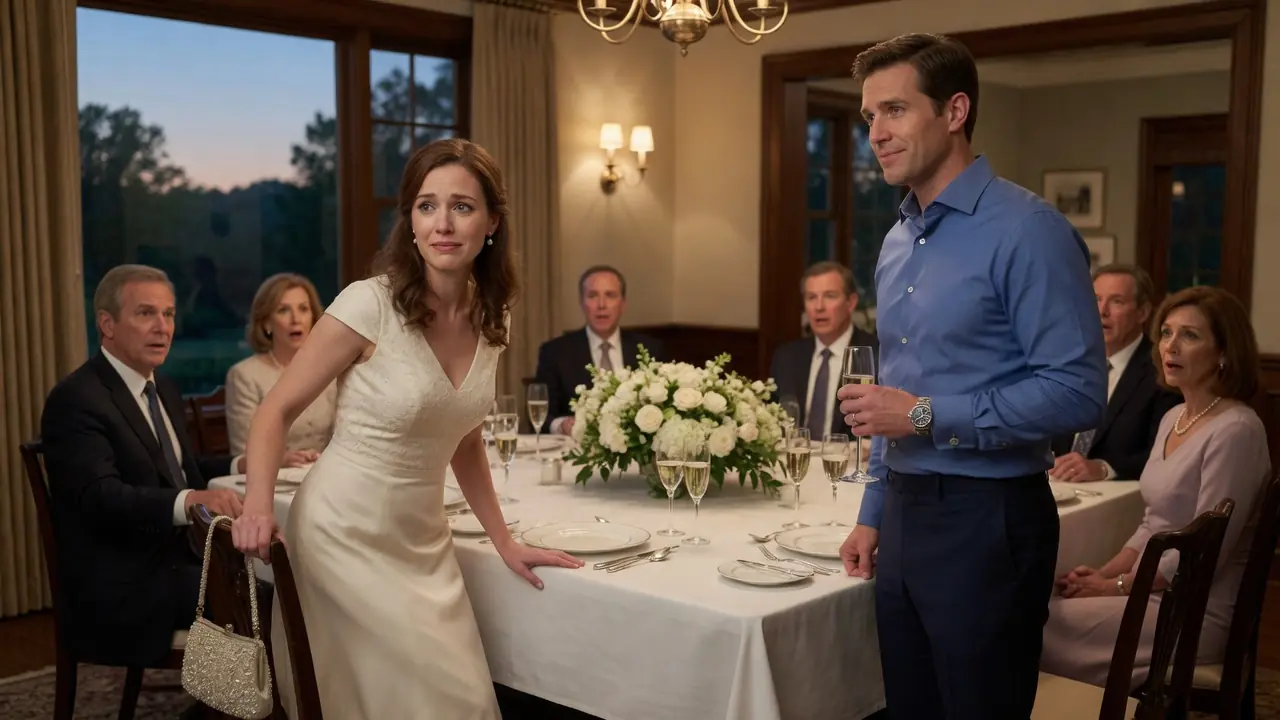
My fiancé stood up with his champagne glass, and I remember thinking how handsome he looked in that blue shirt I had bought him. Five years together, and I still got butterflies when he smiled at me a certain way.
Instead of the toast I expected, he cleared his throat and said, “I need everyone here to understand something important. Vanessa will always be part of my life. She was my first love, and that connection does not just disappear because I’m getting married.”
The room went silent.
I felt my father’s hand grip the edge of the table. My future mother-in-law smiled approvingly. His father nodded with satisfaction.
They had been coaching him, I realized.
“I believe in evolved relationships,” he continued. “In modern families that are not bound by outdated possessiveness. Vanessa and I have a bond that transcends traditional labels, and I need my future wife to respect that.”
I stared at the white tablecloth, trying to calculate how many deposits were non-refundable.
My hands were shaking in my lap, but I kept my face neutral.
“So here’s what I’m saying.” He looked directly at me, something almost triumphant in his eyes. “If you can’t accept that Vanessa will be at family gatherings, that she’ll be someone I confide in, then maybe we need to reconsider this whole thing.”
My mother made a small sound, quickly covered by a cough. My father’s face had gone red.
His mother actually laughed, this light tinkling sound.
“Oh, don’t look so shocked, everyone. This is how mature adults handle relationships. Not with jealousy and insecurity, but with openness and trust.”
I could feel everyone watching me, waiting.
In the past, I would have nodded, smiled, and apologized for not being evolved enough.
My sister reached for my hand under the table, but I pulled away gently.
I did not need comfort.
I needed clarity.
“So that’s an ultimatum,” I said quietly. “Accept your ex-girlfriend as a permanent fixture in our marriage or cancel the wedding.”
He blinked.
“I mean, I wouldn’t put it that way, but…”
“That is what you are saying.”
I looked at him and saw a stranger wearing my fiancé’s face in front of both our families two weeks before our wedding.
“I’m asking you to be reasonable,” he said, an edge creeping into his voice. “To not be so controlling.”
His mother nodded vigorously.
“This possessive behavior is exactly why modern relationships fail.”
I stood up slowly, my chair scraping against their expensive floor.
Everyone froze.
“Okay,” I said.
“Okay, what?”
“Okay. I’ll cancel the wedding.”
My voice was steady, calm, like I was confirming a lunch reservation rather than ending a five-year relationship.
The silence that followed was deafening.
My mother started crying. His parents’ smug expressions cracked.
“Wait, what? You can’t just…” he started.
“You gave me an ultimatum. I’m choosing.”
I picked up my purse.
“Mom, Dad, we’re leaving.”
My parents stood immediately. My sister grabbed her coat.
“This is ridiculous,” his mother shrieked, her composure shattering. “You’re throwing away a perfectly good relationship because you’re too insecure to have a good evening?”
I said nothing and walked toward the door.
He followed us into the hallway, grabbing my arm.
“You’re being crazy right now. You’re upset. You’re not thinking clearly.”
I looked down at his hand, then back at his face.
“Let go.”
He did, stepping back.
“Just sleep on it. We’ll talk tomorrow when you’ve calmed down.”
“There’s nothing to talk about. You made your choice very clear.”
As we walked to my parents’ car, shouting erupted inside the house. My hands were trembling, but not from doubt.
From relief.
My mother kept looking back.
“Honey, are you sure? Maybe if you just…”
“I’m sure, Mom.”
And I was.
For the first time in years, I was absolutely certain.
My father caught my eye in the rearview mirror and gave me the smallest nod. The drive home was quiet, heavy, but comforting.
My phone started buzzing before we had even left their street.
I turned it face down.
Five years gone in the time it took to say okay.
But as we pulled into my driveway, the house I had bought two years earlier in my name alone, I felt something unexpected.
Peace.
It was mixed with panic and grief and the terrifying knowledge that tomorrow I would have to start making cancellation calls.
But underneath was relief so profound it made my chest ache.
I had finally stopped shrinking myself to fit someone else’s idea of evolved.
My parents did not press me for details when we got home. My father made tea while my mother disappeared upstairs, returning with one of her cardigans.
She draped it over my shoulders without a word, and I realized I was shivering despite it being late spring.
“Do you want us to stay?” my father asked quietly.
“No, I’m okay. I just need to process.”
They both hugged me tight and fierce before leaving.
I watched their taillights disappear down the street, then turned to face my empty house.
My phone was vibrating constantly in my purse.
Forty-seven messages.
I made it through exactly three before I had to stop.
The first was from him.
“This is insane. Call me. We need to talk like adults.”
The second was from his mother.
“I hope you’re proud of yourself for ruining this family’s evening with your theatrics.”
The third was from his father.
“We’ve invested considerable money in this wedding. There will be legal consequences if you proceed with this reckless decision.”
I set the phone on the kitchen counter and stared at it like it might explode.
Part of me wanted to read the rest, to see what other accusations they would hurl, but a larger part knew it would only make me doubt myself.
And I could not afford that right now.
Five years.
We had been together for five years.
I thought about our first date, how he had laughed at all my terrible jokes and held my hand across the table. I thought about the night he proposed, down on one knee in that park where we always walked.
When had it changed?
When had I become the problem that needed to be solved?
I pulled out my laptop and found the contract with our wedding planner, a warm woman named Patricia who had been nothing but enthusiastic for the past eight months.
My hands hovered over the keyboard.
One email would start the avalanche.
Cancellation fees, angry vendors, disappointed guests, the social fallout.
The wedding would proceed as planned. Everything would go back to normal.
Except it would not.
Because now I knew what he really thought of me.
What his parents thought.
And I knew they would expect me to swallow it all with a smile.
I typed the email to Patricia. My fingers were shaking, making typos I had to correct twice.
“Patricia, I need to cancel the wedding. I know this is last minute and there will be financial consequences. Please begin making the necessary calls tomorrow morning. I’ll handle informing the guests. I’m sorry for any inconvenience.”
I read it four times before hitting send.
The whoosh sound felt final, like a door slamming shut.
More messages kept coming.
I turned my phone completely off and sat in my dark kitchen listening to the house settle around me.
This house that I had bought before he moved in.
This house that he had never liked because it was not big enough, was not in the right neighborhood, was not impressive enough for someone of his caliber.
God, how had I not seen it?
All the little comments about my choices, my friends, my career. How he had slowly isolated me from anyone who questioned our relationship.
How his parents’ evolved philosophy really just meant he could do whatever he wanted while I was supposed to be grateful for his honesty.
My sister texted from my parents’ number.
“Are you okay? Mom is worried sick.”
I replied, “I’m okay. Turned my phone off. I’ll call tomorrow.”
She answered, “Proud of you, by the way.”
Those four words made me start crying for the first time that night.
Not sad tears, exactly.
Relief mixed with grief mixed with something like pride.
I had stood up for myself.
After years of making myself smaller, quieter, more accommodating, I had finally said no.
The clock read 11:47 p.m.
In twelve hours, I would have to start facing the reality of what I had done.
The canceled venue. The returned gifts. The awkward conversations with relatives. The financial disaster I was about to unleash on his family, who had insisted on paying for everything so they could control every detail.
But tonight, sitting in my kitchen in my mother’s cardigan, I felt something I had not felt in months.
Like myself.
Not the version of me that had been trying so hard to fit into his family’s idea of evolved and progressive.
Just me.
My phone, now on the counter and still off, seemed to pulse with unread messages.
I knew they would escalate. His mother would call me dramatic. His father would threaten legal action. He would call me crazy, unstable, unable to handle adult conversations.
Let them, I thought.
Let them think whatever they needed to think.
I had chosen myself.
And tomorrow, when I woke up, I would start building a life where that was enough.
I went upstairs to my bedroom, the one I had decorated before he moved in, with the curtains he said were too feminine and the reading chair he claimed took up too much space.
I sat in that chair and opened the book on my nightstand, the one I had been reading in secret because he had mocked my taste in fiction.
Outside, the neighborhood was quiet.
Inside, I felt the first stirrings of something that would take me weeks to fully recognize.
Freedom.
Patricia called at 8:15 a.m.
I had been awake since five, staring at my ceiling, mentally preparing for this conversation.
“I’ve started making calls,” she said, her voice careful. “I wanted to give you a heads-up about the financial situation before his family contacts you.”
“How bad is it?”
She paused.
“The venue required a seventy percent deposit, non-refundable. The caterer, fifty percent. The florist, photographer, band, and cake all have cancellation clauses. We’re looking at approximately ninety-five thousand dollars in losses.”
I felt dizzy.
“Ninety-five thousand dollars?”
“His father signed all the contracts. Technically, he’s liable for the cancellation fees.”
She hesitated.
“I’m sorry. I know this isn’t easy.”
After we hung up, I sat with my coffee growing cold.
Ninety-five thousand dollars.
His father had insisted on paying for everything. He had made such a show of his generosity at every planning meeting.
Now that generosity was going to cost him.
My phone, which I had turned back on to talk to Patricia, immediately started buzzing.
His father’s name flashed on the screen.
I let it go to voicemail, then listened with the phone held slightly away from my ear.
“This is financial ruin,” his voice shook with rage. “Ninety thousand dollars down the drain because you couldn’t handle an adult conversation. My lawyer says we can sue for breach of promise, emotional distress, financial damages.”
I deleted the voicemail and called my own lawyer, someone I had used when buying my house.
She listened as I explained.
“Do you have witnesses to the ultimatum?”
“Twenty-three people heard him say I should accept his ex as part of our marriage or cancel the wedding.”
“Then you’re fine. He gave you a clear choice. You made it. Breach of promise suits are nearly impossible to win in this state anyway, especially with documented coercion. Save all messages. Don’t respond to threats.”
His father called four more times that day.
Then his mother.
Then him.
I did not answer.
By evening, I had voicemails from both his parents ranting about my selfishness, my immaturity, my inability to compromise.
His mother’s voice had lost all its smooth sophistication. She sounded shrill, desperate.
“You’ve destroyed us financially. Do you understand that? We took out a loan for part of this wedding. All because you’re too insecure to accept that relationships evolve.”
I saved every message, as my lawyer advised.
The next morning, Patricia called again.
“His father contacted me directly,” she said. “He’s not handling this well. He demanded I falsify documents to show you initiated the cancellation without cause. I refused and told him I have written records of the entire timeline.”
“I’m sorry you’re caught in the middle.”
“Don’t be. I’ve been doing this for fifteen years. I can spot toxic family dynamics.”
She paused.
“For what it’s worth, I think you made the right call.”
Those words meant more than she knew.
His father’s lawyer sent a formal letter three days later, full of legal language that boiled down to empty threats.
My lawyer responded with a single page outlining the facts.
Public ultimatum. Multiple witnesses. His son’s own words.
We never heard from their lawyer again.
But the calls continued.
His mother left a sobbing voicemail about how they would have to sell things to cover the losses. His father sent texts calling me every name he could think of.
My ex alternated between begging me to reconsider and accusing me of being vindictive.
“You knew this would hurt my family financially,” one text read. “That’s why you did this, isn’t it? To punish me.”
I stared at that message for a long time.
The delusion was almost impressive.
He had given me an ultimatum at a dinner party, and somehow I was the villain for taking him at his word.
I did not respond.
Silence was my best defense.
Two weeks after the canceled wedding date, I got a call from a cousin who had been at the dinner.
“His parents are telling everyone you had a breakdown, that you became irrationally jealous and called off the wedding in hysteria.”
“And what are other people saying?”
She laughed.
“That his parents are delusional. Everyone who was there knows what happened. He stood up and basically told you to accept his ex or leave. You left. Now they’re trying to rewrite history.”
The truth was spreading faster than their lies.
Every person at that dinner was talking, and the story was always the same.
He had been disrespectful. His parents had encouraged it. And I had handled it with grace.
His father’s final attempt came in the form of a certified letter demanding I pay half the cancellation fees as the ethical thing to do.
My lawyer responded with copies of every text, every voicemail, every piece of evidence showing their harassment.
We never heard from them again.
The financial disaster was complete.
Ninety-five thousand dollars gone.
No legal recourse.
No way to recover it.
And worse than the money was the social humiliation.
Everyone in their circle knew they had backed their son’s ultimatum and lost spectacularly.
I did not feel victorious.
I felt tired.
But I also felt free.
The knock on my door came on a Tuesday afternoon, three weeks after the canceled wedding.
I was working from home, reviewing architectural plans at my dining table, when I heard his key sliding into the lock.
My stomach dropped.
I had forgotten he still had a key.
The door opened before I could reach it.
And there he stood, looking like he had not slept in days.
His clothes were wrinkled. His hair was uncombed.
For a split second, I felt that old instinct to comfort him, to ask what was wrong.
Then I remembered why he looked like that.
“What are you doing here?”
I stayed on my side of the living room.
“I live here.”
His voice was defensive. Uncertain.
“No, you don’t. You moved in, but this house is in my name. You never paid rent or mortgage. You were a guest.”
He looked around the living room like he was seeing it for the first time.
His gaming console was gone. His books from the bookshelf were gone. The ugly lamp his mother had bought us was gone.
I had spent the past week systematically packing his things into boxes that now sat stacked by the door.
“You can’t just kick me out. I have rights.”
“You have no rights. Check with your father’s lawyer if you don’t believe me.”
I gestured to the boxes.
“Everything is there. I didn’t throw anything away.”
He stared at the boxes, and something crumbled in his expression.
“This is really happening.”
“You made it happen.”
I kept my voice level, but my hands were shaking.
“You stood up at that dinner and gave me an ultimatum. Did you think I’d just cave? That I’d spend our entire marriage competing with your ex for your attention?”
“It wasn’t about competition. It was about being mature enough to…”
“Don’t.”
The word came out sharper than I intended.
“Don’t lecture me about maturity. You wanted to have your cake and eat it too, and you got caught.”
He moved toward the boxes, then stopped, looking at me instead.
“Five years? You’re throwing away five years over one argument?”
“It wasn’t one argument. It was the final drop in years of you making me feel like I was never enough.”
I picked up the shirt draped over one of the boxes, the blue one from our first date.
My throat tightened.
For just a second, I let myself remember that day. How nervous he had been. How he had spilled coffee on his sleeve and laughed at himself.
When had that person disappeared?
“I kept trying to be cooler, more evolved, more understanding. I kept shrinking myself to fit into your idea of a perfect partner, and it was never enough.”
“That’s not fair.”
“You know what’s not fair? Spending five years building a life with someone only to find out they think your completely reasonable boundaries make you controlling and antiquated.”
I set the shirt back down carefully, precisely on top of the box.
“I’m not the villain in this story, no matter how much you want me to be.”
He opened his mouth, then closed it.
For a moment, he looked like he might actually hear me.
His shoulders sagged slightly, and I saw something like recognition flicker across his face.
Then his phone buzzed in his pocket.
He glanced at it, and when he looked back up, his face had hardened.
“My parents were right about you. You’re dramatic. You can’t handle anything that doesn’t fit your traditional little fantasy.”
And there it was.
The real him.
Or maybe the him his parents had created.
The one who thought respecting boundaries was oppressive and expecting monogamy was controlling.
“Get out,” I said quietly. “These are your things. Take them and get out. I’m changing the locks tomorrow.”
He started loading boxes into his car, making multiple trips.
I stayed at the dining table, pretending to work, but really just listening to the door open and close.
Each trip felt like another piece of the past five years being carried away.
On his fourth trip, he nearly dropped a box and swore under his breath.
I did not offer to help.
On his final trip, he stopped in the doorway, one hand on the frame.
“You’ll regret this when you’re alone and you realize how good you had it.”
“I already know how good I have it,” I interrupted. “I have a house I own, a career I love, and parents who don’t manipulate me into thinking emotional abuse is enlightenment. What do you have?”
He did not answer.
He just grabbed the last box and left, pulling the door closed behind him with more force than necessary.
I sat in the silence after he left, waiting for the breakdown I thought would come.
The tears. The second-guessing. The urge to call him back and apologize for being so harsh.
But it did not come.
Instead, I felt this strange lightness, like I had been holding my breath for years and could finally exhale fully.
The next morning, a locksmith came and changed every lock.
New keys, new deadbolts, even the one on the back door.
The house felt different afterward.
Truly mine for the first time since he had moved in two years earlier.
I called my father that evening.
“He came by yesterday and got his things.”
“How are you holding up?”
“Better than I expected.”
I looked around my living room, noticing all the small changes that made it feel like me again. The space where his gaming setup had been. The empty spot on the bookshelf.
Even the air felt cleaner somehow.
“I think I’m going to be okay, Dad.”
“I never doubted it,” he said.
And I believed him.
That night, I slept better than I had in months.
The first person to ask about the canceled wedding was my hairdresser.
I had known her for years, and she had been excited to do my wedding hair. Now she was carefully cutting my ends while I explained what had happened.
“Wait, he said that in front of everyone?”
Her scissors paused mid-snip.
“Yep. Gave me an ultimatum and everything.”
“And his parents were okay with it?”
“They encouraged it. His mother actually laughed when she saw how shocked everyone was.”
She shook her head, resuming her work.
“Well, you know what they’re saying about you, right?”
My stomach tightened.
“What?”
“That you had some kind of emotional breakdown. That you called off the wedding because you couldn’t handle modern relationships.”
She caught my eye in the mirror.
“But everyone I know who was actually there is telling a completely different story.”
Over the next two weeks, I heard variations of this conversation repeatedly.
His family had launched a full campaign to paint me as unstable, jealous, and irrational.
But they had made a critical mistake.
They had given that ultimatum in front of twenty-three witnesses.
My cousin called.
“You need to hear what people are actually saying at the country club.”
“I’m not sure I want to.”
“Trust me, you do. His mother tried to play the victim at her book club. Said you had abandoned her son without warning. That you were never mature enough for him. Then someone who was at the dinner spoke up and described the whole thing.”
“Who?”
“That woman who married into the Wellington family. She told everyone exactly what he said, how smug his parents looked, how calmly you handled it. By the end, his mother was so red-faced she left early.”
I felt a small vindictive satisfaction at that image.
The truth spread like wildfire.
Every person at that dinner had their own network of friends, family, and co-workers. Within days, the real story had reached every corner of our social circles.
He had stood up at a pre-wedding dinner, announced his ex would always be part of his life, and given me an ultimatum.
I had simply taken him at his word.
His narrative crumbled under the weight of actual facts.
I ran into one of his college friends at a coffee shop. He looked uncomfortable when he saw me, shifting his weight from foot to foot.
“Look, I just want to say what he did was messed up. A bunch of us told him that.”
“Thanks,” I said, genuinely meaning it.
“His parents always did have weird ideas about relationships. We used to joke about it.”
He hesitated.
“He’s not handling any of this well. The money thing, the social fallout. He keeps saying you overreacted, but I think he knows that’s not true.”
The social humiliation was apparently worse than the financial disaster.
His family had positioned themselves as progressive, evolved, above the petty constraints of traditional relationships.
Now everyone saw them for what they really were.
People who wanted to have their cake and eat it too without consequences.
My phone buzzed with a text from my sister.
“Mom just got off the phone with one of her friends. Apparently, his mother tried to uninvite us from some charity gala and was told that if we didn’t come, half the attendees would boycott.”
I laughed out loud, startling the barista making my latte.
The next blow came from an unexpected source.
My best friend from college, someone I had lost touch with after getting engaged, reached out.
“I saw the news about your wedding. I’m sorry I wasn’t there for you during the relationship. I should have said something years ago.”
“Said what?”
“That he was slowly isolating you from everyone who cared about you. I tried to bring it up once, and you got so defensive. I backed off, but I shouldn’t have.”
I felt a lump in my throat.
“I wasn’t ready to hear it then.”
“Are you okay? Really?”
“Yeah,” I said, and realized I meant it. “I’m actually really okay.”
We met for drinks that weekend, and it felt like reclaiming a piece of myself I had forgotten existed.
She told me about her life, her career, her recent divorce. We laughed about terrible dates and terrible bosses.
For three hours, I was just myself.
Not someone’s fiancée.
Not someone’s ex-fiancée.
As I drove home that night, I thought about reputation and truth.
His family had tried to rewrite history to make themselves the victims and me the villain.
But truth has a way of persisting.
You cannot give a public ultimatum and then claim you were betrayed when someone accepts it.
The social fallout for them was complete.
They had lost the moral high ground they had spent years cultivating.
More than that, they had lost respect.
People saw them clearly now.
Manipulative, delusional, willing to destroy someone’s reputation rather than admit fault.
I had not needed to defend myself.
The truth had done that for me.
Every witness at that dinner had become an advocate, spreading the real story faster than his family could spread their lies.
And me?
I was free.
Free from his manipulation. Free from his parents’ games. Free from pretending I was okay with things that hurt me.
The vindication felt good.
I will not lie.
But even better was realizing I did not need it.
Whether people believed me or not, I knew what had happened.
I knew I had made the right choice.
That was enough.
I heard about what was happening at his parents’ house through my cousin, who heard it from a neighbor who lived two doors down.
Apparently, the fights were loud enough to hear from the street.
“They’re screaming at each other constantly,” she told me over coffee. “The neighbor said she heard his mother yelling something about that woman and how he had ruined everything.”
I felt a strange mix of satisfaction and sadness.
Satisfaction because they were finally facing consequences.
Sadness because I had wasted five years with someone who came from that kind of dysfunction.
A mutual friend who still talked to him gave me more details, though I had not asked.
“He’s a mess. Living back at home, sleeping until noon, barely eating. His dad walks around the house calculating debts out loud. His mom cries constantly and blames him for everything. Everything. The money, the social embarrassment, even things that have nothing to do with the wedding. She told him last week that she wasted her life raising an ungrateful son who destroyed the family’s reputation.”
I set down my coffee cup carefully.
“That’s harsh.”
“It gets worse. His dad keeps saying he should have raised him with real values instead of all that progressive nonsense. They’re basically blaming each other for how he turned out. And he’s caught in the middle.”
Part of me wanted to feel sorry for him.
But I remembered that smug look on his face at the dinner. The way he delivered that ultimatum like he was doing me a favor by being honest.
The evolved progressive family facade had completely crumbled.
Under financial pressure and social humiliation, they had revealed themselves to be exactly what they had always accused traditional families of being.
Judgmental, cruel, and conditional in their love.
My sister called me a few days later, breathless with gossip she had heard at the gym.
“His mother had a complete meltdown at her yoga class. Started crying in the middle of downward dog. Went on this whole rant about ungrateful children and wasted money.”
“In the middle of yoga class?”
“The instructor had to ask her to leave. Everyone was staring.”
The mental image was almost too much.
His mother, who had always been so composed, so superior, falling apart in public over her own son.
“There’s more,” my sister continued. “Apparently, he and his dad got into a screaming match in their driveway. The dad was yelling about the loan they took out, how they might have to sell the house, how everything was ruined because he couldn’t keep one simple relationship together.”
I thought about that house where I had spent so many uncomfortable dinners being lectured about my antiquated views on relationships.
The irony of them potentially losing it because of their own son’s actions was not lost on me.
Another week passed, and I got a text from my best friend.
“Just saw your ex at the grocery store. He looks terrible. Lost weight, hasn’t shaved. He saw me and literally turned around and left.”
The destruction was complete.
Not just financial, though that was bad enough.
The real damage was to their family dynamic.
They had built their entire identity around being evolved, enlightened, better than everyone else. Now that identity was gone, and they had nothing left but resentment and blame.
I thought about Vanessa, his ex, who was supposed to be such an important part of his life.
Where was she now?
Nowhere, apparently.
When he had become a liability instead of an asset, she had disappeared.
The great evolved relationship that required my acceptance had evaporated the moment he had nothing left to offer.
My mother called one evening.
“I ran into his mother at the market. She saw me and tried to hide behind the produce section.”
“That must have been awkward.”
“I almost felt bad for her. Almost.”
My mother paused.
“She looked like she had aged ten years.”
I understood what my mother meant.
There is something particularly devastating about having your worldview completely destroyed.
His family had believed they were enlightened, that their way of thinking was superior.
Now they were facing the reality that their evolved philosophy had been nothing more than an excuse for selfishness, and it had cost them everything.
The environment at their house, from what I kept hearing, had become toxic.
The parents blamed the son. The son blamed them for raising him with unrealistic expectations.
Everyone blamed me for not being understanding enough, even though I had simply taken them at their word.
There was no mutual support, no evolved communication, no progressive problem-solving.
Just anger, recrimination, and the slow disintegration of a family that had never been as functional as they pretended.
I felt something then that surprised me.
Pity.
Not enough to reach out. Not enough to forgive.
But enough to recognize that their suffering was largely self-inflicted.
They had created this situation with their arrogance and their ultimatum.
Now they were living with the consequences.
But mostly, I felt grateful.
Grateful I had escaped before marrying into that dysfunction.
Grateful I had stood up for myself.
Grateful I would never have to sit through another dinner where they lectured me about my inadequacies while their own family rotted from the inside.
His home had become a battleground, and he was losing on all fronts.
I had my peaceful house, my career, my family who actually supported me.
The contrast could not have been more stark.
Sometimes the best revenge is just living well while others drown in consequences of their own making.
Vanessa disappeared exactly when you would expect someone like her to disappear.
The moment my ex became unstable, broke, and living with his parents, she stopped returning his calls.
My cousin, who followed Vanessa on social media, showed me the posts.
Beach vacations. Expensive restaurants. Photos with a new guy who looked nothing like my ex.
“She blocked him last week,” my cousin said, scrolling through her phone. “One of her friends told me he kept texting her, asking to meet up, and she just ghosted him completely.”
The woman who was supposed to be such an integral part of his life could not be bothered to respond to a single message.
The great transcendent connection that required my acceptance had vanished the moment he had nothing left to offer.
I felt a grim satisfaction at that.
Not because I wanted him to suffer exactly, but because it proved what I had always suspected.
Vanessa had never been about some enlightened approach to relationships.
She had been convenient.
A way for him to keep his options open while having the security of an actual partner.
Two months after the canceled wedding, I was at a coffee shop downtown when someone sat down across from me.
I looked up, ready to politely tell them the seat was taken, and found myself face to face with my ex’s best friend.
We had always gotten along. He was one of the few people in my ex’s life who never made me feel inadequate.
Honest, straightforward, funny without being cruel.
“Hey,” he said, looking uncertain. “Is it okay if I sit?”
“Sure.”
He ordered a coffee at the counter, then returned to the table. We sat in awkward silence for a moment.
“I owe you an apology,” he finally said. “I should have said something before the wedding. About Vanessa, about how he was treating you, about all of it.”
“Why didn’t you?”
“Honestly, I thought you knew what you were signing up for. I thought maybe you were okay with it, or that it wasn’t my place.”
He ran his hand through his hair.
“But after what happened at that dinner, after hearing how he spoke to you in front of everyone, I realized I had been a coward.”
“You weren’t the one who gave me an ultimatum.”
“No, but I watched it happen for months. The way he’d talk about you when you weren’t around, like you were too traditional, too clingy. The way his parents would nod along like he was so enlightened for keeping Vanessa in his life.”
He shook his head.
“It was all nonsense, and I knew it.”
We talked for an hour.
He told me things I had not known, patterns I had not seen. How my ex had always been like this, even in college. How his parents had raised him to believe he was special, that normal rules did not apply to him.
How Vanessa had dated his friend first, then moved to him when the friend ran out of money.
“She’s with some finance guy now,” he said. “Saw them together last week. She didn’t even acknowledge me when I waved.”
“She sounds wonderful.”
He laughed, genuine and surprised.
“You know what? You’re handling this better than anyone expected. Better than he is, certainly.”
“I’m just tired of being angry.”
We started meeting for coffee regularly after that.
Nothing romantic.
Just friendship.
Conversations about work, books, terrible movies.
He was easy to talk to, and more importantly, he did not make me feel like I needed to be someone I was not.
One afternoon, about three months after the canceled wedding, he mentioned that my ex had been asking about me.
“What’s he saying?”
“That he made a mistake. That he wishes he could talk to you, explain things better.”
He paused.
“For what it’s worth, I think he’s full of it. He’s not sorry about what he did. He’s sorry about the consequences.”
“That sounds about right.”
“He asked if I was talking to you. I told him yes. And he lost his mind, started yelling about loyalty, about how I was betraying him.”
He smiled, but there was no humor in it.
“I told him I was being exactly as loyal as he deserved.”
That was the moment I realized something had shifted.
This friendship felt different from anything I had had during my relationship.
There was no pretense. No games.
Just two people who enjoyed each other’s company and respected each other’s boundaries.
I thought about telling him how much his honesty meant to me, but the words felt too heavy.
Instead, I just said, “Thanks for having coffee with me.”
“Anytime,” he said.
And he meant it.
Vanessa was gone, disappeared into whatever new life she had constructed.
My ex had lost his best friend on top of everything else.
The evolved family structure had collapsed entirely, revealing itself as nothing more than a convenient excuse for selfishness.
And me?
I had a friend who was honest with me, who apologized when he should have spoken up sooner, who did not expect me to be anything other than myself.
It felt like the beginning of something, though I could not quite name what yet.
But there was time to figure that out.
For now, this was enough.
Four months after the canceled wedding, I did something I had been putting off for years.
I booked a trip to Europe.
Two weeks in Italy and France, visiting museums and eating food that had nothing to do with anyone’s dietary restrictions or preferences but my own.
My ex had always found excuses when I brought up traveling together.
Too expensive. Wrong time of year. He did not like tourist destinations.
Now I understood he just did not want to go with me.
I wandered through the Uffizi Gallery in Florence. I stood under the Sistine Chapel ceiling. I ate pasta in a tiny restaurant in Rome where the owner’s grandmother was still making sauce in the back.
I took photos for myself, not for social media.
I talked to strangers.
I got lost on purpose.
For two weeks, I was just myself.
Not someone’s fiancée.
Not someone’s ex.
Not someone being judged for being too traditional.
Just a woman who liked art and good food and terrible Italian spoken with an American accent.
When I came back tanned and relaxed, my office had news.
The historic theater project I had been working on for a year had been approved.
It was the biggest commission of my career, a restoration that would take eighteen months and establish me as a serious architect.
My boss called me into her office.
“The board was impressed with your presentation. They want you to lead the entire project.”
I felt something click into place.
This was what I had been working toward, what I had sacrificed for, what had taken a backseat during five years of accommodating someone else’s needs and schedule.
“I accept,” I said.
And I meant it with every fiber of my being.
The project consumed me in the best way.
Site visits, meetings with historians, late nights reviewing plans.
I loved every exhausting minute of it.
My friends started to come back, the ones who had drifted away during my relationship.
My college best friend introduced me to her book club. My sister and I started having weekly dinners again. I joined a cycling group that met on Saturday mornings.
Slowly, without realizing it, I was building a life that felt authentically mine.
Not smaller to fit someone else’s expectations.
Not compromised to avoid conflict.
Just mine.
My ex’s best friend, who had become just a friend without the qualifier, texted one afternoon.
“Coffee Thursday?”
We had been meeting regularly, easy conversations that flowed naturally.
He made me laugh. More importantly, he listened when I talked about my work without that glazed-over expression my ex had always gotten.
Over coffee that Thursday, he mentioned he had started therapy.
“Really?”
“Yeah. Watching what happened with you and him made me realize I’ve been avoiding my own stuff for years.”
He stirred his coffee.
“My therapist asked me why I stayed friends with him for so long when I clearly didn’t respect how he treated people.”
“What did you say?”
“That I was a coward.”
He smiled, but his eyes were serious.
“She said that was a good start, but I should dig deeper.”
I found myself telling him about my own therapy sessions, the ones I had started after the breakup.
How I was learning that I had spent years making myself smaller, quieter, less demanding.
How I was working on believing I deserved better.
“You do,” he said simply. “Deserve better, I mean.”
There was something in the way he said it.
Something that made my heart beat a little faster.
But neither of us pushed it.
We just finished our coffee and went back to our separate lives.
The theater project took up most of my time over the next few months.
I worked with craftsmen who had been restoring historic buildings for decades. I learned about preservation techniques and original materials.
I fell in love with the work all over again.
My parents came to one of the site visits. My father, who had been a contractor before retiring, walked through the space with wonder in his eyes.
“You’re really doing it,” he said.
“Doing what?”
“Building something that matters. Something that will outlast all of us.”
I looked around the gutted theater, seeing not what it was, but what it would become.
He was right.
This would outlast all the drama, all the heartbreak, all the wasted years.
This was real.
My phone buzzed.
A text from my ex’s friend.
“Dinner this weekend? There’s this new Italian place that made me think of your trip.”
I smiled and typed back, “Yes.”
It was not a date.
Or maybe it was.
Either way, it felt natural, unforced, like everything good that had been happening in my life lately.
I had stopped waiting for the other shoe to drop, for the panic to set in, for the loneliness everyone had warned me about.
Instead, I had found something better.
Contentment.
Pride in my work.
Good friends.
A life that felt full without needing someone else to complete it.
Six months earlier, I had walked away from a five-year relationship because I refused to accept an ultimatum.
Now I was standing in a historic theater, leading the biggest project of my career, planning dinner with someone who made me laugh and actually listened when I talked.
The universe, it seemed, rewarded people who knew their worth.
Sometimes the best revenge really is just living well.
The magazine article came out on a Thursday morning.
Rising stars in historic preservation, with my theater project featured prominently.
There was a full-page photo of me in the half-restored lobby, hard hat under my arm, looking confident and professional.
My phone exploded with congratulations. Former colleagues, old professors, friends I had not spoken to in years.
My parents called, my mother crying happy tears.
“We’re so proud of you,” my father said, his voice thick.
The article described the restoration’s complexity, the historical significance, my innovative approach to preserving original features while updating safety systems.
Reading my own words, I barely recognized the confident woman on the page.
Six months earlier, I had been planning a wedding to a man who made me feel small.
Now I was featured in a national magazine for my professional achievements.
The gala for the theater’s reopening was scheduled for Saturday night.
Black tie. Catered by the best restaurant in the city. Attended by the mayor and everyone who mattered in our social circles.
I bought a dress that made me feel powerful.
Deep emerald green.
Trevor, my ex’s former best friend, who I had been seeing more frequently, asked to be my date.
“Are you sure?” I asked. “Your ex-friend might hear about it.”
“I’m counting on it,” he said with a smile that made my stomach flip.
The night of the gala, Trevor picked me up in a suit that actually fit properly.
When I opened the door, he just stared.
“You look amazing.”
The theater was transformed.
Soft lighting highlighted the restored architectural details. The stage gleamed with fresh varnish. Crystal chandeliers I had sourced from an estate sale caught the light.
People kept stopping me to congratulate me. The mayor shook my hand and talked about preserving the city’s heritage. The historical society president asked about my next project. My boss introduced me to potential clients.
Trevor stayed at my side, not hovering, but present.
When conversations got technical, he got drinks. When I needed a break, he somehow sensed it and suggested we look at the restored balcony.
“This is incredible,” he said, looking around. “You did this.”
“I had a whole team.”
“You led them. You had the vision.”
He turned to face me.
“You should be proud.”
I was proud.
For the first time in years, I had accomplished something entirely mine, something nobody could take credit for or diminish.
The mayor called me to the stage to accept an award for historic preservation.
I gave a short speech thanking my team and everyone who had worked to restore the building’s character.
As I stood on that stage, I spotted my parents in the third row beaming, my sister filming, my college friends who had driven two hours to be there, and Trevor in the back applauding with genuine pride.
This was my moment.
Mine alone.
Not shared with someone who thought I was too traditional.
Not compromised.
Just mine.
After the program ended, people mingled with champagne. A photographer from the magazine asked for more photos. I posed in front of the restored proscenium arch.
“One more with your date?” the photographer suggested.
Trevor stepped into the frame, his hand resting lightly on my back.
We smiled, and the camera flashed.
I knew that photo would end up somewhere.
That word would get back to my ex.
Good, I thought.
Let him see what I am doing.
Let him see that I am thriving.
Later, as the crowd thinned, Trevor and I stood on the restored balcony, looking down at the nearly empty theater.
“Thank you for being here tonight,” I said.
“Wouldn’t have missed it.”
He paused.
“Can I tell you something?”
“Sure.”
“I’ve been wanting to ask you out officially for weeks. But I kept thinking it was too soon or weird because of the history.”
My heart was pounding.
“And now?”
“Now I’m tired of pretending this is just friendly coffee.”
He turned to face me fully.
“I like you. I like who you are, what you value, how you’ve handled everything. I’d like to take you to dinner as an actual date, if you’re interested.”
I looked at him.
Really looked at him.
Trevor had been there through the worst of it. He had apologized for not speaking up sooner. He had become someone I looked forward to seeing.
No manipulation. No games. No attempts to make me smaller.
“I’m interested,” I said.
He smiled, that genuine smile that made his eyes crinkle.
“Good, because I was running out of excuses to text you about random things.”
We stood there on the balcony, the restored theater behind us, the city lights spread out before us.
Six months earlier, I had been crying over a broken engagement.
Now I was here.
Successful and confident, and maybe beginning something new with someone who actually saw me.
The contrast was overwhelming.
As we left the theater that night, Trevor’s hand found mine.
It felt natural.
Easy.
Right.
Like everything else good that had happened since I had walked away from that dinner party.
I had chosen myself that night.
Everything else had followed from that one decision.
One year after the canceled wedding, I stood in my new loft, boxes still stacked against the walls, and felt genuinely happy.
The old house, with all its memories of him, had sold quickly.
This place was mine from the ground up.
Floor-to-ceiling windows, exposed brick, a balcony overlooking the city center.
My business had grown beyond anything I had imagined.
The theater project had opened doors to three more historic restorations. I had hired two junior architects and was interviewing for a third. My calendar was booked solid for eighteen months.
Trevor had been patient with me.
We had taken things slowly, dating properly for months before making anything official.
His family, when I finally met them, was warm without being overwhelming. His mother hugged me and asked about my work. His father told terrible jokes that actually made me laugh.
“This is what normal families are like,” I whispered to Trevor after that first dinner.
“Revolutionary concept, right?” he whispered back.
We had moved in together last month after nearly a year of dating.
Not because we felt we had to, but because we wanted to.
Because it made sense.
Because waking up next to him felt natural and right.
My sister came over to help me unpack. She stood in the kitchen looking around with approval.
“You know Mom asks about you and Trevor twice a week, right?”
“Does she?”
“She’s terrified of being pushy, but she really likes him. We all do.”
She paused.
“He’s good for you. You’re lighter with him.”
I knew what she meant.
With my ex, I had always been braced for criticism, for the next lecture about how I needed to be more evolved.
With Trevor, I could just be myself.
Messy, imperfect, sometimes traditional in my views, sometimes not.
He did not need me to be anything other than who I was.
“I’m happy,” I said, realizing it was true without qualification.
The theater project had led to a feature in another magazine, which led to speaking engagements, which led to consulting opportunities.
I had spoken at a conference on historic preservation.
My career was everything I had worked for.
The projects challenged me. The clients respected me. My team looked to me for leadership.
One Saturday morning, Trevor and I were having coffee on our new balcony when he mentioned he had seen my ex.
“Where?”
“That boutique on Maple Street. He was working there behind the counter.”
I set down my coffee carefully.
“Working there?”
“Yeah. I went in to get my mom a birthday present. He saw me, went pale, and disappeared into the back.”
I tried to imagine it.
My ex, who had been so confident about his evolved philosophy, who had given me an ultimatum in front of two dozen people, now working retail and hiding from people he knew.
“Did you talk to him?”
“No. I got what I needed and left.”
Trevor reached for my hand.
“I felt bad for him. Not bad enough to engage, but bad.”
“That’s not petty. That’s human.”
We sat in silence, watching the city wake up below us.
I thought about the man I had almost married, about the five years I had spent trying to be enough for him.
Part of me did feel bad.
But mostly I felt grateful I had escaped.
My phone rang. A client wanted to discuss a new project, a Victorian mansion needing restoration.
I took the call while Trevor started making breakfast, comfortable in our shared space, our shared life.
When I hung up, he had made omelets and fresh coffee.
“Good news?” he asked.
“Great news. Another project.”
I sat across from him.
“This is going to sound strange, but I’m glad everything happened the way it did.”
“Yeah?”
“If he hadn’t given me that ultimatum, I’d probably be married to him right now. Miserable, but married. Instead, I have this.”
I gestured around our loft, but meant everything.
My career.
My confidence.
Him.
“Instead, we have this,” he corrected, and kissed me softly.
Later that week, my mother called with gossip she had heard through her friend network.
His parents had downsized significantly. The financial losses from the canceled wedding, combined with some bad investments, had forced them to sell their house. They had moved to a condo across town.
“And him?” I asked, unable to help myself.
“Still living with them from what I hear. Trying to start some coaching business, but it’s not going well.”
She paused.
“I know I shouldn’t take pleasure in their misfortune, but…”
“You do a little bit.”
“Yes.”
She laughed.
“Is that terrible?”
“It’s honest.”
I thought about Vanessa, his ex, who was supposed to be such an integral part of his life.
Last I had heard, she was engaged to someone else.
The evolved family structure had collapsed entirely.
Meanwhile, I was building something real.
A career that fulfilled me.
A relationship based on mutual respect and actual communication.
A home that was mine, that reflected who I was rather than who someone thought I should be.
Standing on my balcony that night, the city lights spread out before me, Trevor reading in the living room behind me, I felt something I had never felt with my ex.
Secure.
Not because everything was perfect, but because I knew I could handle whatever came.
I had chosen myself a year ago, and that choice had led me here.
To this moment.
This life.
This happiness.
It had all been worth it.
Fifteen months after the canceled wedding, I heard the full story of what had happened to my ex and his family.
Not because I went looking, but because gossip has a way of finding you in a city this size.
My cousin called on a Tuesday afternoon, barely containing her excitement.
“You need to hear this. I just had lunch with someone who knows his mother’s book club friend.”
“That’s a lot of degrees of separation.”
“Just listen. They had to sell the big house. They’re in a two-bedroom condo now. Two bedrooms for three adults. His mother apparently cries about it constantly.”
She paused.
“And he’s still living with them.”
I felt a strange mix of vindication and pity.
“Still?”
“Still. The coaching business he tried went nowhere. Turns out people don’t want life advice from someone living with their parents and working part-time retail.”
She continued with details I had not asked for, but found myself listening to anyway.
His father had taken a job consulting for a fraction of what he used to make. His mother had stopped attending most social events. They had become isolated, bitter, broke.
“And Vanessa?” I asked, already knowing the answer.
“Married someone else six months ago. Some finance guy. Your ex isn’t invited to family gatherings. She completely cut him out.”
The woman who was supposed to be such an integral part of his life had disappeared the moment it became inconvenient.
The irony was almost too perfect.
A few days later, I ran into one of his college friends at a coffee shop. He looked uncomfortable, but approached anyway.
“Hey, can we talk for a second?”
We sat at a corner table. He fidgeted with his cup before speaking.
“I just wanted to say I’m sorry for not speaking up back then. For going along with his nonsense about evolved relationships.”
He met my eyes.
“We all knew it was wrong.”
“It’s okay.”
“It’s not, though. He lost everything, and part of me wonders if it could have been different if someone had told him the truth earlier.”
He shook his head.
“He’s not doing well. Living with his parents, broke, no real friends left. Trevor cut him off completely after you two started dating.”
“I know.”
“The worst part is he still doesn’t get it. Still talks about how you overreacted. How you couldn’t handle a mature conversation.”
He laughed bitterly.
“Meanwhile, Vanessa’s married and explicitly told her new husband that her ex isn’t welcome in her life. The evolved family structure died the moment it became inconvenient for her.”
After he left, I sat with my coffee and thought about the contrast.
My ex had lost his home, his financial security, his best friend, even the ex-girlfriend who was supposedly so important.
He had gambled everything on an ultimatum and lost spectacularly.
Meanwhile, I had a thriving career, a loving relationship, and a beautiful home.
I had gained everything by refusing to compromise on my basic dignity.
That evening, Trevor and I were cooking dinner when I told him about the conversation.
“Do you ever feel bad about cutting him off?” I asked.
“No.”
He was chopping vegetables, movements precise.
“I feel bad about not doing it sooner. I wasted years being friends with someone I didn’t respect.”
“He was your best friend.”
“He was a habit.”
Trevor set down the knife and turned to face me.
“You know what I realized? I had been making excuses for him since college. But he was that bad, and I enabled it by staying silent.”
“You apologized.”
“Years too late.”
He pulled me into a hug.
“But I’m grateful for one thing. If he hadn’t been such an ass, I wouldn’t have you.”
We finished making dinner, easy and comfortable in our shared space.
This was what a real relationship looked like.
No games. No ultimatums. No lectures about evolution.
Just two people who respected each other.
My phone buzzed with a text from my sister.
“Mom just told me his parents tried to come to her charity event and were turned away at the door. Apparently, half the committee threatened to quit if they were allowed in.”
I showed Trevor the text.
He whistled low.
“Social exile is brutal in this city.”
“They earned it.”
And they had.
They had positioned themselves as morally superior, as more evolved than everyone else.
Then they had publicly supported their son giving me an ultimatum, tried to destroy my reputation when I called their bluff, and harassed me legally and financially.
The community had long memories.
I thought about my ex, stuck in a small condo with his parents, working a job he hated, watching everyone move on.
Part of me did feel sorry for him.
But it was distant pity, the kind you feel for someone you used to know but no longer have a connection to.
He had made his choices.
He had stood up at that dinner and demanded I accept his ex as a permanent fixture in our marriage.
He had backed me into a corner, confident I would cave like always.
He had been wrong.
And now he was living with the consequences.
Meanwhile, I was living the life I had built by standing up for myself.
Good career. Good relationship. Good life.
Everything I deserved and everything he had lost.
Sometimes the universe really does reward people who know their worth.
And sometimes it punishes those who take others for granted.
Standing in my kitchen that night, Trevor’s arms around me, our dinner simmering on the stove, I felt nothing but gratitude.
Gratitude that I had walked away.
Gratitude that I had found someone who actually valued me.
Gratitude that I would never have to wonder what my life would have been if I had accepted that ultimatum.
I knew exactly what it would have been.
Miserable.
Instead, I had this.
And this was everything.
The charity auction was Trevor’s idea.
Black tie, high-end donors, all proceeds going to historic preservation.
My theater project had made me a minor celebrity in those circles, and the organizers had specifically requested my attendance.
“It’ll be good for business,” Trevor said, adjusting his bow tie. “Plus, open bar and decent food.”
I smoothed down my navy dress and smiled at him.
Two years since that dinner party where everything had fallen apart and somehow come together.
The venue was elegant, with soft lighting and carefully arranged flowers. We checked in, grabbed champagne, and started mingling.
I recognized most faces. People from the historical society, former clients, city council members.
An hour in, I was talking to a potential client about a Victorian mansion when I saw him.
My ex.
Wearing a server’s uniform.
Carrying champagne glasses.
He moved through the crowd with his head down.
Then he looked up, and our eyes met.
The shock on his face was visceral, raw.
He had known Trevor and I were together, but seeing it was different.
Trevor followed my gaze and raised his champagne glass slightly.
Not mocking.
Just acknowledging.
My ex looked away quickly and disappeared toward the kitchen.
“Are you okay?” Trevor asked quietly.
“Yeah. I’m okay.”
And I was.
No triumph. No vindictive satisfaction.
Just a strange sort of closure.
The woman I had been talking to had not noticed. She continued discussing crown molding, and I pulled my attention back to my life, to what mattered.
For the rest of the evening, I caught glimpses of him serving drinks, clearing plates, always with his head down.
Once, someone from the pre-wedding dinner recognized him. They exchanged words, and he hurried away, looking mortified.
Trevor and I danced, bid on items, talked to people who mattered for our careers.
We were building something together.
A partnership that actually worked.
Near the end of the night, I found my ex in a service hallway, leaning against the wall with his eyes closed.
He opened them when he heard my footsteps.
For a long moment, we just looked at each other.
“Congratulations,” he said finally, voice rough. “On everything. The theater, the magazine, all of it.”
“Thank you.”
“And on Trevor.”
He swallowed hard.
“He was always better than me. I just didn’t want to admit it.”
I did not know what to say.
Looking at him, seeing the complete defeat in his eyes, I could not twist the knife.
“I hope things get better for you,” I said.
And I meant it.
“They won’t.”
He laughed without humor.
“My parents blame me for everything. Vanessa won’t acknowledge I exist. Trevor chose you over me, which is fair. I have a job I hate. I live with people who hate me.”
He really looked at me then.
“You were the best thing that ever happened to me, and I destroyed it because I was too arrogant to see what I had.”
“You gave me an ultimatum.”
“I know. I thought you’d cave. You always had before.”
He shook his head.
“I thought I was so evolved. Turns out I was just selfish.”
“I need to get back,” I said.
“Yeah. Of course.”
He pushed off the wall.
“For what it’s worth, I’m sorry for all of it. You deserved better.”
“I know,” I said simply.
And I walked away.
When I rejoined Trevor, he took one look at my face and pulled me into a quiet corner.
“You talked to him.”
“Briefly. He apologized.”
“How do you feel?”
I thought about it.
Two years earlier, that apology might have meant something.
Now, it was just words from someone I used to know.
“I feel nothing,” I said, surprised by my own honesty. “It’s like looking at a stranger.”
Trevor kissed my forehead.
“Good. That means you’ve actually moved on.”
We left shortly after, walking to our car hand in hand.
Behind us, the auction continued, and somewhere in that building, my ex was still serving drinks, still living with the consequences of his arrogance.
I thought about Vanessa, married to someone else, completely removing him from her life despite all his talk of evolved family structures.
His parents, bitter and broke in their small condo.
Trevor, who had lost a friend but gained someone who actually appreciated him.
Most of all, I thought about myself.
The woman who had sat at that dinner table and accepted an ultimatum by walking away.
The woman who had built a career she loved, found a partner who respected her, and created a life that was authentically hers.
“What are you thinking about?” Trevor asked as we drove home.
“How grateful I am for everything. For you, for my career, for that night when I finally chose myself.”
“Best decision you ever made.”
“Second best,” I corrected.
“Best decision was giving you a chance.”
He laughed, that warm, genuine laugh that had made me fall for him.
“I’ll take second place.”
We drove home through quiet city streets toward our loft and the life we had built together.
Behind us, my past was serving drinks at a charity auction.
Ahead of us was everything we still had to build.
Sometimes the best revenge is not revenge at all.
It is just living well.
Choosing people who value you.
Building a life worth living.
I had learned that lesson sitting at a dinner table while my ex gave me an ultimatum.
I learned it by walking away.
By rebuilding.
By refusing to settle for less than I deserved.
And now, two years later, I had everything.
Not because I had destroyed him.
But because I had chosen myself.
That choice had made all the difference.