My phone rang at 2:27 in the morning.
For one second, I considered letting it go to voicemail.
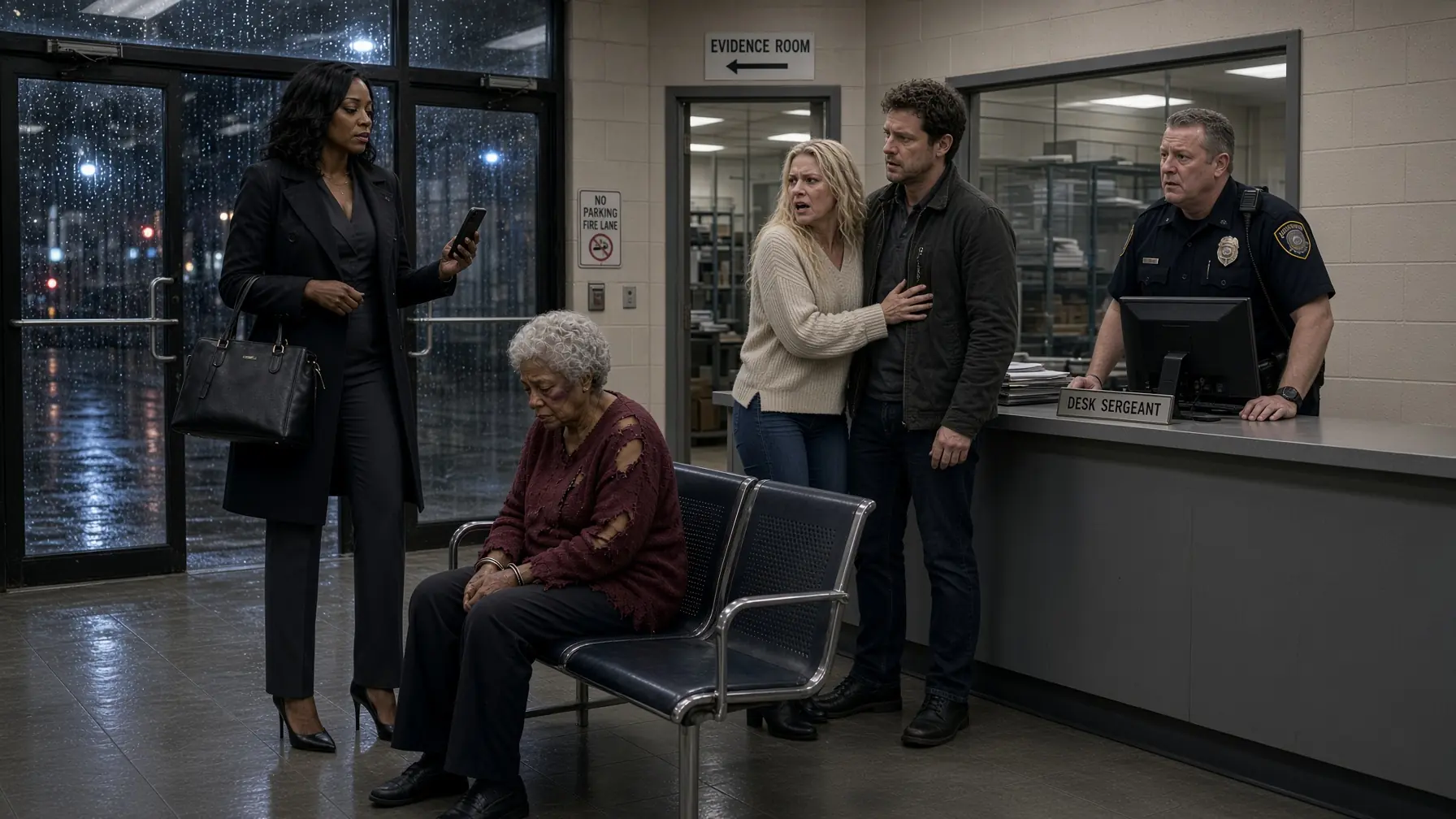
Then I saw the name on the screen.
MOM
I answered before the second ring finished.
“Mom?”
Nothing.
Just breathing.
Thin.
Uneven.
Then a whisper.
“Clara…”
I sat upright.
My mother had never sounded like that in my life.
Not when my father died.
Not during surgery.
Not when Arthur disappeared for three days at seventeen and she thought he was dead in a ditch somewhere.
Her voice was small enough that I had to press the phone hard against my ear.
“I’m hiding in the bathroom.”
I swung my legs out of bed.
“What bathroom?”
“The police station.”
Every trace of sleep disappeared.
“Which station?”
“Westbridge.”
I was already standing.
“What happened?”
She tried to answer.
Instead, I heard a broken sob.
Then the sound of her forcing herself to breathe quietly.
“Honey…”
“Yes.”
“Brooke attacked me.”
My hand froze around the phone.
“With what?”
“A baseball bat.”
For one moment, the room felt perfectly still.
Outside my apartment, freezing rain struck the windows.
Inside, I heard my seventy-year-old mother trying not to cry loudly enough for someone outside the bathroom to hear her.
“Where is Arthur?”
Another silence.
Then:
“He watched.”
My older brother.
Her son.
I closed my eyes.
Mom continued.
“Brooke told the police I attacked her.”
“She said I came at her first.”
“She told them I’m unstable.”
“Arthur agreed with her.”
I opened my closet.
Pulled out black trousers.
A blouse.
My long wool coat.
“Did the officers see your injuries?”
“Yes.”
“Did they photograph them?”
“No.”
“Did they call EMS?”
“No.”
“Did anyone ask whether you wanted a hospital?”
“No.”
“Did they recover the bat?”
“I don’t think so.”
“Did they separate you from Brooke before taking statements?”
“I don’t know.”
“Are you handcuffed?”
A pause.
“They took one cuff off so I could use the bathroom.”
My jaw tightened.
“One cuff?”
“They attached the other one to the bench.”
I stopped dressing.
“Mom.”
“Yes?”
“Listen to me very carefully.”
She sniffed.
“I’m listening.”
“Do not sign anything.”
“Okay.”
“Do not give another statement.”
“All right.”
“If anyone asks you a question, tell them you want counsel.”
“But—”
“Mom.”
She went quiet.
“I’m coming.”
Her voice cracked.
“Hurry.”
“I will.”
Then, softer:
“Lock the door.”
I left my apartment seven minutes later.
The roads were nearly empty.
Rain froze along the edges of the windshield faster than the defroster could clear it.
Westbridge was thirty-two minutes away under normal conditions.
I made it in nineteen.
That does not mean I drove recklessly.
It means there are advantages to knowing every late-night route in a county because your job occasionally requires arriving before evidence disappears.
My name is Clara Carter.
To most of my relatives, I was simply the quiet daughter who moved to the state capital after law school.
They knew I worked for the government.
They knew I wore suits.
They knew I missed Thanksgiving more often than my mother liked.
They did not know much else.
That was partly because they never asked.
And partly because the work I did was not something I discussed casually.
For seven years, I had served in the state Attorney General’s office.
For the previous three, I had been Special Counsel for Public Integrity and Vulnerable Victims.
My unit handled two areas that sometimes intersected in ugly ways.
Public corruption.
And crimes involving elderly or otherwise vulnerable victims.
Abuse in nursing facilities.