The morning I found Dale sitting in my driveway, it was not yet six.
July 2012.
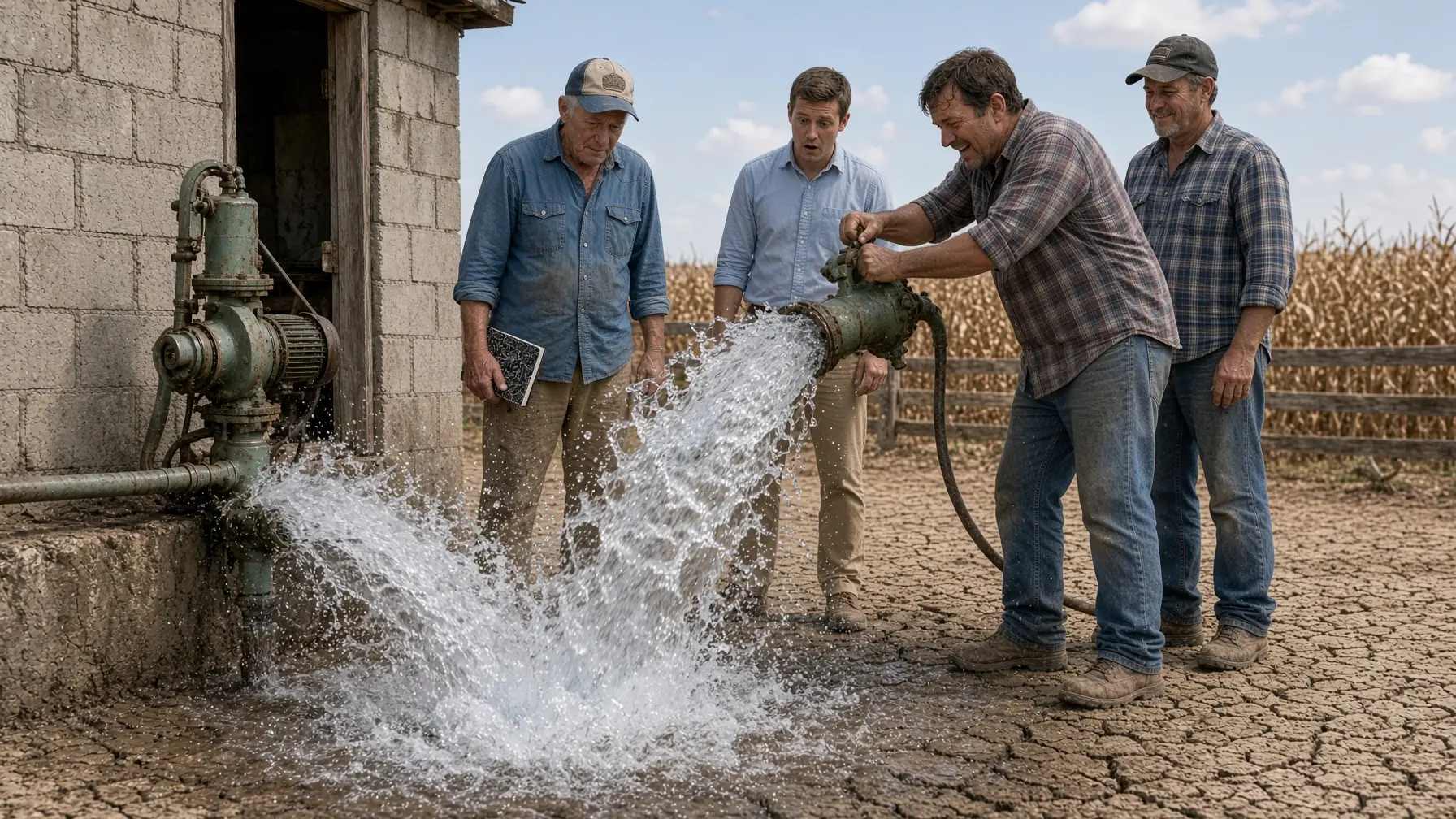
The sun had not cleared the trees, but the air already felt exhausted.
That was the kind of summer we were having.
You woke before daylight hoping for cool air and got something that felt like yesterday’s heat waiting for you on the porch.
Dale’s truck sat crooked near the pump house.
Engine off.
Windows open.
He was behind the wheel with both hands resting on it, staring at that little cinder-block building as though somebody inside had just handed down a sentence.
I watched him from the kitchen window for a minute.
Then I poured coffee.
That sounds rude.
It wasn’t.
I knew Dale.
And I knew whatever brought a farmer into another man’s driveway before six in the morning without calling first was going to require steadiness.
Coffee helped.
When I stepped onto the porch, he climbed out.
No good morning.
No small talk.
He looked past me toward the pump house.
“Ray.”
“Yeah?”
“That thing still running?”
I followed his eyes.
The building had been there since my father put it up in the early fifties.
Low cinder-block walls.
Tin roof that should have been replaced sometime around the first Reagan administration.
Door that only shut properly if you lifted it half an inch while pulling.
Inside sat a pump most people had been telling me to replace for twenty-five years.
It clicked.
Hesitated.
Clicked again.
An old irregular rhythm I had heard so long that silence would have frightened me more than the noise.
“It’s running.”
Dale looked at the ground.
Then at me.
“My well’s done.”
I already knew his water had been dropping.
Everybody’s had.
The drought had been chewing through Hardin County since late spring.
Corn leaves curled before July Fourth.
Pastures browned.
The creek behind my barn dropped so low that limestone I had not seen since I was a boy emerged above the water.
Three farms in the township lost wells in June.
Then four.
Then six.
Dale had been hoping his would hang on.
It didn’t.
“How long?”
“Eleven days.”
“What are you doing for water?”
“Hauling.”
“That’s expensive.”
“I know.”
He took off his cap and pressed both hands against the bill.
“I’ve got eleven head left and forty-seven acres of corn that might still be worth something if I can get water on part of it.”
He swallowed.
“The bank called again yesterday.”
I said nothing.
Dale continued.
“Karen thinks we ought to quit.”
His voice changed when he said that.
Not leave each other.
Leave the farm.
Those are different sentences.
“She’s tired of waking up wondering whether we can make the next payment.”
I looked toward the road.
Across it, the tops of Dale’s corn plants had already turned the color of old straw.
“What did the driller say?”
“Water table dropped again.”
“How much?”
“Eleven feet since they put the well in.”
That got my attention.
Dale had installed a modern submersible system only a few years earlier.
Six-inch casing.
New electrical.
Certified yield.
The whole clean professional arrangement.
Men from the drilling company had arrived with trucks worth more than some houses and handed Dale paperwork that made the water seem permanent.
Now the pump was sitting above what remained.
“They can deepen it,” Dale said.
“How much?”
“Fourteen-two.”
“Thousand?”
He gave me a look.
“No, Ray. Fourteen dollars.”
I nodded.
“Just checking.”
Dale almost smiled.
Almost.
Then his face fell again.
“Fourteen thousand two hundred.”
“You have it?”
“If I had it, I wouldn’t be sitting here.”
Fair.
He looked back toward my pump house.
“I heard yours is still pulling.”
“Roy tell you?”
“Co-op.”
Of course.
Small towns did not require official information systems.
They had coffee.
Roy had seen my livestock tank full.
That was enough.
Dale looked at me.
“I need to ask you something.”
“You already are.”
“I’m serious.”
“So am I.”