I have been putting off telling this story for two weeks now.
Every time I sit down to speak about it, I either get too angry or I start crying, and neither one of those is the energy I want to bring into the room.
Anger makes people stop listening because they think you are only trying to hurt someone back. Tears make people pity you, and pity has never been what I wanted.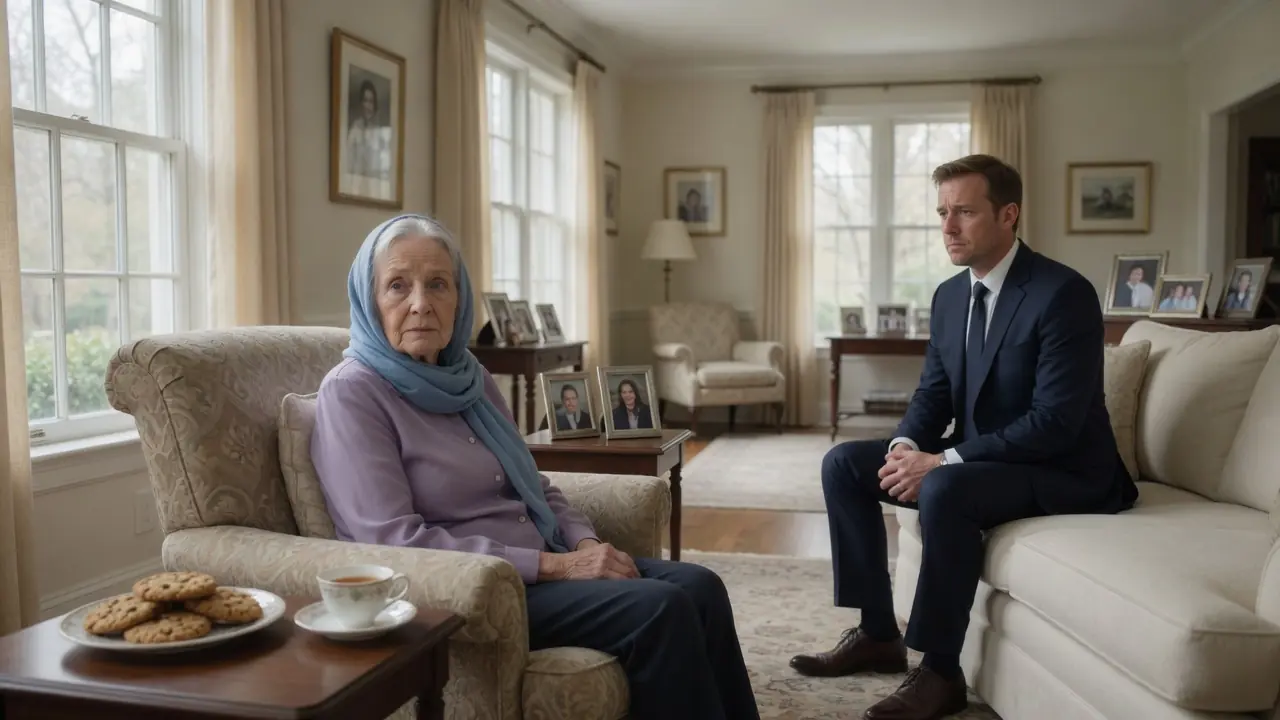
But I need to get it out.
I need somebody to hear this.
So here we go.
My son told me I was too ugly to come to his wedding.
That is the sentence.
I have been turning it over in my head for two weeks, trying to find a gentler way to say it, trying to find some hidden meaning that would make it less cruel. But there is no other way to interpret what happened. He did not say those exact words, but that is exactly what he meant.
And I think we all know it.
His name is Tobias.
He came over on a Tuesday afternoon, the way he sometimes did when he needed something but wanted to dress it up as a visit. I had cookies out because I always had something out when Tobias came over. I had been doing that since he was four years old, and I was not about to stop just because he had grown into a man who wore expensive shoes and checked his watch before he hugged me.
The cookies were oatmeal raisin because those used to be his favorite.
When he was little, he would climb onto the kitchen chair and say, “Mama, don’t make them too flat.” Then he would steal one before they cooled and burn his tongue because patience was never his strength. I used to keep the chipped yellow plate just for him, and even now, all these years later, I put cookies on that same plate when he visits.
That Tuesday, he walked in and did not look at the cookies.
He did not look at the tea I had brewing.
He did not even say, “Smells good, Mama,” the way he used to say when he wanted to pretend he had come for conversation and not for a favor. He just sat on the edge of my couch like he already knew this was going to be a short visit, his knees together, his hands clasped, his eyes avoiding mine.
I should have known then.
A son who cannot look at his mother is either ashamed of something he has done or getting ready to ask her to accept something shameful.
I sat across from him in my lavender blouse, the one with the little pearl buttons Tobias used to play with as a baby. I had chosen it that morning because I had been trying, lately, to look more alive than I felt. When you are seventy-five and sick, people begin looking at you as if your body has become the whole story. So I put on lipstick. I wore earrings. I chose colors that reminded me I was still here.
Tobias cleared his throat.
“Mama,” he said, “Kendra and I have been talking.”
That phrase should come with a warning bell.
Nobody ever says, “We have been talking,” before telling you something tender. They say it before announcing a decision they have already made and are now asking you to survive.
I smiled anyway.
“All right,” I said. “What have you been talking about?”
He looked toward the window.
“The wedding.”
I nodded.
“Of course.”
His wedding was six weeks away then. A vineyard outside Atlanta. White flowers. String lights. A live quartet. A curated menu. Kendra’s word, not mine. Everything about that wedding had been curated, including the way my presence was apparently becoming inconvenient.
Tobias rubbed his palms together.
“I don’t think you should come.”
For a moment, I thought I had misheard him.
I actually smiled, the way people smile when their mind rejects the sentence before the heart can understand it.
“What do you mean you don’t think I should come?”
He breathed out slowly, as if I had made this harder by asking him to explain himself.
“It’s just… it’s going to be a very curated event.”
There was that word again.
Curated.
As if he were building a museum exhibit and I was an object that did not fit the glass case.
He continued.
“The photos, the atmosphere, the guest experience… Kendra has worked really hard to make everything feel elegant and modern. And with everything you’ve been going through…”
He gestured toward me.
Not a full gesture.
Just enough.
Toward my scarf.
Toward my thin shoulders.
Toward the body that had carried him, fed him, worked for him, and now embarrassed him.
“With the chemo,” he said. “The coughing. The scarf. People might feel uncomfortable.”
So I would make people uncomfortable.
At my own son’s wedding.
I am sitting here now, even after all this time, trying to think of what I should have said in that moment. Something sharp. Something wise. Something that would have cracked the room open and made him hear himself.
But my brain stopped working when those words came out of his mouth.
The refrigerator hummed in the kitchen.
The tea kettle clicked as it cooled on the stove.
Outside, someone’s lawn mower started and stopped.
The world kept being ordinary while my son calmly removed me from one of the most important days of his life because illness had made me visually inconvenient.
Then the front door opened.
Kendra walked in without knocking.
Just walked into my house like she had been there a hundred times before, though she had only visited a handful of times and never once helped carry a plate to the sink. She stepped inside wearing cream trousers, a pale green blouse, and sunglasses pushed up on her head like a crown. Her nails were perfect. Her smile was perfect. Everything about her always seemed arranged for someone else’s approval.
She looked around my living room like she was appraising it for sale.
That is not something I am saying to be dramatic.
I have owned property long enough to recognize the eyes of someone calculating value. Her gaze moved from the mantel to the windows, from the old rug to the bookshelves, from the hallway to the stairs. She was not seeing a home. She was seeing square footage.
“Tobias,” she said lightly, “did you explain?”
Tobias did not answer.
Kendra turned to me with a gentle expression she had probably practiced in a mirror.
“Miss Clara, we just don’t want you overwhelmed.”
“I see.”
“And we don’t want the guests worried about you.”
“Worried.”
“Yes,” she said. “It’s a wedding. People should be focused on joy.”
Joy.
There it was.
My sickness would distract from joy.
My scarf would distract from beauty.
My coughing would interrupt elegance.
My body, the one that had survived hospital floors, night shifts, chemo chairs, and seventy-five years of weather, would ruin the visual story Kendra had designed.
Then she tilted her head and said the sentence that showed me where this was really going.
“Maybe after the honeymoon, we should start thinking about long-term care options for you somewhere peaceful. Clean. Supportive.”
Long-term care.
In my own house.
Looking right at me.
I looked at her for a long moment.
“She means a nursing home.”
Kendra smiled.
“We just want what’s best for you, Miss Clara.”
I want to be honest with you.
If someone walked into your home and suggested you be put away while you were sitting right there in front of them, what would you have done?
Because I did nothing.
I sat there in my lavender blouse, the one with the pearl buttons, waiting for Tobias to say something. Waiting for him to correct her. Waiting for him to remember that he was my son before he was her groom.
He did not say anything.
He sat there with his hands folded, eyes lowered, letting this woman speak over me in the house where I had raised him alone.
And that silence did more damage than Kendra’s words.
Before they left, Tobias stood and gave me that standard “we love you, Mom” he gives at the end of every difficult conversation. The one that sounds rehearsed because it is. He leaned down and kissed the top of my scarf, right on the crown of my head, the way you kiss someone who is already somewhere else in your mind.
Like he was practicing a goodbye he had already decided on.
Then they were gone.
I was alone in my house with warm tea, untouched cookies, and the sound of nothing.
Let me back up, because you need to know who I am before the rest of this makes sense.
My name is Clara Massie.
I am seventy-five years old, and I have lived in the same house in Atlanta for thirty-one years. I raised Tobias in this house by myself after his father walked out when the boy was four. I worked hospital housekeeping for twenty-two years on night shifts, the kind of work that settles into your knees and your back and never fully leaves.
People think housekeeping is light work because they do not see the weight of it.
They do not see women lifting bags of linen taller than their grandchildren. They do not see hands cracked from chemicals, feet swollen inside shoes bought one size too big because by four in the morning everything hurts. They do not see the rooms after grief leaves them. They do not see what illness drops on floors, what fear leaves in bathrooms, what families forget beside beds.
I saw all of it.
Then I came home, made breakfast, packed Tobias’s lunch, got him ready for school, slept a few hours, woke up, helped with homework, cooked dinner, and went back to work again.
I wore shoes until the soles came apart.
I brought my lunch every single day.
I said no to myself so many times for so long that no became my default.
No to new coats.
No to hair appointments.
No to vacations.
No to dinner with friends if it cost too much.
No to replacing furniture that still had one good leg of usefulness left.
But here is the thing nobody knew.
The whole time, I was quietly building something.
Not secretly exactly.
More like quietly because nobody ever thought to ask.
I bought my first rental property in my late thirties.
It was a run-down duplex around the corner from where we lived. An elderly woman had passed, and her family just wanted it gone. The porch sagged. The kitchen cabinets were ugly. One bathroom had a leak that made the floor soft near the tub. People drove by and saw a headache.
I saw a future.
My aunt Lucille had left me a small inheritance, not enough to change a life if you spent it, but enough to change one if you invested it carefully. I used every dollar of it to make a bid. The banker looked at me over his glasses like I had walked into the wrong office.
“You understand property management is demanding,” he said.
I looked at him and smiled.
“Sir, I clean hospital rooms at three in the morning and raise a child alone. I am familiar with demanding.”
He approved the loan.
Barely.
I fixed that duplex little by little on weekends and after shifts when my feet were already killing me. I painted walls. I learned to change locks. I hired a retired plumber from church who gave me a discount because I brought him pound cake. I rented both units to quiet tenants, and suddenly there was extra money coming in every month that had not been there before.
So I bought another property.
Then a third.
Nothing fancy.
Small places. Tired places. Houses people had neglected but not destroyed. I understood neglected things. Sometimes all they needed was a roof patch, clean walls, honest repairs, and someone willing to see value before it was obvious.
Later, I put money into a beauty salon my church friend Sheila was trying to start.
Sheila had worked herself half to death doing hair in other people’s shops, always building someone else’s name while her own talent paid their rent. She had a dream and not enough capital. I had savings and faith in her hands.
So I became a silent partner in Sheila’s salon.
She called it Crown & Glory.
At first, it was three chairs, one shampoo bowl, and a sign her nephew painted crooked. Now it has eight chairs, a nail technician, two young women Sheila is training, and a waiting area full of laughter every Saturday morning. Every month, a check comes to me. Every month, I set most of it aside.
Nobody knew any of it.
Not Tobias.
Not my neighbors.
Not the women at church who thought I clipped coupons because I had to.
Not a single person in my life except Sheila, Mo’Nique, and my banker, Mr. Hargrove at Citizens Trust.
I never talked about money.
I never talked about the properties.
I never gave anyone a reason to think I was anything other than a woman who had worked night shifts, raised one son, and grown old in a modest house with too many old photographs.
And yes, I still clipped coupons at the grocery store.
I still wore the same shoes after I could have bought better ones.
I still fixed things before replacing them.
Because the money was not for me.
You understand?
It was always going to be for him.
That was the whole plan.
When I was gone, Tobias would get everything. There would be a letter explaining it all, telling him that the woman he thought had nothing had been quietly building a future for him across all those night shifts, all those holidays worked, all those years of saying no to herself.
I had written him birthday letters, one for every year until he turned fifty.
All of them sitting in a shoe box under my bed.
Some were short.
Some were long.
Some had old photographs tucked inside.
A few had cash I had added for birthdays I knew I might not live to see. I wrote about the day he lost his first tooth. The day he won a spelling bee and acted like he did not care. The day he graduated high school and hugged me so hard I could not breathe. The day I drove home after dropping him at college and cried so hard I had to pull over.
I was going to surprise him.
I had been planning that surprise for twenty years.
And then Tuesday afternoon happened.
The plan died sitting on my couch beside a plate of untouched cookies.
Now let me tell you the last thing Tobias said before he walked out, because this is the part I have been sitting with the most and I need to say it out loud.
He stood at my door and gave me that tired little speech.
“We love you, Mom. We just don’t want the wedding to be stressful. Please understand.”
I did not answer.
I was still waiting for the son I raised to appear in the man standing in front of me.
Then, right at the door, he turned around.
His face changed.
Not a lot.
Enough.
And he said, “This is why Dad left you.”
Lord.
He said it like he had been saving it for years.
Like he had been waiting for exactly the right moment to use it, and he finally found one.
I need you to understand something about that statement.
His father did not leave because of anything I did or anything I was.
Michael left because he did not want to be a parent. He did not want to be a partner. He did not want anything that required him to show up consistently for another person. He liked being admired. He did not like being needed. When Tobias was small, Michael started saying he felt trapped, as if fatherhood were a door I had locked behind him.
I worked two jobs while he “found himself.”
Then he left anyway.
But I never told Tobias the ugliest version of that story.
I gave his father the gentler one because I thought that was what a good mother did. You protect your child from the sharp edges. You let him grow up believing his father was broken rather than admitting his father simply did not want to stay.
I said, “Your father loves you, but he struggles.”
I said, “Your father had things he needed to work through.”
I said, “It was not because of you.”
All of that last part was true.
But I left out the rest.
I protected Michael’s image for twenty years.
And Tobias used it to cut me.
After the door closed, I sat there with my hands on my knees.
Not crying.
Not screaming.
Just breathing.
Trying to understand how we got here.
Because that is still my son.
That is still the boy I rocked to sleep, packed lunches for, sat in bleachers for in January, drove to college visits, called every Sunday, prayed over when he had a fever, and defended even when he was wrong.
And he stood in my doorway and threw his father at me like a weapon.
Something shifted in me that night.
I want to be careful about how I describe it because I do not want you to think I am talking about anger.
It was not anger.
Anger burns hot and leaves you tired.
This was quieter.
Colder.
More permanent.
The kind of internal shift that happens when you finally stop pretending about something you have known for a while.
That night, I sat in my recliner wearing my old flannel robe, the one I have had since Tobias was in high school. The streetlight outside was blinking the way it has been blinking for ten years, the one I keep meaning to call the city about and never do. The house smelled faintly of oatmeal cookies and lavender hand cream.
I sat there hearing his voice.
You will make everyone uncomfortable.
The scarf, the chemo, the coughing.
This is why Dad left you.
People always say you cannot let other people’s words live in you. Let it go. Do not give them power. All that.
But some words arrive carrying the voice of your child.
Those land different.
When the person who says them is someone you pushed into the world with your own body, stayed up with night after night, sacrificed things for that you can never get back, those words do not simply pass through. They find a room inside you and sit down.
I got up eventually and went to my bedroom.
At the bottom of my closet was an old filing cabinet. Inside it, under decades of tax returns, birth certificates, property records, receipts, and utility bills I could not bring myself to throw away, was a folder I had labeled in black marker a long time ago.
Final.
I carried it to the bed and opened it slowly.
My will was inside.
My life insurance policies.
The deeds to the three rental properties.
Bank statements with balances that would surprise anyone who had watched me clip coupons my whole life.
Partnership documents for Crown & Glory.
Investment statements.
A list of account passwords sealed in an envelope.
And right at the top of the beneficiary section was Tobias’s name.
Tobias Michael Massie.
My only child.
My whole plan.
I sat there looking at his name for a long time.
Long enough for the house to get cold.
Long enough for the streetlight outside to stop blinking and go steady.
Then I tore the will in half.
Then in quarters.
Then smaller.
I kept tearing until the pieces were small enough that I could hold them all in one hand.
I know people will have opinions about that.
People always do when an old woman decides something for herself.
They will say I acted from emotion.
They will say I should have waited.
They will say a mother should never cut off her child.
But I need you to understand what happened in that room.
The paper I tore was not my love for Tobias.
It was the legal lie that said he was still the rightful steward of everything I had built.
Those are not the same.
I sat there with those pieces and breathed.
The air in that room actually felt lighter afterward, like something that had been pressing down on my chest had finally lifted.
The next morning, I called Mo’Nique.
Mo’Nique Chambers has been my best friend since we were both nineteen years old, singing in the choir at our church back when we were young enough to think our lives were going to be simpler than they turned out to be. She wore white gloves to service back then and had a soprano voice that could make old deacons sit up straighter. I had a shaky alto and no confidence, but Mo’Nique said I blended well.
We have held each other through things I do not even want to name out loud.
Funerals.
Marriages that fell apart.
Children who disappointed us.
Diagnoses that changed everything.
Hospital rooms.
Courtrooms.
Kitchen tables where one of us said, “I cannot do this,” and the other one said, “Then I will sit here until you can.”
When she picked up the phone that morning, she already knew something had happened just from the way I said her name.
“Clara,” she said. “What did he do?”
That is a friend.
She did not ask if something happened.
She knew.
I told her everything.
What Tobias said about the aesthetic.
What Kendra said about long-term care.
The way he kissed the top of my scarf.
The last thing he said at the door.
All of it.
Mo’Nique was quiet for a moment.
Then she said, “Clara, I saw the wedding announcement.”
“I know.”
“Your name was not in it anywhere.”
I closed my eyes.
“I know.”
Not mother of the groom.
Not beloved mother.
Not family.
Nothing.
Kendra’s parents were listed in beautiful script. Tobias’s father, Michael, was mentioned in a line about honoring absent family members, which was something I had to read twice before the room stopped spinning. The man who left was being honored. The woman who stayed had been erased.
“I need you to come over today,” I said. “I need to rewrite the will.”
Mo’Nique did not immediately celebrate. She did not say, Good, take him for everything. She is not that kind of friend.
She asked, “Are you absolutely sure?”
“I am.”
“Clara.”
“I may be dying,” I said, “but I am not dead yet. And today, I am taking back what belongs to me.”
She was at my door by noon.
Mo’Nique came in without knocking because she has never knocked at my door in fifty-six years of friendship and is not about to start now. She wore a navy pantsuit, carried her leather briefcase, and had the expression she used whenever someone was about to learn the difference between kindness and weakness.
She set the briefcase on my dining table.
“All right,” she said. “Let us do this properly.”
Mo’Nique had become an estate attorney after raising three children and putting herself through law school at forty-two. People underestimated her because she smiled easily and brought pound cake to meetings. They stopped underestimating her once she started asking questions.
I gave her everything she needed.
Account numbers.
Property addresses.
The name of my banker at Citizens Trust.
The deed records.
Insurance policies.
The paperwork for Crown & Glory.
The rental income statements.
I even had ten thousand dollars cash in an envelope in my sewing drawer labeled In Case the World Ends, which got a look from Mo’Nique but no comment.
She listed every asset without judgment.
At the top of the new will, she wrote the name I had chosen.
The Rose House Foundation.
Rose House is a women’s shelter in South Carolina that takes in elderly women who have been abandoned by their families. Women who have been made to feel like a burden just for still being alive. Women whose children stopped calling once money ran out or care became inconvenient. Women who spend their days in rooms nobody visits.
I volunteered there years ago.
I painted walls.
Served food.
Sat with women who were too tired to read on their own.
I remember one woman named Miss Darlene who kept a small purse on her lap every day. There was nothing in it but tissue, peppermints, and a photograph of her two sons. She told me they were busy men, important men, and would come when they could.
They never came.
I remember thinking, I never want to be one of these women.
Then, sitting in my living room while Kendra suggested I be placed somewhere peaceful and clean, I realized I already knew how it felt.
So I chose Rose House.
Not because I hated Tobias.
Because those women would understand what it meant to be treated like a problem after spending a lifetime being the solution.
I signed the new will with a hand that was shaking, but my eyes were not.
Mo’Nique sealed everything and placed it in her briefcase.
Then she looked at me over the top of her reading glasses.
“What do you want to do about the wedding?”
“I want to go.”
She raised one eyebrow.
Just one.
That is a Mo’Nique thing.
“I am listening,” she said.
“Not to cause trouble,” I said. “Not to ruin their day. I just want to be in the room. I want to see my son get married with my own eyes. And when it is over, I want him to know what I decided.”
Mo’Nique studied me.
“You want a confrontation?”
“No.”
“You want revenge?”
“No.”
“What do you want?”
I looked toward the hallway, where framed photographs of Tobias still lined the wall. Baby Tobias in overalls. Tobias with two missing front teeth. Tobias in his graduation gown. Tobias at twenty-three, arm around me, smiling like he was proud to be my son.
“I want to stop disappearing,” I said.
Mo’Nique nodded once.
“I will handle the envelope.”
Four days before the wedding, an envelope showed up in my mailbox with gold lettering and embossed trim that I could feel with my fingers before I even opened it.
It was not from Tobias.
It was from cousin Renee.
If you have a Renee in your family, you already know what I am talking about. She is always at every family event with a plate of something in one hand and a pocket full of everybody else’s business in the other. She knows who is pregnant before the mother does, who is behind on taxes, who got a new car they cannot afford, and who is not speaking to whom but should be.
Inside was a card with calligraphy and a glossy photo of Tobias and Kendra standing under a white archway, smiling so perfectly I kept looking for the seam.
At the bottom of the card, in smaller font, was a handwritten note from Renee.
We would love for you to join us. Quietly, of course. Please sit in the designated family section and respect the couple’s wishes.
Quietly, of course.
I read that twice.
Set the card on my counter.
And knew immediately that I was going.
Not for them.
For myself.
Because I had shown up for that boy every single day of his life, and I was not about to let the last image he had of me be a woman who stayed home.
The morning of the wedding, I got up before sunrise.
I bathed slowly because my body does not move like it used to. Cancer teaches you patience whether you want it or not. You learn to sit on the edge of the tub until the room stops spinning. You learn to button slowly. You learn that brushing your teeth can feel like a task worthy of applause if the day is bad enough.
I put on my soft gray Easter suit, the one that still fit right and made me feel like myself.
I wrapped my head in my good blue scarf with the silver threading, the one I had saved for church services and funerals and days when I needed to remember dignity was not hair-dependent.
Then I pinned on the brooch my mother gave me when I finished school.
A small silver dove.
Worn smooth in places but still holding its shape.
I thought about my mother when I pinned it on. She had cleaned houses for white women who called her by her first name while she called them Mrs. She had raised five children and buried one. She had endured more disrespect than she ever described because survival did not leave much room for testimony.
But she also once told me, “Clara, do not confuse a quiet voice with a surrendered soul.”
I looked at myself in the mirror for a long time.
My body looked smaller than I remembered.
More fragile.
The kind of fragile that sneaks up on you when you are not paying attention.
But my eyes were still exactly mine.
Mo’Nique arrived on time in her navy pantsuit, briefcase in hand, already in business mode. She had the manila envelope sealed with Tobias’s name written on the outside.
I handed her a second smaller one.
“That one is for Kendra,” I said. “Give it to her after.”
Mo’Nique took it.
“Clara, are you physically strong enough for this today?”
“No.”
She looked at me carefully.
I continued.
“But I am spiritually unwilling to stay home.”
She almost smiled.
“That is not a medical category.”
“It is today.”
We drove to the vineyard in silence for most of the way. Atlanta moved past the windows in soft morning light, then the roads opened into greener stretches. My hands rested on my cane. Mo’Nique drove with both hands on the wheel, jaw set.
The vineyard was something.
I am not going to lie.
Green rows stretched up into the hills. White tents stood across the lawn. String lights were already on even though it was still morning. A quartet played near the entrance, all gentle strings and expensive sorrow. Guests floated around in pastels like they had all agreed beforehand on exactly how elegant they were going to be.
I sat in the car for a minute before getting out.
“He really did spare no expense,” I said.
Mo’Nique looked at the tents.
“No, he did not.”
And then I thought, With what?
Because the money I had been quietly building for thirty years was going to a women’s shelter in South Carolina now. So whatever Tobias spent, it was not my money.
I want to be clear about that.
We walked to the designated family section.
A few people nodded politely as we passed, and some did not recognize me, which was exactly what I had been instructed to aim for. The invisible woman in the third row. The mother who had been allowed in only because someone like Renee refused to let complete erasure happen without at least one witness.
I sat down quietly.
Just like the card said.
The ceremony started.
Tobias came down the aisle looking sharp, proud, and handsome in the way that still catches me sometimes. That is still my son up there. I had to take a breath. I am going to be honest with you. I had to really take a breath because for all my hurt, the sight of him still reached the mother in me first.
Then Kendra came down the aisle.
She was beautiful.
I am not so far gone that I cannot see that.
Her dress was smooth and elegant, her veil floating behind her like something out of a magazine. The crowd sighed, and I understood in that moment why Tobias chose her. Kendra knew how to become an image people admired.
But understanding it did not make any of the rest okay.
The officiant talked about unity.
Trust.
Honoring the people who shaped you.
Tobias shifted when that part came.
He did not look back.
But he shifted.
I noticed because I am his mother.
A mother notices the movement of her child even when he thinks she cannot see him.
The vows were long.
Kendra cried during hers, and the crowd made that soft collective sound people make when beauty tells them how to feel. Tobias smiled the charm he had carried since he was twelve, the one that got him extra dessert from church ladies and extensions from teachers who should have known better.
They exchanged rings.
They kissed.
Everyone stood and applauded.
I stayed seated.
Not out of spite.
I genuinely did not have the strength to stand, and I was not going to perform something I was not feeling for the benefit of people who did not know who I was.
Mo’Nique leaned over.
“You want me to go now?”
I looked at Tobias and Kendra as they turned toward the guests, glowing beneath all that white fabric and careful sunlight.
“Let them have the moment,” I said.
And I meant it.
When the guests began moving toward the reception tent and Tobias and Kendra stood near the floral arch taking photographs, laughing and pulling each other close, I turned to Mo’Nique and gave one nod.
She stood.
Now, I want you to picture Mo’Nique doing this because it is the most Mo’Nique thing that has ever happened. She moved without rushing, without drama, without any kind of announcement. Just a woman on a mission who had been doing difficult things with grace for fifty-six years and knew exactly how to move through a room.
Kendra saw her first and looked confused.
Tobias turned.
His smile went still.
Mo’Nique said, “Congratulations. This is from your mother.”
She handed Tobias his envelope.
Then she handed Kendra the smaller one.
Then she turned around and walked straight back to me without another word.
I watched Tobias open that envelope from across the vineyard.
I could see the exact moment his face changed.
Confusion first.
Then irritation.
Then something else.
Something like the ground shifting under him.
He read faster.
Then slower.
Then he looked up.
Our eyes met across all that curated elegance, all those white flowers and string lights and carefully arranged moments.
I looked at my son from thirty feet away.
Not with hatred.
Not with pleading.
With finality.
I did not wave.
I did not smile.
I did not give him a reaction to work with.
I picked up my cane and walked back to the car.
I had been there.
I had seen it.
And I was done.
Mo’Nique told me everything later the way she always does, straight and plain and without added drama. She said Tobias stood there with the pages in his hands and went through four or five different expressions in less than a minute. Confusion first. Then disbelief. Then fear. Then anger.
The new will was in there.
My letter was in there.
Every document showing that everything I had built across all those decades was going to the Rose House Foundation and not one dollar of it was coming to him.
Kendra had her own envelope.
Just a short note I wrote on ivory paper.
Kendra,
I am not going to relive what you said to me in my living room. But I will say this. If you married Tobias thinking you were getting something, I suggest you make other plans. He has nothing now. He earned exactly what he got.
Clara Massie
Mo’Nique said Kendra’s face changed completely when she read it.
Not because of shame.
Not first.
Calculation came first.
Then panic.
Then anger.
That told Mo’Nique everything she needed to know.
Things began falling apart after that. Not because I orchestrated it. Not because I stood up and made a speech. Not because I embarrassed them in front of their guests. The truth did it all by itself.
Truth tends to land hard on people who built their whole life on what they assumed was coming.
I was already home by then, sitting by my window with my tea.
I had left my blue scarf folded on the third-row chair when I left. Not as a statement. Not as a symbol. I simply did not need it anymore. And I thought, if someone picks it up and wonders about it, let them wonder.
He called me three days later.
I answered because I am still his mother.
That has not changed, and it is not going to change. I will always pick up when Tobias calls, and I think on some level he knows that, which maybe is its own kind of problem, but that is a different conversation.
His voice was shaking.
“Mama, what did you do?”
I sat by the window with my tea cooling beside me.
“I updated my will, Tobias. I had every right to do that.”
“You humiliated me.”
“No,” I said. “I gave you information after the ceremony. Quietly.”
“Kendra is devastated.”
“I imagine she is disappointed.”
“That is cruel.”
“Perhaps.”
“Mama, you cannot do this.”
“I already did.”
He went quiet for a second, then said the thing I knew was coming.
“Everything you had was supposed to come to me.”
There it was.
Not Are you okay?
Not I am sorry.
Not I should not have said what I said.
Everything you had was supposed to come to me.
I looked out the window at the old blinking streetlight.
“Tobias, I left you everything for thirty years. I left you my nights and my health and every dollar I scraped together on those hospital floors so you could grow up not having to scrape. What I changed was a document, and that document was always mine to change.”
“I cannot believe you would do this to me.”
I thought about getting loud.
Lord knows I had the material.
I thought about the shoes I wore until the soles were thin. The meals I skipped quietly when money was tight. The birthday letters I burned in my kitchen trash the night after he left my house. All those envelopes for every year until he turned fifty. Gone. The twenty years I spent protecting his father’s name so Tobias could grow up with a kinder story than the true one.
I had so much I could have said.
But I did not say all of it.
I said, “Tobias, you sat on my couch and told me I would ruin your wedding just by being there. Your fiancée suggested I be put in a facility while I was sitting right in front of her. You stood there with your arms folded and let her say it. Then you told me this is why your father left me.”
He did not speak.
I continued.
“That is what I am responding to.”
“Mama…”
“I am not calling it cruelty,” I said. “I am calling it information. You showed me who you are in this season, and I made my decisions based on that.”
His breathing changed.
“I was stressed.”
“I know.”
“The wedding pressure was too much.”
“Then you should have rested, not wounded your mother.”
“I didn’t mean it like that.”
“Yes,” I said softly. “You did.”
That silence was heavier than the first one.
“I love you,” I said. “And I will always love you. That part is not negotiable and never will be. But love does not mean I have to hand everything I built to someone who made me feel like I was ruining a room just by existing in it.”
He started crying then.
Or pretending.
Or both.
I was too tired to separate the sounds.
“Please,” he said.
“I hope you have a good marriage, Tobias. I truly do. I hope you become better than you were in my living room.”
Then I said goodbye and hung up.
I sat there for a good long while afterward asking myself if I had done the right thing.
Did I really do the right thing?
Then I remembered Kendra suggesting long-term care in my own house.
I remembered Tobias sitting there silently.
I remembered his father’s name turned into a weapon.
And the answer came back the same as it always does.
Yes.
A few months later, I heard that the Rose House Foundation had renamed their main building Massie Hall after my estate commitment became public within their donor circle. Not because I had passed away, as some people assumed, but because I had made the gift irrevocable for certain assets and began transferring support while I was still alive.
Women began sharing their own stories online.
Elderly mothers.
Widows.
Aunts.
Grandmothers.
Women who had signed over homes too early and been moved into back rooms.
Women whose children called them burdens while waiting for inheritance.
Women who had apologized for needing care after spending decades caring for everyone else.
It spread farther than I expected.
I did not ask for any of it.
But I am glad it happened because if one woman hears this story and understands she has the right to change her mind about where her legacy goes, then something good came out of everything that happened to me.
Because I need you to understand what I was actually doing when I changed that will.
I was not punishing Tobias.
That is not who I am.
I was a seventy-five-year-old woman with a serious diagnosis who looked at her legal documents one night and realized they no longer reflected what she actually believed. So she changed them.
That is all it was.
A woman exercising a legal right over something she built.
The cancer went into remission six months after the wedding.
I did not call Tobias to tell him.
Not because I wanted him to suffer with not knowing, but because that news belonged to me first. It belonged to Mo’Nique and Sheila and the nurses who were there for every treatment, the ones who knew my name, brought me warm blankets, and asked how I was actually doing.
It belonged to the women at Rose House who sent me a handmade card covered in paper flowers.
It did not belong first to someone who had not called once through the worst of it unless inheritance was part of the conversation.
Tobias eventually found out through Renee because Renee knows everything.
He sent flowers.
White lilies.
No note except, Glad you’re better.
I put them in a vase.
I am not petty enough to throw away good flowers.
But I did not call.
A year after the wedding, Tobias came to my house alone.
No Kendra.
No announcement.
No curated language.
He stood on my porch looking older than he had any right to look, holding a paper bag from the bakery where I used to buy his birthday cakes.
I opened the door.
“Mama,” he said.
“Tobias.”
“I brought lemon pound cake.”
“I see that.”
“Can I come in?”
I looked at him for a long moment.
He looked nervous.
That was new.
I stepped aside.
He entered the living room more slowly this time. He did not look around like he owned it. He did not sit until I told him he could. He placed the cake on the coffee table and stared at his hands.
“Kendra and I are separated,” he said.
I was not surprised.
Still, I said, “I’m sorry.”
He nodded.
“She was angry after the wedding. Not just angry. Different. Once she understood the money was gone, everything changed.”
I looked at him.
“The money was never hers.”
“I know that now.”
“You should have known it then.”
He flinched.
Good.
Not because I wanted to hurt him, but because truth should touch the place that needs healing.
He looked up.
“I came to apologize.”
“For what?”
“All of it.”
“That is too broad.”
He nodded, tears already forming.
“For telling you not to come to my wedding. For caring more about photographs than my mother. For letting Kendra talk about putting you somewhere. For saying what I said about Dad.”
His voice broke.
“For using the lie you told to protect me and turning it into a weapon against you.”
That sentence reached me.
Not forgiveness.
Not yet.
But it reached me.
“I did lie,” I said quietly.
He looked confused.
“About your father.”
His face changed.
I folded my hands in my lap.
“Michael left because he did not want the responsibility of being a husband or a father. I made it softer for you because you were a child and I wanted you to grow up with less bitterness than I had.”
Tobias stared at me.
“He didn’t leave because of you?”
“No.”
His eyes filled.
“I believed…”
“I know.”
“Why didn’t you tell me?”
“Because I thought protection was love.”
He covered his face.
I let him sit with that.
A mother wants to rush in and comfort. But sometimes comfort arrives too early and rescues a person from the consequence that might finally teach them.
After a while, he whispered, “I am sorry.”
“I know.”
“Can you ever forgive me?”
I looked at my son.
He was still handsome.
Still mine.
Still the boy who once burned his tongue on cookies.
Still the man who had wounded me in my own living room.
“I can work toward forgiving you,” I said. “But I am not changing the will back.”
He nodded quickly.
“I didn’t come for that.”
I watched him.
For the first time in a long time, I believed he might be telling the truth.
“Good,” I said. “Because it is not available.”
He almost smiled through tears.
Almost.
That day, we ate lemon pound cake at my coffee table. It was dry, but I did not say so. Tobias asked about my treatments. Really asked. He looked at me when I answered. He apologized again, specifically this time, and did not try to make my forgiveness into a financial negotiation.
That was a beginning.
Not an ending.
People want clean endings.
They want me to say I cut him off forever and lived happily.
Or that he apologized, and I restored everything, and the family healed like a movie.
Life is not that tidy.
Tobias and I speak now.
Carefully.
Not every day.
Not like before.
He is learning to call without needing something. I am learning to answer without giving everything. He volunteers at Rose House twice a month now, not because I asked him, but because Mo’Nique suggested he might learn something there if he could stand being useful without being centered.
The first time he came back from Rose House, he called me from his car.
“Mama,” he said, voice thick. “There was a woman there named Miss Darlene.”
I closed my eyes.
“She is still there?”
“Yes.”
“She likes peppermints.”
“She had them in her purse.”
I smiled sadly.
“Yes.”
He was quiet.
“I understand more now.”
“Good,” I said.
Understanding does not undo harm.
But it can stop new harm from growing in the same soil.
I am still in Atlanta.
Still in the same house I have been in for thirty-one years.
Still clipping coupons at the same grocery store, though now I let myself buy the expensive tea when I want it.
But here is what is different now.
I sleep well.
I wake up in the morning and make my tea and sit by this window. I do not feel like I am apologizing for taking up space. I do not feel like I am managing how much of myself I show so nobody gets uncomfortable. I do not feel like I am the wrong thing in somebody else’s carefully arranged room.
That is what peace feels like when you finally stop spending it on people who did not earn it.
And I want that for every woman who hears this.
Have you ever given somebody everything you had and then found out later they were keeping score of all the wrong things? That they counted what you gave but not what it cost you? That they saw the roof but not the night shifts, the food but not the skipped meals, the inheritance but not the life that built it?
I know I am not the only one.
If you are in something right now where someone in your life is making you feel like a burden, an inconvenience, an embarrassment, or a problem to be managed, I want you to hear this from a seventy-five-year-old woman in Atlanta who has been through it.
You are not those things.
You are a person with a name, rights, a history, and a life that belongs to you.
Know what you own.
Know what your name is on.
Update your paperwork to reflect who you actually are right now, not who people preferred you to be when you were easier to use.
Love people.
Help them if you choose.
Forgive if your spirit leads you there.
But do not confuse love with surrender.
I gave Tobias thirty years.
I gave the women at Rose House the rest.
And I am at peace with both decisions in a way that would surprise people who only saw what happened at that wedding.
My name is Clara Massie.
I am seventy-five years old.
I am still right here in Atlanta, still sipping my tea by this window, still wearing my mother’s silver dove brooch when I need reminding.
Worn smooth in places.
But still holding its shape.
So am I.