I’m 34, male, and I guess I should start from the beginning.
It feels strange typing all of this out, but maybe it will help someone else avoid the mistakes I made.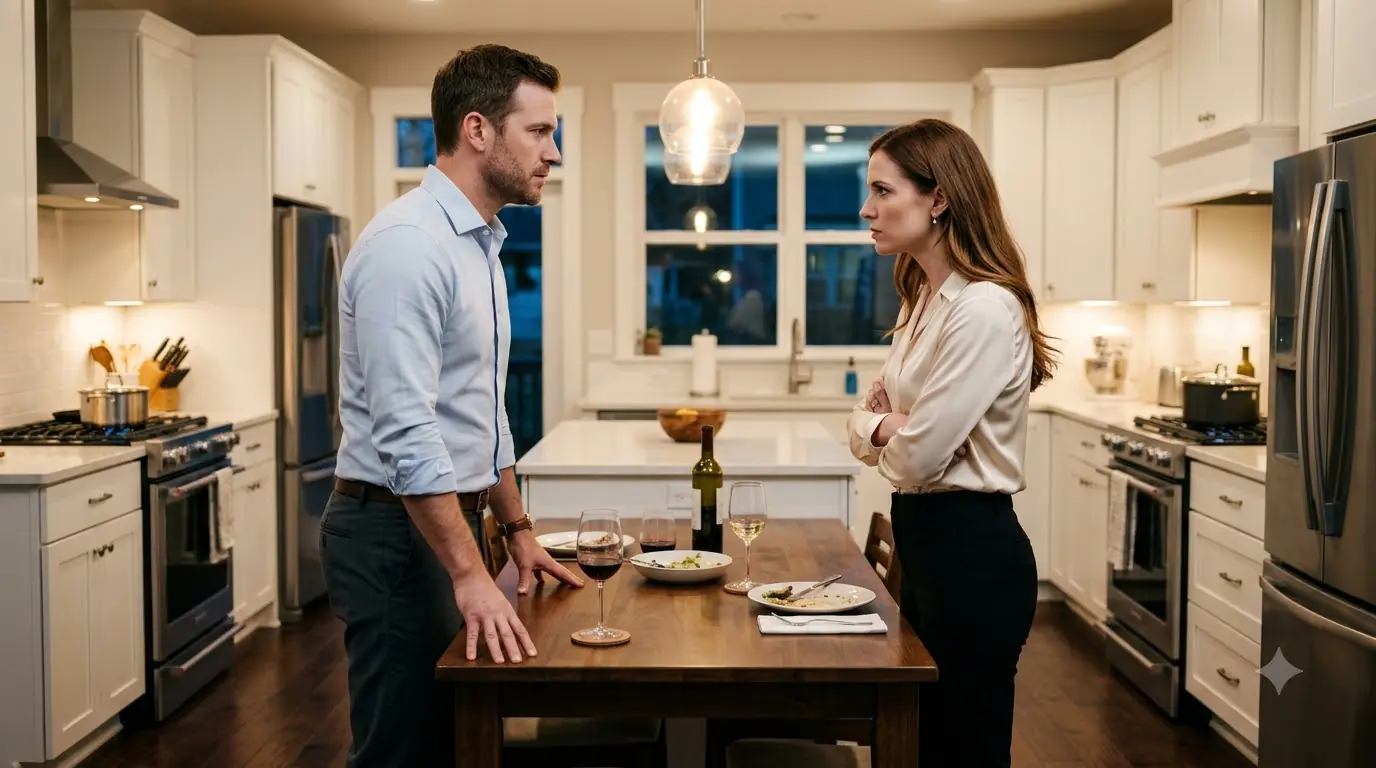
My wife and I started off pretty damn well. We met at my buddy’s housewarming party; she was a college friend of his girlfriend, and I had almost skipped the party because I had a big presentation at work the next morning.
My buddy insisted I come, and funny enough, that one decision changed the direction of my life. From the first day, I was straightforward with her about who I was and what I wanted.
I’ve never been the type to play games. If I’m interested, I’ll say it, and if I’m not, I’ll say that too.
Some women don’t like that kind of direct approach, but she seemed to appreciate it. We dated for about a year and a half before I proposed.
The wedding was simple, just close friends and family at a lake house her parents rented. I remember looking at her that day and thinking I had gotten lucky.
She was attractive, smart, had her own career, and seemed to respect what I brought to the relationship. For the first five years, things were genuinely solid.
We had a system that worked for us. I handled most of the traditional “man of the house” jobs: fixing the leaky sink, mowing the lawn, maintaining the cars, and managing our investments.
I make good money as a software developer, so I covered most of the bills even though she worked too. She cooked, and she was honestly an amazing cook, kept the house clean, and handled most of our social planning.
Traditional, maybe, but it worked. We were the kind of couple other couples liked being around because we didn’t have public blowups or turn every disagreement into a spectacle.
We kept our problems private and talked them through like adults. If I thought she was being unreasonable, I told her, and usually she could see my point; if she had an issue with me, I listened and changed something when her criticism made sense.
One thing I was strict about from the beginning was maintaining some independence. I still went to the gym five days a week, kept my poker night with the guys every other Thursday, and stayed involved in my hobbies.
She had girls’ nights and yoga classes too. We never needed to be attached at the hip twenty-four hours a day to trust each other.
“You’re my rock,” she used to tell me. “I’ve never felt this secure with anyone.”
Looking back, though, there were small moments when something in her shifted. She would get unusually quiet if I made plans without checking with her first, or make little comments when I laughed at something on my phone.
“Who’s so interesting?” she would ask in a fake casual tone.
It happened so rarely that I brushed it off.
About three years into the marriage, a female coworker texted me around 9:00 p.m. about a project. It was completely professional, and when my wife asked who it was, I told her honestly.
She joked, “Should I be worried?” and I laughed because I thought she was teasing.
Looking back, I think she was testing the waters.
Another time, I went to Seattle for a three-day conference and wrapped everything up in two days. I came home a day early to surprise her.
She acted happy to see me, but there was a strange moment when she almost looked disappointed, as though she had made plans for her alone time and I had disrupted them. Again, I didn’t think much of it.
At that point, I thought we were rock solid. My career was going well, we had recently bought a house in a nice neighborhood, and we were talking about possibly having kids in another year or two.
I was taking care of myself, too. I’m six feet two inches tall, and at the time I weighed around 210 pounds and was roughly 15 percent body fat.
I thought I had a supportive partner who had my back. I couldn’t have been more wrong.
The real test came when a recruiter contacted me about a senior developer position at a fast-growing tech company. The salary was almost double what I was making, plus stock options and the kind of benefits package that could potentially set us up for early retirement.
When I told my wife, she seemed genuinely happy for me. She hugged me, planned a nice dinner, and raised her glass that night.
“You deserve this,” she said. “All your hard work is finally paying off.”
I started at the new company, and it was everything the recruiter had promised. The office had standing desks, free snacks, a gym in the building, and a team full of smart people who actually knew what they were doing.
My previous company had been the kind of place where I felt like I was carrying half the development department by myself. This was different, and the first few weeks were intense but exciting.
I would come home energized, talking about the projects we were building and the technical problems we were solving. The money was great too.
When my first paycheck hit, I took my wife to a steakhouse we normally saved for anniversaries. We ordered a good bottle of wine and made a whole night of it.
I remember thinking again how lucky I was to have a partner who supported my career. Then things started changing.
At the new job, the team had a tradition of going out for drinks after our weekly sprint review on Thursdays. It was usually just a couple of hours to relax and talk about something other than work.
The first time I mentioned it, I saw a small crease appear between my wife’s eyebrows. “Every Thursday?
Like, a regular thing?”
“Yeah,” I said. “It’s just a team tradition.
I’ll probably be home around 7:30 or 8:00.”
She made a little sound that told me she didn’t love the idea, but she didn’t say anything else. I figured she would get used to it.
The second week, I texted that we were wrapping up and heading to the bar. She immediately replied, “Who’s all going?”
“The whole team,” I answered, and left it there. When I got home, she was sitting on the couch in the dark with her arms crossed.
“Have fun?” she asked.
Her tone was off.
“Yeah, it was chill. Just a couple beers and some shop talk.”
“Shop talk with Rachel too?” she asked.
That was the first time I felt a real alarm bell in my head. Rachel was one of our UX designers, someone I had mentioned once or twice because she was part of the team.
“Uh, yeah. She’s on the team.
Why?”
“Just curious who my husband is spending his Thursday nights with now.”
I laughed it off because we had been married five years and she had never seemed seriously jealous before. I told myself she had simply had a bad day.
But then it kept happening. Any time I mentioned a female coworker, she wanted details: What does she look like?
How old is she? Is she single?
Then I noticed my wife checking my phone while I was in the shower. She went through my texts, email, and even my work Slack.
I started dreading conversations about work because I knew she would search whatever I said for evidence that I was doing something wrong. The thing was, I wasn’t.
I’ve never cheated in my life, not on her and not on anyone else. That has always been a hard line for me.
About two months into the new job, I got assigned to a major project with a tight deadline. There were five developers on it, including a woman named Jessica who was our backend specialist.
We all had to put in some long days for about three weeks. Nothing crazy, usually staying until 7:00 or 8:00 on certain nights so we could get through blockers and ship on time.
My wife lost it over those late hours. “Why does it have to be you staying late?
Don’t they have junior developers who can do the grunt work?”
I tried explaining that software development didn’t work that way. She didn’t want to hear it.
She started texting constantly while I was at work. “Where are you?
Who are you with? When are you coming home?”
It got so obvious that my team lead eventually asked whether everything was okay at home. That was embarrassing.
Despite all of that, I tried harder to reassure her. After late nights, I sometimes brought flowers home and told her I had been thinking about her.
I left little notes in the mornings reminding her that there was no one else and that she was the person I had chosen. I cut down on after-work hangouts and started coming straight home more often.
I also gave her more details about my day so she would know there was nothing to hide. I genuinely wanted her to feel secure.
None of it helped. By the end of that three-week project, she barely spoke to me except to make sarcastic comments about my “work wife,” Jessica.
For context, Jessica was around 45, married, and had three teenagers. She looked nothing like the imaginary home-wrecker my wife had constructed in her mind.
One night over dinner, my wife said, “I think you should look for another job.”
I nearly choked. “What?
Why the hell would I do that?”
“This place isn’t good for our marriage. You’re never home, you’re always stressed, and the environment seems inappropriate.”
“Inappropriate? What does that even mean?”
“You know what I mean. All these women you work with, all the late nights and happy hours.”
I couldn’t believe what I was hearing. I was making almost twice what I used to make, the work challenged me in a good way, and my career was finally taking off.
She wanted me to throw all of that away because she couldn’t tolerate the fact that some of my colleagues were women. I actually laughed because the demand felt so absurd.
“That’s not happening,” I told her. “This is the best opportunity I’ve ever had, and I’m not giving it up because of a paranoid fantasy you created in your head.”
That set her off. We had our first real screaming match that night.
She accused me of prioritizing work over our marriage. I accused her of trying to sabotage my career because of her insecurity.
I’m not proud of how heated it became, but I was exhausted and frustrated. After that night, things got worse.
She started giving me the cold shoulder. If I tried to kiss her goodbye in the morning, she turned her face away.
If I reached for her in bed, she moved to the edge and made comments like, “I’m sure Jessica would be more willing,” or some variation of the same accusation. Meanwhile, I kept doing everything I had always done around the house.
I handled the yard work and home maintenance, paid the bills, and kept trying to plan date nights. Most of the time she found an excuse to cancel.
I was bending over backward trying to prove that I was still the same man she had married. One Friday, I even left work early, bought flowers, and made a reservation at her favorite restaurant.
When I walked in, she was sitting at our home computer scrolling through my work email. I had stupidly left myself logged in.
“What are you doing?” I asked, still holding the flowers.
She wasn’t embarrassed. She pointed at a completely innocent project email between me and a female product manager named Michelle.
“You’ve never mentioned her before.”
That was when I knew we were in serious trouble. This wasn’t normal jealousy anymore; it had become an obsession.
I should have confronted it directly then. I should have insisted on couples counseling or drawn a hard boundary instead of constantly trying to prove my innocence.
Instead, I kept reassuring her and trying to be the perfect husband despite behavior that was becoming more intrusive every week. That was a huge mistake.
A person who is determined to find evidence of cheating can eventually convince themselves they found it, even when they have to invent it. Over the next few weeks, my wife stopped even pretending she wasn’t monitoring me.
If my phone buzzed, she asked who it was before I had read the message. If I placed the phone face down on the table, she accused me of hiding something.
I felt like I was being watched in my own home. Every conversation became a minefield.
If I talked about work, she got suspicious. If I didn’t talk about work, she accused me of deliberately keeping things from her.
One night I was in the shower when my phone chimed. By the time I came out, she was standing there with the phone in her hand and a furious expression on her face.
“Who the hell is Allison, and why is she texting you at 9:30 at night?”
I wrapped a towel around my waist and sighed. “Allison is our project manager.
She’s texting the entire team about tomorrow morning’s meeting.”
“If you scroll up, you’ll see it’s a group text with eight people.”
“Well, it seems very unprofessional to be texting after hours.”
“It’s about work. That’s literally the most professional reason possible to text someone.”
She threw my phone on the bed and stormed out. I stood there dripping on the carpet wondering what had happened to the woman I married.
I tried everything I could think of. I offered to show her my phone whenever she wanted, invited her to company events so she could meet my coworkers, and even started coming straight home instead of going to the gym after work.
Nothing helped. Her friends tried talking to her too.
Her best friend, Kate, came over for wine one night, and I overheard her telling my wife, “You’re being ridiculous. He’s always been crazy about you.
You’re seeing problems that don’t exist.”
My wife still wouldn’t let it go. The more people told her she was wrong, the more deeply she seemed to believe that everyone was missing what only she could see.
About four months after I started the new job, everything came to a head. It was a Thursday, and I texted her that we had wrapped a project and the team was going out for one quick celebration drink.
We had done that plenty of times before, and I had always been home by around 8:30. Her response was, “Do whatever you want.
You will anyway.”
I almost skipped the celebration because of that text. My team lead insisted I at least come for one drink because I had led the project.
So I went, stayed for exactly one drink, and left. It was barely 7:15 when I walked through the front door.
She was at the kitchen table with her arms crossed. “Have fun with your work friends?”
“It was fine. Just a quick drink.
We shipped the project on time.”
“I’m sure shipping the project isn’t all you did.”
I took a slow breath. “What is that supposed to mean?”
“You know exactly what it means. Don’t play dumb.”
I was so tired of the endless suspicion that something in me finally stopped trying to soften the conversation. “No, actually, I don’t know what it means.
Why don’t you just say what you’re thinking instead of making these little jabs?”
She stood up and got close to me. “Fine.
I think you’re sleeping with someone at work. Probably Jessica, or Rachel, or whoever else you keep mentioning.”
I laughed, not because it was funny, but because the accusation was so absurd. “You think I have the time or energy to cheat on you when I can barely have a conversation with my own wife without it turning into an interrogation?”
“I’m working fifty-hour weeks and then coming home to this every night, and you think I’m somehow fitting in an affair?”
“People make time for what they want,” she snapped.
I shook my head. “This is insane.
I’ve done nothing wrong. Nothing.”
“I got a better job that benefits both of us financially, and somehow that turned me into the bad guy.”
“If it was just about the money, you could find another job that pays well,” she said. “But you won’t even consider it, so clearly there’s something or someone keeping you there.”
That was the moment I understood how far gone the situation was. No amount of evidence or reassurance was going to change her mind.
“I’m not quitting my job,” I told her firmly. “That’s not happening.
You need to find a way to deal with your insecurity because this isn’t sustainable.”
Her eyes narrowed. Then she gave me the ultimatum that ended our marriage, even though neither of us fully understood that yet.
“Listen to me carefully. If you don’t obey me and quit that job, you can forget about ever touching me again.”
“No bedroom activities whatsoever until you do exactly what I want. Your choice.”
I sat there staring at her, waiting for her to hear how serious her own words sounded. Her arms were crossed and her chin was raised as if she genuinely expected me to crumble.
She seemed to believe I would beg, negotiate, or start scrambling to prove myself worthy of her affection. Instead, something inside me became completely clear.
This was no longer a heated disagreement. It was a pattern of control disguised as normal marital conflict, and I had been participating in the cycle by constantly trying to earn back trust I had never broken.
I laughed, genuinely amused, which caught her off guard. “What’s so funny?”
she snapped.
I leaned back, let the last bit of laughter out, and met her eyes. “Perfect.
Keep it forever.”
Silence. She blinked like she was waiting for me to take it back.
She expected me to explain that I didn’t mean it or that I was speaking out of anger. But I wasn’t angry anymore.
I wasn’t even hurt. I was done.
I stood, picked up my phone, and walked out of the room. For the first time in our marriage, I didn’t feel any need to explain myself.
I didn’t care whether she understood why she was wrong. I didn’t want to fight for her agreement anymore.
I went to the bedroom, grabbed a pillow and blanket, and moved into the guest room without saying another word. She didn’t come after me.
I think she assumed I was cooling off and would come back in an hour or two, apologize, and try to smooth things over like I usually did. Maybe she thought I would offer some compromise to “earn back” what she had threatened to withhold.
But she had nothing I wanted anymore. Lying in the guest bed that night, staring at the ceiling, I realized I wasn’t afraid of losing her.
I was relieved. That realization changed everything.
It wasn’t because of one sentence or one fight. It was because I finally understood that I deserved better than spending my life proving myself to someone determined to see the worst in me.
The next morning, I woke in the guest room feeling different. Cold, detached, like something inside me had finally snapped after months of accusations and nights spent feeling guilty for things I had never done.
I was angry, and at that point I wanted her to feel some of what she had been putting me through. I got up earlier than usual, showered, and put on one of my better shirts.
When I walked into the kitchen, she was already there with a cup of coffee and a smug expression, clearly expecting me to apologize. She cleared her throat.
“So, are you done acting childish?”
I took a long, slow sip of coffee while looking at her over the rim of the mug. Then I smiled, not warmly.
“Yeah,” I said. “Actually, I am.”
Her eyes narrowed because she didn’t understand what I meant. She was waiting for the begging, negotiating, and desperate effort to get back into her good graces.
None of it came. I finished my coffee, rinsed the mug, deliberately left it in the sink instead of putting it in the dishwasher like I normally did, grabbed my things, and went to work without another word.
When I got into the car, I actually laughed. For the first time, she wasn’t controlling the emotional temperature of the house, and that felt incredible.
From that day on, I decided to stop doing the extra things that benefited her. At the time, I saw it as giving her a taste of her own medicine.
I stopped picking up her favorite snacks at the store. I stopped checking whether her car needed gas and stopped automatically fixing every small household issue that bothered her but didn’t affect me.
The wobbly dining room chair she had complained about for months was no longer my problem. The strange noise from the dishwasher that drove her crazy could stay strange.
I kept doing my own laundry, but if one of her shirts or towels ended up mixed in, I took it out. I cooked for myself, cleaned my own dishes, and left her things alone.
I bought groceries I liked and stopped filling the cart with her favorites out of habit. If she no longer wanted to participate as my partner, I told myself I was done performing the role of a husband who took care of everything for her.
At first, she acted like it didn’t bother her. She rolled her eyes, sighed dramatically, and made little noises whenever I walked past without acknowledging whatever mood she was trying to create.
But I could tell it was getting to her. She was used to being the one who withheld attention or affection until I came back and tried to repair things.
About a week into this new arrangement, I was watching a basketball game for a team she knew I really followed. She came into the living room and sat near me on the couch with an exaggerated sigh.
“So this is how it’s going to be now?” she asked.
“What are you talking about?” I said without looking away from the television.
“You. This whole ignoring-me thing.
The silent treatment.”
“I’m not ignoring you. I’m watching the game.”
“Oh, really? Because it sure feels like it.”
I shrugged. “I’m just done wasting energy on pointless conversations.”
Her jaw tightened. “So because you didn’t get your way, now you’re throwing a tantrum?”
That made me laugh, which only made her angrier. “No.
This is just me not caring anymore.”
She wasn’t prepared for that answer. She was used to me becoming defensive, explaining myself, and eventually giving in because I wanted peace.
Now I gave her nothing to work with. I was emotionally exhausted, and in that stage of things I took a certain satisfaction in watching the old tactics fail.
A few days later, I came home, cooked myself an excellent steak dinner, and cleaned my own dishes afterward. I didn’t make anything for her.
She stood near the sink with an expectant expression, clearly waiting for me to crack and say something that would ease the tension. Normally I would have made a joke or started a conversation just to pull us back toward normal.
Instead, I dried my plate, put it away, and walked past her without a word. The look on her face told me she could not believe the guilt strategy had stopped working.
I started focusing heavily on myself. Part of it was healthy, and if I’m being honest, part of it was because I knew she would notice.
I fixed my sleep schedule and made the guest room permanently mine. I bought better sheets and a memory-foam pillow and started waking up at 5:30 feeling more rested than I had in months.
I trained hard again. I set up more equipment in the home gym and played music while I worked out.
Every workout felt like I was separating myself from the version of me that had spent months trying to earn permission to be trusted. I also changed how I dressed.
I stopped defaulting to boring clothes and bought things that actually fit well and looked good. Sometimes I dressed nicely just to get coffee or run errands, knowing she would wonder where I was going.
She noticed. I caught her watching me after workouts and asking where I was heading on weekends.
“Out,” I would say, then leave. I wasn’t doing anything inappropriate, but I also stopped giving her the detailed itinerary she had trained me into providing.
Then I started spending more time away from the house. I went out with friends, stayed at the gym longer, worked from coffee shops, and generally found reasons to be anywhere she wasn’t.
Every time I walked out the door, I could feel her anxiety rise. At that stage, I admit I enjoyed it.
The more I focused on my own life, the less I cared about managing her feelings. That was when she really began to panic.
She was losing the control she had expected to gain from the ultimatum. Guilt, accusations, cold shoulders, and withholding affection no longer had the effect they once did.
She doubled down for a while, apparently believing that if she stayed distant long enough, I would eventually break. Days turned into weeks, and instead I seemed happier while she became more miserable.
Then her strategy changed. One Saturday night, I was in the guest room getting ready to go out, dressed better than I used to dress for some of our own nights together.
She appeared in the doorway. “Are you going out again?”
For the first time, I heard desperation in her voice. I glanced at her while fastening my watch.
“Yeah.”
“With who?”
The question came out before she could stop herself. I adjusted my sleeve and gave her a small smile.
“Does it matter?”
She physically flinched, fingers tightening around the doorframe. Months earlier, I would have rushed to reassure her.
Now I let the question hang. Her own paranoia had become something she could no longer control.
“I just think it’s strange,” she said, trying to sound casual. “You never used to go out this much.”
I turned to face her. “Yeah.
I never used to do a lot of things.”
She waited for more, but I gave her nothing. I picked up my keys, walked past her, and left.
A few days later, I came home from work and found the whole house cleaned. She was wearing an outfit she knew I used to love, her hair and makeup done, and my favorite dinner sitting on the table.
She had even bought an expensive drink I liked, something she normally complained cost too much. “I thought we could have a nice night in,” she said, trying to sound casual.
“Not hungry,” I replied, grabbing a protein bar. “I already ate with the guys after work.”
That part wasn’t true. I hadn’t eaten, but I wanted her to feel the rejection she had been using against me.
Watching her stare at the dinner she had prepared while I walked away felt satisfying in the moment. Petty, absolutely, but I was still carrying a lot of resentment.
Her words, “You should obey me,” stayed in my head. To me, that sentence wasn’t just part of an argument; it represented what the marriage had turned into.
I was a grown man who had built his career and life from the ground up, and she had started treating me like someone who needed to follow orders. She wanted obedience and control; I wanted freedom and respect.
During all of this, her best friend Kate started coming over more often. Officially she was there to see my wife, and I assumed most of their time together was spent discussing our marriage.
But I also noticed that Kate somehow found reasons to talk to me alone. At first, I thought she was simply trying to be a peacemaker and understand both sides.
One day I was working on my car in the garage when Kate came out carrying two coffees. She handed one to me and leaned against the workbench.
“She’s a mess, you know,” Kate said after a few minutes of small talk.
I kept my attention on the engine. “Not my problem anymore.”
“She realizes she screwed up. She just doesn’t know how to fix it.”
I looked up. “There’s nothing to fix.
She showed me exactly who she is, and I believe her.”
Kate was silent for a moment, then said something I didn’t expect. “I told her she was being ridiculous from day one.
I told her she was going to lose you if she kept it up.”
“Smart woman,” I said.
“You’ve changed,” Kate said, studying me.
“Had to.”
“No, I mean you seem stronger now. More confident.”
She paused, then added, “It’s a good look on you.”
Something in her tone made me look at her more carefully. Kate had always been attractive, objectively speaking, and she and my wife had been friends since college.
I had always been friendly with her but deliberately kept a respectful distance. Now I started noticing things I had previously ignored.
She held eye contact a little too long. She found excuses to touch my arm while making a point, and she seemed to be visiting more often now that my marriage was clearly falling apart.
Our conversations also changed. At first they were about my wife, but then we started talking about books, movies, her job, and mine.
One evening, Kate stopped by while my wife wasn’t home, supposedly to drop something off. I noticed she wasn’t actually carrying anything.
We stood in the kitchen talking for almost an hour. When she was leaving, she laughed at something I said and touched my arm.
The touch lingered. The look in her eyes was obvious enough that I couldn’t pretend not to understand it.
I stepped back. “We shouldn’t go there.”
She looked down. “I know.
I’m sorry. It’s just hard watching how she treats you and knowing what kind of man you really are.”
“I’m still married,” I reminded her. “Unhappy, but married.”
Kate nodded. “I understand.
For what it’s worth, you deserve better.”
After she left, I thought about how my wife would react if she knew her best friend had developed feelings for me. Part of me was tempted to let something slip just to hurt her back.
I decided against it. Not because I was particularly concerned with protecting my wife’s feelings by then, but because I wasn’t going to become the person she had spent months falsely accusing me of being.
The irony was hard to miss. She had accused me of wanting women at work, and now there was actual temptation in my own kitchen from her best friend, and I was the person creating the boundary.
Meanwhile, the more emotionally distant I became, the more my wife tried to become physically affectionate. After weeks of using intimacy as a weapon, she now seemed to be using it as a way to pull me back.
She brushed against me in the kitchen and started dressing differently around the house. One night she came into the guest room wearing almost nothing.
I asked her, gently but firmly, to leave. She stared at me as if I had said something impossible.
“Why?” she demanded.
“I’m your wife.”
“You made your conditions very clear,” I told her. “I chose not to meet them.
Now we both live with that choice.”
Her eyes filled with tears. “So you are seeing someone else.”
“No.”
“Then why won’t you even try to fix this?”
“Because this isn’t about fixing one fight. It’s about respect.
You tried to control me by using intimacy as leverage, and that showed me what this relationship had become.”
She left the room crying. The next morning, she acted like nothing had happened, but I could see she was running out of strategies.
The final test came when I had to leave for a three-day business trip. In the old days, she would have bombarded me with texts, demanded constant check-ins, and probably found something to accuse me of while I was gone.
Now she seemed afraid that I simply wouldn’t come back. The night before I left, she made dinner and put on music.
“I thought we could have a nice evening before your trip,” she said.
“I need to pack.”
“I can help,” she offered too quickly.
“No need. It’s just three days.”
As I walked away, I heard her ask in a small voice, “You are coming back, right?”
I paused and looked back. “I have a return ticket.”
After I came home from that trip, I knew exactly what I needed to do. The next morning, after she left for work, I called a divorce attorney and scheduled a consultation for that afternoon.
I took a half day, met with the lawyer, and started the process. It was surprisingly simple to take the first step, and I immediately wondered why I had waited so long.
When my wife came home that evening, I was sitting calmly at the kitchen table. She froze in the doorway as if she could tell something had changed.
“Can we talk?” I asked, gesturing toward the chair across from me.
She sat slowly. “What’s going on?”
I decided not to drag it out. “I met with a divorce attorney today.
I’m filing this week.”
The color drained from her face. For several seconds, she stared at me as though I had spoken another language.
Then all the reactions came at once: shock, anger, panic, bargaining. “You can’t be serious,” she whispered.
“Dead serious.”
“But why? Because of one fight?
Because I asked you to consider changing jobs?”
I almost laughed. “This isn’t about one fight.
This is months of accusations, monitoring, manipulation, and using intimacy to control me.”
“You showed me what this marriage had become, and I believe what I saw.”
“We can fix this,” she said, reaching across the table for my hand.
I pulled my hand away before she touched it. “We can go to counseling,” she continued.
“I’ll change. I know I’ve been insecure about your job, but I can work on that.”
“It’s too late,” I said. “I don’t want this anymore.”
Her eyes filled with tears. “So that’s it?
You’re just giving up on us? On all these years?”
I shook my head. “No.
I’m finally choosing myself.”
Those words seemed to hit harder than anything else I had said. She recoiled and stared at me as if she had never really seen me before.
Maybe she hadn’t. She had known the version of me who always tried to restore peace, not the version who was willing to leave.
Once she realized I was serious, she cycled through every emotion imaginable. Some days she screamed that I was destroying our marriage over nothing.
Other days she cried and begged me to reconsider, promised to change, and said she would do anything to save us. Then she started telling people I was having an affair.
She told friends, family, and anyone else who would listen. Most people didn’t believe her, but some did.
Her sister called me and accused me of cheating with Kate. I laughed because there had still been nothing between Kate and me.
“There’s nothing going on with Kate or anyone else,” I told her. “Your sister made that up.”
When she asked why I was leaving, I told her the truth. “Because your sister tried to control me with intimacy, didn’t trust me, and I’m done.”
There was a long silence. Then her sister said, “I didn’t know about that part.”
“Ask her about the ultimatum,” I said.
Her sister never called me again. The divorce itself became messier than I had hoped.
My wife fought me over the house, savings, and even belongings that were clearly mine from before the marriage. Her lawyer sent ridiculous demands that seemed designed to see whether I would surrender just to get everything over with.
But I wasn’t willing to do that anymore. I stuck to what was fair and refused to give in on the rest merely to make the conflict stop.
The situation with Kate became complicated too. Word got back to my wife that Kate had occasionally talked to me alone, and my wife exploded.
She accused both of us of betraying her and claimed we had probably been carrying on behind her back for years. It wasn’t true, but by then she needed someone else to blame, and Kate was an easy target.
Kate called me after their friendship blew up. “I never meant for this to happen,” she said.
“I just saw how she was treating you, and it made me so angry.”
“It’s not your fault,” I told her. “She would have found some reason to explode regardless.”
Before hanging up, Kate said, “For what it’s worth, I meant what I said. You deserve better.”
I moved out before the divorce was finalized because I couldn’t handle the daily drama anymore. The crying, accusations, bargaining, and repeated attempts to change my mind had become exhausting.
I found a decent one-bedroom apartment not far from work. One weekend, while my wife was visiting her parents, I packed the essentials and left.
When she discovered I was really gone, she showed up at the apartment. I don’t know how she found the address; I assume a mutual friend gave it to her.
She stood in the doorway looking exhausted and emotional, telling me I couldn’t just walk away as though she meant nothing. She apologized and said we deserved another chance.
But it wasn’t the first chance or even the third. It was a pattern, and I was done.
I closed the door. That was the last real conversation we ever had.
Three months later, the divorce was finalized. She didn’t show up, and what I felt wasn’t sadness or triumph.
It was relief. My small apartment gradually became a home: simple, peaceful, and mine.
I still hear things about my ex from mutual friends. She jumped into another relationship and apparently sabotaged it with similar behavior.
She still tells some people I cheated, although fewer people seem to believe her now. I stopped trying to correct every version of the story because I no longer needed everyone’s approval.
Two months after the divorce, Kate texted me. We met for coffee, and coffee turned into dinner.
As we walked toward our cars afterward, there was a moment when the situation finally felt honest instead of forbidden or complicated. Kate looked at me and said, “I always wondered what would have happened if we’d met first.”
“We don’t have to wonder anymore,” I told her.
We’ve been dating for four months now. My ex lost it when she found out and immediately accused us of planning the relationship all along.
The irony is that Kate and I really were only friends until after my marriage had ended and the divorce was final. While I was still married, I had deliberately shut that door.
The biggest difference in this relationship is trust. There’s no phone checking, no interrogation about late work nights, and no guilt trips because a woman happens to work on my team.
After years of walking on eggshells, it feels like learning to breathe again. I know my worth now, and I know what I won’t tolerate.
Walking away isn’t always weakness. Sometimes it is choosing yourself when staying requires you to accept a version of love built on suspicion and control.
Sometimes the strongest move isn’t staying and proving how much you can endure. It’s knowing when to walk away.
Better was closer than I thought. It was waiting on the other side of a marriage that had already taught me exactly what I never wanted again.