I never thought I would share this story publicly, but perhaps my experience could help someone going through something similar.
I am Tom, thirty-six years old. I met Sarah, now thirty-four, during our sophomore year of college.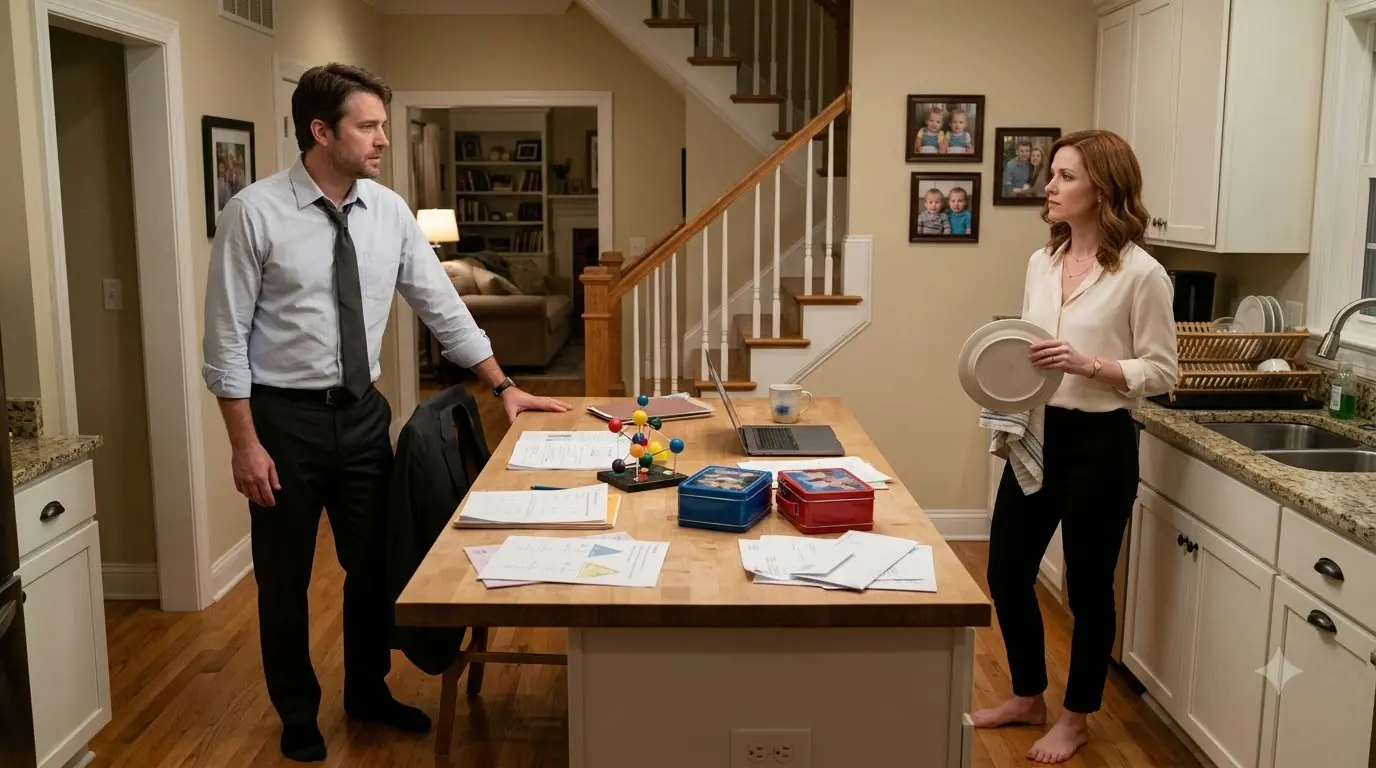
She was a beautiful psychology major with passionate opinions about almost everything. She constantly talked about breaking gender expectations, challenging traditional roles, and changing the way society viewed women.
I was more practical.
I studied business and worked two jobs so I could finish school without debt.
Despite our differences, we connected.
I found her passion attractive, and she seemed to appreciate my stability.
We dated throughout college, moved in together after graduation, and married when I was twenty-seven.
Two years later, we had twins, a boy and a girl named Ethan and Emma.
After college, I found a job at a financial firm.
I worked extremely hard, staying late, bringing assignments home on weekends, and accepting every responsibility that might help me advance.
Eventually, I became a senior portfolio manager.
The salary was good, but the work was exhausting.
Sarah moved from one career to another.
She began in human resources, left to experiment with marketing, and later decided to become a freelance writer focused on women’s issues.
That final career never generated meaningful income, but she insisted that it was her passion and that I should support her ambitions.
Her blog became the center of her identity.
It focused on empowering women, escaping social expectations, and identifying unhealthy relationship patterns.
The irony of that would eventually become obvious.
While I built my career and supported our family, Sarah attended networking events, women’s circles, and meetings connected to a blog read by perhaps fifty people.
Looking back, I also handled most of the household responsibilities.
I woke up with the children, prepared breakfast, helped with homework, and attended school activities.
I did not do those things because I believed I was an extraordinary father.
I did them because somebody had to, and Sarah was often busy “finding herself.”
That was our situation when everything changed.
I worked fifty to sixty hours each week while handling most of the parenting.
Sarah continued building her personal brand while complaining that I was not emotionally available enough.
The conversation happened on an ordinary Tuesday evening.
There had been nothing unusual about the day.
I had just put the twins to bed after working for twelve hours.
Although exhausted, I had helped Ethan with a science project and read Emma her favorite story before she fell asleep.
When I came downstairs, Sarah was standing at the kitchen sink rinsing a plate.
I thought we might watch an episode of a television show together before bed.
It was one of the few activities we still shared.
Then she said it.
“You are nothing more than a co-parent to me, Tom.”
She continued washing the plate.
“You are not my real match.”
The words felt like a physical blow.
It was the sensation of all the air leaving my body at once, only worse.
Her voice remained completely calm.
She spoke as though she were telling me that we needed more dish soap, not discarding ten years of marriage with one sentence.
I stood behind her, staring at the back of her head.
She did not even turn around.
“So that is how you see me?” I finally asked.
My voice sounded unfamiliar, as though it belonged to somebody else.
Sarah shrugged.
She literally shrugged.
“I think we both know this has not been a real marriage for a long time.”
She placed the plate in the drying rack.
“You do not challenge me intellectually.”
“You do not understand what I need as a woman living in today’s world.”
The worst part was not only what she said.
It was the emotionless way she delivered it.
There was no sadness, regret, or hesitation.
She treated me like a random person she tolerated because we happened to share children.
I was the man who had supported her through three career changes.
I paid for retreats where she could “find herself” and kept our household functioning while she worked on a blog that had never produced income.
“I want a partner who matches my energy and understands my journey,” she continued.
She finally turned toward me.
“I want someone who challenges me and appreciates my growth.”
“I have evolved so much during the last few years.”
She paused.
“You are still the same.”
The same.
I had learned how to become a father.
I had supported every ambition, hobby, and passion project she pursued.
Apparently, none of that qualified as growth.
“I am not saying we have to end the marriage,” Sarah added after seeing my expression.
“The children need stability.”
“We can still co-parent effectively.”
She spoke as if she were offering me a generous compromise.
“I simply think we should be honest about what this relationship really is.”
Her honesty was presented as a gift I should appreciate.
She had reduced me to a babysitter and financial provider, then expected gratitude for her openness.
I did not shout.
I did not cry or beg.
I nodded once.
“I see.”
Then I left the kitchen.
Behind me, I heard her call my name.
“Tom, are we not going to discuss this?”
What was left to discuss?
She had made her position clear.
I could not sleep that night.
I lay awake staring at the ceiling and replaying the previous several years.
When had it happened?
When had I become nothing to her?
The signs had been there for a long time.
I had been too busy, too trusting, or too afraid to acknowledge them.
She once brightened when I entered a room.
That was gone.
She used to send random messages during the day containing jokes or songs that reminded her of me.
Those messages had stopped.
The affectionate touches and real kisses had disappeared.
They had been replaced by automatic, emotionless gestures.
I tried to remember the last time she asked about my day and genuinely listened to the answer.
Not the empty “How was work?” people ask when they are following a routine.
When had she last done something thoughtful for me?
When had she defended me when her friends complained about their husbands and included me in the same category?
Sarah was constantly on her phone around me.
She scrolled through social media and shared posts about outgrowing people, recognizing one’s worth, and having the courage to live authentically.
Meanwhile, I woke when the children had nightmares.
I packed lunches, attended soccer practices, and helped with mathematics homework while working more than fifty hours each week.
Her real smiles and excitement were reserved for other people.
They belonged to her progressive friends who constantly told her she deserved more.
They belonged to the life coach who charged two hundred dollars per hour to tell Sarah she was settling.
They belonged to online groups that validated every selfish idea she expressed.
They belonged to everyone except me.
For years, I told myself she was stressed, tired, or overwhelmed.
I created excuses because I did not want to face the truth.
Now I could no longer ignore it.
She had not stopped loving me in one night.
For years, she had shown me that I was little more than a convenience.
I simply refused to see it.
The worst realization came around three in the morning.
I had spent years attempting to make her happy.
I worked harder, helped more, and supported her ambitions while she continually moved the standard and found new reasons I was inadequate.
Nothing I did would ever be enough.
She had already decided I was not enough.
The problem was not my behavior.
It was the way she had chosen to perceive me.
That was when I stopped trying.
The following morning, I woke before Sarah as usual.
I prepared breakfast for Ethan and Emma and packed their lunches.
When Sarah entered wearing the silk robe I had purchased for our anniversary, I said nothing.
I did not ask how she slept or comment on the weather.
She repeatedly glanced toward me, waiting for a reaction.
Perhaps she expected me to beg for her affection.
Maybe she assumed I would apologize for failing to challenge her intellectually or promise to become more involved in her journey.
I was finished.
If she saw me only as a co-parent, I would become exactly that.
Nothing more.
Nothing less.
“You are quiet this morning,” she finally said.
I shrugged while making Ethan’s sandwich.
“I have a great deal on my mind.”
“Work matters.”
“Do you want to discuss what I said last night?”
Sarah leaned against the counter with her coffee mug.
“I think it is important that we understand each other.”
“We understand each other,” I said without looking up.
“You were very clear.”
“I was not trying to hurt you.”
Her voice assumed the condescending tone she used when she believed she was demonstrating emotional intelligence.
“I was only being honest about where I am right now.”
“I appreciate the honesty.”
My response remained flat.
“Now we both know where we stand.”
My reaction confused her.
She expected tears, anger, or desperate promises to become the man she claimed to want.
Instead, she received calm acceptance.
It disrupted the conversation she had imagined.
I took the children to school and continued my day with a new understanding.
I was not her husband anymore.
I was only the father of her children.
There would be no more unnecessary favors.
I would no longer spend hours listening to her explain how difficult it was to rearrange the living room or compose another blog post.
That evening, she returned from a women’s empowerment meeting.
I later learned it mainly consisted of Sarah and her friends complaining about their husbands.
I was helping the children with homework when she entered and dropped the designer bag I had purchased onto a chair I had also paid for.
She waited as though expecting me to ask about the meeting.
I stood.
I told the children I would be in my office if they needed help.
Then I walked away without asking Sarah anything.
Her expression was unforgettable.
Inside the office, I opened my laptop and created a new document.
I titled it:
EXIT STRATEGY.
Then I listed everything I needed to do to protect myself and the children.
The first item was to contact an attorney.
That became our new normal.
There was no more casual conversation or checking in during the day.
I stopped doing small personal favors for her.
At dinner, I focused on the children.
I talked and laughed with them, but not with Sarah.
When she addressed me directly, I answered politely and briefly.
“How was your day?” she would ask.
“Fine.”
Nothing more.
“Did you see the email from Emma’s teacher?”
“Yes. I already handled it.”
The conversation ended there.
I began creating my own plans on weekends.
Sometimes I took the children out without giving Sarah a detailed itinerary.
She would ask where we were, and I would respond later with a simple message.
“Out with the children. We will return later.”
I also began taking better care of myself.
Over the years, Sarah occasionally commented that I had neglected my appearance after the twins were born.
She ignored the fact that I woke at five each morning to work before the children rose and spent the rest of the day keeping our lives organized.
Still, she was correct about one thing.
I had neglected myself.
I began exercising during lunch breaks.
I improved my diet, changed my hairstyle, and bought clothing that fitted properly.
Over several months, I lost approximately thirty pounds and gained muscle.
It was nothing extreme.
I was caring for myself because I needed it, not because I wanted to impress her.
I also reconnected with friends I had rarely seen during recent years.
I met former college friends for lunch and joined a weekend basketball league.
I began living like someone whose identity extended beyond being Sarah’s husband and the twins’ father.
The first Saturday I took the children out alone, Sarah was sitting on the couch when we returned.
She appeared to be scrolling through her phone while watching videos about establishing boundaries in relationships.
“Where did you go?” she asked, attempting to sound casual.
“Out.”
I placed the keys down.
“The children wanted to do something, so we went.”
Her lips tightened.
“It would have been nice to know.”
“As their mother, I should be informed about where my children are.”
I shrugged.
“I did not think it mattered.”
“You are usually too occupied with your blog to accompany us.”
“That is unfair.”
She sat straighter.
“My work is important too.”
“I am sure it is.”
I refused to argue.
“Children, wash your hands before dinner.”
After they ran upstairs, Sarah followed me into the kitchen.
“What is happening with you?”
“You have behaved strangely since our conversation.”
“Nothing is happening.”
I removed ingredients for dinner.
“I am being a co-parent, as you requested.”
“That is not what I meant, and you know it.”
She crossed her arms.
I looked at her directly for the first time in days.
“What did you mean?”
“You said I was nothing more than a co-parent.”
“That seems clear.”
Sarah exhaled impatiently.
“I meant our relationship had evolved.”
“That does not mean we cannot remain partners in other ways.”
“Right.”
I nodded.
“Partners like roommates who share children.”
“Understood.”
That was the first crack in her carefully imagined arrangement.
She believed she could emotionally withdraw from the marriage, treat me as a financial provider and caretaker, yet continue receiving the benefits of having a husband whenever convenient.
She was beginning to understand that relationships did not work that way.
Meanwhile, I attended my first consultation with a family-law attorney.
I did not tell Sarah.
I only wanted to understand my position.
The attorney believed I had a strong case for equal parenting time and potentially primary custody because of my consistent involvement in the children’s lives.
She advised me to document everything accurately.
Every school activity I attended that Sarah missed.
Every medical appointment I handled.
Every evening I supervised homework and every communication I had with teachers.
I created a detailed log containing dates and times.
I preserved emails from teachers who contacted me rather than Sarah because they knew I was the responsive parent.
I kept records in case they were ever required.
I also began setting aside money from my personal earnings in a separate account.
The account would be fully disclosed if a divorce occurred.
My attorney explained that maintaining personal emergency funds was permitted as long as I did not conceal marital assets or improperly remove joint money.
Gradually, Sarah noticed the difference.
She attempted to begin conversations about her day or something profound she read online.
I responded with a nod or a short answer.
She began wearing more revealing clothing around the house.
It was too late.
She also suddenly showed interest in activities I planned.
When I mentioned taking the children skiing during winter, she entered the conversation.
“That sounds enjoyable.”
She smiled.
“I have always wanted to learn how to ski.”
I continued talking to Ethan and Emma without responding to her attempt to include herself.
About six weeks after our original conversation, I was reading on the couch when she sat beside me.
She moved closer than she had in months.
“You have lost weight,” she observed.
Her eyes moved over me.
“Yes.”
I did not look up from the book.
“You look good.”
Her voice lowered.
“Very good.”
“Thank you.”
I continued reading.
“Tom.”
She placed one hand on my arm.
“Can we talk?”
“I feel as though there is a wall between us.”
I finally looked at her.
“What would you like to discuss?”
“Us.”
Relief appeared when she realized she had my attention.
“You have completely withdrawn from me.”
“I am respecting the boundaries you established.”
My voice remained calm.
“You clearly explained what I am to you.”
“I am adapting.”
“I think you misunderstood what I was trying to express.”
She began retreating from her original position.
“I never meant that I did not care about you or value our relationship.”
I closed the book.
“What did you mean when you said I was nothing more than a co-parent?”
“What interpretation should I have chosen?”
Sarah hesitated.
“I was trying to be honest about feeling disconnected.”
“I did not mean that the situation had to remain permanent.”
“I have had time to think about it.”
I stood.
“I realized you were right.”
“We are co-parents.”
“That is all we need to be for the twins.”
I walked away.
For the first time, Sarah was the one watching me leave.
Another evening, she returned home irritated after seeing a friend’s social-media post about a romantic vacation.
I sat in the living room reading.
I looked healthier and more confident than I had in years.
Sarah stood there as though waiting for acknowledgment.
“You have been acting strangely for weeks,” she finally said.
I looked up.
“Strangely in what way?”
“Different.”
“Distant.”
She folded her arms.
“It seems as though you are not even attempting to make our relationship work.”
I closed the book.
“I thought this was what you wanted.”
She blinked.
“What?”
“You said we were only co-parents.”
I kept my voice emotionless.
“That is what I am doing.”
“Parenting.”
“Everything else is irrelevant.”
I paused.
“Is that not what you and your empowerment group constantly discuss?”
“Living authentically?”
Sarah stared at me.
She opened her mouth but said nothing.
That reaction told me everything.
She had not expected me to accept her statement.
She expected me to pursue her, beg for attention, and continue trying to win her affection while she treated me with indifference.
Instead, I gave her precisely what she requested.
Now she did not know how to handle it.
“This is not what I wanted,” she finally said.
Her voice became quiet.
“I wanted us to improve our relationship, not abandon it.”
“That was an unusual way of demonstrating it.”
I leaned back.
“Telling someone he is nothing more than a co-parent does not normally encourage greater emotional investment.”
“I was frustrated.”
She sat across from me.
“I felt as though you did not hear me when I said I was unfulfilled.”
“I hear you clearly now.”
I looked directly at her.
“Message received.”
Sarah studied me for a long moment.
“So that is it?”
“After ten years of marriage, you are withdrawing?”
The irony was so obvious that I nearly laughed.
“I learned from the best.”
After that conversation, her behavior changed again.
She watched me more carefully and appeared to analyze every action.
Before speaking, she often hesitated as though selecting her words.
She waited for me to break the new routine.
I did not.
Sarah began attempting to attract my attention in small ways.
She asked whether I wanted anything from the store.
She mentioned television programs we once watched together.
Her efforts became more direct.
She wore lingerie that had remained untouched inside a drawer for years.
She began discussing how important masculine energy was inside a household.
It was a complete reversal from her earlier belief that men were usually the problem.
I also noticed that she stopped posting indirect messages about outgrowing relationships and recognizing one’s worth.
One evening after the children were asleep, she confronted me in the kitchen while I cleaned.
“You truly do not care, do you?”
“About what?”
I placed the final plate into the rack.
“About any of this.”
Her frustration became visible.
“About us.”
I looked at her and shrugged.
“There is no us.”
Her jaw tightened.
“So that is all?”
“You are comfortable living like this?”
I dried my hands and met her eyes.
“No.”
“But I have accepted it.”
“You explained how you viewed me.”
“I am responding in the same way.”
“That is not what I meant.”
She became defensive.
“Is it not?”
I nearly laughed.
“You spent years treating me as a checkbook and occasional babysitter.”
“You and your friends discussed how useless men were while I maintained this household.”
I stepped closer.
“Congratulations.”
“You convinced me that we are merely co-parents.”
“That is all we will be now.”
“Tom, please.”
Tears formed in her eyes.
“I made a mistake.”
“I was angry because I felt ignored.”
“Ignored?”
This time, I laughed.
“Sarah, I have supported you for years.”
“Every career change, hobby, retreat, and phase of finding yourself.”
“I kept this family functioning while you posted inspirational quotations online.”
I shook my head.
“Do not tell me you were ignored.”
She wiped her eyes.
“I know I made mistakes.”
“We both did.”
“Do we not owe it to ourselves and the children to repair this?”
“The time to repair it was before you decided I was only a co-parent.”
I kept my voice controlled.
“You cannot downgrade someone’s place in your life and then act surprised when he stops treating you as a priority.”
She wanted to argue.
She could not.
Sarah knew she had caused the distance between us.
She had spent years convincing herself that my role in her life did not matter.
Once I stopped trying and emotionally removed myself, she finally understood what that meant.
She expected me to fight for a place she had already taken away.
When I refused, she became the person suffering from the distance.
During the following weeks, her attempts to reconnect intensified.
She prepared my favorite meals and asked about my work while actually listening.
She offered to care for the children so I could have personal time.
Sarah suggested dates and initiated physical affection.
It was too late.
I could not forget what I had seen.
I could not erase the feeling created when she casually dismissed our marriage.
Every time she approached me, I remembered her words.
I remembered her tone and the fact that she did not even turn around when she told me I was nothing to her.
The final confirmation came when I overheard her speaking with a friend on the telephone.
“I do not know what to do,” Sarah whispered.
“He is completely different.”
“It is as though he turned off a switch.”
She listened to her friend.
“No, that is the problem.”
“He is not angry.”
“He is emotionally gone.”
Another pause.
“I have tried everything.”
“Of course I apologized.”
“I explained that I was frustrated and did not truly mean it.”
Sarah lowered her voice further.
“He does not believe me.”
“I do not know what I will do if he leaves.”
She listened again.
“Yes, I know that was what I talked about before.”
“But I did not actually want a divorce.”
“I only wanted him to pay more attention to me.”
That confirmed everything.
Her supposed honesty about our relationship had been a manipulation tactic.
She believed threatening my position would make me work harder to please her.
I called her bluff.
Now she was panicking.
I quietly moved away before she saw me.
There was nothing else I needed to hear.
After three months of this new reality, I made the final decision.
There was no need for a dramatic confrontation.
I wanted clarity.
One evening after the children were asleep, I sat across from Sarah at the kitchen table.
A manila folder rested before me.
“We need to talk.”
She looked up from her phone.
For a moment, she appeared hopeful.
“Yes?”
“I want a divorce.”
I expected anger, resistance, or tears.
Instead, Sarah sat in complete silence.
She stared at me as though she could not understand the words.
When she finally spoke, her voice was quiet.
“Are you serious?”
I nodded and moved the folder across the table.
“What is this?”
She opened it slowly.
“Divorce documents.”
I remained calm.
“There are also financial statements and information you need to review with your attorney.”
The folder contained the preliminary divorce paperwork and complete records of our accounts.
While Sarah focused on finding herself, I had been preparing carefully and with legal guidance.
I had retained recent bonuses in a separate account she did not know about, but the funds were identified and would be fully disclosed during the proceedings.
I had also documented my consistent involvement in the children’s lives.
There were records of school events Sarah missed while attending retreats.
Emails showed that teachers contacted me because I was the parent who responded.
Most importantly, the folder contained a letter from my attorney.
It explained that based on our parenting history and the custody arrangement I intended to request, I had a strong argument for primary custody.
Depending on the final income calculations and parenting schedule, Sarah might be required to contribute child support.
Her face became pale.
“You cannot be serious.”
“The courts always favor the mother.”
“Not automatically.”
I kept my voice steady.
“Courts consider what serves the children’s best interests.”
“I have been recording our parenting responsibilities for months.”
“The teachers know me.”
“I attend the medical appointments and help with homework.”
I looked at her.
“You have been too occupied with your blog and personal journey to be consistently present.”
I showed her the calendar where I had tracked school activities, medical appointments, and parent-teacher conferences.
Each entry recorded who attended.
“A custody evaluator will see who has actually handled the daily parenting.”
I placed the phone down.
“It has usually been me.”
“But I need time to understand my life,” Sarah stammered.
“My blog is close to succeeding.”
“My life coach believes I am about to have a breakthrough.”
“You have said that for three years.”
I leaned back.
“During that time, I earned two promotions and created a college fund for the children.”
“What have you contributed besides social-media posts describing how unfair your life is?”
Real tears filled her eyes.
“Tom, please.”
“We can repair this.”
“I did not mean what I said that night.”
“I was frustrated.”
“Why now?”
I studied her.
“Is the possibility of losing your financial support finally becoming real?”
“This is not about money.”
She shook her head.
“I love you.”
“I have always loved you.”
The statement almost made me laugh.
“You treated me with contempt for years.”
“You showed no interest until I stopped caring.”
“Now you suddenly love me.”
“Please think about the children.”
“They need us together.”
“They need parents who respect one another.”
I corrected her.
“You have made it clear that you do not respect me.”
“You said I was only a co-parent.”
“So that is what we will become.”
“Co-parents living separately.”
“I will fight this,” she said.
Her tone shifted from pleading to threatening.
“I will hire an attorney.”
“I will tell them you planned this for months and concealed money.”
“Hire an attorney.”
I interrupted before she could continue.
“Everything I have done was reviewed by legal counsel and will be disclosed.”
I gestured toward the folder.
“You should obtain your own independent legal advice.”
I did not engage further with her threats.
She understood that the conversation had ended.
During the next several days, Sarah tried everything.
She cried and begged.
Suddenly, she attempted to become the perfect wife.
She prepared meals, asked about my day, and tried to persuade me to return to our bedroom.
I had already been sleeping in the guest room for weeks.
Sarah even began challenging the friends who constantly criticized their husbands.
One of them contacted me, confused because Sarah had defended me so strongly.
The next major argument occurred when I met with a real-estate agent to discuss what might happen to the house during the divorce.
Sarah became furious when she learned about the conversation.
“You cannot sell our house without me.”
“No decision will be made outside the legal process,” I said.
“But you should understand the title and mortgage documents.”
The house had originally been purchased in my name because Sarah’s credit history prevented her from qualifying for the mortgage.
We had intended to review ownership after her finances improved.
She had never addressed the problem.
Sarah looked at the deed and realized her name was not listed.
She collapsed onto the couch and began crying.
“What am I supposed to do?”
“Where will I live?”
“That is something you need to discuss with your attorney and plan for.”
I no longer intended to solve every problem she created.
A week later, Sarah appeared at my office.
She begged me to reconsider.
She promised couples counseling, ending the blog, finding stable employment, and doing whatever I requested.
“It is too late,” I told her.
“You decided years ago that I was not worth loving.”
“You simply did not expect me to eventually agree with you.”
The divorce moved forward.
Sarah ultimately chose not to contest many of the arrangements.
The parenting evaluation confirmed that I had handled most of the twins’ daily care.
The judge awarded me primary physical custody.
Sarah received parenting time every other weekend and one dinner visit each week.
The expression on her face when the decision was announced was unforgettable.
She appeared genuinely shocked.
Sarah had assumed being the mother meant she would automatically receive primary custody regardless of her previous involvement.
Reality proved more complicated.
The house sold for more than expected.
After the marital assets were divided through the legal process, I used my share to purchase a home closer to the children’s school.
It had three bedrooms, a large backyard, and a proper office.
I could work remotely on certain days and remain more available for Ethan and Emma.
Sarah moved into a small one-bedroom apartment across town.
She obtained an entry-level administrative position that barely covered her expenses.
The blog remained an unprofitable hobby.
The first time she returned the children after a weekend visit, I saw her looking through my new house with envy.
It had an open layout, modern kitchen, and many of the features she had once wanted.
It was no longer her home.
“The children seem to like it here,” she said, trying to sound casual.
“They do.”
I nodded.
“They each have a bedroom, and there is a park nearby.”
Sarah shifted uncomfortably.
“Tom, I have been thinking about everything.”
“I made an enormous mistake.”
“The greatest mistake of my life.”
She looked at me.
“I took you for granted, and I live with that every day.”
“Yes.”
I did not soften the answer.
“You do.”
“Is there any possibility that we could try again?”
Her eyes pleaded with me.
“For the children?”
“For us?”
I shook my head.
“There is no us, Sarah.”
“We are co-parents now.”
“That is all we will ever be.”
The words reached her exactly as they had reached me months earlier.
I watched hope disappear from her expression.
In its place came the recognition that she had created this outcome.
“I will collect them Wednesday for dinner,” she said.
Her voice was empty.
“Six o’clock.”
I nodded.
“Do not be late.”
I closed the door and returned to the children.
It was my home and my life.
For the first time in years, that life felt like it belonged to me again.
Two years have passed since the divorce.
I am in a good place.
Ethan and Emma are eleven now.
They are doing well academically and participate in sports and other activities.
I am dating a pediatric nurse named Jessica, whom I met during one of Ethan’s medical appointments.
She is supportive, present, and genuinely interested in both me and the children.
Sarah eventually moved into a smaller apartment.
Her blog quietly disappeared.
Many of the friends who once encouraged her to abandon the marriage became less available when she could no longer afford their brunches, workshops, and retreats.
Sarah occasionally calls me after a difficult day or disappointing date.
She tells me that ending our marriage was the worst mistake of her life.
My response remains the same.
“I understand.”
“But we are co-parents now.”
“That is all we will ever be.”
The children continue visiting her every other weekend.
Even they have begun noticing the difference between our homes.
“Mom is always looking at her phone when we are there,” Emma once told me.
“It is not like here, where we actually do things together.”
That is the real victory for me.
It is not the house, the money, or seeing Sarah experience the consequences of her choices.
It is knowing that my children recognize and appreciate a parent who is genuinely present in their lives.
I spent years believing I needed to prove my value to someone who had already decided not to see it.
Eventually, I understood that constantly attempting to earn basic respect was destroying me.
Removing myself from that arrangement was not revenge.
It was acceptance.
Sarah said I was nothing more than a co-parent.
In the end, that was exactly what we became.
By the time she understood what she had discarded, there was no marriage left to recover.