Love does not survive betrayal.
They say you never really know someone until you catch them in your own bed with their boss’s baby growing in their belly. I wish I could say that was the worst part of my Tuesday, but that would be a lie.
My name is Tom Crane.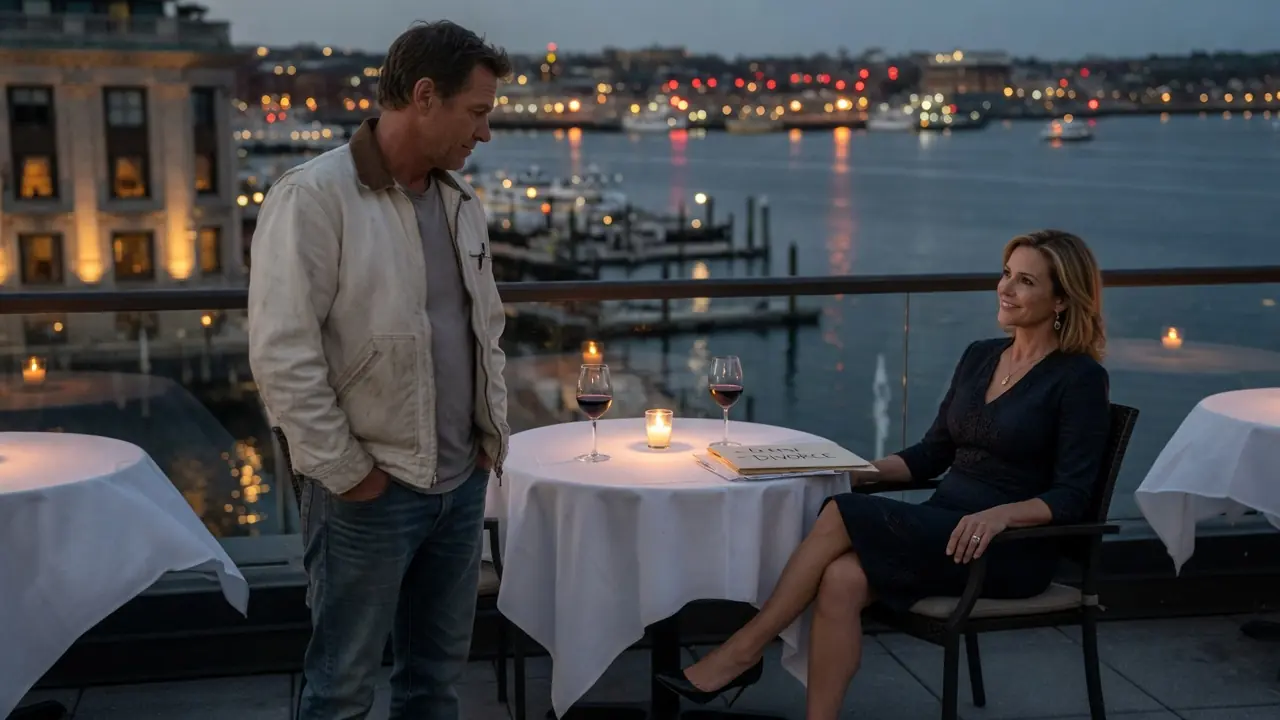
Three days ago, I thought I was living the American dream in a postcard-perfect town in Maine. A two-story farmhouse with good bones. A construction business that actually paid the bills. And a wife who looked like she had stepped out of a corporate magazine.
Melanie had that sharp-edged beauty that made other men stare and made me feel like I had won some cosmic lottery.
Turns out, the house of cards was already falling.
I was just too foolish to hear the wind.
It started at Jenny Morrison’s backyard barbecue last Saturday. Jenny was our neighbor, the kind of woman who knew everyone’s business before they did and treated gossip like a competitive sport.
I was nursing a beer by her fence, watching Melanie work the crowd in her designer sundress, when I overheard her talking to her best friend, Sasha.
“So, when are you telling Tom about the little surprise?” Sasha asked, her voice carrying that particular brand of malicious glee that makes your skin crawl.
Melanie laughed.
The sound felt like breaking glass.
“Why ruin a good thing? Cal says we should wait until after the promotion goes through.”
Cal.
Cal Dunston.
Her boss at the corporate headquarters downtown. Six foot two, silver-haired charm, and enough money to buy half the town. The kind of man who wore thousand-dollar suits and drove cars that cost more than most people’s houses.
“Besides,” Melanie continued, “Tom is so buried in his little construction projects, he barely notices I exist anymore. This baby deserves better than sawdust and broken dreams.”
The beer bottle slipped from my hand and shattered on Jenny’s concrete patio.
Everyone turned to stare, but I was already walking away, my world tilting sideways like a house built on a bad foundation.
That night, I went through our shared calendar on my phone.
There it was.
Melanie had an appointment with Dr. Sarah Williams the following Tuesday.
OB-GYN appointment.
She had listed it as a routine checkup, but nothing about Melanie’s secretive behavior lately had been routine.
So I started paying attention.
Really paying attention.
Tuesday morning came like a freight train I could not dodge.
I followed Melanie’s silver BMW from our house on Griggs Mill Road to the medical complex downtown. I sat in my pickup truck and watched her walk into the women’s health clinic with the kind of confident stride that said she owned the world.
When she came out an hour later, she was on her phone, smiling wider than I had seen her smile in months.
“Cal, it’s confirmed,” she said. “Twelve weeks along.”
Her voice carried across the parking lot like a death sentence.
“I know. I know. Tom doesn’t suspect a thing.”
I drove home in a daze, my hands shaking on the steering wheel.
Twelve weeks.
That put conception right around Valentine’s Day, when I had been in Portland for three days finishing a commercial renovation. Melanie had claimed she was too sick with the flu to come along.
The puzzle pieces fell together with sickening clarity.
The expensive jewelry that appeared without explanation.
The late nights at client dinners.
The way she had started looking at me like I was something she had scraped off her shoe.
The whole place looked tired, like it was giving up on being beautiful.
That was when I made my first mistake.
I decided to confront her directly.
Melanie came home around six, carrying takeout from the expensive Thai place on Main Street. She had that post-work glow that used to make my chest tighten with pride.
Now it just made me sick.
“We need to talk,” I said, blocking her path to the kitchen.
She set down the bag of food and turned to face me. Her expression shifted from mild annoyance to something colder.
“About what?”
“About Cal Dunston. About the baby you’re carrying that isn’t mine.”
The silence stretched between us like a chasm.
Then Melanie smiled.
Not the warm smile I had fallen in love with eight years ago, but something sharp and calculating.
“Took you long enough to figure it out,” she said, brushing past me toward the stairs. “I was wondering when you’d grow a brain.”
“That’s it?” I asked. “That’s all you have to say?”
She paused on the third step, her hand resting on the banister like she was posing for a magazine cover.
“What do you want me to say, Tom? That I’m sorry? That it didn’t mean anything?”
She laughed, and the sound echoed through our half-renovated living room.
“It means everything. Cal can give me things you never could. Security. Status. A future that doesn’t involve wondering if we’ll make rent next month.”
“We own this house outright,” I said. “My business is solid.”
“Your business is small-time contractor work in a dying mill town,” she cut in. “Cal is offering me vice president at the regional office. Real money. Real opportunities. And his baby.”
Her hand moved instinctively to her still-flat stomach.
“A baby with a trust fund and private school tuition already set aside. Not bad for three months of work.”
The casual cruelty of it hit me like a physical blow.
“Get out,” I said.
“Excuse me?”
“Pack your things and get out of my house tonight.”
Melanie’s composure cracked just slightly.
“Don’t be dramatic, Tom. We can work this out. I’ll keep the baby. You’ll keep the house. Everyone wins.”
“Everyone wins?”
The words came out as a roar that surprised us both.
“You cheated on me, got pregnant by another man, and now you want to work it out?”
“It’s not like we had anything real anyway,” she said, her voice turning icy again. “When was the last time you looked at me? Really looked at me? I’m thirty-four years old, Tom. I’m not going to waste what’s left of my good years playing house with someone who treats me like furniture.”
I stormed upstairs and yanked her suitcases out of the bedroom closet, throwing them onto our bed.
“Pack. Now.”
“You can’t kick me out. I live here too.”
“Watch me.”
For the next hour, I stood in the doorway while she packed her designer clothes and expensive shoes. She moved with deliberate slowness, as if dragging out every second would make me change my mind.
I did not.
When she was done, I carried her suitcases downstairs and set them outside on the gravel driveway. Some of her clothes spilled out, silk blouses and expensive lingerie scattering across the ground.
“You’re making a mistake,” Melanie said from the doorway.
“No,” I replied, closing the door in her face. “I’m fixing one.”
I watched through the living room window as she gathered her scattered belongings, her face tight with humiliation.
Jenny Morrison was working in her garden next door, pretending not to watch while taking in every detail. By tomorrow morning, the whole town would know that Tom Crane had thrown his wife out.
Good.
Let them talk.
I cracked open a beer and sat on my half-finished porch, watching Melanie load her car. She kept looking back at the house like she expected me to come running after her, begging for forgiveness.
Instead, I raised my beer bottle in a mock toast and took a long drink.
She drove away without another word, her taillights disappearing into the Maine evening like dying stars.
I should have known it would not be that easy.
Around midnight, headlights swept across my front yard.
Not Melanie’s BMW.
Something bigger.
Darker.
I looked through the window and felt a chill surge through me like ice water.
A black Escalade sat in my driveway, engine running. Three men climbed out, moving with the kind of casual confidence that said they were used to getting their way through intimidation.
The biggest one I recognized.
Grant Morrison. No relation to my neighbor Jenny.
Six foot four, ex-military muscle, and Cal Dunston’s head of security. I had seen him around town, always wearing expensive suits that could not quite hide the hard outline under his jacket.
I grabbed the baseball bat I kept by the front door and stepped outside.
“Private property, gentlemen. Time to leave.”
Grant smiled, showing teeth that were too white and too perfect.
“Easy there, contractor boy. We just want to have a conversation.”
“Nothing to talk about.”
“Boss says otherwise.”
Grant nodded to his companions, two younger men who looked like they had learned their people skills in the wrong places.
“Says you’ve been harassing his girl. That’s not very neighborly.”
“His girl was my wife until about six hours ago.”
“Funny how things change.”
Grant stepped closer, close enough that I could smell his expensive cologne mixed with something darker.
“Here’s how this is going to work. You’re going to apologize to Mrs. Crane for your little tantrum tonight. You’re going to take her back nice and quiet. And when that baby comes, you’re going to play along.”
“Or what?”
“Or we’re going to have to get creative about teaching you some manners.”
I tightened my grip on the bat.
“Three against one doesn’t seem very fair.”
Grant laughed, the sound echoing off the trees surrounding my property.
“Fair has nothing to do with it, Tom. This is about understanding your place in the world.”
“And what place is that?”
“Under my boss’s boot.”
That was when I swung the bat.
I caught Grant in the ribs, hard enough to make him stagger. For one split second, I thought I might actually have a chance.
Then his friends rushed me.
The world became pain, noise, and darkness.
When consciousness crawled back, I was in the trunk of a car, my wrists bound behind my back, my mouth tasting like copper. Every bump in the road sent pain through my skull, and the smell of motor oil made my stomach twist.
The car finally stopped, and the trunk opened to reveal Grant’s face silhouetted against a canopy of pine trees.
We were deep in the woods.
The kind of deep where a man could scream for hours and nobody would hear.
“Rise and shine,” Grant said, hauling me out by my shirt collar. “Time for your education.”
They had stripped me down to my boxers and work boots, leaving me shivering in the October night air. My ribs felt like broken glass, and warm blood trickled down the side of my head.
“Here’s the lesson,” Grant continued, holding a hunting knife that gleamed in the moonlight. “You don’t touch what belongs to Cal Dunston. You don’t threaten what belongs to Cal Dunston. And you do not embarrass what belongs to Cal Dunston.”
“She’s not property,” I managed through split lips.
“Everything is property if you have enough money to buy it.”
He pressed the knife lightly against my throat, just enough to make his point.
“Including you.”
“So what’s the plan?” I asked. “End me and bury me out here?”
Grant’s smile widened.
“Nothing that dramatic. Boss wants you alive. Humbled. He wants you to understand that crossing him has consequences.”
He nodded to his companions.
They forced me to my knees in the pine needles and dead leaves.
“This is what happens,” Grant said, “when small-town boys forget their place.”
What followed was not random rage.
It was professional intimidation.
They knew exactly how to hurt a man without making it obvious enough to draw questions. When they were done, I looked like I had been hit by a logging truck, but I was still breathing.
“Tell anyone about this little conversation,” Grant said as they dragged me deeper into the woods, “and next time won’t be so friendly.”
They left me tied to a tree about five miles from the nearest road, still shivering in my boxers, scraped and bruised from a dozen different places. The zip ties were tight enough to cut into my wrists, and the October night was cold enough to be dangerous.
“Someone will find you eventually,” Grant called over his shoulder as they walked away. “Or they won’t. Either way, you’ve learned your lesson.”
Their footsteps faded into the darkness, leaving me alone with the sound of wind through the trees and the distant howl of coyotes.
I spent the next three hours working my wrists raw against the rough bark of the pine tree, using anger as fuel to keep the cold from taking over.
The zip ties finally snapped around four in the morning, just as the first gray light of dawn began filtering through the canopy.
It took me another two hours to stumble through the woods to the old logging road that led back toward civilization. By the time I reached pavement, I looked like something that had crawled out of a nightmare, limping like a wounded animal.
Old Pete Hoffman found me collapsed beside Route 15, delirious from exhaustion and blood loss.
Pete was a retired cop who lived in a cabin about ten miles from town, the kind of crusty old man who minded his own business and expected everyone else to do the same.
“Jesus, Tom,” he muttered, loading me into his ancient Ford pickup. “What the hell happened to you?”
“Cal Dunston happened to me.”
Pete’s weathered face darkened with understanding.
Everyone in town knew Cal’s reputation, even if most people were too smart or too scared to talk about it openly.
“We need to get you to a hospital.”
“No hospitals. No cops. Just get me somewhere safe where I can think.”
Pete studied my face for a long moment, then nodded.
“My place it is.”
He spent the next day cleaning my wounds and feeding me soup while I told him the whole story. Pete listened without judgment, occasionally grunting or shaking his gray head.
“So, what’s your play?” he asked when I was done.
“I don’t know yet.”
“Well, you better figure it out quick. Men like Cal don’t issue warnings twice. Next time they come for you, it’ll be worse.”
That night, lying on Pete’s lumpy couch with my ribs wrapped in medical tape, I stared at the ceiling and let my anger crystallize into something harder and more focused.
Cal Dunston thought he had broken me.
Thought he had taught me my place in the natural order of things.
He was wrong.
I spent the next week at Pete’s cabin healing and planning.
Pete had contacts throughout the county. Retired cops, construction workers, bartenders, mechanics. The invisible network that kept small towns running.
Within three days, I knew more about Cal Dunston’s business dealings than his own accountant probably did.
The man was dirty, but he was smart about it.
Nothing obvious at first glance. Just creative accounting, selective bid processes, favored contracts, quiet pressure, and political favors dressed up as coincidence.
He owned half the commercial real estate in town, had his fingers in three different construction companies, and maintained a stable of local politicians who jumped when he whistled.
But every man has weaknesses.
Cal’s weakness was his ego.
He liked people to know he was untouchable. He liked the fear and respect that came with his reputation. Most importantly, he liked to be seen as the kind of man who took what he wanted and suffered no consequences.
That pride was going to be his downfall.
My first target was Grant Morrison.
I spent two days watching his routine, learning his habits. Every Tuesday night, Grant went to Mickey’s Bar on Main Street to drink expensive whiskey and intimidate the locals.
He always parked his pristine black Mercedes in the alley behind the building, away from foot traffic and potential vandals.
Tuesday night, I was waiting for him.
Grant stumbled out of Mickey’s around midnight, drunk enough to be careless but not helpless.
Perfect.
I stepped out of the shadows, holding an aluminum baseball bat I had borrowed from Pete’s garage.
“Remember me?” I asked.
Grant’s hand moved instinctively toward his jacket, but he was too slow and too drunk.
I knocked the weapon from his reach and sent it skittering across the wet pavement.
“Easy there, tough guy,” I said. “We’re just going to have a conversation.”
“You’re a dead man, Crane.”
“Maybe. But first, you’re going to learn some manners.”
What followed was not pretty, but it was effective. I did not do permanent damage. I had learned from the best, after all. But I made sure Grant would remember every second of our little chat.
When I was done, I restrained him inside his own Mercedes and turned his pride into a public joke. I did not need to hurt him worse.
Humiliation would travel farther than bruises ever could.
By morning, photos of Grant’s disgrace were circulating through town like wildfire. The big, scary enforcer had been reduced to a laughingstock.
And in a town like ours, that mattered.
The next morning, I drove to Cal’s office building downtown.
I did not go inside.
I sat in the parking lot and waited for him to see me.
He came out around ten, flanked by two new security guards who looked even meaner than Grant. Cal’s silver hair was perfectly styled, his charcoal suit worth more than most people made in a month.
He looked like success incarnate.
Right up until his eyes met mine.
I rolled down my window and smiled, giving him a friendly wave.
“Beautiful morning, isn’t it, Cal?” I called.
His face went white with rage.
He said something to his security team, but they were smart enough to recognize a public place with witnesses. Instead of crossing the parking lot, they climbed into Cal’s Bentley and drove away.
But the message was delivered.
I was not hiding anymore.
That afternoon, Melanie showed up at Pete’s cabin.
“Tom, we need to talk,” she said, standing on the porch in a designer maternity dress that showed off her growing bump.
“Nothing to talk about,” I replied, not bothering to get up from my chair.
“You can’t keep doing this. Cal’s lawyers—”
“Cal’s lawyers can wait in line.”
Melanie’s composure cracked slightly.
“You’re going to get yourself killed.”
“Maybe. But first, I’m going to make sure everyone in this town knows exactly what kind of woman you are.”
“What’s that supposed to mean?”
I pulled out my phone and showed her a screenshot of the town’s private Facebook group, the digital gossip mill where information traveled faster than wildfire.
Someone had posted a photo of Melanie and Cal kissing in the parking lot of the Riverside Motel, along with a detailed timeline of their affair.
“Jenny Morrison’s been busy,” I said, watching the color drain from Melanie’s face. “Turns out she’s been tracking your little love nest visits for months. Amazing what people notice when they’re paying attention.”
“You fool.”
“I learned from the best.”
Melanie looked like she wanted to say something else, but her phone started buzzing with notifications. Her face went ashen as she scrolled through the comments and messages.
“This won’t work,” she said, but her voice had lost its confident edge. “Cal won’t let you destroy him.”
“Cal is going to be too busy trying to save his own reputation to worry about mine.”
She left without another word, but I saw fear in her eyes.
The untouchable corporate wife was starting to realize that some things could not be bought or bullied into silence.
That night, someone threw a brick through Pete’s front window.
The message tied to it was short and clear.
Back off.
Pete swept up the broken glass and shook his head.
“Subtle. Real subtle.”
“They’re getting desperate.”
“Desperate men do stupid things,” Pete said. “You sure you want to keep poking this bear?”
I thought about it for exactly two seconds.
“Yes.”
The next phase of my campaign required more finesse than force.
Cal Dunston had built his empire on reputation and intimidation, which meant his real weakness was public embarrassment.
I started small.
Anonymous tips to the local newspaper about Cal’s business practices. Carefully worded questions at town council meetings about no-bid contracts and campaign contributions.
Nothing reckless.
Nothing fabricated.
Just enough truth to plant seeds of doubt in people’s minds.
Within two weeks, the whisper campaign was gaining momentum.
People who had been afraid to question Cal’s methods suddenly found their voices. Business owners who had been muscled into unfavorable deals began sharing their stories.
The real breakthrough came when I approached Danny Sullivan, a local journalist who had been trying to investigate Cal’s operations for years but never had enough evidence to publish anything.
“I can give you everything you need,” I told him over coffee at a diner outside town. “But it has to be done right. No sloppy reporting. No unsubstantiated claims. Just facts.”
Danny’s eyes lit up.
“What’s your angle here, Tom? What do you get out of this?”
“Justice.”
“That’s it?”
I thought about Melanie’s cruel laughter. Grant’s fists. The taste of pine needles and blood in my mouth.
“That’s enough.”
Over the next month, Danny and I worked together to build an airtight case against Cal’s business empire. Bank records. Witness statements. Documented payoffs. A paper trail that read like a masterclass in small-town corruption.
The story broke on a Thursday morning, splashed across the front page of the county newspaper.
Money, Power, and Corruption: The Cal Dunston Empire Exposed.
By noon, every news outlet in Maine was picking up the story.
By evening, it had gone statewide.
Cal’s carefully constructed world began crumbling like a house of cards in a hurricane. The state attorney general announced an investigation. The FBI opened a file. Local prosecutors started subpoenaing records.
Within a week, three of Cal’s biggest government contracts were suspended pending review.
But the real damage was social.
In a small town like ours, reputation was everything, and Cal’s had been shattered beyond repair.
The man who had once commanded fear and respect was now a laughingstock. The corrupt businessman brought down by a small-town contractor with a grudge.
Melanie tried to distance herself from the scandal, but it was too late.
The affair was public knowledge now, and her pregnancy had become the town’s favorite source of gossip and speculation. She had moved in with Sasha, but even her best friend was starting to look at her like a liability.
I was having dinner at Mickey’s Bar one Friday night when I overheard Jenny Morrison talking to a group of women at the next table.
“Can you believe the nerve of that woman?” Jenny said, her voice carrying across the crowded restaurant. “Parading around town with another man’s baby like she’s some kind of victim.”
“I heard Cal hasn’t returned her calls in two weeks,” another woman added.
“Soon as the heat got turned up, he dropped her like a hot potato.”
“What did she expect?” Jenny replied. “Men like that don’t leave their wives for their side pieces. They use them until they become inconvenient.”
The conversation continued, each woman adding her own layer of judgment and speculation.
By the time they were done, Melanie’s reputation was as dead as Cal’s business empire.
I should have felt satisfied.
The people who had tried to destroy me were getting their consequences, and justice was being served with a heavy helping of public humiliation.
But it was not enough.
Not yet.
The final confrontation came on a cold November evening at the old Griggs Mill, the abandoned textile factory that had given our road its name.
The building had been empty for twenty years, a crumbling monument to the town’s industrial past. I had chosen the location carefully. It was isolated enough for privacy, but public enough that whatever happened there would eventually be discovered and talked about.
Most importantly, it had the kind of symbolic weight that made the whole thing feel like destiny instead of coincidence.
Cal showed up alone, which surprised me.
I had expected him to bring his remaining security team, or at least a few lawyers. Instead, he climbed out of a battered Toyota. His Bentley had been repossessed the week before.
He looked like a man who had aged ten years in two months.
“You wanted to meet,” he said, his voice lacking its usual command. “Here I am.”
“Funny how things change,” I replied, stepping out of the shadows. “Two months ago, you had me beaten and dumped in the woods. Now you’re driving a fifteen-year-old sedan and living in a one-bedroom apartment above the hardware store.”
Cal’s jaw tightened, but he did not deny it.
The investigations had frozen his assets, and his wife had filed for divorce, taking half of what remained.
The mighty had fallen hard and fast.
“What do you want?” he asked.
“An apology would be a good start.”
“For what?”
“For thinking you owned this town. For thinking you owned my wife. For thinking you could destroy me and walk away clean.”
Cal laughed, but there was no humor in it.
“You think you’ve won something here? You think destroying me makes you the hero of this story?”
“I think it makes us even.”
“Even?”
His voice rose with genuine anger.
“You’ve cost me everything. My business. My reputation. My marriage.”
“Your marriage?” I stepped closer. “You mean the wife you were cheating on with mine? That marriage?”
“At least I didn’t put my dirty laundry on display for the whole town to see.”
“No. You just tried to have me beaten for catching you.”
We stared at each other across ten feet of broken concrete and accumulated debris.
Two men who had lost everything for different reasons.
“So what now?” Cal asked. “You going to finish the job in this old ruin and call it self-defense?”
“Nothing that dramatic.”
I pulled out my phone.
“I just want to make sure the whole world knows who the real Cal Dunston is.”
I hit the live button and turned the camera toward him.
Within seconds, people began joining the stream. Curious townspeople who had been following the scandal like a soap opera.
“Ladies and gentlemen,” I announced, “I’d like you to meet Cal Dunston. The man who thought he was untouchable. The man who destroyed families for fun and profit. The man who is about to learn what accountability looks like.”
Cal’s face went white.
“Turn that off.”
“Or what? You’ll have your boys rough me up again? Oh, wait. Grant Morrison is working mall security now. Funny how loyalty only flows one way when the money runs out.”
“You son of a—”
“My mother was a saint compared to you,” I replied, keeping the camera focused on his face. “Now, about that apology.”
What happened next was eighteen minutes of the most satisfying truth I had ever watched unfold.
Cal tried to leave twice, but I blocked his path, keeping him in frame while hundreds of people watched online. The comments came in fast. Former employees shared stories of mistreatment. Business owners detailed his corrupt practices. Ordinary citizens expressed the disgust they had been too afraid to say out loud for years.
By the time it was over, Cal’s carefully constructed facade had cracked completely.
The powerful businessman had been reduced to what he had always been underneath.
A weak, greedy man who had mistaken fear for respect.
“Are we done here?” he asked when the recording finally stopped.
“Almost.”
I walked to my truck and returned with a manila envelope.
“One last thing.”
I handed him the envelope. Inside were copies of every document Danny Sullivan and I had gathered during our investigation. Bank records. Witness statements. Recorded calls. Everything that had brought down his empire.
“This is your life’s work,” I told him. “Take a good look at what corruption and arrogance bought you.”
Cal opened the envelope with shaking hands, his face growing paler with each page.
When he was done, he looked up at me with something that might have been respect.
“You’re thorough. I’ll give you that.”
“I learned from the best. You taught me that documentation is everything.”
He stood there for a long moment, holding the evidence of his own destruction. Then he laughed, a bitter, broken sound that echoed off the abandoned factory walls.
“You know what the funny thing is?” he said. “I actually respected you. Right up until the end, I thought you were just another small-town loser who didn’t know his place. But you’re actually dangerous.”
“Only to people who deserve it.”
Cal nodded, accepting the judgment.
“For what it’s worth, I’m sorry about what Grant did. He went too far.”
“Grant was following orders.”
“Yeah,” Cal said quietly. “He was.”
He looked around the ruined factory, taking in the broken windows and graffiti-covered walls.
“Seems fitting, doesn’t it? Two men who lost everything, meeting in a place that’s already dead.”
“I haven’t lost everything,” I corrected him. “I got my self-respect back.”
“And I’ve got nothing left to lose.”
He turned toward his car, then paused.
“Watch yourself, Tom. Men like me don’t stay down forever.”
“Men like you are exactly why the world needs men like me.”
He drove away without another word, leaving me alone in the gathering darkness.
I sat on the hood of my truck and watched the sun set behind the trees, feeling something I had not felt in months.
Peace.
The live video spread within hours, racking up thousands of views and hundreds of shares. People from across the state were commenting, sharing their own stories about corrupt officials and crooked businessmen.
Cal Dunston became a symbol of everything wrong with the system, and his public humiliation gave others the courage to speak truth to power.
But my real victory was not the viral video or the newspaper headlines.
It was simpler and more personal than that.
Three days later, I was back at my house on Griggs Mill Road, working on the front porch that had been sitting half-finished for two years. The physical work felt good after months of scheming and plotting.
Clean.
Honest.
Tangible.
That was when Melanie and Sasha showed up.
They climbed out of Sasha’s car looking like refugees from a disaster zone. Melanie’s designer clothes had been replaced by discount-store maternity wear, and her perfectly styled hair hung limp and unwashed.
Sasha looked even worse. Dark circles under her eyes. The hunted expression of someone who had discovered that loyalty was a luxury she could no longer afford.
“We need to talk,” Melanie said, her voice lacking its usual command.
“About what?” I asked, not bothering to look up from the board I was nailing into place.
“About ending this. About calling a truce.”
I set down my hammer and turned to face them.
“A truce? What makes you think we’re at war?”
“Don’t play dumb, Tom. You’ve systematically destroyed everything Cal built. You’ve made me a pariah in my own hometown. You’ve—”
“I held people accountable for their actions,” I interrupted. “That’s not the same thing as warfare.”
Sasha stepped forward, her face twisted with desperation.
“You don’t understand what you’ve done. Cal is finished, but he’s taking the rest of us down with him. I’m losing my house. Mel can’t find work anywhere in the county. We’re both—”
“You’re both learning what consequences feel like,” I said. “Welcome to the real world.”
“This isn’t justice,” Melanie said, her voice breaking. “This is revenge.”
“Sometimes they stand closer together than people like to admit.”
She started to cry.
Not the manipulative tears she had used to get her way for years, but genuine sobs from a woman who had finally run out of options.
Under different circumstances, I might have felt sorry for her.
“I’m pregnant, Tom,” she said. “Whatever you think of me, this baby doesn’t deserve to suffer for its parents’ mistakes.”
“You’re right,” I said, surprising them both. “That baby deserves better than a mother who thought betrayal was a career move and a father who ordered violence like room service.”
“Then help us,” Sasha pleaded. “You’ve made your point. Everyone knows what we did. Isn’t that enough?”
I considered the question for a long moment, looking at these two women who had once seemed so untouchable, so confident in their ability to manipulate and destroy.
Now they were broken, desperate, reduced to asking mercy from the man they had tried to crush.
“No,” I said finally. “It’s not enough.”
“What more do you want?” Melanie asked.
“I want you to understand that actions have consequences. I want you to live with the choices you made. I want you to remember, every single day, that you brought this on yourselves.”
“That’s cruel.”
“So is cheating on your husband with your boss. So is getting pregnant and expecting him to raise another man’s child. So is having him beaten and dumped in the woods when he objects.”
Melanie’s face hardened with something approaching her old arrogance.
“You think you’re so righteous, don’t you? The wounded husband getting his noble revenge.”
“I think I’m a man who was pushed too far and decided to push back.”
“And what about forgiveness? What about moving on with your life?”
“I’ll move on when I’m ready. Right now, I’m exactly where I need to be.”
They left after that, climbing back into Sasha’s car with the defeated posture of people who had finally accepted their fate.
I watched them drive away, feeling no satisfaction in their misery, but no regret either.
That night, I sat on my completed porch with a beer and looked out at the small town that had shaped me, broken me, and ultimately forged me.
The porch boards were solid beneath my boots.
The house still needed work.
So did I.
But for the first time in a long time, everything in front of me felt repairable.