Raymond Carter was seventy-nine years old and still unlocked Carter’s Diner every morning before sunrise.
The diner sat on the edge of a small town called Willow Creek, Kansas, where the highway used to carry travelers straight past the front windows. Years ago, trucks stopped there before dawn.
Families came in after church. Farmers filled the counter stools before heading to the fields. Teenagers crowded the back booth after football games, ordering fries they could barely afford and refilling their sodas too many times.
Back then, Carter’s Diner had been alive from morning until night.
Now the highway had shifted.
A new bypass pulled traffic toward gas stations, fast-food places, and bright convenience stores two miles away. Main Street had grown quieter. The old feed store was closed. The movie theater had been turned into storage. The hardware shop opened only three days a week. Carter’s Diner still stood with its red roof, silver counter, cracked vinyl booths, and hand-painted sign, but some mornings Raymond opened the door and wondered if the building remembered more customers than it would ever see again.
His wife, Linda, had built the diner with him.
Not with hammers and nails, though she had used both when needed. She built it with recipes, warmth, sharp opinions, and the kind of laugh that made strangers feel like regulars before their coffee cooled.
Linda had been gone for eleven years.
Raymond still heard her in the kitchen.
Don’t burn the bacon, Ray.
Refill table four.
Stop pretending you don’t care. You care too much.
He would grumble back sometimes, especially when alone.
“I’m doing fine, woman.”
But the diner was not doing fine.
The grill was old. The freezer complained. The roof leaked near the back hallway. The coffee machine had to be slapped on the side before it worked properly, though Raymond insisted that was normal maintenance. Bills came with a confidence customers no longer had.
His daughter, Melissa, lived in Wichita and called every Sunday.
“Dad, you can sell the diner,” she said more often now. “Nobody would blame you.”
“I’d blame me.”
“You’re almost eighty.”
“I’m aware. My knees remind me every hour.”
“You shouldn’t be working open to close.”
“I don’t.”
“Dad.”
“I sit down sometimes.”
She would sigh, and Raymond would change the subject to her children, the weather, or the price of eggs.
He knew she worried because she loved him.
He also knew she did not understand that Carter’s Diner was not just a business. It was where he had asked Linda to marry him after burning a batch of pancakes so badly she laughed until she cried. It was where their daughter learned to count change at the register. It was where neighbors came when they had nowhere else to sit through bad news.
Raymond could not abandon it easily.
One hot July afternoon, the air over Willow Creek shimmered with heat.
The town was quiet, too hot even for gossip. Raymond had closed the lunch rush with only six customers and was wiping down the counter when he heard a strange metallic pop from outside.
Then another.
Then a young woman’s voice shouted, “No, no, no!”
Raymond looked through the front window.
Across the street, near the curb by the old hardware shop, a small yellow food truck had stopped crookedly with its hood smoking. The side of the truck was painted with bright letters:
Maya’s Rolling Kitchen
Tacos, Bowls, Lemonade
The back service window was open, and boxes of supplies were stacked inside. A young woman stood beside the truck, one hand pressed to her forehead, the other holding a phone. She was maybe twenty-six, with dark hair pulled into a high ponytail, tan skin, and a red apron tied over jeans and a white T-shirt. Sweat darkened the collar of her shirt. Her face was tight with panic.
Raymond watched as she tried the phone, looked at the screen, then lifted it toward the sky.
No signal or no battery.
Then she kicked the tire lightly, immediately regretted it, and bent over with both hands on her knees.
Raymond grabbed his cap and stepped outside.
The heat hit him like an oven door.
He crossed the street slowly, one hand on his hip, the other holding a dish towel he had forgotten to put down.
The young woman looked up as he approached.
“Sir, I’m sorry. I’m not trying to block the street. I’ll move it as soon as I can.”
“You planning to push that truck yourself?”
She glanced at the food truck.
“If I have to.”
“That’s a terrible plan.”
“I know.”
“What happened?”
“It overheated. I think. Or something burst. I don’t know. I’m supposed to serve at the county youth center in forty minutes. It’s their summer dinner program. I promised them eighty meals.”
Raymond’s expression changed.
“Eighty?”
“Yes.” Her voice broke. “They already paid a deposit. The rest of the money pays my vendor permit renewal. If I don’t show up, I lose the contract and probably the permit. And the kids don’t get dinner from me tonight.”
Raymond looked inside the truck.
Trays of cooked rice in insulated containers. Marinated chicken. Beans. Chopped vegetables. Tortillas. Lemons. Containers of sauce. Food prepared, ready, waiting.
This was not just a broken truck.
This was somebody’s work sitting in heat, minutes away from becoming wasted.
“What’s your name?” he asked.
“Maya.”
“Maya what?”
“Maya Bennett.”
“Raymond Carter.”
Her eyes flicked toward the diner sign behind him.
“You own the diner?”
“Depends who’s asking and whether the freezer is behaving.”
Despite the panic, she almost smiled.
Raymond stepped closer to the truck and looked beneath it. A small puddle spread near the front.
“Coolant,” he muttered.
“Is that bad?”
“It’s not good.”
“I called a mechanic, but he said he can’t come for an hour. I don’t have an hour.”
“No,” Raymond said. “You don’t.”
Maya closed her eyes.
“I worked all night prepping. I rented this truck from my cousin. I thought if I could get one good contract, maybe I could finally stop doing random catering gigs and build something real.”
Raymond looked at her hands.
They were strong, quick hands. Burn mark near one thumb. Knife callus on the index finger. Fingernails short, clean, practical.
Kitchen hands.
He knew kitchen hands.
“Food still safe?” he asked.
“For now. The hot food is insulated, but I need to serve within the window. If it sits too long, I can’t use it.”
Raymond looked across the street at his diner.
The dining room was empty.
The kitchen was clean.
The old delivery van sat behind the building. It still ran, though it rattled like a drawer full of forks.
He looked back at Maya.
“Start carrying the food into my diner.”
She stared at him.
“What?”
“My kitchen’s across the street. We’ll keep the hot food hot, cold food cold, load my van, and get you to the youth center.”
“I can’t use your kitchen.”
“You can if I say so.”
“But health rules—”
“My kitchen is licensed. Your food is prepared. We’re not changing the menu, just saving it from becoming a funeral.”
“I don’t want to trouble you.”
Raymond gave her a look.
“Miss Bennett, you are standing beside a smoking food truck in July with eighty dinners and forty minutes. Trouble has already arrived. Let’s make it useful.”
That snapped her into motion.
Together, they began carrying containers across the street.
Raymond moved slower than Maya, but he moved with purpose. He cleared space on the stainless-steel prep table. He turned on warmers. He made room in the reach-in cooler for toppings. He checked temperatures with the thermometer he kept clipped near the stove. Maya watched him do it and seemed to breathe for the first time in ten minutes.
“You know what you’re doing,” she said.
“I’ve kept gravy from killing people for forty-five years.”
She let out a sharp laugh.
They worked fast.
Maya carried rice, beans, chicken, tortillas, sauces, lettuce, tomatoes, onions, cilantro, and lemonade jugs into the diner kitchen. Raymond labeled everything with masking tape and a marker. He pulled out clean trays and foil pans, then called his neighbor, Earl, who owned a small tow truck and owed Raymond for years of unpaid pie.
“Earl,” Raymond said into the phone, “there’s a food truck smoking outside the hardware shop. No, not mine. Yes, I know I’m too old to start a food truck. Listen. Get it moved out of the street and tow it to Pete’s garage. No, not later. Now.”
Maya stared at him.
“You just call people like that?”
“When you feed a town long enough, everyone owes you something or thinks they do.”
Then Raymond called the youth center.
A woman answered.
“Willow Creek Youth Center.”
“This is Raymond Carter from Carter’s Diner. I’ve got Maya Bennett here. Her truck broke down, but the food is safe, and we’re bringing it in my van.”
Maya’s eyes widened.
He listened, then nodded.
“Yes, ma’am. Twenty minutes. Set up tables. And find two teenagers with strong arms and honest faces.”
He hung up.
Maya’s voice was small.
“They’re not canceling?”
“No.”
She pressed both hands to the edge of the prep table.
“I thought I’d lost it.”
“You haven’t lost it yet. Keep moving.”
They loaded Raymond’s old van at 4:37.
By 4:52, they reached the youth center.
Raymond backed up near the side entrance while Maya jumped out and opened the rear doors. Two teenagers and the center director rushed over to help. Within minutes, trays were carried inside. Tables were set. Food warmers plugged in. Lemonade poured into dispensers.
The smell of seasoned chicken, beans, rice, and fresh tortillas filled the cafeteria.
Children began lining up at five.
Maya stood behind the serving table, still wearing the red apron, face flushed, hair messy, eyes bright with nervous relief.
Raymond stood beside her with a serving spoon.
“You don’t have to help serve,” she whispered.
“I’m here. Might as well be useful.”
The first boy in line looked at the food and grinned.
“Is that chicken?”
Maya smiled.
“Chicken taco bowls. You want extra sauce?”
“Yes.”
Raymond leaned down.
“Careful. Her sauce looks polite but argues later.”
The boy laughed.
More children came through the line.
Some shy. Some hungry. Some excited. Some asking for extra tortillas. Some telling Maya it smelled better than cafeteria food. Some coming back to say thank you in voices too quiet for anyone else to hear.
Maya’s shoulders relaxed with every plate served.
By the end of the evening, all eighty meals were gone.
The center director paid her the full amount and asked if she could come again next month.
Maya stared.
“You still want me back?”
The director looked surprised.
“Of course. The kids loved it. And honestly, the way you handled a truck breakdown and still got dinner here? That tells me more about you than if everything had gone smoothly.”
Maya’s eyes filled.
She turned toward Raymond.
He gave one small nod.
On the drive back, Maya sat in the passenger seat of the old van holding the signed contract request like it was treasure.
“I don’t know how to thank you,” she said.
“You can start by getting a better radiator.”
She laughed.
“I mean it.”
“So do I.”
“You saved my contract.”
“You saved your contract. I had a kitchen and a van.”
“You opened both.”
Raymond looked at the darkening road.
“Linda would have done the same.”
“Your wife?”
He nodded.
“She believed hungry people made every problem urgent.”
“She sounds amazing.”
“She was bossy.”
Maya smiled.
“So, amazing.”
Raymond grunted, but his mouth twitched.
When they got back, Earl had already towed the food truck. The street was clear. Maya helped Raymond clean the diner kitchen until it shone. Then she stood near the counter with her hands folded.
“How much do I owe you?”
“No.”
“Raymond.”
“No.”
“Kitchen use, gas, time—”
“You can pay me back by showing up next month with eighty more meals and a truck that doesn’t smoke in public.”
She smiled, but tears slipped down her cheeks.
“I won’t forget this.”
“People always say that when they’re tired.”
“I mean it.”
Raymond believed her.
She came back the next morning with breakfast burritos for him and a handwritten thank-you card.
He accepted the burritos.
He pretended not to care about the card.
Then he put it in the drawer beneath the register where he kept Linda’s old recipe notes.
Maya returned the next month to serve at the youth center.
This time, her truck ran properly.
Raymond walked across the street before she left and inspected the hood.
“You check coolant?”
“Yes.”
“Oil?”
“Yes.”
“Tires?”
“Yes.”
“Common sense?”
She laughed.
“Still working on that.”
“Good. Too much confidence ruins cooks and drivers.”
Over time, Maya became part of Raymond’s life.
She stopped by the diner on slow mornings for coffee before catering jobs. She asked him about suppliers, pricing, kitchen flow, food safety, customer complaints, and how to survive when business slowed.
Raymond answered bluntly.
“Charge enough to still respect yourself.”
“Never trust a customer who says exposure is payment.”
“Prep lists save lives.”
“People forgive slow food before they forgive cold food.”
“If your floor is dirty, your food has already lost trust.”
She wrote his advice down in a little notebook.
“Don’t make me sound wise,” he warned.
“Too late.”
She called him Mr. Carter at first.
He told her to stop.
She called him Raymond.
Then, after a few years, when teasing him came easily, she called him Old Man Carter.
He claimed to hate it.
He did not.
Maya’s business grew steadily.
The youth center contract led to a school event. The school event led to a summer fair. The fair led to corporate lunches, weddings, local festivals, and weekend lines down the block. Her food was fresh, generous, and full of flavor. But more than that, people trusted her. She showed up. If something went wrong, she solved it.
Raymond watched with quiet pride.
“You’re getting good,” he told her one afternoon after tasting her new green chili chicken.
Maya froze.
“That’s the nicest thing you’ve ever said to me.”
“It needs salt.”
“There it is.”
She laughed and added salt.
By thirty-two, Maya owned two food trucks and a small catering kitchen in a rented space near the highway. She hired staff, trained them carefully, and still cooked at the youth center once a month, even when she could have sent someone else.
“Some contracts are not about money,” Raymond told her once.
“I learned that from you.”
“Then you learned it from Linda.”
As Maya rose, Raymond’s diner kept fading.
The bypass hurt more each year. The roof leak spread. The freezer finally died one August night, ruining half a week of food. The old grill needed replacement. Insurance costs climbed. A developer bought the empty hardware shop and began asking about the diner property.
Raymond owned the building, but the land taxes had become brutal.
Then came the letter from the bank.
He had taken a small loan to replace the freezer and patch the roof. Business had not recovered enough. Payments were behind. If he did not catch up within ninety days, the bank could begin proceedings against the property.
Raymond read the letter at the counter after closing.
The diner was silent.
The red stools lined the counter.
The pie case was empty.
Linda’s photograph smiled from the wall near the register.
For the first time, Raymond felt the diner not as memory, but as weight.
He folded the letter and placed it beneath Linda’s recipe binder.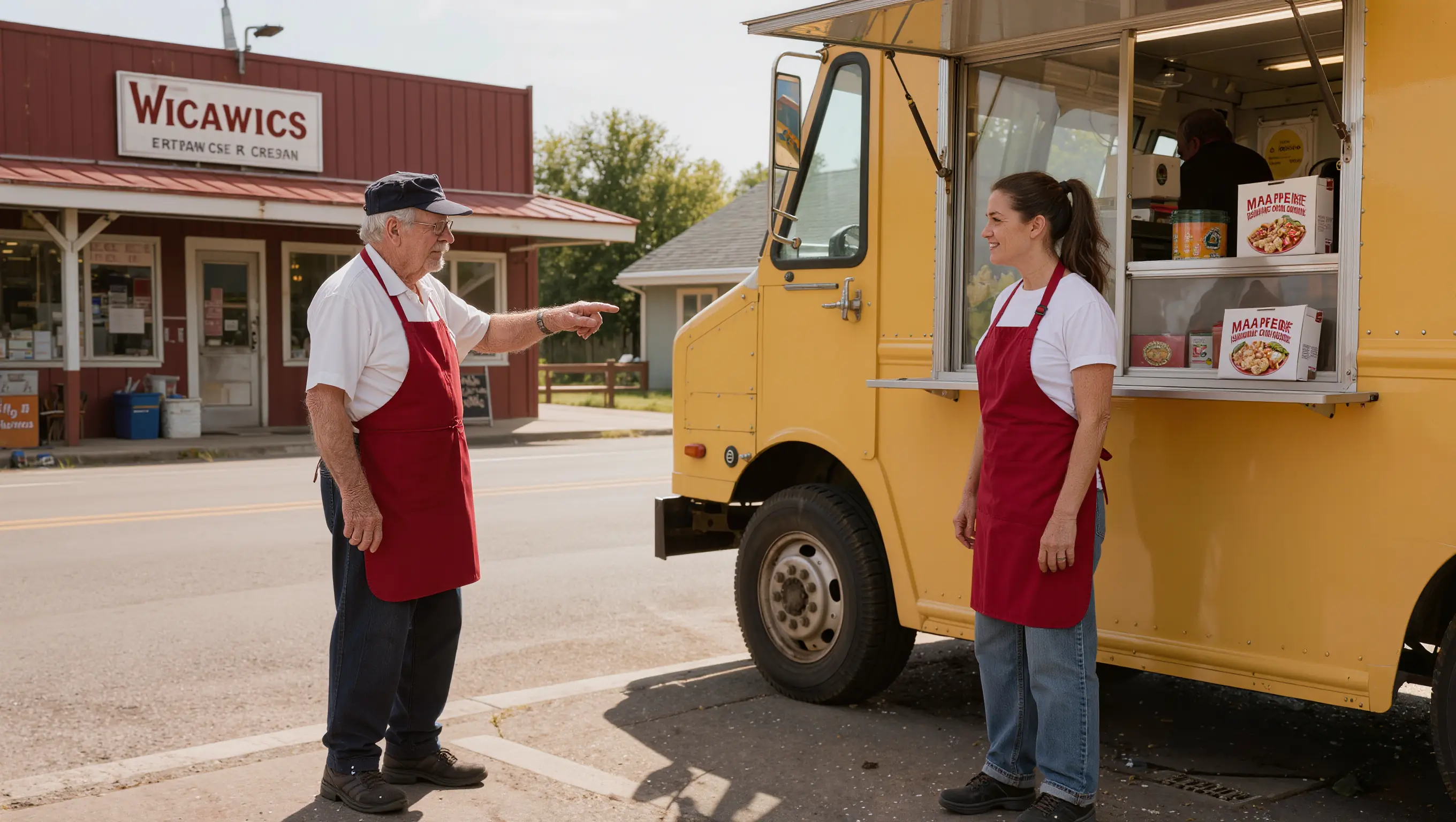
For two weeks, he told no one.
Not Melissa.
Not Maya.
But Maya noticed.
Of course she noticed.
She came in one Wednesday morning and found Raymond sitting in booth three, staring at the window instead of starting the grill.
“You’re not cooking,” she said.
“No customers.”
“You cook before customers.”
“Maybe I’m becoming efficient.”
“That would be suspicious.”
He gave her a tired look.
“You’re early.”
“You’re avoiding.”
He sighed.
“You learned too much.”
“I learned from the best.”
She walked behind the counter to pour coffee and saw the edge of the bank letter beneath the recipe binder.
Raymond’s voice sharpened.
“Maya.”
She looked at him.
He did not stop her.
She read it.
Her face changed.
“No.”
“That word has never paid a bill.”
“They’re threatening the diner?”
“The bank uses longer sentences.”
“When were you going to tell me?”
“When I had good news.”
“You don’t.”
“That is why I didn’t tell you.”
Maya sat across from him in booth three.
The same booth where Linda used to sit after closing, Raymond had once told her.
“Do you want to close?” Maya asked.
Raymond looked around.
The counter.
The grill.
The old register.
Linda’s pie case.
The front window where sunlight still came in just right at seven in the morning.
“No,” he said quietly.
Maya nodded.
“Then let me help.”
“I don’t want charity.”
“I know.”
“I mean it.”
“I know.”
“I helped you once. That doesn’t make you responsible for my mistakes.”
Maya leaned forward.
“You didn’t just help me once. You showed me how to run a food business without losing the part that feeds people first.”
Raymond looked away.
“That sounds like something for a brochure.”
“It’s true.”
“Truth can still be annoying.”
She smiled softly.
Then she opened her notebook.
“Good. Because I have an annoying plan.”
Raymond groaned.
“I hate plans in notebooks.”
“This one has numbers.”
“I hate it more.”
Maya’s idea was not to turn Carter’s Diner into something unrecognizable.
She knew better.
Instead, she proposed a partnership.
Her catering business needed a larger licensed kitchen for prep, training, and community meal production. Carter’s Diner had a kitchen that needed upgrades, a dining room that needed customers, and a name people still trusted. Maya wanted to lease the diner kitchen during off-hours for her catering prep, invest in repairs as part of the lease, and bring her food truck customers into the diner through special weekend menus.
But the bigger idea was Carter Community Kitchen.
Once a week, the diner would host pay-what-you-can family dinners in partnership with the youth center and local donors. Maya’s team would help cook. Raymond’s classic diner menu would stay. Linda’s recipes would be featured. Young food entrepreneurs could train in the kitchen during slow hours, learning safety, pricing, prep, and service.
The diner would not become a trendy restaurant.
It would become what it had always been, only stronger.
A place that fed people.
Raymond stared at the pages.
“You want to put tacos in my diner.”
“Only on Saturdays.”
“Linda would haunt me.”
“Linda would ask if they’re good.”
“They are good.”
“Then she’d approve.”
He turned another page and saw the budget.
Freezer replacement.
Grill repair.
Roof patch.
Bank payment plan.
Kitchen lease income.
Weekend events.
Community dinner sponsorships.
Staff training.
He looked up.
“You did all this before asking?”
“Yes.”
“That is manipulative.”
“That is catering logistics.”
“Same crime.”
Maya smiled.
“I also spoke with Melissa.”
Raymond’s eyes narrowed.
“That is betrayal.”
“That is family.”
“Worse.”
“She wants you to keep the diner if it can be done safely.”
He looked down at Linda’s recipe binder.
“And if it can’t?”
“Then we face that. But we don’t quit before trying.”
Raymond was quiet for a long time.
Then he said, “I won’t let this become a place where people take pictures of pancakes stacked too tall.”
Maya laughed.
“No pancake towers.”
“No mason jar nonsense.”
“Reasonable.”
“No menu item called ‘deconstructed’ anything.”
“Agreed.”
“No painting over Linda’s wall.”
Maya’s expression softened.
“Never.”
The work began the following month.
Raymond complained every day.
He complained about contractors.
He complained about new kitchen equipment.
“The old grill had character.”
“The old grill had uneven heat and a gas leak.”
“That was its character.”
He complained about Maya’s staff.
“They move too fast.”
“They’re efficient.”
“They’re loud.”
“They’re twenty-four.”
He complained about the repaired roof.
“It doesn’t drip anymore. Now I don’t know when it rains.”
Maya looked at him.
“You miss the leak?”
“No. I miss knowing things.”
She laughed.
The community helped too.
The youth center organized volunteers. Local farmers donated produce for the first community dinner. Earl fixed the back door. Melissa came from Wichita with her children and spent a weekend repainting the hallway with Raymond, who insisted he was supervising but ended up with paint on his shoes.
When the new sign went up, Raymond stood outside with his arms crossed.
Carter’s Diner
Home of Carter Community Kitchen
“No,” he said.
Maya stood beside him.
“Yes.”
“Too many words.”
“You say that about everything meaningful.”
“Because meaningful things should learn restraint.”
But he did not ask her to remove it.
The reopening weekend arrived in October.
Carter’s Diner had not looked so alive in years.
The red stools were polished. The booths repaired. Linda’s pie case filled with apple, cherry, and coconut cream. The grill worked properly. The roof held. The coffee machine had finally been replaced, though Raymond kept the old one in the back because “it suffered with us.”
Saturday’s menu offered Carter’s classics and Maya’s specials.
Chicken fried steak.
Biscuits and gravy.
Burgers.
Green chili chicken tacos.
Breakfast bowls.
Lemonade.
Linda’s pie.
People came out of curiosity first.
Then they came because the food was good.
Old regulars sat beside Maya’s food truck fans. Families from the youth center came. Farmers came. Teenagers came. Travelers who had seen posts online came off the bypass and found the old road again.
Raymond stood behind the counter, overwhelmed and pretending not to be.
At noon, Maya tapped a spoon against a glass.
Raymond pointed at her.
“No speeches.”
“One.”
“Unnecessary.”
“Very necessary.”
People turned toward them.
Maya stood near the counter, wearing a red apron.
“Years ago,” she began, “my food truck broke down across the street with eighty meals inside and a youth center waiting for dinner.”
Raymond looked down at the counter.
“I thought I had lost my contract, my permit, and maybe my chance to build a real business. Raymond Carter crossed the street, opened his kitchen, called a tow, loaded his van, and helped me serve every meal.”
Her voice softened.
“He told me trouble had already arrived, so we might as well make it useful.”
People laughed gently.
“That day became the foundation of everything I built. But this diner was already doing that long before I came along. It made trouble useful. It turned hunger into a meal, loneliness into a seat at the counter, and strangers into regulars.”
Raymond’s eyes stung.
Maya turned to him.
“You helped me save my first contract. Today, we help save the kitchen that taught me what feeding people really means.”
The applause filled the diner.
Raymond wiped the counter very carefully, though it was already clean.
That night, the first pay-what-you-can community dinner served one hundred and twenty people.
No speeches.
No shame.
Just plates passed across tables.
Linda’s chicken soup.
Maya’s rice and beans.
Cornbread.
Salad.
Pie.
Raymond watched a tired mother sit with her children and eat slowly, her shoulders finally lowering. He watched an elderly man he had not seen in months talk with a teenager about fishing. He watched Maya’s staff treat every guest with warmth and speed. He watched his diner become itself again, not by going backward, but by remembering its purpose.
After closing, Maya found him sitting in booth three.
“You okay?”
“No.”
She sat across from him.
“Good no or bad no?”
He looked around the diner.
The clean counters.
The new grill.
The old photographs.
Linda’s pie case.
The donation jar from the community dinner.
The schedule for young cooks training next week.
“I think Linda would be mad,” he said.
Maya’s face fell.
“Why?”
“She would be mad I waited this long to ask for help.”
Maya smiled softly.
“Yes. She would.”
Years passed, and Carter’s Diner became one of the most beloved places in Willow Creek again.
Not because it became fancy.
Because it became necessary.
Maya’s catering business grew from the diner kitchen, but she never let it swallow the place. Raymond still opened most mornings, though now he had help. Young cooks learned from him how to season gravy, flip eggs, clean properly, and treat every customer like they had arrived with a story.
Maya taught them food truck logistics, catering math, and how to keep calm when everything went wrong.
“Something always goes wrong,” she told them.
Raymond added, “That is why we own towels.”
The community dinners continued every Thursday night.
Some people paid full price. Some paid less. Some paid nothing. Nobody knew which was which because Raymond designed the system with tickets and a locked box.
“Dignity first,” he said.
Maya wrote that phrase on the kitchen wall.
He complained.
She ignored him.
On Raymond’s eighty-fifth birthday, Maya and Melissa organized a dinner after closing.
Raymond said he did not want a party.
They called it a “staff meeting with cake.”
He attended.
The diner was filled with family, staff, old regulars, youth center kids now grown taller, farmers, neighbors, and people who had found their way back to the old highway because Carter’s Diner had become worth the turn.
Maya brought out a small box.
Raymond groaned.
“Gifts are dangerous.”
“Open it.”
Inside was a key attached to a small metal tag shaped like the old diner sign.
Engraved on it were the words:
Trouble Made Useful
Raymond stared at it.
“That is a strange thing to put on a key.”
“It’s our thing.”
“Our thing?”
“You said it first.”
“I say many things. Most should not be engraved.”
Maya laughed.
Then Melissa stepped beside him and placed Linda’s old recipe binder on the table. It had been restored, protected, and copied. The original recipes stayed inside, and blank pages had been added to the back.
“For new recipes,” Melissa said.
Raymond touched the binder.
Maya added softly, “Only good ones. No deconstructed anything.”
He laughed, then covered his eyes for a moment.
The room stayed quiet.
When he finally looked up, his voice was rough.
“Thank you.”
Two words.
That was all.
But everyone in the diner understood their weight.
Later that night, after the party ended, Raymond and Maya stood outside beneath the red roof. The street was quiet. The old hardware shop across the street had reopened as a small local market. The windows of Carter’s Diner glowed behind them.
Raymond looked toward the spot where Maya’s food truck had once smoked in the summer heat.
“You remember that day?” he asked.
“Every detail.”
“You looked like you were about to cry.”
“I was.”
“You also looked like you might try to push the truck.”
“I considered it.”
“Terrible plan.”
“I know.”
He smiled.
“You built something good.”
Maya looked at the diner.
“So did you.”
Raymond shook his head.
“Linda built the best parts.”
“Then we’re keeping them open.”
He nodded slowly.
Years earlier, Raymond Carter had helped a young woman save her food truck contract because eighty meals were sitting in the Kansas heat, a truck had failed, and a room full of children was waiting for dinner.
He thought he was only opening his kitchen and lending his van.
But practical kindness can become a recipe.
Maya built her business from that day. And when Raymond’s diner was the thing overheating, leaking, breaking down, and nearly out of time, she returned with a plan, a kitchen partnership, a community, and the same urgency he had once given her.
What Raymond received was not just money for repairs or a saved building.
He received Linda’s diner alive again.
He received young cooks to teach, families at the tables, laughter at the counter, and a chosen daughter who understood that food was never only food.
And every time someone rushed into Carter’s Diner with panic in their eyes, a broken plan, or a promise about to fail, Raymond would tie on his apron, point toward the kitchen, and say,
“Come on. Trouble’s here. Let’s make it useful.”