Harold Bennett was seventy-nine years old when he first noticed the boy who never bought lunch.
It happened in the cafeteria of Whitmore Middle School, a red-brick building on the edge of Franklin, Indiana, where Harold worked three mornings a week as a part-time maintenance helper. He had retired from his old carpentry business years earlier, but retirement had never suited him. His wife, June, had passed away five years before, and after that, the house became too quiet, the mornings too long, and the afternoons too heavy.
So when the school principal asked if he could help fix shelves, tighten loose desk legs, replace broken door handles, and repair whatever children managed to destroy between Monday and Friday, Harold said yes.
He liked the work.
He liked the smell of pencil shavings, floor wax, cafeteria rolls, and old books. He liked the noise more than he admitted. He liked hearing lockers slam, sneakers squeak, teachers call names, and children laugh too loudly in hallways where they were supposed to be quiet. It reminded him that the world was still beginning for someone.
Harold was a tall, thin man with silver hair, rough hands, and a face lined deeply from sun, sawdust, grief, and years of squinting at measurements. He wore flannel shirts under an old brown jacket, faded work pants, and boots he had repaired so many times they seemed held together by stubbornness more than leather.
Most of the students knew him as Mr. Bennett.
Some called him “the toolbox man.”
He liked that.
He spent most mornings moving through the school with a small cart of tools, fixing whatever needed fixing. A loose railing near the gym. A broken cabinet in the art room. A wobbly chair in the library. A squeaking door in the music hallway. He worked quietly, nodded to teachers, and kept peppermint candies in his coat pocket for children who looked like they needed something sweet but didn’t know how to ask.
He had no grandchildren nearby. His son lived in Oregon with his family and called when he could. His daughter lived in Atlanta and had three children of her own. Harold loved them, but distance made love feel like a photograph sometimes: real, precious, but too flat to hold.
The school filled some of that empty space.
At noon, Harold often took his lunch at the far end of the cafeteria, sitting near the service doors with a thermos of coffee and a sandwich wrapped in wax paper. He liked watching the children move through the lunch line, loud and restless, trading snacks, laughing over private jokes, complaining about vegetables, and treating chocolate milk like currency.
That was where he first noticed the boy.
The boy stood in line every day, but never took a tray.
He would walk with the others, moving forward one step at a time, hands in the pockets of his oversized hoodie. When he reached the cashier, he would hesitate, then step aside as if he had forgotten something. Sometimes he took a cup of water. Sometimes he took nothing.
Then he would sit at the end of a table near the windows, open a notebook, and pretend to read while everyone else ate.
The first time Harold saw it, he assumed the boy had brought lunch.
The second time, he looked more carefully.
No lunch bag. No tray. No apple pulled from a backpack. Nothing.
By the fourth day, Harold could not stop watching.
The boy was around twelve, maybe thirteen. He had dark hair that fell into his eyes, narrow shoulders, and the guarded expression of a child who had learned not to expect much from anyone. His clothes were clean but worn. His sneakers had been repaired with black tape near the toe. He never caused trouble. He never asked for anything. He simply made himself small.
Harold knew that kind of small.
It was not shyness.
It was survival.
On Friday, Harold waited until the boy got up from the table after lunch and walked toward the hallway. Then he pushed his tool cart slowly in the same direction.
The boy stopped at the water fountain.
Harold stopped beside a loose bulletin board and pretended to examine it.
“Board’s crooked,” Harold said.
The boy glanced over, uncertain whether he was being spoken to.
“It is?” he asked.
“Little bit.”
The boy looked at the bulletin board.
“I think the left side is lower.”
Harold nodded.
“You have a good eye.”
The boy shrugged.
“My mom says I notice weird things.”
“Nothing weird about noticing what’s true.”
The boy did not answer.
Harold took a screwdriver from his cart.
“What’s your name?”
“Micah.”
“Micah what?”
“Micah Reed.”
“Harold Bennett.”
“I know. You fix things.”
“That’s what they keep telling me.”
Micah almost smiled.
Harold tightened one screw, though the board was not really the reason he had stopped.
“You eat lunch today, Micah?”
The boy’s face changed instantly.
His eyes went flat, guarded.
“I wasn’t hungry.”
Harold turned the screwdriver slowly.
“Funny thing. I’ve lived seventy-nine years, and I’ve noticed children who say they aren’t hungry at noon usually are.”
Micah stared at the floor.
“I’m fine.”
“Didn’t ask if you were fine.”
“I have to get to class.”
Harold nodded and stepped back.
“Then get to class.”
Micah hurried away.
Harold watched him go.
That afternoon, Harold asked one of the cafeteria workers, Mrs. Laney, about him.
She sighed before he finished the question.
“Micah Reed. Seventh grade. Sweet kid. Quiet. His lunch account is behind.”
“How behind?”
She lowered her voice.
“Too far. We still give kids meals, but you know how it is. Some of them get embarrassed when the account notice prints. He stopped coming through the line.”
Harold’s jaw tightened.
“How much?”
“Harold…”
“How much?”
Mrs. Laney looked toward the office, then back at him.
“Eighty-six dollars and forty cents.”
Harold said nothing.
It was not a fortune.
It was also, for some families, impossible.
“His mother works at the pharmacy and cleans rooms at the motel on weekends,” Mrs. Laney added. “She’s trying. I know she is.”
Harold looked across the empty cafeteria.
At the tables. The trays. The place by the window where Micah sat with nothing but water and pride.
“Can I pay it?”
Mrs. Laney hesitated.
“You can. But he might find out.”
“Then don’t make a parade of it.”
She studied him.
“You sure?”
Harold pulled out his wallet. It was old, brown, and cracked at the fold. He counted cash from a small envelope he used for groceries, then added a check for the rest.
“I’m sure.”
Mrs. Laney took it gently.
“Harold, this is kind.”
He frowned.
“It’s lunch.”
The next Monday, Harold sat at his usual table by the service doors and watched the lunch line.
Micah came in with his class.
He moved forward slowly, hands in his hoodie pocket. When he reached the trays, he hesitated as usual. Harold watched without staring.
Mrs. Laney smiled at Micah and said something Harold could not hear.
Micah looked confused.
Then she handed him a tray.
He took it.
For a moment, he simply stood there, staring at the food as if it might be taken back.
Then he moved down the line.
Chicken sandwich. Carrots. Apple slices. Milk.
He paid nothing at the cashier. The cashier only nodded.
Micah carried the tray to his usual seat near the window. He sat down, looked around quickly to see if anyone had noticed, then began eating.
Not fast.
Carefully.
Like someone trying not to show hunger.
Harold looked down at his own sandwich.
For some reason, it was hard to swallow.
He thought that would be the end of it.
It was not.
Two days later, Micah appeared beside him in the hallway while Harold was repairing a broken locker latch.
“Mr. Bennett?”
Harold looked over.
“Yes?”
Micah shifted from one foot to the other.
“Did you pay my lunch account?”
Harold kept working.
“Why do you ask?”
“Because Mrs. Laney said it was handled.”
“Sounds handled.”
“Was it you?”
Harold tightened the latch.
“Locker’s fixed.”
Micah did not move.
“I need to know.”
Harold sighed and turned.
“Why?”
“Because if it was you, I have to pay you back.”
“No, you don’t.”
“Yes, I do.”
“No.”
“My mom says we don’t take things from people.”
Harold looked at the boy carefully.
“Your mom sounds like a proud woman.”
“She works hard.”
“I believe that.”
“She would be embarrassed.”
“I didn’t pay it to embarrass her.”
“Then why?”
Harold leaned one hand on the tool cart.
“Because a boy should eat lunch at school.”
Micah’s mouth tightened.
“We’re not poor.”
“I didn’t say you were.”
“My mom just got behind because my little sister had to go to the doctor, and the car needed tires, and my grandma’s heater broke, and everything happened at once.”
“That happens.”
“She’s trying.”
“I know.”
Micah looked down.
“I still want to pay you back.”
Harold thought for a moment.
Then he pointed to the locker.
“You can help me carry tools on Wednesdays.”
Micah looked up.
“What?”
“After school. Thirty minutes. I’ve got shelves in the library that need fixing. You can hand me screws and pretend to understand what I’m doing.”
“I know how to use tools.”
“Oh?”
“My grandpa used to let me help before he moved away.”
Harold nodded.
“Then maybe you’ll be useful.”
Micah studied him, trying to decide if he was being teased.
“How much does that pay back?”
“Enough.”
“For eighty-six dollars?”
“Lunch debt is not bank debt.”
“It was eighty-six dollars?”
Harold winced.
“You weren’t supposed to hear that part.”
Micah looked ashamed.
Harold softened.
“Listen to me. You help me after school now and then, and we’ll call it even. No shame. No speeches. No telling your mother unless you want to.”
Micah swallowed.
“Okay.”
“Good. Wednesday. Three-fifteen. Don’t be late.”
“I won’t.”
He wasn’t.
That Wednesday, Micah appeared exactly at three-fifteen outside the library, backpack on both shoulders, face serious. Harold handed him a small tool belt.
Micah stared at it.
“For me?”
“For the work. Don’t get sentimental over canvas.”
Micah put it on anyway.
The library shelves had begun pulling away from the wall near the nonfiction section. Harold showed Micah how to check the brackets, find the studs, choose screws, and hold the level properly.
“Your bubble’s off,” Harold said.
Micah adjusted it.
“Now?”
“Closer.”
“Closer means not right.”
“Good. You’re learning.”
For thirty minutes, they worked in quiet concentration. Micah asked questions. Good questions. Not just how, but why. Why use that screw? Why measure twice? Why did wood split near the end? Why did old buildings creak more in winter?
Harold answered each one.
He had not realized how much he missed teaching someone.
At four, Micah stepped back and looked at the fixed shelves.
“They look the same.”
“That’s how good repairs work.”
Micah frowned.
“What do you mean?”
“If people only notice your work when it fails, doing it right means nobody claps.”
“That sounds unfair.”
“Most useful things are.”
Micah thought about that.
Then he said, “Can I come next Wednesday too?”
Harold pretended to consider.
“I suppose. If the school survives that long.”
Micah smiled.
After that, Wednesdays became theirs.
Sometimes they fixed chairs. Sometimes they repaired classroom cabinets. Sometimes they replaced missing screws in desk legs or patched small holes in drywall. Harold taught Micah how to use a tape measure, how to sand properly, how to sharpen a pencil with a pocketknife, how to oil a hinge, how to respect tools by not throwing them into a bucket like rocks.
Micah learned quickly.
More importantly, he listened.
The lunch debt was forgotten by everyone except the two of them. Micah ate every day. At first, he still looked uncomfortable taking a tray. Then, slowly, he stopped checking whether anyone was watching. Some days, Harold saw him laughing with another boy over chocolate milk. Some days, Micah saved his apple and gave it to his little sister after school.
Harold noticed that too.
One afternoon, while they were repairing a broken display case in the front hallway, Micah asked, “Why do you still work?”
Harold glanced at him.
“Because things break.”
“No, I mean… you’re old.”
“Thank you for the medical report.”
Micah’s face reddened.
“I didn’t mean—”
“Yes, you did.”
“I meant you don’t have to, right?”
Harold fitted a small hinge into place.
“I have to more than people think.”
“Why?”
Harold did not answer at first.
The hallway was quiet. Most students had gone home. Sunlight came through the glass doors at the end of the corridor, turning dust into gold.
“My wife died,” he said.
Micah grew still.
“I’m sorry.”
“Me too.”
Harold turned the tiny screw.
“After June passed, the house got too quiet. I retired before that, but she kept me busy. She had lists. Paint the porch. Fix the fence. Build a shelf. Move this. Don’t move that. I complained about every bit of it.”
Micah smiled faintly.
“But after she was gone, there was nobody giving me lists. And I found out a man can miss being told what to do.”
Micah looked at him.
“So the school gives you lists?”
“Endless ones.”
“That helps?”
“Yes.”
Micah nodded slowly.
“My dad left when I was little,” he said.
Harold kept his eyes on the hinge.
“Does that help?”
“What?”
“Talking while looking at the hinge.”
Micah exhaled a small laugh.
“Maybe.”
“Then keep looking at the hinge.”
Micah stared at it.
“My mom says he wasn’t ready to be a father. I used to think maybe if I was better at stuff, he would come back.”
Harold’s hand paused.
Then he said quietly, “Children often blame themselves for adult cowardice.”
Micah looked up.
Harold met his eyes.
“It was not your job to make him stay.”
Micah looked back at the hinge quickly, but not before Harold saw the tears.
They finished the repair without saying more.
At four-thirty, as Micah put away the screwdriver, he whispered, “Thanks.”
“For what?”
“For not making it weird.”
Harold nodded.
“That costs extra.”
Micah laughed.
Years moved forward in ordinary steps.
Micah grew taller. His voice changed. His shoulders widened. His hair fell into his eyes until his mother made him cut it. He went from seventh grade to eighth, then to high school. He still came by the middle school sometimes to help Harold during summer maintenance days.
By then, Harold had become something more than the man who fixed things.
He became the person Micah called when he needed advice he did not want to ask his mother for. How to open a stuck window. How to repair a bike chain. How to apologize after snapping at his sister. How to write a thank-you note for a scholarship interview. How to tie a tie.
The tie lesson happened in the school workshop one afternoon before Micah’s first formal presentation at the high school.
“I look stupid,” Micah said, glaring into the dusty mirror.
“You look nervous. Stupid is different.”
“The knot is crooked.”
“So is your attitude.”
Harold stood behind him and showed him how to fold, cross, loop, and pull the tie into place.
“My hands are too big for this,” Micah muttered.
“That’s what every man says when patience is required.”
Micah finally got it right on the sixth try.
He looked at himself in the mirror.
Harold adjusted the collar.
“There.”
Micah was quiet.
“What?” Harold asked.
“My dad never taught me this.”
Harold’s hands stilled.
Then he patted Micah’s shoulder once.
“Well. Now you know.”
Micah nodded.
“Yeah.”
Harold did not attend all of Micah’s school events, but he attended the ones that mattered.
When Micah presented his science project about affordable insulation for old homes, Harold sat in the back row. When Micah won a county technical scholarship, Harold stood beside his mother and clapped until his hands hurt. When Micah graduated high school, Harold wore his best jacket and pretended he had dust in his eye.
Micah’s mother, Elena Reed, knew by then about the lunch debt.
She found out when Micah was fifteen, after he accidentally mentioned “paying back Mr. Bennett” by helping with repairs.
At first, she was embarrassed.
Then she came to the school on a Friday afternoon and found Harold fixing a cabinet in the staff room.
“Mr. Bennett?”
He looked up.
“Yes, ma’am?”
“I’m Elena Reed. Micah’s mother.”
Harold stood slowly.
“Good boy, your son.”
“He says that because of you, he learned how to use tools.”
“Poor child.”
“He also says you paid his lunch account.”
Harold looked down at the cabinet.
“He was hungry.”
Elena’s eyes filled, but her voice remained steady.
“I wish you had told me.”
“I figured you had enough people handing you things to worry about.”
“I would have paid you back.”
“I know.”
“I still can.”
“No.”
“Please don’t make me feel like charity.”
Harold looked at her then.
“I never saw you that way.”
She pressed her lips together.
“I was doing my best.”
“I know. That’s why I paid it quietly.”
For a long moment, she said nothing.
Then she reached into her purse and pulled out a small container wrapped in foil.
“I made tamales,” she said. “Micah said you like spicy food.”
“I do.”
“Then take them. Not as payment.”
Harold accepted the container.
“As what?”
“As a mother saying thank you without losing her dignity.”
He nodded.
“That I can accept.”
From then on, Elena sent food occasionally. Tamales. Soup. Fresh bread. Once, a cake so rich Harold had to share half with the school office because he feared eating it alone might end his life.
Years passed.
Micah went to college on scholarships, studying construction management and later architecture with a focus on affordable housing. Harold thought the word architecture sounded expensive and unnecessarily long, but he was proud anyway.
Micah called him often.
At first, from dorm rooms and noisy hallways.
Then from job sites.
Then from cities Harold had never visited.
“Mr. Bennett, how do you know if a contractor is cutting corners?”
“If the corner looks cut, they are.”
“That’s not specific.”
“It’s accurate.”
“Can I send you photos?”
“You always do.”
Micah sent photos of framing issues, old staircases, repaired brick, strange cabinet failures, and beautiful handrails in historic buildings. Harold answered with short messages, usually blunt.
That beam is wrong.
Do not trust that joint.
Good work.
Ask who inspected that.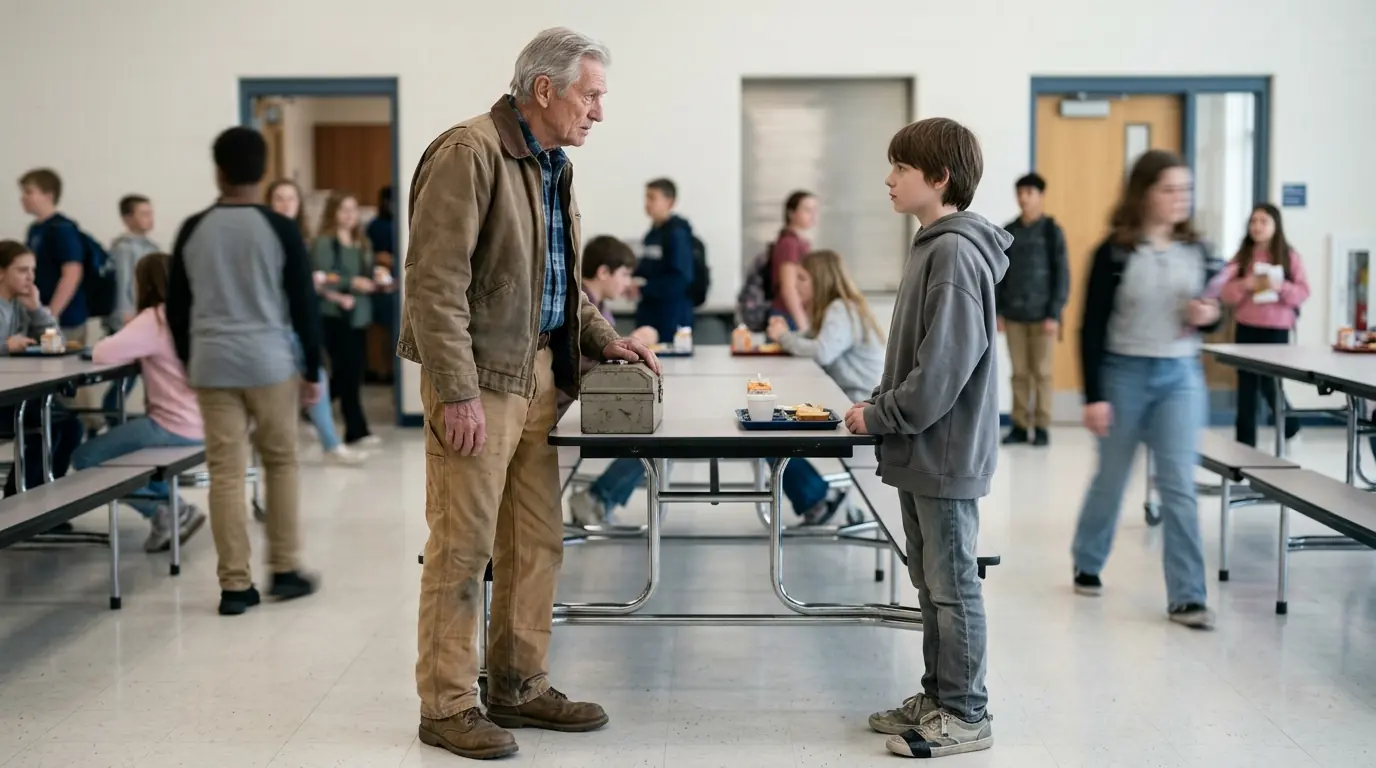
Measure again.
Micah saved every message.
While Micah built a life, Harold’s own life narrowed.
His knees worsened. His hands stiffened. He stopped taking maintenance work at the school except for small repairs. Eventually, the principal gently told him they had hired a full-time facilities company.
“You’ll always be welcome here,” she said.
Harold nodded politely.
But he understood.
The world was moving on to people with vans, uniforms, digital scheduling systems, and insurance paperwork. An old man with a toolbox and peppermint candies no longer fit the system.
He went home that day and placed his school key in a dish by the door.
For three weeks, he told himself he enjoyed rest.
He did not.
The house became quiet again.
Too quiet.
He still fixed small things for neighbors. A loose porch step. A broken gate. A kitchen drawer. But there were too many hours left over. His children called. They worried. His daughter suggested moving to Atlanta. His son suggested Oregon. Harold said he would think about it and then did not.
His house began to need repairs he could not manage.
The roof leaked near the back bedroom. The front porch sagged. The heater needed replacement. The property taxes rose after nearby developments increased home values. Harold had saved carefully, but medical bills, home repairs, and inflation ate through savings faster than pride could accept.
He sold some tools.
Only duplicates at first.
Then specialty planes he rarely used.
Then clamps.
He told himself tools should be used, not displayed.
But each sale felt like giving away a piece of his own hands.
One rainy evening in October, Harold stood in his kitchen beneath a ceiling stain and opened a letter from the county.
The house was at risk of tax foreclosure if payment was not made by the end of winter.
He read the letter twice.
Then he folded it carefully and placed it under the sugar bowl.
As if hiding it could weaken it.
He did not tell his children.
He did not tell Micah.
Pride, at seventy-nine, had looked like a boy refusing lunch.
At eighty-seven, it looked like an old man hiding bills under kitchen items.
The difference was smaller than Harold wanted to admit.
Micah found out anyway.
Not from Harold.
From Elena, who still lived in Franklin and sometimes brought Harold meals. She noticed the roof stain. She noticed the cold house. She noticed tools missing from the garage wall.
Micah arrived three days later.
Harold opened the door to find him standing on the porch in a navy coat, holding a leather folder and wearing the expression of a man prepared for an argument.
Micah was thirty now.
Tall, broad-shouldered, with dark hair trimmed neatly and the same serious eyes Harold remembered from the cafeteria window table. He had become successful in a way that still surprised him when people said it aloud. He worked for a respected development firm, leading projects that converted old buildings into affordable apartments and community spaces. He wore good shoes now, but Harold noticed he still looked at crooked railings.
“What are you doing here?” Harold asked.
Micah looked up at the sagging porch roof.
“Apparently inspecting a disaster.”
Harold frowned.
“I didn’t ask for inspection.”
“I didn’t ask to find out from my mother that you’re selling tools.”
“Elena talks too much.”
“She learned from you.”
“I do not talk too much.”
“No. You hide too much.”
Harold turned back into the house.
“If you came to scold me, at least come in. The neighbors don’t need theater.”
Micah entered.
He looked around the house quietly. The worn furniture. The photographs of June. The old workbench in the back room. The water stain on the ceiling. The space on the garage wall where tools used to hang.
Harold put coffee on.
Micah picked up the letter from under the sugar bowl.
Harold froze.
“You have no manners.”
“You have no hiding skills.”
“Put that down.”
Micah read it.
His jaw tightened.
“Why didn’t you tell me?”
“Because it’s not your problem.”
Micah looked at him.
“That sounds familiar.”
Harold said nothing.
“When I was twelve,” Micah said, “I told you my lunch debt wasn’t your problem.”
“That was different.”
“No, it wasn’t.”
“You were a child.”
“And you were hungry for a reason to keep going after June died.”
Harold looked away sharply.
Micah softened his voice.
“You think I didn’t know? Even then? You helped me, but I helped you too.”
Harold turned toward the coffee pot.
“You came here to talk nonsense?”
“I came here with a proposal.”
“I don’t want money.”
“I figured.”
“I mean it.”
“So do I.”
Micah opened the leather folder and placed several papers on the kitchen table.
Harold reluctantly sat.
The first page showed a drawing of his house.
Not as it was now, tired and sagging.
As it could be.
The front porch repaired. The roof replaced. The back room converted into a small teaching workshop. The garage restored. A wheelchair-accessible ramp subtly integrated along the side, though Harold immediately objected to that.
“I don’t need a ramp.”
“Not today.”
“Not tomorrow either.”
“It’s good design.”
“It looks expensive.”
“It’s already funded.”
Harold glared.
Micah continued.
“I’ve started a nonprofit with two partners. We’re calling it The Measure Twice Project.”
Harold stared at him.
“That is a terrible name.”
“It’s a perfect name.”
“It sounds like a hardware store coupon.”
“It teaches practical repair skills to teenagers from low-income families. Carpentry basics, tool safety, home maintenance, small construction projects, financial literacy, and design thinking.”
Harold looked down at the drawings.
Micah’s voice grew quieter.
“We need a place for the pilot program. A real workshop. Not a corporate training room. Not a polished classroom. A place with history.”
Harold’s fingers rested on the edge of the paper.
“You want my garage?”
“I want to lease your garage and back room officially from you. The nonprofit pays rent. That rent covers your taxes and utilities. We also repair the roof, porch, heater, and workshop as part of making the site safe for students. You stay here. You teach only when you want. You complain as much as necessary.”
Harold looked up.
“This is charity dressed as paperwork.”
Micah smiled faintly.
“No. It’s paperwork dressed as gratitude.”
“I’m serious.”
“So am I. You paid eighty-six dollars and forty cents so a hungry boy could eat lunch without shame. Then you taught him how to fix a shelf, tie a tie, read a crooked line, and believe useful work had dignity.”
Harold’s face tightened.
Micah leaned forward.
“I built my life from what you gave me. Let me build something with you now.”
Harold stood too quickly, then had to steady himself on the chair.
“I don’t need saving.”
Micah stood too.
“I know.”
“Then why does it feel like that?”
“Because being helped feels different when pride is louder than hunger.”
The words hit hard.
Harold looked at him.
Micah did not look away.
For a moment, Harold saw the twelve-year-old boy again, standing beside a locker, saying he had to pay back lunch because his mother taught him not to take things.
Harold sat slowly.
“I don’t know how to accept this.”
Micah’s expression softened.
“You start with coffee.”
Despite himself, Harold huffed a laugh.
“That’s my line.”
“I’ve been saving it.”
The project began in spring.
Harold grumbled through every step.
He grumbled when contractors repaired the roof.
He grumbled when Micah replaced the heater.
He grumbled when the porch was rebuilt with stronger supports.
He grumbled when the garage was cleaned, insulated, rewired, and turned into a safe teaching workshop with proper ventilation, tool storage, workbenches, and bright lights.
He grumbled especially about the sign Micah installed near the driveway.
The Measure Twice Project
Founded In Honor Of Harold Bennett
“That sign is coming down,” Harold said.
“No, it isn’t,” Micah replied.
“It makes me sound dead.”
“You’re standing right here complaining.”
“Exactly. Living men don’t need memorial signs.”
“It isn’t a memorial. It’s an honor.”
“Same danger.”
The first group of students arrived on a Saturday morning in June.
There were eight of them, ages twelve to sixteen. Some were shy. Some restless. Some trying to look unimpressed. One boy reminded Harold painfully of Micah: thin, guarded, watching everything from under lowered brows.
Harold stood at the front of the garage workshop with his old tool belt around his waist.
Micah introduced him.
“This is Mr. Bennett. He taught me most of what I know about tools, repairs, and not doing sloppy work.”
Harold looked at the students.
“I also taught him to stop talking before everyone falls asleep. He ignored that lesson.”
The students laughed.
Good, Harold thought. Laughter loosened fear.
He picked up a tape measure.
“First rule,” he said. “This is not a toy.”
He pointed at the workbench.
“Second rule. We measure twice because wood does not care about your excuses.”
One girl raised her hand.
“What if we measure wrong both times?”
Harold paused.
Then he smiled.
“Then you may have a future in management.”
The room laughed again.
By the end of the first session, the students had learned to read a tape measure, mark straight cuts, sand edges properly, and build simple wooden boxes. The boxes were uneven. Some corners gapped. One lid did not fit at all. Harold insulted each failure with affection.
“That joint looks frightened.”
“Your sandpaper did nothing but visit.”
“This corner has no ambition.”
The students loved him.
Micah watched from the doorway.
At one point, Harold looked up and caught him smiling.
“What?” Harold snapped.
“Nothing.”
“Then stop looking proud. It’s distracting.”
But later, when the students left, Harold stood alone in the workshop, running his hand over one of the benches.
“They listened,” he said.
Micah leaned against the doorframe.
“Of course they did.”
“I thought kids didn’t listen anymore.”
“They listen when someone takes them seriously.”
Harold looked at him.
Micah smiled.
“I learned that from an old maintenance man.”
The Measure Twice Project grew faster than expected.
Word spread through schools, churches, community centers, and social workers. Parents called. Teachers referred students. Local businesses donated materials. A lumberyard offered discounted wood. A hardware store donated tools. Micah secured grants. Elena cooked meals for Saturday sessions, insisting children learned better with full stomachs.
Harold did not work every session, but he came to most.
He taught tool safety, basic repairs, measuring, sanding, small carpentry, and the strange moral philosophy of hinges, which somehow became a student favorite.
“A hinge,” Harold told them, holding one up, “is proof that strength and movement can live in the same place.”
A thirteen-year-old asked, “Do you just make these things up?”
“Yes,” Harold said. “That is one of the privileges of age.”
The students built bookshelves for classrooms, birdhouses for a community garden, small repair benches, and eventually, with supervision, a wheelchair ramp for an elderly neighbor who cried when she saw it.
Harold cried too, but blamed sawdust.
Micah never corrected him.
One year after the project began, the school where Harold had once worked invited him and Micah to speak at an assembly.
Harold refused.
Micah accepted for both of them.
“You’re worse than your mother,” Harold complained.
“Thank you.”
They stood in the same cafeteria where everything had started. Harold looked toward the windows and saw, in memory, a small boy sitting alone with no tray.
Micah saw it too.
When it was his turn to speak, he faced the students.
“When I was in seventh grade,” he said, “I stopped eating lunch because my account was overdue. I was embarrassed. I was proud. I thought needing help meant something was wrong with me.”
The room went quiet.
Harold’s throat tightened.
“Mr. Bennett noticed,” Micah continued. “He paid the account quietly. Then when I tried to pay him back, he let me help him fix shelves. That mattered because he didn’t treat me like a problem. He treated me like someone useful.”
Students looked toward Harold.
He wanted very much to become invisible.
Micah turned slightly.
“That one act became the beginning of everything. My career. My work. This project. Not because eighty-six dollars fixes a life, but because dignity can.”
Harold looked down.
Micah finished, “So if someone helps you, don’t let shame make you push it away. And if you have the chance to help someone, do it in a way that lets them keep their head up.”
The applause came slowly at first, then louder.
Harold pretended to inspect the floor.
After the assembly, Mrs. Laney, now retired, approached them with tears in her eyes.
“I remember that lunch account,” she said.
Harold sighed.
“Apparently everyone remembers everything now.”
She hugged him.
He endured it with dignity.
Years passed, and Harold’s world became full again.
Not easy. Not young. Not free from pain.
But full.
His house was repaired. His taxes were paid through the nonprofit lease. His children visited more often, relieved that their father had people around him. His garage became a place of noise, learning, mistakes, and laughter. Micah came every week unless travel made it impossible. Elena still brought food. Students wrote Harold thank-you notes that he claimed not to read and kept in a shoebox under his bed.
On Harold’s ninetieth birthday, Micah organized a dinner.
Not at a fancy restaurant.
In the school cafeteria.
Harold objected immediately.
“I am not celebrating my birthday in a cafeteria.”
“Yes, you are,” Micah said.
“I spent enough time there.”
“That’s why.”
That evening, the cafeteria was transformed with long tables, simple flowers, framed photos, and trays of food prepared by families from The Measure Twice Project. Former students attended, some now adults. Teachers came. Harold’s children and grandchildren flew in. Mrs. Laney sat near the front. Elena brought tamales. Students displayed projects they had built: shelves, boxes, benches, frames, and one beautifully made wooden sign that read:
Useful Things Last Because Someone Cared Enough To Make Them Well.
Harold stared at the sign.
“I never said that.”
Micah smiled.
“You said it in twelve different pieces. We assembled it.”
During dinner, Micah stood and lifted a glass.
Harold groaned.
“No speeches.”
“You knew there would be speeches.”
“I had hope.”
Micah looked around the room, then at Harold.
“When I was twelve, I thought needing lunch made me weak. Mr. Bennett saw a hungry kid and protected his pride. Then he gave me work so I could stand beside him instead of beneath him.”
His voice thickened.
“He became the first man in my life who stayed. Not because he had to. Because he chose to.”
Harold’s eyes filled.
Micah continued, “Years later, I found out he was at risk of losing his home. He didn’t ask for help. Of course he didn’t. He was just as stubborn as I had been. So I offered him work, purpose, and a way to stay. It still doesn’t repay what he gave me. It only continues it.”
He turned toward Harold.
“You paid a boy’s lunch debt. You gave him a seat beside you. Now every student who walks into that workshop sits at the table you helped build.”
The room rose in applause.
Harold sat very still.
His daughter reached for his hand.
His son put an arm around his shoulder.
Micah walked over and placed a small wooden box in front of him.
“What’s this?” Harold asked.
“Open it.”
Inside was the old school key Harold had once placed in the dish by his front door after being told the school had hired a facilities company. It had been mounted in a small frame, beneath a brass plate.
Harold Bennett
The Door Stayed Open Because You Did
Harold touched the key with one trembling finger.
“I thought I gave this back.”
“You did,” Micah said. “Mrs. Laney found it in an old office drawer. She saved it.”
Harold looked toward her.
She smiled.
“Some things are worth keeping.”
Harold could not speak for a moment.
Then he looked at Micah.
“You were a stubborn boy.”
Micah laughed softly.
“You were a stubborn old man.”
“Still am.”
“I know.”
Harold closed the box carefully.
That night, after the dinner ended and the cafeteria emptied, Harold asked Micah to walk with him to the window table.
The room was dim now, lit only by hallway lights.
Harold stood beside the place where Micah had once sat alone.
“You remember?” he asked.
Micah nodded.
“Every day.”
“I should have done more.”
Micah looked at him.
“You did enough.”
“No,” Harold said quietly. “I mean, I should have asked sooner. Noticed sooner.”
“You noticed.”
Harold looked down at his rough, aged hands.
“I was lonely then.”
“I know.”
“You gave me something too.”
Micah’s face softened.
“What?”
Harold looked around the cafeteria, then toward the hallway where years earlier they had fixed a crooked bulletin board.
“A reason to keep my tools sharp.”
Micah swallowed.
For a moment, neither spoke.
Then Micah said, “Come on. Mom packed leftovers.”
“Tamales?”
“Of course.”
“Then walk faster.”
Micah laughed and offered his arm.
Harold pretended not to need it.
Then he took it anyway.
Harold Bennett had paid a boy’s lunch debt quietly because hunger should never be allowed to become shame.
He thought he was giving Micah Reed one meal, then a few afternoons of work beside an old man with a toolbox.
But what he truly gave was dignity, skill, steadiness, and the belief that a child who felt forgotten could still become useful, strong, and seen.
Years later, when Harold was the one hiding his need beneath pride, Micah returned not with pity, but with purpose. He saved Harold’s home, restored his workshop, and turned one old man’s knowledge into a program that fed young lives in a different way.
Not with soup or bread.
With tools.
With patience.
With a place at the table.
And every Saturday morning, when the students gathered in Harold’s garage workshop and someone measured a board wrong, Harold would tap the workbench, look over his glasses, and say,
“Measure again. The world gives second chances, but wood charges extra.”