The plastic bag was only in the officer’s hand for three seconds.
But those three seconds would later become the most important evidence in the entire case.
On a busy downtown street in Chicago, people moved quickly between office buildings, restaurants, and small shops as the afternoon crowd filled the sidewalks.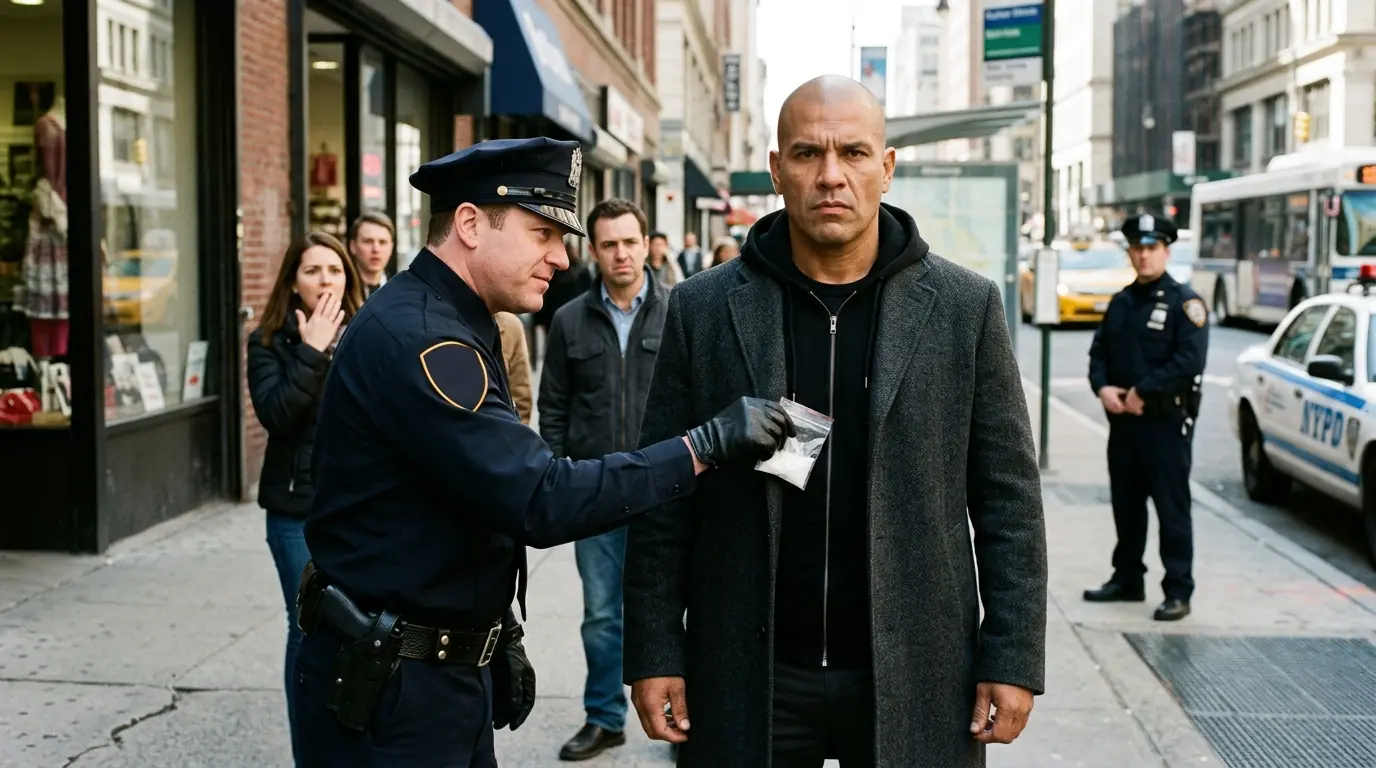
Nobody expected to witness a moment that would eventually lead to an internal investigation, a courtroom battle, and a complete review of one police department’s practices.
At first glance, it looked like a normal police encounter.
A uniformed officer standing beside a man on the sidewalk.
A few pedestrians slowing down.
A conversation becoming tense.
But there was something unusual.
The man being questioned was not angry.
He was not afraid.
He was watching.
Marcus Bennett stood near the entrance of a financial district building with his hands relaxed at his sides.
He was forty-two years old, a Black American businessman who owned a growing technology consulting company that worked with hospitals, universities, and financial institutions across the Midwest.
He had spent more than fifteen years building his reputation.
He was known by clients as patient.
By employees as fair.
By friends as someone who avoided unnecessary conflict.
That afternoon, he wore a charcoal wool overcoat over a black hoodie, dark trousers, and leather shoes.
He looked like someone heading to a meeting.
Because he was.
His company had just completed a major contract, and Marcus was meeting with a potential investment partner across town.
He had no reason to expect anything unusual.
Until Officer Daniel Reeves stepped toward him.
Reeves was forty-six years old and had been a city police officer for seventeen years.
He had a reputation inside the department for being aggressive.
Some officers considered him decisive.
Others considered him difficult.
His supervisors had received several complaints about his communication style, but none had resulted in major discipline.
That afternoon, he approached Marcus with another officer nearby.
“Stop right there.”
Marcus turned.
“Can I help you?”
Reeves looked him up and down.
“Where are you headed?”
Marcus looked confused.
“To a meeting.”
“Where?”
“A few blocks from here.”
Reeves glanced at his coat.
Then his bag.
Then back at him.
“What’s in your pockets?”
Marcus stared.
“My pockets?”
“Yes.”
“Why?”
Reeves stepped closer.
“Because I asked.”
Marcus remained calm.
“I’m happy to answer reasonable questions.”
The second officer noticed the tone changing.
“Daniel,” he said quietly.
But Reeves ignored him.
“You think you can decide what questions are reasonable?”
Marcus looked around.
People had started watching.
A woman outside a coffee shop paused.
A delivery driver slowed down.
A man near the building entrance pulled out his phone.
Marcus noticed.
So did Reeves.
And instead of lowering the tension, Reeves leaned into it.
“Enjoy prison, dirt bag,” Reeves said quietly.
Marcus’s expression changed.
Not fear.
Recognition.
He understood.
This was no longer a conversation.
It was an attempt to create a story.
Reeves reached toward a small clear plastic evidence bag in his hand.
Marcus looked down.
Then back at him.
“What are you doing?”
Reeves smiled slightly.
“Making sure the truth comes out.”
Marcus stepped back.
“Take your hand away from me.”
Reeves moved closer.
“Careful.”
The second officer looked uncomfortable.
“Daniel, what exactly are we doing here?”
Reeves did not answer.
Marcus kept his eyes on the officer’s body camera.
Then he looked directly at the device.
“Your camera is recording this, right?”
Reeves paused.
“Yes.”
“Good.”
That answer seemed to bother him.
Most people in that situation became nervous.
They explained too much.
They argued.
They reacted emotionally.
Marcus did not.
He understood something important.
The truth did not need him to panic.
It only needed to survive.
Reeves held the plastic bag near Marcus’s coat.
A few people in the crowd noticed.
A woman whispered:
“Is he putting something there?”
The second officer immediately looked at the crowd.
Then at Reeves.
“Daniel.”
This time, his voice was different.
Concerned.
Reeves pulled his hand away.
“What?”
The second officer looked at the body camera.
“Did you activate your recording before approaching?”
Reeves frowned.
“Of course.”
“Good.”
The officer nodded.
“Then everything is documented.”
Marcus said nothing.
He simply waited.
Reeves looked frustrated.
“Sir, we need you to cooperate.”
Marcus smiled slightly.
“I am.”
“You’re being difficult.”
“No.”
Marcus looked at him.
“I’m being careful.”
The officer stepped forward.
“You have no idea what you’re involved in.”
Marcus looked at the plastic bag.
“Actually, I think I do.”
The crowd grew larger.
A nearby security guard came outside.
He recognized Marcus.
“Mr. Bennett?”
Marcus nodded.
“Yes.”
The guard looked at the officers.
“He owns the company in this building.”
Reeves ignored him.
“Ownership doesn’t matter.”
Marcus nodded.
“Correct.”
That answer surprised him.
“Because nobody should need a title before they are treated fairly.”
The officer’s expression tightened.
Then Marcus’s phone rang.
He looked down.
The name on the screen appeared.
“Attorney Williams.”
He answered.
“Hi.”
A voice responded.
Marcus listened.
Then looked at Reeves.
“Yes.”
He paused.