The sky above Chicago was the color of old steel, heavy and joyless, the kind of gray that did not promise a storm but still managed to make every person under it feel as if rain had already begun inside their bones.
Cold wind moved between the downtown buildings and cut through coats, scarves, and thin gloves without mercy.
The city was still alive, still loud, still full of buses, car horns, and footsteps rushing over wet pavement, but there was a tiredness in it that evening.
A feeling that everyone was going somewhere, yet nobody was getting any closer to where they truly wanted to be.
Gabriella Murphy hurried down West Randolph Street with her shoulders hunched and her chin tucked low.
She was twenty-three years old, though exhaustion sometimes made her feel older. Her boots were worn at the heels, the left one letting in water whenever she stepped into a puddle. Her coat was one size too big, a faded brown hand-me-down from a woman she used to know back when she still had roommates and something close to a plan.
The sleeves hung past her wrists, but Gabriella had never cared much about looking polished. She cared about staying warm, staying employed, and staying ahead of rent.
That last one had become harder lately.
In one hand, she clutched a folder holding three copies of her résumé, printed at the community library with the last few pages left on her prepaid card. The paper had curled slightly from the damp air. In the other hand, she carried a brown paper bag with a single hamburger inside.
It was cheap, quick, and still warm.
It was supposed to be lunch and dinner together.
The smell of the burger rose through the paper bag, filling her with a painful kind of comfort. She had not eaten since the night before, unless coffee counted, and she had decided that today, after the interview, she would let herself have something hot. Not because she had money to waste, but because she needed one small thing that felt like proof she was still human.
The interview had not gone well.
It had not gone terribly either, and somehow that was worse.
The woman across the desk had smiled too much. She had tilted her head at Gabriella’s portfolio and said things like “interesting eye” and “strong potential” and “we’re really looking for someone with more agency experience.” Gabriella had nodded politely, thanked her, shaken her hand, and walked out with the stiff smile of someone who knew the answer before the rejection email arrived.
Third interview that month.
Third soft no.
Her dream of landing a steady job in graphic design felt farther away each week. She had the eye. She had the skill. She had built posters for local bands, menus for a café that paid her partly in tips, flyers for church events, logo mockups for people who swore they would pay after launch and never did.
She could see balance, color, spacing, story.
She could make ordinary things look memorable.
But every real design job wanted years of experience, software certifications, polished references, and connections she did not have.
So she survived on late-night data entry, short diner shifts when someone called out, odd freelance work, and the stubborn belief that if she kept trying, something had to open.
That belief was starting to feel childish.
As she turned between two buildings to take a shortcut toward the train station, a hard gust of wind pushed through the alley and struck her sideways. She tightened her grip on the folder and paper bag, but the pavement beneath her was slick from last night’s drizzle.
Her right boot slipped.
The world tilted.
For one ridiculous second, Gabriella fought for balance with the dignity of a person trying very hard not to fall in public. Then her heel slid again, and she went down hard on one knee.
The folder flew open.
Her résumés scattered across the wet pavement.
The brown paper bag tore.
The hamburger fell out, landed face down, and split apart on the dirty ground.
Gabriella sat there, stunned.
Her palms stung.
Her knee throbbed.
Rainwater soaked through the fabric of her pants.
But all she could look at was the ruined burger.
The bun had separated. The meat had picked up grit from the pavement. A piece of lettuce clung to a dark puddle near a crushed cigarette butt.
It was a stupid thing to cry over.
A hamburger.
A cheap one.
Not even a good burger.
But it was the only meal she had bought for herself all day.
The sight of it broken on the ground felt like the final insult in a life that had been quietly insulting her for years.
She pressed her lips together.
No.
She would not cry in an alley over a hamburger.
She reached for her résumés with shaking hands.
“You all right?”
The voice came from the far end of the alley.
Deep.
Weathered.
Not threatening, but close enough to startle her.
Gabriella turned sharply and saw a man rising slowly from behind a stack of discarded crates near the brick wall.
He was older, maybe late fifties or early sixties. His hair was salt and pepper, longer than it should have been, pushed back from a face lined by weather and time. His beard was overgrown but not filthy. His jacket had holes at both elbows, and his jeans looked like they had survived too many winters. His shoes were cracked, one sole beginning to pull away near the toe.
But his eyes were different.
Calm.
Watchful.
Clear.
The kind of eyes that did not miss much.
Gabriella looked away quickly, embarrassed that he had seen her fall.
“I’m fine,” she muttered, gathering the papers. “Just a rough day.”
The man stepped closer, slowly enough not to frighten her.
He bent down and picked up one of her résumés before it could soak through. Then another. He handled the pages carefully, tapping them against his palm to align the corners before handing them back.
“Looks like more than a rough day,” he said.
She took the papers.
“Thanks.”
He looked at the ruined burger on the pavement.
Then, with a gentleness that surprised her, he picked up the torn paper bag and placed the pieces of food back inside, as if even a ruined meal deserved some respect.
“Still got some bread left,” he said. “That’s something.”
Gabriella almost laughed.
Not because it was funny.
Because it was the kind of sentence poor people understood too well.
There was always something left if you were desperate enough to lower the standard.
She stood slowly, brushing at her coat.
“You live here?” she asked, nodding toward the crates and flattened cardboard near the wall.
The man gave a soft chuckle.
“For now.”
“That sounds temporary.”
“Most things are.”
“Everything is temporary,” she said, more to herself than to him.
He nodded.
“You’d be surprised what sticks around.”
That made her pause.
She looked at him again, really looked this time.
His hands were marked with age and cold, but his fingernails were clean. His posture was tired but not defeated. He did not have the restless twitch of someone looking for an angle. He did not smell of alcohol. He did not ask for money. He did not step too close.
Then she saw it.
A raw wound near his ankle, partly hidden beneath his sock where the denim had lifted. The skin around it looked swollen, red, irritated.
Gabriella frowned.
“That’s infected.”
He glanced down.
“It’ll pass.”
“It could spread.”
“It could.”
“You should see someone.”
He looked at her, and the simplicity of his reply cut deeper than she expected.
“Someone like who?”
Gabriella said nothing.
She knew that answer.
When the world turned its back on you, there was no someone.
There were numbers you could call that put you on hold.
Clinics that asked for identification.
Forms.
Lines.
Proof.
Fees.
People telling you to come back tomorrow.
She sighed, set her folder against the wall, and dropped to one knee.
“What are you doing?” he asked.
“Don’t move.”
From her shoulder bag, she pulled a small travel-size first aid kit. It was one of the few habits she had kept from the years she spent bouncing between group homes and temporary apartments. Bandages, antiseptic wipes, small gauze pads, tape, pain relievers. Gabriella liked being prepared for small disasters because the big ones rarely asked permission before arriving.
“This will sting,” she warned.
The man braced.
She cleaned the wound carefully.
His jaw tightened, but he did not flinch.
“You’ve got a high pain tolerance,” she said.
“I’ve had practice.”
She wrapped the ankle with gauze and taped it firmly, not too tight.
The quiet between them was not awkward.
It was necessary.
As she tied the last strip of tape, her stomach growled loudly.
She scowled immediately, more embarrassed than hungry, though she was very hungry.
The man heard it.
Of course he did.
He reached into the worn canvas bag beside his cardboard bedding and pulled out a wrapped sandwich.
It was not large. Just two slices of bread, turkey maybe, a little cheese, and a packet of mustard tucked in the side.
“I’ve got a second sandwich,” he said.
Gabriella looked at him like he had insulted her.
“No.”
“It’s not charity.”
“It’s your food.”
“It’s company.”
She stared at him.
He held the sandwich out, not pushing, not pleading.
“I already ate half of one earlier,” he said. “And if you sit there pretending you’re not hungry, I’ll have to pretend I believe you. That’s too much work for both of us.”
Despite herself, Gabriella almost smiled.
“I’ll take it if you’ve got ketchup.”
He reached into his pocket and pulled out a single ketchup packet.
She blinked.
“You’re prepared.”
“Old habit.”
They sat on the curb beneath the narrow shelter of a rusted fire escape and split the sandwich between them.
Half for her.
Half for him.
Gabriella added the ketchup to her side, though it did not belong there. He used mustard.
For a few minutes, the alley became strangely peaceful.
The wind moved above them, but not directly against them. The city hummed beyond the brick walls. Gabriella ate slowly, making herself not devour the food like someone who needed it too much.
The man noticed.
He did not comment.
That made her trust him a little more.
“What’s your name?” she asked finally.
“Evan.”
“Evan what?”
He paused.
“Booth.”
She looked at him.
“You paused.”
“It’s been a while since anyone asked for both.”
She accepted that.
“I’m Gabriella Murphy.”
He nodded as if memorizing it.
“Gabriella Murphy. Designer?”
She glanced at the folder.
“Trying to be.”
“Trying counts more than people think.”
“Not to employers.”
“Employers are often the last people to recognize talent.”
She looked at him sharply.
“That sounds like something a person says after hiring a lot of people.”
For the first time, his expression changed.
Only slightly.
A shadow passing behind his eyes.
“Maybe I just watched people miss what was right in front of them.”
Gabriella did not push.
She had her own locked rooms.
She knew better than to force someone else’s open.
When the sandwich was gone, she stood and brushed crumbs from her coat.
The air was getting colder. Evening had thickened between the buildings. A few drops of rain began to fall again, not heavy yet, but steady enough to promise a bad night.
Evan shifted near the crates.
Gabriella noticed the way he favored his injured ankle when he moved.
She looked toward the street.
Then back at him.
“You got somewhere to be tonight?”
He gave her a faint smile.
“I have a corner with poor insulation.”
“That’s not an answer.”
“It’s the answer available.”
She hated how much she understood that.
She should have walked away.
That would have been sensible.
She had already given him medical supplies. He had already given her food. They were even enough.
But the rain was picking up, and his bandaged ankle would not do well in the cold. And maybe it was because he had shared his sandwich without making her feel small. Maybe it was because he had touched her ruined burger like it mattered. Maybe it was because loneliness recognized loneliness faster than reason could interfere.
She sighed.
“I have a couch.”
Evan looked at her.
She pointed a finger immediately.
“Do not make that face.”
“What face?”
“The grateful saint face. I’m not adopting you.”
“I didn’t assume you were.”
“It’s one night.”
“Understood.”
“And if you try anything weird, I have pepper spray.”
“Good.”
“Good?”
“I’m glad you’re cautious.”
That almost made her smile again.
“My apartment isn’t far,” she said. “Keep up, old man.”
His eyebrow lifted.
“I’m not old.”
“You sleep behind crates.”
“That’s economic, not biological.”
“Still old.”
He chuckled, and the sound surprised them both.
They walked through the narrow streets of Elm View, a neighborhood wedged between better-funded districts and the parts of Chicago officials only mentioned during campaign speeches.
The sidewalks were uneven. Some storefronts were shuttered. A laundromat glowed blue on the corner, its windows fogged from dryers. A dog barked somewhere behind a chain-link fence. Cars hissed past on the wet road.
Gabriella walked slightly ahead, but not so far that Evan had to rush.
She told herself it was because of his ankle.
Her apartment was on the second floor of a weathered brownstone with a front door that stuck in winter and a hallway that smelled faintly of old wood, floor polish, and someone’s dinner.
She unlocked the door and stepped aside.
“Just for tonight,” she said again, more to herself than to him.
Evan nodded.
“Just for tonight.”
The apartment was small.
One bedroom.
A modest living area.
A kitchenette that barely fit a table for two.
A bathroom down the short hall.
An old radiator near the window.
A shelf of library books stacked in uneven piles.
Two framed prints on the wall, both designed by Gabriella because she could not afford art but refused to live without beauty.
One was a black-and-white city skyline. The other was a bright abstract piece in oranges and blues, the kind of color she wished her life had more of.
Evan stepped in and stopped near the doorway, waiting.
He did not wander.
Did not inspect.
Did not comment on what she owned or lacked.
That mattered.
Gabriella motioned toward the worn couch.
“You can sleep there. Bathroom’s down the hall. Don’t touch anything in the cabinets unless I say so.”
“Of course.”
“Shoes off.”
He removed them carefully.
The injured ankle looked worse under the apartment light.
She pretended not to see the full extent of it because if she saw too much, she might feel responsible for more.
She went into the kitchenette, filled the kettle, and set it on the stove.
“Tea?” she asked without turning.
“If it’s not too much trouble.”
“It is, but I’m already making it.”
A faint chuckle came from behind her.
When the tea was ready, she handed him a mug and sat across the room, maintaining a careful distance.
He accepted the mug with both hands and closed his eyes briefly after the first sip.
“Thank you,” he said. “It’s been a while since I had something warm in an actual mug.”
“Don’t get emotional over ceramic.”
“I’ll try to restrain myself.”
She watched him over the rim of her own mug.
“You always live outside?”
“No.”
“That’s not an answer.”
“No, I did not always live outside.”
“You got family?”
He looked into the tea.
“I had a wife. A daughter.”
Had.
Gabriella heard the past tense clearly.
Something in her softened and guarded itself at the same time.
“I’m sorry.”
He nodded once.
“So am I.”
The room went quiet.
Gabriella did not ask more.
Later, she reheated leftover rice and beans from the refrigerator. There was not much, but she split it into two bowls without ceremony. Evan accepted his portion like it was a meal at a fine restaurant.
“You don’t have to look so grateful,” she said.
“I’m trying not to.”
“You’re failing.”
“Then I’ll work on it.”
They ate at the small table. The radiator clanked like an old man complaining in another room. Rain tapped against the window. Gabriella kept waiting for the fear to come, the realization that she had brought a stranger into her home.
But fear did not arrive in the way she expected.
Caution stayed.
But so did a strange calm.
Evan did not fill the silence just to prove he was harmless. He let it exist. When he spoke, he asked simple things.
How long had she lived here?
Did she design the prints on the wall?
What kind of work did she want?
No one had asked Gabriella that last question in months without making it sound like a test.
She answered reluctantly at first, then more honestly.
“I want to design things that matter,” she said, staring into her tea. “Not just ads. I mean, ads would be fine. I need money. But I like visual identity. I like taking something messy and making it clear. Helping people understand what a thing is supposed to feel like.”
Evan listened.
Really listened.
“That’s strategy,” he said.
She frowned.
“What?”
“Design isn’t decoration. Not when it’s done well. It’s strategy people can see.”
Gabriella looked at him.
“You sound like you’ve given that speech before.”
“Maybe a version of it.”
“You’re mysterious in an annoying way.”
“I’ve been called worse.”
That night, she gave him a folded blanket and an extra pillow.
“You need anything else?”
“No. This is more than enough.”
“Lights off by eleven. I have another interview in the morning.”
“Good luck.”
The way he said it made her pause.
Not automatic.
Not polite.
Genuine.
It had been a long time since someone wished her well without wanting anything from her.
“Thanks,” she said.
She went to her room and locked the door, though she felt slightly guilty doing it.
Then she reminded herself not to be stupid.
Trust was not kindness.
Trust had to be earned.
At two in the morning, she woke thirsty.
She stepped quietly into the hall and stopped.
Evan was asleep on the couch, the blanket pulled to his chest, one hand resting over a dog-eared book. His face in sleep looked older and more vulnerable. The sharp intelligence in his eyes was hidden now, leaving only weariness.
Gabriella stood there longer than she meant to.
He looked like a man who had once belonged somewhere.
That thought made her want to cry, and she did not know why.
In the morning, he made oatmeal.
Not great oatmeal.
A little too thick.
A little too plain.
But warm.
Gabriella looked at the bowl suspiciously.
“You always cook in strangers’ kitchens?”
“No. Only when the stranger saves me from hypothermia.”
“I did not save you from hypothermia.”
“Give it time.”
She took a bite.
“It needs sugar.”
“I couldn’t find any.”
“Cabinet above the stove.”
“You told me not to touch cabinets.”
She looked at him.
Then laughed once, despite herself.
It was not a big laugh, but it changed the room.
One night became two.
Two became four.
Evan’s ankle needed time to heal, and Gabriella told herself that was the only reason she let him stay. Then a cold front came in, and she told herself no decent person would send someone out in that weather. Then he fixed the loose hinge on her kitchen cabinet, and she told herself he was useful. Then he repaired the heater when the radiator stopped working properly, and she told herself it would be foolish to lose free maintenance.
The truth was quieter.
She had begun to like having someone there.
Not in a loud way.
Not in a romantic way, at least not then.
In a human way.
A second mug by the coffee pot.
A voice saying good morning.
The smell of toast.
A blanket folded without being asked.
Someone noticing when she came home soaked and handing her a towel before she could pretend she was fine.
Evan noticed everything.
He noticed the way Gabriella skipped meals and called it “not being hungry.”
He noticed how she kept rejection emails in a folder but never deleted them.
He noticed how she designed imaginary logos in the margins of old envelopes when she was tired.
He noticed how she flinched whenever her phone rang after 9 p.m., as if bad news had trained her body.
He did not always comment.
Sometimes noticing was enough.
But he began to help in small ways.
He sharpened her portfolio descriptions.
Not directly at first.
Just asking questions.
“What problem were you solving with this design?”
“What emotion did you want the viewer to feel?”
“What did the client ask for, and what did they actually need?”
Gabriella answered defensively at first.
Then thoughtfully.
Then with growing excitement.
The way he spoke about presentation and value felt different from career blogs and free webinars. He knew how decisions were made. He knew what executives ignored and what caught their attention. He knew how to make an idea sound necessary.
That should have made her suspicious sooner.
Instead, it made her hopeful.
Hope, when starved, will eat from almost any hand.
The trouble came on a Thursday.
Gabriella had come home from an interview and a grocery run, arms full of bags she could barely afford. The apartment was quiet. Warmer than usual. Coffee smelled slightly burnt in the air.
She kicked off her wet boots and turned toward the kitchen.
Then she froze.
Her laptop was open on the dining table.
The screen glowed.
Her résumé document was pulled up.
Not just open.
Edited.
Reformatted.
Cleaned.
Sharpened.
Her name appeared in a header she had not created, strong and elegant. The summary was rewritten in confident language she never would have dared use about herself.
Gabriella Murphy is a visual designer with a strong instinct for narrative clarity, brand identity, and audience-centered communication.
She stared at the sentence.
Her fingers curled around the edge of the table.
“Evan.”
Her voice came out tight.
A pause.
Then Evan appeared from the hallway holding a coffee mug, wearing the same gray sweatshirt he had borrowed and washed the night before.
He stopped immediately.
He knew.
“I was trying to help,” he said.
“You opened my laptop.”
“It was already open. The screen had gone dark, but it wasn’t locked.”
“You opened my résumé.”
“Yes.”
“And changed it.”
“I cleaned it up.”
“You had no right.”
His face tightened with regret.
“You’re right.”
That stopped her for half a second.
Then anger rushed back in.
“You don’t get to go through my stuff because you think you know better.”
“I didn’t touch anything personal.”
“My résumé is personal. My work is personal. My life is personal.”
“I know.”
“No, you don’t.”
He set the coffee down carefully.
“I overstepped. I’m sorry.”
The apology was sincere.
That made it worse.
If he had been arrogant, she could have thrown him out without guilt. If he had defended himself, she could have slammed the door on him and felt clean about it. Instead, he stood there ashamed and quiet, acknowledging the damage.
Gabriella grabbed her coat again.
“Where are you going?” he asked softly.
“Out.”
“It’s raining.”
“Then I guess I’ll get wet.”
She left before he could say anything else.
Outside, the cold hit her face like a slap.
She walked two blocks, then four, then circled the neighborhood with no destination. Anger burned in her chest, but beneath it was something more complicated.
He had invaded her privacy.
That was true.
But he had also seen something in her work that she had stopped believing in.
The résumé was better.
That made her furious.
Back at the apartment, Evan sat on the edge of the couch and stared at the closed laptop.
He had crossed a line.
Good intentions did not erase that.
In his old life, he had been used to seeing problems and solving them quickly. Too quickly sometimes. He had forgotten that people were not companies. You could not restructure someone’s fear without permission. You could not edit a person’s presentation of herself and call it help simply because the result was better.
He cleaned the kitchen.
Washed the mugs.
Folded the blanket.
Then sat in the dark with his hands clasped and waited.
Gabriella returned an hour later.
Her face was calm.
Unreadable.
She walked past him and into her room without a word.
The silence lasted two days.
Evan did not force conversation. He stayed out of her way. Cooked only for himself unless she spoke first. Slept on the couch. Took walks in the evening. Returned quietly.
Gabriella barely acknowledged him.
But every night, before she fell asleep, she saw the résumé on the screen.
On the third day, curiosity defeated anger.
Evan had gone for his evening walk. Gabriella sat at the table and opened her laptop. The edited résumé was still there.
It was good.
Not flashy.
Not exaggerated.
Good.
Then she noticed another file in the folder.
Cover Letter, North Pier Creative.
She opened it.
Her breath caught.
It was tailored to a design firm she had been watching for weeks but had never dared apply to. The letter was short, direct, specific. It spoke of her work not as small freelance scraps, but as proof of adaptability, audience insight, and visual problem-solving.
It sounded like her.
But stronger.
Like someone had translated her effort into a language employers respected.
Her anger shifted shape.
Still present, but now mixed with confusion.
Who was Evan Booth?
She opened the browser history.
Most of it was hers.
Job boards.
Grocery coupons.
Freelance invoice templates.
But there were searches that did not belong to her.
Harven Technologies board structure.
Andrew Reynolds patent transfer scandal.
Evan Booth CEO disappearance.
Gabriella went still.
She typed Evan Booth into the search bar.
Several results appeared.
Archived business articles.
Old press photos.
Tech conference clips.
A Forbes interview from six years ago.
Former Harven Technologies CEO Evan Booth steps down after family tragedy.
She clicked an image.
A younger version of the man sleeping on her couch looked back from the screen.
Clean-shaven.
Sharp suit.
Confident posture.
Same eyes.
Calm.
Watchful.
Clear.
Gabriella sat back slowly.
The apartment seemed to tilt.
Evan was not simply a man who had fallen on hard times.
He had once been someone powerful.
Someone important.
Someone who had led a technology company valued in the hundreds of millions.
And he had vanished.
The articles mentioned the deaths of his wife Esther and daughter Angelica in a car crash. They mentioned grief, leadership instability, board disputes, resignation, later financial collapse, and the rise of Andrew Reynolds as chairman and acting CEO.
Gabriella read until her eyes blurred.
Then she closed the laptop.
That night, she barely slept.
Every memory rearranged itself.
The way Evan spoke.
The way he analyzed her résumé.
The way he fixed problems quietly.
The way he carried himself like someone who had once commanded rooms.
The next evening, she confronted him.
Rain streaked the window behind her.
Evan sat on the couch, hands resting on his knees, body still but tense. He seemed to know the moment had come before she spoke.
Gabriella stood near the table, arms crossed.
“Who are you really?”
The question landed between them.
Evan did not answer immediately.
He looked toward the window.
Then down at his hands.
Then back at her.
“You found the articles.”
“Yes.”
“I figured you would.”
“You were a CEO.”
“Yes.”
“You ran Harven Technologies.”
“Yes.”
“You vanished.”
His jaw tightened.
“Yes.”
“And you’ve been sleeping on my couch like none of that matters.”
“It doesn’t matter in the way people think it does.”
She laughed once, sharp and disbelieving.
“Do you know how insane that sounds?”
“Yes.”
“Were you ever going to tell me?”
He closed his eyes.
“I wanted to.”
“When?”
“When I figured out how to be that man again without breaking.”
The anger in her face softened despite herself.
Evan leaned forward, elbows on his knees.
“You want the truth?”
“I asked for it.”
He nodded slowly.
“I had a wife named Esther. And a daughter named Angelica. She would have been about your age now.”
The room changed.
Not because he raised his voice.
Because he lowered it.
Grief entered quietly, and everything else made room.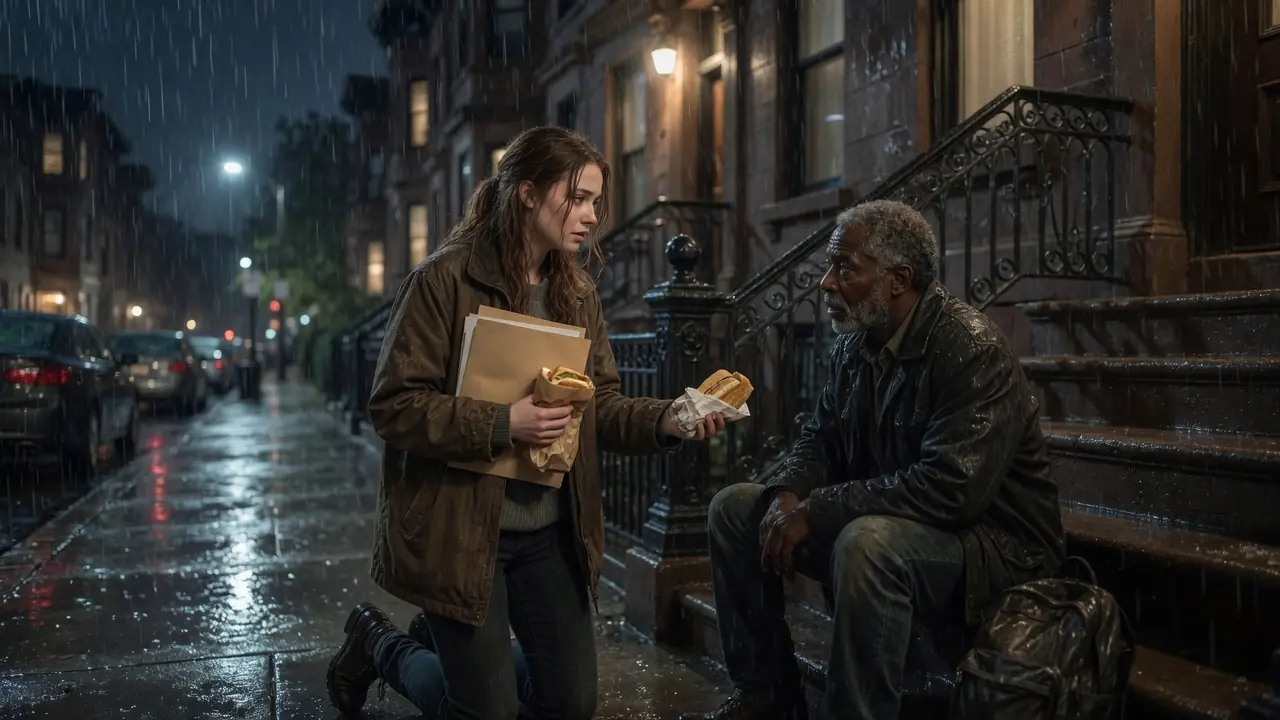
“Esther and I didn’t come from much,” he said. “We built our lives from late nights and secondhand furniture. I got into tech when people still thought it was a phase. Started with small contracts, failed prototypes, ugly offices with bad lighting. I thought if I worked hard enough, I could build something that mattered.”
He looked at the floor.
“Esther believed in me before anyone else did. Even when money wasn’t coming in. Even when I missed dinners. Even when I was physically home but mentally in some meeting I hadn’t left yet.”
Gabriella did not move.
“When Angelica was born, everything changed and somehow I still didn’t change enough. She had these big curious eyes. Always asking questions. She wanted to build robots, save whales, open a library for kids who couldn’t read yet, all in the same week.”
A faint, broken smile crossed his face.
“She fought hard for every idea she loved.”
He swallowed.
“Her twelfth birthday. I promised to take her and Esther to this old diner by the lake. Angelica loved the strawberry pie there. I had a board meeting that afternoon. I swore it wouldn’t run long.”
Gabriella’s throat tightened.
“They went ahead without me,” Evan said. “I told them I’d be right behind them.”
His voice thinned.
“They never made it. A drunk driver swerved off the freeway. Killed them both.”
The apartment was silent except for rain.
“I should have been there,” he whispered. “I should have been in that car. If I hadn’t taken the meeting, if I hadn’t thought some acquisition vote mattered more than a birthday dinner…”
He shook his head slowly.
“For weeks after the funeral, I sat in the house staring at her drawings on the fridge. Her books on the couch. Esther’s sweater over a chair. Their toothbrushes by the sink. People came with food. Lawyers came with documents. Board members came with concerns about leadership continuity.”
His mouth twisted.
“Leadership continuity. My family was gone, and they wanted to discuss stock confidence.”
Gabriella sat down slowly.
“I walked away,” he said. “From the company, the house, the money, the name. At first, people looked for me. Then they stopped. Andrew Reynolds took control. I let him. I let everything rot because I thought that was what I deserved.”
He looked at her then.
“I didn’t tell you because I didn’t want to be that story here. I didn’t want to be the fallen CEO. I didn’t want pity. I wanted to be the man who made oatmeal badly and fixed your cabinet.”
Despite tears burning her eyes, Gabriella almost smiled.
“You did make it badly.”
“I know.”
She looked down at her hands.
“Why help with my résumé?”
“Because I saw you trying to open doors that were built to ignore you. And I saw talent. Real talent. I couldn’t help Angelica become what she wanted. Maybe helping you felt like the closest thing to redemption I could reach.”
Gabriella breathed carefully.
“I’m not your daughter.”
“I know.”
“Do you?”
The question hurt him.
He accepted it.
“I’m trying to.”
She looked at him for a long time.
Then she said, “I’m still mad about the laptop.”
“You should be.”
“But the résumé was good.”
A tired smile touched his face.
“It was already good. I just made people less able to miss it.”
She looked away, blinking fast.
“You really think I’m talented?”
“Yes.”
“No hesitation?”
“None.”
Something inside her cracked, but not painfully.
More like ice breaking over water that had been waiting to move.
“I never had anyone say it like they meant it,” she whispered.
Evan’s voice softened.
“Then I’ll keep saying it until you believe it.”
For a long time, neither spoke.
Then Gabriella moved to sit beside him on the couch.
Not too close.
Close enough.
“You can stay,” she said.
He closed his eyes briefly.
“Thank you.”
“But no touching my laptop without asking.”
“Never again.”
“And if we’re going to fix my career, we do it together.”
He nodded.
“Together.”
The next few weeks were quiet, but different.
Gabriella applied to North Pier Creative using the résumé and cover letter, after making a few edits herself. She got an interview. Then a second. Then a small freelance trial project.
Evan helped her prepare, but only after asking.
He sat across from her with a notebook and asked interview questions like an executive who had hired hundreds of people because he had.
“What do you bring to a team?”
“An ability to work under pressure.”
“Too generic.”
“Fine. I notice what other people miss.”
“Better. Example.”
She gave one.
He pushed for another.
She groaned, threw a cushion at him, then tried again.
At the same time, Evan began paying attention to Harven Technologies.
It started with articles.
Then investor reports.
Then old contacts.
His posture changed when he worked. The worn sweatshirt and rough beard could not hide the mind underneath. He drew diagrams, mapped board relationships, traced acquisitions, and built timelines on scraps of paper until Gabriella’s kitchen table looked like a detective’s wall.
One morning, she found a hand-drawn organizational chart labeled Harven Technologies.
Boxes.
Names.
Arrows.
Andrew Reynolds circled twice.
“You’re working on something,” she said.
Evan glanced up.
“Old habits.”
“That’s not an answer.”
“No.”
“Is Andrew Reynolds the man who took over after you left?”
“Yes.”
“Did he ruin the company?”
Evan hesitated.
“I thought I ruined it first.”
“That wasn’t my question.”
He looked at her.
“Yes. I think he’s dismantling it.”
“Then why are you just drawing boxes?”
That made him laugh softly.
A real laugh.
“Because I don’t yet know where to push.”
Gabriella pulled out a chair.
“Then explain it to me.”
He did.
He told her about Harven’s core technology, a logistics intelligence platform originally designed to help companies reduce waste and predict supply chain delays. He had built it with a team of engineers who believed technology should make systems more resilient, not just more profitable.
After he left, Andrew Reynolds shifted focus.
Licensing deals.
Shell companies.
International transfers.
Layoffs disguised as restructuring.
Patents moved between entities so quickly no one could see who truly owned what.
Evan suspected fraud.
But suspicion was not proof.
Gabriella listened with growing intensity.
“So we need proof.”
Evan looked at her.
“We?”
“You shared a sandwich. I shared a couch. We’re past formal boundaries.”
“This could get dangerous.”
“My life was already dangerous. It just didn’t come with documents.”
He wanted to argue.
He did not.
Because she was right.
The first ally was Marcus Shaw, Harven’s former CTO and Evan’s old friend.
They met him in a quiet diner outside the city. Gabriella insisted on coming. Evan insisted she did not have to. She ignored him.
Marcus was tall, silver-templed, and cautious. When he saw Evan, his expression shifted through shock, anger, relief, and sorrow in less than three seconds.
“You look terrible,” Marcus said.
Evan nodded.
“You look corporate.”
“Low blow.”
They sat in a back booth.
For the first ten minutes, they spoke like men stepping carefully around a grave. Then Evan laid out what he had found.
Marcus listened without interrupting.
When Evan finished, Marcus leaned back and exhaled.
“I knew Andrew was dirty. I didn’t know he was stupid enough to move patents through Solvrade.”
Gabriella leaned forward.
“That name keeps showing up.”
Marcus looked at her, really seeing her now.
“And you are?”
“Gabriella Murphy.”
“She found me,” Evan said.
Marcus raised an eyebrow.
“Found you?”
“In an alley.”
“Of course she did.”
Gabriella folded her arms.
“I also found the Solvrade pattern in three public filings you both missed.”
Marcus blinked.
Evan looked proud.
Gabriella slid printed pages across the table.
Marcus scanned them.
Then looked up slowly.
“Well,” he said. “She’s sharp.”
“I’m sitting right here.”
“Yes, you are,” Marcus said. “And apparently saving the company.”
The plan formed over several days.
Marcus would reconnect with former Harven engineers and gather technical evidence of illegal patent transfers.
Evan would map board complicity and identify which investors might turn if shown proof.
Gabriella would take a short-term data analyst contract at Sveris, a third-party vendor rumored to handle portions of Harven’s system migration.
She got the contract because her newly sharpened résumé finally opened a door.
The irony was not lost on anyone.
The work was tense.
Gabriella spent days inside Sveris, badge clipped to her sweater, pretending to be nothing more than a temporary analyst cleaning data logs. At night, she returned to the apartment with notes hidden in harmless spreadsheets and screenshots stored under boring file names.
Evan worried constantly.
She hated it.
One evening, Marcus suggested she step back before the final phase.
“The summit is high-risk,” he said. “If Andrew realizes she had access—”
“Stop,” Gabriella said.
Marcus paused.
Evan looked at her carefully.
“I’m not some kid who wandered into this,” she said. “I chose to be here.”
Evan’s jaw tightened.
“We’re trying to protect you.”
“No. You’re trying to put me somewhere safe because I remind you of someone you lost.”
The room went still.
Angelica’s name was not spoken.
It did not need to be.
Evan looked away.
Gabriella’s voice softened.
“I’m not her. And you can care about me without turning me into a ghost.”
His face changed.
Pain.
Recognition.
Shame.
“I know,” he said quietly. “I’m trying.”
“Try by trusting me.”
He looked at her for a long moment.
Then nodded.
“All right.”
That night, Gabriella found an envelope on her desk.
Inside was a faded photograph of a twelve-year-old girl wearing safety goggles, crouched over a homemade robot built from scrap metal, wires, and string lights.
On the back, in Evan’s neat handwriting, it said:
She fought hard too.
Gabriella held the photo for a long time.
Then she walked into the living room and sat beside him.
Neither spoke.
Her shoulder rested lightly against his.
That was enough.
The breach happened three nights before the investor summit.
Gabriella’s phone buzzed during dinner.
A Sveris alert.
She opened it and went pale.
“They’re wiping the payment logs.”
Evan stood immediately.
Marcus, who had been eating noodles from a takeout container, nearly dropped his fork.
Gabriella opened her laptop and connected remotely.
Lines of data moved too fast across the screen.
“They’re purging transaction history tied to Solvrade and Eastbridge.”
“Can you mirror it?” Marcus asked.
“I’m trying.”
Her fingers flew.
The VPN stuttered.
A warning flashed.
Access compromised.
“Damn it,” she whispered. “I need help.”
Evan was already beside her.
“Use the shadow proxy we built.”
“It’s collapsing.”
“Move the packet capture to local first.”
“I don’t have time.”
“Gabriella, breathe.”
She glared at him.
“Do not use calm dad voice on me right now.”
He froze.
Not because of the glare.
Because of the word.
Dad.
It had slipped out without her noticing.
Marcus noticed.
Evan noticed.
Gabriella did not have time to notice.
“Move,” she said.
Evan leaned in and took the keyboard only when she shifted aside.
His hands moved fast, precise, almost elegant. The old CEO, the strategist, the builder, the man who had once commanded impossible rooms, returned in flashes of keystrokes and controlled breath.
Ten minutes later, the logs were mirrored.
The purge was blocked.
The evidence was safe.
Gabriella sat back, shaking.
Evan turned toward her.
“We’re good.”
She nodded, still breathing hard.
Then she realized what she had called him.
Her face changed.
“I didn’t mean—”
“It’s okay,” he said quickly.
“No. I mean, it just came out.”
“I know.”
The room went quiet.
Marcus stood slowly.
“I’m going to make coffee and pretend I didn’t witness an emotional breakthrough.”
“Shut up, Marcus,” Gabriella and Evan said together.
Marcus smiled.
The summit took place at the Grand Hotel on a Friday evening.
A closed-door investor event.
No press allowed.
No public questions.
No disruption.
That was the plan.
Their plan was different.
Evan would enter under a consultant badge Marcus secured through an old ally. Gabriella and Marcus would work from a rented van parked one block from the hotel, managing the live stream, evidence drop, and data backups. When Andrew Reynolds began presenting the final transfer of Harven’s patents to an international strategic partnership, Evan would ask the questions that forced him to name the shell companies.
Once he did, Gabriella would release the documents to investors, regulators, journalists, and law enforcement simultaneously.
Simple.
Terrifying.
The morning of the summit, the apartment felt like a war room and a home at the same time.
Coffee mugs.
Printed documents.
A borrowed suit.
A lapel camera no bigger than a button.
Gabriella stood in the kitchen, adjusting Evan’s tie because he kept making it crooked.
“You used to be rich and powerful. How do you not know how to tie this properly?”
“I used to have grief, assistants, and dry cleaners.”
“That’s not an excuse.”
“It’s at least three excuses.”
She tightened the knot.
He looked at her with a softness that made her hands still.
“What?”
“You remind me of hope,” he said.
She swallowed.
“That is way too heavy before breakfast.”
“I know.”
“Eat toast.”
“Yes, ma’am.”
She handed him a piece of toast.
On the fridge, Evan had placed a sticky note.
Eat. Fight. Come home.
Gabriella touched it once before leaving.
At the hotel, Evan moved with practiced calm. The lobby was full of polished shoes, expensive watches, low voices, and men who believed trouble always arrived for other people.
The ballroom on the fifteenth floor was all chrome, glass, and restrained luxury. Digital displays carried Harven’s logo. Investors sat in rows. Andrew Reynolds stood near the stage, shaking hands and smiling like a man who thought history belonged to whoever spoke first.
Evan took a seat near the back.
He pressed the lapel camera button.
In the van, Gabriella saw the feed go live.
“We’re good,” she said.
Marcus adjusted an audio channel.
“Clear.”
Andrew began his speech.
He spoke of innovation, transition, global partnerships, long-term value, and strategic evolution.
Gabriella stared at the monitor.
“He says a lot of words without confessing crimes.”
Marcus nodded.
“That’s executive training.”
Then Andrew opened the floor for questions.
Evan stood.
“Mr. Reynolds,” he said, voice calm and carrying. “Could you clarify the ownership structure behind the Eastbridge transfer?”
Andrew smiled smoothly.
“Eastbridge represents a diverse international strategic pool.”
“Strategic in what sense? Operational partnership, or asset shielding?”
The room shifted.
A few people chuckled uneasily.
Andrew’s smile tightened.
“I’m not sure I understand the implication.”
“Then let me be clearer,” Evan said. “Were Harven patents moved through Solvrade Holdings before being routed to Eastbridge subsidiaries?”
Andrew paused.
Only a second.
Enough.
In the van, Gabriella whispered, “Got you.”
Evan continued.
“Because Solvrade appears to share board members with two Harven-controlled entities and three offshore companies connected to your personal investment trust.”
Now the room was no longer amused.
Andrew stared.
“Who are you?”
Evan stepped into the aisle.
“Someone who built the company you’re dismantling.”
Murmurs broke out.
Andrew’s face drained of color.
“That’s impossible.”
Evan removed the fake badge from his jacket and dropped it onto a chair.
“My name is Evan Booth.”
The room erupted.
Some stood.
Some turned toward Andrew.
Others reached for phones.
Andrew raised his voice.
“This man is unstable. He abandoned his role years ago after a personal tragedy. Security.”
“Personal tragedy,” Evan repeated.
His voice did not rise.
But it sharpened.
“You used my grief to take control. You told the board I was incapable, then sold the company piece by piece through entities you secretly controlled.”
Andrew pointed toward security.
“Remove him.”
At that moment, Gabriella hit the release.
The ballroom screens changed.
Not to a logo.
To evidence.
Wire transfers.
Email chains.
Patent schedules.
Audio clips.
A timeline of shell companies.
Investor packets appeared in inboxes across the room. Journalists received encrypted files. Regulators received copies. Law enforcement already waiting outside received the final authorization from Marcus’s contact.
Andrew’s voice cracked.
“This is fabricated.”
Then his own recorded voice filled the ballroom speakers.
By the time Booth realizes what we moved, there won’t be a company left to reclaim.
The room went silent.
Evan stood still.
Andrew looked toward the exit.
Two officers entered the ballroom.
Behind them came federal investigators.
One produced a warrant.
Andrew tried to speak, tried to laugh, tried to command the room back into obedience, but power leaves quickly when fear changes sides.
He was escorted out in front of the investors he had planned to impress.
In the van, Gabriella sat back, breath caught somewhere between disbelief and relief.
“It worked,” she whispered.
Marcus exhaled.
“No. It landed.”
Afterward, when the room had emptied into chaos, Gabriella entered the ballroom with Marcus.
Evan stood near the stage, staring at the Harven logo on the darkened screen.
For a moment, he looked unbearably tired.
Then Gabriella walked up beside him.
“You did it.”
He shook his head.
“We did it.”
She smiled.
“Next time you fix my résumé without asking, I’ll still be mad.”
“Fair.”
Marcus looked around the room.
“So. Anyone hungry?”
Gabriella laughed.
Evan looked at them both, and something like peace moved across his face.
“Let’s go home,” she said.
And they did.
The fallout was enormous.
Andrew Reynolds was charged with fraud, securities violations, and conspiracy. Several board members resigned. Investors demanded restructuring. Harven’s employees, many of whom had feared layoffs, began speaking publicly about what the company had once been and what it could be again.
At first, Evan refused to return.
“I’m not that man anymore,” he told Gabriella.
They were sitting at her kitchen table three days after the summit, surrounded by newspapers and cold coffee.
“No,” she said. “You’re not. That might be good.”
He looked at her.
“The old Evan built a company and lost himself in it. Maybe this Evan can build something without forgetting to come home.”
His eyes softened.
“You make that sound possible.”
“It is possible.”
“How do you know?”
“Because you put sticky notes on the fridge now.”
He laughed quietly.
“That is not a leadership credential.”
“It should be.”
The interim board asked Evan to serve as restoration advisor first. Then acting CEO. He agreed only on conditions.
Employee protections.
Full forensic audit.
Patent recovery.
A foundation in Angelica’s name supporting young designers, engineers, and builders from low-income backgrounds.
And Gabriella as creative strategy lead for the rebuilding campaign.
She objected immediately.
“I am not qualified to lead strategy for a tech company.”
Evan placed her own résumé in front of her.
The version they had worked on together.
“You notice what other people miss.”
She glared.
“Do not use my words against me.”
“I believe they are mine.”
“They are ours now.”
“Yes,” he said. “They are.”
Gabriella accepted a consulting role first.
Then full-time.
Her campaign for Harven’s return was not glossy or arrogant.
It was human.
A broken company rebuilding trust.
A founder returning not as a savior, but as a man accountable to the people who stayed.
Employees responded.
Customers responded.
The public responded.
Gabriella designed the new visual identity herself.
Not a total rebrand.
A repair.
The old Harven blue remained, but deeper, steadier. The logo was cleaned, not replaced. The campaign line came from something Evan once said in the apartment.
What matters can still be rebuilt.
On the day Harven officially relaunched, Evan stood before employees in the main atrium.
He spoke not like the CEO from old articles, but like the man Gabriella knew.
“I walked away when grief made me believe I had nothing left to give,” he said. “That choice hurt people. Some of you. This company. The work we built together. I cannot undo that. But I can return differently. If you allow me, we will rebuild this company with transparency, dignity, and responsibility.”
He paused.
Then looked toward Gabriella.
“I was reminded recently that design is strategy people can see. Today, I hope our strategy is visible. We repair what was broken. We protect what matters. We come home.”
The applause began slowly.
Then grew.
Gabriella stood in the back, tears in her eyes, pretending she had dust in them.
Marcus stood beside her.
“He’s back,” he said.
Gabriella shook her head.
“No. He’s new.”
Years passed.
Harven recovered, not overnight, not magically, but steadily.
Evan never became the untouchable man he once was. He refused the mythology reporters tried to build around him. Fallen CEO returns from homelessness to reclaim empire was the headline they wanted.
He corrected it every time.
“I was helped,” he said. “That is the story. A young woman with almost nothing shared warmth, food, and trust with me when I had no right to expect any of it. Everything after that began there.”
Gabriella became one of the most respected creative strategists in the city.
Her work had clarity, tenderness, and strength. She built campaigns not around selling illusions, but revealing truth. She hired interns from community colleges. She mentored young designers who came in with shaky portfolios and brilliant eyes.
Whenever one apologized for lacking experience, Gabriella would say, “Pressure creates diamonds, but it also creates designers. Show me what you see.”
Evan loved that line.
She claimed she had stolen it from someone else.
He did not argue.
They never defined their relationship in a way that satisfied outsiders.
Some called him her mentor.
Some called her his adopted daughter.
Some whispered that family did not require blood.
Gabriella once asked Evan what he thought they were.
They were sitting in the old apartment, which she had kept even after she could afford better because she said it reminded her where the door first opened.
Evan looked around.
At the couch he once slept on.
At the kitchen table where they had built a case that changed everything.
At the fridge, still covered in sticky notes.
“Family,” he said.
She nodded.
“Good. That’s what I thought.”
On Angelica’s birthday every year, they went to the diner by the lake and ordered strawberry pie.
The first time, Evan cried before the pie arrived.
Gabriella sat with him.
No advice.
No empty comfort.
Just presence.
The second year, he told stories about Angelica until he laughed.
The third year, Gabriella brought a small robot kit and left it at a community center in Angelica’s name.
By the fifth year, the Angelica Booth Foundation had funded design and engineering scholarships for hundreds of young people who had talent but no access.
Gabriella personally reviewed portfolios.
Evan reviewed essays.
Marcus complained that they took too long.
They ignored him.
One cold rainy evening, nearly ten years after Gabriella dropped her hamburger in the alley, she walked down West Randolph Street after a foundation event.
She wore a good coat now.
Boots without holes.
A leather portfolio bag.
Her name was known in rooms she once could not enter.
But the city still smelled the same in the rain.
Wet brick.
Coffee.
Exhaust.
Cold metal.
As she passed the alley, she stopped.
The crates were gone.
A new mural covered one wall, bright blues and oranges, painted by a young artist from one of their scholarship programs. Gabriella stood there for a long moment, remembering the ruined burger, the sting in her palms, the man rising from the shadows to ask if she was all right.
Evan appeared beside her, older now, his beard neatly trimmed, his coat expensive but his eyes still the same.
“You knew I’d come here,” she said.
“You get sentimental when it rains.”
“I do not.”
“You absolutely do.”
She smiled.
They stood together in the alley where everything had begun.
“I was so angry that day,” she said.
“I remember.”
“At the burger?”
“At the world.”
She laughed softly.
“Mostly the burger.”
Evan looked toward the mural.
“I was ready to disappear.”
“I know.”
“You stopped that.”
“You shared a sandwich first.”
“Half a sandwich.”
“Don’t minimize your contribution.”
He smiled.
Rain tapped gently against the pavement.
A young woman hurried past the alley entrance, arms full of papers, face tight with panic. A folder slipped from her hand, scattering pages across the sidewalk.
Gabriella and Evan moved at the same time.
They helped gather the papers before the rain ruined them.
The young woman looked embarrassed, near tears.
“Thank you,” she said. “I’m sorry. I’m just having the worst day.”
Gabriella handed back the folder.
“I know that kind of day.”
Evan glanced at the paper bag in the young woman’s hand.
“Have you eaten?”
The young woman blinked, startled.
“What?”
Gabriella smiled gently.
“There’s a diner around the corner. Come on. Hungry people shouldn’t argue.”
The young woman looked between them, confused by the kindness, suspicious of it, needing it.
Then slowly, she nodded.
As they walked toward the lights of the diner, Gabriella looked at Evan.
He looked back, and she knew he was remembering too.
The sandwich.
The couch.
The truth.
The fight.
The company rebuilt.
The family formed from ruin and stubborn mercy.
Kindness had not made their lives simple.
It had made them possible.
That was better.
Inside the diner, they ordered soup, sandwiches, and strawberry pie.
The young woman ate like someone trying not to look hungry.
Gabriella looked away politely, giving her dignity.
Evan noticed and smiled.
Some lessons, once learned, become instinct.
Outside, Chicago continued in its cold, indifferent motion.
Buses passed.
People hurried.
Rain streaked the windows.
But inside, at one small table, warmth gathered again.
Not loudly.
Not dramatically.
Just enough to begin.
And Gabriella understood, with a peace that had taken years to earn, that the most important moments in life rarely look important when they arrive.
A ruined meal.
Half a sandwich.
A couch offered for one night.
A résumé is repaired too soon.
A painful truth finally spoken.
A fight for what was stolen.
A family built not from blood, but from choosing not to leave.
Those were the moments that changed everything.
Not because they fixed the world all at once.
But because they proved that broken people could still feed each other.
Could still shelter each other.
Could still see what others missed.
Could still build something whole from what everyone else had thrown away.
And sometimes, when the rain was cold and the city looked away, that was enough to save a life.
Sometimes, it was enough to reclaim one.
Sometimes, it was enough to begin again.