Rain had a way of making expensive cities look honest.
Under clear skies, the towers of Hadley glittered like monuments to success. Glass reflected wealth. Restaurants glowed behind polished windows. Black cars slid along clean avenues carrying people who never seemed to worry about rent, overdue electricity, or whether the twenty-eight dollars in their wallet needed to last four days.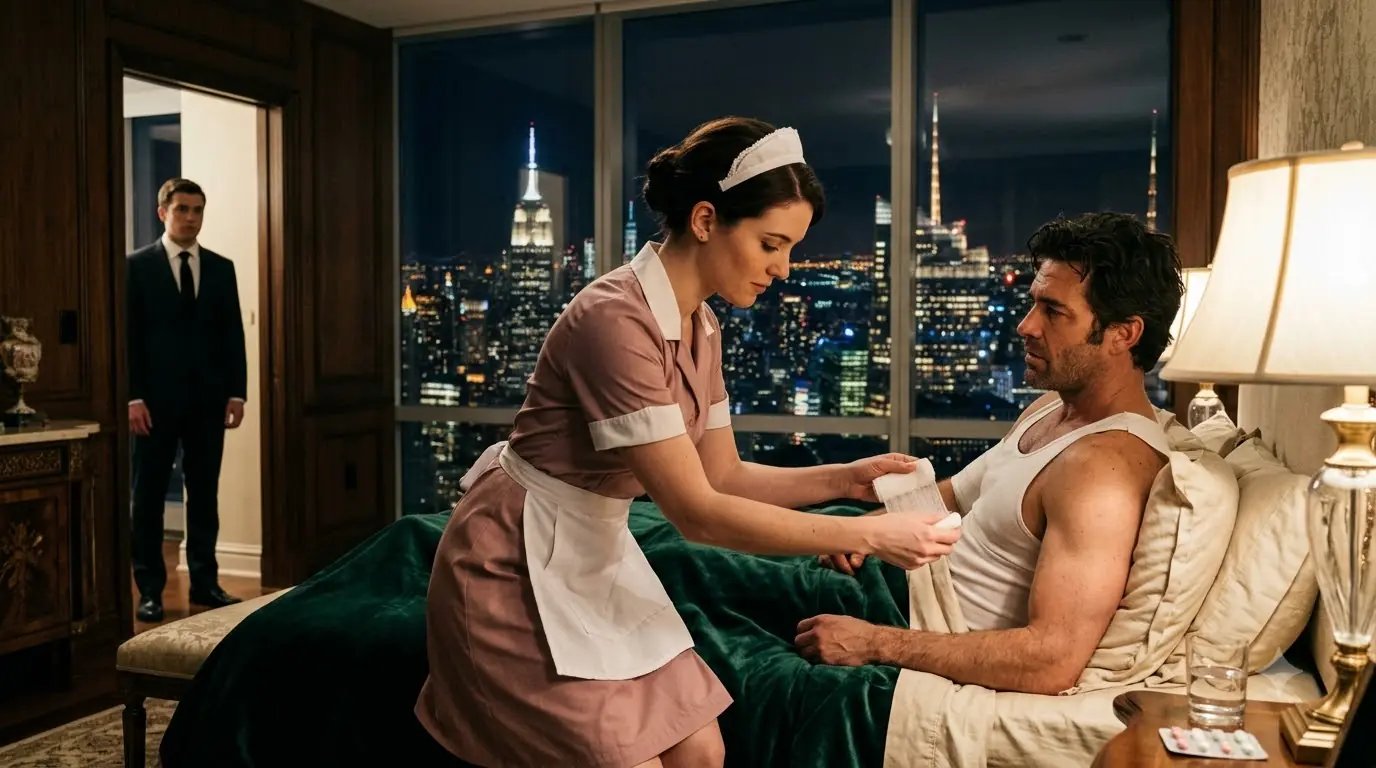
But rain changed everything.
Rain turned marble steps slick.
It pushed garbage into gutters.
It flattened newspaper against sidewalks.
It washed perfume, exhaust, and expensive appearances into the same gray water.
The 27-year-old former housekeeper stood beneath the damaged awning of a closed pharmacy with one battered suitcase between her shoes and watched the city drown.
She had exactly twenty-eight dollars.
No job.
No apartment after Monday.
And an eight-year-old niece sleeping across town in the spare bedroom of the only friend kind enough not to ask when the arrangement would end.
Three weeks earlier, the housekeeper had worked inside one of Hadley’s most expensive hotels.
She had changed linen in suites that cost more per night than her monthly rent.
She had learned how wealthy people behaved when they believed staff were invisible.
Some were kind.
Some were careless.
Some apologized when they made a mess.
Others looked through housekeepers as though uniforms came without faces.
The incident that ended her job had started with a shattered decorative sculpture.
A hotel guest had knocked it from a console after drinking heavily.
By morning, the guest claimed the housekeeper had broken it while cleaning.
Management knew the guest’s version made no sense.
The room entry log proved she had not been inside when it happened.
A hallway camera showed the guest stumbling toward the suite hours before the damage was reported.
None of that mattered.
The guest was important.
The housekeeper was replaceable.
Management offered her a choice.
Accept responsibility and keep working under a final warning.
Or refuse.
She refused.
By noon, her employee badge no longer opened the staff entrance.
By the end of the week, her savings were nearly gone.
She told herself she had protected her dignity.
Dignity, unfortunately, did not pay rent.
The rain grew heavier.
She tightened one hand around the suitcase handle and checked the time.
11:43 p.m.
Her friend had offered the couch.
The housekeeper had said no.
The apartment was already crowded.
Her niece needed stability more than she needed another adult taking up the living room.
So the woman had spent the evening walking between all-night cafés, train stations, and public places where nobody asked why she carried luggage.
The pharmacy awning had been temporary.
Then two men came running from the alley.
The first nearly collided with her.
The second looked backward as he sprinted.
Neither spoke.
Both disappeared across the intersection.
The housekeeper stared after them.
Then she heard something behind the dumpster.
A low sound.
Not a voice exactly.
More like somebody trying not to make one.
She reached into her coat pocket.
Her fingers closed around the small sewing scissors she used to keep in her housekeeping kit.
The scissors were ridiculous protection.
Still, they were something.
A man stepped from the shadows.
Tall.
Broad-shouldered.
Dark hair wet from rain.
Black overcoat soaked through.
One hand pressed against his upper arm.
The housekeeper’s fingers tightened around the scissors.
The stranger looked toward her pocket.
“You can put those away.”
She froze.
His voice was quiet.
Not frightened.
Not angry.
Just exhausted.
Then his knees almost gave way.
The housekeeper forgot the scissors.
“You’re hurt.”
“I noticed.”
“You’re bleeding.”
“I’ll survive.”
“Maybe.”
He leaned against the brick wall.
The housekeeper looked toward the alley.
“Were those men following you?”
The stranger did not answer.
That told her enough.
She should have walked away.
She knew that.
Every sensible thought in her head said that wounded strangers in alleys were not problems unemployed housekeepers should adopt at midnight.
Then the man’s coat shifted.
Dark blood had spread along one sleeve.
The housekeeper exhaled.
“Sit down.”
He looked at her.
“What?”
“Sit.”
His eyebrow lifted.
Even exhausted, he looked like a man unused to instructions.
The housekeeper pointed toward the low concrete ledge beneath the pharmacy window.
“If you fall, I’m not catching you.”
The stranger stared for another second.
Then sat.
She opened her old housekeeping bag.
Clean towels.
Small first-aid packet.
Tape.
Antiseptic wipes.
Things hotel workers carried because guests found endless creative ways to injure themselves.
The stranger watched.
“You carry medical supplies?”
“I carried drunk tourists for four years.”