Karen Whitmore parked in Marcus Bennett’s driveway shortly before sunrise and switched off the car as though she had every right to be there.
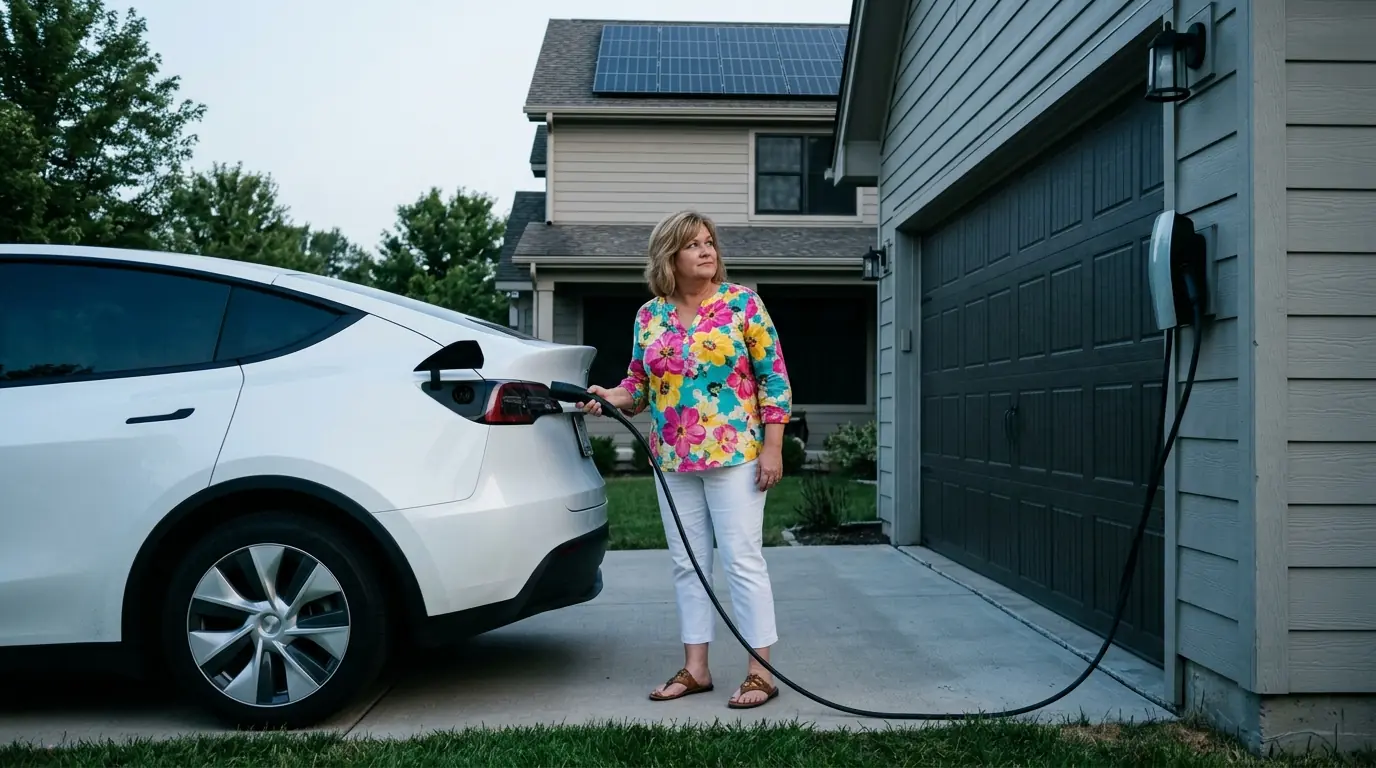
The white Tesla stood close enough to the garage wall for the charging cable to reach without stretching. She had chosen the position accurately. There was no need to back up, straighten the wheels, or get out and check the distance. By the time she opened her door, the car was exactly where she wanted it.
The neighborhood was waking slowly. Soft daylight had reached the edges of the roofs, but the street remained quiet. Somewhere farther along the block, a sprinkler ticked against a narrow strip of pavement. Karen paused beside the car and looked toward the house.
The front windows were dark.
She appeared satisfied by that. Her shoulders loosened, and the expression she wore settled into the mild, unhurried confidence of someone attending to a familiar convenience before the day became busy.
At around fifty-five, Karen had shoulder-length blonde hair and a stocky build. Her floral blouse was bright enough to stand out even in the early light, covered in large pink, yellow, and turquoise flowers. White cropped trousers ended above expensive sandals. There was nothing hurried or apologetic in the way she crossed the short distance to the wall-mounted charging unit.
Above the garage, the rooftop solar panels were beginning to emerge from shadow.
Karen lifted the connector from its holder.
She glanced toward the windows again, then turned toward the open charging port on her Tesla. The cable moved through her hand with practiced familiarity. She knew how much slack she needed. She knew which way to bring it around the car.
The garage door remained fully closed.
No one stood at the front entrance. No porch light came on. Nothing visible suggested that the house was occupied, much less that anyone inside had been waiting for the small click she was about to make.
For weeks, Marcus had tried to understand what disappeared while those windows were dark.
The first indication had been a number he nearly ignored.
He had been standing in his kitchen one morning, looking at the home energy display while the water heated. It was part of a routine that had developed after the solar-and-battery system was installed: check the overnight use, check the stored reserve, and go on with the day. He did not study every fluctuation. A home used power. Weather changed. Appliances behaved differently when people forgot to turn something off.
But the reserve was lower than he expected.
Marcus looked at it long enough to recognize the difference, then set the phone down beside his cup. He had things to do, and the house appeared normal. The refrigerator was running. No lights had been left on in the garage. He could not remember using anything unusual the night before.
He decided he had overlooked something.