At thirty-two, Anna Walker had learned that kindness was not always convenient.
Sometimes kindness happened when there was money in the bank.
Sometimes it happened when the bills were already late.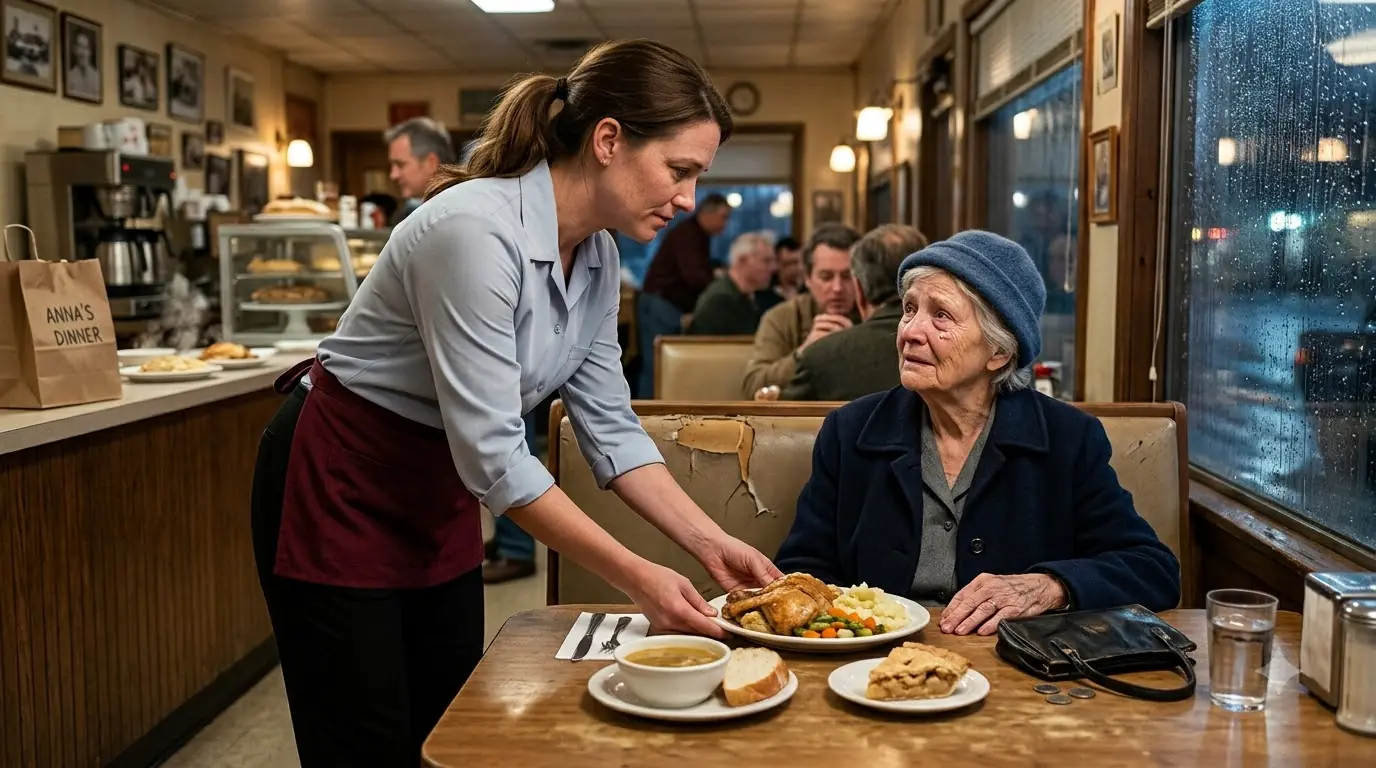
Sometimes it happened when a person had enough to share.
But the hardest kind of kindness happened when someone had almost nothing left and still chose to give.
Anna knew that kind better than most people.
She was a single mother raising her eight-year-old daughter, Lily, in the small town of Rosewood, Ohio.
Rosewood was the kind of town where everyone knew the main streets but not always the struggles happening behind the front doors.
The town had one hospital, one grocery store, a few small restaurants, a public library, and a community center that was always trying to help more people than it had resources for.
People waved at neighbors.
People remembered birthdays.
People left casseroles on porches when someone got sick.
But even in kind towns, some people fell through the cracks.
Anna knew because she had almost become one of them.
Her life had not always been difficult.
When she was younger, she had dreamed of becoming a teacher.
She loved children.
She loved helping people understand things.
She loved the feeling of watching someone finally succeed after struggling.
But life changed.
At twenty-three, she married Daniel, her high school sweetheart.
At twenty-four, Lily was born.
For a while, everything looked like the life Anna had imagined.
A small apartment.
A little family.
Weekend breakfasts.
Christmas mornings.
Ordinary happiness.
Then Daniel lost his job.
Then he became distant.
Then arguments became normal.
Then one morning, he packed a bag and left.
No dramatic goodbye.
No explanation that fixed anything.
Just an empty closet and a quiet apartment.
Anna became a single mother overnight.
She tried to return to school.
She tried office jobs.
She tried childcare work.
But bills did not wait for dreams.
Eventually, she accepted a job as a waitress at Rosewood Family Diner.
It was not what she wanted.
But it paid.
The diner was old but loved.
The walls were covered with photographs of regular customers.
The booths were cracked.
The coffee machine was older than Anna.
The menu had not changed much in fifteen years.
But people came because the food was warm and the staff remembered their names.
Anna worked mornings, evenings, weekends, and holidays.
She learned to carry six plates at once.
She learned how to smile when customers complained.
She learned how to move quickly when the kitchen was behind.
She learned how to hide exhaustion.
Every night, after closing, she drove home to Lily.
They lived in a small apartment above a laundromat.
The walls were thin.
The kitchen was tiny.
The carpet had seen better years.
But Lily called it home.
And that was enough.
Anna was a young white American woman with fair skin, soft brown eyes, and long brown hair usually tied into a simple ponytail while she worked.
She had a gentle face that often looked tired but rarely looked angry.
Her coworkers joked that she apologized to chairs when she bumped into them.
Her manager, Richard Collins, called her “too emotional.”
Anna never considered that an insult.
She thought caring was supposed to be part of being human.
Richard disagreed.
Richard believed restaurants survived through numbers.
Costs.
Inventory.
Profit.
Rules.
He often reminded employees:
“This is a business. Not a charity.”
Anna understood that.
She understood restaurants needed money.
She understood food cost mattered.
She understood employees needed policies.
But she also believed there was a difference between protecting a business and losing your humanity.
That difference became clear on a cold November evening.
The rain started around sunset.
Not heavy.
Just enough to make the streets shine and make people hurry toward warm places.
The diner was quieter than usual.
A few customers sat near the windows.
A truck driver drank coffee at the counter.
An elderly couple shared a slice of pie in a booth.
Anna was finishing her shift.
She had worked nine hours already.
Her feet hurt.
Her shoulders hurt.
Her stomach hurt because she had skipped lunch.
In the break room, she had one meal saved.
Her dinner.
The last food she brought from home.
A turkey sandwich wrapped in foil.
An apple.
A small container of pasta salad.
She had planned to eat it before driving home.
Lily had a school project due tomorrow.
Anna needed energy.
She needed something.
But then the diner door opened.
The bell above the entrance rang softly.
An elderly woman stepped inside.
The woman stopped near the doorway.
She looked around carefully.
Almost like she was deciding whether she belonged there.
Anna noticed immediately.
She always noticed.
The woman looked to be around eighty years old.
She was small and thin, with silver hair tucked under a faded blue hat.
Her coat was old.
Not dirty.
Just old.
Her shoes were wet.
Her hands trembled slightly as she held a worn handbag.
She looked at the menu.
Then at the prices.
Then down.
Anna walked toward her.
“Good evening. Table for one?”
The woman looked embarrassed.
“Oh, no, dear.”
Her voice was quiet.
“I was just wondering…”
Anna waited.
The woman swallowed.
“Do you have anything leftover?”
Anna blinked.
“Leftover?”
“Anything you were going to throw away.”
The woman forced a small smile.
“Bread. Soup. Cake. Anything.”
Anna immediately understood.
The woman was not asking for food.
She was asking permission to admit she needed food.
“I can pay a little,” the woman added quickly.
Anna looked at her hands.
Then at her coat.
Then at the empty street outside.
“Have you eaten today?”
The woman hesitated.
Then shook her head.
“No.”
Anna felt something inside her tighten.
She looked toward the kitchen.
The manager’s office door was closed.
Richard was probably doing inventory.
She knew the rules.
No free meals.
No unauthorized food.
No exceptions.
She also knew the woman standing in front of her.
She was hungry.
Anna walked into the kitchen.
The cook, Mike, looked up.
“Everything okay?”
“There’s a woman outside who hasn’t eaten.”
Mike looked toward the dining room.
“Oh.”
“She needs something.”
Mike lowered his voice.
“Richard won’t like it.”
“I know.”
Anna opened the refrigerator.
There was soup from dinner service.
A chicken plate that had been prepared but never picked up.
Fresh bread.
A slice of apple pie.
Mike watched her.
“You’re going to get in trouble.”
Anna paused.
“I know.”
“Then why?”
She looked at him.
“Because she’s hungry.”
Mike did not answer.
Anna prepared the plate.
Not scraps.
Not old food.
A real meal.
She carried it to the woman.
The woman looked shocked.
“Oh no, dear.”
“It’s okay.”
“I asked for leftovers.”
“I know.”
“This is too much.”
Anna smiled softly.
“No one should be grateful for being given something they would never choose themselves.”
The woman stared at her.
Then tears filled her eyes.
“What is your name?”
“Anna.”
“I’m Eleanor.”
“Nice to meet you, Eleanor.”
Eleanor sat down.
She ate slowly.
Carefully.
Like every bite was something she was afraid to waste.
Anna returned behind the counter.
She watched quietly.
After several minutes, Eleanor finished everything.
The soup.
The bread.
The chicken.
The pie.
Then she placed her hands around the empty plate.
“Thank you.”
Anna smiled.
“You’re welcome.”
“I haven’t eaten like that in days.”
Anna froze.
“Days?”
Eleanor looked embarrassed.
“I did not mean to say that.”
“Why haven’t you eaten?”
“My bank card stopped working.”
“Did you call your bank?”
“I tried.”
“And?”
“My phone died.”
Anna looked at the elderly woman.
“Do you have somewhere to go?”
Eleanor looked away.
That answer was enough.
Before Anna could say anything else, Richard walked out of his office.
He stopped.
His eyes went straight to the empty plate.
Then to Eleanor.
Then to Anna.
“What is this?”
The room changed instantly.
Anna knew that tone.
“Richard…”
“Did you serve this meal without charging?”
Anna stood straight.
“Yes.”
His face hardened.
“You know the policy.”
“She was hungry.”
“That is not the point.”
“It is the point.”
The diner became silent.
Richard stepped closer.
“You cannot give away inventory.”
“I paid for it.”
“With what?”
“My own money.”
“That is not the issue.”
Anna looked at him.
“Then what is?”
Richard lowered his voice.
“You think every sad story becomes your responsibility?”
Anna felt the words hit harder than she expected.
Because maybe that was exactly what she believed.
Maybe she did believe people mattered.
Maybe she did believe hunger mattered.
“Yes,” she said quietly.
Richard stared.
“What?”
“Yes.”
She looked toward Eleanor.
“If someone is sitting at my table hungry, I believe it matters.”
Richard shook his head.
“You are not listening.”
“No,” Anna said.
“I am listening. I just don’t agree.”
The room was silent.
Then Richard said the words she never expected.
“Hand me your apron.”
Anna froze.
“Richard…”
“You’re done.”
The elderly woman immediately stood.
“Please, this is my fault.”
Anna shook her head.
“No.”
Richard looked at her.
“You chose this.”
Anna slowly removed her apron.
Her hands trembled.
Not because she was afraid.
Because she was disappointed.
She placed it on the counter.
Then she looked at Eleanor.
“I’m sorry.”
Eleanor looked heartbroken.
“You lost your job because of me.”
Anna smiled sadly.
“No.”
She picked up her purse.
“I lost a job because I refused to ignore you.”
Then she walked outside.
The rain was colder than before.
The next few weeks were difficult.
Much harder than Anna admitted.
She applied everywhere.
Restaurants.
Hotels.
Stores.
Anything.
But winter hiring was slow.
Bills continued.
Lily needed school supplies.
The car needed repairs.
The apartment rent was due.
Some nights Anna sat at the kitchen table after Lily slept and wondered if she had made the wrong choice.
Not morally.
Never that.
But practically.
A mother’s heart and a mother’s fear often fought different battles.
One night, Lily found her crying.
“Mom?”
Anna quickly wiped her face.
“I’m okay.”
Lily frowned.
“You say that when you’re not.”
Anna smiled sadly.
“You’re getting too smart.”
“Did you lose your job because you helped that lady?”
Anna looked surprised.
“Who told you?”
“You told me.”
“I did?”
“When you said sometimes doing right things is scary.”
Anna hugged her daughter.
“Yes.”
“Are we going to be okay?”
Anna held her tighter.
“Yes.”
Even though she was not completely sure.
Two weeks later, someone knocked on their apartment door.
Anna expected a landlord.
Or a bill collector.
Instead, she saw Eleanor.
But she looked completely different.
She wore a beautiful navy coat.
Her hair was styled neatly.
She stood beside a woman holding a folder.
Anna stared.
“Eleanor?”
The elderly woman smiled.
“Hello, Anna.”
“What are you doing here?”
“I came to return something.”
“What?”
“My debt.”
Anna frowned.
“You don’t owe me anything.”
Eleanor smiled.
“That is exactly why you deserve this.”
The woman beside her opened the folder.
Anna saw a logo.
Whitman Foundation.
Her eyes widened.
“You’re…”
“Yes,” Eleanor said.
“I am Eleanor Whitman.”
The founder of one of the largest community foundations in the state.
Anna stepped back.
“I don’t understand.”
Eleanor looked at her gently.
“The woman who walked into that diner was not looking for food.”
A pause.
“I was looking for people.”
Anna went quiet.
“I wanted to understand whether kindness still existed when nobody was watching.”
Anna swallowed.
“You tested people.”
“I observed them.”
“And me?”
Eleanor smiled.
“You passed.”
Anna shook her head.
“I lost my job.”
“Yes.”
“Because of you.”
Eleanor nodded.
“And because of that, I learned something.”
“What?”
“That some places do not deserve people like you.”
The folder was handed to Anna.
Inside was an offer.
Not a restaurant job.
Not a waitress position.
A leadership role.
Community Food Access Coordinator.
Salary.
Benefits.
Training.
Funding.
A chance to build programs that helped people without shame.
Anna stared at the papers.
“I can’t.”
“Yes, you can.”
“I don’t have experience.”
Eleanor smiled.
“You fed someone before you knew there was a reward.”
A pause.
“That is the experience I was looking for.”
The years after that changed Anna completely.
She helped create community kitchens.
Meal programs.
Emergency food networks.
Restaurant partnerships.
Training programs for workers who wanted to help struggling customers without damaging business operations.
She taught one important lesson everywhere she went:
Compassion needs structure.
Not less compassion.
Better structure.
The diner that fired her eventually closed.
The building was purchased by the Whitman Foundation.
Months later, it reopened.
The sign changed.
The name changed.
The mission changed.
It became:
The Table Community Kitchen.
A restaurant where anyone could eat.
Where people could donate meals.
Where elderly residents could receive food deliveries.
Where single parents could ask for help without embarrassment.
And Anna became the director.
Her daughter Lily grew up watching her mother turn one small decision into something bigger.
Years later, Lily asked:
“Mom, do you regret losing your old job?”
Anna looked around the kitchen.
At volunteers.
At families eating together.
At elderly people laughing over coffee.
At children finishing homework at the tables.
She smiled.
“No.”
“Why?”
“Because I thought I lost a job.”
She paused.
“But I actually found my purpose.”
And every year, on the anniversary of the day Eleanor walked into the diner, Anna served the same meal.
Chicken.
Soup.
Bread.
Apple pie.
Not because it was special.
Because someone once needed it.
And someone else chose to give it.
Because sometimes the smallest meal reveals the biggest heart.
Sometimes losing something temporary creates room for something meaningful.
And sometimes, when a person chooses kindness over comfort, the world finds a way to answer.