Everyone in town saw broken eggs.
The farm woman saw possibility.
That difference was small enough to sound foolish at first.
By the end of summer, it would be worth more than almost anything else on her little farm.
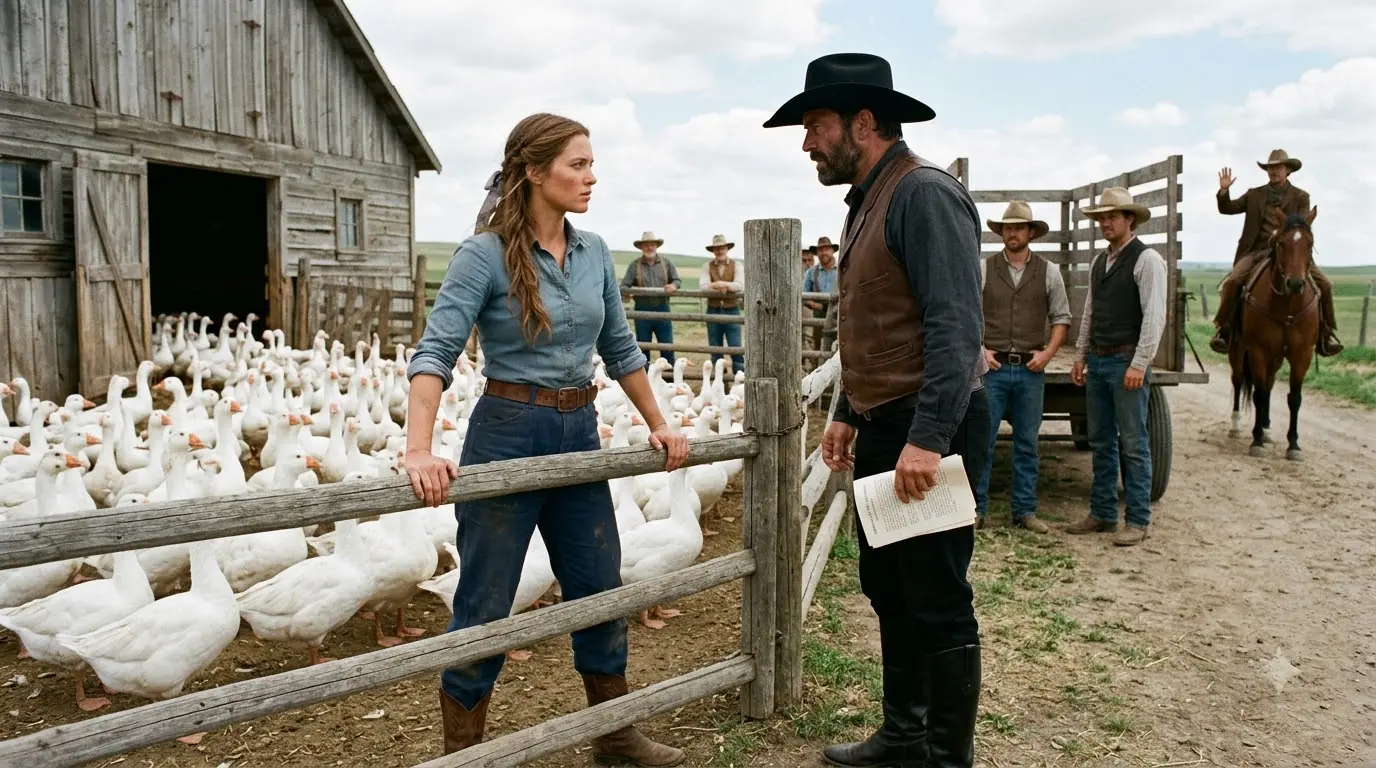
The spring of 1891 had come late to western Montana.
Snow still clung to the shadowed sides of the mountains even as green returned to the lower valleys.
Creeks ran high with meltwater.
Mud swallowed wagon wheels.
Cold mornings gave way to warm afternoons so quickly that ranchers never knew whether to leave coats at home.
The farm woman was twenty-seven years old.
She owned twelve acres outright.
Rented another twenty.
Had two dairy cows.
Six hens.
One old mare.
A vegetable plot.
A weathered barn.
And precisely enough money saved to survive one more bad season.
That last fact occupied her thoughts more than the others.
Her father had left the farm to her when illness forced him to move west with relatives.
The property was not impressive.
No broad cattle range.
No grain silos.
No hired crew.
No large house with a wraparound porch.
Only land that worked if she worked first.
Every fence post had to justify itself.
Every sack of feed mattered.
Every broken hinge cost something.
The woman had learned to measure survival in small numbers.
One extra bucket of milk.
Three dozen eggs.
A saved horseshoe nail.
Two weeks of firewood.
A dollar not spent.
She did not dream about becoming wealthy.
She dreamed about not losing what she already had.
That was why she had ridden into town that morning.
The largest hatchery in the county occasionally sold cracked feed grain cheaply.
Sometimes damaged wooden crates.
Sometimes unwanted straw.
The woman had heard they were clearing storage.
She hoped to buy enough packing straw to repair winter bedding.
Instead, she found fifty men staring at a pile of eggs.
The wagon had overturned less than an hour earlier.
One wheel had dropped into a washed-out rut near the north road.
The wagon leaned.
Crates shifted.
Then everything went over.
Hundreds of goose eggs had spilled.
Some shattered instantly.
Others cracked when crates collapsed.
Workers had gathered what remained and carried the damaged shipment behind the hatchery.
The smell of broken egg hung faintly in the cool air.
Mud streaked pale shells.
Fragments glittered near the refuse heap.
The hatchery owner stood beside two employees examining the mess.
He was a wealthy man by local standards.
Middle-aged.
Broad through the shoulders.
Dark beard beginning to gray.
Fine boots rarely touched manure.
A large operation.
Several breeding flocks.
Contracts with farms across three counties.
He bought birds by the hundred.
Sold eggs by the thousand.
He had the confidence of someone accustomed to losing more in one morning than the farm woman earned in a season.
She stood several yards away.
Listening.
One worker lifted an egg.
“Small crack.”
The owner barely looked.
“Trash.”
Another.
“Shell’s dented but not open.”
“Trash.”
The worker pointed toward two intact crates.
“These might be all right.”
The hatchery owner frowned.
“They were in the overturned wagon.”
“They didn’t break.”
“Do you want to guarantee them?”
The worker said nothing.
The owner gestured toward the pile.
“Everything damaged goes.”
The woman stepped closer.
“How many?”
The hatchery owner turned.
He recognized her vaguely.
Everyone knew everyone enough for that.
“Excuse me?”
“How many eggs?”
He looked toward his foreman.
“Three hundred fifty from the damaged shipment.”
The woman stared.
Three hundred fifty.
Some ruined completely.
But not all.
She crouched.
Picked up one.
A thin fracture ran around half the shell.
Not crushed.
Another had a narrow hairline crack.
Another only a chipped outer layer.
The hatchery owner noticed what she was doing.
“You don’t want those.”
The woman looked up.
“Why?”
“They’re finished.”
“All of them?”
He laughed once.
“Yes.”
She held up the hairline-cracked egg.
“This one?”
“Damaged shell.”
“That doesn’t mean nothing’s alive.”
“It means I’m not paying labor to find out.”
The woman turned the egg carefully.
She knew birds.
Not professionally.
But better than most people expected.
Her mother had raised chickens.
An aunt had kept ducks.
For years, the farm woman had helped with hatching.
She knew damaged shells sometimes failed.
Often.
But not always.
She also knew the hatchery owner had a business calculation to make.
His labor cost.
His space.
His reputation.
His volume.
He could afford to throw away uncertainty.
She could not.
The woman stood.
“If you’re throwing them away…”
The hatchery owner waited.
“May I have them?”
Several workers looked over.
The owner stared at her.
Then laughed.
Not cruelly at first.
More from disbelief.
“Those?”
“Yes.”
“They’re garbage.”
“I heard you.”
“You’ll waste weeks.”
“Then I waste weeks.”
A worker near the barn smiled.
The hatchery owner looked at the woman again.
“You planning to hatch three hundred fifty damaged goose eggs in that little shed of yours?”
“Maybe.”
Now the nearby men laughed.
The woman felt heat rise into her face.
She disliked public attention.
Always had.
But need made embarrassment less powerful.
She kept her voice steady.
“You throwing them away or not?”
The hatchery owner grinned.
“Take every last one.”
She looked directly at him.
“Every one?”
“Yes.”
“No charge?”
He spread his hands.
“Lady, if you haul my trash away, I should probably thank you.”
More laughter.
The woman nodded.
“I’ll take them.”
The hatchery owner shook his head.
“You’re serious.”
“Yes.”
“You have a wagon?”
“One trip at a time.”
“You’ll need several.”
“I know.”
He turned toward his workers.
“Help her load if she really wants them.”
Then he walked away.
The woman looked down at the cracked egg in her hands.
For the first time that morning, she smiled.
By sunset, all 350 were on her farm.
Her barn had never looked so absurd.
Eggs covered padded shelves.
Eggs sat inside straw-lined boxes.
Eggs rested beneath lantern light.
Broken pieces had been separated.
The worst failures were obvious.
Dozens were beyond saving.
Fully crushed.
Leaking.
Collapsed.
Those she discarded immediately.
The rest required patience.
The farm woman worked late.
She cleaned mud carefully.
Examined shells.
Separated shallow cracks from severe damage.
Marked eggs with pencil.
Set aside those that looked hopeless.
Her neighbor arrived around dusk carrying a loaf of bread.
He stopped at the barn door.
Stared.
“What in God’s name?”
The farm woman did not look up.
“Goose eggs.”
“I know what they are.”
“Then why ask?”
He stepped inside.
“You paid for these?”
“No.”
“Good.”
She glanced up.
“That sounded supportive.”
“It wasn’t.”
The neighbor picked up one shell.
“It’s cracked.”
“Yes.”
“So are half of them.”
“Yes.”