The first time Aaron Miller saw Isabella Grant, she was sitting alone on the floor beside Gate C17 at Denver International Airport, wearing an elegant cream coat, holding a cracked laptop against her chest, and trying very hard not to cry.
It was just after midnight, and the airport had that strange, hollow feeling that only came after too many delays.
The bright shops were closed.
The restaurants had pulled down their metal gates.
Cleaning crews moved slowly through the terminal with carts and quiet voices. Travelers slept across rows of chairs, using backpacks as pillows and jackets as blankets.
Somewhere overhead, a tired voice announced yet another canceled flight.
Aaron should have been home hours ago.
At thirty-three years old, he did not have the luxury of wasting time.
He was a single father, a shuttle driver, and a part-time handyman for a small airport hotel near Peña Boulevard. His seven-year-old daughter, Mia, was asleep at his sister’s apartment, probably curled up with her stuffed bear and the blue blanket she still refused to admit she needed.
Aaron hated nights like this.
Not because of the work. He had never been afraid of work.
He hated them because every late shift reminded him that Mia was growing up in pieces he sometimes missed. Lost teeth. School stories. Bedtime questions. The little everyday moments that disappeared when a father was always trying to earn enough to keep the lights on.
Mia’s mother had left three years earlier.
She had been young, restless, and honest in the cruelest way. She told Aaron she loved Mia, but motherhood made her feel trapped. She said she needed to find herself before she became bitter. Then she packed two suitcases, kissed Mia on the forehead, and moved to California with a friend who promised her a fresh start.
Mia stopped asking when her mother would come back after the fifth broken promise.
Aaron never stopped hurting over it.
But pain did not change rent. Pain did not buy groceries. Pain did not pay for Mia’s asthma medicine or the after-school program that kept her safe until he finished work.
So he worked.
He drove hotel guests to and from the airport. He fixed loose faucets and broken closet doors between shuttle runs. He carried bags, smiled politely, accepted small tips with gratitude, and went home too tired to dream.
That night, a snowstorm had moved over Denver faster than expected, grounding flights and flooding the airport with frustrated travelers. The hotel sent Aaron for one last pickup after a group of conference guests called from baggage claim.
He had just dropped them at the shuttle stop when he saw the woman near Gate C17.
She stood out immediately.
Not because she was loud.
Because she was too quiet.
Everyone else stranded in the terminal was complaining, calling, pacing, arguing with airline staff, or sleeping in defeat. But she sat completely still, as if one more movement might make whatever she was holding together finally break apart.
Her long dark brown hair had slipped from a smooth low bun, falling in loose strands around her pale face. Her tailored cream coat looked expensive but wrinkled from travel. Beneath it, she wore a soft blush blouse, charcoal trousers, and nude heels that had no business surviving an airport delay. A slim gold watch circled her wrist, and beside her sat a structured leather bag with papers spilling from one pocket.
She looked twenty-seven or twenty-eight.
Beautiful.
Elegant.
And completely alone.
Aaron slowed.
He told himself it wasn’t his business.
Then he saw the broken laptop screen.
The woman stared at it as if it had just ruined her life.
A man in a navy suit stood a few feet away, talking sharply into his phone.
“No, she doesn’t have the presentation,” he said. “Her laptop is dead. I told you this is exactly why she wasn’t ready for the Weston meeting.”
The woman looked up.
“Elliot,” she said quietly. “Please stop.”
The man ignored her.
“No, I’m not being dramatic. Isabella missed the connection, the backup files are on her device, and the board is already questioning whether she can handle expansion.”
Aaron shifted his grip on his shuttle keys.
Isabella.
The woman tried to stand, but the laptop slid from her lap, and several papers scattered across the floor.
The man named Elliot looked down with a cold expression.
“Perfect,” he said. “Very professional.”
Isabella froze.
Several people nearby glanced over, then looked away.
Aaron knew that look.
People always looked away when humiliation was dressed well enough to be called business.
He walked over before he could convince himself not to.
“Ma’am,” he said.
Isabella looked up quickly.
Her eyes were hazel, tired, and guarded.
“Yes?”
Aaron pointed gently toward the papers. “Want a hand?”
She opened her mouth, but Elliot answered first.
“She’s fine.”
Aaron did not look at him.
He crouched and began gathering the papers.
Isabella hesitated, then started helping.
“Thank you,” she whispered.
Aaron picked up a page with a logo at the top.
Grant & Vale Wellness Group.
He had heard the name in passing. The hotel had hosted two events for them the previous year. Some kind of upscale wellness company, he thought. Retreat centers, mental health programs, corporate wellness, maybe boutique clinics.
The papers showed charts, floor plans, and photographs of what looked like a property in the mountains.
Elliot ended his call and crossed his arms.
“You don’t need to involve airport staff.”
Aaron looked at his dark shuttle jacket, then back at him.
“I’m not airport staff.”
“Then you definitely don’t need to involve yourself.”
Isabella’s cheeks flushed.
Aaron stacked the papers carefully and handed them to her.
“Laptop broken?”
She swallowed. “The screen cracked when my bag fell. It turns on, but I can’t see anything.”
“Do you have the files backed up?”
“Yes, but the updated deck is on the laptop. I was finishing changes on the flight.”
Elliot laughed softly.
“That is the problem. Always doing things at the last second.”
Isabella looked down.
Aaron felt irritation rise in his chest.
“What time is your meeting?” he asked.
“Eight in the morning,” Isabella said.
“Where?”
“Boulder. At the Weston Foundation office.”
Aaron nodded slowly.
“Do you need the laptop fixed or the files off it?”
Her eyes lifted.
“The files.”
“I know a guy at my hotel who works night audit and repairs computers on the side. If the laptop still powers on, he might be able to connect it to a monitor and pull the files.”
For the first time, real hope crossed her face.
“Are you serious?”
“Yes.”
Elliot stepped forward.
“Isabella, we are not handing company property to a shuttle driver’s friend.”
Aaron looked at him then.
He kept his voice calm.
“You got a better plan?”
Elliot’s mouth tightened.
“We can call corporate IT.”
“At midnight, during a snowstorm, with an eight a.m. meeting?”
Elliot said nothing.
Isabella looked between them.
Aaron stepped back, giving her room to decide.
“My shuttle is going to the airport hotel,” he said. “It’s fifteen minutes away if roads stay open. You can come, use the lobby monitor, call whoever you need, and keep the laptop with you the whole time. Or you can stay here and wait. Your choice.”
The words your choice seemed to matter.
Isabella looked at him for a long second.
“What’s your name?”
“Aaron Miller.”
“Isabella Grant.”
Elliot scoffed. “You are not actually considering this.”
Isabella stood, gathering her bag and damaged laptop.
“Yes,” she said. “I am.”
The shuttle ride to the hotel was quiet.
Elliot came too, though he spent the entire trip typing on his phone with the irritated energy of a man documenting someone else’s failure for later use.
Isabella sat near the front, one hand resting protectively on the laptop bag in her lap.
Aaron glanced at her in the mirror only once.
She was staring out the window at the snow, her face reflected faintly in the glass.
The hotel lights appeared through the storm like a small promise.
Inside the lobby, the night auditor, Luis, looked up from the front desk with tired confusion.
“You brought half the airport?”
“Just trouble,” Aaron said. “Can you help with a laptop?”
Luis brightened immediately.
“Finally, something interesting.”
Within ten minutes, Luis had connected Isabella’s laptop to the office monitor. The cracked screen was useless, but the system itself worked. Isabella stood behind him, tense and silent, as the desktop appeared.
Her shoulders dropped.
“Oh, thank God.”
Luis pulled the presentation file onto a flash drive and emailed a backup copy to Isabella’s assistant. He also found several corrupted slides and helped export a PDF version just in case.
Elliot hovered nearby, pretending not to be impressed.
Aaron stood near the coffee station, watching only enough to make sure Isabella was all right.
At one point, she stepped away from the desk and came toward him.
“I don’t know how to thank you,” she said.
“You don’t need to.”
“I do.”
“No. You needed help. That’s all.”
She studied him.
People with money were often suspicious of simple kindness. Aaron had seen it before. They expected invoices, favors, hidden motives, or pride disguised as generosity.
Isabella did not look suspicious exactly.
She looked unused to it.
“Why did you help me?” she asked.
Aaron poured coffee into a paper cup.
“Because that man was enjoying your bad night.”
Her lips parted slightly.
Then she looked toward Elliot.
“He’s my chief operating officer.”
“Sounds exhausting.”
A tiny laugh escaped her before she could stop it.
Then she covered it quickly, as if laughter at the wrong time was dangerous.
Aaron handed her the coffee.
“Here.”
“Oh, no, I can pay.”
“It’s hotel coffee. Trust me, nobody should pay.”
That time, she smiled for real.
It changed her whole face.
Not into something prettier. She had already been beautiful.
It changed her into someone younger, softer, less alone.
Aaron looked away first.
He had no business noticing.
Luis finished saving the files at 1:18 a.m.
The hotel was overbooked because of the storm, but Aaron convinced housekeeping to unlock a small staff rest room near the back office so Isabella could sit somewhere quiet until morning. Elliot took a chair in the lobby, still sending messages that probably made him feel important.
Before Isabella went to the rest room, she stopped beside Aaron near the side entrance.
“My company may secure a major foundation partnership tomorrow,” she said. “If we lose it, my board may push to sell.”
“That’s why the presentation mattered.”
“Yes.”
“And why he wanted you to fail.”
She looked down.
“I think so.”
Aaron softened his voice. “Then don’t.”
She looked up at him.
“Don’t fail?”
“Don’t give him what he’s waiting for.”
For a long moment, she said nothing.
Then she nodded.
“I’ll try.”
“Trying counts.”
She reached into her bag and pulled out a business card.
Isabella Grant
Founder & CEO
Grant & Vale Wellness Group
On the back, she wrote her personal number.
“If you or your friend Luis ever need anything, please call me.”
Aaron accepted the card, mostly to be polite.
“I probably won’t.”
“I thought you might say that.”
“Then why give it to me?”
Her smile was small and tired.
“Because people who say they don’t need anything are often the ones carrying the most.”
That landed too close to the truth.
Aaron slipped the card into his jacket pocket.
“Good luck tomorrow, Miss Grant.”
“Isabella,” she said.
He nodded.
“Good luck, Isabella.”
At 5:45 a.m., Aaron drove Isabella to Boulder himself.
He was not supposed to.
His shift technically ended at three, and another driver was scheduled for the morning airport route. But roads were still rough, rideshares were unreliable, and the hotel manager owed Aaron enough favors not to complain when he offered.
Elliot rode separately with another stranded executive.
That suited Aaron fine.
Isabella sat in the passenger seat of the shuttle van, wearing the same cream coat but looking steadier now. Her hair was neatly repinned. Her presentation was backed up in three places. She held a fresh coffee Luis had made in a travel cup.
The sunrise slowly touched the snow-covered highway.
For a while, they drove in silence.
Then Isabella said, “Do you have children?”
Aaron glanced at her.
“What gave it away?”
She pointed to the dashboard.
A small bracelet made of pink and purple beads hung from the rearview mirror. In uneven plastic letters, it spelled DADDY.
“My daughter made that,” he said.
“How old?”
“Seven.”
“What’s her name?”
“Mia.”
Isabella smiled softly.
“That’s beautiful.”
“She picked it herself.”
“Her name?”
“No. The spelling on every school paper. She writes it with a heart over the i.”
Isabella laughed quietly.
“She sounds wonderful.”
“She is.”
There was a pause.
Then Isabella asked, “And her mother?”
Aaron kept his eyes on the road.
“Gone.”
“I’m sorry.”
“She’s alive. Just not around.”
“That can be its own kind of grief.”
He looked at her briefly.
Most people did not understand that.
“She left when Mia was four,” Aaron said. “Decided family wasn’t the life she wanted.”
Isabella’s face softened.
“That must have been hard.”
“For Mia, yes.”
“And for you?”
He smiled faintly.
“I got good at not thinking about that part.”
Isabella did not answer quickly.
Then she said, “That sounds lonely.”
It was.
But Aaron did not say so.
The Weston Foundation office sat in a glass building near the base of the mountains. When Aaron pulled up, Isabella turned to him with nervous gratitude in her eyes.
“I wish I could do more than say thank you.”
“Win your meeting.”
She smiled.
“I’ll do my best.”
Before she got out, he added, “And don’t let Elliot talk first.”
That startled a laugh out of her.
Then she nodded.
“I won’t.”
Aaron drove away before he could wonder why he cared so much.
Three weeks passed.
Aaron heard nothing from Isabella Grant.
He told himself that was normal. Expected. Correct.
Women like Isabella did not stay in the lives of hotel shuttle drivers. They passed through during emergencies, grateful and polished, then returned to boardrooms, foundations, and mountain offices where men like Aaron entered only through service doors.
But he did see her name online.
Not because he searched it.
At least, not the first time.
A local business article announced that Grant & Vale Wellness Group had secured a major partnership with the Weston Foundation to open three family-centered wellness retreats across Colorado.
The article included a photo of Isabella standing at a podium in a pale blue suit, smiling confidently beside foundation leaders.
Aaron stared at the photo longer than necessary.
Mia climbed onto the chair beside him.
“Who’s that?”
“A woman I helped at work.”
“Is she famous?”
“Not famous.”
“She looks famous.”
Aaron closed the laptop.
“Brush your teeth.”
Mia narrowed her eyes. “You said that because you’re avoiding questions.”
“Correct.”
Mia was small, sharp-eyed, and far too perceptive for his comfort. She had curly brown hair, big hazel eyes, and a serious little mouth that made her look like she was permanently evaluating adults for honesty.
She missed her mother in ways that changed shape.
Some days she was angry. Some days quiet. Some days she asked questions that had no answers. Other days she acted like she did not care at all, which worried Aaron most.
He tried to be enough.
But being enough for a child who had been left was like trying to hold water in your hands. You could give everything and still feel something slipping through.
Then, on a Thursday afternoon, Isabella walked into the airport hotel.
Aaron was fixing a loose cabinet hinge behind the front desk when the lobby doors opened. He looked up and nearly dropped the screwdriver.
She stood beneath the entrance lights wearing a fitted camel coat over a white blouse and dark green trousers. Her hair fell in soft waves over her shoulders, and she carried a leather folder in one hand.
Elegant.
Calm.
Completely out of place beside the hotel’s vending machines and faded carpet.
When she saw him, her face warmed.
“Hi, Aaron.”
He straightened.
“Miss Grant.”
“Isabella.”
“Right. Isabella.” He looked toward the front desk. “Are you checking in?”
“No. I came to find you.”
Luis, standing behind the desk, looked immediately interested.
Aaron ignored him.
“Me?”
“Yes.”
She walked closer and held out a small gift bag.
“For Luis. A thank-you. And a proper external drive, since he said mine was too small and personally offended him.”
Luis appeared at Aaron’s side as if summoned by praise.
“I stand by that.”
Isabella smiled. “I thought you might.”
Luis accepted the bag with delight and then wisely disappeared into the back office, though not before giving Aaron a look that said he expected every detail later.
Aaron wiped his hands on a cloth.
“So, the meeting went well?”
“It did. We got the partnership.”
“That’s good.”
“More than good.” Her voice softened. “You helped save it.”
“I drove a shuttle and found Luis.”
“You stepped in when everyone else watched.”
Aaron looked away.
Praise made him uncomfortable, especially from someone who looked at him as if she meant every word.
Isabella opened the folder.
“I also came because I have a proposal.”
That put him on guard.
“A proposal?”
“My company is preparing to open a family wellness retreat outside Evergreen. The property needs a reliable transportation and guest support coordinator during renovation and launch. Someone practical. Calm under pressure. Good with people who are stressed, tired, or scared.”
Aaron almost laughed.
“I drive a hotel shuttle.”
“I know.”
“I’m not a corporate coordinator.”
“No,” she said. “That’s why I trust you.”
He stared at her.
She continued, “It would be a temporary contract at first. Better pay than hotel shuttle work. Daytime hours most weeks. Some weekend availability. You could still stay local.”
Daytime hours.
The words hit harder than money.
Daytime hours meant dinner with Mia. Homework at the kitchen table. Bedtime stories without watching the clock. Picking her up from school himself.
He became cautious because hope was dangerous when it involved his daughter.
“Why me?” he asked.
Isabella’s expression softened.
“Because you helped me when I had nothing to offer you in return.”
“That doesn’t mean I can do the job.”
“No. But everything I learned about you afterward does.”
His eyebrows lifted. “Afterward?”
She looked slightly embarrassed.
“I asked the hotel manager about you.”
“Should I be worried?”
“He said you’re dependable, underpaid, and too stubborn to accept help.”
Aaron glanced toward the back office, where Luis was definitely listening.
“Sounds like him.”
“He also said you’re raising your daughter alone and still cover shifts for coworkers when their kids are sick.”
Aaron did not like his life being discussed.
Isabella seemed to sense that.
“I’m sorry,” she said quickly. “I didn’t mean to pry. I just needed to know whether offering you the position would be respectful or intrusive.”
That disarmed him.
Most people never cared which one it was.
He took the folder.
“I’ll look at it.”
“Good. Take your time.”
He looked at the salary page.
It was more than he made from the hotel and handyman work combined.
His throat tightened.
“This is too much.”
“It’s the market rate.”
“Not for me.”
“For the job,” Isabella said gently. “Not as a favor.”
He looked at her.
She held his gaze.
That mattered.
A week later, Aaron accepted.
The Evergreen retreat property was an old mountain lodge with cedar walls, wide windows, walking paths, and cabins scattered among pine trees. Grant & Vale planned to turn it into a wellness center for families recovering from grief, burnout, illness, and trauma.
At first, Aaron thought the whole thing sounded like something rich people would pay too much for.
Then Isabella explained the foundation partnership.
A portion of the retreats would be fully funded for families who could not afford them. Parents who lost spouses. Children dealing with abandonment or grief. Families recovering after medical crises.
Aaron said nothing for a long time.
Then he asked, “Why does this matter to you?”
They were standing on the lodge porch, looking out at snow melting beneath the trees.
Isabella wore a soft gray sweater beneath her coat, her hands tucked into gloves, her face thoughtful.
“My mother had severe depression when I was young,” she said. “My father loved her, but he didn’t know how to help. We had money, doctors, everything people assume solves pain. But our home was lonely. Everyone was surviving separately.”
Aaron looked at her.
“She passed away when I was seventeen,” Isabella continued. “After that, my father built Grant & Vale around wellness, but mostly for executives and wealthy clients. I joined because I wanted to make it more human. Less luxury escape, more real healing.”
“And your board?”
“My board prefers wealthy clients who don’t ask complicated questions.”
“Sounds like boards and humanity don’t mix well.”
She smiled faintly.
“They can. With enough stubbornness.”
Aaron found himself smiling back.
Working with Isabella was different from what he expected.
She was not distant. Not fragile. Not spoiled.
She worked long hours, asked specific questions, remembered names, and listened when staff told her something would not work. She could be firm in meetings, but she was never cruel to people who had less power than she did.
Aaron respected that before he admitted he liked her.
Liking came slowly.
It came when she remembered Mia’s school schedule and adjusted meeting times without making him ask.
It came when she stood beside him during a vendor dispute and backed his decision without undermining him.
It came when she sat with a grieving father during a site tour, not as a CEO selling a program, but as a person who understood pain could make even beautiful places feel impossible to enter.
And it came when she met Mia.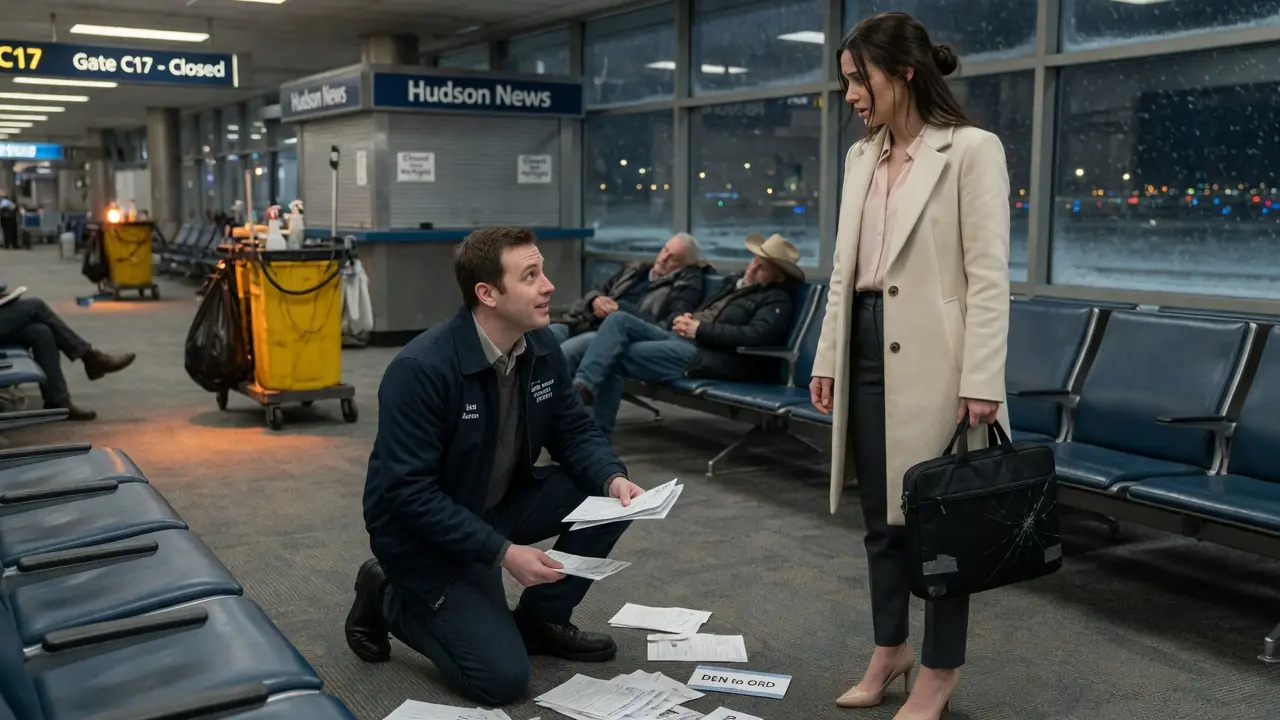
That happened on a Saturday in early spring.
Aaron had planned to leave Mia with his sister, but a last-minute emergency meant he had to bring her to the retreat property for two hours while a contractor repaired a damaged water line.
He apologized to Isabella the moment they arrived.
“I know this is unprofessional.”
Isabella looked down at Mia, who stood half-hidden behind Aaron’s leg with a backpack shaped like a cat.
“You must be Mia.”
Mia looked suspicious. “Are you Dad’s boss?”
“Yes.”
“Are you mean?”
Aaron closed his eyes.
“Mia.”
Isabella crouched slightly, her expression completely serious.
“I try not to be.”
“That’s not a no.”
“You’re right. Sometimes I have to be firm. But I don’t think I’m mean.”
Mia studied her.
“Okay.”
Isabella smiled. “Fair review.”
For the next two hours, Mia sat at a lodge table drawing while Aaron worked. Isabella passed through twice, each time pausing to ask about the picture.
Mia was drawing a house with mountains behind it.
“Is that your house?” Isabella asked.
Mia shook her head.
“No. It’s a house where nobody leaves without saying goodbye.”
The sentence landed hard.
Aaron, standing nearby with a wrench in his hand, went still.
Isabella’s face softened with a kind of sadness that did not pity.
“That sounds like an important house,” she said.
Mia nodded.
“It has a rule.”
“What rule?”
“If you leave, you have to come back when you say.”
Isabella looked at Aaron briefly, then back at Mia.
“That’s a very good rule.”
Mia seemed pleased.
From that day on, Mia liked Isabella.
Not loudly at first.
Mia did not trust loudly.
She began by asking if Isabella would be at the lodge. Then by drawing pictures for her. Then by saving interesting rocks she found near the walking paths because Isabella once said she liked the colors.
Isabella accepted every rock as if it were valuable.
Aaron noticed.
He noticed too much.
One evening, after Mia had fallen asleep in the car on the way home, Aaron pulled into his apartment parking lot and sat for a moment with the engine off.
Mia’s picture lay on the passenger seat.
The important house.
He heard Isabella’s voice in his mind.
That sounds like an important house.
No one had spoken to Mia’s pain that gently before.
Not even him, maybe.
Because he was always trying to fix it.
Isabella had simply honored it.
That was dangerous.
Because a woman who could see his daughter clearly could find every locked room in his heart.
Over the next several months, the retreat project grew closer to opening.
So did Aaron and Isabella, though neither admitted it quickly.
They shared coffee during early site meetings.
They walked the lodge paths while reviewing transportation plans.
They talked about Mia, grief, work, childhood, and the strange loneliness of being the person everyone expected to stay strong.
Isabella told him about her mother’s quiet sadness, her father’s emotional distance, and the pressure of running a company at twenty-eight while older executives waited for her to fail.
Aaron told her about Mia’s mother, the broken promises, the nights Mia cried without making sound because she did not want to upset him.
He told her that he was afraid of letting anyone close to his daughter.
Isabella did not argue.
She simply said, “You should be.”
That surprised him.
She continued, “Children deserve adults who are careful with their trust.”
Aaron looked at her for a long moment.
“Most people tell me I’m too guarded.”
“Maybe you are,” she said. “But you earned that honestly.”
He had no defense against that kind of understanding.
Their first almost-confession happened in June.
The lodge was nearly finished. The cabins had been painted. The walking trails were marked. The family rooms had soft lighting, comfortable chairs, shelves of books, and windows facing the mountains.
Mia had helped choose the color for one small children’s art room.
She called it “blue but not sad.”
Isabella loved that so much she used it in the design notes.
That evening, Aaron and Isabella stood in the art room after everyone else had left. The sun was setting behind the pines, filling the room with pale light.
On one wall hung framed children’s drawings collected from community workshops.
Mia’s important house was in the center.
Aaron stared at it.
“You framed it.”
“Only with her permission,” Isabella said.
“She gave permission?”
“She negotiated.”
Aaron smiled. “That sounds like her.”
“She asked if framing meant people would see it and remember the rule.”
Aaron swallowed.
“And you said?”
“I said yes.”
He looked at Isabella then.
She stood beside him in a white blouse and soft green trousers, her hair loose around her shoulders, her face open and nervous in a way he rarely saw.
“Thank you,” he said.
“For framing it?”
“For seeing her.”
Isabella’s eyes filled.
“She’s easy to see.”
“No,” Aaron said softly. “She isn’t. Not for people who aren’t paying attention.”
The room went quiet.
Isabella looked down, then back up.
“Aaron…”
He knew something was about to change.
His chest tightened.
Then his phone rang.
His sister.
Mia had a mild asthma flare after running outside.
Nothing serious, but enough to end the moment.
Aaron left quickly, and Isabella did not try to stop him.
Later that night, after Mia was sleeping safely, Aaron found a message from Isabella.
I hope she’s okay. No need to answer tonight. Just wanted you to know I’m thinking of both of you.
He read it three times.
Then he replied.
She’s okay. Thank you for not making me feel bad for leaving.
Isabella answered.
I would never make you feel bad for choosing your daughter.
That was the moment Aaron knew he was falling in love.
Not because of beauty.
Not because of gratitude.
Because Isabella Grant understood that Mia came first and did not resent second place.
The retreat opened in August.
The first group included six families, three funded by the Weston Foundation. One mother had lost her husband the year before. One father was raising two boys after a divorce. One family had a child recovering from cancer treatment.
Aaron coordinated arrivals, transportation, luggage, schedules, and quiet emergencies no one else noticed.
Isabella moved through the opening week with grace, but Aaron could see her nerves beneath it.
On the third evening, one little boy refused to enter the dining hall because crowded rooms made him anxious. Isabella sat with him on the porch steps for fifteen minutes, not pushing, not performing, just speaking softly until he agreed to take dinner outside.
Aaron watched from the doorway.
Mia, who had come for the family open house that evening, watched too.
“She’s nice,” Mia said.
“Yes,” Aaron said.
“Not fake nice.”
He looked down at his daughter.
“No. Not fake nice.”
Mia leaned against his side.
“Do you like her?”
Aaron took a careful breath.
“I do.”
“Like-like?”
He smiled faintly. “Maybe.”
Mia was quiet for a long time.
Then she said, “If she says she’ll come back, I think she would.”
Aaron’s throat tightened.
“That matters, huh?”
Mia nodded.
“The rule matters.”
He put his arm around her.
“Yes,” he said. “It does.”
The first kiss happened a month later.
Not at the opening.
Not during a crisis.
Not with dramatic music or rushing emotion.
It happened on an ordinary Thursday evening after a long staff meeting, when rain tapped against the lodge windows and everyone else had gone home.
Aaron found Isabella in the art room, standing in front of Mia’s framed drawing.
She looked tired.
Not CEO tired.
Heart tired.
“Bad meeting?” he asked.
She smiled without turning.
“Not bad. Just heavy.”
He stood beside her.
“What kind of heavy?”
“The kind where I realize this place matters, and that means I can disappoint people if I get it wrong.”
Aaron looked at the drawing.
“You won’t get everything right.”
“I know.”
“But you’ll care when you don’t. That counts.”
She turned toward him.
Her eyes were soft.
“You make things sound simple.”
“No. I make them sound possible. There’s a difference.”
She laughed quietly, then looked down.
“I care about you,” she said.
Aaron’s heart began to pound.
“And Mia.”
“I know.”
“I don’t want to step into your life carelessly.”
“You haven’t.”
“I’m scared.”
“So am I.”
She looked up at him.
“I don’t want to be another person who promises your daughter something and leaves.”
The honesty of it nearly broke him.
Aaron stepped closer.
“Then don’t promise what you can’t give.”
“What can I give?”
“Truth. Time. Patience.”
She nodded, tears shining in her eyes.
“I can give that.”
He lifted a hand slowly, giving her time to pull away.
She didn’t.
He touched her cheek.
Then he kissed her.
Softly.
Carefully.
Like a question both of them had taken months to ask.
When they pulled apart, Isabella rested her forehead against his chest.
“I love you,” she whispered.
Aaron closed his eyes.
He thought of all the ways love had hurt his daughter.
All the ways loneliness had hardened him.
All the ways this woman had slowly, gently made space without demanding trust before it was ready.
“I love you too,” he said.
They did not tell Mia right away.
Not because they wanted to hide it.
Because Aaron wanted to move carefully, and Isabella agreed.
They continued as they had been, only warmer now. Hand touches that lasted longer. Coffee shared with soft smiles. Quiet phone calls after Mia went to bed. Long conversations about what it meant to become part of a child’s life without taking over the empty space someone else left.
When they finally told Mia, she looked at them both across the kitchen table and said, “I know.”
Aaron blinked.
“You know?”
“You smile like people in cereal commercials.”
Isabella laughed.
Mia looked at her seriously.
“Are you going to leave?”
The question made the room still.
Isabella did not rush her answer.
“I may have to travel for work sometimes,” she said gently. “And I can’t promise life will always be easy. But I will not disappear. If I say I’m coming back, I will come back. If plans change, I will tell you the truth.”
Mia studied her.
“The rule.”
“Yes,” Isabella said. “The rule.”
Mia nodded slowly.
“Okay.”
Then she got up, walked around the table, and hugged Isabella.
Aaron looked away.
Some gifts were too big to watch directly.
A year later, Grant & Vale Evergreen Retreat had become one of the most respected family wellness centers in the region.
The board, once skeptical of Isabella’s foundation model, could no longer deny the impact. Families wrote letters. Donors expanded funding. Hospitals and schools began referring families who needed support but could not afford private care.
Isabella became known not just as a young CEO, but as a leader with a conscience.
Aaron became the retreat’s Director of Family Operations, a title that made him laugh the first time he saw it printed on a badge.
Mia called him “Director Dad.”
He kept the badge.
Their lives changed slowly but deeply.
Aaron no longer worked nights unless he chose to. He picked Mia up from school four days a week. He cooked dinner without checking his phone every five minutes. He watched his daughter become less afraid of good things.
And Isabella kept showing up.
For school plays.
For asthma checkups.
For ordinary Sunday pancakes.
For hard days when Mia missed her mother and did not know what to do with the feeling.
She never tried to replace anyone.
That was why Mia made room for her.
On Mia’s eighth birthday, Isabella gave her a gift that made Aaron speechless.
It was not expensive jewelry.
Not a trip.
Not a toy too large for their apartment.
It was a framed architectural rendering of Mia’s important house, drawn professionally from the original picture. Beneath it was a plaque:
The Important House Project
A Grant & Vale Foundation Program For Children Healing From Family Loss
Mia stared at it.
“What is it?”
Isabella knelt in front of her.
“Your drawing inspired a new program at the retreat. Children who come here will be able to draw, design, and talk about the safe places they dream of. Then our team will help create small memory projects for them, so they can feel seen.”
Mia’s eyes widened.
“My house helps other kids?”
“Yes,” Isabella whispered. “Your house helps other kids.”
Mia threw her arms around her.
Aaron stood in the doorway, unable to speak.
He had thought Isabella gave him a better job.
She had.
He thought she gave him stability.
She had.
But this was more than that.
She had taken his daughter’s pain and treated it like something meaningful, not something to hide.
Later that night, after Mia fell asleep with birthday ribbons still tied around her bedpost, Aaron and Isabella stood in the apartment kitchen.
The framed rendering leaned against the wall, waiting to be hung.
Aaron looked at it, then at her.
“You gave her dignity,” he said.
Isabella’s eyes softened.
“She already had it.”
“You helped her see it.”
A tear slipped down Isabella’s cheek.
Aaron pulled her into his arms.
For a long time, they stood there without speaking.
Two years after the night at the airport, Aaron and Mia moved into a small house near Evergreen.
It was not large. It was not fancy.
But it had a porch.
A real one.
With two chairs, a hanging plant, and a mountain view if you stood at the right angle.
Mia chose the paint for her bedroom.
Blue but not sad.
Isabella helped paint one wall and got more paint in her hair than on the roller. Mia declared this proof that CEOs should not be left unsupervised.
On the first evening in the house, they ate pizza on the floor because the table had not been delivered yet.
Mia looked around the room, smiling.
“This house follows the rule,” she said.
Aaron looked at Isabella.
Isabella looked back at him.
“Yes,” she said softly. “It does.”
Months later, on a clear autumn afternoon, Aaron took Isabella back to the airport.
Not because she was leaving.
Because he wanted to show her where everything had started.
They stood near Gate C17, now crowded with travelers rushing in every direction.
Isabella looked at the row of seats where she had once sat with a broken laptop and a breaking life.
“I was so scared that night,” she said.
“I know.”
“You could have walked past.”
“No.”
She smiled. “You always say that.”
“Because it’s true.”
“Why couldn’t you?”
Aaron looked at the gate, the moving travelers, the polished floor where her papers had scattered.
“Because you looked like someone everyone expected to stay strong while they made it harder for you.”
She took his hand.
“And you knew that feeling.”
“Yes.”
She leaned against his shoulder.
“I thought you helped me save a deal.”
“I thought I helped you save a presentation.”
They both smiled.
Then Aaron reached into his pocket and pulled out a small box.
Isabella went still.
“Aaron…”
He opened it.
Inside was a simple ring, elegant and bright beneath the airport lights.
“I know we took our time,” he said. “And I’m glad we did. Because now I know this isn’t gratitude, or timing, or fear of being alone.”
His voice grew rough.
“It’s family. The kind we choose carefully. The kind that keeps the rule.”
Isabella’s eyes filled.
Behind them, a voice announced a boarding group.
Travelers moved around them, unaware that the most important moment in Aaron Miller’s life was happening beside Gate C17.
He took a breath.
“Will you marry me?”
Isabella laughed through tears.
“Yes,” she whispered. “Yes.”
Mia, who had been hiding behind a nearby column with Aaron’s sister, shouted, “Finally!”
Isabella turned, stunned, then laughed harder as Mia ran into her arms.
Aaron slipped the ring onto Isabella’s finger.
And for the first time in years, he did not feel like a man trying to hold life together alone.
He felt like a man standing inside the future he had once been too tired to imagine.
A future that began with a cracked laptop.
A stranded businesswoman.
A shuttle driver who stopped walking.
And one quiet choice to help.
Years later, when Isabella told the story, she always said Aaron saved her company.
Aaron always shook his head.
“I just found a monitor.”
But Mia would roll her eyes and correct them both.
“No,” she would say. “Dad helped Isabella keep her promise. And Isabella helped us build the important house.”
That was the truest version.
Because love had not rushed into their lives.
It had arrived carefully.
Through airport snow, quiet conversations, children’s drawings, kept promises, and the slow healing of hearts that had once been left behind.
And in the end, what Aaron gave Isabella came back to him in a way he never expected.
He gave her help when she was stranded.
She gave him and Mia a place where staying finally felt safe.