The brass bell above Rosewood Diner gave a weary clang each time the door opened.
Marcus Thompson’s morning anthem. Not cheerful, just tired metal announcing another shift, another day, hoping the tip jar might be kinder.
The diner was a relic frozen in time.
Cracked burgundy booths, sticky linoleum, and the lingering scent of burnt coffee welded into the walls. Tucked in Houston’s Heights, it had served the same working-class crowd for more than four decades.
For Marcus, a single father working as a diner server, Rosewood was both refuge and cage.
Six days a week, from long before dawn until early afternoon, he performed the choreography of survival, balancing plates, pouring coffee, forcing smiles until they felt disconnected from meaning.
Once, he had been a promising culinary student with a gift for flavor and a dream of opening a restaurant where food told stories. But that dream drowned beneath overdue bills and the weight of single fatherhood.
His wife Rachel had left when their daughter Jasmine was only three years old, leaving a note that read, “You are a wonderful father. Jasmine will be better off with you.”
Overnight, Marcus became both parents.
He rose at 4 each morning, preparing Jasmine’s breakfast and leaving handwritten notes. Daddy loves you more than all the stars.
Mrs. Rosa from apartment 2C helped Jasmine get ready for school while Marcus rode the early bus through darkness, hands rough from years of hot plates and cheap detergent.
At Rosewood, he greeted regulars who knew only his name and polite smile. He kept moving because stopping meant thinking, and thinking hurt.
Jasmine, now seven, with curly hair tied into two puffs and bright brown eyes full of wonder, was his entire world.
The math of poverty was merciless. Rent, childcare, medication, groceries, utilities, transport—all together always more than he earned. Debt kept growing, quietly, relentlessly.
Still, Marcus hid the fear from his daughter. Every evening, when she ran to him shouting “Daddy!”, the world briefly became survivable again.
He arrived at the diner before dawn most days. Walter Hayes, the manager, always complained about minutes lost. Betty, the longtime waitress, always commented on how the single father was always behind.
Marcus never argued. He just worked.
Then there was Grace.
Every morning at exactly 7:20, she arrived.
An elderly woman with a cane, slow steps, faded cardigan, and cloudy gray eyes. She sat in the same corner booth every day like part of the furniture.
The staff saw her as invisible. Marcus saw something else.
He saw loneliness.
On his first encounter, he greeted her gently instead of ignoring her like others did. She didn’t respond much, but he kept showing up with kindness anyway.
Day after day, he served her coffee, the breakfast special, and quiet patience.
For months she said almost nothing.
Until one morning, he noticed her struggling to cut her toast. Her hands trembled with age and stiffness.
Marcus quietly took the knife.
“Let me help you with that,” he said.
He cut the toast into four small squares.
Grace looked up for the first time.
Something shifted.
From that day forward, a ritual formed.
Black coffee, breakfast, toast in four neat pieces. Small talk from Marcus about life, about Jasmine, about dreams he once had.
Grace listened. Always listened.
Months turned into more than a year.
Then one morning she spoke.
“You have a child.”
Marcus froze.
“Yes, ma’am. Jasmine. She’s seven.”
Grace studied him. “Who takes care of her in the mornings?”
He told her everything—early mornings, neighbors helping, exhaustion, love holding it all together.
Finally, Grace said softly, “You’re a good father.”
No one had ever said that to him.
Not like that.
After that, she began asking about Jasmine every morning. Slowly, Marcus found himself waiting for 7:20 with anticipation instead of fatigue.
Then one Saturday, everything changed.
Marcus had no choice but to bring Jasmine to work. His usual childcare arrangement collapsed last minute.
Jasmine sat quietly at a corner table with crayons and homework.
At 7:20, Grace entered as usual—but stopped when she saw the child.
Marcus rushed over, embarrassed.
“I’m sorry. My sitter had an emergency.”
Grace looked at Jasmine for a long moment.
“That’s your daughter?”
“Yes, ma’am.”
Then Grace said something no one expected.
“Let her sit with me.”
Marcus hesitated, but Jasmine happily joined her.
What followed was something extraordinary.
Grace helped Jasmine with math, gently corrected her homework, and laughed softly for the first time Marcus had ever heard.
Jasmine proudly said, “My daddy is my superhero.”
Grace’s eyes filled with tears.
She stayed hours longer than usual.
Before leaving, she said quietly, “Thank you… for letting me feel like a grandmother again.”
Marcus didn’t understand the weight of those words yet.
He would.
Because the next Monday, Grace never came.
At first, Marcus assumed she was late.
Then hours passed.
Then days.
Finally, four men in black suits arrived at the diner.
The room froze.
A woman stepped forward—Catherine Bradley, an attorney.
She asked for Marcus.
What she said next shattered everything.
“Mrs. Grace Morgan passed away.”
Marcus felt the air leave his body.
Grace wasn’t just a quiet diner regular.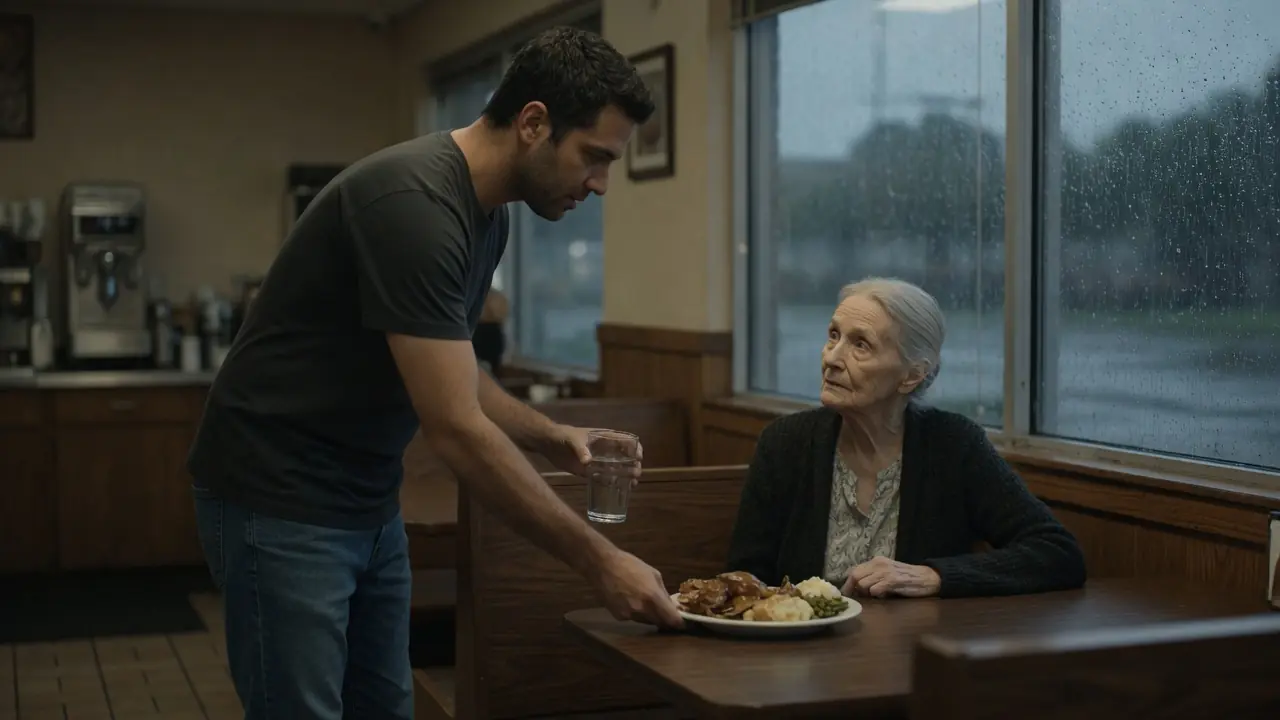
She was one of the most powerful business figures in Texas.
And she had left everything behind.
For him.
A fortune. A diner. A legacy.
The staff watched in disbelief as Marcus was taken to a world of glass towers, legal documents, and millions he couldn’t even comprehend.
But the real shock came in the reading of the will.
The family expected control.
They expected wealth.
Instead, they got nothing.
Because Grace had already decided everything.
She had watched Marcus for 19 months.
Not randomly.
Carefully.
Quietly.
Testing whether kindness still existed in a world that had forgotten it.
And Marcus had passed.
Not by trying.
But by simply being who he was.
He received money to erase his debt.
He received ownership of Rosewood Diner.
And he received something far greater.
A purpose.
A mission tied to Margaret’s legacy—Grace’s daughter, who had once believed restaurants should be places of dignity, not profit alone.
But not everyone accepted it.
The family tried to fight it.
Preston, Grace’s grandson, wanted control, money, power.
But Marcus stood in the shareholders meeting with nothing but truth.
He spoke about Grace.
About humanity.
About kindness that cost nothing but meant everything.
And slowly, the room changed.
Not through wealth.
But through honesty.
The vote failed against the CEO Grace trusted.
A new initiative was born—one focused on helping small businesses grow with dignity.
Preston lost.
Marcus didn’t celebrate.
He just stood quietly, realizing something had changed forever.
Months later, Rosewood Diner was still there.
But different.
Better.
Brighter.
Grace’s corner booth remained preserved, a small tribute to the woman who changed everything.
Marcus now split his life between running the diner and helping others build their dreams through Grace’s legacy program.
One afternoon, Jasmine sat in the booth doing homework.
She looked up and asked, “Do you think she’s proud of us?”
Marcus smiled.
“Yes,” he said softly. “I think she always was.”
The bell above the door rang again.
Another customer entered.
An elderly man.
Tired eyes.
Hesitant steps.
Marcus walked over gently.
“Table for one?”
The man nodded.
And Marcus understood.
The cycle hadn’t ended.
It had only begun.
Because kindness, once given, never truly disappears.
It just finds the next person who needs it.