At five every morning, Ellen Foster stood beneath the weak yellow light of her Cedar Hollow kitchen and packed lunch for her nineteen-year-old son. Rice from the previous evening went into one side of the plastic container, greens into another, and whatever meat she had managed to save from dinner rested carefully on top. Sometimes there was fruit, sometimes there wasn’t, but Ellen always placed the lunchbox beside the door before Liam woke. Then she smiled and told him the same lie mothers sometimes tell when love is larger than the refrigerator: “There’s plenty.”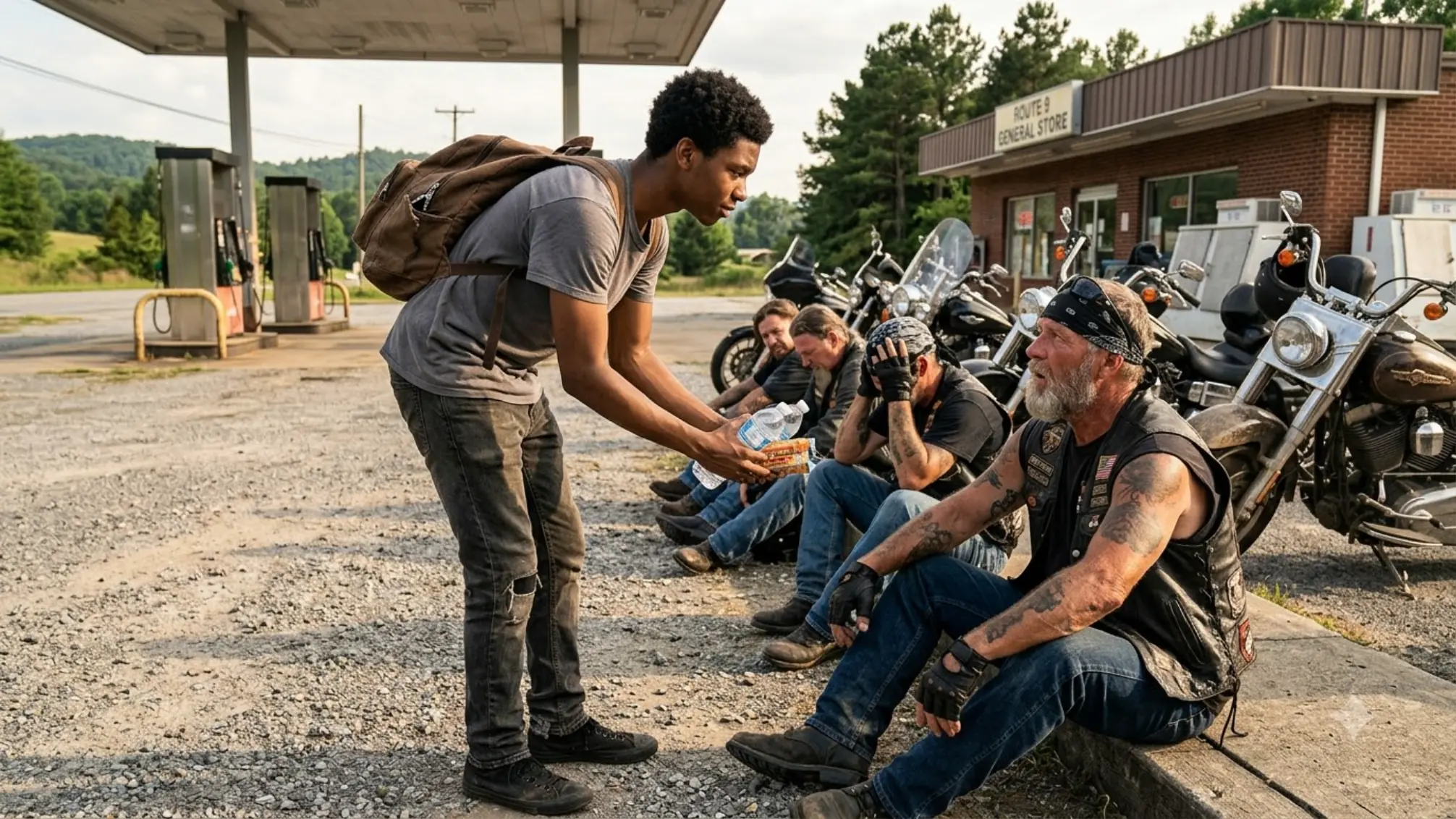
There had not been plenty in the Foster home for three years. Liam’s father, Greg Foster, had died after a scaffold brace failed at a construction site, leaving Ellen with a funeral bill, a small settlement that disappeared almost immediately, and a house that seemed to break a little more every month. The dryer failed first, then the water heater, then part of the roof began leaking during heavy storms. By the time Liam started community college, a foreclosure notice with $12,400 overdue had been hidden beneath the phone book on the kitchen counter.
Liam saw it anyway. He never told Ellen because she never mentioned the money he quietly slipped into her purse from his evening job at the Quick Mart. Their relationship had become a careful exchange of small protections, each pretending the other was not carrying too much. Ellen worked twelve-hour hospital shifts while Liam attended classes in mechanical engineering, stocked convenience-store shelves at night, and mowed neighborhood lawns on Saturdays for ten dollars each.
His classmates rarely knew how tired he was. Liam sat in the back row wearing jeans patched at one knee, shoes repaired with glue, and a backpack whose zipper had broken months earlier. When classmates invited him to restaurants after lab, he said he had already eaten, even when lunch had been the only meal he expected that day. He borrowed outdated textbooks from the public library because calculus had not changed enough for embarrassment to matter.
One thing Liam never left behind was his mother’s lunchbox. He carried it because it represented more than food. Ellen woke before sunrise to prepare something for a son she often would not see again until the following morning, and every container quietly said, I’m still here. You’re still my boy. We’re still a family. Liam understood that language better than anyone.
One Friday afternoon in late September, Liam pedaled his battered ten-speed bicycle along Route 9 after classes. The front tire was losing pressure, so he stopped at a small roadside gas station where the air pump was still free. Four motorcycles were parked near the side of the building, chrome dusty from long miles, saddlebags hanging open. Four exhausted bikers sat on the curb beneath the thin shadow of the awning.
The biggest was Duke Callaway, fifty-five, broad-shouldered with a long silver beard and a leather vest marked by years of charity rides. Beside him sat Ray Bennett, Sal Whitmore, and the youngest, Tommy Brooks, whose pale face and visibly trembling hands immediately caught Liam’s attention. Tommy was diabetic, though Liam did not know that yet. What he did know was that the man looked dangerously unwell.
The riders had lost a saddlebag somewhere on the highway. Inside it were their wallets, cards, emergency food, and Tommy’s glucose supplies. Their support van was hours behind them, and after nearly a full day without proper food, Tommy’s condition had begun deteriorating. Duke had already entered the station twice asking the clerk for something simple they could repay later.
The clerk, Phil, refused. “No money, no food.” Duke explained Tommy’s condition, promised payment, and even offered names and contact information from the charity organization he ran. Phil looked at the leather vests and motorcycles instead of the shaking man outside and threatened to call the police if Duke kept asking.
Liam heard nearly all of it through the open door. He stood beside the air pump holding his bicycle and looked from Tommy to the backpack on his shoulders. Hidden inside the front pocket was a twenty-dollar bill wrapped in masking tape. Ellen had placed it there on the first day of college and written four words across the tape in blue ink: Only if you really need it.
Liam had carried that money for six weeks. He had not spent it when his shoe split open because glue was cheaper. He had not spent it during the week when the Foster kitchen held mostly ramen and canned corn. He had not spent it on textbooks, bus fare, or the nights when walking home in darkness felt longer than usual.
The twenty dollars was reserved for impossible.
Liam looked again at Tommy’s shaking hands.
This was impossible.
He walked into the gas station and headed directly for the cold case. Four bottles of water cost eight dollars, and four packs of peanut-butter crackers added six more. With tax, the total came to $14.18, almost a full shift of take-home money for Liam.
He placed the taped twenty on the counter.
Phil noticed the handwritten message but said nothing. He counted change, dropping coins onto the counter instead of placing them in Liam’s hand. Liam picked up the water and food and walked back outside without arguing.
Duke saw him approaching and initially assumed the young man had bought something for himself. Instead, Liam bent down and placed everything in front of the bikers. “Here,” he said. “Please take it. You need it more than I do right now.”
Nobody moved.
Then Tommy reached forward with both trembling hands.
He opened a bottle and drank half in one desperate pull. Ray tore into the crackers immediately, while Sal ate half his portion and slipped the rest into his vest pocket out of habit. Duke waited until the others had eaten before opening his own package.
“What’s your name?” Duke asked.
“Liam Foster.”
“You go to school?”
“Cedar County Community College.”
“What are you studying?”
“Mechanical engineering.”
Duke nodded toward Liam’s worn bicycle. “Makes sense.”
Liam smiled slightly.
Then Duke’s eyes dropped toward Liam’s shoes, patched jeans, damaged backpack, and old bicycle. He had spent enough years traveling through poor communities to recognize somebody who did not have money to spare. “That twenty,” he said quietly. “Was that emergency money?”
Liam hesitated.
“My mom’s.”
Duke stared.
“She gave it to you?”
“Yeah.”
“For emergencies?”
Liam nodded.
Duke set down his crackers.
For a few seconds, he seemed unable to speak.
“I’ve ridden more than forty thousand miles raising money for homeless kids,” he finally said. “I’ve met people who wrote ten-thousand-dollar checks without blinking. I’ve met generous people everywhere.” His voice became rougher. “But I don’t know if I’ve ever seen someone give away something they couldn’t afford to lose.”
Liam looked uncomfortable with the attention.
“There’s plenty.”
Duke stared at him.
“No, son.”
His eyes became wet.
“There isn’t.”
He looked toward the water and crackers.
“And that’s exactly why this matters.”
Tommy’s shaking began slowing within minutes. His color gradually improved as his body received something it desperately needed. He looked directly at Liam. “You might have saved me a hospital ride, man.”
Liam shrugged.
“I just bought crackers.”
Tommy shook his head.
“No.”
“You did more than that.”
Liam glanced at the time.
He was already running late.
“I’ve got work.”
He climbed onto the bicycle and pedaled away.
Duke watched him disappear toward Cedar Hollow.
The support van finally arrived late that night, carrying food, replacement supplies, and a driver named Hank who expected to find four irritated bikers complaining about bad luck. Instead, Duke barely spoke. He sat inside the van staring at the place where Liam had handed them fourteen dollars’ worth of food purchased with money his mother intended to protect him.
The following morning, Duke borrowed Hank’s pickup and returned to Cedar Hollow. He found the Foster house at the end of Maple Street after asking around town. The place looked tired rather than abandoned, which somehow affected Duke more deeply. The porch leaned but had been swept, the grass was long but a narrow walking path had been trimmed, and faded curtains hung neatly behind clean windows.
A yellow foreclosure notice was visible inside the front door.
Duke sat in the pickup.
Then he walked next door.
Mrs. Patterson opened the door cautiously when she saw the enormous biker standing on her porch. Duke explained he was looking for Liam and asked whether she knew the family. Her suspicion softened once she realized he was not a debt collector.
For twenty minutes, she told him everything. Greg’s accident. Ellen’s night shifts. Liam walking forty minutes home from work because the family owned only one unreliable car. The boy mowing lawns, repairing his shoes instead of replacing them, and slipping money into his mother’s purse.
“They’re going to lose that house,” Mrs. Patterson said.
Duke looked toward the Foster porch.
“When?”
“Soon if something doesn’t change.”
He thanked her and returned to the truck.
Then he called Ray, Sal, and Tommy.
Tommy answered from an urgent-care bed, where doctors had stabilized him after the long ride. Duke wasted no words. “That kid who fed us? His family’s three months behind on their mortgage. Dad died. Mom works nights. He’s working and going to school.”
Nobody spoke.
Duke continued.
“That twenty dollars was probably the only emergency money that boy had.”
Ray’s jaw tightened.
“What do we do?”
Duke looked at the Foster house.
“We ride.”
That evening, Duke wrote about Liam on a private nationwide motorcycle network. He did not exaggerate. Four riders had been stranded, one was diabetic and deteriorating, a gas station clerk refused them food without immediate payment, and a nineteen-year-old stranger spent his mother’s emergency twenty dollars helping them.
Duke ended with one sentence:
He had almost nothing, and he gave anyway.
The post spread faster than anything Duke had written before. By midnight, hundreds of riders had responded. By the following morning, screenshots were moving through motorcycle clubs, veterans’ groups, trucking communities, mechanics’ forums, and charity pages across the country.
Someone created a fundraiser.
Eight thousand dollars arrived during the first twelve hours.
Then twenty thousand.
Then forty-five.
Tommy recorded a short video from his hospital bed. His IV remained attached while he looked directly into the camera. “I’m sitting here because a nineteen-year-old kid who didn’t know me saw my hands shaking and decided that mattered.”
The video spread to millions.
Riders began calling Duke personally.
“When are we going?”
“Saturday.”
“Where?”
“Maple Street, Cedar Hollow.”
“How many people?”
Duke originally hoped for fifty.
By Friday night, he had stopped counting.
Ellen and Liam knew none of this.
Ellen slept during the day and worked nights. Liam attended classes, worked his shifts, and had no home internet. Neither spent enough time online to understand that their name had become known to thousands of strangers.
At 6:48 Saturday morning, Ellen pulled into her driveway after a twelve-hour hospital shift. She remained inside the car for a minute with her head against the seat, gathering enough energy to walk through the front door. Then she heard something low in the distance.
The coffee inside her cup holder began trembling.
Ellen stepped outside.
Motorcycles appeared at the end of Maple Street.
Not five.
Not twenty.
Rows of four turned the corner with headlights glowing beneath the early morning sun. They kept coming until motorcycles filled the street, shoulders, empty lots, and every open space neighbors could safely offer.
Approximately 1,500 riders had come.
Liam stumbled through the front door barefoot, wearing a T-shirt and shorts after the engines woke him. He stopped halfway across the porch. His face went completely blank.
Duke dismounted first.
He walked along the cracked pathway toward the house.
“Morning, Liam.”
Liam stared.
“Duke?”
“Told you I wouldn’t forget.”
Liam looked beyond him at the impossible sea of motorcycles.
“What is this?”
Duke smiled.
“This is what happens when a kid shares his lunch.”
Ellen hurried around the side of the house in her hospital scrubs. “Liam, what is going on?”
Duke removed his sunglasses.
“Mrs. Foster?”
“Yes?”
“My name is Duke Callaway.”
He gestured toward Liam.
“Your son helped four strangers at a gas station last week.”
Ellen slowly looked toward her son.
Duke continued.
“We hadn’t eaten. One of my guys was diabetic and getting sick.”
Then he looked toward Liam.
“He bought us food with a twenty-dollar bill I believe you gave him.”
Ellen’s expression changed immediately.
She whispered, “The emergency twenty?”
Liam looked down.
“Sorry, Mom.”
Ellen stared at him.
Then at Duke.
Then at hundreds of strangers standing along Maple Street.
Duke’s voice softened.
“Ma’am, don’t apologize for raising that boy.”
Tommy walked forward carrying a white envelope.
No shaking this time.
He handed it to Ellen using both hands.
“The fundraiser reached fifty-two thousand dollars.”
Ellen did not understand.
Tommy repeated it.
“Fifty-two thousand.”
She opened the envelope.
There was a check inside.
For several seconds, Ellen simply stared at the number.
Then three years of exhaustion seemed to break at once.
She sat on the porch steps and cried.
Not quietly.
Not politely.
Her entire body shook as she covered her face.
Liam immediately sat beside her and wrapped one arm around her shoulders.
Nobody rushed them.
Duke stood on the walkway.
Fifteen hundred riders waited in silence.
They let a tired mother understand that the foreclosure notice inside her door no longer had the same power it possessed yesterday.
Then the work began.
Sal Whitmore arrived with a truck carrying lumber, roofing material, tools, and a brand-new front door. Ray brought hardware and paint. Riders who were carpenters climbed onto the roof, electricians checked the house wiring, plumbers inspected old fixtures, and mechanics examined Ellen’s car.
Nobody asked what they would receive in return.
They had already received it at the gas station.
A reminder of what generosity looked like before calculation became involved.
By midday, neighbors came outside.
Some had spent years whispering about the Foster family’s financial problems. Now they brought lemonade, sandwiches, extension cords, folding chairs, and work gloves. Mrs. Patterson stood in her front yard handing drinks to bikers while openly crying.
The old roof disappeared.
The crooked porch rail came down.
Fresh white paint covered the faded exterior.
The missing letter on the mailbox was replaced.
For the first time in years, FOSTER appeared complete.
A local television crew arrived that afternoon. The reporter asked Duke why so many riders had traveled from fourteen states for one family. Duke looked toward the house, where Liam was helping Sal hold roofing material.
“That kid had almost nothing,” Duke said.
“And he gave us what he had.”
The reporter asked whether Liam knew this would happen.
Duke laughed.
“He didn’t even ask our last names.”
That became the sentence repeated most often in the news coverage.
Liam had given without knowing whether the people he helped were important.
Without knowing they ran charities.
Without knowing they belonged to a network capable of mobilizing fifteen hundred riders.
Without expecting a dollar back.
The community college noticed next.
Administrators reviewed Liam’s academic record.
A 3.4 GPA.
Strong performance in applied mechanics.
Perfect attendance despite evening work.
Maximum financial aid and still a remaining gap.
The engineering department assembled a scholarship package covering tuition, books, and a monthly stipend.
Liam found the letter in his campus mailbox several days later.
He read it once.
Then twice.
Then a third time because his brain refused to accept what his eyes were telling him.
That evening he placed the letter in front of Ellen during dinner.
She stared at it.
“Full scholarship?”
“Looks like it.”
“All four years?”
“Yeah.”
Ellen touched the paper carefully.
“So you can quit the Quick Mart.”
Liam smiled.
“I think so.”
His mother began crying again.
This time Liam laughed.
“You’ve been doing that a lot.”
“You’re expensive emotionally.”
The hospital where Ellen worked responded too. Her supervisor reviewed twelve years of service records and discovered three commendations, almost no absences, and a long-pending request to move from night shifts to days. The transfer was finally approved.
Even more importantly, the $52,000 fundraiser cleared the $12,400 mortgage delinquency.
The foreclosure stopped.
For the first time since Greg died, Ellen opened a savings account.
She deposited the remaining money and sat staring at the balance.
Safety.
That was what the number represented.
Not luxury.
Not wealth.
Enough breathing room that one broken appliance would no longer threaten the entire household.
A month after the motorcycle convoy, Duke called Liam.
“Free tonight?”
“For what?”
“Come to Atlanta.”
Liam laughed.
“That’s three hours.”
“I know.”
Duke sent Ray to pick him and Ellen up.
They arrived at Duke’s converted warehouse after sunset.
Two hundred riders were waiting.
String lights hung from exposed rafters while motorcycles lined the walls. Ellen wore a blue dress she had bought that afternoon, the first new clothing she had purchased for herself in almost two years.
Duke stood at the front holding a folded black leather vest.
He told the gas station story again.
Not because anyone had forgotten.
Because some stories became more powerful when spoken aloud in front of the person who created them.
Then Duke unfolded the vest.
Across the back was the emblem of Wheels for Hope.
Over the chest was a name stitched in gold:
LIAM “LUNCHBOX” FOSTER
The room exploded.
Liam stared at Duke.
“I don’t have a motorcycle.”
Laughter rolled through the warehouse.
Duke held the vest out.
“Brotherhood isn’t the machine.”
He tapped his own chest.
“It’s what you carry here.”
Liam accepted it.
The vest was slightly too large.
He put it on anyway.
Then he tried to speak.
“My dad used to tell me something.”
The room quieted.
“He said the smallest thing you do might be the biggest thing in somebody else’s day.”
Liam looked toward Tommy.
“I thought I was buying crackers.”
Tommy smiled.
“You bought me another day.”
Liam’s voice broke.
He stopped speaking.
Duke placed one hand on his shoulder.
Nobody needed more.
Then Duke gave Liam one final document.
Members of the motorcycle community had created a small educational charity.
Its name was printed across the top:
THE GREG FOSTER MEMORIAL FUND
It would help children of construction workers who had been killed or seriously injured on job sites.
Liam read his father’s name.
Slowly, he folded the paper.
Then he slipped it into the new vest pocket directly over his heart.
Ellen lowered her face into her hands.
Outside, one motorcycle started.
Then another.
Then another.
Two hundred engines came alive until the warehouse walls vibrated.
Nobody rode away.
It was simply their way of saying welcome.
A year later, Liam was twenty and still studying mechanical engineering. His GPA had improved, his shoes were new, and his bicycle finally had proper grips, though he kept one piece of black electrical tape wrapped around the left handlebar. Duke told him not to forget where he started.
Liam never did.
Every Saturday morning, he still rode to the Route 9 gas station.
Phil no longer worked there.
Liam never asked why.
He left one brown paper bag on the bench outside.
A sandwich.
A bottle of water.
Peanut-butter crackers.
No note.
No name.
He never waited to see who took it.
At home, Ellen still packed his lunch.
She no longer woke at five because desperation required it.
Her day shift allowed them to eat dinner together, argue about dishes, laugh over television shows, and experience ordinary family life again.
Sometimes she tucked a note beneath the lid.
Have a good day.
Or simply a blue heart.
The Foster house looked different too.
Fresh white paint.
Straight porch rail.
Solid roof.
Working dryer.
A small garden where tomatoes and sunflowers grew beside the house.
And on the living-room mantel sat two photographs.
One showed Greg Foster smiling in work clothes years before the accident.
Beside it was Liam wearing a black leather vest surrounded by hundreds of bikers.
Between them rested the original lunchbox.
Liam kept it even after the latch broke.
People occasionally asked why one cheap plastic container deserved a place of honor.
Liam always gave them the same answer.
“That lunchbox changed our life.”
Technically, that was not true.
The lunchbox changed nothing.
Neither did the motorcycles.
What changed everything was one decision made outside a gas station when nobody was watching.
A nineteen-year-old with almost nothing saw four exhausted strangers and realized one of them needed help more urgently than he needed twenty dollars.
He could have ridden away.
Nobody would have blamed him.
His family was already struggling.
His emergency mattered too.
Instead, he remembered how his mother lived.
How Ellen gave even when the refrigerator was nearly empty.
How she packed lunch every morning and said there was plenty even when both of them knew there was not.
Liam repeated the lesson she had been quietly teaching him his entire life.
Give when you can.
Especially when giving costs something.
Fifteen hundred motorcycles were the dramatic part of the story.
The repaired house was visible.
The scholarship could be measured.
The fundraiser had a dollar amount.
But Duke Callaway always insisted none of those things were the true beginning.
The beginning was fourteen dollars and eighteen cents.
Four bottles of water.
Four packs of crackers.
One twenty-dollar bill with masking tape stuck to the corner.
And four handwritten words from a tired mother:
Only if you really need it.
Liam had looked at a shaking stranger and decided he did.
Years later, Duke would still tell people that Liam never rescued four bikers because he was wealthy, fearless, or powerful.
He helped because someone was hurting.
That was enough.
And for Duke, that remained the most important part of the entire story.
Because generosity was easy when what you gave never affected your own life.
Liam Foster showed him something harder.
Sometimes the smallest gift became enormous precisely because the person offering it could least afford to let it go.
And sometimes a sandwich, a bottle of water, and a handful of crackers traveled much farther than anyone could imagine.