Earl Maddox walked into the Sedalia Livestock Auction with seventy-five dollars folded inside his shirt pocket and a silence that made louder men uncomfortable.The auction barn smelled of hay, manure, sweat, and old coffee, with cattle shifting in the pens while farmers leaned against rails and pretended not to count each other’s money.
Earl wore faded jeans, a denim jacket rubbed pale at the elbows, and a cap that had lost its shape years ago. He did not look like a man ready to make history. He looked like a farmer trying to survive another Saturday.
The bull came through the side gate near noon, pale as winter dust and thin enough that even the auctioneer paused before starting the bid.
He was a Charolais, or at least he had been bred to be one, with a broad head, long frame, and a tired sway in his walk.
His ribs showed beneath his hide, one eye watered, and his coat looked rough from neglect.
A few men laughed before the auctioneer even opened his mouth.
Nobody in that barn saw promise when they looked at him.
Nobody except Earl.
He stepped closer to the rail, narrowing his eyes at the bull’s shoulders, legs, and the way the animal carried his weight despite the weakness.
The bull looked sick, yes, but not broken.
His bone structure was strong, his hips were wide, and beneath the mud and poor feeding was the shape of an animal that had come from good blood.
Earl had spent thirty years studying cattle the way other men studied bank statements.
He knew the difference between worthless and neglected.
That was when Glenn Kirby saw him watching.
Glenn owned Kirby John Deere over on Highway 50, a bright dealership with glass windows, clean tractors, and salesmen who smiled harder when a farmer had good credit.
He was a large man with a loud laugh, a green jacket, and a habit of slapping shoulders too hard when he wanted the whole room to know he was friendly.
He sold machines to rich farms, sponsored county events, and treated small farmers like background noise unless they were signing paperwork.
When he spotted Earl leaning toward the sick bull, Glenn grinned like a man who had just found free entertainment.
“Well, look at that,” Glenn said loudly, making sure the farmers around him could hear.
“Earl Maddox finally found livestock in his price range.”
A few men chuckled.
Earl did not turn around.
He kept his eyes on the bull while the animal lowered its head and breathed hard against the rail.
Glenn stepped beside him, his polished boots sinking slightly into the dirty straw.
“You thinking about bidding on that thing?” Glenn asked.
Earl said, “Maybe.”
Glenn laughed and pointed at the bull’s ribs.
“Earl, that animal is halfway to the bone yard already. You buy him, you’ll need a shovel before you need a pasture.”
The auctioneer started low because he had no choice.
“Who’ll give me fifty?”
The barn stayed quiet.
The bull shifted, coughed once, and lowered his head again.
Earl lifted one hand.
The auctioneer blinked.
“I’ve got fifty. Who’ll give me seventy-five?”
Before anyone could answer, Glenn shouted, “Let him have it before the poor beast dies in the ring.”
Laughter rolled across the barn.
Earl lifted his hand again.
“Seventy-five,” the auctioneer called.
He looked around, waiting for a second bidder, but no one moved.
The gavel dropped with a hollow crack.
“Sold to Earl Maddox for seventy-five dollars.”
Glenn clapped slowly, grinning from ear to ear.
“There it is, boys. Seventy-five dollars bought Earl a dying joke.”
Earl turned then, his face calm but his jaw tight.
Glenn slapped the rail and leaned closer, enjoying the audience.
“That bull will be dead by July, Earl.”
Earl gripped the lead rope when the handler passed it to him.
“Maybe you only see sickness because you never learned bloodlines.”
The laughter faded a little.
Glenn’s smile sharpened.
“Bloodlines? That thing couldn’t breed a headache.”
Earl looked him in the eye.
“No, Glenn. It bought me the calf your rich customers will beg to own.”
The men nearby made low sounds, half amused and half uncomfortable.
Glenn stepped closer, his face red with the pleasure of cruelty.
“You hear that? Earl thinks this walking scarecrow is going to make him rich.”
Earl did not answer.
He led the bull out of the ring slowly, giving the animal time to place each step.
Outside, his old stock trailer waited behind a rusted pickup that looked older than half the tractors Glenn sold.
The bull stumbled once at the ramp, and Glenn’s laugh followed Earl into the yard.
“Careful, Earl,” he shouted.
“If he dies on the way home, at least you can say you got half a mile out of him.”
Earl loaded the bull with patience.
He did not push, curse, or yank the rope.
He waited until the animal trusted the ramp enough to step inside.
Then he closed the gate, tied it carefully, and stood for a moment with one hand on the metal bars.
The bull breathed through his nose and looked at Earl with dull, exhausted eyes.
“I know,” Earl said softly.
“They laughed at me too.”
Earl’s farm sat eighteen miles outside Sedalia, down a county road that turned to mud after heavy rain and dust after two dry days.
It was not a large place anymore.
His father had owned four hundred acres once, but medical bills, bad corn years, and bank pressure had reduced the Maddox farm to one hundred and twelve acres of pasture, hay ground, and old fence.
Earl lived alone in the farmhouse where he had been born, with a woodstove in the kitchen and his late wife’s wind chimes hanging on the porch.
Her name had been Lorna, and she had loved cattle more gently than Earl did.
Earl studied structure, weight, and pedigree, but Lorna had looked into an animal’s eyes and known when something was wrong.
She had been gone for six years, yet Earl still heard her voice whenever a sick calf needed warming or a cow would not take feed.
That evening, as he backed the trailer near the quarantine pen, he imagined Lorna standing beside him with both hands on her hips.
“You paid money for trouble again, didn’t you, Earl?”
He smiled sadly.
“Maybe.”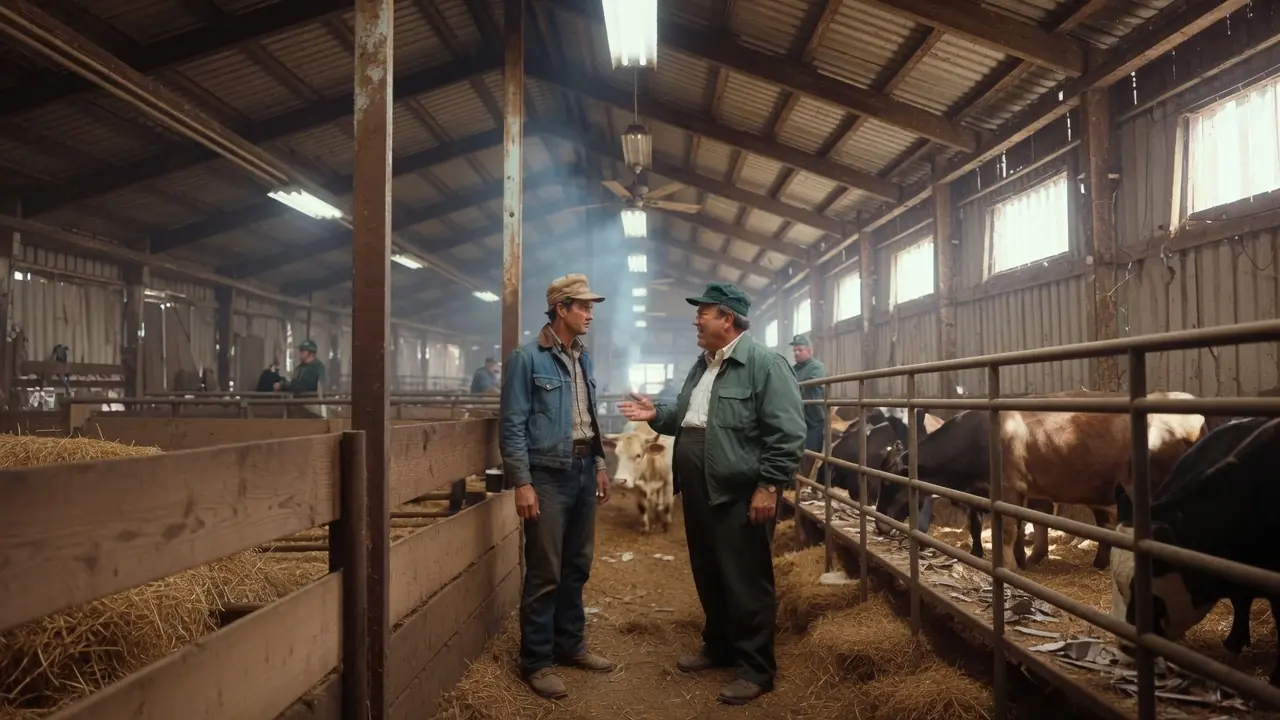
The bull stepped out of the trailer like an old man leaving a hospital.
Earl settled him in the clean pen behind the barn, where fresh straw waited beneath a roof patched with tin sheets.
He gave him water first, then hay, then a small ration mixed with minerals and molasses to tempt his appetite.
The bull sniffed it but did not eat much.
Earl expected that.
The next morning, Earl called Dr. Lena Morris, the veterinarian who had known him since she was a teenager riding along with her father on farm calls.
She arrived in a white truck with mud already dried along the doors and found Earl standing outside the pen with a notebook in his hand.
She looked at the bull, then at Earl.
“You bought him at auction?”
“Seventy-five dollars.”
Lena raised her eyebrows.
“Earl.”
“I know.”
“He looks terrible.”
“I know that too.”
She examined the bull carefully, checking his temperature, lungs, teeth, hooves, eyes, and body condition.
The animal was underweight, wormy, dehydrated, and likely fighting a respiratory infection from stress and poor care.
But his heart sounded strong, and his joints were better than she expected.
When she finished, she leaned against the fence and looked at Earl with a thoughtful frown.
“He is sick, but I don’t think he’s finished.”
Earl nodded.
“That’s what I saw.”
Lena glanced at his notebook.
“What else did you see?”
Earl opened it to a folded auction sheet he had taken from the office.
The bull’s previous owner had been listed as a small estate dispersal from northern Missouri.
Beside the lot number, almost hidden under a coffee stain, were partial registration notes Earl had copied before leaving.
Lena read them and whistled softly.
“Earl, is that what I think it is?”
“If the numbers match,” he said, “this bull’s grandsire came from the old Barrow line.”
Lena looked back at the weak animal chewing slowly at the hay.
“That line produced some serious calves twenty years ago.”
“And nearly disappeared,” Earl said.
“Folks crossed away from it because the calves weren’t flashy enough as yearlings. But they grew deep, bred easy, and put weight on grass.”
Lena folded her arms.
“You think this sick old boy is carrying something everyone else forgot.”
Earl looked at the bull.
“I think people forget a lot when something stops shining.”
For the next three weeks, Earl worked like the bull’s life was tied to his own.
He gave medicine on schedule, cleaned the pen twice a day, measured feed, checked manure, and sat nearby in the evenings until the animal trusted the sound of his voice.
He named the bull Jasper because Lorna had once said every creature deserved a name before it deserved judgment.
At first, Jasper only nibbled at feed and stood with his head low.
By the fourth week, he was eating steadily.
The coat improved first.
Then his eyes cleared.
Then his walk strengthened, one slow day at a time.
Earl moved him from the quarantine pen to a small green pasture near the barn, where clover grew thick along the fence line.
Jasper lowered his head into the grass, and for the first time, Earl saw the animal breathe like he wanted to live.
Word spread, as it always did in farm country.
At the diner, Glenn Kirby told anyone who would listen that Earl was pouring good feed into bad beef.
He said Jasper was a charity case with horns.
He said Earl had always been too sentimental to make money.
And every time someone laughed, Glenn laughed louder.
In May, Glenn drove past Earl’s farm in a new pickup with a John Deere logo on the door.
He slowed near the fence and saw Jasper standing in the pasture, still thin but stronger, his head up and his body filling out.
Earl was fixing a gate hinge nearby.
Glenn rolled down his window.
“Well, I’ll be. The corpse is still walking.”
Earl kept tightening the bolt.
“Morning, Glenn.”
“You naming him yet, or waiting to see which ditch he drops in?”
“Jasper.”
Glenn slapped the steering wheel and laughed.
“Jasper. That’s cute. You know, I’ve got customers buying real bulls this month. Registered, polished, clean papers. Nobody wants a rescue animal with auction dust in his lungs.”
Earl finally looked up.
“Then it’s a good thing I didn’t buy him for your customers.”
Glenn smirked.
“You still think he’ll make calves worth something?”
Earl wiped his hands on a rag.
“I don’t think it. I’m planning on it.”
Glenn leaned out the window, voice turning cruel.
“Planning won’t fix poor blood, Earl.”
Earl’s eyes hardened.
“No. But poor eyes miss good blood every day.”
Glenn drove off with a laugh, but Earl noticed he looked back twice in the mirror.
By early summer, Jasper had gained weight and strength.
His shoulders filled out, his coat smoothed, and the old Charolais shape began to show beneath the recovery.
Earl bred him carefully to six cows from his best maternal line, not because he expected miracles, but because he knew what the pairing could do if Jasper’s genetics held true.
He wrote down every date, every pasture move, every ration change, and every detail of the cows’ condition.
Farming punished sloppy hope.
The first calf came on a cold February morning before sunrise.
Earl found the cow near the lower pasture windbreak, licking a pale calf that was already trying to stand.
The calf was strong, wide across the hips, and thick through the shoulder without looking heavy-headed.
Earl crouched in the frost, his breath fogging in front of him, and watched the calf rise on trembling legs.
By instinct, the calf found milk within minutes.
Earl smiled for the first time in weeks.
“Well, Jasper,” he whispered, “there you are.”
Five more calves followed that spring.
Every one of them was better than expected.
They were clean-made, fast-growing, deep-bodied, and unusually calm.
Lena Morris came out to look them over in April and stood by the fence with her hands on her hips, shaking her head.
“Earl, these calves are good.”
He nodded.
“They are.”
“No,” she said, glancing at him.
“I mean really good.”
Earl looked toward the strongest bull calf, a pale cream-colored animal with a broad back and powerful legs.
“That one’s out of Ruby.”
Lena stared.
“That calf could bring serious money.”
Earl did not answer right away.
He watched the calf move beside its mother, smooth and balanced, exactly the way a good animal should.
In his chest, he felt something he had not allowed himself to feel in years.
Not excitement.
Hope.
By August, the calf had become impossible to ignore.
Earl named him King’s Ledger, though most folks simply called him Ledger.
He grew with a kind of quiet authority, gaining weight on pasture better than calves fed expensive grain.
His frame was correct, his temperament steady, and once Earl completed the DNA and pedigree verification, the old Barrow genetics were confirmed.
The bloodline Glenn had mocked was real.
Lena helped Earl prepare the paperwork for the fall Sedalia sale.
He did not have a fancy ranch sign or professional videos.
He had photographs taken in good daylight, weight records, vet reports, DNA confirmation, and a calf that looked better in person than on paper.
Lena called two serious cattlemen she trusted.
By sale week, people who had laughed at Earl in March had started asking careful questions.
Glenn Kirby heard the rumors at his dealership and laughed them off at first.
Then one of his richest customers mentioned Earl’s calf during a tractor delivery.
“Heard Maddox has a Charolais bull calf worth looking at,” the man said.
Glenn nearly dropped the invoice.
“Earl Maddox?”
“That’s what I said.”
The customer smiled.
“They say the calf’s out of that sick bull he bought for nothing.”
Glenn forced a laugh.
“People say a lot of things in auction season.”
The customer shrugged.
“Maybe. But I’m going to look.”
On sale day, the Sedalia barn was packed.
The air buzzed with the sound of cattle, boots, coffee cups, and men pretending they had not come specifically to see whether Earl Maddox’s calf was real.
Earl stood near the holding pen in the same faded denim jacket he had worn months earlier.
Jasper was not there, but his son was.
Ledger stood calm under the lights, pale coat clean, head high, legs square beneath him.
Glenn arrived in his green jacket, walking with the forced confidence of a man who sensed the joke might be turning around.
He found Earl near the rail and looked into the pen.
For once, Glenn did not laugh immediately.
Ledger shifted his weight, showing the depth of his body and the strength of his frame.
Several cattlemen leaned closer, murmuring quietly.
Glenn cleared his throat.
“That the calf?”
Earl looked at him.
“That’s him.”
Glenn tried to smirk.
“Looks decent enough. Market’s strange this year. Don’t get your hopes too high.”
Earl’s eyes stayed steady.
“Glenn, you spent months telling folks Jasper would be dead by July. Now you’re standing here trying to sound like you always saw something.”
A few farmers nearby turned to listen.
Glenn’s face tightened.
“I was joking.”
Earl stepped closer, voice low and sharp.
“No. You were teaching the room how to laugh at a man with less money than you.”
Glenn’s smile vanished.
The auctioneer’s voice called Ledger’s lot number, and Earl led the calf into the ring himself.
The crowd quieted in a way Earl had not expected.
Months earlier, that same ring had filled with laughter when Jasper stumbled through it.
Now men straightened, catalogs lifted, and bidders studied the calf like they were looking at something rare.
Earl felt his heart beat hard beneath his old shirt.
The auctioneer opened at three thousand.
A hand went up immediately.
“Three thousand, now thirty-five.”
Another hand.
“Thirty-five, now four.”
The numbers moved fast.
Glenn stood near the side rail, his expression changing with every bid.
At six thousand, he stopped pretending not to care.
At eight thousand, he folded his arms tightly.
At ten thousand, the room began to murmur.
Earl kept one hand on Ledger’s lead rope and stared straight ahead.
“Twelve thousand,” the auctioneer called.
A rancher from Kansas lifted his catalog.
“Thirteen.”
The Missouri cattleman near the front answered immediately.
“Fourteen.”
The barn went quiet.
The auctioneer’s eyes moved through the crowd.
“Fourteen thousand, now fifteen. Who’ll give me fifteen?”
For one breath, no one moved.
Then the Kansas rancher raised his hand again.
“Fifteen thousand.”
The gavel dropped.
“Sold for fifteen thousand dollars.”
The sound that came next was not laughter.
It was the heavy, stunned noise of a room realizing it had been wrong.
Earl stood still, the lead rope loose in his hand, while Ledger was guided out of the ring.
Fifteen thousand dollars.
From a calf out of a bull bought for seventy-five.
Lena Morris wiped her eyes near the back wall.
A few farmers came forward to shake Earl’s hand.
Some said congratulations.
Some said they always knew he had an eye.
Earl accepted the words politely, though he remembered exactly who had laughed.
Glenn Kirby did not move until Earl walked past him.
Then Glenn forced a weak smile.
“Well, I’ll admit it. That calf surprised everyone.”
Earl stopped.
The crowd around them quieted again, sensing something unfinished.
Glenn held out his hand.
“Guess you saw something we didn’t.”
Earl looked at the hand but did not take it.
“No, Glenn,” he said.
“I saw something you refused to see because it was standing beside a poor man.”
Glenn’s face reddened.
“That’s not fair.”
Earl’s voice hardened.
“You called my bull a dying joke. You said my seventy-five dollars bought a shovel. You mocked my boots, my farm, and the animal I was trying to save.”
Glenn glanced around, uncomfortable now that the audience had turned.
“Earl, come on. That’s auction talk.”
Earl stepped closer.
“No. That’s coward talk dressed up as humor.”
The words hit Glenn harder than shouting would have.
Earl looked toward the ring where Ledger had just sold.
“That bull you mocked gave me a fifteen-thousand-dollar calf. But that’s not the part that matters most.”
Glenn swallowed.
“What does?”
Earl looked back at him.
“The part that matters is you saw weakness and thought it gave you permission to be cruel.”
The room stayed silent.
Glenn’s hand slowly dropped.
Earl walked away before Glenn could answer, because the moment did not need more words.
He picked up his check later from the office, folded it carefully, and put it inside the same shirt pocket where seventy-five dollars had been months earlier.
The paper felt heavy, but not because of the money alone.
It carried medicine, feed, time, patience, and every evening he had sat beside Jasper when the world saw only a dying animal.
Back home, Earl walked to the pasture before going inside.
Jasper stood near the fence, healthier now, broad and calm beneath the evening sky.
The old bull lifted his head when Earl approached, chewing slowly.
Earl rested both arms on the top rail and smiled.
“Your boy did good.”
Jasper blinked, unimpressed by human victory.
Earl laughed softly.
Then his eyes grew wet.
He thought of Lorna, of the auction barn, of Glenn’s laughter, of the moment the gavel fell at fifteen thousand.
He wished she had been there to see it.
But maybe, in the way old farms hold memory, she had been.
Two weeks later, Glenn Kirby drove up Earl’s gravel lane.
Earl saw the truck from the porch and considered going inside.
Instead, he stayed where he was, coffee in hand, while Glenn parked beside the barn and stepped out without his usual salesman grin.
He looked older than he had at the auction.
Or maybe he only looked smaller without laughter around him.
“Earl,” Glenn said.
“Glenn.”
The dealer removed his cap, something Earl had rarely seen him do.
“I came to apologize.”
Earl said nothing.
Glenn looked toward the pasture where Jasper grazed.
“I was wrong about the bull.”
“You were.”
“And I was wrong about you.”
Earl watched him carefully.
Glenn swallowed.
“I thought because you were down to old equipment and small acreage, you didn’t know what you were doing.”
He gave a bitter little laugh at himself.
“That’s a poor thing for a man in farm business to admit.”
“It is,” Earl said.
Glenn looked at the ground.
“I’ve spent years selling machines to farmers and forgot the machine doesn’t make the farmer.”
His voice roughened.
“I humiliated you because I thought it was safe.”
Earl’s expression changed slightly.
“That’s the truest thing you’ve said.”
Glenn nodded.
“I’m sorry.”
For a long time, Earl did not answer.
The wind moved through the pasture grass, and Jasper flicked his tail at flies.
Earl had imagined this moment differently.
In his imagination, he had thrown Glenn’s words back harder, made him feel small, watched him squirm under the weight of everyone’s judgment.
But standing on the porch, Earl found revenge less satisfying than he expected.
“Apology’s a start,” Earl said finally.
“Don’t make it the finish.”
Glenn looked up.
“What do you mean?”
Earl nodded toward the road.
“Next time you see a farmer down on his luck, don’t turn him into a joke. Next time you see an animal looking rough, don’t assume it’s worthless. And next time you’re standing in a room full of men laughing at somebody with less money, decide whether you’re a dealer or just another crow picking at trouble.”
Glenn absorbed that quietly.
“I’ll try,” he said.
“Do better than try.”
Glenn nodded once, then returned to his truck.
By the following spring, Earl’s little herd had changed.
Jasper’s calves continued to grow strong, and word of the bloodline spread beyond Sedalia.
Earl did not become rich overnight, and he did not want to.
He fixed the barn roof, paid down feed debt, replaced a broken waterer, and put some money aside for the first time in years.
He also kept Jasper.
A cattle magazine eventually ran a small story about the seventy-five-dollar bull whose calf sold for fifteen thousand.
They called Earl a sharp-eyed stockman, a patient breeder, a reminder that old knowledge still mattered.
At the diner, men who once laughed now asked him about genetics, pasture recovery, and feed strategy.
Earl answered when the questions were honest.
When they were not, he let silence do the work.
One evening, Earl stood in the pasture watching Jasper graze beside three new calves.
The sun lowered over the field, turning the grass gold around the animals’ legs.
Earl leaned on the fence, his old cap pulled low, and felt the quiet satisfaction of a man who had not just been proven right, but had helped something living become what it was meant to be.
The world often judged by ribs, rust, wrinkles, and worn-out boots.
Earl knew better.
He had seen value under sickness.
He had seen dignity under laughter.
And in the same auction barn where men once mocked his seventy-five-dollar bull, every farmer in Sedalia had learned that the poorest-looking thing in the ring might carry the richest future in its blood.