The smell came before the trucks did. It always did.
By the time Elsie Wren stepped onto the back porch that summer morning, the air over the South pasture already carried it.
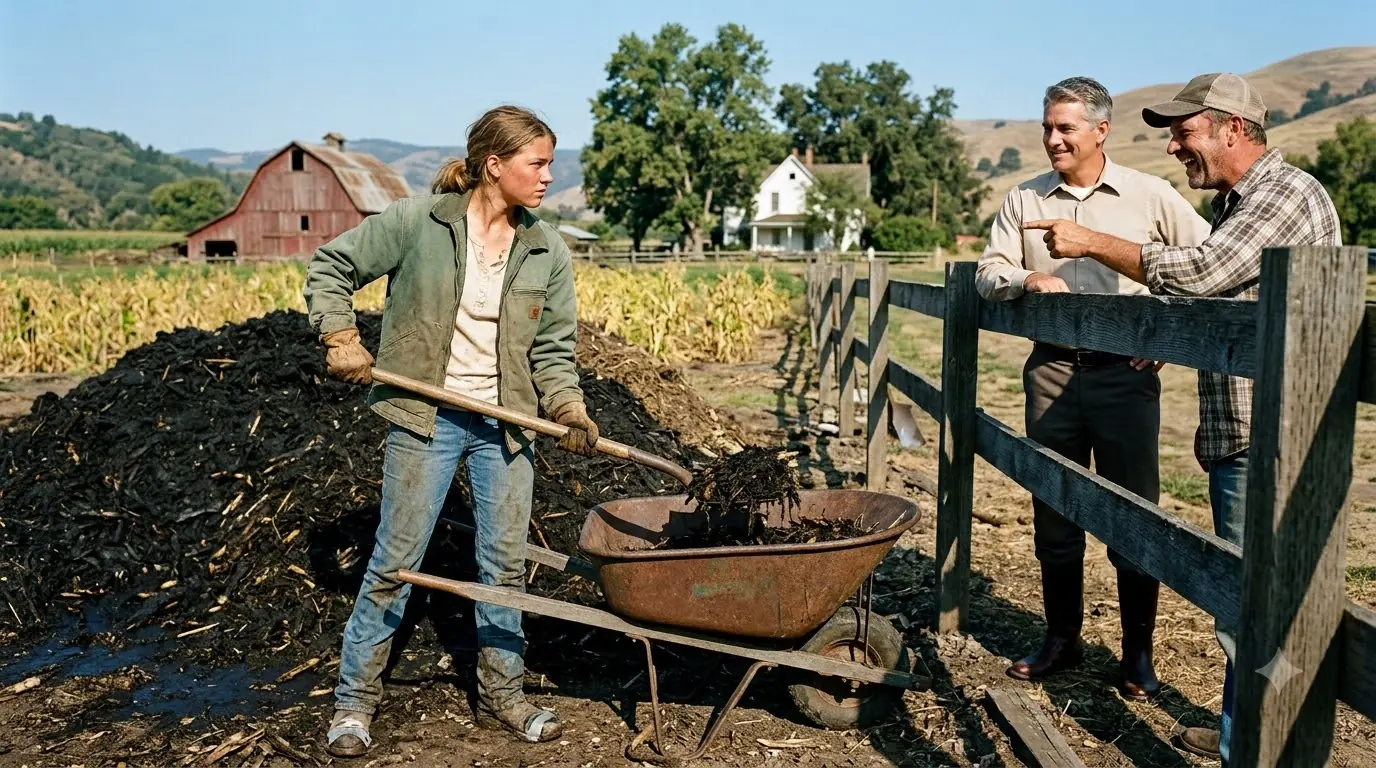
That thick fermented sweetness, half molasses and half rot, the kind of smell that settles into your hair and the inside of your nose and refuses to leave.
The grass near the fence line had turned the color of weak tea. Flies hung in slow, lazy spirals above the drainage ditch.
And beyond the fence, in the low corner of land her grandfather had once called the good bottom, a fresh black mountain of crushed cane and mill sludge steamed quietly in the early heat. She was 16. Her boots were taped at the toe.
Her hands were already chapped from the morning's work. And she had been watching this pile grow in one form or another for nearly 6 years. The Callaway Sugar Refining Company had been dumping there since she was 10. Quietly at first, then openly. Then with a kind of patient confidence that said no one was coming to stop them.
Her father had written letters. Her mother had stopped reading them out loud. The county clerk had a folder somewhere with their name on it that, as far as anyone could tell, had never been opened twice. Elsie stood on the porch and watched a fresh truck back up to the dumping ground, its tailgate yawning open like a tired mouth.
The driver didn't look at the house. They never did. What none of them knew, what she didn't know yet that morning, was that the black mountain poisoning her family's land was about to become the most valuable fertilizer in the county. And the quiet girl on the porch was the only person who would figure out how.
The Wren farm sat on the soft, rolling edge of a river valley in a county where the cane fields had once been the pride of three generations. 80 acres. A red barn that leaned slightly east.
A farmhouse painted the kind of white that had stopped being white sometime around 1994. Elsie's grandfather had worked that soil for 41 years and used to say the bottom land was so rich you could push a fence post in by hand and watch a sprout climb it by Sunday.
That was before the refinery expanded. Before a man in a tucked-in shirt arrived one autumn afternoon and explained that the back 40 of the Wren property happened to sit downwind, downhill, and conveniently adjacent to land the company had recently purchased. He used the word byproduct a great deal. He used the word temporary even more.
The dumping was meant to last a season, then a year, then until the new processing facility comes online. A phrase that Elsie learned could mean anything from 6 months to forever. The piles grew. The drainage shifted. The bottom land that had once grown sweet corn waist-high by July began to grow thin, yellow stalks that snapped in the wind.
The well water took on a faint sourness her mother refused to comment on. Her father went to the company offices three times. The first time he came home angry. The second time he came home quiet.
The third time he didn't talk about it at all. The manager, a man named Hal Brennan, was not cruel. That was almost the worst part. He was tired in the way men become tired when they have learned that nothing they say will ever be questioned.
He poured coffee. He spoke about regulatory timelines and operational realities and the unfortunate complexities of agricultural runoff. Then he walked her father to the door and forgot him before the door had finished closing. The neighbors were not much better.
Some of them worked at the refinery. Some of them simply did not want trouble. When Elsie's mother brought it up at the feed store, a woman named Dorothy Halsey, who had known Elsie since she was small, looked at the floor and said, "Honey, that's just how things are now." That, more than the smell, more than the trucks, more than the yellowing corn, was the moment Elsie understood that no one was coming.
She was 16 the day she stopped waiting. It began, like most real things begin, with something small and easy to miss. Late September, the kind of warm afternoon where the cicadas sound like a kettle that will not stop boiling.
Elsie was walking the fence line, checking for breaks, when she stopped near the oldest part of the dumping ground, a section long abandoned by the trucks in favor of fresher corners.
The pile had collapsed in on itself, flattened by rain, eaten at by weather. Grass had crept across the edges. And on the south side, half hidden under a curl of decomposing bagasse, she saw something that made her stop walking. A volunteer tomato plant, not a sad, struggling one, a thick, dark-leaved, almost arrogant tomato plant, taller than any in her mother's garden, hung with fruit so heavy the stems bowed.
Nothing else grew in that field. Nothing. She stood there for a long time, long enough for the sun to shift, and in that silence, for the first time in 6 years, she felt something other than helplessness. She felt curious. She didn't tell anyone, not that night, not the next morning.
She went to the small county library after school the following Tuesday and asked the librarian, a soft-spoken woman named Mrs. Penhalligan, for anything she had on composting.
Mrs. Penhalligan brought her three books, then four more by the end of the week, then began quietly setting aside agricultural extension pamphlets she found in the recycle bin from the university up north.