For as long as anyone in Caldwell County could remember, the Higgins family pond had been the one thing on the farm nobody touched.
It sat behind the old hay barn, three acres of dark water fringed with cattails, and every farmer in the county agreed on exactly one thing about it.
You don’t mess with a good pond.
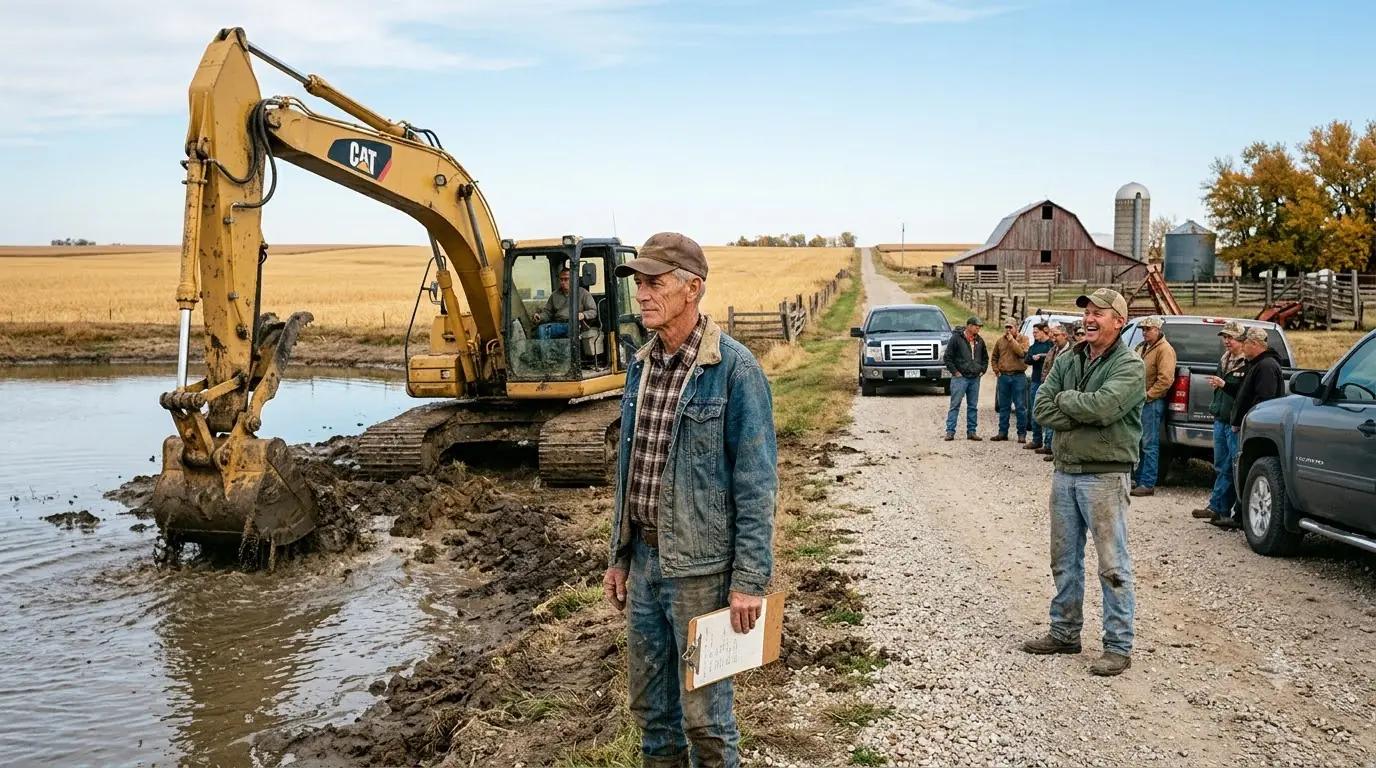
So, when 62-year-old Walter Higgins backed a rented excavator down his gravel lane and told his neighbor he intended to drain it dry, the neighbor laughed out loud right there in the driveway.
Within a week, half the township had heard about it.
Men who hadn’t spoken to Walter in years suddenly had opinions. At the feed store, at the diner on Route 9, in pickup trucks idling at the four-way stop, the question was the same.
Had Walter Higgins finally lost his mind?
Walter said nothing.
He kept the excavator running.
Three weeks into the draining, with the water level dropping a few inches a day, something started surfacing in the exposed mud.
Nobody could explain it.
Walter didn’t explain it, either.
He just kept working, calm as ever, while the whole county wondered what he’d seen in that pond that none of them ever had.
What did he know that everyone else missed?
Walter Higgins was not a man who argued.
In 62 years, he had built a reputation around the opposite habit.
He listened, he watched, and when he finally spoke, people tended to lean in.
He’d farmed the same 110 acres his whole adult life, the same land his grandfather Earl had cleared by hand in the 1930s.
And in all that time, Walter had developed one quiet, unshakable rule.
Before you change anything, you study it first.
For nearly a decade, he had been studying the pond.
Neighbors assumed he simply liked fishing there.
In truth, Walter spent those years noticing things that didn’t sit right.
The water level rose and fell on a schedule that had nothing to do with rainfall.