The last garden light was still standing when Marcus Reed reached the front steps. It leaned neither left nor right, cast no glare in the clean afternoon sun, and stood entirely inside the boundary of his property. Karen Whitmore raised a metal club over it as though those facts meant nothing.
“Stop,” Marcus said.
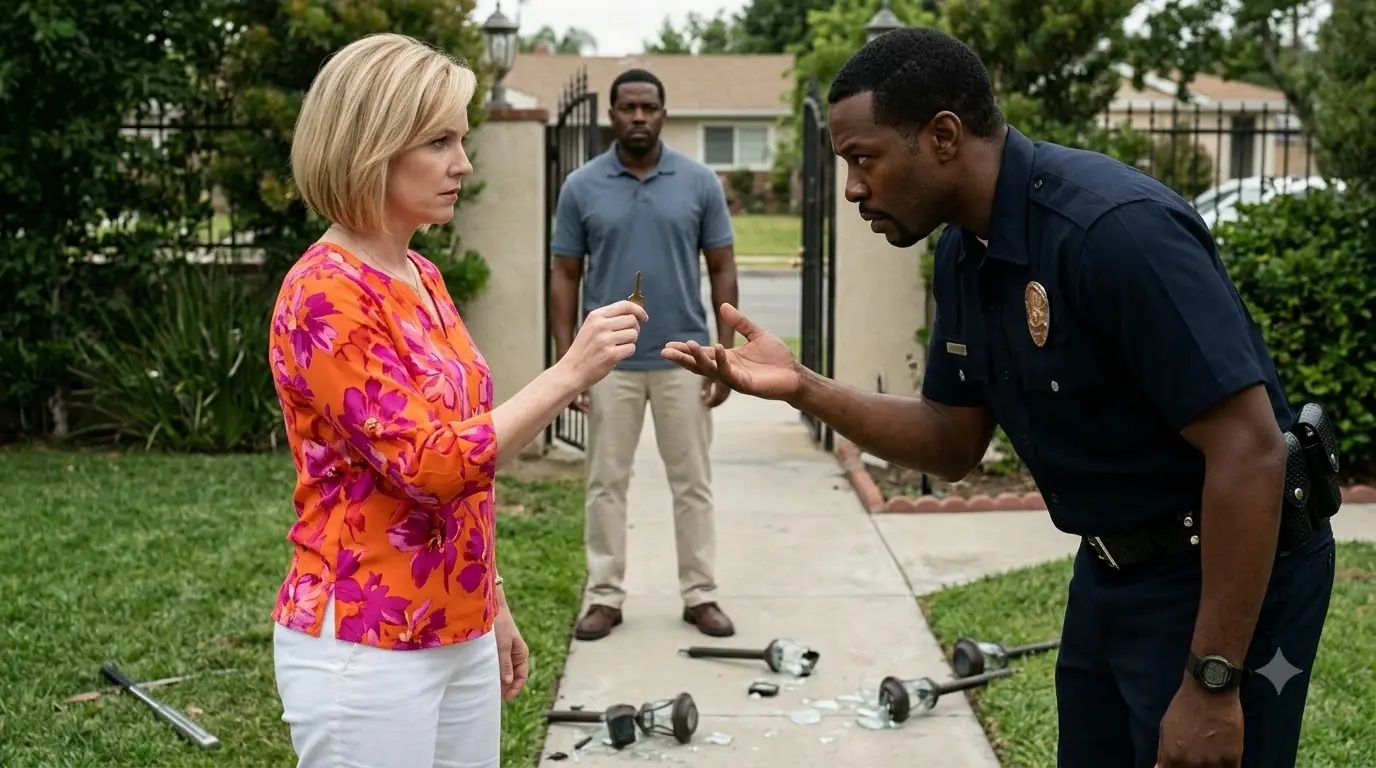
She looked toward him. For one brief second, he believed the word had reached her. Then her hand tightened, her shoulders turned, and the club came down.
Glass broke onto the walkway. A small piece struck the concrete near her white capri trousers and bounced into the grass. The fixture folded beneath the blow, joining the broken lights that marked the path from the sidewalk toward the house.
Marcus stopped several feet away. He was broad through the shoulders, dressed in a slate blue polo and beige trousers, with anger pulling hard at his jaw. He kept his hands at his sides.
Karen lowered the club and surveyed the yard. Orange and fuchsia flowers covered her blouse, bright against the wreckage. Her stiff blonde bob had barely shifted, and her smile looked almost pleased with a job completed.
“Maybe now you'll follow the rules.”
Marcus looked past her toward the side gate. It stood open. He remembered closing it, remembered the catch settling, and remembered thinking the day's argument could wait until someone answered the messages he had already sent.
“Get off my property,” he said.
Karen's smile widened. In her other hand, something brass caught the daylight.
That was the moment he understood that the broken lights were not the only question waiting in his yard. But twelve days earlier, the problem had begun with a sheet of paper and a sentence that seemed easy enough to answer.
Marcus found the first notice folded beside his front door. It had been placed neatly beneath the edge of the mat, where he could not miss it when he went outside. The heading referred to neighborhood appearance and lighting standards.
He read it standing on the porch. The notice said his garden lights were inconsistent with community expectations and required immediate attention. It named no specific defect, quoted no provision, and described no complaint from a person affected by them.
He looked at the walkway. The fixtures were low, set back from the edge, and directed downward. They illuminated the path at night without shining toward the road. In daylight, they looked like ordinary dark shapes among the planting beds.
He had installed them because the front path was difficult to see after sunset. The house's porch light reached the steps but left the turn near the gate in shadow. A few small fixtures made the walk easier without turning the yard into a display.
He had not thought of them as a statement. They were useful, modest, and placed where he could maintain them without disturbing anyone else. That was the sort of decision he liked making about his home: a problem noticed, a practical improvement made, and life continuing afterward.
Now someone had turned the improvement into a demand. Marcus read the notice again, then took it inside and opened the packet of association documents he kept in a drawer. He wanted to see whether he had missed something before deciding the message was unreasonable.