The Oliver 88 started on the third pull of the starter rod, just as it had on most October mornings for the past seventy-six years.
The engine coughed once, released a thin gray breath from the exhaust pipe, and settled into a slow, familiar rhythm. Earl Cotter stood beside the faded green tractor with one hand resting on the hood, listening carefully for anything unusual. He heard the steady knocking of old pistons, the light rattle near the fan housing, and the faint whistle from a gasket he planned to replace before winter.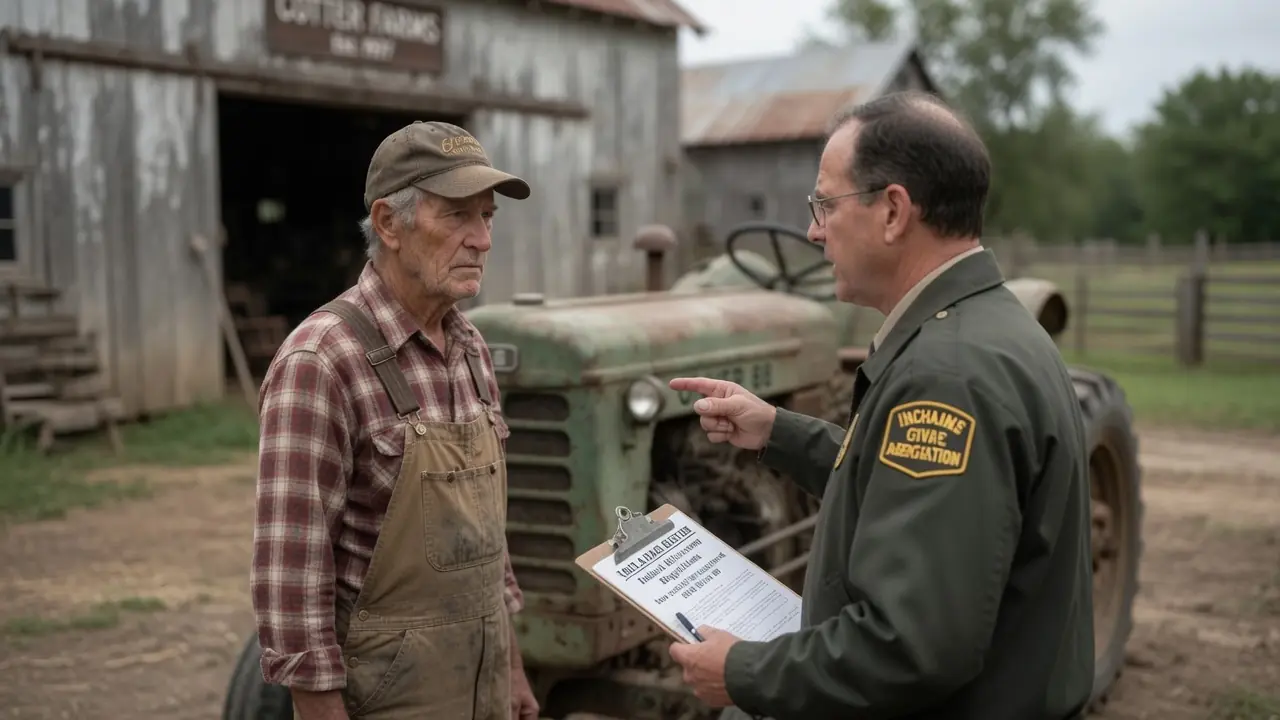
To anyone else, the machine sounded old.
To Earl, it sounded alive.
He climbed onto the metal seat and eased the tractor from the barn. The rear tires pressed deep tracks into the damp Indiana soil, passing beneath the wooden sign his father had hung above the doors in 1977.
COTTER FARMS
EST. 1947
The farm occupied one hundred and twelve acres outside Kendallville, where cornfields stretched between low hills and weathered barns. Earl had lived there almost his entire life. He knew which section flooded after heavy rain, where deer crossed the southern fence, and which maple tree turned red before every other tree in the county.
The Oliver had been part of the farm even longer than Earl.
His father, Henry Cotter, bought it used in 1963 from a neighboring farmer who was leaving for factory work. Earl had been six years old. He still remembered standing barefoot in the yard while Henry drove the machine home, its green paint brighter then and the white OLIVER lettering clean across the side.
Henry had lifted Earl onto the seat and placed the boy’s hands around the steering wheel.
“A machine lasts as long as someone respects what it tells them,” he had said.
Earl did not understand the words at six.
He understood them now.
For sixty-one years, the Cotter family had recorded every repair made to the tractor. The first notes were written by Henry in a narrow black ledger. Earl continued the tradition after taking over the farm, then transferred later records into binders when the original book became too fragile to handle regularly.
Every oil change had a date.
Every replaced belt, bearing, hose, seal, and spark plug had a receipt or handwritten entry. Even the engine rebuild in 1989 had photographs showing the machine taken apart across the barn floor. Henry believed machinery should never be repaired carelessly or forgotten after the work was done.
That morning, Earl planned to pull a wagon carrying fencing materials toward the eastern pasture. He had just connected the hitch when a white state vehicle turned from the county road. The truck moved slowly past the farmhouse, crossed the gravel yard, and stopped directly in front of the barn.
A circular emblem on the door read:
INDIANA AGRICULTURAL COMPLIANCE DIVISION
The driver stepped out carrying a clipboard.
He was a heavyset man in his early forties, wearing a dark green jacket with a state patch across the shoulder. His glasses had narrow metal frames, and his expression suggested he had already decided something before leaving the truck.
“Earl Cotter?” he called.
“That depends on what you’re selling.”
“I’m not selling anything.”
“That usually means it costs more.”
The man did not smile.
“Grant Holloway. State agricultural inspector.”
Earl climbed down from the tractor.
“What can I do for you?”
Grant glanced at the Oliver, then at the faint exhaust drifting above it. He wrote something on the form attached to his clipboard without asking a question.
“You can shut that machine down.”
Earl looked toward the engine.
“It is barely warm.”
“I said shut it down.”
Earl reached across the control panel and turned off the ignition. The engine slowed, coughed once, and became silent.
Grant stepped closer to the tractor.
“What year is it?”
“1948.”
“Original engine?”
“Mostly.”
“Diesel conversion?”
“Gasoline.”
“Emission-control system?”
Earl looked at him.
“It was built when people controlled emissions by turning the machine off.”
Grant wrote again.
“Then it is noncompliant.”
“With what?”
“Indiana Agricultural Equipment Emissions Standard 14-B.”
Earl had heard about the rule at the feed store. It required certain commercial agricultural machines to meet updated emissions limits or undergo approved modifications. The regulation primarily targeted heavily used diesel equipment operating near residential areas and public facilities.
Nobody had mentioned antique tractors.
Grant opened a yellow violation booklet and began writing Earl’s name across the top page.
“This machine cannot be operated after today.”
Earl stared at him.
“That tractor works fewer than fifty hours a year.”
“The law does not ask how sentimental you are about it.”
“I did not mention sentiment.”
“You farmers always do eventually.”
Grant walked around the Oliver, inspecting its rusted panels and worn tires. He took several photographs with a state-issued phone. When he reached the exhaust pipe, he shook his head.
“This thing belongs in a scrapyard.”
Earl’s voice became quieter.
“Be careful.”
Grant turned.
“Is that a threat?”
“No. It is advice.”
The inspector stepped toward him.
“Why are you still running this illegal rust heap—trying to poison the county?”
Earl’s jaw tightened.
“Because it fed this farm before you were old enough to hold that clipboard.”
Grant held out the violation form.
“Sign here.”
Earl did not take it.
“What am I signing?”
“Confirmation that you received notice to stop operating the tractor.”
“And if I refuse?”
“The notice remains valid.”
“What happens to the Oliver?”
“If you continue using it, the state may seize it.”
“May?”
Grant tapped the paper.
“That means a transport crew removes it from the property.”
“And then?”
“If the machine cannot be brought into compliance, it may be dismantled or destroyed.”
Earl stared at the inspector.
The autumn wind moved through dry corn stalks behind the barn. Somewhere near the house, a loose piece of metal struck softly against the porch railing. Earl could hear his father’s voice from decades earlier, warning him never to let anger move faster than understanding.
Grant pushed the clipboard closer.
“Sign now, or I’ll have this tractor seized and crushed.”
Earl looked at the paper but did not touch the pen.
“Show me the regulation.”
“You have the summary.”
“I did not ask for the summary.”
Grant gave an impatient sigh.
“The summary explains everything relevant.”
“To you, perhaps.”
“It was issued by the department.”
“Then the department can show me the complete law.”
Grant withdrew the clipboard.
“You may request it online.”
“I don’t have reliable internet in the barn.”
“Then go to the library.”
“You arrived here accusing me of violating a law you will not let me read.”
“I’m not responsible for your access to public information.”
Earl stepped toward the tractor’s hood.
“You are responsible for knowing whether your accusation is true.”
Grant’s face reddened.
“I know the rule.”
“Then quote the section that applies to a seventy-six-year-old tractor.”
The inspector opened the yellow booklet and pointed to a paragraph on the second page.
“All agricultural equipment operating for commercial production must meet the emissions standards listed in Appendix C.”
“Where is Appendix C?”
“In the full regulation.”
“And you did not bring it?”
Grant closed the booklet.
“I brought the enforcement summary.”
Earl crossed his arms.
“Then you brought half an answer and a complete threat.”
The insult landed.
Grant removed a red tag from his vehicle and tied it around the Oliver’s steering wheel. The card declared the tractor temporarily prohibited from operation pending compliance review.
“You have ten business days to appeal,” he said.
Earl read the tag.
“Where?”
“The county agricultural office.”
“What documents do I bring?”
“Proof of modification, inspection certification, or evidence the equipment is exempt.”
Earl looked up.
“Exempt?”
Grant hesitated.
“Certain categories may be excluded.”
“Which categories?”
“You can read the regulation.”
Earl pointed toward the road.
“Then I suggest you do the same before you return.”
Grant walked back to his truck.
“Operating the machine before your appeal is resolved will increase the penalty.”
“How much?”
“Up to five thousand dollars.”
“For driving my father’s tractor across my own farm?”
“For ignoring a lawful order.”
Earl watched the state truck disappear beyond the cornfield. He remained beside the Oliver until the sound of its engine faded completely. Then he reached toward the red tag but stopped before removing it.
Taking it down would feel satisfying.
Keeping it there would preserve evidence.
Earl walked into the farmhouse and called his daughter, Anna.
She lived twenty minutes away and taught history at the local high school. When Earl explained what happened, she initially believed he was exaggerating Grant’s threat.
“He said they could crush Grandpa’s tractor?”
“Those were his words.”
“Did you record him?”
“No.”
“Did anyone hear it?”
“The Oliver.”
“Unfortunately, tractors are poor witnesses.”
Anna arrived before noon carrying a laptop and two grocery bags. Earl refused the groceries but accepted the laptop. They sat at the kitchen table where Henry’s original maintenance ledger rested beneath a cloth.
The regulation was difficult to find.
The department’s website displayed a four-page summary almost identical to Grant’s booklet. The summary used broad language, stating that agricultural machinery used for commercial production had to meet current standards.
Anna searched for the full text.
After fifteen minutes, she found a link buried beneath meeting records from the state environmental board. The document was forty-seven pages long and had been uploaded as a scanned file that could not be searched by keyword.
“That feels intentional,” Earl said.
“It may only be incompetent.”
“Sometimes the difference is unimportant.”
They began reading from page one.
The first sections defined emissions, engine classes, commercial operations, inspection authority, and penalties. The rules contained exceptions for emergency vehicles, research equipment, temporary interstate transport, and machines used exclusively for private collections.
Nothing clearly protected Earl’s tractor.
Page twenty-nine described equipment manufactured before modern testing standards. It required a case-by-case assessment if the machine operated more than a specified number of hours annually.
Earl leaned closer.
“Keep reading.”
Page thirty contained diagrams showing approved identification plates. The Oliver had no modern plate, only a faded serial number stamped near the engine block.
Anna turned to page thirty-one.
Halfway down the page, beneath a section titled LIMITED HISTORIC AGRICULTURAL MACHINERY EXEMPTION, she stopped.
“Dad.”
Earl saw the words.
The exemption applied to agricultural equipment manufactured at least fifty years before the regulation’s effective date, provided the machine retained historical characteristics, operated fewer than one hundred hours annually, and had documented service or ownership history. Eligible equipment could continue limited farm use if it passed a basic safety inspection and was not operated for large-scale commercial contracting.
The 1948 Oliver met every condition.
Earl read the paragraph twice.
Then he sat back.
“Page thirty-one.”
Anna smiled.
“Page thirty-one.”
He looked toward the barn through the kitchen window.
“The man threatened to crush it without reading page thirty-one.”
“Maybe he read it and assumed you had no records.”
Earl uncovered Henry’s ledger.
“Then he chose the wrong farmer.”
The following morning, Earl began assembling evidence.
He carried every binder from the barn office into the house and arranged them by decade. Receipts from 1963 showed Henry purchasing the tractor for eight hundred and seventy-five dollars. Fuel logs documented limited seasonal use, while tax records proved the Oliver had never been rented for contract farming.
Anna photographed each page.
Earl contacted Walter Dean, the retired mechanic who rebuilt the engine in 1989. Walter was eighty-four, hard of hearing, and delighted to learn that someone finally cared about the work.
“I told your father that engine would outlive us,” Walter said.
“You may still be right.”
Walter signed a statement confirming the rebuild preserved the original block and major mechanical design. He also produced three photographs from the repair, including one showing Henry standing beside the disassembled engine.
Earl’s granddaughter, Molly, helped organize the records.
At sixteen, she had little interest in tractors before the violation. Yet she became fascinated by the handwritten notes filling the old ledger. One entry from 1974 described Earl accidentally driving through a fence while learning to reverse a hay wagon.
“You destroyed Great-Grandpa’s fence?”
“I improved the ventilation.”
“He charged you for six posts.”
“He believed in consequences.”
Molly turned another page.
“These records are like a family diary.”
Earl looked toward the barn.
“That tractor was present for most of the important days.”
Henry used it to clear snow when Anna was born during a blizzard. It pulled the wedding wagon when Earl married his late wife, Susan. Years later, it carried Susan’s memorial flowers through the fields she loved.
The Oliver was not valuable in the way modern machinery was valuable.
It could not compete with newer tractors for speed, efficiency, or power. Its market price might not cover the cost of a replacement engine. Yet removing it from the farm would erase a physical connection running through four generations.
Earl filed his appeal on the third day.
The county hearing was scheduled for the following Tuesday in a government building beside the courthouse. Grant Holloway would attend as the issuing inspector. A three-person agricultural review panel would determine whether the red tag remained valid.
Earl arrived carrying a wooden crate filled with binders.
Grant sat at the opposite table with his clipboard and the same yellow enforcement summary. He looked at the crate and smiled.
“You brought the tractor’s entire life story?”
“Only sixty-one years of it.”
The review chair, Patricia Sloan, opened the hearing.
Grant spoke first.
He described the Oliver as visibly outdated, lacking emissions controls, and releasing exhaust inconsistent with modern standards. He stated that Earl refused to cooperate with the shutdown order and became confrontational.
Earl waited until Patricia invited him to respond.
“Did I remove the red tag?”
“No,” Grant admitted.
“Did I operate the tractor afterward?”
“Not that I know.”
“Did I threaten you?”
“You told me to be careful.”
“After you called my father’s tractor scrap.”
Grant shifted in his chair.
Patricia redirected the discussion.
“Mr. Cotter, are you claiming exemption?”
Earl opened the full regulation.
“Yes, ma’am.”
He turned it toward Grant and placed one finger beneath the relevant paragraph.
“Page thirty-one.”
Grant glanced down.
His face changed only slightly, but Earl saw it.
Patricia read the section aloud. The second panel member began reviewing the maintenance records, while the third examined photographs showing the tractor’s serial number and long-term use.
Grant reached for the regulation.
“This exemption requires documented service history.”
Earl placed the original ledger on the table.
“Here it is.”
“It also limits annual operation.”
Earl opened another binder.
“Fuel and hour logs.”
“The machine must retain historic characteristics.”
“Photographs from the 1989 rebuild, plus a signed statement from the mechanic.”
Grant’s voice became sharper.
“These documents have not been independently verified.”
Walter Dean stood from the back row.
“I can verify them.”
Everyone turned.
Walter lifted his cane.
“I rebuilt that motor with Henry Cotter, and if this gentleman knows more about it than I do, he can explain why the exhaust manifold still carries the weld I made after Henry dropped it.”
Grant said nothing.
Earl slid the full regulation across the table.
“Read page thirty-one, Grant. Then explain why you tried to seize a machine the law protects.”
Patricia asked Grant whether he had reviewed the historic exemption before issuing the violation.
“I relied on departmental guidance.”
“Did the guidance include this exemption?”
“The field summary does not list every exception.”
“Did you ask the machine’s age?”
“Yes.”
“Did you request maintenance history?”
“No.”
“Did you inform Mr. Cotter that a historic exemption might apply?”
Grant looked toward Earl.
“I told him certain categories could be excluded.”
“After threatening seizure,” Earl said.
Patricia raised one hand.
The panel recessed for twenty minutes.
When they returned, the decision was unanimous. The violation was canceled, the red shutdown tag was declared invalid, and the Oliver was granted provisional historic-equipment status pending a basic safety inspection.
Earl did not smile immediately.
He looked toward Grant.
“What about the next farmer?”
Patricia paused.
“What do you mean?”
“The next person he visits may not have a daughter who finds hidden documents or sixty-one years of receipts. Your summary makes the rule sound absolute, while the actual regulation contains an exemption on page thirty-one.”
The second panel member nodded.
“That concern is outside today’s individual appeal.”
“It should not be.”
Grant gathered his papers.
“The department cannot print forty-seven pages for every inspector.”
“No,” Earl said. “But it can print one sentence saying old machinery may qualify for protection.”
Patricia promised to refer the matter to the division director.
Earl had heard government promises before.
He decided not to rely on one.
Anna contacted a local newspaper and shared the regulation, violation notice, and appeal decision. The resulting story appeared two days later under the headline:
FARMER SAVES HISTORIC TRACTOR AFTER INSPECTOR MISREADS EMISSIONS RULE
The article spread across farming communities.
Owners of antique equipment began reviewing their own notices. Within a week, three farmers challenged violations involving tractors older than fifty years. Two qualified for the same exemption.
The department could no longer call Earl’s case an isolated misunderstanding.
A state legislative committee requested an explanation. Under questioning, officials admitted that the field summary failed to mention the historic-machinery provision. Inspectors had been trained to issue notices first and let owners raise exemptions through appeals.
Earl listened to the hearing on the radio while replacing the Oliver’s cracked fuel hose.
“That sounds backward,” Molly said.
“It is efficient for the office.”
“What about the farmers?”
“They are not the office.”
The department revised the summary.
A new box appeared on the first page:
EQUIPMENT FIFTY YEARS OR OLDER MAY QUALIFY FOR HISTORIC AGRICULTURAL EXEMPTION. REVIEW SECTION 14-B.9, PAGE 31, BEFORE ISSUING A SHUTDOWN NOTICE.
Inspectors also received updated training.
Grant Holloway was not fired.
The review found that he followed an incomplete enforcement guide but used unnecessarily threatening language and failed to investigate obvious evidence of historic status. He received formal discipline and was required to repeat certification training.
Three months later, Grant returned to Cotter Farms.
Earl saw the state truck and walked toward the barn, expecting another inspection. Grant climbed out without a clipboard.
“I came to apologize.”
Earl waited.
“I should have read the full rule.”
“Yes.”
“I should not have threatened to crush the tractor.”
“No.”
Grant looked toward the Oliver.
“I thought you were another farmer refusing change because something old felt familiar.”
“And I thought you were another inspector who valued authority more than accuracy.”
Grant lowered his eyes.
“Perhaps we were both partly right.”
Earl considered that.
“Would you like to hear it run?”
Grant appeared surprised.
“After what I did?”
“Hearing it does not forgive you.”
Earl started the engine.
The Oliver settled into its familiar rhythm. Grant listened beside the hood, no longer looking only at the smoke, rust, or missing emissions equipment.
“How many hours does it run each year?” he asked.
“Thirty or forty.”
“What do you use it for?”
“Hay wagons, fence work, parades when Molly talks me into them.”
Grant touched the edge of the hood carefully.
“My grandfather had an old Farmall.”
“What happened to it?”
“My uncle sold it after he died.”
Grant watched the engine.
“I wish he hadn’t.”
Earl understood then that rules were not the only reason Grant had treated the Oliver as disposable. Sometimes people rejected the value of old things because admitting that value forced them to remember what they had already lost.
The safety inspection took place that spring.
The Oliver passed after Earl replaced two lights, repaired the brake linkage, and installed a slow-moving-vehicle reflector. Its exhaust remained smoky by modern standards, but its limited use and historic status allowed operation under the exemption.
The story might have ended there.
Instead, a curator from the Indiana State Museum contacted Earl after seeing the newspaper photographs. The museum was developing an exhibit about postwar farming and wanted to document machines that remained in working condition.
Earl initially refused.
“The tractor belongs on the farm.”
“We are not asking you to donate it immediately,” curator Helen Ward explained. “We would like to display it temporarily and preserve its records digitally.”
Earl looked toward Molly.
She was trying very hard not to look excited.
“How temporary?”
“Six months.”
“Who starts it?”
“A trained conservation technician.”
“Who taught the technician?”
Helen smiled.
“You can.”
The Oliver entered the museum the following winter.
Before it left Cotter Farms, Earl drove it one final time around the eastern pasture. Molly sat beside him on a small metal platform, holding the old ledger against her chest.
“You think Great-Grandpa would approve?” she asked.
“He would complain about strangers touching the carburetor.”
“That means yes?”
“That means he would approve after complaining.”
At the museum, the tractor stood beneath a sign reading:
THE COTTER FAMILY OLIVER 88
IN CONTINUOUS FARM USE, 1963–2024
PRESERVED THROUGH FOUR GENERATIONS
Beside it, visitors could view digital pages from the maintenance ledger. The exhibit included Henry’s handwritten entries, Walter’s engine-rebuild photographs, the invalid violation tag, and a copy of page thirty-one.
Molly designed the final display panel.
Its title read:
READ THE WHOLE RULE BEFORE DESTROYING THE HISTORY IT WAS WRITTEN TO PROTECT.
Earl visited the exhibit with Anna on opening day.
Children climbed onto a stationary tractor seat nearby while older farmers stopped in front of the Oliver and told stories about machines their own families once owned. Some spoke with pride. Others spoke with regret.
Grant attended quietly.
He remained near the back until Earl noticed him.
“You came,” Earl said.
“I wanted to see where the rust heap ended up.”
Earl raised an eyebrow.
Grant smiled carefully.
“That was a joke.”
“You need more training.”
They stood together before the tractor.
The Oliver did not look expensive beneath the museum lights. Its paint remained faded, the seat carried cracks, and one repaired panel showed a slight difference in color.
Yet every mark now had context.
The rust was not neglect.
The repairs were not signs of worthlessness.
They were proof that generations had considered the machine valuable enough to keep working.
When the six-month exhibition ended, Earl faced a choice. The museum offered to acquire the Oliver permanently, guaranteeing professional preservation. Cotter Farms could continue borrowing it for selected public events, but the machine would no longer perform daily field work.
Earl spent several nights considering the decision.
The tractor had been built to work.
Placing it behind a barrier felt almost like silencing it. Yet the farm now used newer equipment, and the Oliver’s clutch had become increasingly difficult for Earl’s knee.
Molly offered the answer.
“Let it teach.”
Earl looked at her.
“Grandpa Henry used it to teach you farming. You used it to teach me. Now it can teach people why old things matter.”
He signed the agreement.
The museum paid a fair price, but Earl directed most of the money toward an agricultural-history scholarship for students from farming families. Applicants did not need perfect grades. They had to submit a project showing how traditional knowledge could solve a modern problem.
Earl named it the Henry Cotter Working Heritage Scholarship.
On the day the Oliver officially became museum property, Earl placed the original ignition key inside the curator’s hand. He kept a duplicate Henry had made decades earlier.
“That key will not start it anymore,” Helen warned.
“I know.”
“Then why keep it?”
Earl closed his fingers around the small piece of metal.
“Not everything valuable has to keep doing its old job.”
Years later, visitors still stopped beside the Oliver 88.
Most read about the exemption and the inspector who overlooked it. Some focused on the confrontation, imagining the satisfaction Earl must have felt when page thirty-one defeated the shutdown order.
Earl remembered something different.
He remembered his father’s hands guiding his toward the steering wheel. He remembered Anna riding behind him through the snow and Molly discovering family history inside an oil-stained ledger. He remembered sixty-one years of people repairing something because replacement was not always the same as improvement.
Grant had seen rust and assumed uselessness.
The department had seen emissions and forgotten history.
Earl had demanded the complete truth before surrendering what could never be replaced.
The Oliver survived not because every old machine deserved exemption from every modern rule. It survived because the law had already balanced safety with preservation, and one farmer was stubborn enough to read beyond the summary.
Page thirty-one did more than cancel a violation.
It protected a family’s memory, corrected an unfair enforcement system, and transformed an aging tractor from threatened scrap into a public legacy.
Above the museum display hung one final quotation from Earl.
“A rule should protect people without teaching them to throw history away.”
Beneath those words, the old Oliver stood quietly.
Its engine no longer worked the fields each morning.
But it was still doing useful work.