He lay still on the narrow sofa in his Indianapolis apartment, listening to rain tap against the windows and counting the seconds between the distant rolls of thunder. On the coffee table sat a blue folder containing three copies of his résumé, a list of references, and the invitation to the most important interview of his life. If he received the operations supervisor position at Carter Logistics, the salary would be nearly twice what he earned repairing delivery vans at night.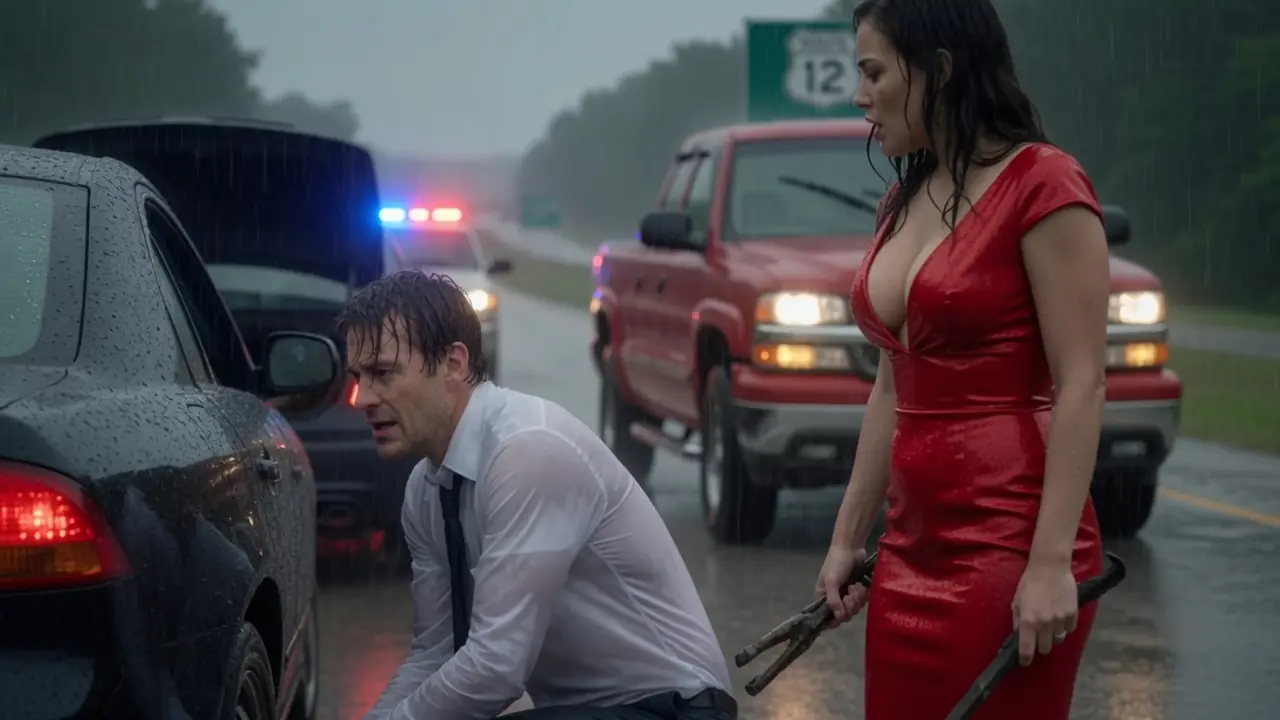
For the first time in two years, Luke might be able to stop choosing which bills could wait.
He rose quietly and folded the blanket before walking toward the small bedroom at the end of the hall. His eight-year-old son, Noah, slept beneath a faded dinosaur comforter with one arm wrapped around a stuffed tiger. A paper calendar hung beside the bed, and Noah had drawn a bright red circle around that morning’s date.
DAD’S BIG INTERVIEW was written inside it in uneven blue letters.
Luke stood in the doorway longer than he intended.
Two years earlier, Noah’s mother, Rachel, had died after a sudden illness that moved through their lives faster than either of them could understand. Since then, Luke had learned how to braid hair for school plays, pack lunches without forgetting fruit, and smile while receiving bills he did not know how to pay. He had also learned that children could notice fear even when adults never spoke its name.
Noah opened one eye.
“Are you nervous?”
“I thought you were asleep.”
“I was checking.”
Luke walked in and sat beside him.
“Checking what?”
“To see if you were nervous.”
“And what did your investigation discover?”
Noah studied his father’s face.
“You look like you’re going to throw up.”
Luke laughed softly.
“That is a very professional assessment.”
“You’re going to get the job.”
“You don’t know that.”
“I do.”
Noah pushed himself upright and reached toward the nightstand. He handed Luke a folded piece of construction paper containing a drawing of two stick figures standing beside a large building. One figure wore a tie, while the smaller one held a sign reading MY DAD DID IT.
Luke swallowed.
“This is for after the interview?”
“It’s for before, so you don’t forget.”
“Forget what?”
“That you’re good at fixing things.”
Luke looked at the drawing.
The Carter Logistics position involved supervising maintenance schedules, coordinating drivers, and reducing breakdowns across a regional fleet of more than two hundred trucks. Luke had no college degree, but he had spent sixteen years repairing engines, organizing parts inventories, and keeping old vehicles operating on budgets that should have made it impossible. His former manager had recommended him after Carter Logistics announced it would consider practical experience instead of formal education.
Luke wanted the job badly enough to be frightened by it.
He kissed Noah’s forehead and stood.
“Mrs. Alvarez will take you to school.”
“I know.”
“Your lunch is in the refrigerator.”
“I know.”
“Do not trade all your carrots for cookies.”
Noah gave him an innocent expression.
“I have never done that.”
“You did it Friday.”
“That was a business transaction.”
Luke smiled and walked toward the door.
Noah called after him.
“Dad?”
Luke turned.
“Even if you don’t get it, you’re still the person in my picture.”
Those words stayed with him as he dressed.
His only white dress shirt had been ironed beneath a towel because the apartment did not have an ironing board. The dark suit came from a charity shop and fit well enough if Luke kept the jacket buttoned. Rachel had given him the navy tie on their fifth wedding anniversary, joking that every man needed one tie that made him appear more responsible than he actually was.
He stood before the bathroom mirror and adjusted it twice.
The interview was scheduled for nine thirty at Carter Logistics’ regional headquarters north of Indianapolis. Under normal conditions, the drive would take forty minutes. Luke left at seven forty-five because the storm had flooded several streets and slowed traffic across the city.
His aging sedan started on the second attempt.
Luke placed the résumé folder on the passenger seat, checked the fuel gauge, and whispered, “Please cooperate today.”
The car had no response, which he considered promising.
Rain swept across the windshield as he entered the highway. Trucks moved cautiously through sheets of water, their tires throwing heavy spray across neighboring lanes. Luke kept both hands on the steering wheel and repeated the answers he had practiced the night before.
How would you handle a driver who repeatedly ignored maintenance warnings?
How would you reduce vehicle downtime without increasing costs?
Why should Carter Logistics choose you over candidates with management degrees?
Luke had answers for all of them.
He had spent his entire adult life solving problems with limited time, limited money, and no room for failure. He knew how to explain that professionally, though the truth sounded simpler inside his head.
People depended on him, so he found a way.
At eight thirty-seven, traffic began moving normally. Luke calculated that he would arrive forty minutes early. He imagined sitting in the parking lot, drying his palms, reviewing his notes, and calling Noah before entering the building.
Then he saw the dark sedan on the shoulder.
Its hazard lights blinked weakly through the rain. A woman in a blue dress stood beside the rear tire, trying to position a jack on the wet pavement. Her hair was soaked, and passing vehicles sent waves of water dangerously close to her feet.
Luke drove past her.
For three seconds, he kept going.
He looked at the dashboard clock.
Eight thirty-nine.
He had time, but not much once the tire was changed. The storm was worsening, and stopping beside a busy highway carried risks of its own. He told himself that roadside assistance existed for a reason and that another driver would call for help.
Then he looked in the rearview mirror.
The woman bent beside the tire as a truck passed, its wake forcing her backward. She caught the side of the car before falling.
Luke exhaled.
“Of course.”
He slowed, moved onto the shoulder, and reversed carefully until his car was parked several yards in front of hers. By the time he stepped outside, rain had already soaked the shoulders of his suit.
The woman turned sharply.
“I’ve called for assistance.”
“I’m sure you have.”
“They said it could take two hours.”
“That sounds less helpful.”
Luke approached the damaged wheel. The tire had split along the sidewall, and the jack she had positioned was dangerously close to unstable ground.
“Move away from the road,” he said.
“I can manage.”
“I believe you.”
She stared at him.
“Then why are you taking the wrench?”
“Because believing you can do something doesn’t mean I should watch you get hit while doing it.”
The woman looked toward the traffic. Another truck passed, shaking the sedan with its wind.
She stepped closer to the passenger side.
Luke removed his suit jacket and placed it inside her car. His white shirt became transparent across the shoulders almost immediately. He loosened his tie, rolled up his sleeves, and examined the jack.
“You positioned this correctly at first,” he said.
“At first?”
“The ground shifted beneath it.”
“I watched three videos.”
“You chose better videos than most people.”
The woman smiled despite herself.
Her name, she told him, was Evelyn Carter. Luke noticed it only as a name because Carter was common enough in Indiana and his attention remained on the wheel. He did not connect it to the company listed on the folder inside his car.
“You are going somewhere important,” Evelyn said.
Luke glanced at his wet shirt.
“What gave it away?”
“The tie.”
“It usually makes me look responsible.”
“At the moment, it makes you look as though you escaped from a very formal swimming pool.”
Luke laughed.
“I have a job interview.”
Evelyn’s expression changed.
“What time?”
“Nine thirty.”
She checked her watch.
“You need to go.”
“The tire is still flat.”
“I’ll wait inside.”
“Your car is too close to the traffic lane.”
“I can move it after you loosen the wheel.”
“Not safely.”
Evelyn took a step toward him.
“Sir, I appreciate what you’re doing, but you should leave.”
Luke kept working.
“I already stopped.”
“You could still make your interview.”
“And spend the entire drive wondering whether your jack collapsed?”
“That would be my responsibility.”
Luke looked up.
“One day my son may be standing somewhere in the rain needing help. I have to believe someone would stop for him, even if they had somewhere important to be.”
The words silenced her.
Luke returned to the wheel. One lug nut had been tightened far beyond the correct torque, forcing him to use his full weight against the wrench. It finally moved with a sharp crack.
Evelyn held an umbrella over him, though the wind made it nearly useless.
“How old is your son?”
“Eight.”
“Does he know about the interview?”
“He drew a calendar.”
“So no pressure.”
“None at all.”
“What position are you applying for?”
“Operations supervisor.”
Evelyn’s grip tightened around the umbrella.
“Where?”
“Carter Logistics.”
For the first time, she looked genuinely startled.
Luke noticed but misread the reason.
“You’ve heard of them?”
“I have.”
“They operate several distribution centers across the Midwest.”
“So I’ve been told.”
“The job could change things for us.”
Evelyn looked toward the rainwater running down his face.
“And yet you stopped.”
Luke shrugged.
“I thought I had enough time.”
“You no longer do.”
“I noticed.”
The replacement tire was stored beneath the trunk floor. Luke found that its air pressure was low but usable for the short drive to a service station. He installed it, tightened the lug nuts in sequence, and lowered the vehicle.
When he stood, pain moved through his lower back.
Evelyn reached for his arm.
“Are you all right?”
“Just discovering that I’m no longer twenty-five.”
She looked at his oil-darkened hands, soaked shirt, and ruined trousers.
“You’ve destroyed your interview clothes.”
“They were not particularly expensive.”
“That is not the point.”
Luke wiped his hands on an old rag from her trunk.
“The tire is secure. Drive slowly and stop at the first service station.”
Evelyn watched him.
“Why did you risk losing your future just to help a stranger in the rain?”
Luke looked toward the highway.
“Because one day my son may need help too, and I hope someone chooses kindness over convenience.”
Evelyn’s expression softened.
“May I see your résumé?”
Luke blinked.
“My résumé?”
“You said you were applying for operations supervisor.”
“It’s inside my car.”
“Bring it.”
He stared at her for a second, then walked through the rain and retrieved the blue folder. Water had entered through the imperfect door seal, soaking one corner. He handed her the driest copy.
Evelyn read the name.
Luke Bennett.
Her eyes moved down the page, pausing at his years of fleet maintenance experience, his safety record, and the recommendation from his previous employer. Then she looked at the interview invitation.
Luke saw the Carter Logistics logo reflected in her eyes.
Her voice became quieter.
“Luke, I’m the CEO who was waiting to interview you.”
For a moment, he thought he had misunderstood.
“You’re Evelyn Carter?”
“Yes.”
“The Evelyn Carter?”
“I’m never certain how to answer that.”
Luke looked at the flat tire, his ruined shirt, and the wrench still in his hand.
“You were supposed to interview me?”
“I asked to sit in on the final candidates this morning.”
He exhaled slowly.
“Then I suppose you’ve already seen who I really am.”
Evelyn folded the résumé carefully.
“I have seen one important part.”
Luke glanced at the clock.
Nine twenty-four.
“I’m still late.”
“So am I.”
“You’re the CEO.”
“That makes lateness more visible, not more acceptable.”
Luke almost smiled.
Evelyn handed the résumé back.
“Follow me to the service station. Then we’ll go to headquarters.”
“In these clothes?”
“You can explain what happened.”
“It will sound like I invented a heroic roadside story after arriving late.”
“I’ll support your version.”
“That may help.”
The service station was four miles away. Evelyn drove slowly, while Luke followed with his hazard lights on. By the time they arrived, the replacement tire had softened further but remained intact.
Evelyn called her assistant and arranged for the sedan to be collected.
Luke stood beneath the station awning, water dripping from his trousers.
“You don’t have to continue the interview today,” she said.
“I do.”
“You could return tomorrow.”
“Tomorrow I might wonder whether I received special treatment.”
“You helped me before you knew who I was.”
“That is exactly why it could look like special treatment now.”
Evelyn studied him.
“What do you suggest?”
“Interview me with everyone else.”
“You missed the scheduled panel.”
“Then give me whatever time remains and judge me like the other candidates.”
Evelyn nodded slowly.
“All right.”
They reached Carter Logistics at ten twenty-three. The headquarters building was a wide structure of steel and glass overlooking a yard filled with white delivery trucks. Luke parked beside Evelyn’s replacement vehicle and followed her through the main entrance.
Every employee they passed greeted her by name.
Luke felt his stomach tighten.
The receptionist looked at his soaked clothing and started to explain that service personnel entered through another door. Then she saw Evelyn beside him and stopped mid-sentence.
“This is Luke Bennett,” Evelyn said. “He had a difficult commute.”
Luke looked toward her.
“That is one description.”
The interview panel consisted of Evelyn, regional director Thomas Reed, human resources manager Karen Shaw, and fleet engineering chief Marcus Bell. They had already completed interviews with three candidates and were visibly irritated by the delay.
Thomas looked at Luke’s shirt.
“Mr. Bennett, your interview was scheduled nearly an hour ago.”
“Yes, sir.”
“Do you usually arrive this late for important commitments?”
“No.”
“Then what happened?”
Luke glanced at Evelyn.
“My car encountered no trouble. I stopped to help another driver change a flat tire.”
Thomas turned toward the CEO.
Evelyn folded her hands.
“I was the driver.”
The panel’s posture changed immediately.
Luke noticed and disliked it.
“With respect,” he said, “I would prefer that not to count as an answer to any question.”
Karen raised an eyebrow.
“You do not want the CEO’s endorsement?”
“I want the position if I can do the work.”
Marcus leaned forward.
“That may be the best answer we’ve heard today.”
The interview began.
Luke explained how he would reorganize preventative maintenance around mileage, load, and route conditions instead of fixed dates. He described a color-coded inspection system he had created at his previous garage, reducing missed repairs without purchasing new software.
Thomas challenged him on his lack of management education.
Luke did not become defensive.
“I haven’t studied management in a classroom,” he said. “But I have supervised mechanics, negotiated with suppliers, trained apprentices, and kept vehicles on the road when missing a delivery meant people did not receive medicine.”
“What happens when an experienced driver refuses your instructions?” Thomas asked.
“I ask why before deciding he is difficult.”
“And if he is simply difficult?”
“Then I document the problem, explain the consequence, and enforce the rule.”
“You sound patient.”
“I’m raising an eight-year-old. It would be embarrassing if some of that training didn’t transfer.”
Evelyn smiled.
The interview seemed to be going well until Marcus placed a maintenance report on the table. One of Carter Logistics’ distribution trucks had suffered repeated overheating despite three repairs. Each candidate had been asked to review the report and recommend a next step.
Luke studied it for several minutes.
“The cooling system isn’t the primary problem.”
Marcus leaned back.
“What is?”
“The vehicle carries refrigerated cargo.”
“Yes.”
“The compressor load increases whenever the truck stops in traffic.”
“That is normal.”
“But the overheating occurs only on city routes, never during highway runs.”
Luke traced the temperature records with one finger.
“The cooling fan controller is receiving the wrong engine-load signal. The shop keeps replacing mechanical parts because the software data looks normal when the refrigeration unit is off.”
Marcus’s expression sharpened.
“That fault was confirmed this morning.”
Thomas looked impressed despite himself.
“How did you identify it?”
“Because I had the same failure on three delivery vans six years ago.”
The panel asked more questions. Luke answered honestly when he knew something and admitted when he did not. He did not decorate uncertainty with impressive language.
At noon, the interview ended.
Karen told him the company would contact him by Friday.
Luke stood.
“Thank you for seeing me despite the delay.”
Thomas offered his hand.
“Thank the CEO.”
Luke shook it.
“I thanked her by changing the tire.”
Evelyn followed Luke into the hallway.
“You are difficult to help.”
“I’ve been told.”
“By whom?”
“My late wife.”
The answer shifted the air between them.
Evelyn’s expression softened.
“I’m sorry.”
“Thank you.”
She looked toward his wedding ring, which he still wore on his right hand.
“How long ago?”
“Two years.”
“And you have raised Noah alone since then?”
“With considerable advice from a very opinionated eight-year-old.”
Evelyn smiled.
“He sounds remarkable.”
“He is.”
She walked with Luke toward the elevator.
“I want you to know that what happened on the highway will not decide the position.”
“That matters to me.”
“But it told me something.”
Luke waited.
“Most candidates speak about leadership as if it begins when someone receives authority,” Evelyn said. “You acted responsibly when nobody was watching and no reward was possible.”
Luke looked down at his damaged shoes.
“It still cost me the interview shirt.”
“We have an excellent dry cleaner.”
“I’m beginning to understand the benefits package.”
Evelyn laughed, and for the first time that day, Luke’s anxiety loosened.
He returned home shortly after two.
Noah was still at school, but Mrs. Alvarez stood in the hallway holding a bag of groceries. She looked at Luke’s clothes and immediately assumed the interview had ended in disaster.
“What happened to you?”
“I changed a tire.”
“In the interview room?”
“It is a long story.”
When Noah came home, he ran through the apartment door.
“Did you get it?”
“They haven’t decided.”
“Did you answer everything?”
“Mostly.”
“Did you throw up?”
“No.”
“Then it went well.”
Luke placed Noah’s drawing on the refrigerator.
“There was one complication.”
He explained the roadside stop, the flat tire, and Evelyn’s identity. Noah listened with growing amazement.
“You helped the boss before you knew she was the boss?”
“Yes.”
“That sounds like a movie.”
“It felt wetter than a movie.”
“Is she nice?”
Luke paused.
“Yes.”
“Pretty?”
Luke looked at him.
“What kind of interview question is that?”
Noah grinned.
By Thursday, no call had come.
Luke returned to his night job and tried not to check his phone every five minutes. He told himself that the other candidates had stronger credentials and that kindness did not qualify someone to manage a fleet.
On Friday morning, the phone rang at seven twelve.
Evelyn’s name appeared on the screen.
Luke answered immediately.
“Mr. Bennett?”
“That sounds serious.”
“It is.”
He stood beside the kitchen sink while Noah watched from the table.
“The panel completed its decision,” Evelyn said. “You were the highest-ranked candidate in the technical assessment and the second-highest in management experience.”
Luke’s hope rose carefully.
“Second is not usually where companies stop counting.”
“No. But Thomas believes your practical judgment outweighs the difference.”
“And you?”
“I removed myself from the final vote.”
Luke frowned.
“Why?”
“Because I did not want anyone—including you—to believe the roadside encounter decided the result.”
He understood then.
“So what did the remaining panel decide?”
“They voted unanimously to offer you the position.”
Luke closed his eyes.
Noah stared at him.
“The actual position?” Luke asked.
“Operations supervisor, starting next month, with the salary and benefits listed in the posting.”
Luke pressed one hand against the counter.
“Not because I changed your tire?”
“No. Because you diagnosed a refrigeration-load fault from one page of data and proposed the strongest maintenance plan.”
“Then the tire was irrelevant?”
Evelyn paused.
“Not irrelevant.”
Luke waited.
“It showed us what kind of leader your skills would belong to.”
His throat tightened.
“I accept.”
Noah understood before the call ended.
He jumped from the chair and wrapped both arms around Luke’s waist. Luke held him with one hand while Evelyn remained quietly on the line.
“Is that your son?” she asked.
“Yes.”
“Tell him his calendar was accurate.”
Luke looked at the red circle Noah had drawn.
“He heard you.”
Three weeks later, Luke began work at Carter Logistics.
The transition was not effortless. Several drivers doubted a former mechanic could supervise regional operations, and one senior employee openly resented losing the promotion to someone without a degree. Luke listened, learned the routes, and spent his first month inside garages rather than behind an office door.
He discovered that maintenance reports were often delayed because drivers feared being blamed for breakdowns. Instead of punishing them, Luke created a reporting system that separated honest warnings from negligent damage. Within six months, preventable failures dropped by twenty-two percent.
Evelyn did not interfere.
She met with Luke as she did other managers, questioned his budgets, rejected one equipment request, and approved another after he provided stronger evidence. Their relationship remained professional, but something quieter grew beneath it.
She asked about Noah.
Luke noticed when she skipped lunch.
They disagreed often enough to trust the moments when they agreed.
The following spring, Carter Logistics sponsored a community vehicle-safety day for single parents and elderly drivers. Luke organized free tire inspections and emergency roadside workshops in the company yard.
Evelyn arrived carrying coffee.
Noah stood beside Luke wearing a volunteer shirt several sizes too large.
“Is this the CEO?” he asked.
Luke looked embarrassed.
“Noah.”
Evelyn crouched slightly.
“I am.”
“You’re the rain lady.”
She laughed.
“I have been called worse.”
Noah studied her.
“My dad said you were brave.”
Luke blinked.
“I said she tried to change the tire herself.”
“That means brave.”
Evelyn looked at Luke.
“He also said you were pretty.”
“Noah.”
“I asked.”
“You asked me privately.”
“There were no rules.”
Evelyn’s cheeks warmed, and Luke suddenly became interested in a nearby tire-pressure gauge.
Nothing changed immediately.
There was no sudden promise beneath the rain, no reward disguised as romance, and no easy replacement for the woman Luke had loved. Evelyn understood that grief was not an empty chair waiting for someone new.
She also understood patience.
Months became a year.
Luke and Evelyn began sharing coffee after long meetings. Noah invited her to his school science fair, where his project demonstrated how tire pressure changed during cold weather. Evelyn attended and listened to every explanation as seriously as if he were presenting to her board.
One evening, another storm moved across Indianapolis.
Luke stood beneath the Carter Logistics entrance watching rain strike the parking lot. Evelyn joined him, holding an umbrella.
“You need a ride?” she asked.
“My car starts most days.”
“That is not an answer.”
He smiled.
They walked together.
Near the employee lot, Evelyn stopped beside her sedan—the same car from the highway, now fitted with four new tires. Luke looked at them approvingly.
“You finally replaced the other three.”
“I had expert advice.”
Evelyn opened the umbrella.
“That morning, I believed I was simply stranded.”
“You were.”
“No. I mean in more ways than one.”
Luke looked at her.
She had inherited Carter Logistics after her father’s death and spent years proving that every decision came from strength rather than uncertainty. People rushed to help her once they learned her name, but very few stopped before knowing it.
“You reminded me that character still exists when nobody is evaluating it,” she said.
Luke’s voice softened.
“You gave me a fair interview when it would have been easier to give me a favor.”
“You would have hated the favor.”
“I would.”
“I know.”
Rain moved around the umbrella in silver sheets.
Evelyn looked toward him.
“You said you hoped someone would stop for Noah one day.”
“I remember.”
“What if the person who stopped wanted to remain in both your lives?”
Luke became still.
Evelyn did not look away.
He thought of Rachel, not with guilt but with gratitude. Loving her had taught him that the heart did not replace one person with another. It expanded slowly, painfully, and sometimes unexpectedly.
Luke reached for the umbrella handle, his hand covering Evelyn’s.
“I think Noah would ask whether she was pretty.”
“And what would you say?”
Luke smiled.
“I would finally answer him honestly.”
They stood beneath the rain where neither of them was stranded anymore.
Two years later, Luke kept the ruined white interview shirt folded inside a box. The oil stains never disappeared, and one sleeve remained torn from the roadside jack.
Noah wanted it framed.
Evelyn agreed.
Luke argued that displaying a dirty shirt inside their home was ridiculous, but he lost the vote two to one.
Beneath the frame, Noah placed the drawing he had made on the morning of the interview. The stick figure still wore a crooked tie, and the small sign still read MY DAD DID IT.
Luke received the job because he had the experience, judgment, and ability to perform it.
But before anyone studied his résumé, Evelyn had seen something no document could contain.
A man racing toward the future stopped beside a stranger in the rain.
He believed the choice might cost him everything.
Instead, it led him to an interview that began before either of them understood they had already met.