Snow had a way of making a town look innocent.
It covered the cracked sidewalks, softened the roofs of old stores, and turned every streetlight into a small golden moon. By midnight, the world outside seemed quiet enough to forgive almost anything.
But Nora Bell was not fooled by snow.
She sat alone beneath the bus shelter on Fifth Street, her wheelchair half-buried in slush, her red dress bright against the white ground like a warning nobody had bothered to read.
Her hands were folded in her lap.
Not because she was calm.
Because if she let them move, they would shake.
Three hours earlier, her fiancé had called her a burden in a room full of flowers meant for an engagement dinner.
Two hours earlier, her father had told her she could either marry the man anyway or leave his house before morning.
One hour earlier, Nora had wheeled herself out of the mansion where she had grown up, wearing the only dress she had been able to reach from her closet, carrying one old leather bag, and refusing to cry where her father could see.
Now she was waiting for a bus that had already stopped running.
Across the street, a black sedan sat beneath a leafless tree.
Its engine was running.
Inside, her father’s security man watched her through the windshield, one hand on the steering wheel, the other near his phone.
Nora knew he was there.
Her father would never allow her to disappear without surveillance.
Control, in his mind, was almost the same as love.
Almost.
The pickup truck slowed when it reached the corner.
At first, Nora did not look up.
Cars slowed sometimes. People stared. Some looked away quickly, embarrassed by her wheelchair, her dress, her loneliness, or maybe all three. Staring was easier than stopping.
This truck stopped.
A man stepped out into the snow.
He wore an old brown coat, work boots, and the tired face of someone who had learned to keep going because a child depended on him. In the passenger window, a little girl pressed both hands to the glass, watching with wide eyes.
The man looked at Nora.
Not at the wheelchair first.
At her.
“Miss,” he called gently, “are you waiting for someone?”
Nora lifted her chin.
“I’m fine.”
The lie froze between them.
The man looked at the empty road, the dark bus schedule sign, the snow gathering on her shoulders.
Then he nodded once.
“Okay,” he said. “But are you safe?”
That question broke something small in her.
Not because it was dramatic.
Because nobody had asked it all day.
“My bus never came,” she said.
“It probably stopped running an hour ago.”
“I know.”
He stepped a little closer, but not too close.
“My name is Caleb Ross. My daughter is in the truck. Her name is Mia. We live six blocks from here.”
Nora looked at the little girl in the window.
Mia waved.
A careful, hopeful wave.
Nora almost waved back, but her fingers would not obey.
“I don’t get into cars with strangers,” she said.
“Good,” Caleb replied. “You shouldn’t.”
That answer surprised her.
Most men argued when you refused help.
Caleb only pulled his phone from his pocket and held it out so she could see the screen.
“You can call the police station and give them my plate number. Or I can call someone for you. Or Mia and I can wait right here until somebody you trust comes.”
Nora looked toward the black sedan.
The security man sat very still.
She almost laughed.
Somebody she trusted.
There had been a time when she thought she had many such people.
A father.
A fiancé.
A house full of staff who smiled when she entered a room.
Then the accident came, and trust had been peeled away person by person until only manners remained.
“Why are you stopping?” she asked.
Caleb glanced back at his truck.
“My daughter saw you first.”
Inside the truck, Mia leaned closer to the glass.
“She said, ‘Daddy, that lady looks cold in her heart too.’”
Nora looked away quickly.
It was a foolish sentence.
A child’s sentence.
But it was also the truth.
Caleb removed his coat and held it out.
“Can I put this around your shoulders?”
Nora hesitated.
He waited.
No impatience.
No pity.
Finally, she nodded.
The coat was heavy and warm, carrying the faint scent of woodsmoke, laundry soap, and cold air. Nora pulled it around herself, and for one dangerous moment, she wanted to close her eyes and pretend she had somewhere to belong.
The man looked down at the wheels of her chair.
“Snow’s getting packed under the tires.”
“I can manage.”
“I believe you,” Caleb said. “But managing doesn’t mean you have to freeze.”
That was the first thing he said that made her cry.
Not visibly.
Not yet.
The tears stayed behind her eyes, burning.
“I have nowhere to go,” she whispered.
Caleb did not ask why.
Not there.
Not under that streetlight.
Not while the snow continued to fall like silence.
He simply said, “Then come with us for tonight.”
Nora looked at the truck again.
Mia had opened the door now and was standing on the running board in pink snow boots, holding a folded blanket against her chest.
“We have cocoa,” the little girl said seriously. “And soup. And my dad makes toast too dark, but you can scrape it.”
“Mia,” Caleb said.
“What? She should know.”
For the first time that night, Nora almost smiled.
Behind her, the black sedan’s headlights brightened briefly.
Caleb noticed.
His eyes shifted toward it, then back to her.
“Is that someone you know?”
“My father’s man.”
“Is he here to hurt you?”
“No.”
“Is he here to take you back?”
Nora swallowed.
“Maybe.”
Caleb stood a little taller.
“Do you want to go back?”
“No.”
He nodded, as if that settled the only part that mattered.
“Then we’ll take the long way.”
The house on Willow Lane was small, older than the houses Nora had known, and nothing about it tried to impress anyone.
The porch leaned slightly to one side. The railing had been repaired with wood that did not match the rest. A string of white Christmas lights hung along the gutter, uneven but cheerful. Warm yellow light spilled through the front window, softening the snow on the steps.
To Nora, it looked like a place that had survived things.
Caleb lifted her from the truck carefully, asking before every movement.
“Is this okay?”
“Yes.”
“Do you want me to hold under your knees or behind your back?”
“Behind my back.”
“Tell me if I hurt you.”
“You won’t.”
She did not know why she said that.
Maybe because his hands, though strong, were careful in a way James’s hands had never been.
Mia carried Nora’s bag and walked ahead like a tiny guard.
“Careful on the steps,” she warned her father. “The second one lies.”
“It doesn’t lie,” Caleb said. “It creaks.”
“That is how steps lie.”
Inside, the house smelled like chicken soup, crayons, and cinnamon.
A pair of small boots sat near the door. Children’s drawings covered one wall. A plastic toy horse stood on the kitchen counter beside a stack of unpaid bills, as if it had been appointed supervisor of the household.
The furniture did not match.
The floorboards creaked.
A small Christmas tree stood in the corner with homemade ornaments, paper stars, and a photograph of a woman tucked gently among the branches.
Nora noticed it immediately.
The woman in the picture had soft brown hair, a wide smile, and one hand resting on a baby’s blanket. There was something bright about her, even in a still image.
Mia followed Nora’s gaze.
“That’s my mom,” she said.
Caleb’s face changed.
Only slightly.
But Nora saw it.
“She lives in heaven now,” Mia added, with the solemn confidence of a child who had been told the truth gently and often.
Nora looked at Caleb.
“I’m sorry.”
He nodded once.
“Thank you.”
No more than that.
Not because he did not feel it.
Because some grief had to be handled with both hands, and he was holding too much already.
He settled Nora at the kitchen table after unfolding her wheelchair and clearing away Mia’s coloring books.
Mia dragged a chair close beside her.
“You can sit here,” she announced. “This is the best chair because the heater blows on your feet.”
Nora looked down at her legs.
She could not feel the heater.
Not below the waist.
But she felt the kindness.
“That sounds perfect,” she said.
Dinner was chicken soup, thick with carrots and potatoes, and bread Caleb apologized for because it had gone too hard around the edges.
Nora had eaten in dining rooms where chefs wore white coats and waiters poured water without making a sound.
Nothing had ever tasted like that soup.
Mia placed a mug of hot chocolate in front of her with both hands.
“I put five marshmallows,” she said. “Because you looked like a five-marshmallow emergency.”
Nora stared at the mug.
The marshmallows floated unevenly, melting at the edges.
She tried to say thank you.
Instead, tears slipped down her cheeks.
Mia’s face fell.
“Did I do it wrong?”
“No,” Nora whispered quickly. “No, sweetheart. You did it exactly right.”
Caleb stood at the stove with his back half-turned, pretending to stir the soup though there was nothing left to stir.
He did not rush to comfort her.
He did not ask what was wrong.
He gave her the dignity of not being watched too closely while she fell apart.
That kindness undid her more than pity ever could.
Mia reached over and laid one small hand on Nora’s wrist.
“When I cry,” she said, “Daddy says tears are just feelings leaving the body because they got too crowded.”
Nora laughed through the tears.
“Your daddy sounds very wise.”
“He’s medium wise,” Mia said. “He still burns toast.”
Caleb turned.
“I am being attacked in my own kitchen.”
“You started it with the toast.”
Nora smiled then.
A real smile.
It felt strange on her face, like a language she had forgotten.
That night, after Mia fell asleep on the couch and Caleb carried her to bed, Nora sat by the window watching snow fill the street.
She heard him return quietly.
“You can take the bedroom,” he said. “Mia and I can manage out here.”
“No.”
“Nora—”
“No,” she repeated, softer. “I can sleep here. I don’t want to take your room.”
He studied her for a moment.
“You’re not taking anything. You’re being offered something.”
She looked at him.
That was not how her world worked.
In her father’s house, everything offered came attached to a condition. A favor was leverage. A gift was a chain. A room was never just a room.
Caleb seemed to understand more than she wanted him to.
“You can lock the door,” he said. “Bathroom is right beside it. If you need anything, call out. If you don’t need anything, nobody will bother you.”
Her throat tightened.
“Why are you doing this?”
He looked toward the small Christmas tree.
“For a while after my wife died, people helped us,” he said. “Meals. rides. babysitting. Then time passed, and most people went back to their lives. I understood. But I never forgot the ones who stayed a little longer.”
Nora looked down at her hands.
“And now you stay?”
“When I can.”
She wanted to say she did not deserve it.
But something in his face warned her not to insult the gift by refusing its name.
So she only said, “Thank you.”
Caleb nodded.
“You’re safe here tonight.”
Those words followed her into sleep.
Safe here.
Not fixed.
Not rescued.
Not owned.
Safe.
For Nora Bell, that was more than anyone had offered in years.
Three nights passed before she told Caleb the truth.
By then, Mia had already decided Nora belonged to them.
The child packed an extra spoon in her lunchbox “in case Nora wanted school pudding later.” She drew Nora into the family picture before asking permission. She introduced her to the neighborhood cat through the window, explaining that Mr. Pickles had trust issues but “a good heart under bad manners.”
Nora found herself laughing more than she meant to.
She found herself waiting for Mia’s stories.
She found herself watching Caleb move through the small house with tired grace, making breakfast, packing lunches, checking homework, answering work calls, folding laundry, and carrying grief in the quiet spaces between tasks.
On the fourth evening, after Mia went to bed, Nora sat across from Caleb at the kitchen table and told him who she was.
“My father is Graham Bell,” she said.
Caleb’s hand paused around his coffee mug.
“Bell Medical Systems?”
She nodded.
His face changed in a way she did not understand at first.
Recognition.
Then something guarded.
“I thought your last name sounded familiar.”
“He owns half the hospitals in this state, one way or another.”
“And you left his house in a snowstorm.”
“He threw me out.”
Caleb said nothing.
So she kept going.
She told him about the accident two years earlier, the black ice on the private road, the driver who lost control, the terrible silence after the crash. She told him about waking in the hospital and learning her spinal cord had been damaged permanently.
“At first,” she said, “everyone spoke as if the paralysis were temporary because they needed it to be. My father brought in specialists from Boston, Chicago, Switzerland. He treated my body like a broken machine that could be repaired if enough important men looked at it.”
Caleb listened without interrupting.
“My fiancé stayed at first,” she continued. “Preston Vale. His family owns Vale Robotics. Our marriage was supposed to complete a partnership between our companies.”
“Supposed to,” Caleb said quietly.
Nora looked toward the dark window.
“Yesterday morning, Preston told me he could not attach his future to a woman who made him look like a caretaker.”
Caleb’s jaw tightened.
“He said that?”
“He said worse.”
She took a breath.
“He said people would call him noble for marrying me, and he was not interested in being admired for settling.”
The kitchen went very still.
Caleb’s hand curled around the mug until his knuckles whitened.
“And your father?”
“My father said the deal mattered more than my pride. He said marriage has survived worse than discomfort. He said I was being selfish.”
Her voice stayed steady.
That surprised her.
Maybe because she had cried all the tears already under the bus shelter.
“When I refused, he gave me two hours to reconsider. I asked him if I was still his daughter or just a failed contract.”
Caleb looked at her.
“What did he say?”
Nora smiled sadly.
“He looked away.”
That was the answer.
Caleb leaned back slowly.
“My wife died in a Bell hospital,” he said.
Nora stopped breathing for a moment.
“What?”
“Four years ago. Clara Ross. Routine valve repair. Complications. I was a cardiothoracic surgeon then, consulting on another case in the same building. Hospital policy wouldn’t let me into her operating room. I watched through glass while other doctors tried to save her.”
His voice was quiet.
Too quiet.
“I had spent ten years being the man people called when things went wrong in an operating room. But when it was my wife on the table, I was just a husband in a hallway.”
Nora’s eyes filled.
“Caleb…”
“She died before Mia turned three.”
He looked down into his coffee.
“I resigned three weeks later. Sold the house. Moved here. Took a job at a small clinic under my mother’s maiden name so nobody would ask me to be brilliant anymore.”
Nora stared at him.
“Caleb Ross. You’re Dr. Caleb Ross.”
He gave a tired smile.
“I was.”
“My father tried to hire you.”
“Yes.”
“He said you vanished.”
“No,” Caleb said. “I survived.”
The sentence settled between them.
Two people from different worlds, both reshaped by hospital walls, both sitting at a small kitchen table where no one had meant to confess anything.
Then a small voice came from the hallway.
“You’re both sad.”
Mia stood there in pink pajamas, her stuffed rabbit tucked under one arm.
Caleb closed his eyes.
“Mia Rose, you’re supposed to be asleep.”
“I woke up because the house felt heavy.”
Nora did not know what to say to that.
Mia walked to her father first, kissed his sleeve, then came to Nora and leaned against her chair.
“When Mommy died,” Mia said, “Daddy said love doesn’t disappear. It just has to find new places to go.”
Caleb’s face broke.
Only for a second.
Mia looked up at Nora.
“Maybe some of ours found you.”
Nora covered her mouth.
The little girl reached for her hand.
“You can stay,” Mia said. “Not because you’re sad. Because I like you. And because Daddy makes better pancakes when someone else is watching.”
Nora laughed and cried at the same time.
Caleb pulled Mia into his lap, but the child kept one hand in Nora’s.
It was an awkward shape.
Not quite family.
Not yet.
But for the first time in two years, Nora felt the future enter the room without hurting her.
Graham Bell came on the eighth day.
He arrived in a black Escalade, followed by another SUV and two men in dark coats. He stepped out wearing a charcoal overcoat and leather gloves, his silver hair perfect despite the wind.
Nora watched from the kitchen window.
Her stomach twisted.
Caleb was at the sink washing Mia’s cereal bowl.
He looked once through the glass and dried his hands.
“Do you want me to answer?”
Nora gripped the wheels of her chair.
“Yes.”
Caleb opened the door before Graham could knock.
The two men stood face to face on the porch, one dressed like power, the other like a man who had shoveled snow before breakfast.
Graham’s eyes moved over Caleb with professional dismissal.
“You’re the man keeping my daughter here.”
Caleb’s voice remained even.
“Your daughter is an adult. She is here because she wants to be.”
“My daughter belongs at home.”
Nora wheeled herself into view behind Caleb.
“No,” she said. “I belonged there before you made it clear the house was never mine unless I obeyed.”
Graham’s face tightened.
“Nora, this has gone far enough.”
“Yes,” she said. “It has.”
He looked past her into the small house.
The mismatched chairs.
The worn table.
Mia’s drawings on the wall.
His mouth hardened.
“You would choose this?”
Nora’s hands shook, but her voice did not.
“I would choose being seen over being displayed.”
Graham’s eyes flicked toward Caleb.
“You have no idea what you’re interfering with.”
“I think I do,” Caleb said.
“No,” Graham replied. “You don’t. My daughter’s marriage was tied to a partnership that would fund our next medical division. If that collapses, thousands of jobs are at risk. Research shuts down. Clinics close. People get hurt.”
Nora flinched.
Caleb noticed.
“Then perhaps,” he said, “you shouldn’t have built your business plan around forcing your daughter to marry a man who insulted her humanity.”
One of the bodyguards shifted.
Caleb did not move, but the air around him changed.
Graham noticed too.
“You speak boldly for a man living in a house I could buy with a bonus check.”
Mia’s voice suddenly came from behind Nora.
“My daddy’s house is not for sale.”
Everyone turned.
She stood in the hallway wearing her school backpack, cheeks flushed, eyes fierce.
“And Nora is not for sale either.”
Graham looked at the child as if he had forgotten children could speak in rooms where adults were threatening one another.
Caleb turned slightly.
“Mia, sweetheart—”
“No,” she said, stepping closer to Nora. “He’s being mean.”
Nora reached for her hand.
Graham’s expression shifted as he watched his daughter’s fingers close around the child’s.
Something almost human flickered in his eyes.
Then vanished.
“You have twenty-four hours,” he said to Caleb. “After that, my attorneys get involved.”
“Your attorneys cannot make me stop being free,” Nora said.
Graham looked at her.
For one second, she saw pain there.
Not softness.
Pain.
As if he truly could not understand why his daughter would refuse the world he had built for her.
Then he turned and walked back to the Escalade.
One of the bodyguards lingered by the passenger door.
He was tall, broad-shouldered, with a scar near his jaw and tired eyes.
Nora recognized him.
“Mr. Hale,” she called.
The bodyguard stopped.
His name was Daniel Hale. He had worked for her father since she was sixteen. He had taught her how to throw a punch once after a gala guest grabbed her wrist. He had been outside her hospital room every night after the accident.
He looked back at her.
“I’m sorry, Miss Nora,” he said quietly.
Then he got into the SUV.
After the cars left, Mia climbed into Nora’s lap without asking.
Nora held her tightly.
Caleb stood by the window long after the street emptied.
That night, the news broke.
Bell Medical Systems loses Vale Robotics partnership.
Stock plunges amid family dispute.
Thousands of jobs at risk as surgical technology division faces collapse.
Nora read the headlines on Caleb’s old laptop, her chest tight with guilt.
“This is because of me.”
“No,” Caleb said from the stove.
“It is.”
“It is because your father treated you like a business asset. It is because Preston Vale is a coward. It is because executives tied people’s livelihoods to a marriage contract. Do not carry a building that other people set on fire.”
She looked up.
“How do you always make things sound simple?”
“I don’t,” he said. “I make coffee and pretend.”
The phone rang.
Unknown number.
Nora answered.
It was Arthur Wynn, her father’s chief financial officer, a man who had known her since she was a child.
“Nora,” he said, his voice strained, “I’m sorry to call you, but your father isn’t listening to anyone. The board is preparing to remove him. The surgical assistance project is failing. Vale pulled their robotics team. Without a replacement solution, we lay off three thousand workers by spring.”
Nora’s hand tightened around the phone.
“I can’t fix that.”
“No,” Arthur said. “But I thought you should know.”
The call ended.
Nora sat very still.
“Three thousand families,” she whispered.
Caleb turned.
“What surgical assistance project?”
Nora wiped her face.
“Bell Medical acquired a company developing robotic tools for complex cardiac surgery. The engineering is advanced, but surgeons hate the interface. Too rigid. Too slow. It works beautifully in a lab and terribly in a living body.”
Caleb stopped moving.
Nora noticed.
“What?”
He looked at her, and for the first time since she had met him, she saw the old doctor wake behind his eyes.
“Show me.”
By midnight, the kitchen table was covered with printed diagrams, laptop screens, scribbled notes, and Mia’s crayons because no one could find enough pens.
Caleb studied the designs with frightening focus.
Nora watched him transform.
The tired single father was still there, but beneath him stood a surgeon who had once commanded operating rooms. His hands moved across the diagrams with certainty. His questions were sharp, precise, and practical.
“This arm rotation makes no sense,” he said. “No surgeon is going to trust a tool that forces wrist compensation during a microvascular repair.”
Nora leaned closer.
“That’s what I told them.”
He looked at her.
“You saw that?”
“I studied biomedical engineering before the accident.”
“Before?”
She held his gaze.
“Before everyone decided I was finished.”
Caleb handed her a pencil.
“Then prove them wrong.”
For the next three hours, they worked.
Nora translated engineering limitations into mathematical adjustments. Caleb translated surgical reality into design requirements. Together, they found the flaw that had stalled the entire project.
At 2:13 a.m., Caleb leaned back.
“This is fixable.”
Nora stared at the papers.
“You’re sure?”
“Yes.”
She closed her eyes.
Her father’s company.
Her father’s pride.
Thousands of jobs.
A technology that might save lives.
All of it sitting on a worn kitchen table between a sleeping child’s drawings and two cold mugs of coffee.
Caleb opened his laptop.
“What are you doing?”
“Writing to your father.”
“You don’t have to save him.”
“I’m not saving him,” Caleb said. “I’m trying to save the people who would pay for his mistakes. And maybe I’m helping you show him what he refused to see.”
The email was short.
Professional.
Brutal in its clarity.
Dr. Caleb Ross is available as an independent surgical design consultant under specific terms.
Nora Bell is to be recognized as co-consultant on the project.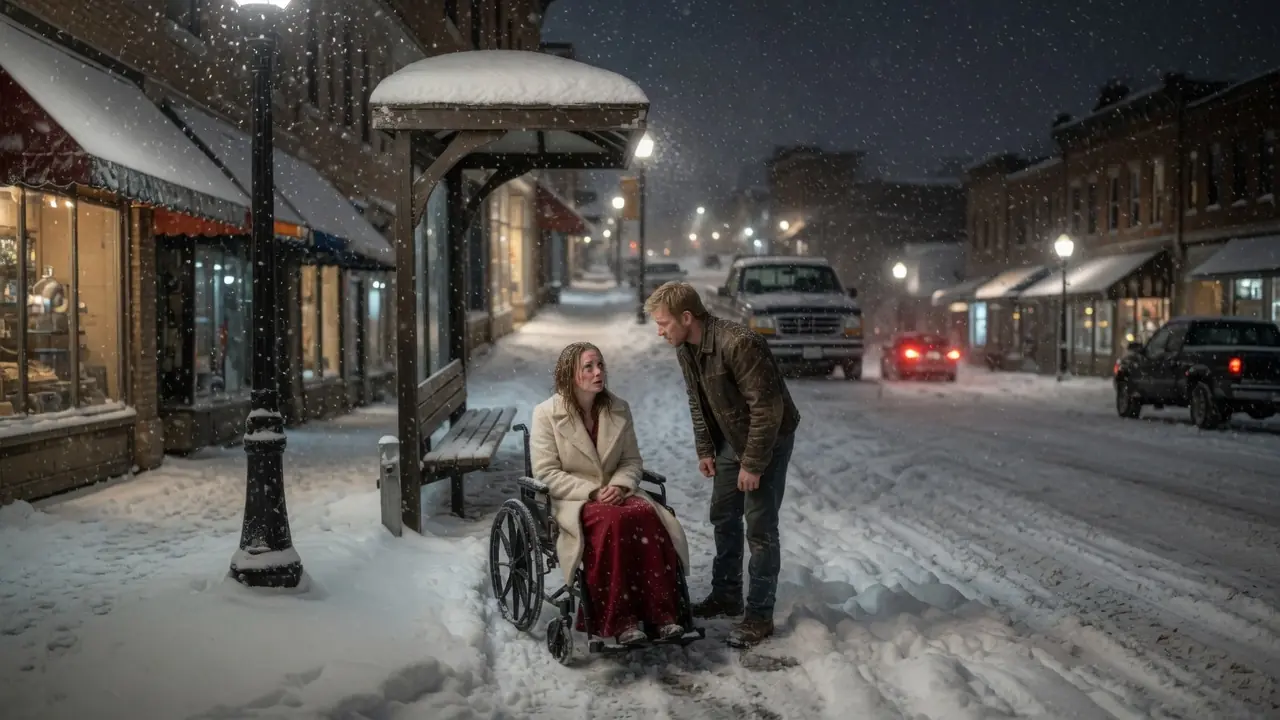
All communication must include her.
No personal coercion. No marriage conditions. No attempts to remove her from her current living situation.
The work exists to save lives, not reputations.
Caleb attached his credentials, his publications, and their preliminary corrections.
Before sending, he turned the laptop toward Nora.
“Your choice.”
She read it twice.
Then she clicked send.
Her father called fourteen minutes later.
His voice sounded controlled, but not calm.
“Dr. Ross.”
“Mr. Bell.”
“You’ve been difficult to find.”
“I intended to be.”
A pause.
“This proposal of yours. Can you deliver?”
“Yes.”
“And my daughter?”
Caleb looked at Nora.
“She can answer for herself.”
Nora took the phone.
“Dad.”
Silence.
Then Graham said, very quietly, “Nora.”
“I’ll help with the project,” she said. “But not as your daughter in need of correction. As an engineer. As a consultant. As a person.”
Another silence.
Then he asked, “How soon can you come in?”
The first meeting at Bell Medical took place three days later.
Caleb insisted Nora enter the building through the front lobby, not a private garage.
Mia came too because school had been canceled for snow, and she refused to stay with Mrs. Donnelly next door once she learned Nora was “going to fight business dragons.”
Bell Medical headquarters rose forty stories above downtown, glass and steel shining against the winter sky. Nora had walked through that lobby hundreds of times before the accident. After the wheelchair, every entrance felt different. People looked longer. Some with pity. Some with discomfort. Some with surprise that she still had a place there.
This time, Caleb walked beside her.
Mia held the back of Nora’s chair like she was part of a royal escort.
Graham Bell waited upstairs in the boardroom.
He looked older than he had a week earlier.
Not weak.
Graham Bell did not know how to look weak.
But tired in a way money could not cover.
His eyes went first to Caleb, then to Nora, then to Mia.
Mia lifted her chin.
“I’m here for support.”
Graham blinked.
Caleb set a folder on the table.
“Let’s begin.”
For two hours, the room belonged to work.
Caleb presented the surgical failures in plain language. Nora explained the engineering modifications. Bell’s technical team challenged them, then slowly went quiet as Nora answered every question with precision that left no room for dismissal.
Graham watched his daughter as if seeing a person who had been standing in front of him for years behind glass.
At one point, the lead engineer said, “That adjustment came from Dr. Ross’s notes?”
Nora answered before Caleb could.
“No. It came from mine.”
The engineer looked embarrassed.
Caleb smiled faintly.
Graham’s jaw shifted.
Not anger.
Recognition.
After the meeting, Graham asked to speak privately.
Nora almost refused.
Then Caleb said, “I’ll be outside.”
He took Mia to the hallway, where she immediately began asking a receptionist whether the building had secret tunnels.
Inside the boardroom, Graham stood by the window.
“You were impressive today,” he said.
Nora laughed once.
The sound was not kind.
“I was impressive before. You stopped looking.”
He turned.
The words hit him. She saw that.
“I thought I was protecting your future.”
“You were arranging it.”
“I thought Preston could still—”
“He called me damaged goods.”
Graham flinched.
This time, he did not hide it fast enough.
“Did you know?”
“No.”
“But would it have mattered?”
He did not answer quickly enough.
Nora nodded.
“That’s what hurts.”
Graham gripped the back of a chair.
“I don’t know how to do this,” he said.
“What?”
“Be your father without managing your life.”
That honesty startled her more than any apology.
For a moment, she saw him not as the empire, not as the threat, not as the man who had pointed to the door, but as someone who had inherited cruelty and mistaken it for strength.
“I don’t need you to manage me,” she said. “I need you to know me.”
His eyes lowered.
“I would like to try.”
“Then start by not confusing trying with owning.”
The board meeting came one week later.
Forty people sat around a polished table, most of them prepared to remove Graham Bell if the project could not be saved. Investors joined by video. Attorneys lined the walls. Arthur Wynn looked as if he had not slept in days.
Caleb presented first.
He spoke as a surgeon, not a salesman.
He explained the technology’s promise, its dangers, and the exact redesign needed to make it usable in real operating rooms. He did not flatter the board. He did not protect Graham’s ego. He made the truth sound like a surgical instrument: sharp, clean, necessary.
Then he stopped.
“I did not solve this alone,” he said.
He turned to Nora.
“She did.”
A ripple moved through the room.
Nora wheeled forward.
For one heartbeat, she saw the room as she once would have: men in suits, women with polished faces, money disguised as judgment.
Then she saw Mia in the back corner coloring a dragon in a notebook.
Mia looked up and gave her two thumbs up.
Nora breathed.
“My father built this company on the belief that value must be proven,” she began. “I grew up believing that too. Be useful. Be beautiful. Be strong. Be convenient. Then I became disabled, and people who once praised my future began speaking about me as if I had become a problem.”
The room went very quiet.
“The accident did not make me worthless,” she said. “It showed me who had been measuring me wrong.”
Graham looked down.
Nora continued.
“This project failed because everyone designed for perfection. Perfect conditions. Perfect angles. Perfect theory. But surgery is not perfect. Bodies are not perfect. People are not perfect. The technology had to learn to adapt.”
She looked at her father.
“So do we.”
No one moved.
Then Mia raised her hand.
Caleb closed his eyes.
“Mia,” he whispered.
But the board chair, perhaps stunned into curiosity, said, “Yes, young lady?”
Mia stood.
“My dad says sorry is only real when it changes what you do next.”
A few people smiled.
Nora did too, through tears she had not meant to show.
Graham stood slowly.
His voice, when it came, was rough.
“My daughter is right. I valued the company’s future more than her freedom. I confused control with care. That failure is mine.”
He turned to Nora.
“In front of this board, I am asking you to forgive me. Not today if you can’t. Not because I deserve it. But because I intend to spend whatever time I have left proving I can learn.”
The room had seen mergers, lawsuits, betrayals, hostile takeovers.
It had never seen Graham Bell ask for anything with empty hands.
Nora did not forgive him in that moment.
Not completely.
Real forgiveness does not arrive on command for dramatic effect.
But she reached for his hand.
And he took it like a man being offered a second chance he had not earned.
The board voted to keep him as CEO under strict oversight, with the surgical technology project restructured under Caleb and Nora’s joint leadership.
Preston Vale’s name was removed from every future discussion.
No one missed him.
Winter deepened.
The house on Willow Lane became crowded with blueprints, medical diagrams, Mia’s homework, soup bowls, and the strange music of people learning how to belong to one another.
Nora stayed.
At first in the guest room.
Then because Mia started calling it “Nora’s room” and everyone stopped correcting her.
Caleb consulted from the kitchen table most days and traveled to Bell Medical twice a week. Nora worked beside him, sometimes arguing with engineers over video calls while Mia did spelling practice on the floor.
Graham came by on Sundays.
The first time, he arrived with three expensive gifts, all wrong.
Mia took one look at the crystal snow globe he brought her and said, “Do you have Uno?”
Graham did not.
The next Sunday, he did.
Progress sometimes looked like a billionaire learning card games at a sticky kitchen table while a seven-year-old accused him of cheating.
Nora began physical therapy again.
Not because Caleb promised miracles.
He never did.
He told her the truth: her paralysis was likely permanent. Therapy would help strength, circulation, pain, independence. It might give her some standing ability. It might not.
“You don’t have to become a story people clap for,” he told her.
She looked at him from the parallel bars.
“What if I want to try anyway?”
“Then I’ll be here.”
On a snowy evening in late January, Nora stood for eleven seconds.
Her arms shook. Her shoulders burned. Her legs did not obey the way she wished they would, but her body held upright between the bars with Caleb close enough to catch her and careful enough not to touch until she needed him.
When her strength gave out, he helped her back into the chair.
She cried into her hands.
“I know it’s not walking,” she said.
Caleb knelt in front of her.
“No,” he said. “It’s yours. That makes it enough.”
She looked at him then.
Really looked.
The tired father.
The grieving husband.
The brilliant doctor who had hidden from his own name.
The man who stopped in the snow and asked if she was safe.
“I’m scared,” she whispered.
“Of what?”
“Loving this. You. Mia. This house. I’m scared it will vanish if I need it too much.”
Caleb’s face softened.
“I’m scared too.”
“That doesn’t help.”
“It’s honest.”
She laughed through tears.
Then he reached for her hand.
“Emma was the first great love of my life,” he said. “I used to think that meant no other love could enter without replacing her. But Mia taught me something. Children don’t think love is a room with one chair. They just keep pulling up more.”
Nora touched his face.
“I love you.”
He closed his eyes.
When he opened them, there were tears in them.
“I love you too.”
Their first kiss was quiet.
No music.
No perfect lighting.
Just the hum of the heater, the snow tapping against the window, and Mia in the hallway whispering loudly, “Finally,” before running back to her room.
Caleb laughed against Nora’s mouth.
Nora laughed too.
For the first time in years, the sound filled her whole chest.
Christmas came late for them that year.
Not on the calendar.
In the heart.
The official holiday had passed in a blur of crisis, board meetings, grief, and snow. So Mia declared that February 3rd would be “Second Christmas” because “first Christmas was emotionally busy.”
No one argued.
They decorated the tree again.
Graham brought Uno and homemade cookies he had not made himself but claimed he “supervised.” Mia accepted this as a start.
Daniel Hale, the bodyguard, came too after Nora invited him. He stood awkwardly near the door until Mia handed him a paper crown and told him he was in charge of guarding the cookies.
He wore it without complaint.
During dinner, Graham raised his glass.
“I have spent my life building things,” he said. “Companies. systems. walls. I thought walls kept people safe.”
He looked at Nora.
“I was wrong. Sometimes walls only keep love out.”
Nora’s eyes filled.
Caleb reached for her hand beneath the table.
Graham continued.
“I cannot undo what I did. But I can choose differently tomorrow. And the day after. And the day after that.”
Mia nodded solemnly.
“That’s a good sorry.”
Everyone laughed.
Later, after dessert, Nora gave Mia a small wrapped box.
Inside was a necklace with a tiny silver star.
Mia gasped.
“For me?”
“For you.”
“Why?”
Nora brushed a curl from the child’s face.
“Because the night your dad stopped at the bus shelter, you saw me first.”
Mia climbed into Nora’s lap carefully.
“I knew you were ours.”
Nora held her close.
“What do you want to call me?” she asked softly. “Nora is fine. Anything is fine.”
Mia pulled back.
“Can I call you my second mom? Not instead of Mommy. With Mommy.”
Caleb looked away quickly.
Graham suddenly became very interested in his napkin.
Nora kissed Mia’s forehead.
“I would be honored.”
That night, after everyone left and Mia fell asleep on the couch between them, Caleb and Nora sat beneath the crooked tree lights.
The house was a mess.
Wrapping paper on the floor.
Cocoa mugs on the table.
Uno cards under a chair.
A wheelchair beside the couch.
A child breathing softly between two adults who had once believed the best parts of life were behind them.
Nora leaned her head against Caleb’s shoulder.
“Do you ever think about that night?” she asked.
“The bus stop?”
“Every day.”
“Me too.”
“You said, ‘Come with me.’”
“I didn’t know what else to say.”
“It was enough.”
Outside, snow began again, slow and quiet.
The same kind of snow that had fallen the night her old life ended.
Only now it did not look like burial.
It looked like beginning.
A year later, the surgical assistance system completed its first successful clinical trial.
The device allowed surgeons to perform a delicate cardiac repair with more stability than human hands alone could provide. Newspapers praised Bell Medical’s comeback. Business magazines called Graham Bell’s leadership “humbled and transformed.” Medical journals credited Dr. Caleb Ross and Nora Bell as co-architects of the redesign.
Nora read the article at the kitchen table.
Mia leaned over her shoulder.
“They called you brilliant.”
Nora smiled.
“They did.”
“I already knew.”
Caleb poured coffee.
“We all knew.”
Graham arrived that afternoon with flowers for Nora and a toy stethoscope for Mia because she had recently announced she might become a doctor, an artist, or a professional pancake judge.
He stood in the doorway for a moment, watching the life inside.
Nora at the table.
Mia drawing stars on a napkin.
Caleb burning toast.
The house small, worn, warm, alive.
Graham’s eyes shone.
“I thought I built you a kingdom,” he said quietly to Nora.
She looked at him.
He smiled sadly.
“But this is the first place I’ve seen you look free.”
Nora reached for his hand.
“You can visit the kingdom,” she said. “But you don’t get to rule it.”
He laughed.
A real laugh.
“I can accept that.”
Not everything became perfect.
Nora still had pain.
Caleb still had nights when he woke reaching for a wife who was no longer there.
Mia still cried sometimes for a mother she remembered in flashes.
Graham still slipped into control when fear took him by surprise, and Nora still had to remind him that love was not a board meeting.
But people changed in practice.
Not in speeches.
Not in one grand apology.
In Sunday visits.
In listening before deciding.
In ramps built before anyone had to ask.
In a child’s school play where Nora sat in the front row, Caleb beside her, Graham behind them holding flowers, all three clapping too loudly when Mia forgot one line and invented a better one.
Years later, people would tell the story as if Caleb saved Nora at a bus stop.
Nora never liked that version.
“He stopped,” she would say. “That mattered. But I was not a package he carried out of the snow. I chose to come. I chose to stay. I chose to live again.”
Caleb liked that version better.
Because the truth was not rescue.
The truth was meeting.
A widowed single father who had forgotten he was more than his grief.
A paralyzed woman who had been told her worth ended where her legs stopped working.
A little girl who believed family was something you recognized before adults found language for it.
And a father with an empire who had to lose control before he could learn how to love.
The old bus stop remained on Fifth Street.
The shelter roof was repaired after Graham quietly funded improvements to the town’s transit stops, though he claimed it was “infrastructure investment.” Mia rolled her eyes whenever he said that.
Nora visited it once, on the anniversary of the night she left home.
Caleb drove.
Mia came too, carrying a thermos of hot chocolate with exactly five marshmallows because tradition mattered.
Snow fell lightly again.
Nora sat beneath the streetlight, looking at the place where she had once believed she had nowhere to go.
Caleb stood beside her.
Mia leaned against her chair.
“Are you sad?” the child asked.
Nora thought about it.
“Yes,” she said. “A little.”
Mia slipped her hand into hers.
“But not alone.”
Nora smiled.
“No. Not alone.”
Caleb looked down at her.
“Ready to go home?”
Home.
The word no longer hurt.
It no longer meant marble halls, locked expectations, or love disguised as control.
It meant a small house on Willow Lane.
It meant burnt toast, homework, medical diagrams, Christmas lights left up too long, and a little girl who saved five marshmallows for emergencies.
It meant Caleb’s hand on her shoulder.
It meant choosing and being chosen back.
Nora looked once more at the falling snow.
Then she nodded.
“Yes,” she said. “Take me home.”
And this time, when the truck pulled away from the bus stop, it did not carry a broken girl rescued from the cold.
It carried a woman who had found her way back to herself.
A father who had learned love could return in a different shape.
A child who had known the truth from the beginning.
And a family that started with three simple words in the snow.
Come with me.