Emily Carter woke each morning before the first bus began running through the quiet streets of Columbus, Ohio. At 4:45, she would leave the warmth of her narrow bed, cross the small apartment, and stand beside the radiator until her hands stopped shaking from the cold. The apartment had only one bedroom, which she had given to her eight-year-old daughter, Lily, after the divorce. Emily slept on a folding sofa beside the kitchen because she wanted Lily to believe their home was smaller than other homes, not broken.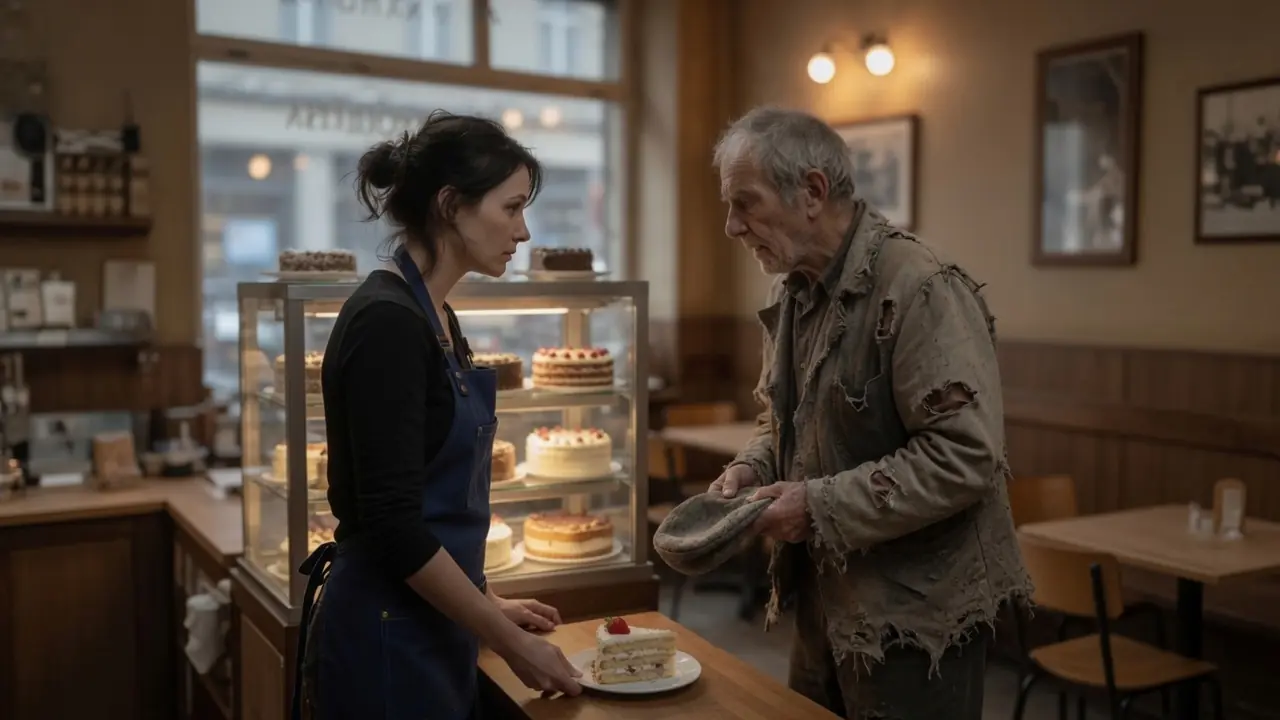
That Tuesday morning, Emily packed Lily’s lunch with the last two slices of bread, a spoonful of strawberry preserves, and an apple beginning to soften near the stem. She placed a handwritten note beside the sandwich telling Lily that she was brave, clever, and deeply loved. Emily had started adding those notes after learning that another child at school had laughed at Lily’s worn winter coat. She could not always give her daughter new things, but she could make certain poverty never became the loudest voice Lily heard.
Mrs. Alvarez from the apartment downstairs arrived at 5:20 to stay with Lily until school. She was seventy-one, widowed, and unwilling to accept money for helping, so Emily carried her groceries upstairs each Sunday and cleaned the difficult corners of her kitchen. Their arrangement was never discussed as charity. It was simply two women using what strength they had to cover what the other lacked.
Emily reached Whitaker’s Bakery Café shortly before six. The store occupied the corner of a brick building in a working-class neighborhood where teachers, mechanics, nurses, and bus drivers stopped before work. Its front windows were painted with looping gold letters, and a glass display case showed fresh bread, pastries, pies, and layered cakes decorated with berries. The bakery had existed for forty-two years and was known for treating regular customers like family.
At least, that was what the framed company history near the entrance claimed.
Victor Lane had managed the café for eighteen months. He was forty-one, thin, sharply dressed, and proud of never wasting anything that could be sold. He counted damaged cookies, measured discarded frosting, and required employees to record every napkin used during a shift. Victor often said kindness was an expense businesses could not afford, though he never hesitated to offer free samples to wealthy customers he believed might place large orders.
Emily had worked at the bakery for eleven months. She arrived early, covered shifts when younger employees called out, and learned the names of almost every regular customer. She knew Mrs. Collins wanted coffee with one sugar, Mr. Davis could not eat nuts, and the nurses from Saint Matthew’s Hospital preferred fruit pastries after night shifts. Customers trusted Emily because she listened before answering.
Victor disliked that trust.
He believed employees should be efficient, polished, and emotionally distant. Whenever Emily spent too long helping an elderly customer count change or explaining ingredients to someone with allergies, he appeared behind her with his arms folded. He never shouted when customers could hear him. He preferred quiet warnings delivered close enough to make humiliation feel private.
“You are here to sell,” he reminded her that morning. “Not to become everyone’s social worker.”
“I understand.”
“You said that last week.”
“A customer was having trouble reading the label.”
“And the line waited.”
“For less than a minute.”
Victor’s expression hardened. “Do not argue before sunrise, Emily.”
She lowered her eyes and tied the burgundy apron around her waist. Arguing cost energy, and she needed every part of herself to survive until payday. Her checking account contained thirty-two dollars, her electricity bill was overdue, and Lily needed money for a school science project by Friday.
The bakery opened at six-thirty.
For the first two hours, customers arrived in steady waves. Emily poured coffee, packed muffins into paper bags, sliced bread, and warmed breakfast rolls. The other morning employee, nineteen-year-old Sophie Grant, worked the second register and whispered jokes whenever Victor entered the storage room. The laughter helped the shift move faster.
At nine, Victor inspected the cake display.
One fresh fruit cake sat on the middle shelf beneath the glass. It contained three soft vanilla layers, whipped cream, sliced strawberries, kiwi, peaches, and blueberries arranged in careful circles. The baker had prepared it early that morning for individual slices because the store had received too much fruit from a supplier. Victor ordered Emily to cut each piece narrowly enough to produce ten portions.
“The old owner used to cut eight,” Sophie said.
“The old owner is not standing here paying ingredient costs,” Victor replied.
Emily glanced toward the framed photograph behind the counter. It showed Thomas Whitaker, the bakery’s founder, standing beside his late wife during the store’s opening year. Thomas had retired five years earlier and rarely visited publicly. Most younger employees had never met him.
The photograph showed a strong man in his fifties with thick gray hair and a confident smile. Emily had always imagined him as someone who entered rooms surrounded by executives. She never expected he might walk through the front door wearing a torn coat and carrying a weathered cap.
The elderly stranger arrived shortly after eleven.
He moved slowly, favoring one leg, and paused inside the entrance as though uncertain whether he was welcome. His gray hair was uncombed, his face deeply lined, and the cuffs of his brown coat had begun to fray. He held an old flat cap between both hands and glanced toward the display case with the unmistakable hunger of someone trying not to stare.
Emily greeted him from behind the counter. “Good morning, sir.”
He nodded but said nothing.
The lunch rush had not yet begun, so the café remained quiet. Sophie was restocking coffee cups, while Victor reviewed invoices inside the office. The old man walked closer to the cake display and studied the fresh fruit cake.
“Beautiful, isn’t it?” Emily asked.
“My wife used to make one like that,” he said.
His voice was soft but clear. Emily noticed how his eyes stayed on the strawberries rather than her face.
“Would you like a slice?”
The man looked down at the cap in his hands. “How much?”
“Six dollars and fifty cents.”
He reached into his coat pocket and removed several coins. After counting them, he placed them back without letting Emily see the total. His shoulders lowered.
“I’m sorry, ma’am,” he said. “I haven’t eaten all day, but I don’t have any money.”
Emily looked toward the office.
Victor’s door was partly closed. She knew the rules. Employees were not permitted to provide free food, even when products would be discarded at closing. Victor had once thrown away an entire tray of day-old pastries rather than allow staff to take them home.
The old man began stepping away.
“Wait,” Emily said.
She cut one slice from the fresh fruit cake and placed it on a white plate. She added a fork, then set the plate on a small table near the window. The man stared at it without moving.
“Then today, you don’t need money,” Emily said gently. “You just need to eat.”
His expression tightened with emotion. “I cannot take something you might have to pay for.”
“Please sit down.”
“You have a family?”
Emily looked surprised. “A daughter.”
“Then you should not lose money because of an old stranger.”
“My daughter is the reason I’m doing it.”
He studied her carefully.
Emily thought of Lily’s lunchbox and the notes she placed inside it. She did not want her daughter growing up in a world where rules mattered more than a hungry person standing three feet from food. If Victor deducted the cake from her wages, she would find a way to manage.
The old man sat slowly.
He lifted the fork and cut through the soft layers. Before taking the first bite, he closed his eyes as though he were remembering another table, another year, and someone no longer beside him. Emily quietly poured him a glass of water.
Victor emerged from the office.
His gaze moved immediately to the plate.
“What is that?”
Emily turned toward him. “A slice of fresh fruit cake.”
“I can see that. Who paid for it?”
The elderly man lowered his fork.
Emily straightened. “I’ll pay.”
Victor approached the table. “You are working, not shopping.”
“He said he hasn’t eaten all day.”
“That is not our responsibility.”
Several customers near the entrance turned toward them. Sophie stopped arranging cups. The elderly man pushed the plate away, embarrassment darkening his face.
“I’m sorry,” he said. “I’ll leave.”
Emily placed her hand beside the plate. “You don’t have to.”
Victor looked at her sharply. “Take it back.”
“He already started eating.”
“Then it is damaged merchandise.”
The old man stood and picked up his cap. “Please do not punish her.”
Victor laughed quietly. “Punish her? She understands the policy.”
Emily’s cheeks burned. “Deduct it from my pay.”
“You barely earn enough to support your own child, yet you’re giving expensive cake to strangers.”
The comment struck exactly where Victor intended.
Emily felt the eyes of customers on her. He had exposed her financial struggles publicly, using her daughter as proof that compassion was irresponsible. For one moment, shame made her wish she had remained silent.
Then she saw the old man’s hands trembling around his cap.
“Then charge me,” Emily said. “But don’t humiliate a hungry man.”
Victor stepped closer. “I decide what happens inside this bakery.”
Sophie spoke quietly. “Victor, it’s one slice.”
He turned toward her. “Did anyone ask you?”
Sophie lowered her eyes.
Victor picked up the plate and carried it toward the counter. The old man watched the cake disappear from in front of him. He had eaten only two bites.
“Get out,” Victor said. “This bakery does not feed beggars.”
The room fell silent.
Emily moved around the counter. “Give him the plate.”
“You are one sentence away from losing this job.”
“He did nothing wrong.”
“He entered without money and expected pity.”
“I never asked,” the old man said.
Victor pointed toward the door. “Then leaving should be easy.”
The elderly stranger remained still.
Something changed in his posture. His shoulders straightened, and the weakness that had seemed to bend him disappeared. He placed his cap carefully on the table, unbuttoned the worn coat, and reached into an inside pocket.
Victor smiled with contempt. “Finding a few coins now will not change anything.”
The man removed a leather cardholder.
He opened it and placed an old ownership card beside the abandoned fork. The name printed beneath a faded company seal was clearly visible.
Thomas Edward Whitaker
Founder and Majority Owner
Whitaker Bakery Group
Sophie inhaled sharply.
Victor looked at the card, then at the framed photograph hanging behind the counter. The older man in front of him had thinner hair and deeper lines, but the eyes were unmistakable.
“Mr. Whitaker,” Victor whispered.
Thomas looked toward the fresh fruit cake slice Victor had taken away. “Your bakery?”
Victor’s face lost color. “I did not recognize you.”
“That was the purpose.”
“I can explain.”
Thomas turned toward Emily. “That was the test, and she was the only one who passed.”
Victor glanced at the customers. “Please, let us discuss this privately.”
“No,” Thomas said. “You humiliated them publicly.”
Victor’s voice became desperate. “We have strict inventory policies.”
“I wrote the original policies.”
“They have changed since your retirement.”
“I know.”
Thomas explained that he had received letters from former employees and customers describing Victor’s behavior. Older customers claimed they were rushed, struggling parents were mocked when cards declined, and employees were forbidden to donate unsold food. Complaints sent to the company had repeatedly disappeared before reaching regional management.
Thomas had decided to visit in disguise.
He wanted to know whether the problem came from exaggerated complaints or a manager who had forgotten the reason the bakery existed. Only the regional director and the building owner knew he would be present. He had entered hungry because he had intentionally skipped breakfast, wanting the discomfort to be real.
Victor forced a nervous smile. “Then surely you understand that Emily violated procedure.”
Thomas looked toward the manager. “The bakery’s emergency hospitality policy allows an employee to provide one meal to a person in immediate need.”
“I have never seen that policy.”
“You removed it from the training handbook.”
Victor said nothing.
Thomas continued. “You also stopped participating in the neighborhood food program my wife created.”
“The program was costing us money.”
“The program was part of the company’s founding agreement.”
Victor’s eyes moved toward the office.
Thomas noticed.
“Is there something in there you do not want me to see?”
“No.”
“Then open it.”
Victor remained still.
Thomas turned to Sophie. “Please call regional director Margaret Sloan. Tell her I need her here immediately.”
Victor stepped between Sophie and the phone. “That is unnecessary.”
Thomas’s voice became cold. “Move.”
Victor obeyed.
Margaret arrived twenty-five minutes later with an accountant and a human resources representative. By then, Thomas had invited the elderly customers, employees, and two regular patrons to describe their experiences. Emily remained near the counter, uncertain whether she was witnessing Victor’s downfall or preparing for her own.
The accountant opened the store records.
Within an hour, the test uncovered more than cruelty.
Victor had been recording unsold cakes and pastries as waste, then selling them privately to catering clients for cash. He had reduced employee meal allowances, canceled food donations, and reported the savings as improved store performance. He also changed work schedules to punish employees who questioned him.
Sophie admitted that Victor removed her from weekend shifts after she gave a cup of coffee to a homeless veteran. Another baker revealed that Victor forced staff to discard usable bread while claiming the donation service had stopped collecting it. The service had never stopped.
Emily listened as one hidden complaint after another surfaced.
Victor had built his authority from silence. Every employee believed they were the only person being punished, and every customer assumed their humiliation was an isolated experience. Thomas’s disguise had not created the truth.
It had simply given people permission to speak it.
Victor sat inside the café office while Margaret reviewed the findings. He repeatedly claimed that he had only tried to improve profitability. When the door opened again, he emerged carrying his jacket.
Thomas stood beside the display case.
“Emily keeps her job,” he said. “You just lost yours.”
Victor stared at him. “Over one free slice?”
“No. Over every person you treated as worthless when you believed no one powerful was watching.”
“I increased sales.”
“You increased fear.”
Victor looked toward Emily. “You caused this.”
She held his gaze. “You did.”
Margaret escorted him through the front door.
The customers watched in silence as Victor walked past the same tables where he had ordered Thomas to leave. Outside, he stopped briefly and looked back through the glass. No employee followed him.
The bakery closed for the remainder of the afternoon.
Thomas returned the fresh fruit cake slice to the table and sat down. The cream had softened slightly, but he took another bite anyway. Emily brought him a fresh fork.
“You knew the entire time?” she asked.
“That I owned the bakery?”
“That Victor might fire me.”
Thomas nodded. “I was prepared to stop him.”
“You waited.”
“I needed to see how far he would go.”
Emily folded her arms. “That does not feel fair.”
Thomas looked surprised.
“You tested me without my consent,” she continued. “I could have lost the only income supporting my daughter.”
“You are right.”
The immediate admission disarmed her.
Thomas placed the fork down. “I spent so much time watching Victor that I forgot what the risk felt like for you.”
Emily looked toward the floor.
“I am sorry,” he said. “Not as an owner. As a man who placed you in a frightening position.”
She nodded slowly.
Thomas did not offer her money or demand forgiveness. Instead, he asked about the policies employees needed changed. Emily told him about the discarded food, unstable schedules, and Victor’s habit of publicly exposing workers’ private struggles. Sophie added concerns about low staffing and the lack of a safe complaint process.
Thomas listened without interrupting.
The following morning, the café reopened under Margaret’s temporary management. Every employee received restored hours and compensation for wages lost through Victor’s retaliation. The company also returned the emergency hospitality policy to the training manual.
Unsold bread and pastries were donated each evening to two local shelters.
A discreet meal-card system was established for hungry customers. Employees could provide food without forcing anyone to explain their poverty in front of a line. The fresh fruit cake became the first item served during the program’s opening day.
Thomas asked Emily to become the café’s customer care supervisor.
She initially refused.
“I know how to work a register,” she said. “I have never managed people.”
“You defended a stranger while your job was threatened.”
“That does not mean I understand payroll.”
“You can learn payroll. I cannot teach someone to see dignity before profit.”
The new position paid more, included predictable hours, and provided health insurance for Lily. Emily requested two days to review the offer before accepting it. Thomas smiled when she insisted on reading every page of the contract.
“You passed another test,” he said.
“I wasn’t taking one.”
“That may be why you passed.”
Three weeks later, Lily visited the bakery after school.
Emily introduced her to Thomas, who wore a clean gray suit instead of the torn coat. Lily studied him suspiciously before looking at the framed photograph.
“You look younger up there,” she said.
“So does everyone.”
“Mom said you pretended to be poor.”
Thomas looked toward Emily. “Your mother tells the truth directly.”
“Was it a costume?”
“No. The coat belonged to my brother.”
“Was he poor?”
“He was hungry once when we were children.”
Thomas explained that he and his older brother had entered a bakery during a snowstorm after their father lost his job. They had no money, but the owner gave them bread and hot milk. Years later, Thomas founded Whitaker’s Bakery because he wanted to create the kind of place that had once protected his family from humiliation.
“My wife made the fresh fruit cake,” he added. “It became the first cake we sold here.”
Lily looked toward the display. “Did it look better than this one?”
Thomas pretended to inspect the current cake. “Never tell the baker, but yes.”
Emily laughed.
The sound filled the café without fear.
Over the following months, business improved. Customers who had stopped visiting returned after hearing Victor was gone. Employees stayed longer, and the bakery’s partnership with local shelters became one of its proudest traditions.
Emily changed too.
She no longer apologized before raising concerns. She learned inventory reports, staff scheduling, customer safety, and supplier management. She still served coffee during busy mornings because she never wanted a title to separate her from the people entering through the door.
One winter afternoon, an elderly woman reached the register and discovered she was short three dollars. Before embarrassment could spread across her face, Sophie quietly used one of the hospitality meal cards. No announcement was made.
No one stared.
Emily watched the woman leave with bread, soup, and a small fresh fruit cake slice. She remembered the day Thomas had entered wearing the worn coat, and how Victor believed dignity belonged only to paying customers.
Thomas had revealed a test that afternoon.
Yet the true test had never been whether Emily would give away one piece of cake. It was whether the bakery could remain kind after powerful people stopped watching.
Near closing time, Thomas entered through the front door without disguise. He placed a small wooden frame on the counter and asked Emily to hang it near the company history.
Inside was a new statement written beneath a photograph of the bakery’s first fresh fruit cake.
No hungry person should leave this table believing money determines their worth.
Emily read it twice.
“Your wife wrote that?” she asked.
Thomas shook his head. “You did.”
“I never said those exact words.”
“You showed them.”
That evening, Emily carried a fresh fruit cake slice home for Lily and Mrs. Alvarez. They divided it into three uneven pieces because Lily insisted the person who cut the cake should receive the largest serving.
Emily gave the largest piece to Mrs. Alvarez.
Lily gave hers to Emily.
For the first time in years, Emily did not refuse kindness because she feared owing something in return. She sat at the small kitchen table with the two people who had helped her survive, and together they ate the cake that had nearly cost her job.
Instead, it had helped return the bakery to the promise on which it had been built.
A promise that hunger should be answered with food.
And dignity should never be reserved for those who could afford it.