Seventeen-year-old Norah Hayes stopped the tractor at the edge of the low field and left the plow raised. Across the fence, Wade Collins laughed at the sight of good bottomland disappearing beneath grass, certain she was wasting the one resource her family could not afford to waste. Norah had no explanation that would satisfy him—only an old notebook and a warning underlined twice by a man who had been dead for three years. Before the season ended, she would have to decide whether trusting that warning was worth everything her family still had.
“You know you’re getting paid by the acre, right?”
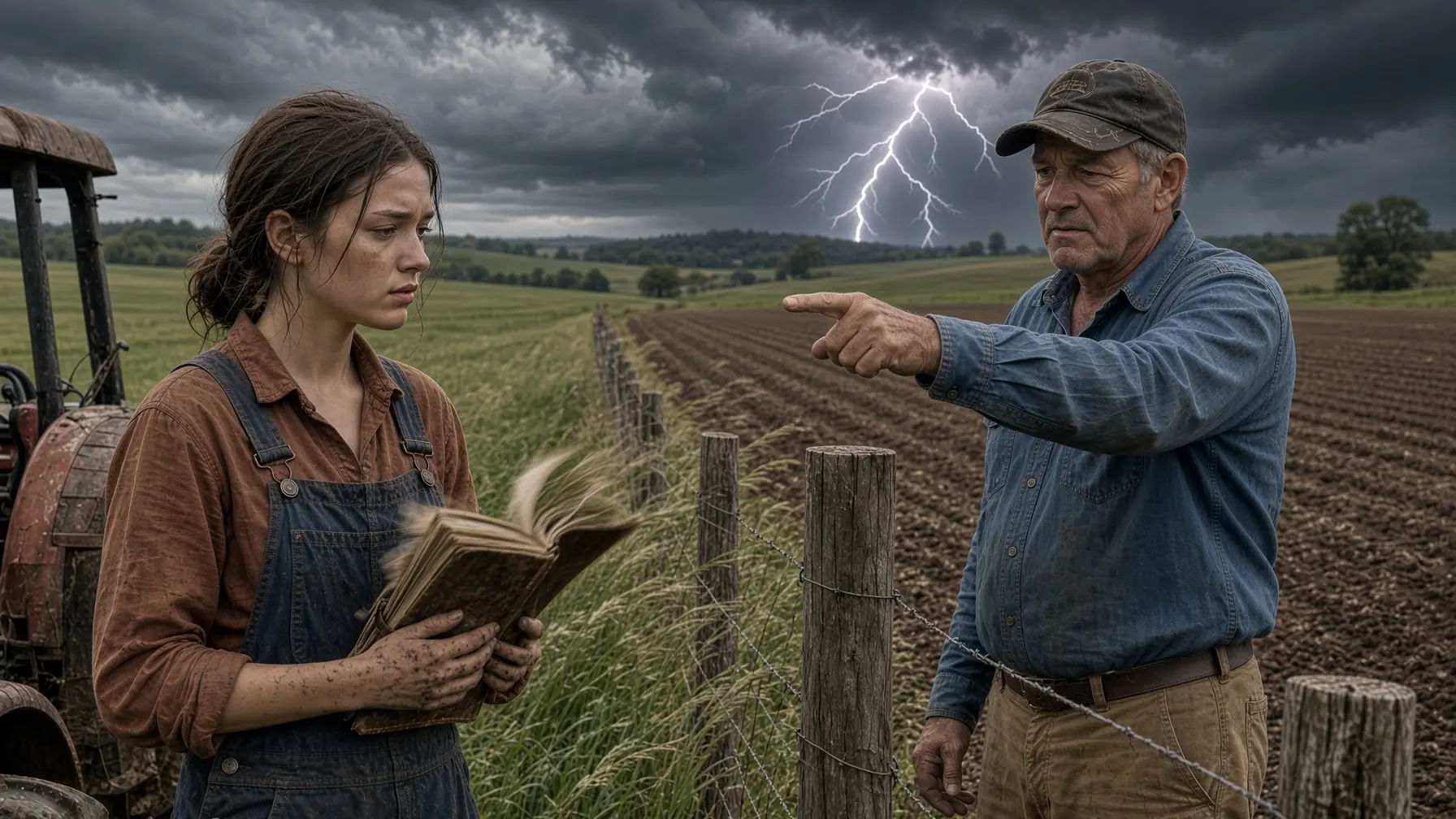
Wade leaned against the fence rail, one boot resting on the lower board. He had been checking the boundary when Norah brought the tractor around the twenty-acre section, and now he watched her with the patient amusement of a man who expected experience to win an argument without much effort.
Norah shut off the engine.
The sudden quiet left her aware of birds in the grass and the soft ticking of the old tractor as it cooled. Beside her on the seat lay a notebook with a cracked cover and a spine held together by yellowed tape.
“I’m not farming it,” she said.
Wade raised his eyebrows.
“Not the way you mean.”
He looked beyond her at the low ground. Tall grass stood in uneven patches, wildflowers appeared wherever the sod opened, and clover spread between areas of rye that had grown through the mild weeks of early spring.
Every other farmer in the valley would have turned ground like that into neat, dark rows by now.
Wade laughed.
“Well, I suppose that saves diesel.”
Norah looked at the notebook rather than answer. She knew how the field appeared from his side of the fence because she had spent the past week looking at it that way herself.
Twenty acres.
Land with good access, decent soil, and the kind of location farmers usually called an opportunity.
Her family needed opportunities.
They needed money more.
Wade had farmed beside the Hayeses for forty years. He knew the shape of their property, the habits of their machinery, and which gates needed lifting before they would swing shut.
He also knew Norah had taken over more work since Elmer Hayes died.
Her father, Roy, still worked. He repaired equipment, fed animals, and went out to the upper fields when the weather allowed.
But the decisions had begun reaching Norah first.
Which field could wait.
Which bill needed attention.
Whether a worn part could last another week.
Nobody had held a family meeting and appointed her to anything. Responsibility had arrived quietly, disguised as errands, until she looked around and realized she was carrying it.
“Your grandfather did strange things with that ground,” Wade said. “Doesn’t mean you have to.”
“I know.”
“Then why are you?”
She touched the notebook.
That answer would not improve the conversation.
Wade followed the movement of her hand and shook his head.
“You can respect a man without repeating everything he did.”
Norah nodded because that was true.
Then she climbed down, closed the notebook, and carried it toward the house.
Behind her, Wade returned to his fence. He had said what he thought needed saying, and Norah could feel how easy the morning had been for him.
For her, the plow still seemed to hang in the air.
She had found the notebook in Elmer’s rolltop desk.
The desk stood in the room off the kitchen where old receipts, spare keys, broken reading glasses, and things nobody wanted to throw away had accumulated since his death. Roy had said several times that he would clear it out.
He never did.
One evening, looking for a receipt, Norah opened a narrow drawer that resisted until she lifted its swollen edge. Inside were notebooks stacked beside a packet of envelopes.
Most pages contained ordinary farm records.
Planting dates.
Rainfall.
Repairs.
Seed purchases.
A reminder about a gate latch that Norah had fixed herself the previous summer.
Reading those notes had made Elmer feel unexpectedly close. He had been gone three years, yet here was his handwriting complaining about the same gate, recording the same dry spell, and remembering something he needed to buy.
Then she found the warning.
Whatever you do, don’t turn the low ground.
He had underlined it twice.
Norah read the words several times.
The instruction stood between practical entries, not on a page of memories or advice. It looked like something he wanted the next person working the farm to notice.
She took it to Roy.
He sat at the kitchen table with a bill beside his coffee. When she placed the notebook in front of him, he looked at the writing without touching it.
“Your grandfather wasn’t a fool.”
“I know.”
“But he wasn’t always right either.”
Roy rubbed his forehead.
“Man got stubborn about that low ground. Never explained why. I farmed beside him thirty years.”
“Did you ask?”
“Once or twice.”