The first thing Earl Brennan noticed was not the rain.
It was the angle of the wheat.
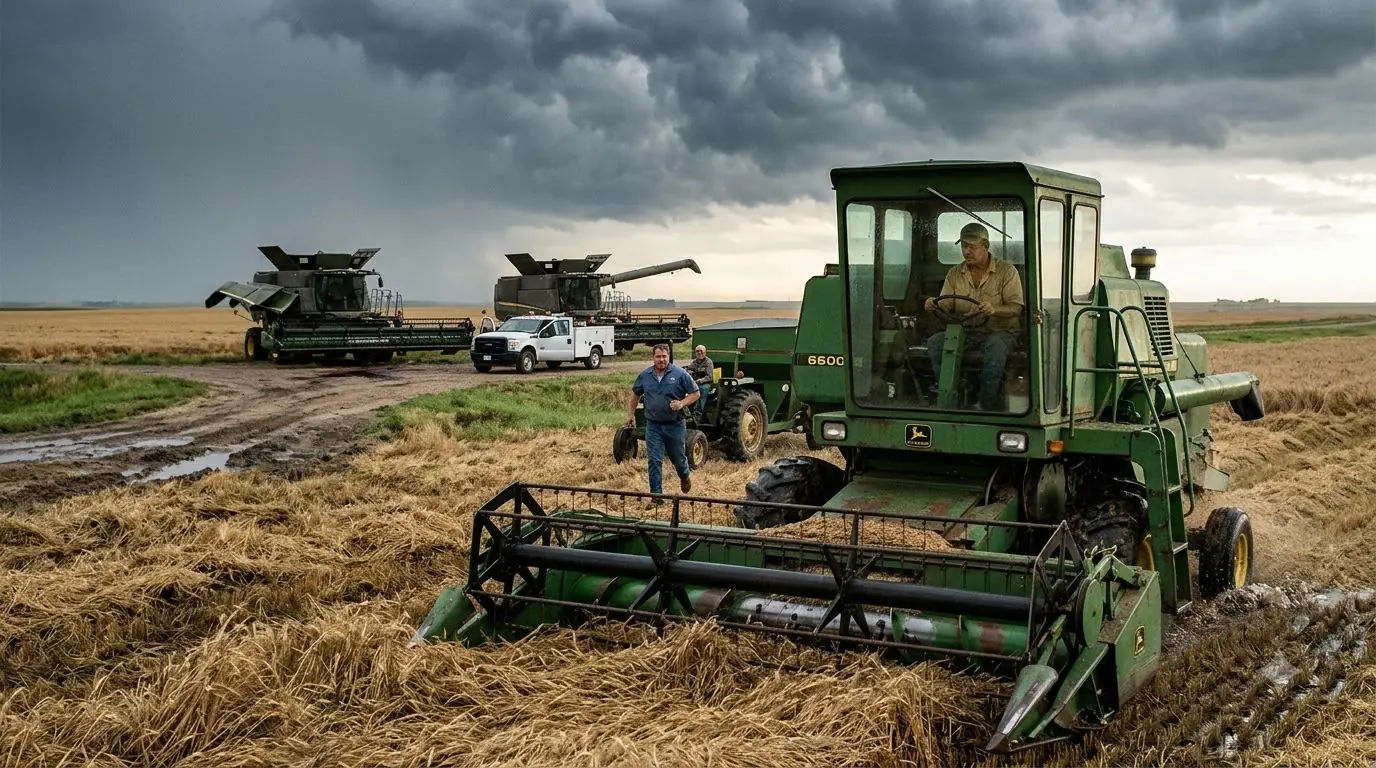
He had spent more than three decades watching Kansas weather teach men humility, and he had learned that a crop told the truth sooner than the sky did. Hundreds of acres of hard red winter wheat lay pinned to the earth in long flattened bands where the summer storm had pushed through at noon. The stalks had not just bent. They had twisted together, wet heads tangled into a dense woven mat that ran from one end of Vince Kessler’s north quarter to the other. From the gravel road the field looked like wet fur brushed the wrong direction.
Out on the western horizon the second storm was building.
Rain hung there in a towering slate wall, streaking downward from a bruise-colored sky. Every few moments a white branch of lightning flashed inside it and briefly lit the curtains of falling water from within. The air in the field still held the hot metallic smell that always came after hail threatened but missed. The first storm had been violent enough to flatten the wheat. The second one, if it got there before harvest, would be the one that ruined it.
Earl sat in the cab of his old John Deere 6600 and studied the lodged strip in front of him as if he were reading handwriting.
The combine was older than half the men who had offered opinions about it that day. Its paint had faded from bright green to a tired, work-worn shade the color of creek moss. The panels were sun-burnished and weathered. The cab seals were not what they had once been. One gauge shook at certain engine speeds. But the reel turned true. The cutter bar was honest. The separator was clean. Every belt that mattered had been checked by Earl’s own hands that morning. Every bearing had been greased. Every sound the machine made belonged there.
That counted for something.
A little farther back in the field, two newer combines stood silent beside a grain cart. Their engine panels were open like mouths caught mid-protest. One had thrown a drive belt and sat helpless with its guts exposed. Beneath the other, a dark slick of hydraulic fluid spread slowly into the damp earth. They were bigger, newer, air-conditioned better, and cost more than Earl’s entire equipment line put together. At that moment they were also decorations.
Vince Kessler stood beside the grain cart holding a handheld radio in one hand and staring from the approaching weather to Earl’s machine with a look that bounced between desperation and disbelief. Vince was the sort of man who wore clean work shirts even during harvest and had somehow managed to stay pressed-looking through sixty-hour weeks. He was broad through the shoulders, younger than Earl by five years, richer than Earl by a much wider margin, and possessed of the kind of confidence that modern financing can buy a man before experience earns it. Usually Vince’s confidence filled a field before his machines did.