“Twelve tons.”
Dean Foster stared across the Brooks property at the enormous pile beside the abandoned livestock shed.
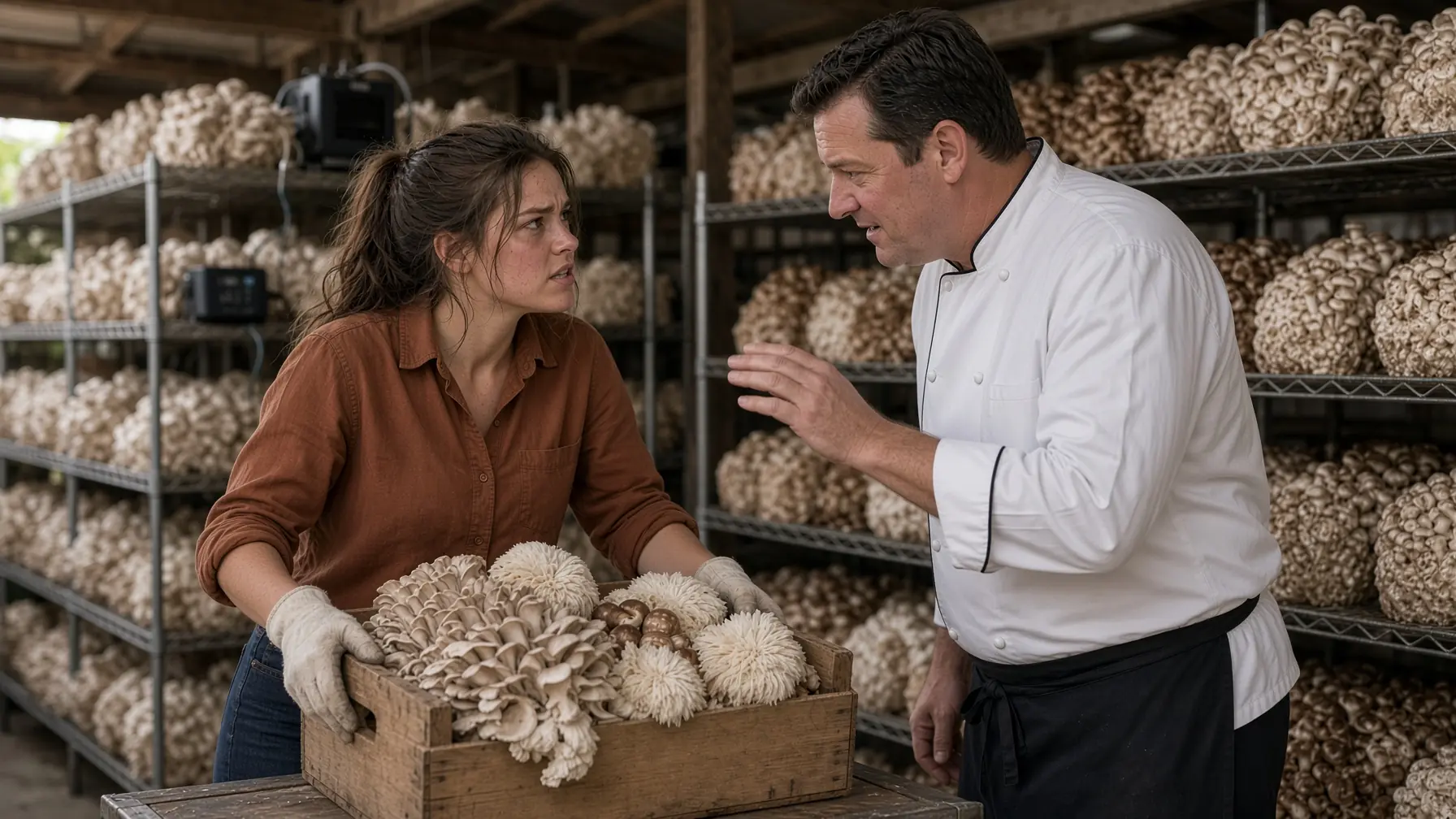
Then he laughed.
“You really hauled twelve tons of garbage onto your daddy’s land and called it a business plan?”
Twenty-four-year-old Maya Brooks looked at the mound.
Then at Dean.
“I called it a start.”
Dean shook his head.
The sawmill manager had paid Maya five hundred dollars to remove the material from his yard before a new shipment arrived.
To him, the deal had been simple.
He had waste.
She had trucks.
Problem solved.
He never imagined the young woman standing beside that pile would eventually make his sawmill dependent on the very material he had once paid her to take away.
And he certainly never imagined that eight months later, when Maya’s operation became large enough to attract regional attention, he would make a phone call designed to cut off her supply completely.
That call came on a Monday morning.
Dean did not bother visiting the farm.
He simply called.
“Maya, don't send your truck this week.”
She stopped writing.
“Why?”
“I sold the mill’s entire hardwood output.”
“To who?”
“Three-year exclusive contract.”
Maya was silent.
Dean continued.
“They're paying well above market.”
“So you sold all of it.”
“All of it.”
“What about our arrangement?”
“We never had an exclusive written agreement.”
He was right.
That made it worse.
Then Dean said:
“Don't bother sending your truck back.”
The line went quiet.
Dean expected anger.
Pleading.
Negotiation.
Anything that would confirm he had just found the pressure point in Maya’s company.
Instead:
“Understood.”
That was all.
Dean frowned.
“Maya?”
“Yes?”
“You heard me, right?”
“I heard you.”
Then she ended the call.
Dean looked at the phone.
He smiled.
As far as he was concerned, the problem had been solved.
Maya Brooks had built a business around material coming from his mill.
Now that material belonged to someone else.
Five weeks of inventory.
Maybe six if she cut production.
Then the contracts would collapse.
The customers would leave.
The expansion would die.
And Maya would finally discover that a business built on waste was still dependent on the person who controlled the waste.
What Dean did not know was that Maya had already learned the most expensive lesson of her life:
Never build something important around one thing you cannot control.
And this time, she had no intention of learning it twice.
The Brooks family farm sat on forty-six acres of North Carolina soil that had once looked far healthier than it did when Maya came home.
Her father, Walter Brooks, had worked the land for thirty years.
By the time Maya returned at twenty-four, he was also working nights at a distribution warehouse forty minutes away.
He would leave before dinner.
Return around six in the morning.
Eat standing at the kitchen counter.
Sleep a few hours.
Then go back outside to work the farm.
He never complained.
Maya wished he would.
Silence made the situation feel worse.
The greenhouse at the eastern edge of the property had been empty for years.
Its panels were cloudy.
Several supports needed repair.
Pasture that once stayed green through much of the season had gone pale and thin.
The best tractor had been sold two winters earlier to cover debt.
That debt had not disappeared.
It had simply been replaced by another.
The number hanging over everything was:
$18,700.
The bank wanted it by a fixed date.
Walter had already started talking about selling.
He never called it surrender.
He called it “being realistic.”
One night he sat across from Maya at the kitchen table.
“You've got what, seventy-eight hundred saved?”
“About that.”
“Keep it.”
“For what?”
“Go to Raleigh.”
“Dad.”
“Get an apartment.”
“I don't want an apartment.”
“Find work.”
“I have work.”
Walter looked around the kitchen.
“This?”
“The farm.”
His face softened.
“Maya.”
She hated the way he said her name.
Like he was trying to make disappointment sound gentle.
“This place already took thirty years from me.”
“It didn't take them.”
“Some days it feels like it.”
She looked toward the window.
The dark fields beyond it belonged to every childhood memory she had.
Walter teaching her to drive an old pickup.
Her mother planting tomatoes before she died.
Maya falling from a fence at nine and claiming she had jumped.
Leaving did not feel like freedom.
It felt like accepting the judgment everyone else had already made.
That the Brooks farm had reached the end.
Walter continued.
“You don't need to save this place to prove anything.”
“I’m not trying to prove anything.”
He looked at her.
Maya looked away first.
At the time, she believed that meant she had won the argument.