By the time Damon Cross drove Isaiah Cole into the corner pads, the whole waterfront training center had turned into a wall of noise.
Phones were lifted high above adult heads. Men in work boots stood on the lower rows of the metal bleachers to get a better angle. Women who had only come to watch a public sparring event found themselves pressed shoulder to shoulder against the ring aprons, mouths half open, unsure whether to flinch back or lean closer. Beyond the open loading doors of the building, the afternoon light off Baltimore’s harbor flashed against fishing masts, coiled rope, and wet pilings darkened by years of tidewater.
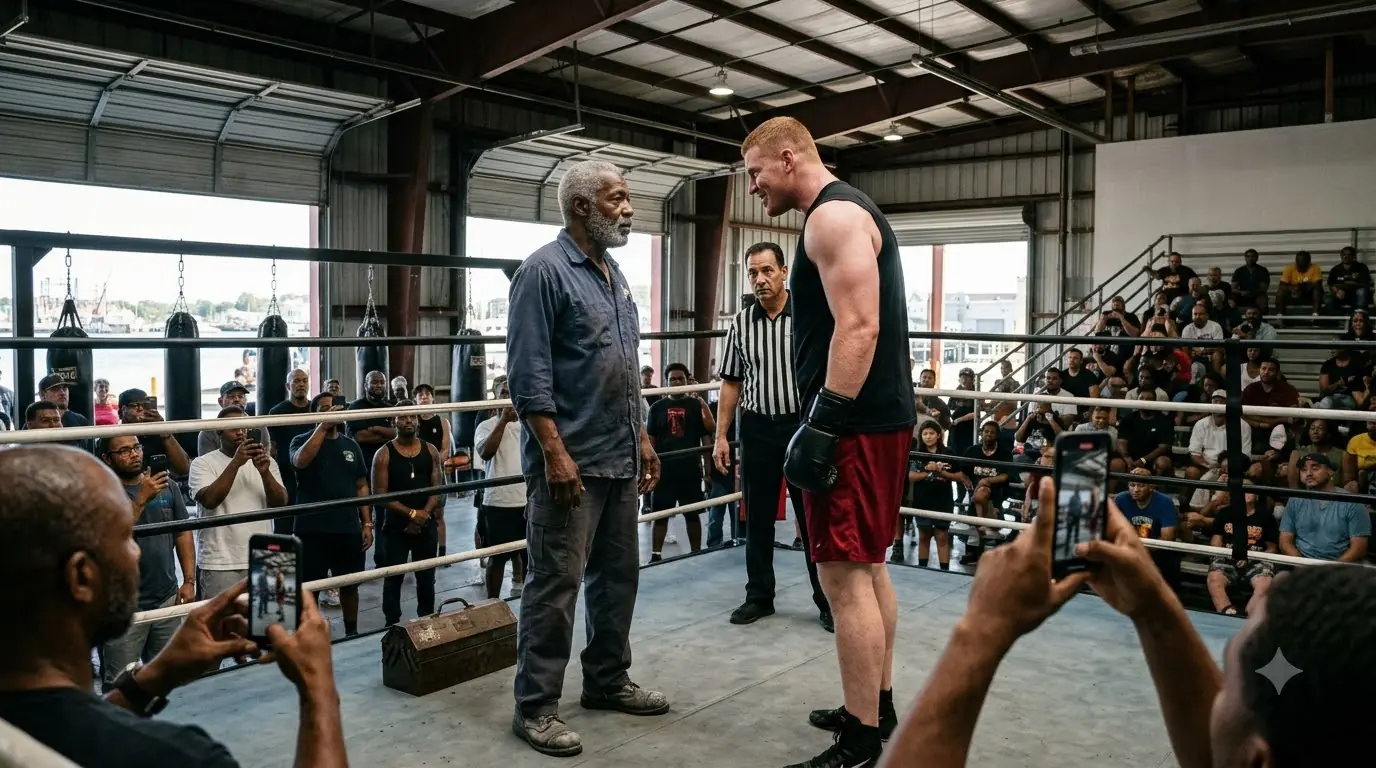
Salt hung in the air with sweat, metal dust, and old canvas.
The training center had never heard noise quite like that. It knew ordinary noise well enough: the smack of gloves on mitts, the hollow boom of heavy bags, the scrape of folding chairs over concrete, the deep industrial complaints of freight traffic drifting in from the harbor, the layered voices of parents waiting on bleachers while children skipped rope or shadowboxed under fluorescent lights. Those sounds belonged to the place. They were the language of work, repetition, and community. The noise around the ring now was different. It had the feverish pitch that comes when a room senses it is about to witness an accident, a humiliation, or a truth, and cannot decide which outcome it wants most.
Some spectators held their phones vertically and locked their elbows as if bracing weapons. Others forgot to film and simply stared. A few of the older dockworkers in the back had their expressions set in that wary half-frown common to men who have seen enough public foolishness to distrust any situation in which a young strong man is being cheered on while an older steady one is being underestimated. One woman at ringside had one hand pressed flat to her own chest. Another had already started muttering that somebody should stop it. That sentence had been floating around the gym for the better part of an hour, growing less useful each time it was repeated.
Above the ring the lights hummed faintly. Sponsor banners along the side rails shifted every time a draft came in from the loading doors. Through the open rear of the building the harbor flashed in fragments—masts, gulls, a line of rippled sunlight on dark water, the rusty geometry of working piers. The view made the whole confrontation feel at once absurdly public and strangely intimate. Men who had spent the day gutting fish or repairing diesel housings had wandered in expecting a local spectacle and found themselves watching something else entirely: not a celebrity exhibition, but a test of what kind of behavior a room would tolerate when money, status, and ego all pushed in the same direction.
Even before the first clean act of violence, the event had become larger than the two men inside the ropes. It had become about every person who had chosen silence earlier in the day. About every volunteer who had looked away. About the director who needed sponsor checks badly enough to compromise too slowly and then regret it too late. About the coach who saw danger and spoke in warnings instead of truths. About the crowd that wanted a lesson delivered but hoped not to bear responsibility for ordering it. Isaiah understood that, perhaps more clearly than anyone else in the building. Damon almost certainly did not.