Every September, Harold Bennett spent more money on fertilizer than most farmers spent on new trucks. Nobody understood why. Not the bankers, not the equipment dealers, not even the feed store owner. Around town, people joked that Harold trusted seed bags more than savings accounts. They weren't entirely wrong. Every year, Harold bought fertilizer months before planting season, sometimes an entire year early. His grandson once asked why they stored so much product nobody needed yet. Harold smiled faintly without looking up. "Because inflation doesn't announce itself. It sneaks in while people feel comfortable."
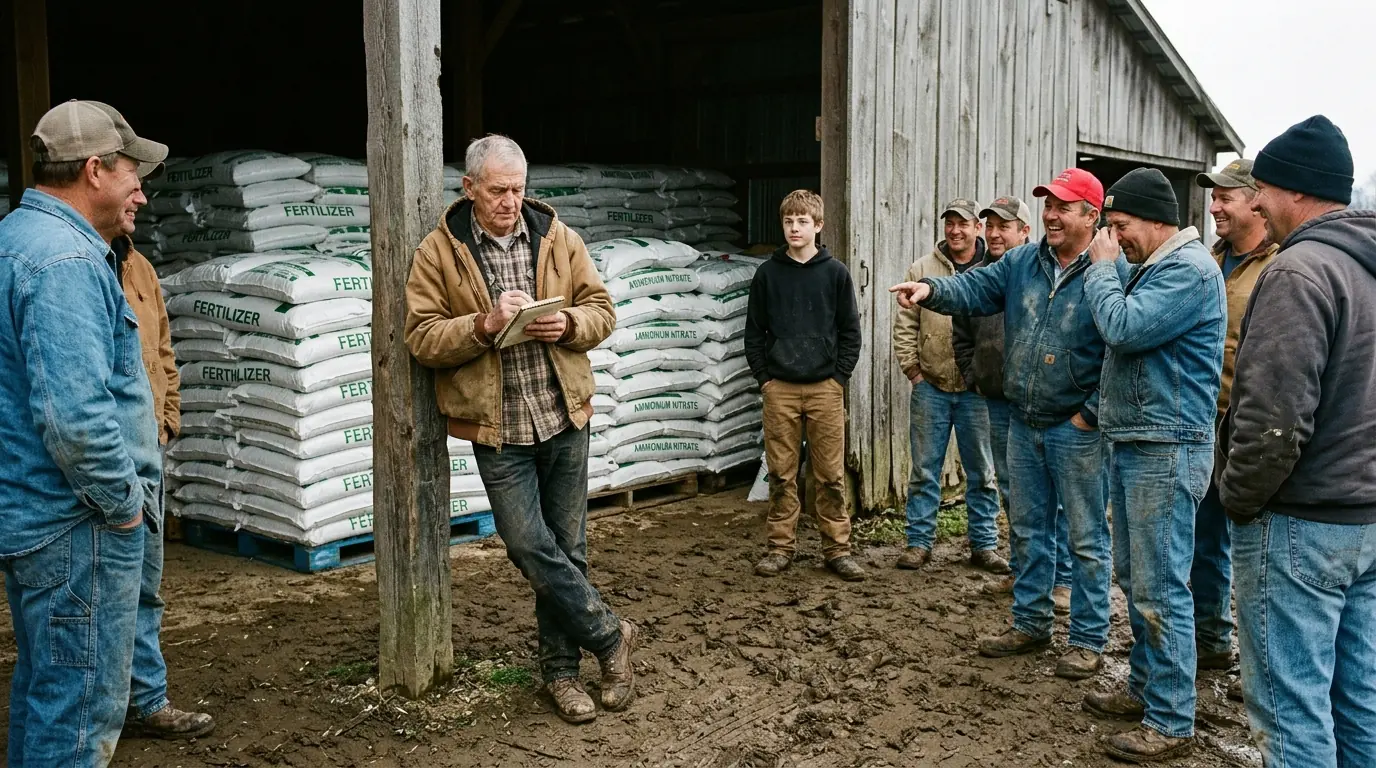 Meanwhile, across Mason County, farmers spent money like prosperity would last forever. Bigger combines, bigger loans, bigger monthly payments. Harold Bennett still drove the same truck he bought during the Carter administration. People mistook restraint for poverty. "You expecting a fertilizer shortage or something?" "No. I'm expecting inflation." The feed store owner laughed at first. Most people did whenever Harold talked about economics. But every night after chores, Harold studied commodity prices longer than most traders studied stock markets. Fuel costs were rising. Transportation costs were climbing. Supply chains were tightening quietly. Harold had already lived through inflation once before, and he never forgot what it did to careless farmers. His father taught him something banks never explained: real wealth wasn't paper during inflation. It was things people still needed tomorrow. So Harold stored value differently than everybody else. Not in stocks. Not in flashy equipment. He stored his money in things farmers would desperately need once prices exploded. While others borrowed heavily for equipment, Harold quietly stockpiled survival.
Then inflation exploded faster than anyone expected. And overnight, Harold Bennett's dusty old barn became more valuable than the town bank. Within four months, fertilizer prices nearly doubled across the Midwest. And suddenly nobody was laughing anymore. "Look, it's not my fault. The suppliers are blaming fuel prices. Truckers are blaming shortages. The banks are blaming inflation. I just can't get the stock in. Approaching fast. It's here. And we're supposed to plant what? Air? Yeah, you tell me where we're supposed to get it."
Meanwhile, Harold Bennett stayed unusually calm. Almost like he'd seen the entire thing coming. Inside Harold's barn, there was enough fertilizer stored to supply multiple farms for an entire season. For the first time, his grandson understood why Harold bought supplies early every year. Harold didn't believe in reacting to panic. He believed in preparing before panic arrived.
Across the county, some farmers suddenly couldn't afford enough fertilizer to plant properly. Men who owned half-million-dollar equipment couldn't afford basic crop supplies anymore. "How did you know?" "It's just a feeling you get after enough seasons pass. Everything expensive starts with transportation. When diesel rises, everything farms depend on eventually follows." The feed store owner suddenly realized Harold studied inflation the same way farmers studied weather: constantly, carefully. Harold had watched inflation destroy farms once before during the '70s. He remembered every mistake people made. His father believed paper money changed value too easily. But seed, fertilizer, and fuel always mattered. So Harold treated farm supplies like stored wealth, not inventory. Wealth.
"Harold, I know things have been said, but I need help. The fertilizer, I can't afford it this season." Harold sold supplies cheaper than market prices whenever families truly needed help. His grandson noticed something important: Harold never tried to profit from panic. Then fertilizer prices surged even higher. And suddenly, local banks started treating Harold Bennett's dusty barn like a financial vault. By spring of 1981, Harold Bennett's fertilizer inventory was worth more than some local businesses. The banks suddenly understood something terrifying. Harold hadn't been stockpiling supplies. He'd been protecting purchasing power. And unlike paper money, seed and fertilizer still mattered no matter what inflation did. Across Mason County, farmers started rationing fertilizer like wartime supplies.
"Look, fellas, I know you're counting on me, but I've never seen it this bad. The supply just isn't there. I'm sorry." Fuel shortages slowed deliveries nationwide. And every delay pushed prices even higher. Inflation punishes savers first. Especially the ones who trust paper too much. The boy started paying closer attention after that, because nearly everything Harold's predictions kept becoming reality. Every night after chores, Harold still studied markets longer than most bankers. "Look at these numbers. It's accelerating. We can't keep up. I've never seen anything like it, not in all my years. He came in here back in '08, bought up every bit of fertilizer we had. Paid cash. I thought he was crazy. But Harold's answer began decades earlier. During another inflation disaster most younger farmers barely remembered. If money weakens, own what people can't live without."
That philosophy shaped Harold Bennett's entire life. And now it was saving his farm. "Harold, I hate to ask, but could we delay it just till after the harvest? I can't swing it right now." "It's all right, son. We'll figure it out. We always do." Harold helped families privately whenever he could. But he refused to humiliate anyone publicly. The grandson noticed something important during those weeks: people trusted Harold more than the banks now.
"Harold, is it going to get worse?" Harold stayed silent for several seconds before answering. Then he looked toward the fields. "Inflation never destroys people all at once. It destroys them slowly while they still believe things are normal." For the first time in his life, the feed store owner started trusting Harold Bennett's predictions more than television economists. Harold barely watched national news anymore. He trusted numbers more than politicians. Across the county, farmers started delaying purchases because prices felt impossible. Some realized too late they could afford machinery payments or crop supplies, but not both. Debt gets heavier during inflation, especially for men who borrowed assuming prices stay stable. The boy listened more seriously now, because nearly everything Harold predicted kept happening. "Look at these margins. They're gone. Just gone. And they're all coming in for more loans for planting. We can't keep this up."
Harold still repaired most of his equipment himself. He believed independence mattered more than appearances. Farmers who once mocked Harold's old machinery were suddenly terrified of every diesel invoice. "Why didn't you expand when everybody else did?" Harold remained silent for several seconds before answering. "Because every generation eventually mistakes temporary prosperity for permanent wealth." Harold had watched entire farming families disappear during previous inflation years. That memory never left him. The cheapest farmer survives longest. While others stored luxury equipment, Harold stored necessities.
The grandson eventually discovered notebooks filled with inflation records dating back decades. Harold tracked everything: fuel prices, seed shortages, freight costs. "Harold, how do we survive this without losing it all?" "Inflation punishes people who depend on perfect conditions. Farming was never supposed to depend on perfect conditions. Harold, we've been following your projections. We're prepared to offer you a significant investment opportunity. Harold, what would you do? How are you protecting your assets in this climate?" Harold never sounded excited about being right. That made people trust him even more. Inflation was spreading into fuel, food, equipment, and nearly every part of rural life. When money weakens, everything essential becomes expensive first. The grandson couldn't believe what he was seeing: professional bankers taking notes from an old farmer in work boots. Meanwhile, across Mason County, inflation finally started crushing the most heavily financed farms. Men who looked wealthy two years earlier were suddenly losing everything. Harold never celebrated those losses because he remembered how easily hard times destroy pride. "Why help everyone after they mocked you for years?" Harold stayed silent for several seconds before answering. "Hard times embarrass people enough already. They don't need humiliation, too."
The grandson slowly understood what Harold valued most: not money, not land—stability. Harold had survived inflation before because he prepared early, spent carefully, and stayed patient longer than everyone else. Every notebook inside Harold's farmhouse contained the same lesson: preparation matters more than prediction. Harold Bennett never became wealthy chasing fast profits. He became secure protecting necessities. Harold Bennett never became wealthy chasing fast profits. He became secure protecting necessities. Eventually, even the banks stopped treating Harold like an uneducated farmer. By then, they understood what he really was.