“Three years,” Laura Bennett muttered, staring at the dead vines wrapped around her boots. “Three years… and I’m still pulling weeds.”
The words disappeared into the afternoon woods without echo. Nothing on the overgrown hillside seemed impressed by her frustration. Mature maples and oaks lifted their branches high above her, poplars leaned toward the open patches of sky, and beneath them the slope remained exactly what it had been since the day she inherited it: tangled, steep, stubborn, and full of things that grew faster than one woman could cut them back.
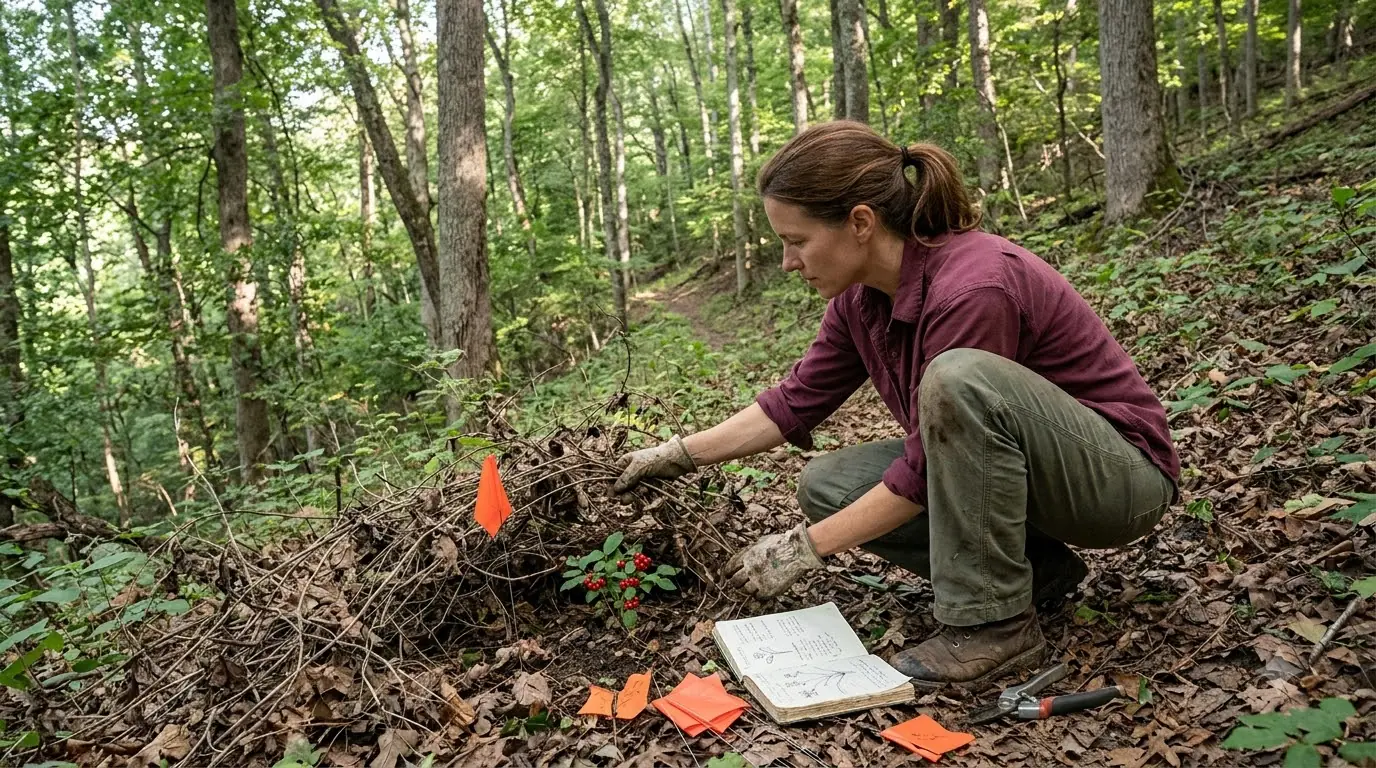
Laura crouched beside the narrow path she had been clearing since noon and rested her forearm across one knee. Her burgundy work shirt was darkened between the shoulder blades, her olive trousers were streaked with mud, and one glove had split along the thumb two weeks ago and been repaired with black tape. Beside her lay a pair of closed pruning shears, three unused orange marker flags, and a worn notebook whose brown cover had softened at the corners from decades of handling.
The notebook had belonged to her grandfather.
For most of her life, Laura had thought of it as one of the old man’s many peculiar habits. He wrote down weather dates, where springs ran after storms, which trees had dropped limbs, when the first whip-poor-will called each year, and little sketches of leaves that meant nothing to her when she was a child. He had carried it in the chest pocket of his work shirts and sometimes pulled it out without warning to make a note while everyone else waited.
When Laura inherited the hillside after his death, the notebook had come with the deed, a rusting shed, a small house that needed a roof, and just enough debt to make grief feel like paperwork.
The first year she had planned to clean the property and sell it.
The second year she had planned to clean the property and decide.
By the third, she had stopped explaining the plan to anyone.
Family friends called the land “pretty but useless.” A timber buyer had told her the slope held a few decent trees but nothing special. A neighbor had suggested goats. A cousin who lived two counties away had advised her to sell before taxes and repairs ate what little value remained. Laura had nodded through all of it, because every suggestion contained some truth and because none of the people offering advice had spent childhood summers walking behind her grandfather on this hill.
He had never called the place useless.
He had called it patient.
That word had irritated her more often than comforted her during the last three years.
Patience did not patch roofs. It did not pay insurance. It did not clear briars. It did not explain why her grandfather had refused two offers for the property in his final decade, even after his knees became too weak for him to climb past the lower spring.
Laura picked up the pruning shears, then set them back down.
A knot of dead vine lay across the leaf litter near her left boot. She grabbed it with both gloved hands and pulled. The brittle stems came free in a loose bundle, crackling as they slid over last year’s leaves.