Naomi Carter deliberately chose the cheapest black tote bag she could find.
It cost thirty-eight dollars.
That detail mattered.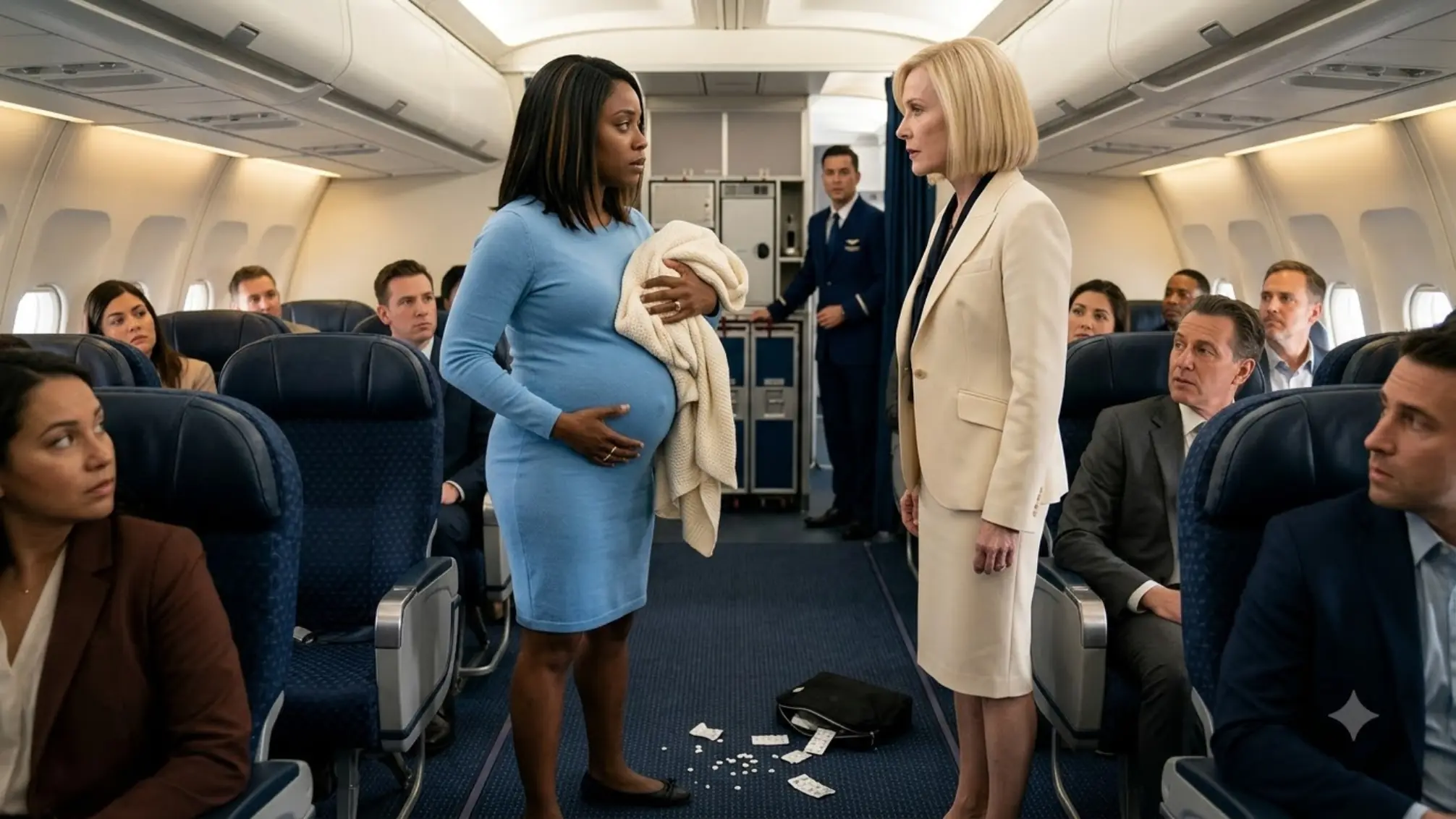
For nearly fifteen years, Naomi had entered airports surrounded by assistants, drivers, executives, and people trained to recognize her before she reached the curb. Her normal luggage was handmade Italian leather. Her company usually placed her in private lounges. If she wanted a glass of water, somebody appeared with three options before she asked.
Today, none of that was allowed.
She wanted to know what Carter Atlantic Airways felt like to someone nobody considered important.
So at 7:10 on a Tuesday morning, the forty-one-year-old founder and CEO of the airline stood alone inside Dallas Fort Worth International Airport wearing a simple rose-pink knit blouse, cream trousers, low beige flats, and a thin cardigan folded over one arm.
Her deep-brown skin carried almost no makeup. Her shoulder-length natural hair had been straightened into a simple bob rather than the polished style used in corporate photographs. She wore no recognizable jewelry except a small gold ring that had belonged to her mother.
Her ticket displayed her legal middle name.
Naomi Elise.
Not Naomi Carter.
No executive status.
No VIP code.
No corporate security escort.
Just another passenger traveling to New York.
That was exactly what she wanted.
Six weeks earlier, Naomi had received an anonymous packet at Carter Atlantic headquarters.
Inside were forty-three customer complaints.
Some were ordinary service issues.
Late drinks.
Lost bags.
Seat disputes.
But eleven complaints shared a disturbing pattern.
Passengers in premium cabins described being questioned about whether they belonged there.
Several were Black.
Two were Latino.
One was a young Asian software engineer traveling in sweatpants.
Another was a white construction contractor wearing work boots.
A Black attorney from Houston said a gate supervisor asked three separate times whether she had accidentally entered the priority boarding line.
A physician from Baltimore claimed a flight attendant told him first class was “for ticketed premium customers” while he was already holding a first-class boarding pass.
A small-business owner said another passenger complained about sitting beside him because his clothes looked “too casual,” and the crew pressured him to move rather than confronting the passenger.
The airline’s internal reports described these incidents differently.
Customer misunderstanding.
Seating confusion.
Communication issue.
No policy violation established.
That was what disturbed Naomi.
Complaints were entering the system angry and specific.
They were leaving it vague and harmless.
Someone was sanding the sharp edges away.
Naomi summoned Chief Compliance Officer Marcus Hill.
“Who oversees premium-service complaints?”
Marcus hesitated.
“Executive Customer Experience.”
“Who runs it?”
He already knew where the conversation was going.
“Eleanor Vance.”
Naomi leaned back.
Eleanor had joined Carter Atlantic eight years earlier after a long career in luxury hospitality. She was sixty-two, wealthy, impeccably connected, and famous inside the company for using words such as standards, presentation, and appropriate clientele.
Her numbers looked excellent.
Premium customer satisfaction remained high.
First-class revenue had increased.
Complaints supposedly decreased every year.
The board loved her.
Naomi had even praised her publicly.
Now she wondered what those numbers had hidden.
“Don’t tell Eleanor we’re reviewing this,” Naomi said.
Marcus stared at her.
“What are you planning?”
“I’m flying.”
“You fly constantly.”
“Not as myself.”
Marcus almost laughed.
Then he realized she was serious.
“No.”
Naomi raised an eyebrow.
“No?”
“You’re the CEO of an airline. You cannot secretly test your own crews like some reality show.”
“I’m not testing individual crews.”
“Then what?”
“I’m testing what happens when employees think nobody important is watching.”
Marcus folded his arms.
“This could go badly.”
“That’s the point.”
The operation remained known to only four people.
Marcus.
General counsel Rachel Monroe.
Board chair Samuel Pierce.
And Dana Brooks, director of internal audit.
They selected Flight 271 from Dallas to New York because Eleanor Vance would be aboard.
That was not coincidence.
Eleanor was traveling to New York for a board presentation on Carter Atlantic’s new premium-cabin strategy.
Naomi would attend that meeting too.
But Eleanor expected the CEO to arrive later aboard a corporate aircraft.
Naomi canceled the corporate flight without telling her.
Instead, she purchased seat 2A on Flight 271 under her middle name.
The experiment began before boarding.
At the priority security entrance, an employee checked Naomi’s boarding pass twice.
Nothing improper happened.
Inside the first-class lounge, a receptionist smiled and welcomed her.
Again, normal.
Naomi ordered coffee and sat near the window.
At 8:06, Eleanor Vance entered.
Naomi recognized her immediately.
Cream designer suit.
Short blonde bob.
Pearl earrings.
Structured handbag.
Eleanor was followed by Julian Mercer, Carter Atlantic’s regional vice president for passenger operations, a thirty-eight-year-old executive Naomi had promoted eighteen months earlier.
Julian did not recognize Naomi.
That surprised her.
They had met six times.
But those meetings happened when Naomi wore tailored suits, corporate badges, and the visual authority of being surrounded by senior leadership.
Today she was apparently invisible.
Eleanor stopped near the lounge attendant.
“Why is this area so crowded?”
The attendant apologized.
Naomi counted fourteen people in a room designed for sixty.
Eleanor glanced toward Naomi.
Their eyes met briefly.
Then Eleanor asked the attendant, loudly enough to be heard, “Are we still allowing complimentary upgrades into this lounge?”
The employee looked uncomfortable.
“Access is based on ticket class and status, ma’am.”
“Of course.”
Eleanor walked away.
Naomi wrote one sentence in her phone.
8:08 a.m. Assumed lounge eligibility based on appearance.
The flight boarded at 9:05.
Naomi entered with Group One and found seat 2A.
She placed her cheap tote beneath the seat in front of her.
A businessman sat in 2B.
He nodded politely.
No problem.
Then Eleanor entered.
Her assigned seat was 1C.
She stopped in the aisle when she saw Naomi.
For a moment, confusion crossed her face.
Then she turned toward flight attendant Sarah Mitchell.
“Sarah.”
“Yes, Ms. Vance?”
Eleanor pointed discreetly toward Naomi.
“Can you verify 2A?”
Sarah looked surprised.
“Is there an issue?”
“Just verify it.”
Naomi looked out the window.
Sarah approached.
“Excuse me, ma’am. May I see your boarding pass?”
Naomi handed it over.
Sarah scanned it.
“Thank you, Ms. Elise.”
She returned it immediately.
Eleanor was still watching.
“Well?”
“Seat 2A is correct.”
Eleanor’s mouth tightened.
“Paid?”
Sarah paused.
“I’m sorry?”
“Was it purchased or upgraded?”
That crossed a line.
Sarah knew it.
So did Naomi.
Passenger fare information was none of Eleanor’s business in that context, even as a corporate executive.
Naomi turned toward her.
“Is there a reason my payment method matters?”
Eleanor looked directly at her for the first time.
“I’m discussing an operational matter.”
“About my seat?”
“About cabin allocation.”
Naomi smiled faintly.
“Then allocate around me.”
The businessman beside her coughed into his hand, hiding amusement.
Eleanor did not appreciate it.
“First class has certain service expectations.”
Naomi nodded.
“I paid for one of them.”
Eleanor looked at the rose-pink blouse, the inexpensive tote, and the simple flats.
Then she smiled.
Not pleasantly.
“I’m sure you did.”
She moved forward.
Naomi added another note.
9:11. Ticket verified. Executive requested fare origin after verification.
The aircraft departed on time.
For the first forty minutes, nothing happened.
Sarah provided excellent service.
Coffee arrived.
Breakfast arrived.
Naomi quietly watched crew interactions.
Then turbulence began.
Not severe.
Enough to suspend beverage service temporarily.
When conditions improved, Sarah returned to the aisle.
Eleanor called her over.
“I need to speak privately.”
Sarah leaned closer.
Eleanor whispered something.
Sarah’s expression changed.
She looked toward Naomi.
Then back at Eleanor.
“I don’t think that’s necessary.”
“It is.”
“Seat 2A is ticketed correctly.”
“That isn’t the issue.”
Naomi could hear fragments.
Board member.
Optics.
New York delegation.
Then Sarah approached Naomi.
She looked embarrassed.
“Ms. Elise, I apologize. We have a seating request.”
Naomi already knew.
“What request?”
“There’s a corporate guest boarding connection issue in New York, and Ms. Vance is asking whether you might voluntarily move to 5C so a delegation member can use this row for discussion.”
Naomi looked around.
The cabin had twenty first-class seats.
Several were occupied by solo travelers.
“Why me?”
Sarah hesitated.
That was the question nobody wanted to answer.
Naomi looked toward Eleanor.
“Did she select me?”
Sarah lowered her voice.
“Yes.”
Naomi nodded.
“I’m staying.”
“Absolutely.”
Sarah seemed relieved.
She turned away.
Eleanor stopped her.
“What did she say?”
“She declined.”
Eleanor stared at Naomi.
Then she stood.
She walked directly into the aisle beside seat 2A.
The businessman beside Naomi removed his headphones.
Eleanor spoke softly.
“You’re creating an unnecessary issue.”
Naomi looked up.
“I’m sitting in the seat I purchased.”
“We have executives who need workspace.”
“So purchase them workspace.”
Eleanor’s eyes hardened.
“You’re being difficult for no reason.”
“No.”
Naomi crossed one leg over the other.
“I’m making you explain why the only passenger you asked to move is me.”
Silence.
Eleanor glanced around.
Several passengers were listening now.
She lowered her voice.
“People like you always turn routine requests into accusations.”
Naomi’s expression changed.
“People like me?”
Eleanor realized the mistake.
Instead of apologizing, she doubled down.
“Passengers who assume every inconvenience is personal.”
Naomi leaned back.
“Interesting recovery.”
Eleanor’s face flushed.
“You know what? Stay there.”
“I planned to.”
Eleanor returned to her seat.
The businessman beside Naomi whispered, “That was wild.”
Naomi looked at him.
“Please don’t intervene.”
He raised both hands.
“Wasn’t planning to. But I heard it.”
That mattered.
Naomi wrote another note.
Then Sarah returned quietly.
“I’m sorry.”
“You didn’t do it.”
“No, but I carried the request.”
“Why?”
Sarah looked toward the galley.
“Because she’s Eleanor Vance.”
There it was.
Naomi locked her phone.
“What does that mean to you?”
Sarah thought carefully.
“It means people who say no to her tend to regret it.”
Naomi looked toward Eleanor.
“How?”
“Schedules change.”
“Promotions?”
Sarah said nothing.
She did not need to.
Naomi felt anger now.
Not because Eleanor had insulted her.
Because fear had been institutionalized.
The seat-belt sign turned off.
Naomi stood to use the lavatory.
Her tan audit folder remained inside the tote.
She had carried a printed copy of several complaint summaries because she intended to review them before the board meeting.
As Naomi stepped into the aisle, Eleanor stood too.
Again.
This time there was no pretense.
“Can I give you some advice?”
Naomi smiled.
“I suspect you will whether I want it or not.”
Eleanor stepped closer.
“When people enter spaces they’re unfamiliar with, the smartest thing they can do is observe the culture before demanding special treatment.”
Naomi stared.
“You asked me to surrender the seat I bought.”
“For operational reasons.”
“Then you questioned whether I paid for it.”
Eleanor’s voice cooled.
“You’re trying very hard to make this into something ugly.”
“I haven’t had to try.”
The cabin became quiet.
A passenger in row three lifted a phone.
Eleanor noticed.
“Put that away.”
The passenger frowned.
“I’m recording my window.”
“You’re recording a private conversation.”
Naomi turned toward him.
“You can keep your phone where it is.”
Eleanor snapped her head back.
“You don’t give instructions on my aircraft.”
Naomi paused.
My aircraft.
She almost smiled.
Instead, she asked, “Your aircraft?”
“You know what I mean.”
“I’m not sure you do.”
Eleanor looked at Sarah.
“Move her.”
Sarah froze.
“I can’t physically move a ticketed passenger from an assigned seat without cause.”
“I am giving you cause.”
“What cause?”
Eleanor pointed toward Naomi.
“Disruptive behavior.”
The businessman in 2B laughed in disbelief.
“She’s been quieter than you.”
Eleanor glared at him.
“Stay out of this.”
He leaned back.
“Gladly.”
Sarah stood straighter.
“Ms. Vance, she has not violated any cabin rule.”
Eleanor’s expression turned cold.
“Sarah, are you refusing an instruction from Executive Customer Experience?”
Sarah went pale.
Naomi watched closely.
This was no longer about her.
Sarah was being forced into the same system described in the complaints.
Obey or risk your career.
Naomi stepped forward.
“Leave her out of it.”
Eleanor smiled.
“So now you’re protecting the crew?”
“I’m protecting an employee from an executive abusing her title.”
The cabin fell silent.
Eleanor laughed.
“You don’t even work here.”
Naomi reached for her tote.
When she lifted it, the zipper snagged.
The tan file slipped out.
Documents scattered across the aisle.
Sarah immediately bent to help.
Naomi did too.
Eleanor remained standing.
Sarah picked up the first page.
Then froze.
Naomi saw her eyes move across the header.
CARTER ATLANTIC AIRWAYS
CONFIDENTIAL EXECUTIVE AUDIT
PREMIUM CUSTOMER EXPERIENCE REVIEW
Sarah looked up.
Naomi extended her hand.
“Please.”
But Sarah had already seen the signature line.
Authorized by Naomi E. Carter
Founder & Chief Executive Officer
Sarah looked at Naomi’s face.
Then at the printed corporate photograph in the file.
The image was formal.
Different hair.
Different clothes.
Same eyes.
Sarah’s mouth opened slightly.
“Ms…”
Naomi shook her head once.
Not yet.
Sarah understood immediately.
She gathered the remaining documents.
Then she noticed another page.
Eleven complaints.
Eleanor Vance’s name appeared repeatedly.
Sarah’s expression shifted from surprise to something approaching alarm.
Eleanor noticed.
“What is that?”
Sarah stood.
“Nothing.”
“Give it to me.”
“No.”
That was the first time Sarah had openly refused her.
Eleanor stared.
“What did you say?”
Sarah held the folder against her chest.
“I said no.”
Naomi stood slowly.
Eleanor looked between them.
“What is going on?”
Sarah stepped toward the forward galley.
Eleanor blocked her.
“I asked you a question.”
Sarah’s voice became formal.
“I need to speak with the captain.”
“About what?”
“A corporate security matter.”
Eleanor laughed.
“Corporate security?”
Naomi watched the color leave Eleanor’s face.
Some instinct had finally told her the situation was larger than a stubborn passenger.
Sarah entered the forward galley and called the cockpit.
Three minutes later Captain David Reynolds stepped into the cabin.
He was fifty-six, silver-haired, calm, and one of Carter Atlantic’s most senior captains.
He looked at Sarah.
Then at the folder.
Then at Naomi.
Recognition happened instantly.
Unlike Eleanor, Reynolds had attended the annual leadership summit six months earlier.
His posture changed.
“Ms. Carter.”
The cabin went silent.
Eleanor frowned.
“What?”
Captain Reynolds approached Naomi.
“Ms. Carter, I apologize. I didn’t know you were aboard.”
Naomi smiled.
“That was intentional.”
Eleanor stared at her.
“No.”
Nobody answered.
She looked toward Sarah.
Then Reynolds.
Then Naomi again.
“Carter?”
Naomi reached into the tote.
She removed a slim black credential wallet.
Opened it.
NAOMI E. CARTER
FOUNDER & CHIEF EXECUTIVE OFFICER
CARTER ATLANTIC AIRWAYS
The businessman in 2B whispered, “Oh, damn.”
Eleanor stopped breathing for what seemed like several seconds.
Naomi closed the wallet.
“You said this was your aircraft.”
Eleanor’s lips parted.
“I meant—”
“I know what you meant.”
The captain stepped aside.
Naomi remained standing in the aisle wearing the same rose-pink blouse Eleanor had apparently considered incompatible with first class.
Eleanor recovered enough to speak.
“This is clearly some kind of misunderstanding.”
Naomi looked at Sarah.
“Was it?”
Sarah hesitated.
Then shook her head.
“No, ma’am.”
Eleanor turned sharply.
“Sarah.”
Naomi raised one hand.
“No.”
Eleanor looked back.
“You do not get to intimidate her because she answered me honestly.”
“I wasn’t intimidating anyone.”
“You threatened her career when she refused to remove a ticketed passenger without cause.”
“I was enforcing operational standards.”
Naomi lifted the audit folder.
“I spent six weeks reading what your standards look like when passengers complain.”
Eleanor’s face changed again.
Naomi continued.
“Forty-three complaints.”
The cabin remained silent.
“Eleven with nearly identical language about passengers being questioned, relocated, or treated as though they didn’t belong in premium cabins.”
Eleanor swallowed.
“You’re judging an entire division based on isolated customer grievances?”
“No.”
Naomi looked directly at her.
“I’m judging what I watched you do when you thought I had no power.”
That line ended the argument.
Captain Reynolds asked if Naomi wanted Eleanor moved.
Naomi shook her head.
“No.”
Eleanor looked almost relieved.
Naomi continued.
“She stays exactly where she is.”
The relief disappeared.
“I want her to experience the rest of this flight knowing nobody will rearrange reality for her.”
Naomi returned to seat 2A.
Eleanor sat slowly.
For the remaining ninety minutes, she barely moved.
Naomi did not celebrate.
Her stomach was tight with disappointment.
Eleanor was one executive.
But Sarah’s fear had shown Naomi something much larger.
The problem was cultural.
Employees had learned that policies became flexible around powerful people.
That meant Naomi had allowed a company to grow large enough that values written in headquarters no longer necessarily survived contact with authority.
That belonged to her too.
The plane landed at JFK at 1:41 p.m.
Eleanor stood immediately.
Naomi remained seated.
When the door opened, two people entered before passengers were allowed to deplane.
Marcus Hill.
And general counsel Rachel Monroe.
Eleanor saw them.
Her shoulders dropped.
Marcus approached Naomi first.
“How bad?”
Naomi glanced toward Eleanor.
“Worse than the complaints.”
Rachel looked at the audit folder.
“Do we have witnesses?”
The businessman in 2B raised his hand.
“Several.”
Passengers laughed softly.
Eleanor did not.
Naomi stood.
“Eleanor, you’re scheduled to present to the board at three.”
Eleanor blinked.
“You still expect me there?”
“Yes.”
“Why?”
“Because I want you to explain your premium-service strategy.”
Eleanor stared.
Naomi continued.
“And then I want you to explain why employees believe refusing you damages their careers.”
Sarah looked down.
Eleanor’s eyes moved toward her.
Naomi saw it.
“Don’t.”
Eleanor looked back.
“I wasn’t going to say anything.”
“Good.”
The board meeting began exactly at three.
Eleanor entered in the same cream suit.
Naomi sat at the head of the table.
Nobody mentioned the airplane immediately.
That made Eleanor more nervous.
She presented slides.
Premium revenue growth.
Customer retention.
Service scores.
Brand segmentation.
Then came a slide titled:
Protecting the Premium Experience.
Naomi interrupted.
“What does that mean?”
Eleanor stopped.
“Maintaining consistency for high-value customers.”
“Define high-value.”
“Revenue contribution, loyalty, purchasing behavior.”
“Appearance?”
Eleanor went still.
“No.”
“Clothing?”
“No.”
“Race?”
“Of course not.”
“Then why did you question whether I paid for seat 2A?”
Nobody moved.
Eleanor’s face hardened.
“I made a judgment error.”
Naomi nodded.
“Yes.”
She opened the audit file.
“Now explain the eleven similar judgment errors in these complaints.”
For the next forty minutes, the board reviewed evidence.
Original customer complaints.
Altered internal summaries.
Emails.
Scheduling decisions involving employees who challenged premium-service directives.
Sarah’s name appeared in one older message.
Needs stronger alignment with executive expectations before promotion.
The message was written by Eleanor.
Sarah had been denied promotion twice.
Naomi looked up.
“Was that because she challenged you?”
Eleanor answered carefully.
“She lacked executive presence.”
“What does that mean?”
“She was uncomfortable implementing difficult decisions.”
“Like removing passengers who had done nothing wrong?”
Eleanor did not answer.
The board suspended her pending formal investigation.
But Naomi did not stop there.
Julian Mercer, the regional vice president, was also questioned because several altered complaint summaries passed through his department.
He admitted senior staff had learned to soften language involving Eleanor because nobody wanted to provoke her.
“Did she tell you to falsify complaints?”
“No.”
“Then why did you do it?”
Julian looked ashamed.
“Because we knew what she wanted.”
That answer disturbed Naomi more than a direct order would have.
Systems become dangerous when leaders no longer need to ask for misconduct.
The culture learns to anticipate them.
The investigation lasted nine weeks.
Eleanor was ultimately terminated for policy violations, retaliation, improper interference with passenger seating, and inappropriate influence over complaint handling.
Three managers were disciplined.
One resigned.
Several customer cases were reopened.
Passengers received formal apologies and refunds where appropriate.
Sarah Mitchell finally received the promotion she had earned two years earlier.
Naomi personally objected when someone suggested Sarah should be promoted because she “stood up for the CEO.”
“No,” Naomi said. “Promote her because her record says she deserved it before she ever knew who I was.”
That distinction became part of the reforms.
Carter Atlantic changed its complaint system.
Original customer language could no longer be overwritten.
Management summaries existed separately.
Repeated complaints involving similar behavior triggered independent review.
Premium-service employees received authority to refuse executive requests that conflicted with passenger policy without requiring approval from the executive involved.
And Naomi added one sentence to every leadership training program.
The least powerful person in the room is the best test of your character.
Six months later, Naomi boarded another Carter Atlantic flight.
Again, alone.
Again, ordinary clothes.
This time nobody knew she was coming.
She wore jeans, a pale green sweater, and carried the same thirty-eight-dollar tote.
Marcus had asked why she kept using it.
Naomi smiled.
“It’s useful.”
“For undercover work?”
“No.”
She touched the worn handle.
“For remembering.”
The flight attendant greeted her normally.
No excessive attention.
No suspicion.
No performance.
Naomi took seat 4D.
Across the aisle, a young Black man wearing a hoodie settled into first class carrying a battered backpack.
An older passenger glanced at him, then toward the flight attendant.
Naomi watched carefully.
The passenger whispered something.
The flight attendant listened.
Then she answered politely.
“Sir, every passenger in this cabin has the same right to their assigned seat.”
The older passenger looked embarrassed.
The young man had not even noticed.
Naomi looked out the window.
She smiled.
That was the company she had thought she already owned.
Now, perhaps, it was becoming the company she actually wanted to lead.
Later that year, Naomi spoke to a room filled with Carter Atlantic managers.
Someone asked about the famous Flight 271 incident.
By then, employees throughout the company knew the story.
A senior executive had treated an ordinary-looking Black passenger as though she did not belong in first class.
The passenger turned out to be the CEO.
People loved the irony.
Naomi did not.
“The lesson is not that you should be careful because the person you disrespect might secretly own the company.”
The room grew quiet.
“That would be a terrible lesson.”
She looked across the managers.
“The lesson is that she shouldn’t have to.”
Nobody spoke.
Naomi continued.
“If I had been a teacher, nurse, contractor, cashier, grandmother, unemployed traveler, or first-time passenger who saved for five years to buy that seat, the policy should have protected me exactly the same way.”
She paused.
“Respect that depends on discovering someone’s status is not respect.”
That sentence eventually appeared in Carter Atlantic’s leadership handbook.
Naomi never asked for it to.
She returned to work.
Airlines remained complicated.
Flights were delayed.
Baggage disappeared.
Customers became angry.
Employees made mistakes.
No policy could eliminate human bias entirely.
But leadership could decide what happened after the warning signs appeared.
That was the part Naomi had failed to understand before Flight 271.
For years, she had measured culture through dashboards.
Retention percentages.
Customer ratings.
Complaint totals.
Revenue.
She had assumed fewer complaints meant conditions were improving.
Sometimes fewer complaints simply meant people had stopped believing anyone would listen.
One afternoon, Sarah visited headquarters.
She had recently become a cabin-service training manager.
Naomi met her in the executive cafeteria.
Sarah noticed the cheap black tote beside Naomi’s chair.
“You still have that?”
Naomi laughed.
“Apparently it’s famous now.”
Sarah smiled.
Then she became serious.
“I wanted to thank you.”
“For what?”
“For what happened.”
Naomi shook her head.
“You shouldn’t thank me for being mistreated.”
“No.”
Sarah looked down at her coffee.
“I mean afterward.”
Naomi waited.
Sarah continued.
“For years, I thought surviving Eleanor meant staying quiet. I thought that was professionalism.”
Naomi understood.
Sarah looked up.
“The day you were on that flight, I realized I had been helping the system every time I carried out an instruction I knew was wrong.”
Naomi nodded slowly.
“I learned something similar.”
Sarah looked surprised.
“You?”
“I thought having good policies meant I had built a good culture.”
Naomi smiled faintly.
“Turns out paper behaves very well when nobody challenges it.”
Sarah laughed.
Before leaving, she asked one question.
“When Eleanor asked me to move you, did you already know what would happen?”
“No.”
“You didn’t plan the confrontation?”
“Absolutely not.”
Sarah looked relieved.
“So when did you know she was finished?”
Naomi thought about it.
Not when Eleanor questioned her ticket.
Not when she demanded her seat.
Not when she threatened Sarah.
Not even when the folder opened.
“The moment she said, ‘People like you.’”
Sarah nodded.
Naomi continued.
“Because people only say that when they’ve already divided the room into who deserves respect and who has to prove they deserve it.”
Months later, Naomi saw Eleanor once more.
They encountered each other at a charity dinner in Manhattan.
Eleanor approached carefully.
She looked older.
Less certain.
“I’ve wanted to speak with you.”
Naomi nodded.
Eleanor struggled for several seconds.
“I was wrong.”
Naomi waited.
“I told myself I was protecting standards.”
“You were protecting hierarchy.”
Eleanor lowered her eyes.
“Yes.”
No excuse followed.
That surprised Naomi.
Eleanor continued.
“I don’t expect forgiveness.”
“Good.”
A faint smile crossed Eleanor’s face.
“I suppose I earned that.”
Naomi looked at her.
“You know what bothered me most?”
“The airplane?”
“No.”
Naomi thought of Sarah.
“The fact that people were afraid of you before I ever boarded.”
Eleanor absorbed that quietly.
Then she nodded.
“I understand.”
Maybe she did.
Maybe she did not.
Naomi no longer needed to decide.
They said goodbye.
The following morning, Naomi flew home.
She arrived early and sat anonymously in the terminal watching people board Carter Atlantic flights.
Families.
Executives.
College students.
Retirees.
People in expensive suits.
People carrying food in plastic bags.
People who looked wealthy.
People who did not.
Every boarding pass represented the same fundamental agreement.
A person had purchased passage.
The airline owed that person safety, professionalism, and dignity.
Nothing printed on a boarding pass measured social worth.
Naomi understood that more deeply now.
When Group One was called, she stood and joined the line.
A man behind her glanced at the inexpensive tote.
“You sure this is priority boarding?”
Naomi turned.
He immediately looked embarrassed.
“I just meant—”
Naomi smiled.
“Yes.”
Then she stepped forward.
The gate agent scanned her ticket.
“Welcome aboard, Ms. Carter.”
The man behind her froze.
Naomi heard it.
For half a second she considered turning around.
She did not.
Because that reaction was exactly what she had spent months trying to change.
Her identity was irrelevant.
She walked down the jet bridge, carrying the same cheap bag, wearing ordinary clothes, and took her seat.
The company did not belong to her because her name was on corporate documents.
It belonged to every employee entrusted with its values during the millions of moments when she was nowhere nearby.
That was what Eleanor had forgotten.
It was what Naomi herself had nearly forgotten.
And it was why the most important part of Flight 271 was not the moment a frightened executive discovered she had insulted the CEO.
It was the hour before that reveal.
When Naomi Carter looked ordinary.
When nobody knew her title.
When Eleanor believed there could be no consequences.
That was when the truth about the company became visible.
And that was the truth Naomi had gone undercover to find.