A waitress was closing her diner on a rainy Halloween night when she found a young boy in a wheelchair shivering outside.
She brought him in, gave him food, dried his clothes as best she could, and warmed his heart with the kind of tenderness he had not felt in a long time.
What she did not know was that across the street, hidden inside a SUV, a billionaire was watching.
The next morning, he showed up at her door with an offer that would drag her into a world of money, secrets, power, and dangerous corporate games.
One act of kindness would change both of their lives forever.
The rain had started just before six.
Soft at first, only a mist that clung to the windows and turned the Halloween decorations outside into ghostly silhouettes. Plastic skeletons dangled from the lamp posts. Orange string lights flickered weakly along the diner’s chipped awning. The jack-o’-lantern by the front door had begun to cave in on one side, its grin warped and tired.
Inside Pumpkin Diner, the smell of burnt coffee and old grease hung in the air.
The neon sign buzzed above the counter, its hum blending with the low crackle of the radio playing an old blues tune. It had been a long day, a long week, and Monica Harris could feel every hour of it in her bones.
Her wrists ached from wiping tables.
Her shoes were damp from the constant drip near the entrance.
The rag in her hand was more gray than white now.
She glanced at the clock on the wall.
5:52 p.m.
Eight more minutes, and she could finally close.
Most of the town was already home, tucking children into costumes, lighting pumpkins, and waiting for trick-or-treaters. Monica had promised herself she would get off early tonight. Maybe stop by the store for a small bag of candy. Not for anyone else. Just for herself.
A little sweetness after another twelve-hour shift.
But work had a way of stretching time.
The bell over the door rattled each time the wind pushed against it, and the neon sign outside kept flickering like even the lights were too tired to finish the job.
Monica sighed, grabbed the mop, and started cleaning the floor one last time.
Her reflection shimmered faintly in the window.
A woman in her thirties, chestnut-brown skin glistening with sweat, dark hair tied back under a fading orange bandana, shoulders squared by years of labor and disappointment.
She was not sure when she had stopped dressing up for Halloween.
Maybe the year her mother passed.
Maybe the year rent doubled.
Maybe the year kindness started to feel like a luxury.
Still, she smiled when she saw the little ghost stickers on the booth windows. The owner’s granddaughter had put them there that morning, laughing as she stuck them on crooked.
“They look happier that way,” the girl had said.
Monica had agreed.
She reached for the sign by the door, ready to flip it from OPEN to CLOSED, when something outside caught her eye.
Through the mist-slick glass, beneath the dim glow of the streetlight, sat a small figure.
Hunched.
Still.
Almost blending into the night.
At first, she thought it was one of those Halloween props the pawn shop across the street liked to put out. A scarecrow, maybe. Some kind of dummy.
But then it moved.
A tiny hand brushed rainwater from a soaked sleeve.
A wheelchair shimmered faintly under the drizzle, its metal frame reflecting the streetlight.
Monica’s breath caught.
The boy could not have been more than ten or eleven.
He wore a superhero costume, a red cape clinging to his shoulders, sticking to his back from the rain. His dark hair was plastered to his forehead, and his lips trembled as he tried to pull a thin blanket tighter around himself.
A bag of candy sat in his lap, half empty, the wrappers sticking to his damp fingers.
Monica frowned, heart tightening.
She dropped the mop and grabbed her coat from the rack.
The bell above the door chimed softly as she pushed it open. The wind bit her cheeks. The rain was colder now, sharper, the kind that slid down your collar and stayed there.
“Hey, sweetheart,” she called, crouching beside him.
Her voice was gentle, the kind people used when they did not want to scare a stray cat.
“What are you doing out here all alone?”
The boy flinched at first. His wide blue eyes darted up to meet hers. He hesitated, like he was not sure whether he was allowed to answer.
Then he said softly, almost swallowed by the rain, “I’m waiting for my dad.”
Monica looked up and down the street.
Nothing.
Just the dim outline of a closed pawn shop and a row of parked cars reflecting orange streetlight.
She tried again.
“Where is he now, honey?”
The boy shrugged.
His voice grew smaller.
“He said he’d be right back.”
Her chest ached at those words.
She had heard them too many times from too many people who never came back.
“Well, you can’t stay out here,” she said firmly, offering a warm smile. “Not like this. Come on inside. It’s warmer. I’ll fix you something to eat.”
The boy hesitated, gripping the armrest of his wheelchair.
But the promise of warmth, or maybe the kindness in her tone, made him nod.
Monica took the handles and wheeled him toward the diner. The door creaked open, and the smell of butter and coffee greeted them.
Behind them, the Halloween wind howled through the empty street, scattering candy wrappers like ghosts.
Inside, Pumpkin Diner glowed soft, golden, alive again for one more night.
And outside, just across the street, the dark silhouette of a SUV idled in silence, headlights off, its driver watching through tinted glass.
The moment the door shut behind them, the diner felt like another world.
The hiss of the rain outside softened to a low hum, and the warm air wrapped around them like a blanket. The smell of grilled butter and cinnamon syrup still lingered from the breakfast rush. The neon sign buzzed faintly above the window, bleeding orange light across the boy’s pale face.
Monica guided the wheelchair toward a booth near the radiator, the one that always rattled but never quite broke.
She grabbed a clean towel and gently rubbed his hair dry before draping it over his shoulders.
“There,” she said softly. “That better?”
The boy nodded.
His eyes still darted nervously around the room, as if unsure whether this was real or just a trick of the night.
He looked so small sitting there.
Soaked shoes.
Trembling hands.
Cheeks flushed from the cold.
The superhero costume clung to him like a faded memory of something braver.
“What’s your name, sweetheart?” Monica asked, crouching so they were eye level.
He hesitated.
“Noah,” he whispered.
Monica smiled, the kind that reached her eyes.
“Well, Noah, I’m Monica. Lucky for you, I make the best grilled cheese sandwich this side of Pennsylvania.”
Noah blinked, almost smiling.
“Really?”
“Cross my heart.”
She straightened, heading for the counter.
“And I’ve got hot chocolate, too. With whipped cream, if you promise to tell me your favorite Halloween candy.”
The faintest laugh escaped him.
Quick.
Uncertain.
But real.
Monica’s chest eased a little at the sound.
She had seen too many children come through these doors carrying the kind of silence adults left behind.
Within minutes, the sizzle of butter filled the diner.
She flipped the sandwich with practiced ease, letting the cheese melt just right. She poured a bowl of pumpkin soup beside it, her little seasonal touch, and set it all before him.
“This one’s on the house,” she said, slipping a napkin under his plate. “Happy Halloween, baby.”
Noah looked at the food like he was not sure if he was allowed to touch it.
Then hunger won.
He picked up the sandwich, bit in, and his eyes widened.
“This is amazing,” he murmured, words muffled through melted cheese.
Monica chuckled, wiping her hands on her apron.
“Good food makes everything better. That was my grandma’s rule. Works nine times out of ten.”
He grinned.
The kind of grin that made you forget how dark the night was outside.
She poured him a mug of hot chocolate, steam curling like smoke from a tiny spell.
“So,” she said lightly, “your dad’s still not back yet?”
Noah shook his head.
His voice went small again.
“He said he had a phone call. It’s been a while, though.”
Monica followed his gaze out the window.
The street was not empty. People were moving up and down under umbrellas. The city was alive with Halloween energy.
Still, something about the boy sitting alone in the rain had made her heart twist.
She did not know who his father was, but she could not leave him out there.
Nobody deserved that.
She told Noah to take off one of his shoes and leave it by the diner’s windowsill, a small signal in case his dad passed by and recognized it.
The rain had thickened, silver threads slicing through the glow of the streetlight. The Pumpkin Diner sign flickered between life and death.
She turned back to him, her expression softening.
“You got any family nearby, baby?”
He shook his head, lips pressed tight.
“Just Dad.”
Something in the way he said it, not sad, not angry, just resigned, made her throat tighten.
She leaned against the counter, crossing her arms.
“Well, you’re safe here until he shows up. Nobody gets left out in the cold on my watch.”
Noah smiled faintly, sipping his chocolate.
“You talk like my teacher.”
“That a compliment or an insult?”
He giggled, the sound bright enough to cut through the hum of the neon lights.
“Compliment.”
Monica grinned.
“Then I’ll take it.”
Outside, the rain whispered against the glass, blurring faces and reflections.
Across the street, a SUV finally pulled closer than it had before.
Inside sat Ethan Cole, the man on the other end of Noah’s story.
His phone buzzed with unanswered calls, but he ignored them, eyes locked on the window of Pumpkin Diner.
The wipers brushed across the windshield again, a slow rhythmic sweep that seemed to echo the tick of Ethan’s thoughts.
The diner glowed like a small ember in the dark, a flicker of warmth in a town that had long since gone soft and shadowy beneath the rain.
The dashboard clock blinked 6:27 p.m.
To him, it felt later.
Like the night had stretched thin and heavy around him.
He could not look away from the window.
Through the rain-slick glass, he could see Noah.
His son.
Laughing.
Actually laughing.
The boy’s thin shoulders shook with it. His hands waved as he tried to keep the mug of cocoa steady.
And the woman beside him smiled the way people do when they mean it.
No calculation.
No performance.
Just warmth.
It disarmed him.
Ethan Cole had built an empire out of precision.
Cole Industries ran on algorithms, acquisitions, market timing, and margins. Not feelings. Not second chances. Not the unpredictable goodness of strangers.
He had spent years perfecting the art of distance.
From employees.
From competitors.
From grief.
Even, if he was honest, from his own son.
It was cleaner that way.
Safer.
But watching Noah now, smiling at a stranger with chocolate smudged on his chin, something old and uncomfortable stirred in him.
He thought about the last conversation he had with the boy.
It had not really been a conversation at all.
Just an impatient “Wait here,” before he had stepped into the storm to take a business call.
He had not looked back.
And yet here he was, watching a waitress, a woman he did not know, a woman who looked like she carried the weight of the world in her eyes, do the thing he should have done.
Care.
The phone rang again.
He finally answered.
“Mr. Cole,” a woman’s voice came through, crisp and controlled. “Vivien Rhodes. I’m still at the office. Do you need something?”
He hesitated, eyes locked on the window.
“I need you to go somewhere for me.”
There was a beat.
“Now?”
“Yes. There’s a place called Pumpkin Diner on Route 19. You’ll see it. Neon sign, old orange letters.”
He could almost hear her frown.
“What am I looking for?”
Ethan’s gaze lingered on Monica.
The way she leaned down to wipe Noah’s mouth with a napkin.
The easy patience in her movements.
The soft laughter that seemed to fill the empty diner.
“Find out who she is,” he said finally.
“The woman with my son.”
A pause.
“You mean the waitress?”
“Yes. Name. Background. Whatever you can get. Quietly.”
Vivien hesitated again, then said, “Understood.”
Ethan ended the call and slipped the phone onto the passenger seat.
He adjusted his cufflink, a habit he had when he did not know what else to do, and leaned back, watching.
Noah was showing the woman something now, a little plastic spider from his candy bag. She pretended to jump, eyes wide, hand clutching her chest.
Noah laughed so hard his wheelchair shook.
Ethan’s jaw tightened.
It should not have mattered.
This was a stranger.
Someone from another world.
But she had done something he could not ignore.
She had reached his son.
And Ethan Cole did not like owing anyone anything.
He turned the key, and the SUV’s engine rumbled softly to life.
For a moment, the headlights flashed across the diner windows, casting streaks of light across the linoleum floor inside.
Monica looked up briefly, maybe hearing the engine, maybe just sensing eyes on her.
But by the time she turned toward the glass, the SUV was already gliding away into the rain.
Back inside, the bell above the door jingled as the storm rattled the windows.
Monica returned to the counter, watching Noah finish the last bite of his cookie, crumbs clinging to his smile.
She did not notice the faint outline of the car disappearing into the fog.
She did not know that the man inside had already decided that before the night was over, her name would be on his desk.
Outside, beneath the dying glow of Halloween lights, the rain kept falling.
Slow.
Relentless.
Cleansing.
Like the start of something neither of them could see coming.
By the time Monica locked up the diner, the storm had thinned to a drizzle.
Noah’s father had returned, not in the way she expected, not with frantic gratitude or panicked apologies, but through a driver who stepped inside with a neat umbrella and a careful explanation.
“Mr. Cole was delayed,” the driver said. “He asked me to bring Noah home.”
Monica had looked at the boy.
“Do you know him?”
Noah nodded.
“That’s Henry. He works for Dad.”
Only then did Monica release the handles of the wheelchair.
She packed him one more cookie in a napkin.
“For the road,” she said.
Noah hugged the paper bundle to his chest like treasure.
“Will I see you again?” he asked.
Monica smiled, though something in her chest pinched.
“You know where the best grilled cheese is.”
He smiled back.
Then Henry wheeled him toward the waiting car, umbrella shielding him from the rain.
Monica watched until the taillights vanished down the street.
Then she locked the diner.
The street was slick with puddles that shimmered under dying jack-o’-lantern lights. Halloween decorations fluttered weakly in the wind, a plastic ghost half-torn from its string swaying like it was too tired to scare anyone.
She tugged her coat tighter around her and started the walk home.
Her sneakers slapped softly against the wet pavement, splashing through thin rivulets of rain.
The night was quiet now except for the hum of streetlights and the distant echo of children’s laughter fading down side streets, the last trick-or-treaters heading home.
Monica’s apartment sat three blocks away above a laundromat that never seemed to close.
The building leaned slightly to one side, its brick facade darkened by decades of soot, but it was home.
One room.
Thin walls.
A heater that only half worked when it felt generous.
The next morning came gray and quiet, the kind of morning that did not really look like morning at all. Just a pale sheet of light seeping through thin curtains. Rain still clung to the edges of the windows, drops tracing lazy paths down the glass like the night had not fully decided to leave.
Monica had meant to sleep in.
It was her first morning off in over a week. Pumpkin Diner would not need her until the night shift, and she had stayed up late, later than she should have, hunched over her old laptop, trying to make sense of a free online course called Finance for Beginners.
She was not sure what had driven her to start learning about stocks and credit reports at two in the morning.
Maybe it was boredom.
Maybe it was fear.
Maybe it was the creeping feeling that her life was on pause while everyone else’s kept moving.
When the knock came, it hit like a sharp crack through the silence.
Three firm, deliberate wraps.
Her eyes snapped open.
She blinked, disoriented, then glanced at the clock on her nightstand.
8:04 a.m.
“Who in the world?” she muttered, voice raspy.
Another knock.
Not frantic.
Patient.
Someone who knew exactly what they wanted.
Monica groaned and dragged herself out of bed. The air in the apartment was cold enough to bite. She tugged on her robe, ran a hand through her hair, and padded barefoot across the creaky floorboards.
She paused at the door.
“Who is it?”
A beat of silence.
Then a voice, calm, low, precise.
“Ethan Cole.”
Her brow furrowed.
The name did not ring a bell at first.
Then it hit her.
Noah.
The SUV.
The eyes behind the glass.
Her stomach tightened.
“What do you want?”
“Just to talk.”
She froze.
The man’s voice had the kind of control that made even simple words feel expensive.
She cracked the door open on the chain.
He stood tall in the hallway, wearing a dark overcoat that looked like money did not sleep. His hair was damp, like he had walked straight from the rain. Even through the narrow opening, she could tell he did not belong in this building.
“Mr. Cole,” she said slowly, her tone half suspicious, half exhausted. “You’re the one who left your kid out in a storm last night.”
A flicker of tension passed through his jaw.
“Yes,” he said. “And you’re the one who didn’t.”
The words caught her off guard.
He did not wait for a reply.
“May I come in?”
She hesitated, weighing instinct against curiosity.
Common sense told her to tell him to get lost.
Curiosity, that dangerous, stubborn part of her, reached for the lock anyway.
The door opened just enough for morning light to spill into her apartment.
He stood in the doorway with an envelope in his hand.
Thick paper.
Embossed seal.
The kind of thing that meant whatever was inside carried weight.
Monica crossed her arms.
“You always bring paperwork to your thank-yous?”
He stepped inside when she moved aside.
The scent of rain and expensive cologne filled the room, mixing uneasily with the faint smell of detergent and burnt coffee.
“I don’t believe in charity,” he said simply. “But I do believe in paying debts.”
She raised a brow.
“You think feeding your son a sandwich put you in my debt?”
“No,” he said evenly. “I think it revealed something worth investing in.”
Monica stared at him.
“Investing.”
He placed the envelope on her small kitchen table, its edge brushing against the half-open notebook from last night, the one filled with her messy handwriting about financial literacy.
“A job offer,” he said.
She blinked.
Then laughed, a sharp, disbelieving sound.
“You’re joking.”
“I don’t joke.”
“I’m a waitress, Mr. Cole. Not some corporate genius.”
He met her gaze.
“You’re a woman who knows how to handle people. You know what it means to care when there’s nothing in it for you. That’s rarer than any resume.”
Her mouth opened, then closed again.
“And you’re saying you want to hire me?”
“I’m saying I want you to work with me.”
He nodded toward the envelope.
“Community relations. Public engagement. Six figures. Benefits. The works.”
She blinked at him like he had just offered to buy the moon.
“You don’t even know me.”
“I know enough.”
The words were quiet, but they landed like a punch.
Monica glanced at the envelope again.
It looked absurd sitting there, surrounded by chipped mugs, unpaid bills, and a thrift-store tablecloth.
“What’s the catch?” she asked finally.
Ethan studied her for a long moment.
“No catch. Just an opportunity. One you’ve already earned.”
For a second, neither spoke.
The air felt charged, heavy with something unspoken.
Respect, maybe.
Or challenge.
Monica sighed, shaking her head.
“I’ll think about it.”
He nodded once, as if that was all he needed to hear.
“Good.”
He turned to leave.
By the time she opened her mouth to say something, anything, he was already halfway down the stairs, his footsteps fading into the hum of morning traffic.
She stood there for a long moment, robe tied loosely at her waist, hair a mess, staring at the envelope that did not belong in her world.
She was not sure what scared her more.
The idea of saying yes.
Or what might happen if she did not.
The glass tower of Cole Industries rose like a blade against the gray November sky.
Its mirrored surface caught the light of the morning traffic and fractured it into a thousand cold reflections.
A skyline built on precision and ambition.
Monica Harris stood on the sidewalk, clutching her thrifted handbag in both hands, staring up at the building that looked too clean for anyone like her to walk into.
Her heart thudded against her ribs.
Half nerves.
Half disbelief.
She had almost talked herself out of coming twice.
She had sat at her kitchen table that morning, the job offer open in front of her like some impossible joke. The numbers had been real. The letterhead had been real. The signature, Ethan Cole, Chief Executive Officer, had definitely been real.
And yet even as she ironed her only decent blouse and pulled on the heels she had not worn since her mother’s funeral, she told herself it was probably a mistake.
A test.
A setup.
But she came anyway because some part of her, the same part that could not leave a shivering boy out in the rain, refused to back down just because the odds looked bad.
Now, as the automatic doors whooshed open before her, she straightened her spine and stepped into another world.
The lobby gleamed with polished marble and brushed steel. The air smelled faintly of citrus and money, the kind of clean that came from people who never spilled anything.
A receptionist with perfect posture and red lipstick glanced up, her smile mechanical.
“Good morning. Do you have an appointment?”
“Monica Harris,” she replied, forcing her voice steady. “Mr. Cole is expecting me.”
The receptionist tapped something on her sleek monitor. Her eyes flicked briefly over Monica’s clothes, the slightly faded blazer, the scuffed shoes, the small coffee stain Monica had tried to hide with her hand.
Then she nodded.
“Top floor.”
The elevator ride felt like a confession.
The higher it climbed, the more her stomach twisted. Each floor slid past in silence.
Twenty.
Thirty.
Forty.
Until the doors opened with a soft ding.
Ethan Cole was waiting.
His office was not an office.
It was a statement.
Floor-to-ceiling windows looked out over the city, the kind of view reserved for people who had already won. A minimalist desk of glass and chrome sat near the center, perfectly aligned with the horizon.
No clutter.
No chaos.
Ethan did not look up right away. He was typing something on a tablet, the lines of concentration sharp in the morning light.
“You’re late,” he said without turning.
Monica glanced at her watch.
“By two minutes.”
He looked up, gray eyes cool.
“That’s two minutes I don’t get back.”
She exhaled through her nose, dropping her bag onto the chair.
“You want me here or not, Mr. Cole?”
A flicker, the briefest hint of amusement, crossed his face.
Then it was gone.
“That remains to be seen.”
Before she could bite back a response, the door behind her slid open with a soft hiss.
“Miss Harris,” a woman’s voice said, smooth as glass.
Monica turned.
The woman from the phone call, Vivien Rhodes, stood framed in the doorway, dressed in a tailored suit that probably cost more than Monica’s rent. Her face was polished and unreadable.
“Good morning,” Vivien said with a polite smile that did not touch her eyes. “Welcome to Cole Industries.”
“Yeah,” Monica said, returning the smile. “We’ve kind of met.”
Vivien’s gaze flickered just for a moment, enough to register surprise.
“So we have.”
She handed Ethan a folder.
“These are the reports you requested. I’ve scheduled your call with the Orion Group for two.”
Ethan nodded, flipping it open.
“Good.”
Vivien hesitated at the door, her tone light but her look sharp.
“If you need anything, Miss Harris, don’t hesitate to ask.”
“I’ll manage,” Monica said.
“I’m sure you will,” Vivien replied.
Then she was gone.
The room went quiet again, save for the soft hum of the city beyond the glass.
Ethan gestured toward the chair across from him.
“Sit.”
Monica did.
He slid a file across the desk, clean, crisp, with color-coded tabs.
“You’re here because I need someone who understands people,” he said. “Not the way analysts do, with data points and charts. The way that actually matters.”
She arched a brow.
“You mean someone who listens?”
“Someone who doesn’t talk themselves into thinking empathy is weakness.”
Monica leaned back.
“You’re a strange man, Mr. Cole. You don’t believe in charity, but you want someone who cares about people to work for you.”
His lips curved just slightly.
Not a smile.
Not really.
“Contradictions keep us alive.”
She smirked.
“Sounds exhausting.”
“It’s profitable.”
He turned one of the files toward her.
“The Orion Group,” he said. “They’re proposing a merger that would increase our profit margin by twelve percent. But it will require outsourcing half of our manufacturing division overseas.”
“Which means layoffs,” Monica said quietly.
He nodded once.
“Thousands.”
Her jaw tightened.
“And you’re okay with that?”
“I’m not okay with inefficiency,” he said. “But that’s why you’re here.”
Monica looked down at the folder, then back at him.
“You want me to convince them to keep jobs here.”
“I want you to convince them to make the right choice, whatever that ends up being.”
She studied him, trying to read what lay behind that measured tone.
There was no open cruelty.
No simple arrogance.
Just calculation.
And maybe, buried somewhere deep, a flicker of something human.
Finally, she nodded.
“Fine. But I don’t do corporate games. If I’m in, I’m in my way.”
Ethan’s gaze did not waver.
“Good. That’s why I hired you.”
The words hung in the air like a challenge.
Monica leaned forward, resting her hands on the edge of his desk.
“Then let’s get to work.”
Outside, the city stretched beneath them.
Glass.
Rain.
Motion.
Two people from opposite worlds sitting on the same side of the table, neither realizing yet that this was only the beginning.
The conference room felt colder than the rest of the building, all glass, steel, and sterile air conditioning. Even the table gleamed like it had never seen fingerprints before.
A panoramic view of the city stretched behind the floor-to-ceiling windows, but Monica barely noticed it.
Her focus was on the three men sitting across from her, each one radiating the kind of quiet power that came from money too old to remember what hunger felt like.
At the head of the table sat Philip Langston.
Sixty years old.
White hair slicked back with precision.
Cufflinks that could probably pay Monica’s rent for a year.
He had that look, the kind Monica had learned to recognize the first time a landlord called her sweetheart while raising the rent.
A man who did not think cruelty counted if you smiled while doing it.
Ethan Cole stood beside her, calm as stone, a tablet in one hand and a glass of water untouched before him.
“Gentlemen,” he said, voice even. “Thank you for coming. I’ll keep this brief.”
Langston leaned back, lacing his fingers.
“Brief is good. We all know why we’re here. You want our backing on the Orion merger. We’re ready, provided we streamline the manufacturing division.”
“Streamline,” Monica repeated under her breath, testing the word like it was something sour.
Langston’s pale eyes flicked toward her.
“Excuse me?”
Ethan did not interrupt.
He just watched.
Monica sat forward, hands clasped loosely on the table.
“I’m just curious,” she said smoothly. “When you say streamline, you mean cutting half the workforce and moving operations to Taiwan, right?”
Langston gave a small patronizing smile.
“It’s not personal. It’s just business.”
Monica met his gaze without blinking.
“I’ve heard that line before.”
Langston’s brow lifted.
“And?”
“It’s usually followed by someone losing their home.”
The room went still.
The younger investor on Langston’s right shifted in his chair, eyes darting toward Ethan as if to ask whether she was supposed to be talking.
Ethan did not move.
Langston exhaled through his nose, the kind of sigh men give when they think they are being patient.
“Miss Harris, I understand this is your first time at a table like this, but this isn’t about emotion. It’s about numbers.”
Monica smiled.
Calm.
Measured.
Dangerous.
“Then let’s talk numbers.”
She slid a folder across the table, its edges crisp against the polished wood.
Inside were charts, projections, and something Langston clearly did not expect.
Humanity translated into data.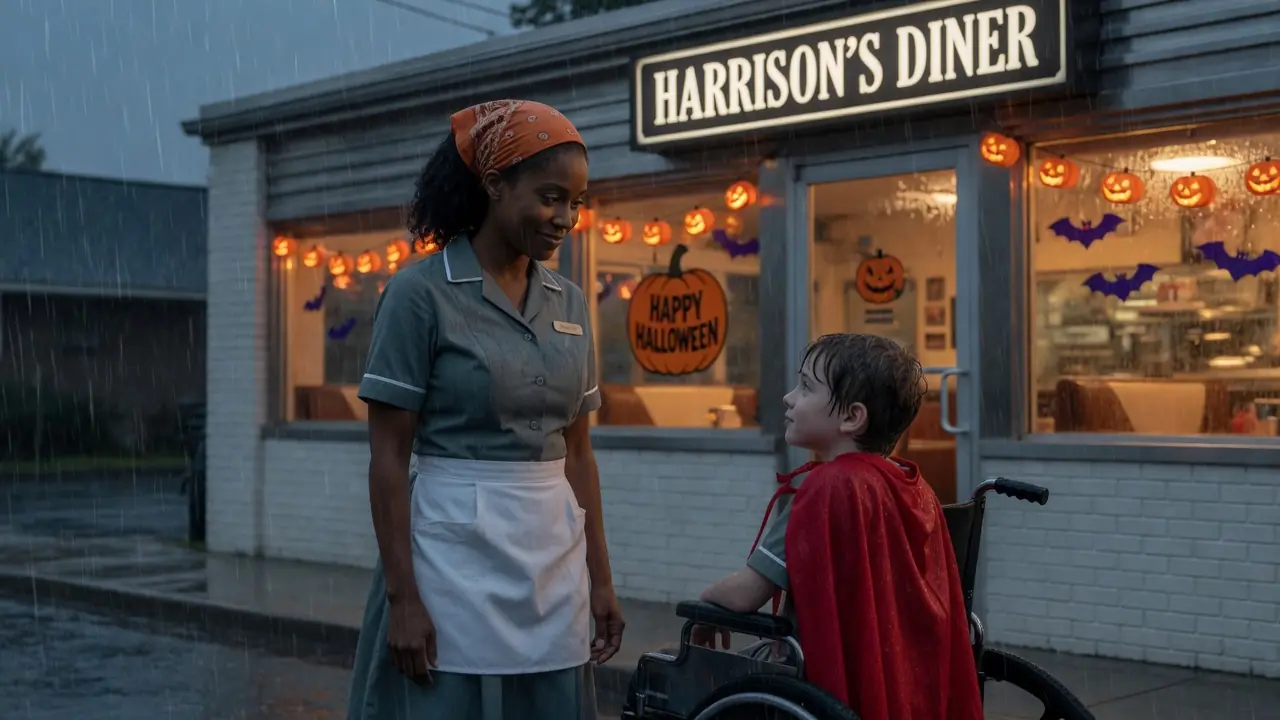
“If you move production overseas, you’ll save twelve percent in the short term,” she said, tapping the first page. “But you’ll lose forty-seven percent in brand equity within three years. Public trust drops. Domestic morale collapses. And when the news cycle hits, and it will, your investors will spend the next decade explaining why profit came before principle.”
Langston blinked.
The younger man frowned, scanning the documents.
“Where did you get this analysis?”
“I made it,” Monica said simply. “Last night.”
Langston gave a humorless chuckle.
“You’re saying we should make decisions based on feelings.”
“I’m saying you should make decisions based on survival.”
She leaned in, voice low but steady.
“Because in case you haven’t noticed, people don’t stay loyal to companies anymore. They stay loyal to stories. And right now, you’re writing one where you’re the villain.”
The silence that followed was absolute.
Even the city noise outside seemed to pause.
Langston’s jaw worked once before he finally looked at Ethan.
“Is this why you brought her here? To lecture us on morality?”
Ethan did not smile.
“No,” he said quietly. “To remind you that morality and profit aren’t enemies. They just require intelligence.”
Langston stared at him for a long moment, then turned back to the file in front of him. His fingers traced the edge of the chart, the one that showed profit curves sinking after public layoffs.
His expression hardened, then softened again into something closer to reluctant respect.
Finally, he said, “We’ll revisit the terms.”
“Good,” Ethan said.
Langston rose, adjusting his cufflinks.
“You found yourself quite the advocate, Cole. Surprising choice.”
Ethan’s voice stayed even.
“She’s not a choice. She’s an asset.”
Langston’s mouth twitched into something between irritation and admiration.
“Enjoy your idealism while it lasts. It doesn’t age well in this business.”
The three men filed out, their expensive shoes silent on the marble floor.
For a long moment, the only sound in the room was the faint hum of the air vents.
Monica leaned back in her chair, exhaling.
“You’re welcome,” she said.
Ethan’s gray eyes met hers.
For the first time since she had met him, there was something close to warmth in them.
“I knew I hired you for a reason.”
She smirked.
“Damn right you did.”
He almost smiled.
Almost.
Then he glanced down at the folder she had prepared.
“Get used to that feeling, Miss Harris.”
“What feeling?”
“You just changed the direction of a billion-dollar conversation.”
Monica stood, gathering her things.
“Guess it’s about time someone did.”
Outside, the rain had stopped. The city gleamed beneath a thin wash of sunlight, as if the storm had cleaned everything it could not destroy.
And for the first time since she had stepped into that tower, Monica Harris did not feel like an outsider.
She felt like she belonged, even if the world upstairs was not ready for her yet.
Two months later, Monica had learned to move through Cole Industries like someone who had always belonged there.
She had memorized the rhythm of the elevators, the cadence of board meetings, the way silence meant more than words in a building like this.
The whisper of heels on marble floors no longer made her flinch.
Her name was on the door now.
Small, elegant letters.
Monica Harris
Public Relations Director
Every time she passed it, she half expected someone to peel it off and tell her the dream was over.
But the dream had not ended.
If anything, it had sharpened.
She had survived the whispers, the raised brows, the polite disbelief that someone from a diner had found her way to the top floor.
And not only had she survived, she had started to matter.
Ethan trusted her judgment.
The employees liked her.
Even the press had begun calling her the moral compass of Cole Industries, a title she privately thought was both ridiculous and dangerously accurate.
That morning, the city was drenched again.
Rain slid down the glass walls of her office, turning the skyline into streaks of silver. She was sipping coffee, reviewing a community outreach proposal, when someone knocked on her door.
Two quick taps.
Brisk.
Deliberate.
Vivien Rhodes stepped inside without waiting for an answer.
She looked perfect as always, dark suit, white blouse, no warmth. Her expression was taut, like she was holding bad news in her jaw.
“We have a problem,” she said.
Monica put the coffee down.
“Define problem.”
Vivien crossed the room and handed her a printed email.
Monica’s eyes skimmed the page and stopped cold.
It was a financial report.
Internal.
Confidential.
The kind of thing that never left Ethan’s private server.
At the top of the page, in clear letters, was her name.
From: Monica Harris
To: [email protected]
Her stomach tightened.
“What is this?”
Vivien’s voice stayed flat.
“An email leak. It hit the press last night. The board has already seen it.”
“This isn’t mine.”
“I know,” Vivien said quietly. “But someone wants it to be.”
For a moment, neither spoke.
The sound of rain against the window filled the silence.
Then Monica asked, “Who else has seen this?”
“Ethan. The board. Legal.”
Monica folded the page, hands trembling slightly.
“You told me you knew this wasn’t me.”
“I do,” Vivien replied. “But that’s not the point. You’re the outsider. You’re the name they’ll remember first. It’s convenient.”
Monica let out a low, humorless laugh.
“Of course it is.”
Vivien hesitated, her expression unreadable.
“He’s waiting for you.”
When Monica entered Ethan’s office a few minutes later, she felt the change immediately.
The air was colder.
The blinds were half drawn.
He stood by the window, his back to her, shoulders tense beneath the tailored gray suit. The skyline beyond him glowed faintly through the fog.
“Tell me I wasn’t wrong,” he said, voice controlled but strained.
Monica dropped the paper on his desk.
“You weren’t.”
He turned then, gray eyes sharp.
“That’s not your email.”
“You think I’d sabotage the company that gave me a shot at a life I didn’t even believe I could have?”
“I want to believe you,” he said evenly.
“Then do it.”
“This isn’t small,” he continued. “We’re talking about millions in losses, an open investigation, shareholder panic. The board wants someone to blame.”
“I know how this goes,” Monica said, her tone low. “The new one. The one. The one who doesn’t fit. I’ve been the easy target my whole life.”
Ethan said nothing, but the flicker of anger that crossed his face told her enough.
She stepped closer, meeting his gaze.
“You think I did this?”
“No,” he said quietly. “But they do.”
Something shifted between them then.
A brief silence that felt heavier than any accusation.
Ethan’s voice softened, though the steel never left it.
“Whoever planted this was careful. The email was routed through an external proxy. Vivien’s tracing it now. It’ll take time.”
Monica crossed her arms.
“And if we don’t find them before the board meeting?”
Ethan adjusted his cufflink, expression unreadable.
“Then we make them regret it.”
Monica stared at him for a long moment.
The man who once believed in control more than kindness now stood before her calm, deliberate, and quietly furious.
She did not know if it was for her or for himself.
Maybe both.
She nodded slowly.
“Then let’s start digging.”
Ethan reached for his jacket.
“You’re not alone in this, Monica. Remember that.”
“Good,” she said. “Because I’m not going down for something I didn’t do.”
Outside, the rain had turned to a steady downpour, streaking down the glass like molten silver.
Somewhere inside Cole Industries, someone had built a trap.
They had chosen the wrong woman to stand in it.
By the time the sky began to dim again, the rain had faded to a whisper, and the city outside Cole Industries looked like it was holding its breath.
The glass tower reflected a dying sun, long streaks of orange melting into gray. For a brief moment, Monica thought it looked like the building was on fire.
Inside, it was already dark.
Most of the staff had gone home hours ago, leaving behind a maze of quiet hallways and humming computers. The usual chatter of assistants and the echo of shoes on marble were gone, replaced by the low constant hum of the servers in the tech wing.
That was where she and Ethan were headed.
They walked in silence, side by side.
Ethan’s stride was measured, his jaw tight, the flickering light from the hallway bouncing off his cufflinks. Monica matched his pace, though every step tightened the knot in her stomach.
She had faced angry customers.
Entitled managers.
Nights when she was not sure she could afford breakfast the next day.
But this was different.
This was walking into the heart of a machine that did not expect her to survive it.
When they reached the server room, the glass doors slid open with a hiss.
Inside, Vivien Rhodes was already there.
Her hair was tied back, blazer off, sleeves rolled up. She stood in front of a bank of monitors, the glow casting pale light across her face.
“I traced the proxy,” Vivien said, not looking up. “The fake email was routed through a shadow server in Zurich, then bounced through two private networks. Whoever did this knew what they were doing.”
Monica folded her arms.
“So you’re saying it’s not just some intern with a grudge?”
Vivien finally turned, her expression serious.
“No. This was professional. Someone inside the company had to give them access.”
Ethan stepped closer to the monitors.
“Who?”
Vivien hesitated, then tapped a key.
One of the screens lit up with a cascade of code, then froze on a familiar name.
Eric Callaway.
Monica frowned.
“Who is that?”
“Senior executive,” Ethan said quietly. “Head of global operations. Ten years with the company. Loyal. Efficient. Spotless record.”
“Spotless,” Vivien repeated, her tone dry. “Until tonight.”
Ethan’s eyes stayed on the screen.
His reflection in the glass looked harder than usual.
All edges and shadow.
“Show me the trail.”
Vivien tapped through the logs.
Lines of text scrolled down in rapid succession.
Access times.
IP addresses.
Encrypted IDs.
It was a digital fingerprint.
And it all led back to one name.
E. Callaway.
Monica watched the data unfold like the world’s coldest confession.
“So he framed me,” she said finally.
Vivien nodded.
“He used your account as the decoy. You were logged into the system at the same time he was routing the email. It’s how he covered his tracks.”
Ethan exhaled slowly, the sound sharp in the quiet room.
“That’s all I need.”
He turned and started toward the door.
“Wait,” Monica said, stepping after him. “What are you going to do?”
“End this.”
“Hold on.”
She caught his arm, forcing him to look at her.
“You can’t just walk into a board meeting and accuse a senior executive of corporate espionage without making it undeniable.”
His eyes flashed.
“I have proof.”
“You have digital breadcrumbs and your gut. You taught me yourself. Control. Precision. Don’t throw it out now because you’re angry.”
Ethan studied her for a moment, jaw tight.
Then, slowly, he nodded.
“So what do you suggest?”
“We make it undeniable,” Monica said. “We make him confess.”
Vivien raised an eyebrow.
“You think he’s going to sit down and spill his sins over coffee?”
“No,” Monica said, her voice low and steady. “But I’ve spent enough years talking to men like him to know if you corner them the right way, they start talking just to hear themselves sound powerful.”
Ethan’s expression softened just slightly.
“What are you thinking?”
Monica glanced at the camera feeds flickering across the monitors.
“We bring him here. Tell him the system flagged a breach in his division. Make it look routine. Let him think he’s in control. People like Callaway don’t panic when you accuse them. They panic when you almost do.”
Vivien smirked faintly.
“You might actually be scarier than him.”
Monica did not smile.
“He made me the villain in his story. I want him to know what that feels like.”
Ethan nodded once.
“Do it.”
Vivien picked up the phone on the desk and dialed a number.
“Security? Find Eric Callaway and tell him the CEO needs him in the server room. Now.”
They did not have to wait long.
Ten minutes later, the elevator dinged and the door opened.
Callaway walked in with the lazy confidence of a man who had never been caught doing anything wrong.
He was tall, mid-forties, with the soft arrogance that came from too many expensive suits and too little empathy.
“Evening, boss,” he said, smiling at Ethan. “Didn’t expect to see you down here. Everything all right?”
Ethan did not answer.
He stood near the monitors, arms folded, eyes cool.
Vivien was silent, too, leaning against the far wall.
The only sound was the hum of the machines.
Monica turned from one of the screens and faced him.
“Mr. Callaway,” she said, her tone crisp and professional. “We found something unusual in last night’s data flow. Looks like a breach in your department’s network.”
His smile faltered just slightly.
“A breach?”
“Yes. Someone rerouted a confidential file through Zurich. An internal account was used as the mask.”
He shrugged.
“Probably a junior staffer. IT handles that sort of thing, don’t they?”
“Usually,” she said. “Except this time, the trail leads back to your ID.”
The room went quiet.
The whir of the servers filled the silence.
Callaway’s smile returned, thinner now.
“You’re mistaken. My credentials are locked. Only I have access.”
Ethan stepped forward.
“Exactly.”
Something flickered in Callaway’s eyes.
A quick, involuntary twitch.
He looked between them, calculating.
“So what are you saying?”
“I’m saying,” Ethan replied, his voice quiet but sharp, “you leaked proprietary information to the press. You framed my employee to cover it up. And you did it badly.”
Callaway laughed, a short brittle sound.
“You’ve got no idea what you’re talking about.”
Monica walked closer, stopping just a few feet from him.
Her voice dropped low, steady.
“You should have picked someone else, Eric. You thought I’d panic, cry, walk out. That’s how you play, right? You build your walls out of people you think are weaker than you.”
He sneered.
“Please don’t flatter yourself.”
“Not flattering myself,” she said. “Just stating the pattern.”
She motioned toward the screen.
“We traced everything. You hid behind my login, but you were too arrogant to realize the timestamps overlapped. You were logged in from the executive server while my session was still active in another location. Sloppy.”
He opened his mouth, but no sound came out.
Ethan stepped beside her now, the two of them standing shoulder to shoulder.
“You’ve got thirty seconds to explain why I shouldn’t walk you into the boardroom and ruin you publicly.”
The color drained from Callaway’s face.
For a second, the arrogance cracked.
But then he smiled again, slower, colder.
“You won’t.”
Ethan’s voice was ice.
“Try me.”
Callaway leaned forward, hands in his pockets.
“You’re not going to embarrass one of your own in front of investors. You care too much about image. The CEO who champions ethics can’t admit his company is rotten inside. It would ruin your little redemption story.”
Vivien’s head snapped up, but Ethan stayed still.
Monica watched his jaw tighten.
Callaway went on, voice rising.
“You want to save face? Fine. Fire the waitress. Blame the charity hire. You think anyone’s going to question it?”
Monica’s hands curled into fists.
“You’re digging your own grave.”
He turned to her, smirking.
“Sweetheart, I built the ground you’re standing on.”
That was when the screen behind him blinked.
A red light appeared in the corner.
Tiny.
But unmistakable.
Callaway froze.
His smirk faltered.
Ethan’s voice was calm, almost gentle.
“You should really check for cameras before giving a speech like that.”
Callaway spun around.
“You—”
“Yeah,” Monica said, stepping forward. “We recorded every word.”
For a heartbeat, the room was silent except for the low hum of servers.
Then Callaway lunged for the keyboard, slamming a key, trying to cut the feed.
Vivien was faster.
She hit the emergency override, locking the system with a chirp.
“Don’t bother,” she said. “It’s already archived.”
Callaway stood frozen, his breath ragged.
The mask was gone now.
In its place was pure fear.
Ethan stepped closer, his voice low.
“You betrayed this company. You framed someone who did nothing but tell the truth. You’re finished.”
Callaway swallowed, shoulders rigid.
“You think this changes anything? You think I’m the only one?”
Ethan did not blink.
“No,” he said softly. “But you’re the first.”
For a long second, no one moved.
Then Ethan turned to Vivien.
“Get security.”
As she made the call, Callaway stared at Monica. His face was a storm of hatred and disbelief.
“You think you won something?” he hissed. “You’ll never last here. They’ll eat you alive.”
Monica met his gaze without flinching.
“I’ve been surviving men like you my whole life.”
Two guards entered and took him by the arms. His protests echoed down the hallway as they escorted him out.
When the doors closed again, the silence that followed felt enormous.
Vivien shut down the terminal and looked at Monica.
“That was brutal.”
Monica exhaled, shoulders shaking slightly.
“Necessary.”
Ethan did not speak for a long moment.
Then, quietly, he said, “You just saved this company.”
She turned toward him.
“You mean we did.”
He gave a slow nod, the faintest shadow of a smile crossing his face.
“We did.”
Outside, the storm broke completely.
Lightning flashed across the sky, washing the office in white light. For a heartbeat, everything was still.
The machines.
The glass.
Their reflections caught in the moment.
And then it was gone, leaving only the soft hum of servers and the quiet realization that the truth, once unleashed, had its own way of burning through the dark.
Years passed.
Not all at once, but in the quiet, patient way years do their work.
Street by street.
Building by building.
Story by story.
What used to be the gray spine of Lexington Avenue was now streaked with color and motion. Murals on brick walls. Cafes with open doors. Children in bright uniforms running past offices that had once been too sterile to notice them.
The air itself felt lighter, alive in a way it had not been in years.
At the corner of A and Lexington stood a building of glass and white stone, simple and luminous in the early light.
The sign above the door read:
The Cole-Harris Foundation
On the steps below it, workers were still arranging potted magnolia trees, their petals scattering across the pavement like tiny white stars.
Inside, the smell of fresh paint and paper filled the air.
A banner stretched across the lobby.
GRAND REOPENING
10 YEARS OF KINDNESS IN ACTION
Behind the banner, in the calm glow of the atrium, Monica Harris stood still for a moment, her reflection caught in the glass wall across from her.
She was forty-three now.
Her hair was swept neatly back, streaked with silver that looked more like steel than age. Her suit was navy. Her stance composed.
But her eyes carried the same light they always had.
The one that came from surviving storms and refusing to forget them.
The hum of conversation rose behind her as volunteers moved between tables, setting out programs and welcome folders. The mayor’s motorcade was due in twenty minutes. Cameras were already being tested.
But Monica did not look toward the press.
She looked up at the mural above the reception desk, where a quote was painted in looping gold letters.
Power is not what you take from others, but what you give that multiplies.
That line had been hers.
She remembered the day Ethan insisted it be painted there, even when the architect said it did not fit the symmetry.
“Symmetry is overrated,” he had said with a faint smile. “Meaning isn’t.”
That had been five years ago.
Now the foundation had programs in twelve cities.
Mentorships.
Scholarship grants.
Legal aid centers.
Job training for single parents.
Support for children with disabilities.
It had outgrown every expectation, especially hers.
And yet, every time she walked into a boardroom or a press event, she still felt the ghost of that diner apron on her skin.
It was not shame.
It was remembrance.
A way to stay honest.
“Miss Harris,” a young assistant called from across the room. “They’re asking if you want to approve the press seating near the podium.”
Monica turned, her calm smile returning.
“Let them handle it. I trust their sense of symmetry.”
The assistant laughed, catching the reference, and hurried off.
Behind Monica, footsteps sounded.
Measured.
Familiar.
“Still terrifying your staff, I see.”
She did not need to turn to know.
“And you’re still pretending you don’t enjoy it, Mr. Cole.”
Ethan stepped into view, a little older, his sharpness tempered by something softer. His hair was silver at the temples now, and though he no longer ran Cole Industries day to day, he still carried the quiet gravity of a man who had once built empires.
“You never change,” he said.
“Someone has to hold the line.”
He smiled faintly.
“The cities changed. The foundation changed. Even I changed. But you...”
“I still drink diner coffee and distrust politicians,” she said.
“Exactly. That’s why I keep you around.”
They stood side by side, looking through the glass as people gathered outside the gate. The crowd stretched halfway down the block.
Students.
Families.
Reporters.
Old employees.
The curious.
The hopeful.
A decade ago, most of them would never have crossed paths with Cole Industries.
Now they called this place theirs.
“Do you ever think about that night?” Ethan asked suddenly.
“The diner?”
He nodded.
“All the time,” she said quietly. “Especially when I’m tired.”
“Because it reminds you where you started?”
“Because it reminds me what’s worth starting for.”
He studied her for a long moment.
“You’re not tired of fighting?”
Monica’s gaze followed a group of volunteers rolling a cart of donated books across the lobby.
“Fighting is easy,” she said. “Believing people can still be good is what takes work.”
Ethan’s lips curved into the smallest smile.
“And yet you still believe.”
“I don’t have the luxury not to.”
He was about to reply when the sound of applause echoed from outside.
The mayor had arrived, flanked by cameras and aides.
Vivien, still unflappable even after ten years, appeared in the doorway with a clipboard.
“Showtime,” she said crisply. “Try not to look like you despise small talk, Monica.”
“I’ll do my best,” Monica murmured.
Then she followed them toward the courtyard.
The ribbon cutting was a spectacle.
Speeches.
Flashbulbs.
The usual chorus of polished words.
But when Ethan stepped to the podium, the noise fell away.
His voice, deeper now, carried the weight of truth rather than power.
“Ten years ago,” he began, “I thought kindness was a currency only fools spent. Then someone taught me that the world doesn’t fall apart only because of cruelty. It falls apart because people stop believing kindness matters. Today, this foundation stands as proof that belief can build more than any market.”
He turned toward Monica then.
Not long enough for the cameras to make it obvious, but long enough for her to feel it.
When the speeches ended, when the ribbon fluttered and applause filled the courtyard, Monica saw him across the crowd under the white magnolia blossoms.
Noah.
He was twenty-two now.
Tall.
Confident.
His dark hair tied back.
His gait steady.
The cane was gone.
He moved with the unthinking ease of someone who had fought too long to earn it.
The crowd parted around him as he approached. His smile was easy and familiar.
“Look who finally made it back from MIT,” Monica said as he reached her.
“Graduated last month,” Noah said, grinning. “Thought I’d show up before my father starts guilt-tripping me on live television.”
Ethan, appearing behind her, raised an eyebrow.
“Too late.”
Noah laughed, shaking his head.
“You two never change.”
“And that’s why this place still stands,” Monica said.
They walked together through the hall as guests toured the building.
A trio bound by the strangest kind of family, one born not of blood, but of grace.
In the new innovation wing, Noah stopped beside a model on display: a sleek, lightweight prosthetic joint printed in titanium alloy.
A plaque beside it read:
Developed by the Noah Cole Research Initiative, 2030
He touched it lightly, his voice softer now.
“You know, I wouldn’t have made it here without you.”
Monica smiled.
“Sure you would have.”
He looked up, serious.
“No. You gave me back the idea that good people still exist. That’s what made everything else possible.”
She wanted to answer, but the words caught in her throat.
She only nodded.
Later that afternoon, after the crowd had gone, Monica found herself alone in the foundation boardroom.
The glass walls looked out across the skyline, glowing gold with late sunlight. Papers lay scattered on the table. Budgets. Proposals. A new partnership agreement with the city.
But the folder at the top was marked:
URGENT: FISCAL RECOMMENDATIONS
She opened it and found the newest battle.
The corporate board wanted to reduce the foundation’s annual funding by forty percent, citing profit sustainability.
In simple terms, less heart, more numbers.
The room was quiet.
The city’s hum was a distant murmur.
She leaned back in the chair, feeling that old weariness rise in her chest, the one she thought she had buried years ago.
She closed her eyes for a moment.
Then heard footsteps.
Ethan was standing in the doorway, jacket off, tie loosened.
“You saw it.”
“I saw it,” she said. “They want to cut the very thing that makes us human.”
He walked in, resting his hands on the back of a chair.
“They say it’s just for a quarter.”
“They always say that.”
He sighed.
“We can push back, but it’ll be ugly.”
“It’s always ugly,” she said. “But it’s always worth it.”
Her phone buzzed.
A reporter wanted an interview.
An anniversary feature.
Live on national television.
Ethan looked at the screen and then back at her.
“You should do it. Tell them why this matters.”
She hesitated.
“I’m not built for sound bites.”
“Then don’t give them sound bites,” he said. “Give them truth.”
That night, under the warm studio lights, Monica sat before the cameras.
The host asked polite, rehearsed questions about growth, about impact, about leadership.
She answered them all.
Calm.
Composed.
Deliberate.
Until the host said, “Miss Harris, ten years ago, you were working in a diner. Now you run one of the most influential foundations in the country. What changed?”
Monica smiled faintly.
“Nothing,” she said. “Not the things that matter.”
The host tilted her head.
“And what are those?”
Monica’s eyes drifted toward the camera.
For a moment, she was not in the studio anymore.
She was back in that rain-soaked diner, watching a boy in a wheelchair shiver under neon light. She could almost smell the toast, hear the hiss of the coffee machine, feel the wet towel in her hand.
“Someone once taught me,” she said softly, “that kindness doesn’t fix everything. It just reminds people that everything can still be fixed. That’s what we do. Every scholarship, every job program, every child we help, every door we hold open, it’s a reminder that there is still good in this world worth fighting for.”
The studio was silent.
Even the cameras seemed to hold still.
When the interview aired, it spread faster than she expected.
The clip was replayed across social media, tagged under:
#KindnessIsPower
The board withdrew its proposal two days later.
Months passed.
The city slid from summer into fall.
The magnolia trees outside the foundation turned gold, then bare.
One evening, long after the offices had emptied, Monica found herself walking home through the rain.
She took the long route past the old laundromat, the pawn shop, and finally the little diner on the corner.
Pumpkin Diner’s sign still buzzed, flickering pink in the drizzle.
She stepped inside, out of habit more than hunger.
The new waitress, young and bright-eyed, probably in college, looked up and smiled.
“Booth in the corner?”
Monica smiled back.
“Always.”
She ordered the same thing she always had.
Grilled cheese.
Tomato soup.
coffee.
The waitress set it down with a cheerful smile.
“On the house, ma’am. My manager says you helped open that big fancy foundation downtown. Says we’re proud of you.”
Monica looked at the plate, then at the girl.
“Tell your manager I said thank you. But I just held the door. You’re the ones keeping the lights on.”
The girl laughed, not quite understanding, and went back to the counter.
Monica sat there a long while watching the rain trace lines down the window.
She thought of her grandmother’s voice.
Of Ethan’s impossible faith.
Of Noah’s grin when he showed her his first prototype.
She thought of all the small, ordinary moments that had built this extraordinary life.
When she finished her meal, she left fifty dollars under the plate and stepped back into the night.
The rain had eased to a mist.
Across the street, city light shimmered on the pavement.
As she walked, she passed a bus shelter where a boy and his mother were huddled beneath a thin umbrella. The boy looked up at her and smiled shyly.
Without thinking, Monica took off her coat and draped it around his shoulders.
The mother tried to protest, but Monica just shook her head.
“Keep it,” she said. “It’s just a coat.”
The boy looked at her the way Noah once had, with a kind of startled gratitude that burned brighter than words.
By the time she reached the corner, the clouds had begun to lift.
The first hint of dawn touched the horizon, soft and pink, turning the wet streets to glass. The city was quiet except for the distant hum of traffic and the rhythmic tap of her heels.
When she reached the foundation, the lights were still on inside.
She paused by the front steps, looking up at the plaque beside the magnolia trees.
Someone, probably a volunteer, had left a single white flower tucked into the lettering. It was fresh, still wet from the rain.
She smiled.
The sun broke over the skyline then, full and golden, flooding the street with light. It caught on the glass, on the steel, on the windows of the foundation, until the whole building seemed to glow from within.
And for one breathtaking moment, it looked exactly like what it had always been meant to be.
A lighthouse built out of kindness.
Monica stood there, her face warm in the morning light, and felt something deep in her chest settle into peace.
She had spent her life surviving storms.
Now she was the calm after them.
The magnolia petals stirred in the breeze.
The city awakened.
Somewhere behind her, the door opened, and a young intern called, “Miss Harris, are you coming in?”
She turned, smiling.
“I already am.”
As she stepped inside, the world outside brightened.
Past the glass.
Past the magnolia.
Past the city shimmering like a second sunrise.
All that remained was the sign glowing in the morning light.
Kindness Is Power.