Tasha Williams was already running late when she heard the shouting.
She’d overslept by 10 minutes.
Her alarm clock had finally given up after years of faithful service, and now she was speed walking through the Mega Mart parking lot, her worn sneakers splashing through puddles from last night’s rain.
At 28, she carried herself with quiet determination, her dark hair pulled back in a simple ponytail, her clothes clean but showing the telltale signs of careful budgeting—a sweater mended at the elbow, jeans faded but pressed.
8:36 a.m.
She needed to catch the 8:39 a.m. bus to make it to Davidson and Associates by 9:00 a.m. The accounting firm where she worked as a data entry clerk was strict about punctuality, and she couldn’t afford to be late.
Not again.
“Get up, you worthless old man.”
The harsh voice made Tasha stop midstride.
Near the side of the building, a young man in baggy jeans and a backward baseball cap was standing over a hunched figure on the ground.
An elderly man who looked to be in his 70s, wearing layers of mismatched clothing that marked him as homeless.
“I said, get up.”
The young man kicked at the elderly figure again, not hard enough to seriously injure, but enough to knock him off balance.
Tasha glanced at her phone.
8:37 a.m.
Two minutes to catch her bus.
If she missed it, the next one wouldn’t come for another twenty minutes, which meant she’d be at least 15 minutes late for work, which meant another lecture from Jenkins about professional responsibility and time management.
The young man raised his foot again.
“Hey!”
Tasha shouted, running toward them without thinking.
“Leave him alone.”
The aggressor spun around, surprised to be confronted. He was maybe 20, with the kind of swagger that came from never having been seriously challenged.
“Mind your own business, lady.”
“This is my business,” Tasha said.
She positioned herself between them, her heart pounding. She wasn’t particularly intimidating, but something in her voice made the aggressor hesitate.
“Whatever,” he muttered. “Crazy homeless people and crazy do-gooders deserve each other.”
He walked away.
“Are you hurt?” she asked, crouching down.
“I’m fine, miss… just winded.”
His voice was rough but articulate, with a formal politeness that seemed out of place in his circumstances.
“Thank you for stepping in. That young man was quite insistent.”
Tasha checked her phone again.
8:38 a.m.
One minute.
But as she looked at the elderly man—really looked—she noticed the way his jacket hung loose, the pallor of his skin, the slight tremor in his hands.
“When did you last eat?” she asked.
The man hesitated.
“Yesterday morning, I believe… or perhaps the day before. The days tend to blur together.”
8:39 a.m.
Her bus was arriving right now.
Tasha reached into her bag and pulled out her sandwich—turkey and cheese on homemade bread wrapped in brown paper.
It was supposed to last her the entire day.
“Here,” she said, pressing it into his hands.
“Oh no, miss, I couldn’t—”
“Please.”
She also pulled out an apple and a bottle of water.
“It’s not much, but it’s everything I have.”
The man’s eyes widened with emotion.
“What is your name, child?”
“Tasha… Tasha Williams.”
He extended a hand with surprising dignity.
“Richard Coleman. And I won’t forget this kindness.”
Something in the way he said her name felt unusually formal.
But Tasha was already backing away.
“I have to run. Take care of yourself, Mr. Coleman.”
She sprinted toward the bus stop.
The bus pulled away as she arrived.
The bus arrived at Davidson and Associates at 9:21 a.m.
Tasha stepped off, her heart pounding, and walked toward the glass building.
Every step felt heavier than the last.
Harold Jenkins was already waiting in the hallway.
“Williams. My office.”
Inside, he slid a folder across the desk.
“You’re terminated.”
Tasha froze.
“There was an emergency,” she said quickly. “An elderly man was being attacked. I stopped to help him.”
“That is not my concern.”
“My concern is this company.”
He leaned back, satisfied.
“You stopped to help a homeless person.”
“Yes. Because he was being hurt.”
“That’s not your job.”
Minutes later, security escorted her out.
A cardboard box in her hands.
Whispers followed her through the office.
Some sympathetic. Some satisfied.
Outside, the sunlight felt too bright.
Three weeks later, everything changed.
A call came.
“Coleman Group would like to invite you for an interview.”
Tasha nearly dropped the phone.
The building downtown was glass and marble.
On the 32nd floor, she met Janet Morrison.
“Tell me about your experience,” Janet said.
“I was terminated after a conflict with my supervisor,” Tasha said carefully.
“And what did you learn?”
“That good work doesn’t always protect you from unfair judgment.”
Something shifted in Janet’s expression.
“Mr. Coleman would like to meet you.”
When the door opened, Tasha froze.
It was him.
Richard Coleman.
No homeless clothes. No street corner.
Now a powerful CEO in an immaculate suit.
“Hello, Miss Williams,” he said calmly. “We’ve met before.”
Tasha’s mind went blank.
“The sandwich…” she whispered.
Coleman smiled slightly.
“That was the point.”
He explained everything.
The test.
The observation.
The purpose.
“You passed,” he said.
“The job is yours.”
Salary: 65,000.
Full benefits.
A future.
Tasha could barely breathe.
“Why me?”
“Because I saw who you are when no one was watching.”
Her new life began.
But not without resistance.
Samantha Pierce and Eric Dawson made it clear she didn’t belong.
They undermined her work, changed vendors, and tried to erase her influence.
But Tasha didn’t break.
She rebuilt everything.
She created a new vision for the Riverside artist studio—focused on light, creativity, and emotional space.
When she presented to the board, everything changed.
Instead of a corporate pitch, she brought a living vision into the room.
And when she finished, silence fell.
Then approval.
Unanimous.
Months later, Riverside launched.
The artist studio became the most visited space.
People didn’t just view it—they felt it.
Some stayed longer than they intended, quietly emotional.
At the opening, a woman approached her.
“I used to paint,” she said softly. “Then life took over.”
She looked around.
“This feels like remembering myself.”
Tasha understood.
That night, Samantha tried to discredit her publicly.
But Coleman stepped in.
And then Tasha stepped forward.
“I didn’t get here because I was chosen,” she said.
“I got here because I refused to stop being myself.”
Silence.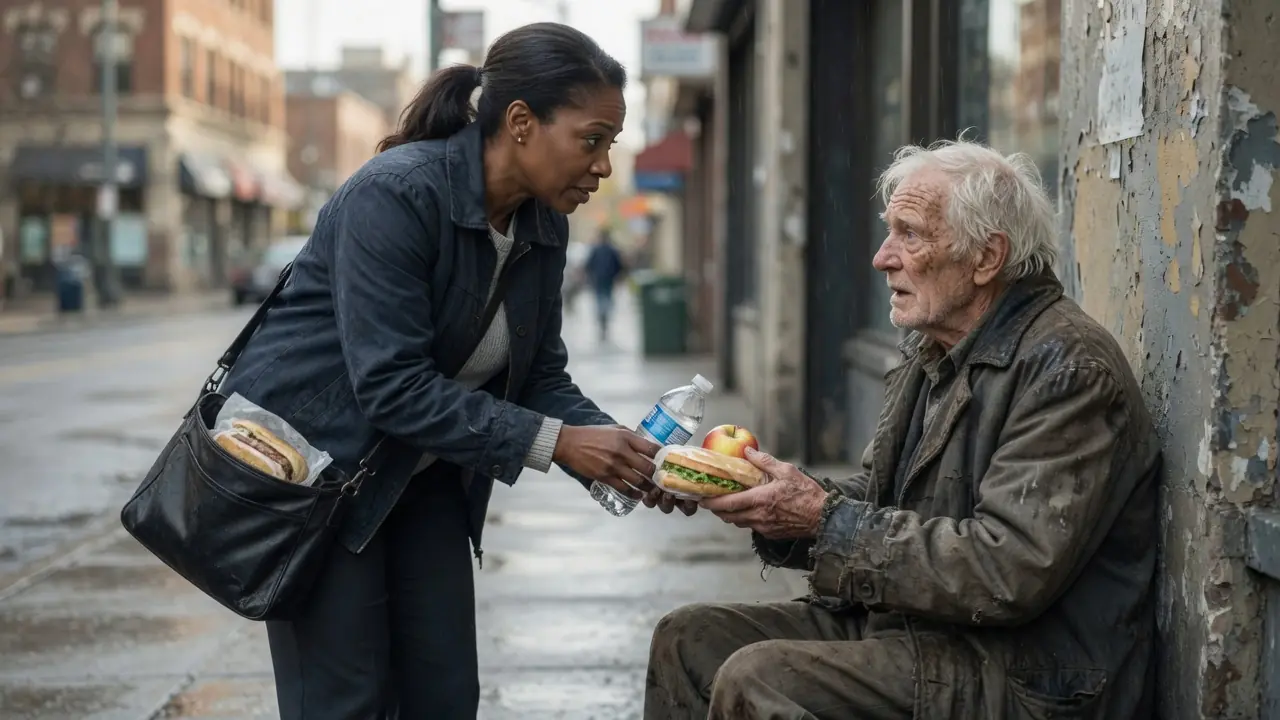
Then applause.
The room fell completely silent after her words.
Then, slowly, applause began.
One clap.
Then another.
Then the entire room.
Coleman watched her with quiet pride.
Samantha stood frozen, humiliated.
Eric avoided eye contact completely.
After that night, everything shifted again.
Coleman called Tasha into his office.
“I want to expand this idea,” he said.
“Not just luxury spaces. Affordable ones.”
Tasha looked up.
“Affordable?”
“Yes. Real studios. For real artists. People who need them most.”
Her breath caught.
“Can we really do that?”
Coleman nodded.
“If we don’t, then what’s the point of any of this?”
Months passed.
The first pilot project opened in a converted warehouse.
Twelve affordable artist studios.
Natural light. Open space. Real access.
And the rent?
Based on income—not market hype.
One of the first tenants was a woman named Margaret Chen.
She stood in the studio window, quietly emotional.
“I used to have a space like this,” she said.
“Then life happened. I forgot who I was.”
She touched the wall gently.
“This feels like getting myself back.”
Later that night, Coleman and Tasha stood together.
The city skyline stretched outside the glass.
“I never told you everything,” Coleman said.
Tasha turned slightly.
“About what?”
He paused.
“Before this company… I was an artist.”
Tasha blinked.
“What?”
He opened a worn portfolio.
Inside were paintings.
Real ones.
Powerful ones.
“I gave it up,” he said quietly.
“For responsibility. For family. For expectation.”
Tasha looked at the work.
“They’re incredible.”
Coleman gave a small, tired smile.
“And unfinished. Like me.”
A silence stretched between them.
Then he said:
“Don’t do what I did.”
“Don’t abandon what makes you alive.”
That moment stayed with her.
It changed everything again.
Tasha began painting again.
Not for work.
For herself.
A year later, her first solo exhibition opened.
The gallery was packed.
Critics. Collectors. Press.
But Tasha barely noticed them.
She saw only her family.
Her mother crying quietly.
Her brother smiling wide.
And Coleman standing in the back, silent and proud.
Her paintings told her entire journey.
The struggle.
The job.
The loss.
The rise.
And at the center—
A single piece:
A small home by a lake.
Light pouring through the window.
A memory of where everything began.
At the microphone, she spoke softly.
“I used to think survival was enough.”
“But I was wrong.”
“Survival is not living.”
“Creating is.”
The audience listened.
No one moved.
No one interrupted.
After the exhibition, Samantha and Eric appeared briefly at the entrance.
They didn’t speak.
They didn’t need to.
They were gone from her story now.
Coleman walked beside her as the crowd slowly faded.
“You built something bigger than a project,” he said.
“You built a way of seeing life.”
Tasha shook her head.
“I just refused to give up.”
“That’s exactly why it worked,” he replied.
Her mother hugged her tightly outside the gallery.
“You didn’t just change your life,” she whispered.
“You changed ours.”
David laughed.
“So what’s next, superstar?”
Tasha smiled for the first time without exhaustion behind it.
“More work.”
“And more painting.”
That night, alone in her room, she stood in front of a blank canvas.
Brush in hand.
No fear.
No doubt.
Only silence.
Then movement.
Stroke by stroke, color returned.
Not as escape.
But as truth.
And for the first time in her life—
Tasha wasn’t surviving anymore.
She was creating.
Living.
Becoming.