At twenty-four, Emma Brooks believed that ordinary errands could become impossible when a person grew old enough for the world to stop waiting.
She lived in a small town in Oregon called Maple Glen, where the sidewalks were uneven, the streets were lined with old trees, and most shops closed before the sky turned dark.
Emma was a young white American woman with fair skin, long chestnut-brown hair usually tied into a low ponytail, soft green eyes, and a patient face that made strangers ask her for directions even when she was in a hurry.
She worked at Maple Glen Community Kitchen, a small nonprofit kitchen attached to the town’s senior center.
It was not a restaurant. It was not fancy. It served simple meals to elderly residents, low-income families, and anyone who needed something warm without being questioned. Emma chopped vegetables, packed meal boxes, washed dishes, stirred soup, delivered food trays, and helped organize donated groceries.
She loved the work.
Not because it was easy.
It was never easy.
There were long hours, sore feet, old equipment, not enough volunteers, too many people needing help, and constant worry about funding. But Emma loved the moment when someone opened a meal box and their face softened. Food, she had learned, could carry dignity if it was offered the right way.
Her dream was to start a small program called The Shared Table, where elderly people could bring family recipes, teach young volunteers how to cook them, and turn old recipes into affordable community meals. She believed recipes were more than instructions. They were memory. They were culture. They were love measured in cups, pinches, and handwritten notes.
But dreams needed money, support, permission, and proof that anyone else cared.
Emma had a notebook full of ideas and almost nothing else.
One cold afternoon in late October, Emma left the senior center carrying a box of empty food containers to return to the storage room across town. The air was sharp, and the wind pushed orange leaves along the sidewalk in restless waves. She was walking down Alder Street when she heard a metal crash behind her.
Then an elderly woman cried out.
“Oh no! Please, no!”
Emma turned quickly.
Across the sidewalk, near the entrance of a small grocery store, an elderly woman stood frozen beside a collapsed shopping cart. She was a white American woman in her late seventies, short and thin, with silver hair tucked beneath a pale blue knit hat, pale skin, and frightened blue eyes behind round glasses. She wore a long beige coat and black gloves, and one hand gripped a wooden cane.
The cart’s front wheel had snapped off.
The whole cart had tipped sideways.
Groceries had spilled across the pavement: apples, a bag of flour, a carton of eggs, onions, carrots, and a glass jar of honey that had cracked but not shattered. Beside the groceries lay a small wooden recipe box. Its lid had flown open, and handwritten recipe cards were scattered across the sidewalk.
The wind caught one card and sent it sliding toward the street.
Emma dropped the box of containers and ran.
“Ma’am, don’t bend down! I’ll get them.”
The old woman reached anyway, but her cane slipped on the leaves. Emma caught her elbow just before she lost balance.
“Please,” Emma said gently. “Stand still. I’ve got it.”
“The cards,” the woman whispered. “Please, the cards.”
Emma moved fast.
She grabbed the first recipe card before it reached the curb. Another had blown under a bench. A third was stuck against a bicycle rack. Emma gathered them carefully, pressing each one against her coat so the wind could not take it again.
A young man from the grocery store came outside and helped collect the apples. Another woman picked up the onions and carrots. Emma reached for the wooden box and checked the cards.
Some were old, yellowed, and soft at the edges. Some were written in blue ink. Some had stains from sauce, butter, or coffee. One card read:
Rose’s Sunday Stew
Another:
Peach Cobbler For Rainy Days
Another:
Anna’s Birthday Soup — Add More Pepper If She Is Moody
Emma almost smiled.
These were not just recipes.
They were a family.
“What’s your name?” Emma asked.
The elderly woman’s lips trembled.
“Margaret Ellis.”
“I’m Emma Brooks. I work at the community kitchen.”
Margaret looked up.
“The one near the senior center?”
“Yes.”
“I was trying to get there.”
Emma looked at the groceries.
“With all this?”
Margaret nodded, embarrassed.
“I called yesterday. A young woman said the kitchen was collecting old family recipes for a new meal program. I wanted to bring mine. I bought ingredients too, in case someone wanted to test one.” She looked at the broken cart. “I thought I could manage the walk.”
Emma softened.
“That young woman was probably me.”
Margaret’s eyes widened.
“You?”
“Yes.”
The old woman looked at the scattered groceries, the broken wheel, and the recipe cards in Emma’s hands.
“I’ve made a terrible mess.”
“No,” Emma said. “The cart made a terrible decision.”
Margaret gave a weak laugh, then covered her mouth as tears came.
“My daughter says I should throw those cards away because everything can be found online now. But my mother wrote some of them. My husband wrote notes on others. I thought if the kitchen could use even one…” Her voice broke. “Maybe they wouldn’t just sit in my drawer until no one knew whose handwriting it was.”
Emma held the recipe box carefully.
“Mrs. Ellis, these are exactly the kind of recipes I was hoping for.”
Margaret stared at her.
“Really?”
“Really.”
The wind blew again. Emma looked at the broken cart.
“But first, we need to get you and these groceries out of the cold.”
“I don’t want to trouble you.”
“You came to help our kitchen. Let us help you reach it.”
The grocery store manager offered a spare crate. Emma packed the groceries into it, separating the cracked honey jar so it would not leak onto the recipe cards. She placed the wooden recipe box inside her own tote bag for safety. Then she helped Margaret sit on a bench while she called the community kitchen.
“Lena,” Emma said when the kitchen manager answered, “I’m on Alder Street with a senior named Margaret Ellis. Her cart broke, but she was bringing recipes and ingredients for The Shared Table idea.”
There was a pause.
“The idea the board hasn’t approved yet?” Lena asked.
Emma winced.
“Yes. That one.”
Another pause.
Then Lena said, “Bring her in. I’ll make tea.”
Emma smiled.
They arranged for a volunteer driver to pick up Margaret and the groceries. While they waited, Emma sat beside her on the bench, shielding the recipe box from the wind.
Margaret kept glancing at it.
“My husband, Robert, used to tease me about that box,” she said. “He said I guarded it like a treasure chest.”
“Was he wrong?”
Margaret smiled through tears.
“No. He was not.”
“What was his favorite recipe?”
“Chicken and dumplings,” Margaret said immediately. “But he always added too much black pepper and pretended it was an accident.”
Emma laughed.
“My grandfather did that with chili powder.”
“Men love pretending seasoning falls by itself.”
The volunteer driver arrived ten minutes later. Emma helped Margaret into the car, then loaded the groceries and broken cart. At the community kitchen, Lena greeted Margaret with tea, a warm chair, and no judgment.
The kitchen smelled of soup, bread, onions, and coffee.
Margaret relaxed almost immediately.
Emma spread the recipe cards across a clean table to make sure none were missing or damaged. There were sixty-three cards in total. Some were written by Margaret. Some by her mother, Rose. Some by her husband, Robert. Some had little comments from children and grandchildren.
Emma read one aloud.
“‘If serving to Robert, hide extra dumplings or he will claim fairness.’”
Margaret laughed properly this time.
“That was my mother. She knew him.”
Lena leaned over the table.
“These are wonderful.”
Margaret’s face changed.
“You can use them?”
Emma looked at Lena.
Lena looked at the cards, then at Margaret, then back at Emma.
“We can start with one,” Lena said.
Emma nearly jumped.
“Really?”
“One meal,” Lena said. “A trial. No promises beyond that.”
Margaret touched the card labeled Rose’s Sunday Stew.
“This one fed our family through three winters,” she said. “It stretches well. Potatoes, carrots, onions, barley, beans if you need more. My mother always said a good stew should make room for whoever comes late.”
Emma picked up the card.
“Then this is the one.”
The next day, Emma and Margaret cooked Rose’s Sunday Stew together in the community kitchen.
Margaret could not stand for long, so Emma set her up at a chair near the prep table. Margaret read the recipe, corrected Emma’s chopping, insisted the onions needed more time, and explained why the carrots should not be cut too small.
“People should know what they’re eating,” she said. “Tiny carrots are cowardly.”
Emma laughed and wrote that down.
As the stew simmered, Margaret told stories.
Her mother, Rose, had cooked through hard winters when money was short. She had fed neighbors who lost jobs, children who came home with friends, and once a traveling salesman whose car broke down during a snowstorm. She believed food should stretch, but never taste like apology.
Emma wrote that down too.
Food should stretch, but never taste like apology.
When the stew was served that evening, people noticed.
“This tastes like something my grandmother made,” one man said.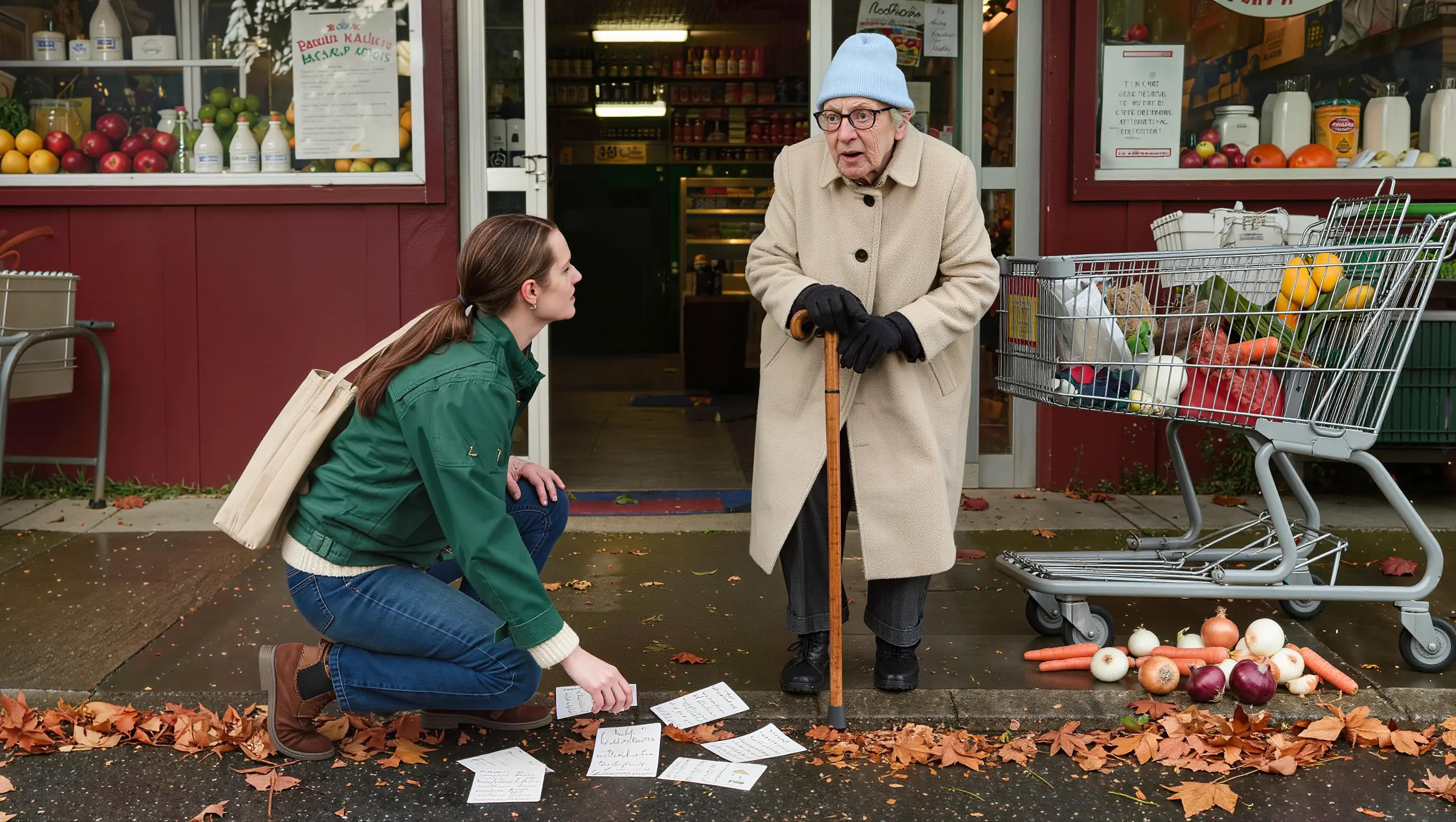
A widowed woman closed her eyes after the first bite.
“I haven’t had barley stew like this in years.”
A teenager volunteer asked for seconds.
Margaret sat near the serving table, watching quietly as people ate. Her hands were folded in her lap. Her eyes were wet, but she was smiling.
Emma sat beside her.
“They like it.”
Margaret nodded.
“My mother would be insufferable right now.”
“That means proud?”
“Very proud.”
The trial meal became the first official evening of The Shared Table.
Not because Emma convinced the board with charts.
Because Margaret’s recipe did what charts could not.
It made people feel the value immediately.
Over the next few months, the program grew slowly. Every other Friday, an elderly resident brought a family recipe and a story. Emma helped adapt the recipe for a large community meal. Volunteers cooked. The original recipe was copied and displayed on a board with the family story.
Margaret became the program’s first regular guest.
She brought more cards from her wooden box.
Chicken and dumplings.
Peach cobbler.
Bean soup.
Cabbage rolls.
Apple cake.
Robert’s terrible-but-beloved pepper biscuits.
Each meal came with a story.
Each story brought people closer.
The community kitchen felt different on Shared Table nights. Less like charity. More like a gathering where everyone had something to give, even if all they brought was memory.
One afternoon, Margaret came in carrying a small envelope.
“I have something for you,” she said.
Emma smiled nervously.
“Should I be worried?”
“Only if you dislike being thanked.”
Inside the envelope was one recipe card.
The original card for Rose’s Sunday Stew.
Emma immediately shook her head.
“No. Margaret, I can’t take the original.”
“You can.”
“This belongs to your family.”
“My family has copies. You gave this recipe a second life. It belongs where it keeps feeding people.”
Emma’s eyes filled.
“I don’t know what to say.”
“Say you’ll keep making room for whoever comes late.”
Emma laughed through tears.
“I will.”
Margaret also handed her a letter.
It was written to the board of the community kitchen and to a local food access foundation. Margaret described the broken cart, the scattered recipe cards, the first stew night, and Emma’s vision for The Shared Table.
At the end, she wrote:
Emma Brooks understands that dignity is not added to food after it is cooked. It is part of how the table is set.
With Margaret’s letter, photos from the meals, and feedback from the community, Emma applied for a small grant.
She won.
It was not a fortune.
Not a building.
Not a restaurant.
But enough to buy storage shelves, recipe binders, large pots, a scanner for old recipe cards, printed story cards, and ingredients for six months of Shared Table meals.
The program became official.
Margaret attended every meal she could. She sat at the front table with a name tag that read:
Margaret Ellis
Recipe Keeper
She chose the title herself.
Years passed.
The Shared Table became one of Maple Glen’s most loved community programs. Elderly residents brought recipes from many different family histories. Young volunteers learned to cook. Families who needed meals came not as silent recipients, but as guests at a table built from memory.
Emma eventually became the program coordinator.
She never became rich.
But she became exactly the kind of useful she had always wanted to be.
Margaret grew older, and her visits became less frequent. But whenever Rose’s Sunday Stew was on the menu, Emma made sure someone brought Margaret a bowl at home.
One winter morning, Margaret passed away peacefully.
At her memorial gathering, held at the senior center with no ceremony beyond stories, food, and photographs, Emma served Rose’s Sunday Stew.
Margaret’s daughter came up to her afterward with the wooden recipe box.
“I want you to keep this at the kitchen,” she said. “Mom wrote it in her will. She said the box should live where people are hungry and stories are welcome.”
Emma cried.
Inside the box was a final note from Margaret.
Dear Emma,
The day my cart broke, I thought my mother’s recipes were about to scatter into the street and disappear.
You caught them.
Then you did something better.
You cooked them.
Keep feeding people in a way that lets them bring something to the table too.
With love,
Margaret Ellis
Years later, whenever people asked how The Shared Table began, Emma told them the truth.
“It began with an old woman, a broken cart, and recipe cards blowing down the sidewalk.”
Then she would show them Rose’s Sunday Stew card.
The gift was small.
A recipe card.
A letter.
A wooden box full of handwritten meals.
But inside those small things was the future Emma had been trying to build.
And every time she stirred a large pot of stew, she remembered Margaret’s voice saying,
“A good stew should make room for whoever comes late.”