On the eleventh day, Hannah Brooks stopped asking when the dealership would send someone.
She had asked from the cab of her pickup, from the machinery shed, and from the edge of a wheat field that had gone from promising to urgent while she waited. She had asked politely enough that her husband had once mistaken the conversation for a call to a friend.
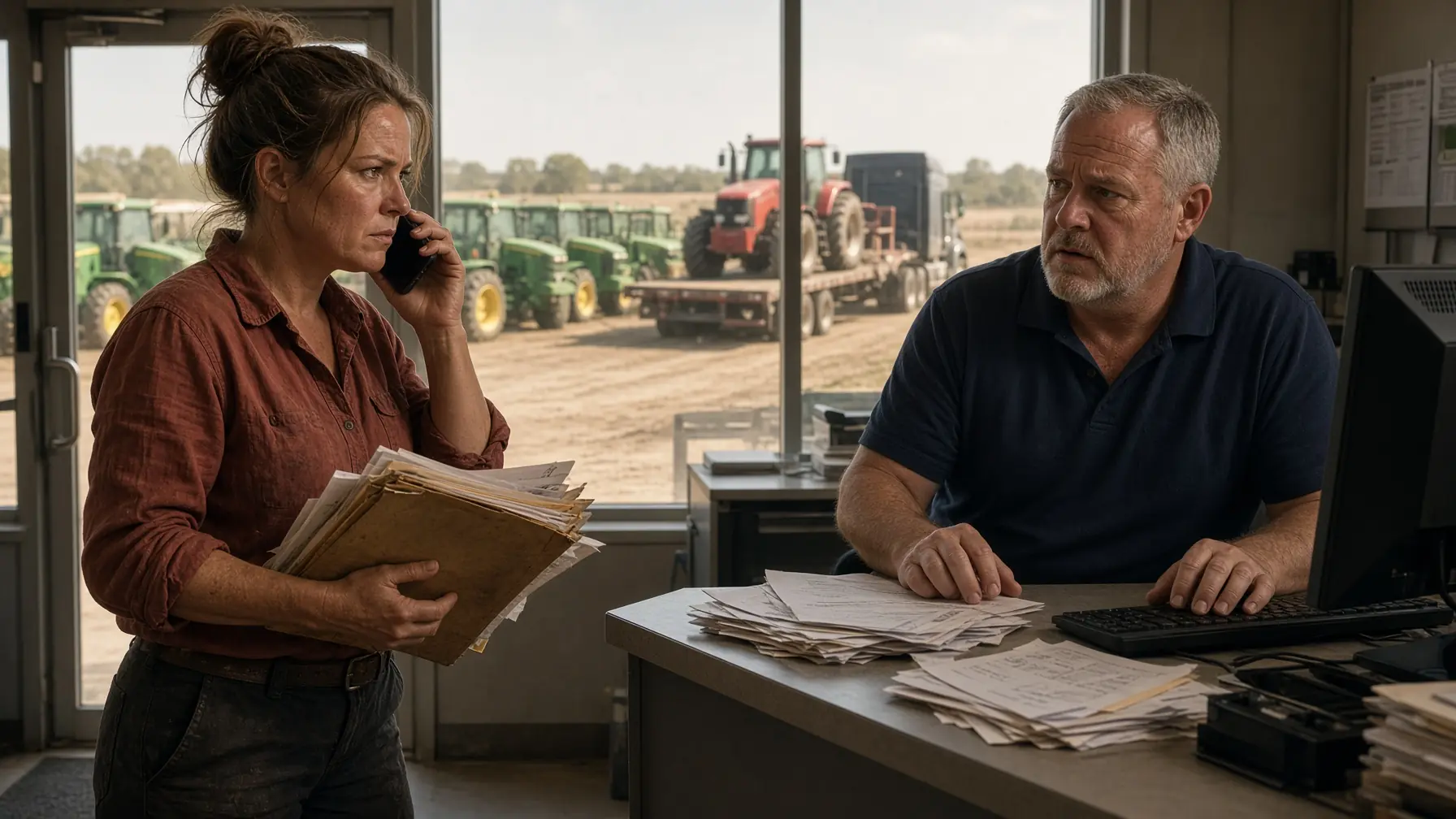
By the eleventh day, she had written every unanswered promise on the inside cover of a manila folder.
Now she stood outside the dealership with that folder beneath her arm, looking through the glass at Grant Hawthorne.
He was laughing at something on his computer.
Behind her, late summer wind moved across the highway, carrying the dry smell of grass and road dust. Somewhere beyond the rows of green tractors, a truck engine rose and faded.
Hannah remained beside her pickup for another moment.
She had come prepared to be reasonable.
She was beginning to think that had become part of the problem.
Eleven days earlier, the wheat had still given her enough time to believe people.
That morning, she had walked a strip along the south field while dew clung to her boots. She rubbed a few kernels between her fingers, checked them, and looked toward the equipment yard.
Her combine sat beneath the open shed.
It should have been ready.
She had arranged service before the season, bought the parts the dealership recommended, and set money aside for the things that always appeared once a machine began working long days. The plan had been careful because careful was the only way she knew to run fifteen hundred acres without spending every winter repairing summer decisions.
Then the combine developed a problem she could not trust herself to solve.
It would run, then behave badly enough that she shut it down rather than risk turning a service call into something much more expensive. She checked the things she could check, consulted the material she had, and called the dealership.
The service adviser took the machine information.
“How soon are you looking to run?”
“As soon as the wheat lets us.”
He made a sound that suggested he understood.
“We’ll get someone out.”
Hannah rested her forehead against the combine’s warm side panel.
“Tomorrow?”
“I need to look at the route.”
“Call me when you know.”
“I will.”
She wrote his name on the back of an envelope.
That first day, she did not worry.
There were still jobs to finish. A truck needed cleaning. The grain cart needed attention. Her husband was replacing a damaged section of fence along a rented field, and one of their workers had a family appointment he had arranged months earlier.
A delay could be inconvenient without being dangerous.
By evening, she had moved enough things around that the next morning remained open for the technician.
She left the machinery shed unlocked.
She put the service paperwork where she could reach it.
Before bed, she checked her phone one more time.
No call.
At breakfast, her husband asked whether anyone had confirmed.
“Not yet.”
He poured coffee.
“They’ll probably call on the way.”
Hannah nodded.
She wanted that to be true, so she let it stand.
The next morning, she kept close to the yard.