Ten-year-old Jonah Reed kept the bus ticket folded inside his shoe because it was the safest place he knew.
Not in his backpack, where pencils broke and papers tore.
Not in his coat pocket, where things disappeared through a hole near the seam.
Not in his hand, where someone might see it and ask why he held it so tightly.
Inside his shoe, beneath the thin sole, the little blue paper ticket stayed hidden.
It was his way home.
Jonah lived with his mother, Claire Reed, in a small apartment above a closed laundromat in Harrisburg, Pennsylvania. The sign below still said Bright Wash Laundry, though no machines had turned there for nearly two years. The windows were dusty. The stairs creaked. In winter, the hallway smelled like cold metal and old soap.
Their apartment was not much, but Claire called it “ours” in a voice that made Jonah understand he should be grateful.
And he was.
He was grateful for the couch where his mother slept when her back hurt too much to climb into bed. He was grateful for the kitchen table with one wobbly leg. He was grateful for the small bedroom where he kept three books, two shirts, one baseball glove, and a photo of his father in a frame with cracked glass.
His father had been gone for three years.
Not dead.
Just gone.
That was harder to explain.
When other children asked, Jonah said, “He moved away.”
When teachers asked, Claire said, “It’s just the two of us.”
When Jonah asked, his mother only said, “Some people don’t know how to stay.”
After that, Jonah stopped asking.
Claire worked at a nursing home laundry room during the day and cleaned offices at night. Her hands were always dry from soap and chemicals. Her eyes were always tired. But every morning, before she left, she kissed Jonah’s forehead and said, “Be kind. Be careful. Come home.”
Those were the three rules.
Be kind.
Be careful.
Come home.
Jonah tried to follow all of them.
Most days, he walked home from school to save bus money. It was forty minutes if he walked fast, longer if it rained. But on Fridays, when his mother worked late and the neighborhood got noisy near evening, she gave him one bus ticket.
“Use it,” she always said. “No arguments.”
Jonah never argued.
He knew that ticket cost money she could have used for milk or eggs or the medicine she sometimes skipped when her headaches came back.
So he protected it.
That Friday afternoon, cold rain fell over Harrisburg in slanted gray lines. The sidewalks shone under traffic lights. Cars splashed water near the curb. People hurried with umbrellas and damp grocery bags, their faces lowered against the wind.
Jonah stood under the awning outside Hillman Elementary, waiting for the city bus.
His sneakers were already wet. His coat was too thin. The blue bus ticket pressed against the bottom of his foot inside his shoe.
The bus stop was crowded.
A woman with a stroller stood near the sign. Two teenagers shared earbuds. A tired man in a work vest leaned against the wall with his eyes closed. An old man stood at the edge of the shelter, holding a brown paper grocery bag against his chest.
Jonah noticed the old man because he was shivering.
He looked about seventy-five, maybe older, with dark brown skin, short white hair beneath a flat cap, and a deeply lined face that seemed gentle even while worried. He wore a dark coat with missing buttons, gray trousers, and polished shoes that had been soaked through by the rain. His hands trembled around the grocery bag.
The bus arrived late.
Everyone moved forward quickly.
The doors opened with a tired hiss.
One by one, passengers climbed aboard.
Jonah waited near the back of the line, his foot pressed down against the hidden ticket.
The old man stepped onto the bus just before him.
He searched his coat pocket.
Then his trouser pocket.
Then the inside pocket of his coat.
His face changed.
The driver looked impatient.
“Fare or pass?”
The old man checked his grocery bag as if the ticket might have slipped between the bread and canned soup.
“I had it,” he said quietly. “I know I had it.”
“Sir, I need you to pay or step off.”
The old man’s ears reddened.
“I’m sorry. My wallet must have fallen somewhere. I just need to get to Rosewood Avenue.”
The driver sighed.
Other passengers shifted behind him.
One teenager muttered, “Come on, man.”
The old man lowered his head.
Jonah felt something inside his chest tighten.
He thought of his mother’s three rules.
Be kind.
Be careful.
Come home.
The old man tried to step off the bus.
Jonah bent quickly, slipped off his shoe, pulled out the blue ticket, and stepped forward.
“He can use mine.”
The bus driver looked down at him.
The old man turned.
“No, son. You need that.”
Jonah held the ticket out.
“It’s okay.”
The old man shook his head.
“I can’t take a child’s ticket.”
Jonah looked at the rain outside.
Then at the old man’s shaking hands.
“You’re colder than me.”
“That doesn’t mean—”
“My mom says if someone needs help, help first.”
The driver took the ticket before anyone could argue longer.
“Move back, please.”
The old man stared at Jonah as if he had just handed over something far larger than bus fare.
“What’s your name?” he asked softly.
“Jonah Reed.”
The old man swallowed.
“Arthur Bennett.”
The passengers moved down the aisle.
Jonah stepped back onto the sidewalk.
Arthur looked alarmed.
“Aren’t you getting on?”
“I can walk.”
“In this rain?”
Jonah forced a small smile.
“I walk fast.”
The bus doors began to close.
Arthur pressed one hand against the glass.
Jonah lifted his hand in a small wave.
Then the bus pulled away, carrying the old man home.
Jonah stood beneath the awning for a few seconds, listening to the rain.
Then he put his shoe back on and began walking.
The walk home was awful.
Cold water soaked through his sneakers within minutes. His socks rubbed against his heels. Rain slid down the back of his neck where his coat collar had torn. Cars passed too close to the curb, splashing dirty water over his jeans. His backpack grew heavier as his school papers absorbed dampness.
But Jonah kept walking.
He told himself Rosewood Avenue was far. The old man needed the bus more.
By the time Jonah reached the apartment, his fingers were stiff and his teeth chattered.
Claire was not home yet.
He changed into dry clothes, hung his wet coat near the heater that barely worked, and tried to warm soup in a small pot. But his hands shook so badly that he dropped the spoon twice.
When Claire came home at 8:30, she stopped in the doorway.
“Jonah?”
He looked up from the table.
She saw his wet shoes near the heater. His soaked backpack. His pale face.
“What happened?”
He hesitated.
That was enough.
“Jonah Reed.”
He looked down.
“I gave my bus ticket to an old man.”
Claire closed the door slowly.
“You what?”
“He lost his wallet. The bus driver was going to make him get off. It was raining.”
“You walked home?”
“Yes.”
“In the cold rain?”
Jonah nodded.
Claire’s face tightened with fear first, then frustration, then something softer that hurt more to look at.
“Baby,” she whispered, “that ticket was for you.”
“I know.”
“You could have gotten sick.”
“I know.”
“You could have called me.”
“You were working.”
“I would have come.”
“You can’t leave work like that.”
Claire sat down heavily across from him.
For a moment, she said nothing.
Then she reached for his hand.
“Was he safe?”
“I think so.”
“Did he thank you?”
“Yes.”
“What was his name?”
“Arthur Bennett.”
Claire looked at her son’s small, tired face.
She wanted to scold him.
She wanted to tell him the world was too hard for a child to keep giving pieces of himself away.
But she also knew what kind of boy she had raised.
So instead, she stood, wrapped a towel around his shoulders, and pulled him close.
“You have a good heart,” she said into his hair. “But I need that heart to come home safe.”
“I’m sorry.”
“I know.”
“I just couldn’t watch him stand there.”
Claire closed her eyes.
Because that was exactly what she feared.
And exactly what she loved.
The next morning, Jonah woke with a sore throat.
Claire made him tea with honey and checked his forehead every hour. She tried not to look worried, but Jonah saw it anyway.
By Monday, he was well enough for school.
He thought about Arthur Bennett more than he expected. He wondered if the old man had found his wallet. He wondered if he had eaten the groceries in his paper bag. He wondered if someone had been waiting for him on Rosewood Avenue.
Jonah never expected to see him again.
But on Wednesday afternoon, his teacher, Mrs. Harper, called him to the front office.
Jonah’s stomach dropped.
Children only went to the office when something was wrong.
He walked down the hallway slowly, shoes squeaking faintly against the floor.
Inside the office, Mrs. Harper stood beside the principal, Mr. Collins.
And sitting in a chair near the window was Arthur Bennett.
He wore the same flat cap, but his coat was dry now. A wooden cane rested against his knee. Beside him sat a woman in her forties wearing a navy raincoat and worried eyes.
Arthur stood when he saw Jonah.
“There he is,” he said softly.
Jonah blinked.
“Mr. Bennett?”
The woman smiled through tears.
“You’re Jonah?”
“Yes, ma’am.”
She stepped forward and crouched to his height.
“I’m Naomi Bennett. Arthur is my father.”
Jonah looked at Arthur.
“Did you find your wallet?”
Arthur nodded.
“Dropped it outside the pharmacy. Someone turned it in the next morning.”
“That’s good.”
Naomi wiped one eye.
“My father told me what you did.”
Jonah looked embarrassed.
“It was just a bus ticket.”
Arthur shook his head.
“No, son. It was your way home.”
The office grew quiet.
Mr. Collins looked at Jonah differently than he had before.
Naomi opened her purse and pulled out an envelope.
“My father asked the bus company about the ticket. They helped us trace the school stop. Then your principal helped contact your teacher.”
Jonah grew nervous.
“Am I in trouble?”
Mrs. Harper quickly said, “No, Jonah. You are not in trouble.”
Arthur smiled gently.
“I came to return what you gave.”
Naomi handed him the envelope.
Inside was a pack of bus tickets.
Not one.
Ten.
Jonah stared at them.
“I can’t take these.”
Arthur chuckled softly.
“Exactly what I told my daughter you’d say.”
Naomi’s voice softened.
“Please. My father hasn’t stopped talking about you. He said a little boy stood in the rain because he refused to let an old man be humiliated.”
“I didn’t want him to feel bad.”
Arthur’s eyes filled.
“That is kindness, Jonah. Not just helping. Protecting someone’s dignity while you do it.”
Jonah did not know what dignity meant exactly, but he understood the feeling.
He remembered Arthur searching his pockets while everyone waited.
He remembered the old man’s face.
He looked down at the tickets.
“My mom should decide.”
Naomi nodded immediately.
“That’s fair. We spoke with the school first because we didn’t know how else to find you. Could we meet your mother?”
That evening, Naomi and Arthur came to the apartment above the closed laundromat.
Claire had cleaned as much as she could before they arrived, but there was no hiding everything. The heater rattled. The wallpaper peeled near the window. The kitchen chair wobbled. The hallway outside smelled faintly of damp wood.
Jonah watched Naomi notice those things.
But she did not look pitying.
That mattered.
Arthur sat at the kitchen table while Claire made tea.
“I don’t know what to say,” Claire said. “Jonah should have come home safely.”
Arthur nodded.
“Yes, ma’am. He should have. And if he were my child, I would have been frightened too.”
That answer surprised her.
Arthur continued, “But I also know what it feels like when people look through you because you are old and slow and in their way. Your boy saw me.”
Claire looked at Jonah.
He was sitting quietly near the stove, hands folded in his lap.
Naomi placed the bus tickets on the table.
“This is only the beginning of our thanks. But we don’t want to offend you.”
Claire looked at the tickets for a long time.
Her pride told her to refuse.
Her exhaustion told her to accept.
Her love for Jonah made the decision.
“We can accept the tickets,” she said quietly. “For Jonah.”
Jonah looked relieved.
Arthur smiled.
“Good.”
Naomi then said carefully, “There is something else.”
Claire stiffened.
Arthur glanced at his daughter, then back at Claire.
“My wife passed three years ago,” he said. “Since then, I’ve lived alone in a small house on Rosewood Avenue. Too many rooms. Too many stairs. Too much quiet.”
Naomi placed a hand on his shoulder.
“We’ve been trying to convince Dad to move closer to us or let someone help him. He refuses because he says leaving the house feels like losing Mom again.”
Arthur sighed.
“That is accurate.”
Naomi smiled sadly.
“Recently, we decided to turn the downstairs rooms into a safe community reading space. My mother loved books. She used to run a small after-school reading circle from that house before she got sick.”
Jonah looked up.
“Reading circle?”
Arthur’s face brightened.
“Children came after school. She helped with homework, gave them snacks, read stories. Some of those children are grown now.”
Naomi nodded.
“We want to start it again. Not big. Just a small program twice a week. But Dad needs help organizing it. Someone responsible. Someone good with children. Someone who understands families who may not have much support.”
Claire looked confused.
“Are you offering me a job?”
Naomi smiled gently.
“Yes. Part-time at first. Paid. Flexible hours. We would work with your schedule.”
Claire stared at her.
“I don’t have teaching experience.”
Arthur leaned forward.
“You raised him.”
He nodded toward Jonah.
“That is experience.”
Claire’s eyes filled before she could stop them.
Naomi continued, “We’re not asking for an answer tonight. But Dad wanted to meet you because Jonah’s kindness reminded him of what my mother’s house used to be.”
Arthur looked at Jonah.
“Your bus ticket got me home, son. Maybe now that house can help other children get somewhere too.”
Jonah did not fully understand, but he felt the air in the apartment change.
Like a window opening.
The next Saturday, Claire and Jonah visited Arthur’s house.
It sat on Rosewood Avenue beneath two old maple trees, painted white with blue shutters and a wide front porch. The steps had a railing. The windows were clean. A small wooden sign near the door read:
Bennett House
Inside, the house smelled like lemon polish, old paper, and cinnamon. The downstairs rooms were warm and full of shelves. Books lined the walls from floor to ceiling. Some were children’s books. Some were old novels. Some were dictionaries, atlases, poetry books, repair manuals, cookbooks, and thick photo albums.
Jonah stood in the doorway, amazed.
“This is a lot of books.”
Arthur smiled.
“My wife, Ruth, believed a house without books was just a box with furniture.”
Claire ran her fingers along the back of a wooden chair.
“She sounds wonderful.”
“She was,” Arthur said. “And bossy about grammar.”
Naomi laughed.
“She corrected birthday cards.”
Arthur pointed to the front room.
“This used to be where children sat after school. Ruth gave them cookies at that table.”
Jonah imagined it easily.
Children with backpacks.
Pencils.
Books open.
Rain tapping the windows.
Someone kind asking about their day.
Claire walked through the house slowly. Her face was careful, but Jonah knew her well enough to see hope trying to rise.
Naomi explained the job.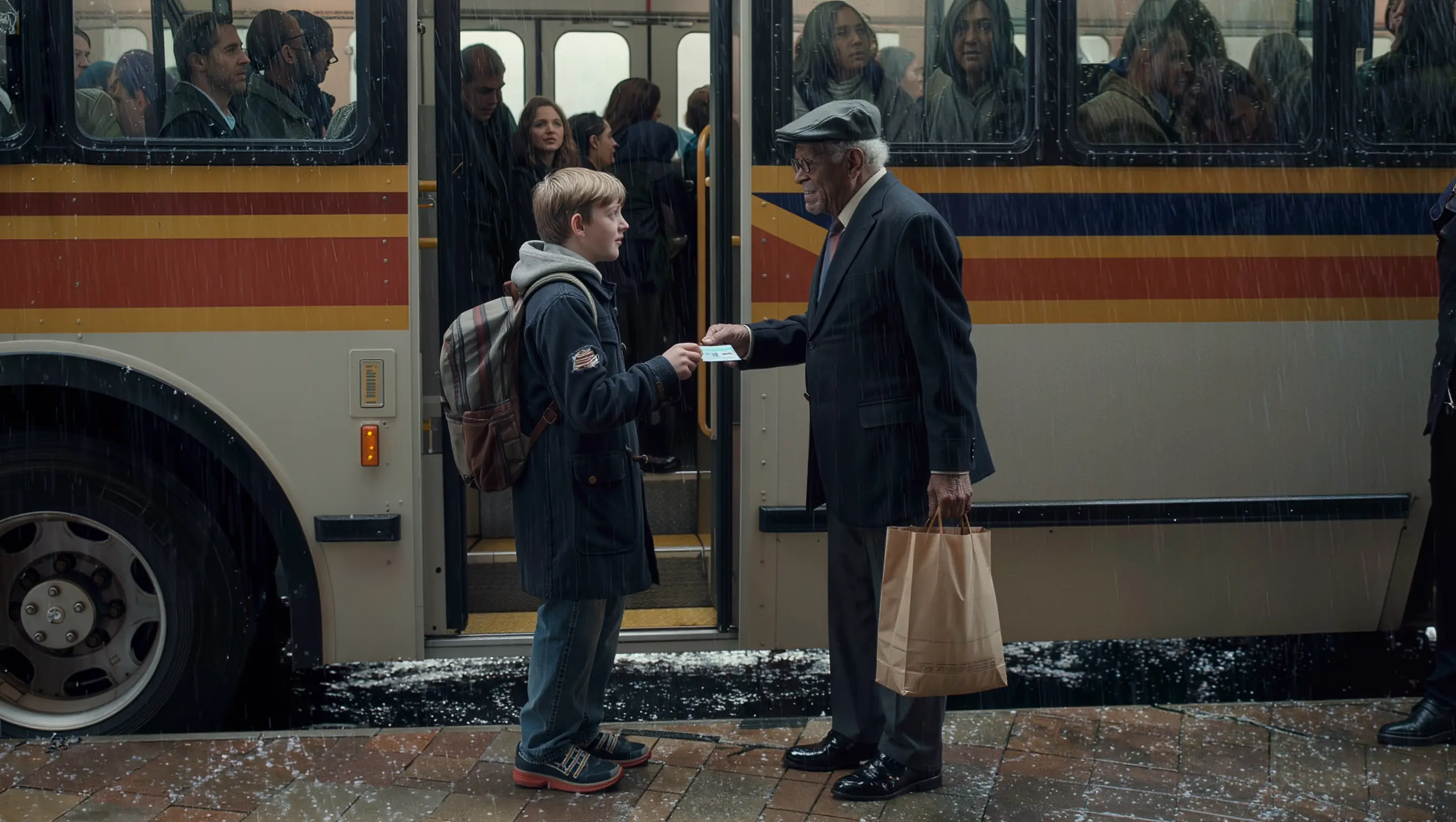
Claire would help schedule students, prepare snacks, organize book donations, assist with homework time, and coordinate with parents. Arthur would read aloud and manage the house. Naomi would handle paperwork and funding.
It was real work.
Not charity.
That mattered to Claire.
“I’ll try it for a month,” she said finally.
Jonah grinned.
Arthur clapped once.
“Excellent. Ruth always said the best things begin with someone brave enough to try.”
The Bennett House Reading Circle opened two weeks later with six children.
Jonah was one of them.
So were two kids from his school, a quiet girl from the apartment building next to the pharmacy, and two brothers whose mother worked late shifts at the hospital.
Claire made peanut butter crackers and apple slices.
Arthur read the first chapter of a book about a boy building a boat.
Naomi helped one child with math homework.
Jonah sat at the table with his spelling worksheet, listening to the sound of voices in the old house.
For the first time in a long while, he felt warm in a way that had nothing to do with heat.
The program grew slowly.
Then quickly.
Parents heard about it. Teachers recommended students. A local bakery donated leftover bread twice a week. A retired librarian volunteered on Thursdays. Someone donated backpacks. Someone else donated notebooks. The church collected winter gloves.
Claire became the heart of the place.
She remembered which children were shy, which ones needed extra snacks, which parents worked late, which students pretended to understand homework when they didn’t. She never made anyone feel poor. She never made anyone feel like a burden.
Arthur adored her for that.
“You have Ruth’s gift,” he told her once.
Claire shook her head.
“I’m just trying to help.”
“That was Ruth’s gift.”
Jonah watched his mother change.
She still worked hard, but she no longer came home with the same defeated silence. She had stories now. Good ones. Funny ones. Stories about children learning to read better, about a boy finally understanding fractions, about Arthur falling asleep in his chair while still holding a book open.
Jonah liked those stories.
Winter came.
The Reading Circle became especially important after school because many apartments in the neighborhood were cold, and the Bennett house was warm. Arthur insisted the fireplace be lit on the coldest days. Claire insisted every child wash hands before snacks. Naomi insisted Arthur stop climbing ladders to reach high shelves.
Nobody listened to Naomi enough, but they tried.
One afternoon in January, Jonah found Arthur sitting alone in the front room after the other children left.
In his hands was an old photograph of a woman with bright eyes and a wide smile standing on the porch surrounded by children.
“Is that Mrs. Ruth?” Jonah asked.
Arthur nodded.
“The first year of the reading circle.”
“She looks happy.”
“She was happiest when children filled the house.”
Jonah sat beside him.
“Do you miss her?”
Arthur’s hand tightened around the photograph.
“Every day.”
“Does it get easier?”
Arthur thought for a long moment.
“No. But it gets wider.”
Jonah frowned.
“Wider?”
“When grief is new, it fills the whole room. There’s no space for anything else. Later, the room grows around it. The grief is still there, but other things fit beside it.”
Jonah thought about his father.
His leaving was not the same as death, but it still felt like a missing chair at every table.
“Can people miss someone who left on purpose?”
Arthur looked at him gently.
“Yes.”
“Even if they’re mad?”
“Yes.”
Jonah stared at his hands.
“I think I do.”
Arthur placed the photograph down and rested one hand on Jonah’s shoulder.
“That does not make you weak.”
Jonah’s eyes burned.
“I didn’t say it did.”
“No,” Arthur said softly. “But you wondered.”
That was when Jonah began to understand that Arthur gave him something different from bus tickets or snacks or books.
Arthur gave him room to say things he kept locked inside.
Spring arrived with rain and muddy sidewalks.
The Reading Circle received a small grant from the city to expand. Claire’s part-time position became full-time. She left one of her night cleaning jobs. Then, by summer, she left the other.
The first evening she did not have to go clean offices, Jonah found her standing in the apartment kitchen, staring at the clock.
“You forgot something?” he asked.
Claire laughed, then cried.
“No,” she said. “That’s the strange part.”
They made grilled cheese sandwiches and tomato soup. Then they watched a movie on the old laptop without Claire falling asleep in the first twenty minutes.
To Jonah, that felt richer than anything money could buy.
Then came the storm.
In late August, heavy rain flooded several streets near the laundromat apartment. Water leaked through the ceiling above Jonah’s bed. The landlord promised repairs “soon,” which meant not soon. The hallway smelled like mildew. The heater had not been fixed from the previous winter.
Claire tried not to panic.
Jonah saw it anyway.
One evening, Naomi came to pick up extra books and noticed a bucket under Jonah’s ceiling leak.
Her face became serious.
“Claire.”
Claire’s shoulders stiffened.
“It’s temporary.”
“How long?”
Claire did not answer.
The next week, Arthur asked Claire and Jonah to come to Bennett House for dinner.
Jonah knew something was happening because Naomi was there too, and Arthur wore his best cardigan.
After dinner, Arthur led them to the back of the house.
“There’s an apartment above the garage,” he said.
Claire looked at him cautiously.
“I didn’t know that.”
“Hasn’t been used properly in years. Ruth and I used to host visiting teachers there during summer programs.”
Naomi opened the door at the bottom of a staircase.
Upstairs was a small but bright apartment with two bedrooms, a kitchen, a bathroom, and windows facing the maple trees. It needed dusting and paint, but it was warm, dry, and safe.
Claire stood frozen.
Arthur spoke before she could refuse.
“I am getting older. Naomi worries. Too much, but she is not wrong. I need someone near the house. Someone I trust. The Reading Circle needs you here more often anyway.”
Claire closed her eyes.
“Arthur…”
“It would be part of your position. Reduced rent. Fair paperwork. Proper agreement. No charity hidden in pretty words.”
Naomi held up a folder.
“I had everything reviewed. You can show it to anyone you trust before deciding.”
Claire’s lips trembled.
“I don’t know how to accept this.”
Arthur looked at Jonah.
“Do you remember what you gave me the day we met?”
“A bus ticket.”
“My way home,” Arthur corrected. “You gave me my way home.”
Jonah swallowed.
Arthur turned back to Claire.
“Let an old man return the favor with a roof that doesn’t leak.”
Claire cried then.
Not loudly.
Just enough that Jonah took her hand.
They moved in before school started.
The apartment above the garage became home in less than a week.
Jonah’s bedroom had a window where he could see the porch below. Claire had a room with enough space for a real bed instead of a couch. The kitchen did not smell like damp plaster. The heat worked. The door locked properly.
The first night there, Jonah placed his shoes beside the bed and looked at them for a long time.
He no longer needed to hide bus tickets in them.
That realization made him feel older and younger at the same time.
Life at Bennett House became full.
Children came after school. Parents stopped by. Volunteers carried books in and out. Claire kept everything running. Naomi handled funding and legal matters. Arthur read aloud every day at four o’clock, even when his voice grew tired.
Jonah helped younger kids with spelling.
He discovered he liked teaching.
Not because he always knew the answer.
Because he liked the moment someone else realized they could find it.
One Thursday, a little boy named Marcus struggled with a paragraph and threw his pencil down.
“I’m stupid,” Marcus muttered.
Jonah remembered saying something similar once.
He sat beside him.
“You’re not stupid. Words are just being slippery.”
Marcus frowned.
“That doesn’t make sense.”
“It does. You catch one at a time.”
Arthur, listening from his chair, smiled quietly.
By the end of the hour, Marcus read the whole paragraph.
Claire watched Jonah from the kitchen doorway.
Later, she said, “You’re good with him.”
Jonah shrugged.
“He just needed someone not to rush him.”
Claire kissed the top of his head.
“That’s usually what people need.”
Years passed.
The Bennett House Reading Circle grew into a neighborhood learning center. It added summer programs, family dinners, book drives, tutoring, and a small scholarship fund for students who showed kindness and leadership.
Arthur lived long enough to see the house full again.
On Jonah’s thirteenth birthday, Arthur gave him a small wooden box. Inside was the original blue bus ticket Jonah had given him, laminated and preserved.
Jonah stared.
“You kept it?”
Arthur smiled.
“Of course.”
“Why?”
Arthur’s eyes softened.
“Because that little ticket reminded me that Ruth’s work wasn’t finished. I was becoming an old man alone in a quiet house. You made me remember the door could still open.”
Jonah held the ticket carefully.
“I thought you used it.”
“I did,” Arthur said. “Then I asked the driver if I could keep it after explaining why. He thought I was strange.”
Jonah laughed.
“You are strange.”
“Good. Normal people are overrated.”
When Jonah was fifteen, Arthur’s health began to fail. He moved more slowly, forgot small things, and sometimes had to stop reading because his breath ran short. But every afternoon, he still came downstairs to sit with the children.
One rainy day, he called Jonah to the porch.
The same kind of rain had fallen the day they met.
Arthur handed him a letter.
“Not for now,” he said. “For when you need reminding.”
Jonah frowned.
“Reminding of what?”
“That one act of kindness is never only one act.”
Arthur passed away the following winter.
The memorial was held in the front room of Bennett House. Children placed books on the table instead of flowers. Parents brought handwritten notes. Naomi spoke about her father’s quiet stubbornness. Claire spoke about how he gave families dignity, not pity.
Jonah could barely speak, but he read a paragraph from Arthur’s favorite book because Naomi asked him to.
His voice shook.
But he finished.
Afterward, he opened Arthur’s letter.
Jonah,
You were ten years old when you gave me your bus ticket. I know people told you it was a small thing. People say that when they do not understand the weight of what was given.
You gave me your safe way home.
Because of that, I found my way back to Ruth’s dream.
The house is protected now. Naomi has the papers. Your mother knows them too. Bennett House will remain a learning center, and the apartment will remain available to your family as long as you need it.
Study hard. Stay kind. Let people help you without shame.
And remember this: when you gave away your ticket, you did not lose your way home.
You built a larger one.
Arthur
Jonah read the letter three times.
Then he sat on the porch steps and cried where nobody could see, except Claire, who sat beside him and held his hand.
Years later, Jonah Reed became a teacher.
Not because someone told him to.
Not because it was easy.
Because he had learned inside Bennett House that children often carried hidden burdens, and a patient adult could become the difference between giving up and trying again.
He returned to Bennett House after college as its education director. Claire still managed the center. Naomi still chaired the foundation. The front room still smelled like books, cinnamon, and old wood. Arthur’s chair remained near the fireplace, not empty exactly, but honored.
Above the doorway hung a framed blue bus ticket.
Under it was a small plaque:
One Kindness Can Carry Many People Home.
Whenever children asked about it, Jonah told them the story.
About a rainy Friday.
A crowded bus.
An old man searching his pockets while strangers grew impatient.
A ten-year-old boy with only one ticket.
A long walk home in wet shoes.
And a house full of books that opened because kindness had been brave enough to step forward.
Jonah always ended the story the same way.
“I thought I was giving up my ride home,” he would say. “But somehow, that ticket became the road that led us all there.”